
Food Pathogen Testing Market Report 2026
Global Outlook – By Type (E.coli, Salmonella, Listeria, Other Pathogens), By Technology (Traditional, Rapid, Immunoassay, PCR, Other Technologies), By Application (Meat And Poultry, Fruits And Vegetables, Dairy, Other Applications), By Sales Channel (OEM, Aftermarket) – Market Size, Trends, Strategies, and Forecast to 2030
Food Pathogen Testing Market Overview
• Food Pathogen Testing market size has reached to $12.31 billion in 2025 • Expected to grow to $20.72 billion in 2030 at a compound annual growth rate (CAGR) of 10.9% • Growth Driver: Rising Food And Beverage Industry Demand Propels Food Pathogen Testing Market Growth • Market Trend: Innovative Molecular Diagnostic Tools Gain Popularity In The Market • Europe was the largest region in 2025 and Asia-Pacific is the fastest growing region.Market Gains By 2030 – Top Opportunities By Segment
Market Gain identifies the most promising market opportunities by highlighting the segments or products expected to generate the highest incremental revenue growth over the next five years.
What Is Covered Under Food Pathogen Testing Market?
Food pathogen testing refers to detecting food pathogens that are implemented for food production to ensure sanitation and food safety, reduce foodborne diseases, and eliminate dangerous organisms that could damage consumers in production settings, ingredients, or final goods. The main types of food pathogen testing include E. coli, Salmonella, Listeria, and others. Enterohemorrhagic Escherichia coli O157:H7 is a major foodborne pathogen causing severe disease, that can be tested by real-time PCR to quickly rule out negative samples or establish the presumptive presence of E. coli O157:H7 in 24 h. Various technologies, including traditional, rapid, immunoassay, convenience-based, PCR, and others, are performed to detect the microorganisms in meat, poultry, dairy, and processed foods and are distributed by sales channels including OEM and aftermarket.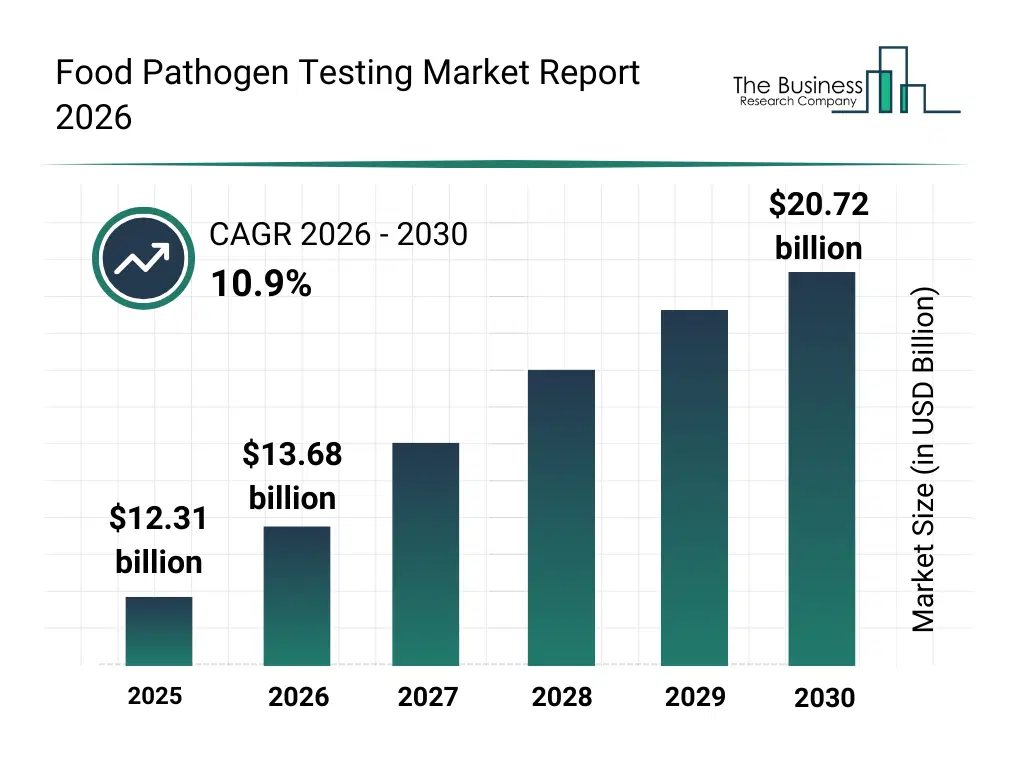
What Is The Food Pathogen Testing Market Size and Share 2026?
The food pathogen testing market size has grown rapidly in recent years. It will grow from $12.31 billion in 2025 to $13.68 billion in 2026 at a compound annual growth rate (CAGR) of 11.1%. The growth in the historic period can be attributed to rising incidents of foodborne illnesses, strengthening food safety regulations, expansion of processed food production, increased outsourcing of food testing services, improvements in microbiological testing methods.What Is The Food Pathogen Testing Market Growth Forecast?
The food pathogen testing market size is expected to see rapid growth in the next few years. It will grow to $20.72 billion in 2030 at a compound annual growth rate (CAGR) of 10.9%. The growth in the forecast period can be attributed to growing adoption of rapid and real-time testing solutions, increasing investment in advanced food diagnostics, rising focus on preventive food safety management, expansion of testing in emerging food markets, integration of digital data management in testing workflows. Major trends in the forecast period include increasing adoption of rapid pathogen detection methods, rising use of pcr-based testing technologies, growing demand for on-site food safety testing, expansion of automation in food testing laboratories, enhanced focus on multi-pathogen detection capabilities.
Global Food Pathogen Testing Market Segmentation
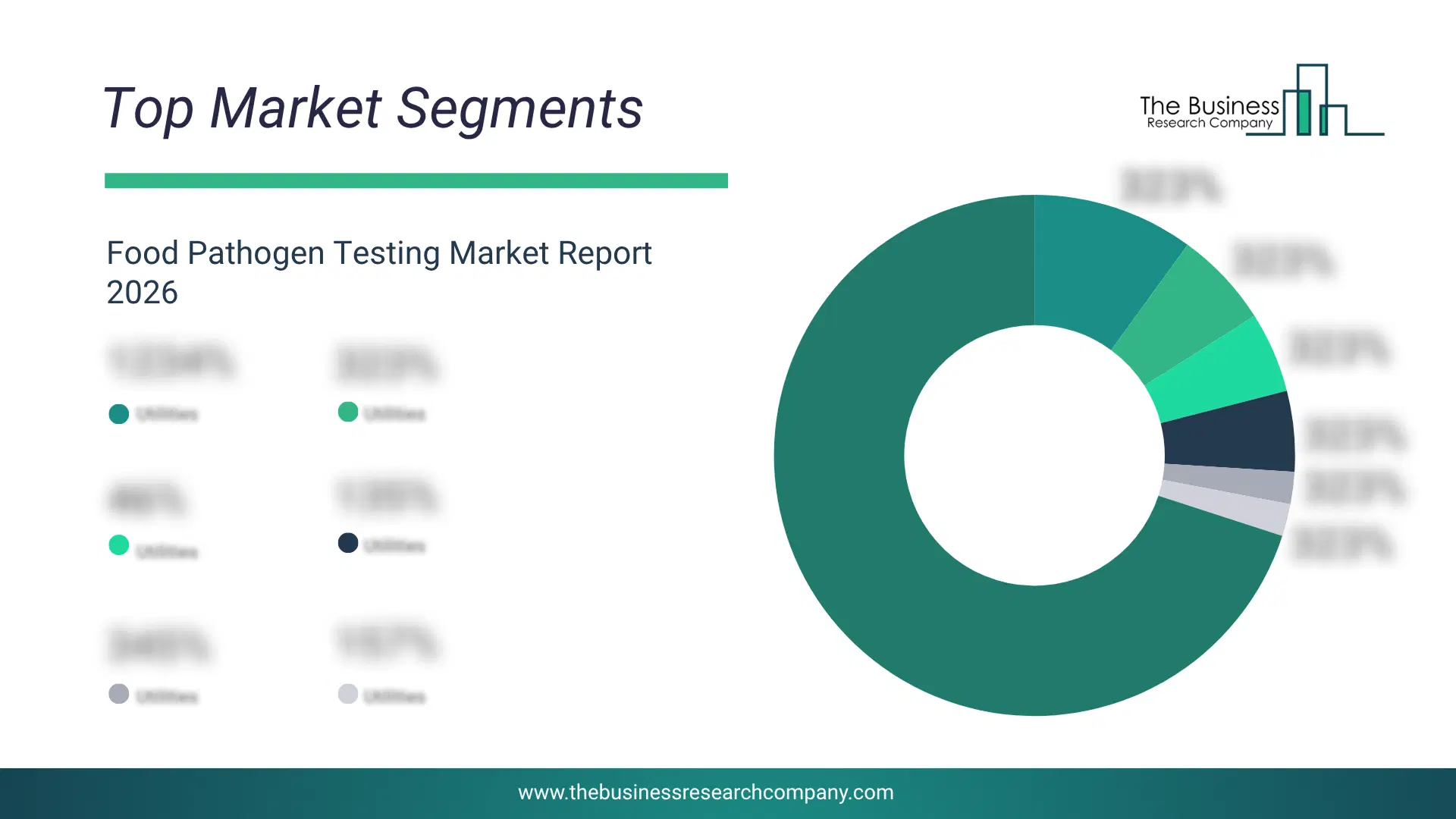
1) By Type: E.coli, Salmonella, Listeria, Other Pathogens 2) By Technology: Traditional, Rapid, Immunoassay, PCR, Other Technologies 3) By Application: Meat And Poultry, Fruits And Vegetables, Dairy, Other Applications 4) By Sales Channel: OEM, Aftermarket Subsegments: 1) By E. Coli: E. Coli O157, Enterotoxigenic E. Coli (ETEC), Enteropathogenic E. Coli (EPEC) 2) By Salmonella: Salmonella Enteritidis, Salmonella Typhimurium, Salmonella Newport 3) By Listeria: Listeria Monocytogenes, Listeria Innocua 4) By Other Pathogens: Campylobacter, Staphylococcus Aureus, Clostridium Perfringens, Bacillus Cereus, Vibrio Spp The top segments in the food pathogen testing market will be: • PCR will reach $364.21 Million by 2030. • Meat And Poultry will reach $340.25 Million by 2030. • Salmonella will reach $304.16 Million by 2030. • Traditional will reach $218.04 Million by 2030. • E.coli will reach $210.71 Million by 2030.What Is The Driver Of The Food Pathogen Testing Market?
The increasing demand from the food and beverage industry is expected to boost the growth of the food pathogen testing market going forward. The food and beverage industry encompasses businesses involved in the production, distribution, and sale of edible goods and drinks, ranging from agriculture and manufacturing to restaurants and cafes. Food pathogen testing in the food and beverage industry plays a crucial role in ensuring the safety and quality of products. It helps identify and mitigate the presence of harmful pathogens, prevent foodborne illnesses, safeguard public health, meet regulatory requirements, and maintain consumer confidence in the safety of food and beverage products. For instance, in October 2024, according to the Department for Environment, Food and Rural Affairs (Defra), a UK-based government department, in 2023, the average weekly expenditure on all food and drink rose to $57.20 (£43.33) per person, marking a 5.4% increase from $54.30 (£41.11) in 2022. Therefore, the increasing demand from the food and beverage industry is driving the growth of the food pathogen testing industry.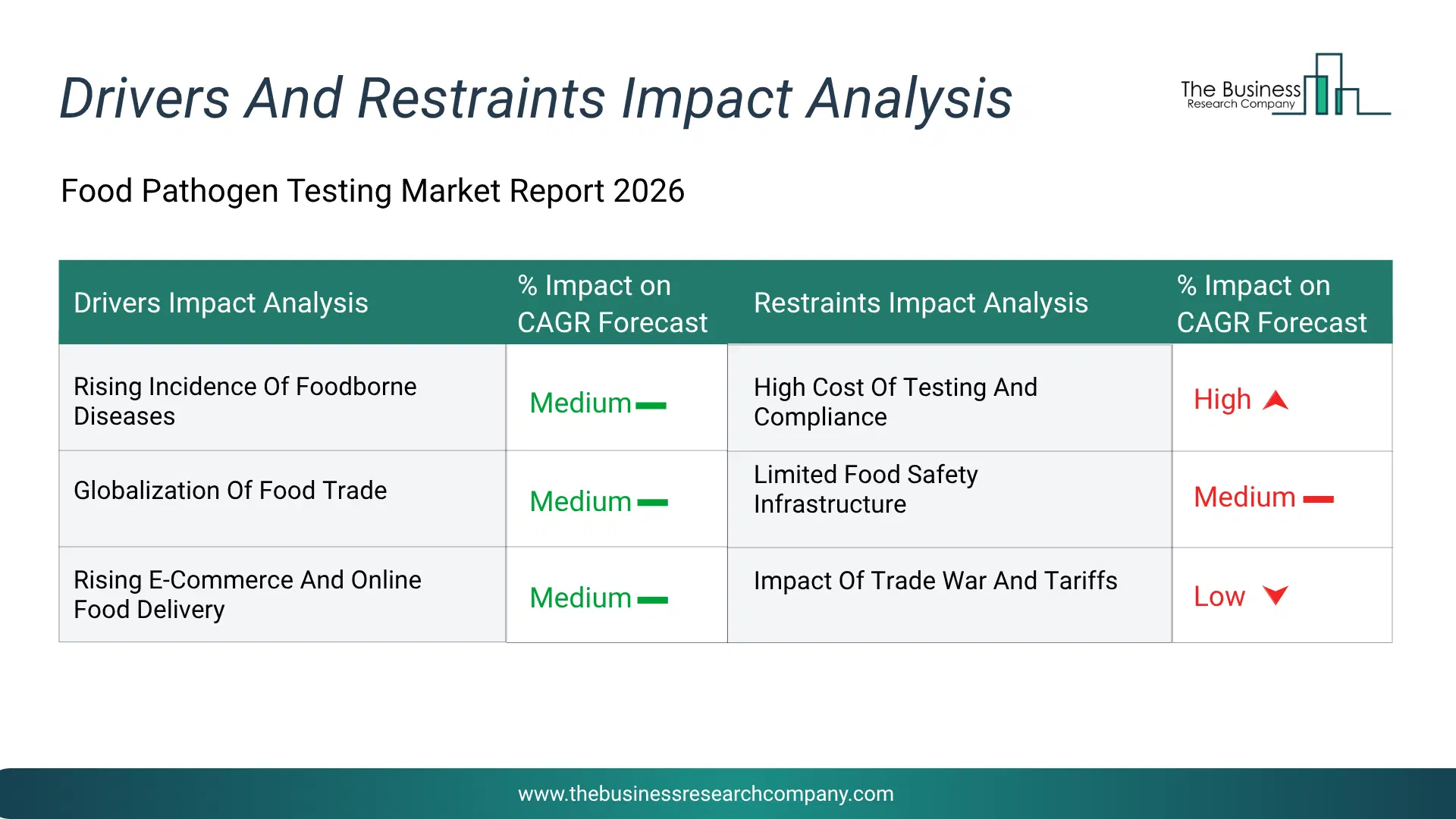
Infographic Chart Showing Key Market Drivers Analysis And Restraints For Food Pathogen Testing Market
The chart presents an impact analysis of key drivers and restraints, quantifying their relative influence on the market's growth rate and helping assess the balance between growth enablers and limiting factors. This chart offers a high-level perspective; the full report contains more detailed insights.
How Will The Drivers Impact Growth In The Global Food Pathogen Testing Market?
• Rising Incidence Of Foodborne Diseases (Medium) – During the forecast period, the rising incidence of foodborne diseases will propel the growth of the food pathogen testing market. As outbreaks continue to impact public health systems and consumer trust, food manufacturers and processors will face increasing expectations to adopt proactive, preventive testing strategies rather than reactive, recall-driven responses. This environment will push companies to expand routine pathogen screening programs, invest in higher-sensitivity molecular diagnostics and strengthen in-process and finished-product testing protocols. Over time, the need to demonstrate consistent pathogen control, support outbreak traceability and minimize legal and reputational risks will make comprehensive food pathogen testing a strategic necessity, reinforcing long-term demand for advanced detection platforms and laboratory services. The rising incidence of foodborne diseases growth contribution during the forecast period in 2025 is 1.5%. • Globalization Of Food Trade (Medium) – During the forecast period, the globalization of food trade will propel the growth of the food pathogen testing market. Cross-border trade increases the risk of pathogen introduction due to differences in production practices, environmental conditions and food safety controls across regions. To manage these risks, exporters, importers and multinational food companies will need to implement standardized and harmonized pathogen testing protocols that meet the strictest regulatory requirements among their trading partners. This will drive demand for globally recognized testing platforms, accredited laboratory services and traceable digital testing workflows that support compliance documentation, shipment clearance and recall prevention, making food pathogen testing a critical enabler of safe and efficient international food commerce. The globalization of food trade growth contribution during the forecast period in 2025 is 1.3%. • Rising E-Commerce And Online Food Delivery (Medium) – During the forecast period, rising e-commerce and online food delivery is expected to be a key driver of the growth of the food pathogen testing market in the forecast period. with more meals, fresh groceries and ready-to-eat products being transported directly to consumers, the risk profile for microbial contamination, temperature abuse and cross-contamination across extended delivery chains becomes more complex. food producers, cloud kitchens and distribution hubs will be under growing pressure to implement tighter pathogen monitoring at multiple points, including pre-dispatch quality checks and post-processing validation. this shift will accelerate demand for rapid, near-real-time testing solutions that can support fast product release cycles while ensuring safety and regulatory compliance, making pathogen testing an integral part of digital food commerce operations. the rising e-commerce and online food delivery growth contribution during the forecast period in 2025 is 1.0%. • Increasing Demand For Seafood And Meat Products (Low) – During the forecast period, increasing demand for seafood and meat products is expected to be a key driver of the growth of the food pathogen testing market in the forecast period. as production volumes increase and processing operations scale to meet consumption needs, food producers will need to implement more frequent and robust pathogen monitoring to manage contamination risks linked to slaughtering, handling, cold-chain logistics and storage. seafood and meat processors will increasingly rely on rapid and high-throughput testing technologies to support continuous production workflows, validate sanitation effectiveness and ensure compliance with food safety regulations. this structural expansion in protein consumption will directly translate into greater demand for routine pathogen detection kits, molecular assays and contract testing services across global processing facilities. the increasing demand for seafood and meat products growth contribution during the forecast period in 2025 is 0.5%.How Will The Restraints Impact Growth In The Global Food Pathogen Testing Market?
• High Cost Of Testing And Compliance (Medium) – During the forecast period, high cost of testing and compliance is restricting the growth of the food pathogen testing market during the forecast period. the cumulative expenses associated with routine pathogen screening, including the procurement of testing kits, reagents, instruments, laboratory infrastructure and accredited services, create a significant financial burden, particularly for companies operating on thin margins. in addition, the cost of maintaining regulatory compliance, such as documentation, audit readiness and method validation, adds ongoing operational overhead. these financial pressures can lead some food businesses to reduce testing frequency, rely on basic or slower methods, or outsource selectively rather than adopting advanced molecular platforms, thereby slowing the overall penetration of high-sensitivity and rapid pathogen testing technologies across the market. growth affected by the high cost of testing and compliance during the forecast period in 2025 is -2.0%. • Limited Food Safety Infrastructure (Medium) – During the forecast period, limited food safety infrastructure is restricting the growth of the food pathogen testing market during the forecast period. in many markets, the lack of accredited laboratories, reliable power supply, trained technical staff and standardized sample handling facilities makes it difficult to deploy and scale advanced diagnostic technologies such as real-time pcr and automated testing systems. these infrastructure gaps restrict consistent testing coverage across rural and semi-urban production zones, reduce market access for testing service providers and delay the adoption of modern pathogen detection platforms, ultimately constraining the geographic expansion and long-term growth potential of the food pathogen testing industry. growth affected by the limited food safety infrastructure during the forecast period in 2025 is -1.5%. • Impact Of Trade War And Tariffs (Medium) – During the forecast period, the impact of the trade war and tariffs restricting the growth of the food pathogen testing market during the forecast period. higher tariffs and trade barriers can disrupt supply chains, extend lead times and create price volatility for critical testing components, making it more expensive for laboratories and food producers to maintain consistent testing operations. in parallel, geopolitical tensions and shifting trade policies can reduce cross-border food trade volumes, lowering demand for export-related pathogen testing and compliance services. these combined effects introduce uncertainty into investment planning, discourage capital spending on advanced testing platforms and ultimately slow the adoption of modern food pathogen detection technologies across international markets. growth affected by the impact of the trade war and tariffs during the forecast period in 2025 is -0.3%.Key Players In The Global Food Pathogen Testing Market
Major companies operating in the food pathogen testing market are Lloyd’s Register Quality Assurance Limited, Intertek Group PLC, Asurequality Ltd., Thermo Fisher Scientific Inc., Bio-Rad Laboratories Inc., Merck Co. & KGaA, Neogen Corporation, bioMerieux SA, Agilent Technologies Inc., Qiagen NV, Shimadzu Corporation, SGS Société Générale de Surveillance SA, Genetic Id Na Inc., RapidBio Systems Inc., Mérieux NutriSciences Corp., FoodChain ID Inc., Ring Biotechnology Co. Ltd., Genon Laboratories Ltd., PerkinElmer Inc., Randox Food Diagnostics Ltd., Omega Diagnostics Group PLC, Romer Labs Inc., Eurofins Scientific SE, Charm Sciences Inc., Hygiena LLC, MilliporeSigma, Hardy Diagnostics, Luminex Corporation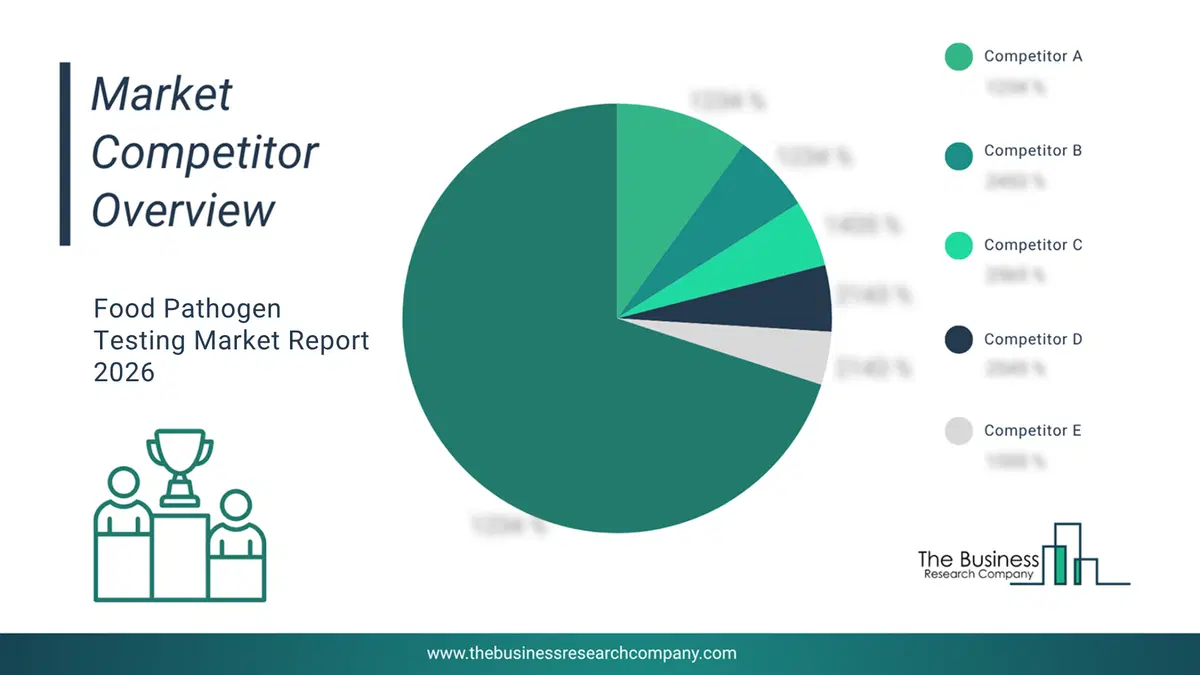
This chart is for illustrative purposes; the full report includes a detailed competitor analysis and comprehensive overview of the top 10 companies in the market.
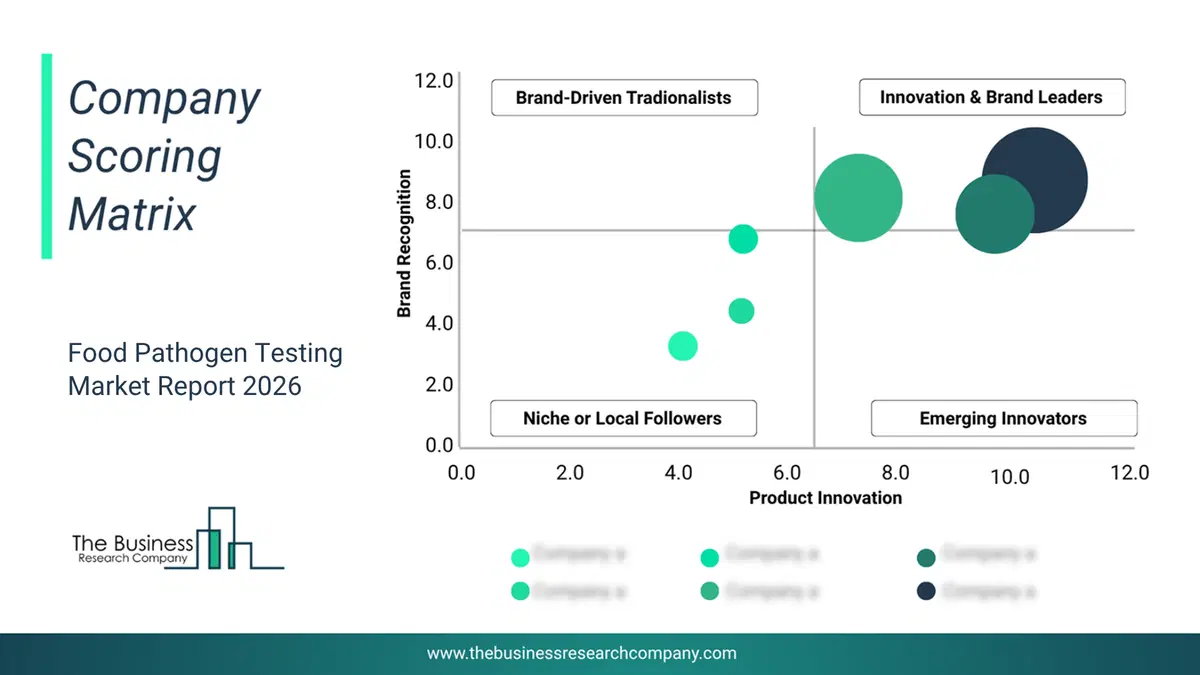
This chart maps companies by product innovation and brand strength, with bubble size indicating relative revenue, helping identify market leaders, challengers, and niche players. This is an illustrative chart; the full report provides a complete and accurate competitive analysis.
Global Food Pathogen Testing Market Trends and Insights
Major companies operating in the food pathogen testing market are increasing their focus on introducing innovative molecular diagnostic tools, such as speciation kits, to gain a competitive edge in the market. Speciation kits are laboratory tools used to identify the species of an organism from a sample of its DNA. For instance, in April 2023, Bio-Rad Laboratories, Inc., a US-based research company, launched the ID-Check Speciation kits. These kits are specifically designed to detect DNA from select meat species in food, feed, and environmental samples. The kits can detect DNA from select meat species, including bovine, chicken, duck, goat, horse, sheep, swine, and turkey species, by targeting mitochondrial DNA in food, feed, and environmental samples. When used under optimal conditions, these kits provide remarkable sensitivity, allowing for detection in less than 2 hours and limits of detection at 0.001% (0.01% for chicken and swine).What Are Latest Mergers And Acquisitions In The Food Pathogen Testing Market?
In October 2024, Mérieux NutriSciences, a France-based healthcare and food testing services company, acquired Bureau Veritas’s for an undisclosed amount. With this acquisition, Mérieux NutriSciences aimed to expand its global footprint, enhance its food-safety testing capabilities, and strengthen its service offerings across microbiological, chemical, and molecular food testing. Bureau Veritas S.A. is a France-based testing and inspection company that specializes in providing comprehensive food-safety, microbiological, chemical, and pathogen-testing services for a wide range of food products.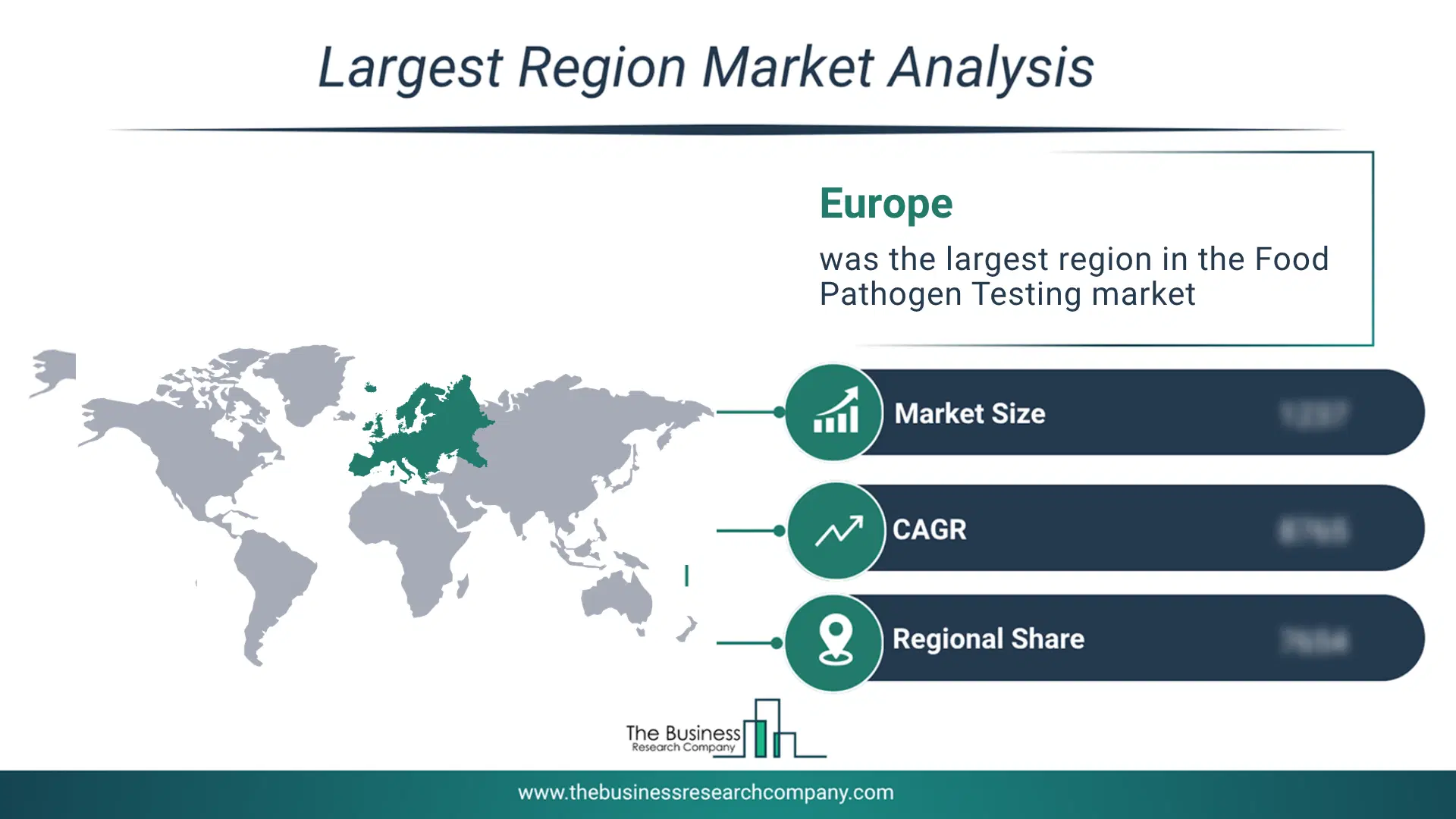
Regional Outlook
Europe was the largest region in the food pathogen testing market in 2025. Asia-Pacific is expected to be the fastest-growing region in the forecast period. The regions covered in this market report are Asia-Pacific, South East Asia, Western Europe, Eastern Europe, North America, South America, Middle East and Africa. The countries covered in this market report are Australia, Brazil, China, France, Germany, India, Indonesia, Japan, Taiwan, Russia, South Korea, UK, USA, Italy, Spain, CanadaWhat Defines the Food Pathogen Testing Market?
The food pathogen testing services market includes revenues earned by entities through multiplex PCR, real-time PCR, nucleic acid sequence-based amplification (NASBA), loop-mediated isothermal amplification (LAMP), and oligonucleotide DNA microarray. The market value includes the value of related goods sold by the service provider or included within the service offering. Only goods and services traded between entities or sold to end consumers are included.How is Market Value Defined and Measured?
The market value is defined as the revenues that enterprises gain from the sale of goods and/or services within the specified market and geography through sales, grants, or donations in terms of the currency (in USD unless otherwise specified). The revenues for a specified geography are consumption values that are revenues generated by organizations in the specified geography within the market, irrespective of where they are produced. It does not include revenues from resales along the supply chain, either further along the supply chain or as part of other products.
This chart presents market attractiveness based on a quantitative evaluation of growth, competition, strategic alignment, and risk, offering a clear view of opportunity areas for decision-making. This chart is for illustrative purposes; the full report contains the complete analysis.

This chart highlights the Total Addressable Market (TAM) by estimating the maximum revenue opportunity using an assumption-driven approach, supporting strategic planning and opportunity sizing across markets. The chart is illustrative; the full report provides a more comprehensive analysis.
What Key Data and Analysis Are Included in the Food Pathogen Testing Market Report 2026?
The food pathogen testing market research report is one of a series of new reports from The Business Research Company that provides market statistics, including industry global market size, regional shares, competitors with the market share, detailed market segments, market trends and opportunities, and any further data you may need to thrive in the food pathogen testing industry. The market research report delivers a complete perspective of everything you need, with an in-depth analysis of the current and future state of the industry.Food Pathogen Testing Market Report Forecast Analysis
| Report Attribute | Details |
|---|---|
| Market Size Value In 2026 | $13.68 billion |
| Revenue Forecast In 2030 | $20.72 billion |
| Growth Rate | CAGR of 11.1% from 2026 to 2030 |
| Base Year For Estimation | 2025 |
| Actual Estimates/Historical Data | 2020-2025 |
| Forecast Period | 2026 - 2030 - 2035 |
| Market Representation | Revenue in USD Billion and CAGR from 2026 to 2030 |
| Segments Covered | Type, Technology, Application, Sales Channel |
| Regional Scope | Asia-Pacific, Western Europe, Eastern Europe, North America, South America, Middle East, Africa |
| Country Scope | The countries covered in the report are Australia, Brazil, China, France, Germany, India, Indonesia, Japan, Taiwan, Russia, South Korea, UK, USA, Canada, Italy, Spain. |
| Key Companies Profiled | Lloyd’s Register Quality Assurance Limited, Intertek Group PLC, Asurequality Ltd., Thermo Fisher Scientific Inc., Bio-Rad Laboratories Inc., Merck Co. & KGaA, Neogen Corporation, bioMerieux SA, Agilent Technologies Inc., Qiagen NV, Shimadzu Corporation, SGS Société Générale de Surveillance SA, Genetic Id Na Inc., RapidBio Systems Inc., Mérieux NutriSciences Corp., FoodChain ID Inc., Ring Biotechnology Co. Ltd., Genon Laboratories Ltd., PerkinElmer Inc., Randox Food Diagnostics Ltd., Omega Diagnostics Group PLC, Romer Labs Inc., Eurofins Scientific SE, Charm Sciences Inc., Hygiena LLC, MilliporeSigma, Hardy Diagnostics, Luminex Corporation |
| Customization Scope | Request for Customization |
| Pricing And Purchase Options | Explore Purchase Options |