
Food Recycler Market Report 2026
Global Outlook – By Component (Product, Services), By Material Type (Steel, Stainless Steel, Carbon Steel, Plastic, Fiber, Other Material Types), By Price Range (Economic, Premium), By Distribution Channel (Original Equipment Manufacturer (OEM), Distributors, Retailers, E-commerce), By End User (Residential, Commercial) – Market Size, Trends, Strategies, and Forecast to 2030
Food Recycler Market Overview
• Food Recycler market size has reached to $37.55 billion in 2025 • Expected to grow to $51.9 billion in 2030 at a compound annual growth rate (CAGR) of 6.6% • Growth Driver: Rising Demand For Natural And Organic Products Driving Growth In The Food Recycler Market • Market Trend: Electric Food Recyclers Enhancing Waste Management Efficiency • North America was the largest region in 2025 and Asia-Pacific is the fastest growing region.What Is Covered Under Food Recycler Market?
A food recycler is a device or system designed to process food waste into a more useful or manageable form, often through composting, dehydration, or fermentation methods. These recyclers transform food scraps and leftovers into compost, fertilizer, or animal feed, reducing the volume of waste sent to landfills and contributing to environmental sustainability. The main components of a food recycler are products and services. The food recycler product is the transformed, value-added material created from recycled food waste, which can take various forms like fertilizer, supplements, or repurposed food ingredients. The various material types include steel, stainless steel, carbon steel, plastic, fiber, and others with various price ranges such as economic, and premium. These are distributed through various distribution channels such as original equipment manufacturers (OEM), distributors, retailers, and e-commerce and used by various end users such as residential, and commercial.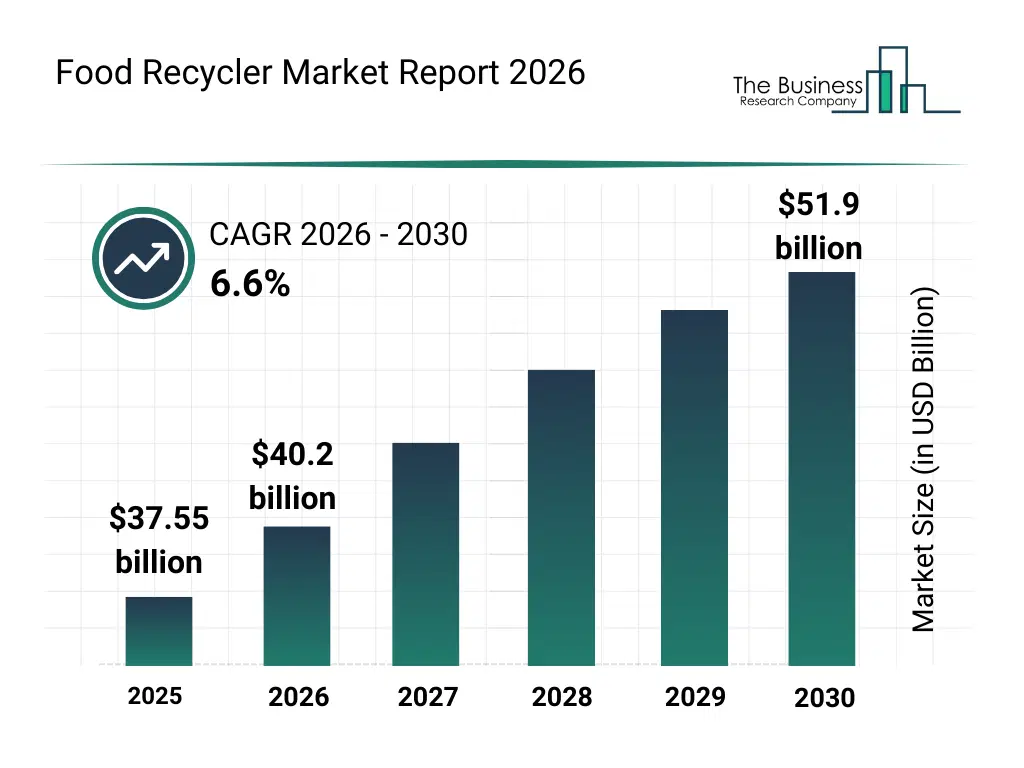
What Is The Food Recycler Market Size and Share 2026?
The food recycler market size has grown strongly in recent years. It will grow from $37.55 billion in 2025 to $40.2 billion in 2026 at a compound annual growth rate (CAGR) of 7.1%. The growth in the historic period can be attributed to growth of food waste generation, expansion of commercial kitchens and hospitality sector, rising landfill disposal costs, adoption of composting practices, increasing awareness of waste management solutions.What Is The Food Recycler Market Growth Forecast?
The food recycler market size is expected to see strong growth in the next few years. It will grow to $51.9 billion in 2030 at a compound annual growth rate (CAGR) of 6.6%. The growth in the forecast period can be attributed to increasing focus on circular economy initiatives, rising adoption of smart waste management systems, expansion of zero-waste regulations, growing investments in sustainable foodservice operations, increasing demand for decentralized waste processing. Major trends in the forecast period include increasing adoption of household food recycling systems, rising demand for commercial food waste processing solutions, growing integration of smart and automated recycling units, expansion of dehydration and composting technologies, enhanced focus on waste volume reduction.
Global Food Recycler Market Segmentation
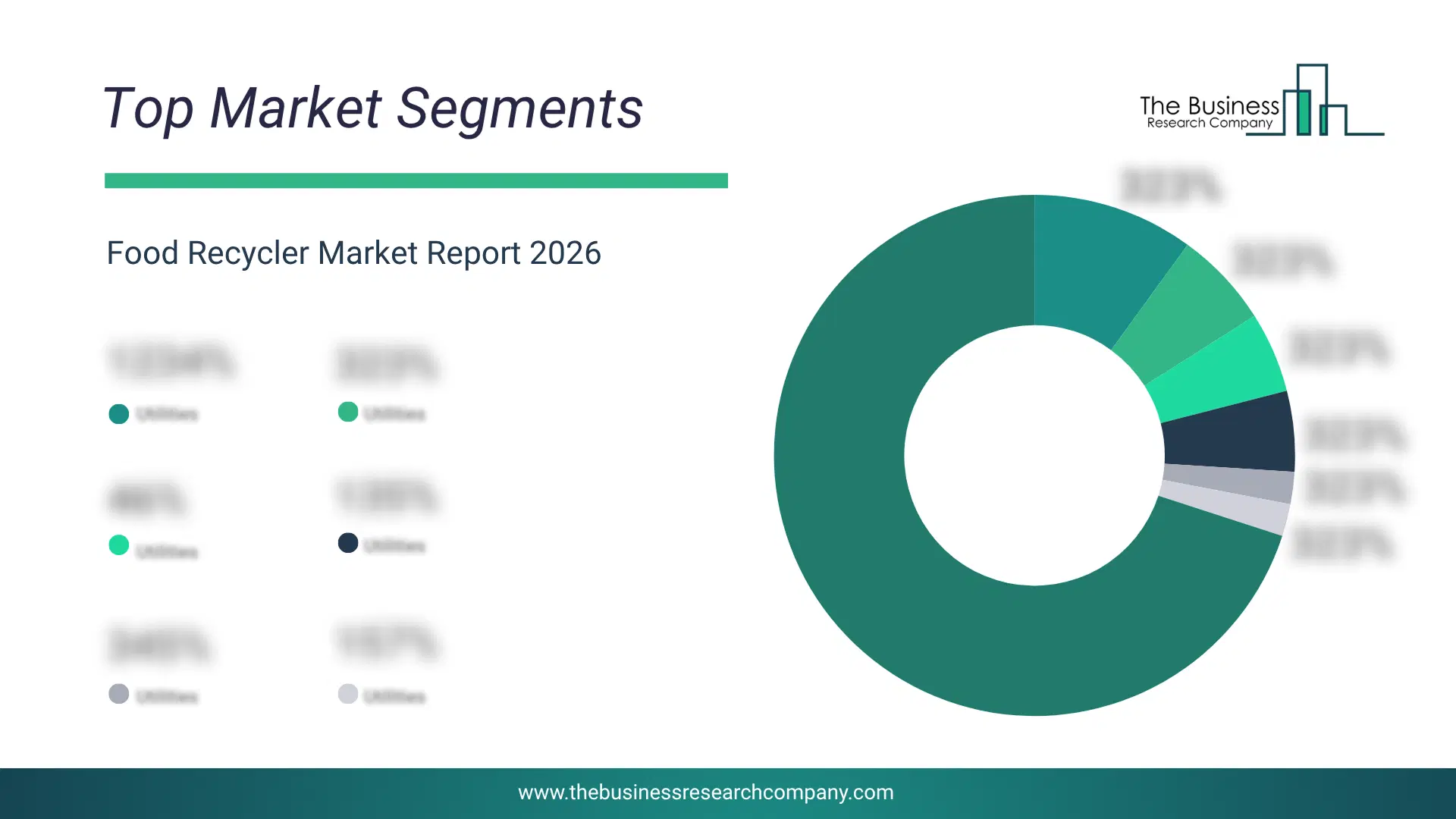
1) By Component: Product, Services 2) By Material Type: Steel, Stainless Steel, Carbon Steel, Plastic, Fiber, Other Material Types 3) By Price Range: Economic, Premium 4) By Distribution Channel: Original Equipment Manufacturer (OEM), Distributors, Retailers, E-commerce 5) By End User: Residential, Commercial Subsegments: 1) By Product: Electric Food Recyclers, Manual Food Recyclers, Composting Bins, Food Dehydrators 2) By Services: Installation Services, Maintenance And Repair Services, Waste Collection Services, Recycling And Composting Services, Consultation And Training ServicesWhat Is The Driver Of The Food Recycler Market?
The rising demand for natural and organic products is expected to propel the growth of the food recycler market going forward. Natural products contain ingredients derived from natural sources, while organic products are made from materials produced by organic agriculture and adhere to strict standards for organic production and certification. The demand for natural and organic products is due to sustainable and eco-friendly products, changing consumer preferences, and increased awareness of health and environmental issues. Food recyclers play a vital role in supporting the production and sustainability of organic products by recycling organic waste into valuable resources such as compost and renewable energy, fostering more environmentally friendly and efficient agricultural practices. For instance, in February 2025, according to the Organic Research Centre, a UK-based non-profit organization, in 2024, the global area under organic farming increased from 96.4 million hectares to 98.9 million hectares, marking a 2.6 % rise compared to 2022. Therefore, the rising demand for natural and organic products driving the food recycler industry.Key Players In The Global Food Recycler Market
Major companies operating in the food recycler market are Whirlpool Corporation, Vita-Mix Corporation, simplehuman, Joseph Ltd., Renovare Environmental Inc., MEIKO Maschinenbau GmbH & Co. KG, Ridan Composting Limited, The FoodCycler, Hungry Giant Recycling, Oklin International Ltd., Kollvik Recycling S.L., Bhor Engineering Pvt Ltd., Perfect Circle Recycling, Kompakt, Neterwala Group, BioHiTech Global Inc., Ecovim USA, Ecotone Renewables, Food Waste Experts, Smart Cara, GreenGood, SBT Japan Inc.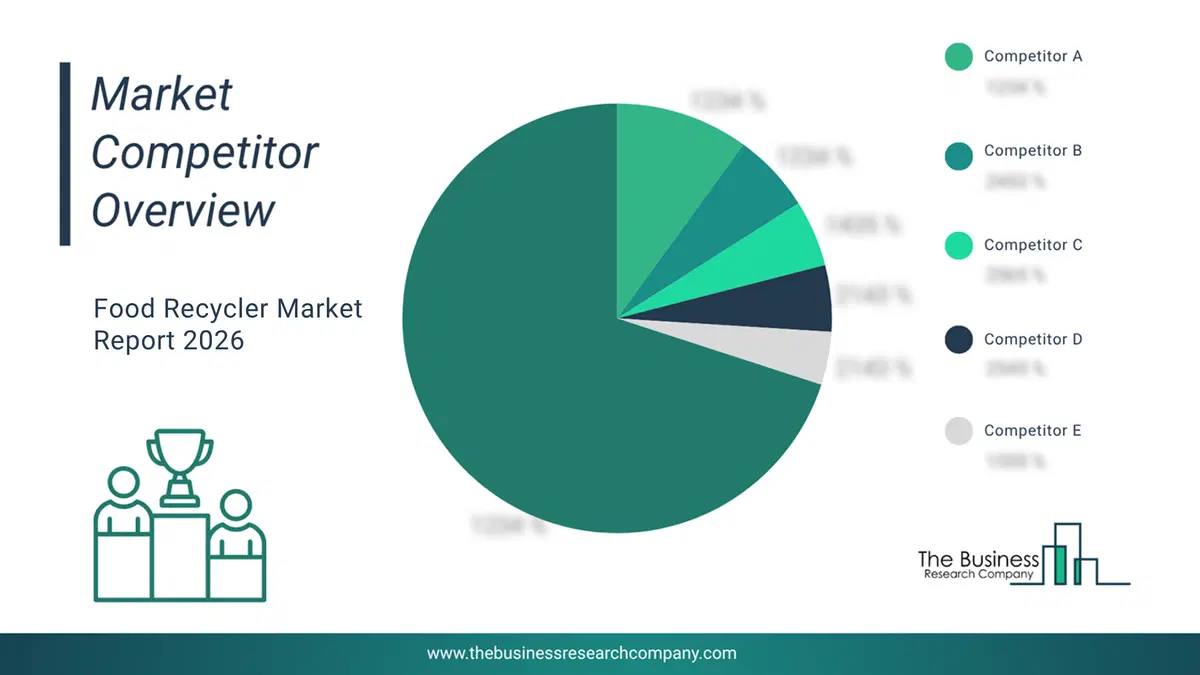
This chart is for illustrative purposes; the full report includes a detailed competitor analysis and comprehensive overview of the top 10 companies in the market.
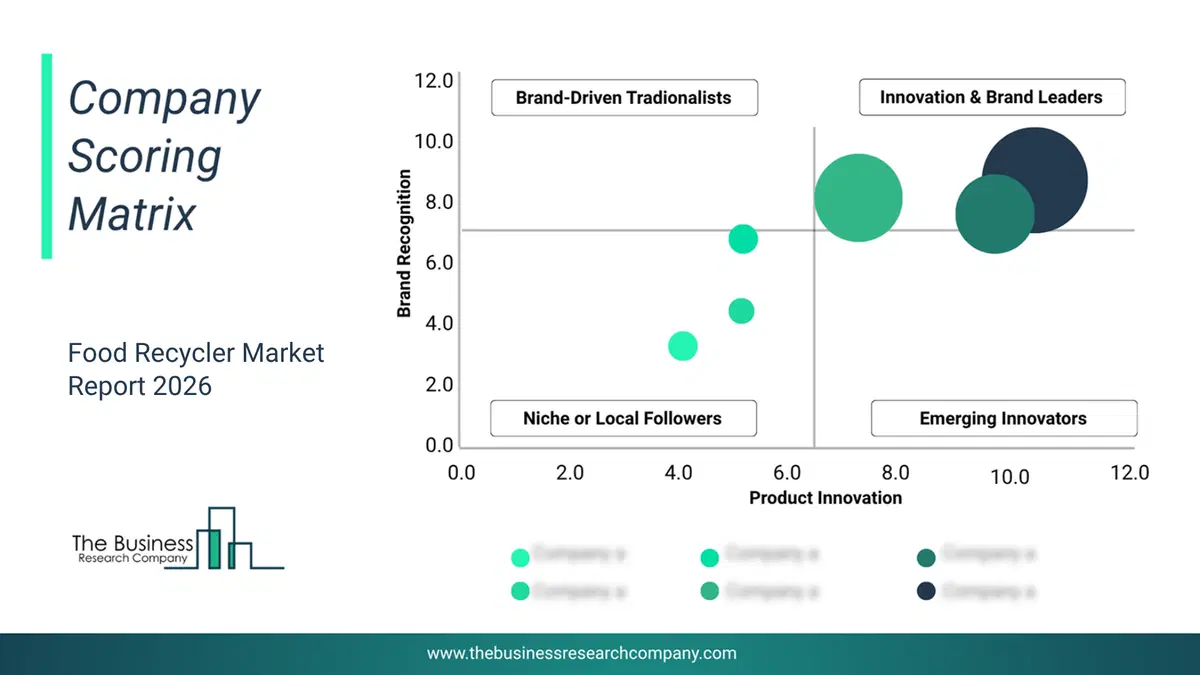
This chart maps companies by product innovation and brand strength, with bubble size indicating relative revenue, helping identify market leaders, challengers, and niche players. This is an illustrative chart; the full report provides a complete and accurate competitive analysis.
Global Food Recycler Market Trends and Insights
Major companies operating in the food recycler market are focusing on developing innovative products such as electric food recyclers to enhance waste management efficiency and promote sustainability. Electric food recyclers utilize electricity to break down food waste into compost or nutrient-rich soil, contributing to waste reduction and sustainability. These devices offer a convenient, eco-friendly solution for households and businesses looking to minimize their environmental footprint. For instance, in July 2024, Food Cycle Science Corporation, a Canada-based cleantech company, launched the FoodCycler Eco 3. This product features a compact design with a 3.5-liter capacity, ideal for households with limited counter space. Its VortechTM grinding technology processes tough scraps like bones and fibrous vegetables, operating quietly and odor-free. The appliance reduces waste by up to 90%, turning food scraps into nutrient-rich compost in just hours.What Are Latest Mergers And Acquisitions In The Food Recycler Market?
In July 2024, Denali Environmental Technologies, Inc., a US-based sustainability solutions company, partnered with Walmart Inc. to rollout innovative organic recycling and reuse technology across thousands of Walmart and Sam’s Club stores nationwide. With this partnership, Denali Environmental Technologies, Inc. and Walmart Inc. aim to enhance sustainability efforts, reduce food waste, and promote circular economy practices in retail operations. Walmart Inc. is a US-based multinational retail corporation that operates a chain of hypermarkets, discount department stores, and grocery stores.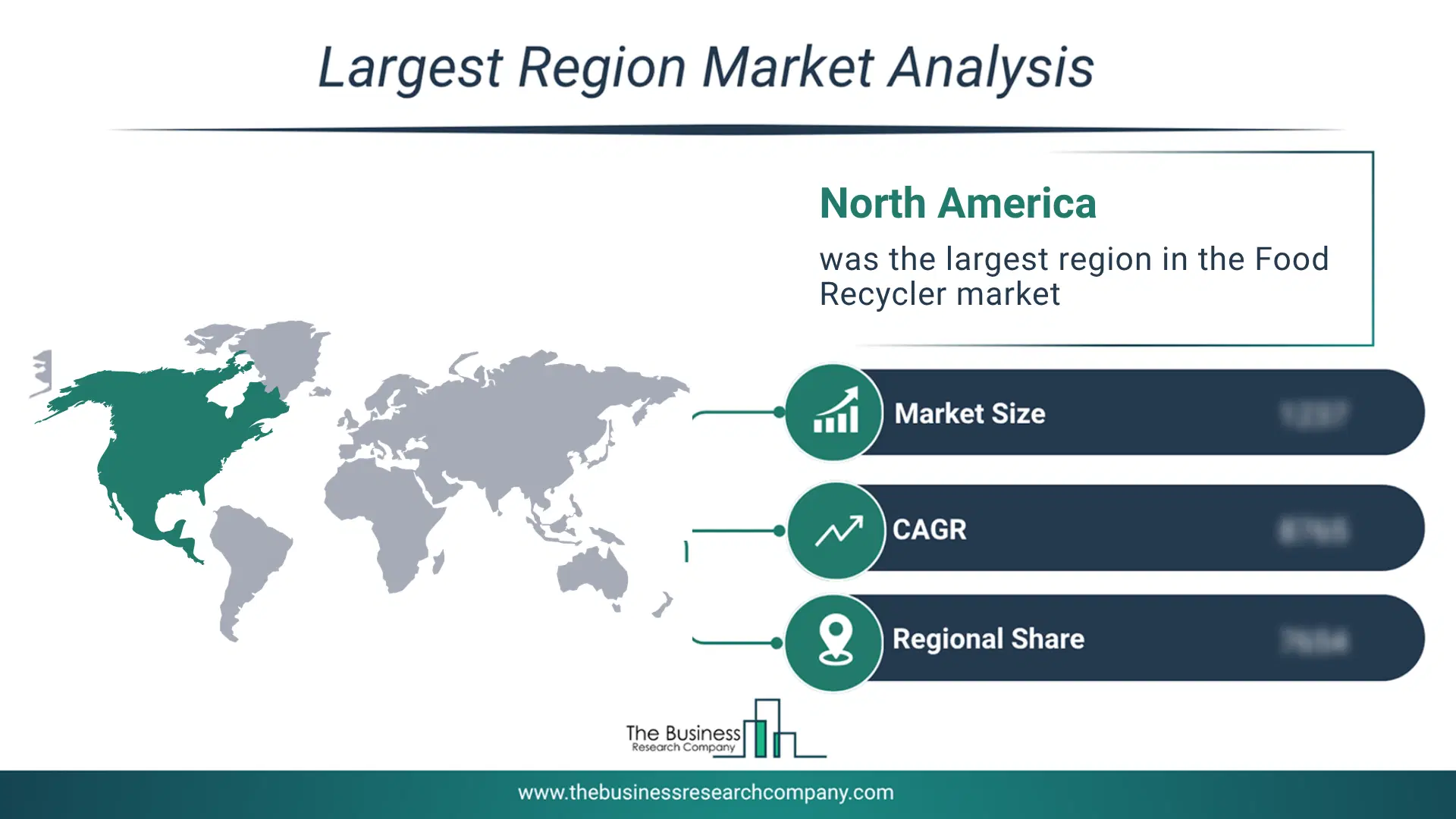
Regional Outlook
North America was the largest region in the food recycler market in 2025. Asia-Pacific is expected to be the fastest-growing region in the forecast period. The regions covered in this market report are Asia-Pacific, South East Asia, Western Europe, Eastern Europe, North America, South America, Middle East and Africa. The countries covered in this market report are Australia, Brazil, China, France, Germany, India, Indonesia, Japan, Taiwan, Russia, South Korea, UK, USA, Italy, Spain, CanadaWhat Defines the Food Recycler Market?
The food recycler market consists of the sale of composting bins, electric food recyclers, vermicomposters, anaerobic digesters, in-sink food waste disposers, bokashi systems, and fermentation-based recyclers. Values in this market are ‘factory gate’ values, that is the value of goods sold by the manufacturers or creators of the goods, whether to other entities (including downstream manufacturers, wholesalers, distributors, and retailers) or directly to end customers. The value of goods in this market includes related services sold by the creators of the goods.How is Market Value Defined and Measured?
The market value is defined as the revenues that enterprises gain from the sale of goods and/or services within the specified market and geography through sales, grants, or donations in terms of the currency (in USD unless otherwise specified). The revenues for a specified geography are consumption values that are revenues generated by organizations in the specified geography within the market, irrespective of where they are produced. It does not include revenues from resales along the supply chain, either further along the supply chain or as part of other products.
This chart presents market attractiveness based on a quantitative evaluation of growth, competition, strategic alignment, and risk, offering a clear view of opportunity areas for decision-making. This chart is for illustrative purposes; the full report contains the complete analysis.

This chart highlights the Total Addressable Market (TAM) by estimating the maximum revenue opportunity using an assumption-driven approach, supporting strategic planning and opportunity sizing across markets. The chart is illustrative; the full report provides a more comprehensive analysis.
What Key Data and Analysis Are Included in the Food Recycler Market Report 2026?
The food recycler market research report is one of a series of new reports from The Business Research Company that provides market statistics, including industry global market size, regional shares, competitors with the market share, detailed market segments, market trends and opportunities, and any further data you may need to thrive in the food recycler industry. The market research report delivers a complete perspective of everything you need, with an in-depth analysis of the current and future state of the industry.Food Recycler Market Report Forecast Analysis
| Report Attribute | Details |
|---|---|
| Market Size Value In 2026 | $40.2 billion |
| Revenue Forecast In 2030 | $51.9 billion |
| Growth Rate | CAGR of 7.1% from 2026 to 2030 |
| Base Year For Estimation | 2025 |
| Actual Estimates/Historical Data | 2020-2025 |
| Forecast Period | 2026 - 2030 |
| Market Representation | Revenue in USD Billion and CAGR from 2026 to 2030 |
| Segments Covered | Component, Material Type, Price Range, Distribution Channel, End User |
| Regional Scope | Asia-Pacific, Western Europe, Eastern Europe, North America, South America, Middle East, Africa |
| Country Scope | The countries covered in the report are Australia, Brazil, China, France, Germany, India, Indonesia, Japan, Taiwan, Russia, South Korea, UK, USA, Canada, Italy, Spain. |
| Key Companies Profiled | Whirlpool Corporation, Vita-Mix Corporation, simplehuman, Joseph Ltd., Renovare Environmental Inc., MEIKO Maschinenbau GmbH & Co. KG, Ridan Composting Limited, The FoodCycler, Hungry Giant Recycling, Oklin International Ltd., Kollvik Recycling S.L., Bhor Engineering Pvt Ltd., Perfect Circle Recycling, Kompakt, Neterwala Group, BioHiTech Global Inc., Ecovim USA, Ecotone Renewables, Food Waste Experts, Smart Cara, GreenGood, SBT Japan Inc. |
| Customization Scope | Request for Customization |
| Pricing And Purchase Options | Explore Purchase Options |