
Food Service Market Report 2026
Global Outlook – By Type (Full Service Restaurants, Quick Service Restaurants, Institutes, Other Types), By Systems (Conventional Foodservice System, Centralized Foodservice System, Ready Prepared Foodservice System, Assembly-Serve Foodservice System), By Sector (Commercial, Non-Commercial) – Market Size, Trends, Strategies, and Forecast to 2030
Food Service Market Overview
• Food Service market size has reached to $2859.78 billion in 2025 • Expected to grow to $4700.55 billion in 2030 at a compound annual growth rate (CAGR) of 10.4% • Growth Driver: Rising Demand For Convenience Foods In Food Service • Market Trend: Food Service Giants Leverage AI For Personalized Meal Planning And Recipe Solutions • Asia-Pacific was the largest region and fastest growing region.Market Gains By 2030 – Top Opportunities By Segment
Market Gain identifies the most promising market opportunities by highlighting the segments or products expected to generate the highest incremental revenue growth over the next five years.
What Is Covered Under Food Service Market?
Food service refers to the industry, business, or activity involved in preparing, distributing, and serving food and beverages to customers. It involves various aspects, including menu planning, food preparation, cooking, serving, and ensuring food safety and hygiene. The goal is to meet customers' dietary needs and preferences while providing a pleasant dining experience. The main types of food service are full-service restaurants, quick-service restaurants, institutes, and others. Full-service restaurants are a type of restaurants that provide a complete dining experience with table service, where customers are seated and served by waitstaff. The various types of systems such as conventional food service systems, centralized food service systems, ready-prepared food service systems, and assembly-serve food service systems. These are used sectors such as commercial, and non-commercial.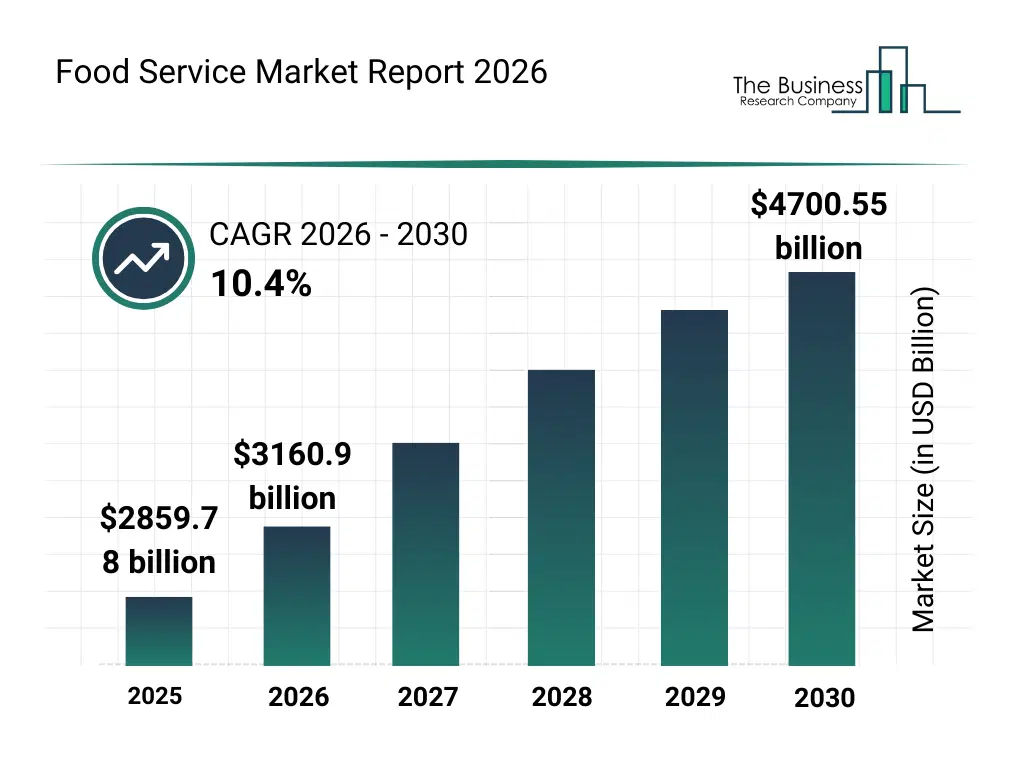
What Is The Food Service Market Size and Share 2026?
The food service market size has grown rapidly in recent years. It will grow from $2859.78 billion in 2025 to $3160.9 billion in 2026 at a compound annual growth rate (CAGR) of 10.5%. The growth in the historic period can be attributed to urbanization and lifestyle changes, growth of dining out culture, expansion of restaurant chains, rising disposable income, globalization of cuisines.What Is The Food Service Market Growth Forecast?
The food service market size is expected to see rapid growth in the next few years. It will grow to $4700.55 billion in 2030 at a compound annual growth rate (CAGR) of 10.4%. The growth in the forecast period can be attributed to continued growth of food delivery platforms, increasing health conscious consumers, adoption of digital ordering systems, demand for sustainable sourcing, expansion of organized foodservice. Major trends in the forecast period include growth of online food ordering platforms, rising demand for sustainable food practices, expansion of cloud and ghost kitchens, increasing focus on food safety and hygiene, personalization of menus and dining experiences.
Global Food Service Market Segmentation
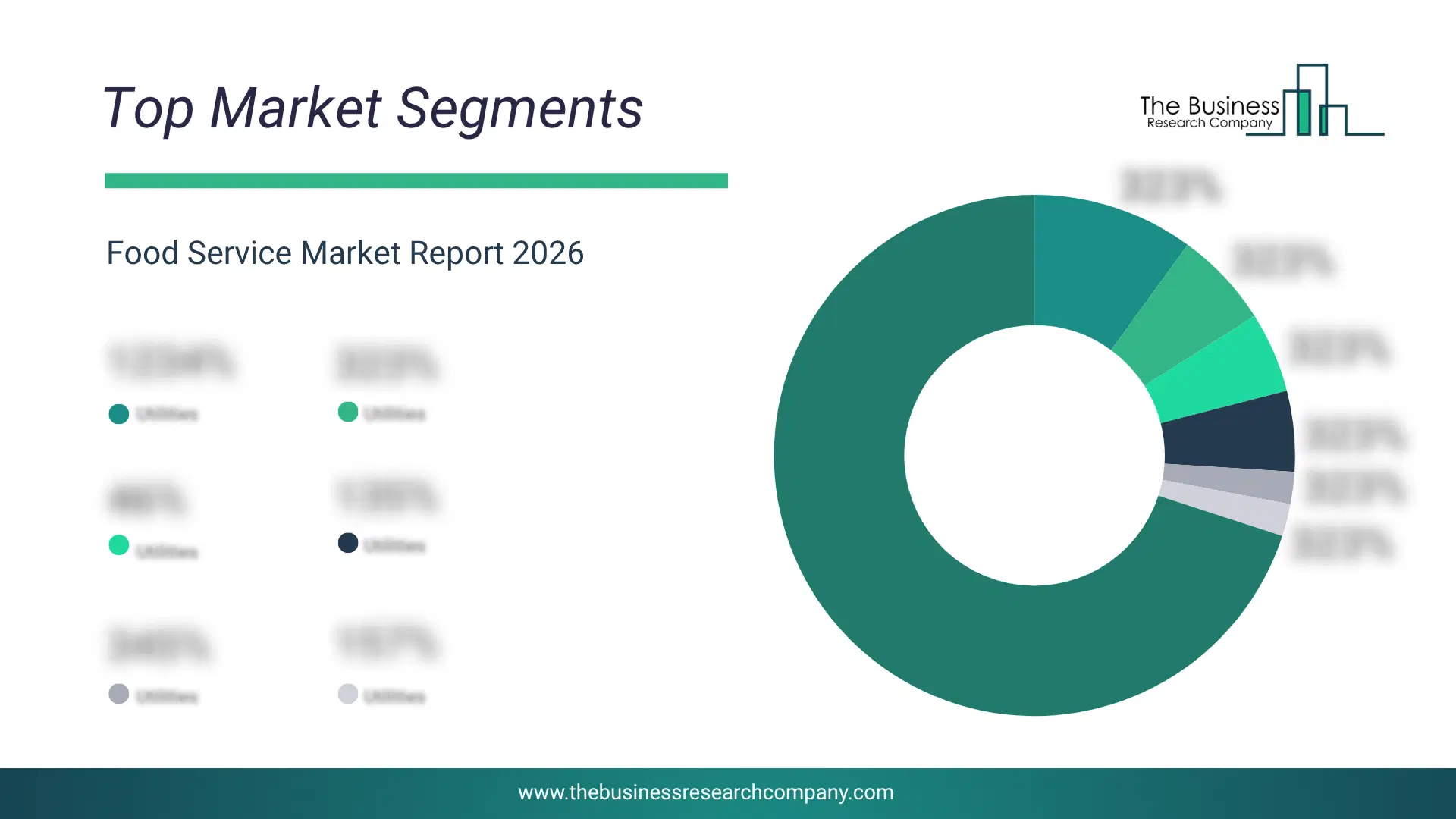
1) By Type: Full Service Restaurants, Quick Service Restaurants, Institutes, Other Types 2) By Systems: Conventional Foodservice System, Centralized Foodservice System, Ready Prepared Foodservice System, Assembly-Serve Foodservice System 3) By Sector: Commercial, Non-Commercial Subsegments: 1) By Full Service Restaurants (FSR): Fine Dining Restaurants, Casual Dining Restaurants, Family Dining Restaurants, Theme-Based Restaurants, Ethnic / Specialty Cuisine Restaurants, Luxury & Premium Restaurants, Hotel-Based Restaurants, Bistro & Brasserie-Style Restaurants 2) By Quick Service Restaurants (QSR): Fast Food Chains, Fast Casual Restaurants, Cafés & Coffee Shops, Bakery-Cafés, Food Courts, Drive-Through Restaurants, Takeaway / Take-out Outlets, Kiosks & Food Stalls 3) By Institutes: Educational Institutions: Corporate Offices & Business Parks, Hospitals & Healthcare Facilities, Military & Defense Establishments, Government Institutions, Correctional Facilities, Elderly Care & Assisted Living Facilities, Research & Training Institutes 4) By Other Types: Catering Services, Cloud Kitchens, Food Trucks & Mobile Food Units, Vending Machine Food Services, Event & Outdoor Food Services, Airline, Railway & Cruise Food Services, Leisure & Entertainment Venues The top segments in the food supply for restaurants market will be: • Quick Service Restaurants (QSRs) will reach $343.35 Billion by 2030. • Small And Mid-Size Restaurants will reach $228.93 Billion by 2030. • Large Hotels And Restaurants will reach $126.01 Billion by 2030. The top segments in the food service market will be: • Quick Service Restaurants will reach $1934.78 Billion by 2030. • Full Service Restaurants will reach $1672.52 Billion by 2030. • Institutes will reach $663.07 Billion by 2030. • Other Types will reach $406.58 Billion by 2030.What Is The Driver Of The Food Service Market?
The increasing demand for convenience foods is expected to propel the growth of the food service market going forward. Convenience foods are pre-packaged or pre-prepared foods designed for quick and easy consumption with minimal preparation time, which are typically ready-to-eat or require simple steps such as heating or mixing, catering to busy lifestyles. The growing demand for convenience foods is due to busy lifestyles, lack of time for cooking, and the desire for quick, easy meal solutions. Food services offer quick, ready-to-eat meal options that cater to busy lifestyles through efficient takeout and delivery services, making accessing high-quality meals effortless and time-saving. For instance, in August 2024, according to the U.S. Department of Agriculture (USDA), Economic Research Service (ERS), a U.S.-based government economic analysis source, in 2023, U.S. consumer spending on food away from home increased by 12.0%, rising from $4,004 per person in 2022 to $4,485 per person, reflecting stronger demand for convenience and prepared food options. Therefore, the increasing demand for convenience foods drives the food service industry.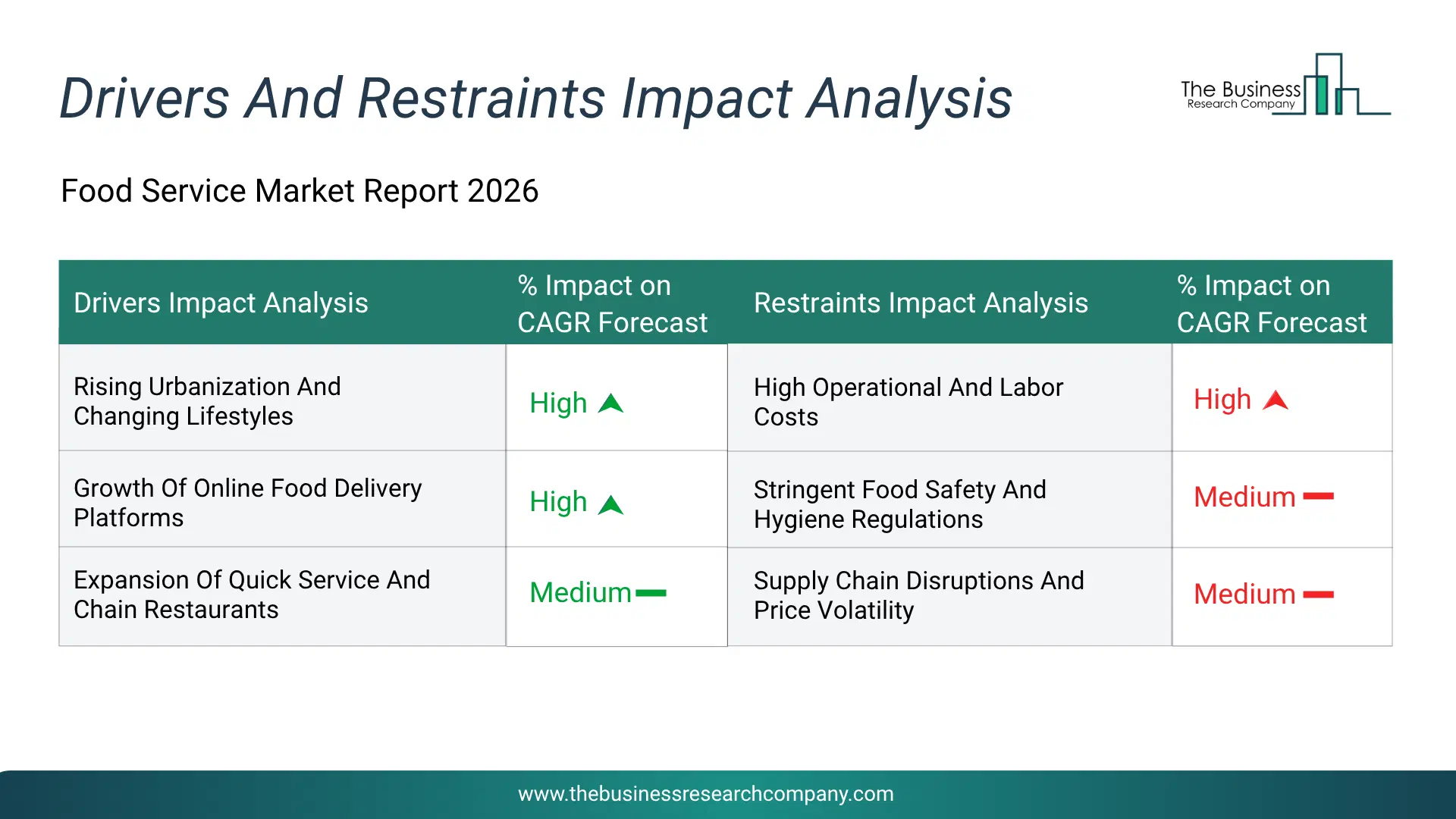
Infographic Chart Showing Key Market Drivers Analysis And Restraints For Food Service Market
The chart presents an impact analysis of key drivers and restraints, quantifying their relative influence on the market's growth rate and helping assess the balance between growth enablers and limiting factors. This chart offers a high-level perspective; the full report contains more detailed insights.
How Will The Drivers Impact Growth In The Global Food Service Market?
• Rising Urbanization And Changing Lifestyles (High) – During the forecast period, the rising urbanization and changing lifestyles are expected to become key growth drivers for the food service market by 2030. Expanding urban populations and increasingly busy schedules are encouraging consumers to seek convenient dining solutions that fit modern lifestyles. Higher workforce participation, changing family structures, and growing preference for ready-to-eat meals are accelerating demand across food service establishments. Food service providers are therefore expanding service offerings and optimizing customer accessibility to meet evolving consumption habits. This shift toward convenience-oriented dining patterns is reinforcing steady market expansion. • Growth Of Online Food Delivery Platforms (High) – During the forecast period, the growth of online food delivery platforms is expected to emerge as a major factor driving the expansion of the food service market by 2030. The increasing penetration of smartphone applications and digital ordering ecosystems is transforming how consumers access food services. Delivery aggregators and restaurant-operated digital channels are improving ordering convenience, expanding geographic reach, and strengthening customer engagement. Technology-enabled delivery capabilities are also helping food service operators enhance operational flexibility and improve service responsiveness. • Expansion Of Quick Service And Chain Restaurants (Medium) – During the forecast period, the expansion of quick service and chain restaurants is expected to act as a key growth catalyst for the food service market by 2030. The growing presence of standardized restaurant networks is improving food accessibility and supporting consistent consumer experiences across locations. Chain operators are expanding aggressively through franchise development models and strategic outlet additions to capture rising demand. Menu diversification, operational scalability, and enhanced service speed are further strengthening market growth opportunities. As restaurant networks continue expanding globally, food service participation and transaction volumes are expected to rise.How Will The Restraints Impact Growth In The Global Food Service Market?
• High Operational And Labor Costs (High) – During the forecast period, the high operational and labor costs significantly restrain the food service market by compressing profit margins and limiting scalability. Restaurants and food service providers must bear continuous expenses such as wages, rent, utilities, raw materials, and equipment maintenance. Rising minimum wages and employee benefit requirements further increase financial pressure, especially for small and mid-sized operators. Labor-intensive processes like food preparation, service, and cleaning require a consistent workforce, making it difficult to reduce staffing costs without compromising service quality. Additionally, high employee turnover in the industry leads to recurring recruitment and training expenses. Inflation in energy and ingredient costs also raises the overall cost structure, forcing businesses to either increase menu prices or absorb losses. Price increases, however, can reduce customer demand in highly competitive markets. As a result, many operators struggle to maintain profitability while delivering consistent quality. Expansion plans, including opening new outlets or upgrading infrastructure, are often delayed due to budget constraints. High costs also discourage innovation and investment in new service models. Overall, elevated operational and labor expenses limit growth potential and create financial instability across the food service sector. • Stringent Food Safety And Hygiene Regulations (High) – During the forecast period, the stringent food safety and hygiene regulations act as a restraint by increasing compliance complexity and operational burden for food service providers. Businesses must adhere to strict guidelines related to food handling, storage, preparation, and sanitation to ensure consumer safety. Compliance often requires investments in specialized equipment, staff training, and regular inspections, which add to operational costs. Failure to meet regulatory standards can result in penalties, legal actions, or temporary closures, posing significant risks to business continuity. Maintaining consistent compliance across multiple locations further complicates operations for large chains. Regulatory requirements may also vary across regions, making expansion into new markets more challenging. Frequent updates to food safety laws require businesses to continuously adapt their processes and systems. Documentation and record-keeping add administrative workload, diverting focus from core business activities. Smaller operators with limited resources often find it difficult to meet all compliance requirements. These regulatory pressures can slow down new business entry and limit innovation in menu offerings. Consequently, strict food safety and hygiene norms create barriers to growth and increase the cost of doing business in the food service market. • Supply Chain Disruptions And Price Volatility (Medium) – During the forecast period, the supply chain disruptions and price volatility pose a major restraint by affecting the availability, consistency, and cost of raw materials. Food service providers rely heavily on a steady supply of fresh ingredients, and any disruption—caused by factors such as transportation delays, climate conditions, or geopolitical issues—can impact operations. Inconsistent supply can lead to menu changes, reduced service quality, or temporary unavailability of certain dishes. Price volatility in key ingredients such as vegetables, meat, and grains makes cost planning difficult and reduces margin predictability. Sudden price spikes force businesses to either increase menu prices or absorb higher costs, both of which can negatively impact profitability. Dependence on multiple suppliers adds complexity and increases the risk of logistical inefficiencies. Perishable goods further intensify the challenge, as delays can lead to wastage and financial losses. Global supply chain uncertainties also affect imported ingredients and specialty items. Smaller businesses are particularly vulnerable due to limited bargaining power and lack of alternative sourcing options. Frequent disruptions hinder long-term planning and operational stability. Overall, supply chain instability and fluctuating input costs create uncertainty and limit sustainable growth in the food service market.Key Players In The Global Food Service Market
Major companies operating in the food service market are Sysco Corporation, Compass Group, McDonalds Corporation, Sodexo SA, Marriott International, Dominos Pizza Inc., Aramark Corporation, Darden Restaurants Inc., Chipotle Mexican Grill Inc., Tim Hortons Inc, Yum Brands Inc., KFC Corporation, Restaurant Brands International Inc., Elior Group, Jollibee Foods Corporation, Papa Johns International Inc., Wendys Company, Whitbread PLC, Supermacs Holdings Ltd., Dunkin Brands Group Inc.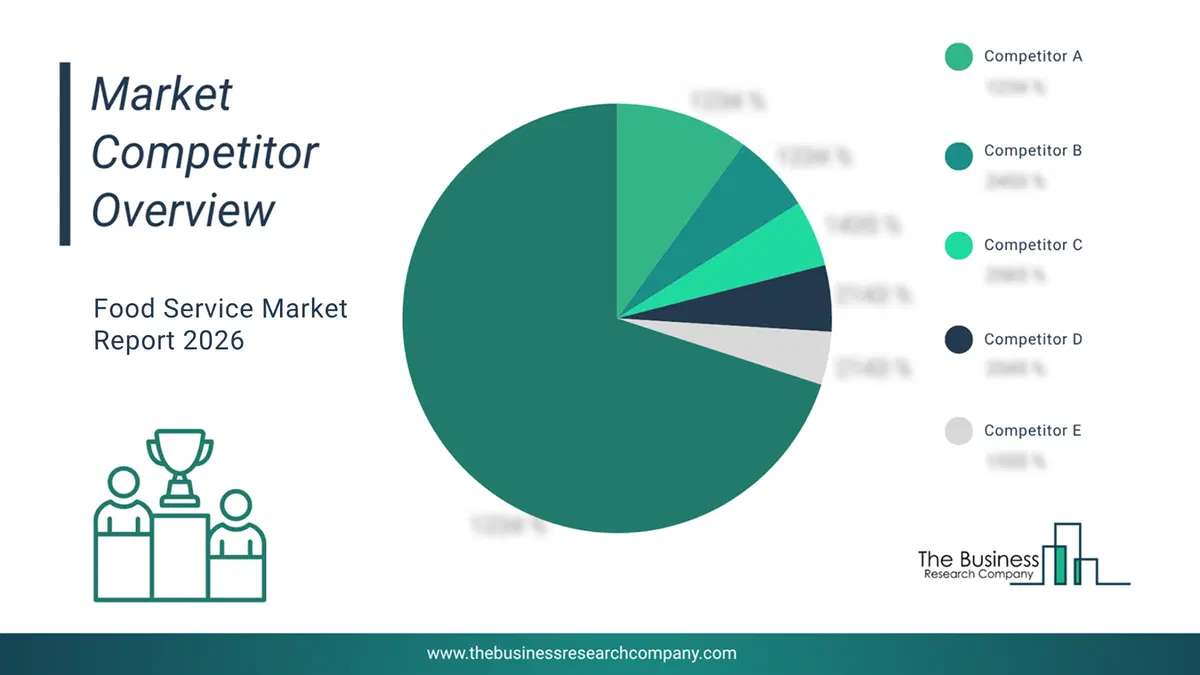
This chart is for illustrative purposes; the full report includes a detailed competitor analysis and comprehensive overview of the top 10 companies in the market.
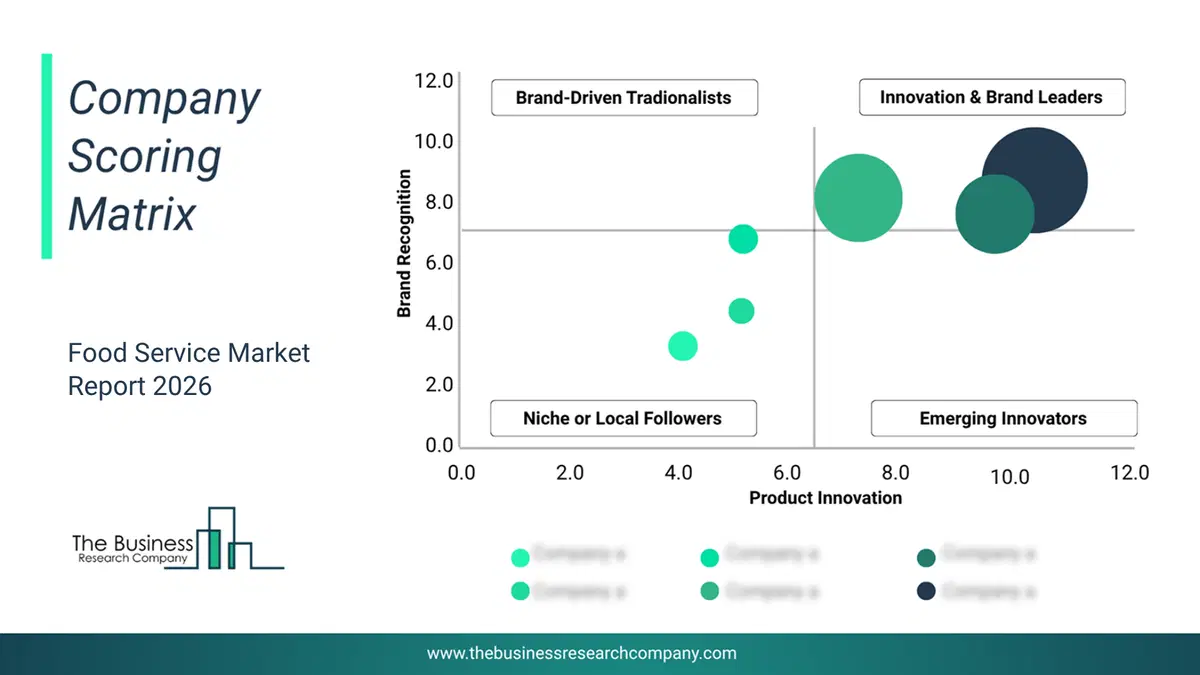
This chart maps companies by product innovation and brand strength, with bubble size indicating relative revenue, helping identify market leaders, challengers, and niche players. This is an illustrative chart; the full report provides a complete and accurate competitive analysis.
Global Food Service Market Trends and Insights
Major companies operating in the food service market are developing advanced solutions such as AI-powered, personalized food and recipe solutions to individual preferences and dietary needs and streamlining meal planning and preparation processes. AI-powered, personalized food and recipe solutions aim to make meal planning, cooking, and eating healthier and more enjoyable by leveraging technology to cater to individual needs and preferences. For instance, in August 2023, Samsung Electronics, a South Korea-based electronics company, launched a new AI-powered, personalized food service and recipe platform. It uses advanced Food AI to suggest meals based on user preferences and food seasonality. It offers over 160,000 recipes, acting as a personalized assistant to help users discover new dishes, create tailored meal plans, and order ingredients online. The app can personalize recipes to match users' dietary requirements, nutritional goals, and available ingredients.What Are Latest Mergers And Acquisitions In The Food Service Market?
In May 2024, Restaurant Brands International Inc., a UK-based multinational fast food holding company acquired Carrols Restaurant Group for $1.0 billion. This acquisition aligns with RBI's Reclaim the Flame plan, which includes a $500 million investment to revamp over 600 Carrols restaurants before refranchising them within seven years. Through this acquisition, Restaurant Brands International Inc. aims to enhance its market position in the fast-food sector by integrating the largest Burger King franchisee in the U.S. into its operations. Carrols Restaurant Group is a US-based company that operates as a franchisee of Burger King and is involved in the quick-service restaurant industry.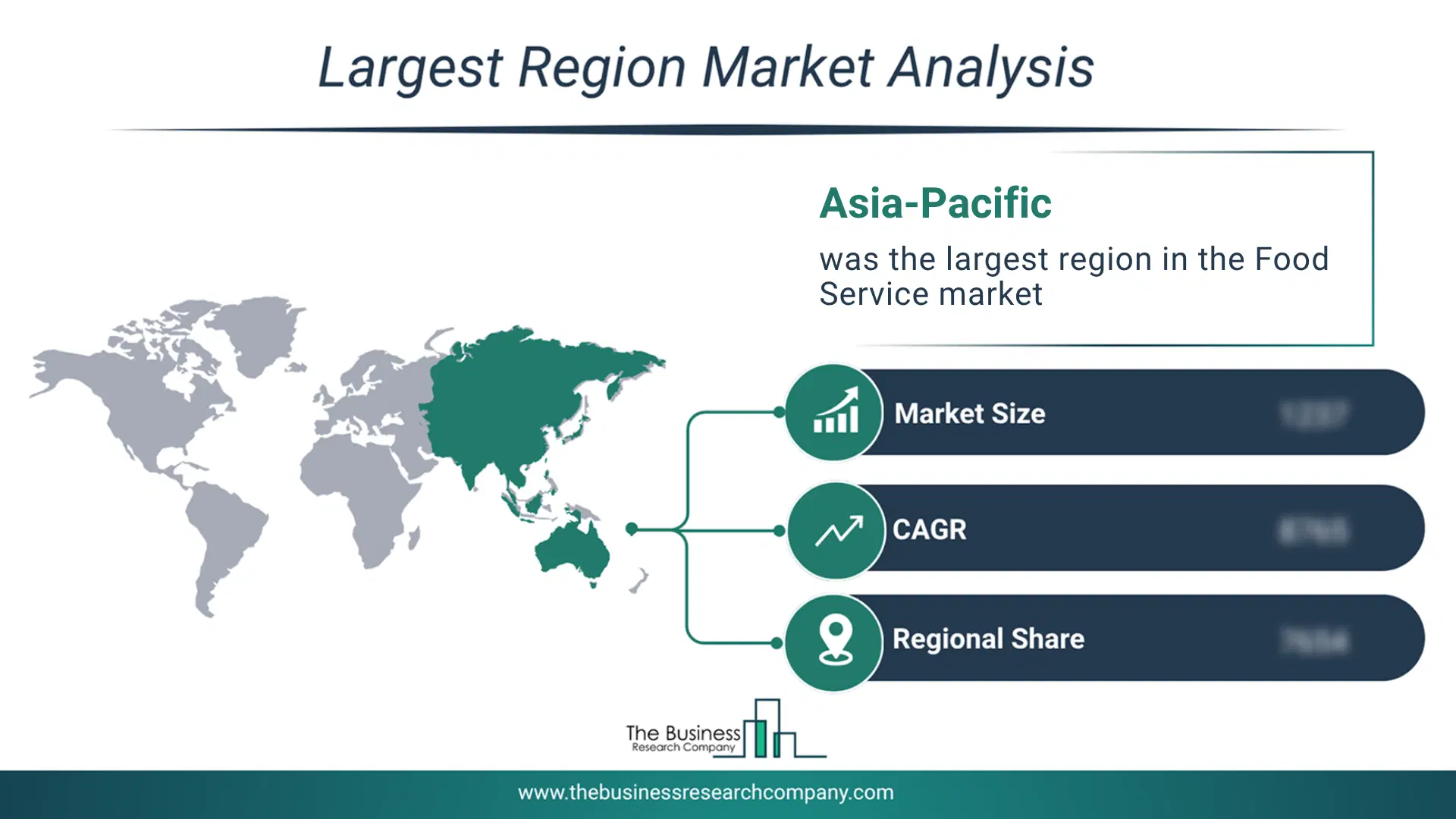
Regional Outlook
Asia-Pacific was the largest region in the food service market in 2025. Asia-Pacific is expected to be the fastest-growing region in the forecast period. The regions covered in this market report are Asia-Pacific, South East Asia, Western Europe, Eastern Europe, North America, South America, Middle East, Africa. The countries covered in this market report are Australia, Brazil, China, France, Germany, India, Indonesia, Japan, Taiwan, Russia, South Korea, UK, USA, Canada, Italy, SpainWhat Defines the Food Service Market?
The food service market includes revenues earned by entities by dine-in service, delivery service, drive-thru service, buffet service, and mobile food service. The market value includes the value of related goods sold by the service provider or included within the service offering. Only goods and services traded between entities or sold to end consumers are included.How is Market Value Defined and Measured?
The market value is defined as the revenues that enterprises gain from the sale of goods and/or services within the specified market and geography through sales, grants, or donations in terms of the currency (in USD unless otherwise specified). The revenues for a specified geography are consumption values that are revenues generated by organizations in the specified geography within the market, irrespective of where they are produced. It does not include revenues from resales along the supply chain, either further along the supply chain or as part of other products.
This chart presents market attractiveness based on a quantitative evaluation of growth, competition, strategic alignment, and risk, offering a clear view of opportunity areas for decision-making. This chart is for illustrative purposes; the full report contains the complete analysis.

This chart highlights the Total Addressable Market (TAM) by estimating the maximum revenue opportunity using an assumption-driven approach, supporting strategic planning and opportunity sizing across markets. The chart is illustrative; the full report provides a more comprehensive analysis.
What Key Data and Analysis Are Included in the Food Service Market Report 2026?
The food service market research report is one of a series of new reports from The Business Research Company that provides market statistics, including industry global market size, regional shares, competitors with the market share, detailed market segments, market trends and opportunities, and any further data you may need to thrive in the food service industry. The market research report delivers a complete perspective of everything you need, with an in-depth analysis of the current and future state of the industry.Food Service Market Report Forecast Analysis
| Report Attribute | Details |
|---|---|
| Market Size Value In 2026 | $3160.9 billion |
| Revenue Forecast In 2030 | $4700.55 billion |
| Growth Rate | CAGR of 10.4% from 2026 to 2030 |
| Base Year For Estimation | 2025 |
| Actual Estimates/Historical Data | 2020-2025 |
| Forecast Period | 2026 - 2030 |
| Market Representation | Revenue in USD Billion and CAGR from 2026 to 2030 |
| Segments Covered | Type, Systems, Sector |
| Regional Scope | Asia-Pacific, Western Europe, Eastern Europe, North America, South America, Middle East, Africa |
| Country Scope | The countries covered in the report are Australia, Brazil, China, France, Germany, India, Indonesia, Japan, Taiwan, Russia, South Korea, UK, USA, Canada, Italy, Spain. |
| Key Companies Profiled | Sysco Corporation, Compass Group, McDonalds Corporation, Sodexo SA, Marriott International, Dominos Pizza Inc., Aramark Corporation, Darden Restaurants Inc., Chipotle Mexican Grill Inc., Tim Hortons Inc, Yum Brands Inc., KFC Corporation, Restaurant Brands International Inc., Elior Group, Jollibee Foods Corporation, Papa Johns International Inc., Wendys Company, Whitbread PLC, Supermacs Holdings Ltd., Dunkin Brands Group Inc. |
| Customization Scope | Request for Customization |
| Pricing And Purchase Options | Explore Purchase Options |