
Food Supply For Restaurants Market Report 2026
Global Outlook – By Restaurant Type (Quick Service Restaurants (QSRs), Small And Mid-Size Restaurants, Large Hotels And Restaurants), By Order Type (Bulk, Small To Moderate), By Application (Bakery Items, Dairy Items, Meat, Poultry, And Seafood, Grains And Flours, Oils, Sauces, Dressings, And Condiments, Canned, Ready To Cook And Packaged Food, Fresh And Frozen Vegetables And Fruits, Other Applications) – Market Size, Trends, Strategies, and Forecast to 2030
Food Supply For Restaurants Market Overview
• Food Supply For Restaurants market size has reached to $540.64 billion in 2025 • Expected to grow to $712.67 billion in 2030 at a compound annual growth rate (CAGR) of 5.7% • Growth Driver: Tourism Industry Propel Growth Of The Food Supply For The Restaurant Market • Market Trend: Revolutionizing Restaurant Procurement With Smart Supply Solutions • North America was the largest region in 2025 and Asia-Pacific is the fastest growing region.Market Gains By 2030 – Top Opportunities By Segment
Market Gain identifies the most promising market opportunities by highlighting the segments or products expected to generate the highest incremental revenue growth over the next five years.
What Is Covered Under Food Supply For Restaurants Market?
Food supply for restaurants refers to the process of sourcing, purchasing, and delivering ingredients and products necessary for meal preparation and service. It involves coordinating with various suppliers to ensure the consistent availability of fresh and quality food items. Effective food supply management is crucial for maintaining menu standards and customer satisfaction in the restaurant industry. The main types of food supply for restaurants are quick service restaurants (QSRs), small and mid-size restaurants, and large hotels and restaurants. Quick-service restaurants (QSRs) refer to fast-food establishments that offer limited menus, fast service, and convenient dining options. The order types are bulk and small to moderate, catering to various applications such as bakery items, dairy items, meat, poultry, and seafood, grains and flours, oils, sauces, dressings, and condiments, canned, ready-to-cook and packaged food, fresh and frozen vegetables and fruits, and others.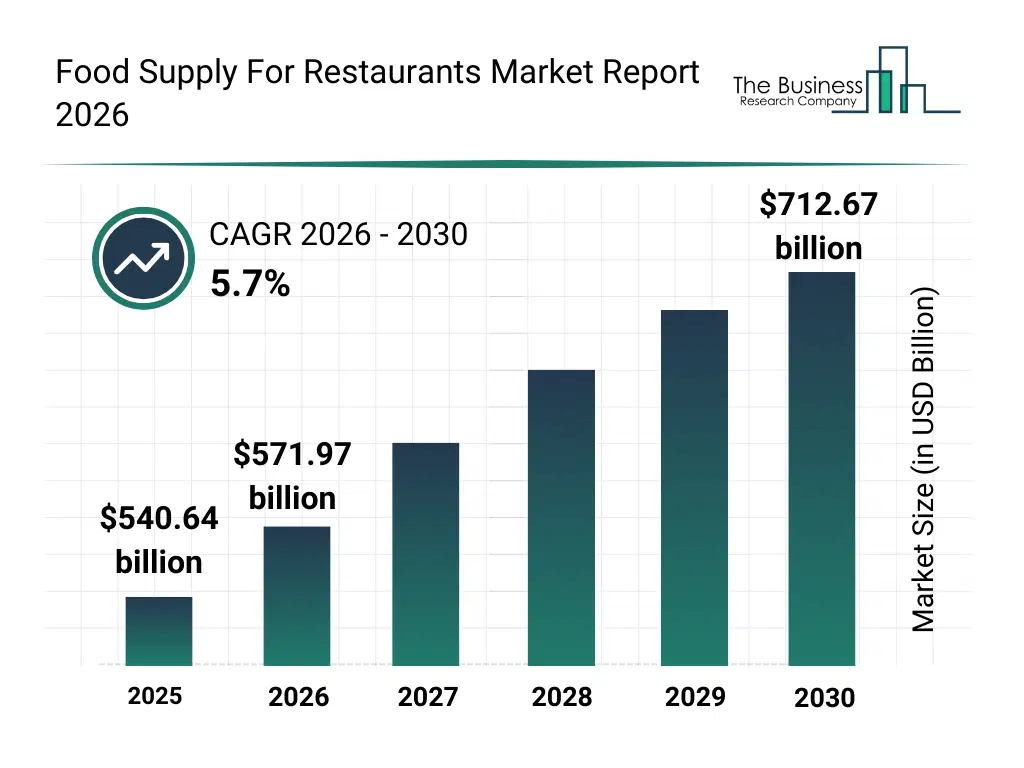
What Is The Food Supply For Restaurants Market Size and Share 2026?
The food supply for restaurants market size has grown strongly in recent years. It will grow from $540.64 billion in 2025 to $571.97 billion in 2026 at a compound annual growth rate (CAGR) of 5.8%. The growth in the historic period can be attributed to growth of restaurant industry, dependence on food distributors, expansion of qsr chains, demand for consistent food quality, development of food logistics.What Is The Food Supply For Restaurants Market Growth Forecast?
The food supply for restaurants market size is expected to see strong growth in the next few years. It will grow to $712.67 billion in 2030 at a compound annual growth rate (CAGR) of 5.7%. The growth in the forecast period can be attributed to growth of cloud kitchens, increasing demand for reliable suppliers, adoption of inventory management software, focus on food safety compliance, expansion of multi outlet restaurant chains. Major trends in the forecast period include increasing demand for fresh and traceable ingredients, growth of centralized food distribution networks, rising adoption of cold chain logistics, expansion of bulk food procurement, digitalization of restaurant supply chains.
Global Food Supply For Restaurants Market Segmentation
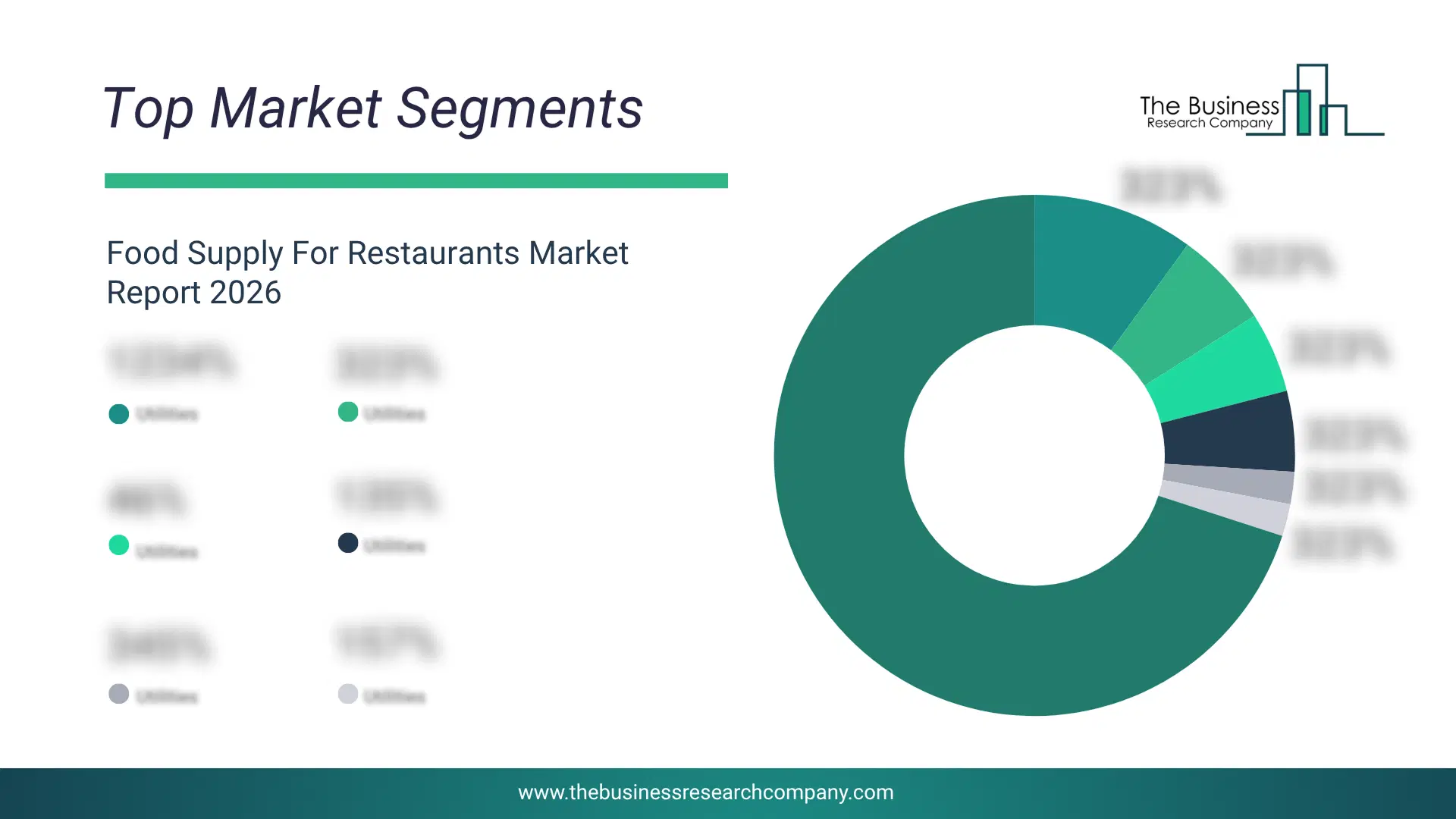
1) By Restaurant Type: Quick Service Restaurants (QSRs), Small And Mid-Size Restaurants, Large Hotels And Restaurants 2) By Order Type: Bulk, Small To Moderate 3) By Application: Bakery Items, Dairy Items, Meat, Poultry, And Seafood, Grains And Flours, Oils, Sauces, Dressings, And Condiments, Canned, Ready To Cook And Packaged Food, Fresh And Frozen Vegetables And Fruits, Other Applications Subsegments: 1) By Quick Service Restaurants (Qsrs): Fast Food Chains, Fast Casual Restaurants, Takeaway And Delivery Services, Drive-Thru Qsrs, Coffee Shops And Cafés 2) By Small And Mid-size Restaurants: Independent Restaurants, Family-Owned Restaurants, Casual Dining Restaurants, Fine Dining Restaurants, Ethnic Cuisine Restaurants, Bistro And Brasserie-Style Restaurants 3) By Large Hotels And Restaurants: Hotel Restaurants (In-House Dining), Banquet And Conference Catering Services, Luxury Hotel Restaurants, Buffet-Style Hotel Restaurants, Large Hotel Chains With Multiple Dining Outlets The top segments in the food supply for restaurants market will be: • Quick Service Restaurants (QSRs) will reach $343.35 Billion by 2030. • Small And Mid-Size Restaurants will reach $228.93 Billion by 2030. • Large Hotels And Restaurants will reach $126.01 Billion by 2030.What Is The Driver Of The Food Supply For Restaurants Market?
The growth of the tourism industry is expected to propel the growth of the food supply for restaurants market going forward. The rise in the tourism sector is driven by increased consumer confidence, improved travel accessibility, and the easing of pandemic-related restrictions. The tourism industry boosts food supply for restaurants by increasing demand for diverse and high-quality food options, driven by higher customer volumes and diverse culinary preferences. For instance, in May 2023, according to UN Tourism, a Spain-based specialized agency of the United Nations that promotes responsible, sustainable, and universally accessible tourism, in the first quarter of 2023, international arrivals hit 80% of pre-pandemic levels. Approximately 235 million tourists traveled internationally during the initial three months of the year, more than double the number from the same period in 2022. Therefore, the growth of the tourism industry is driving the growth of the food supply for restaurants industry.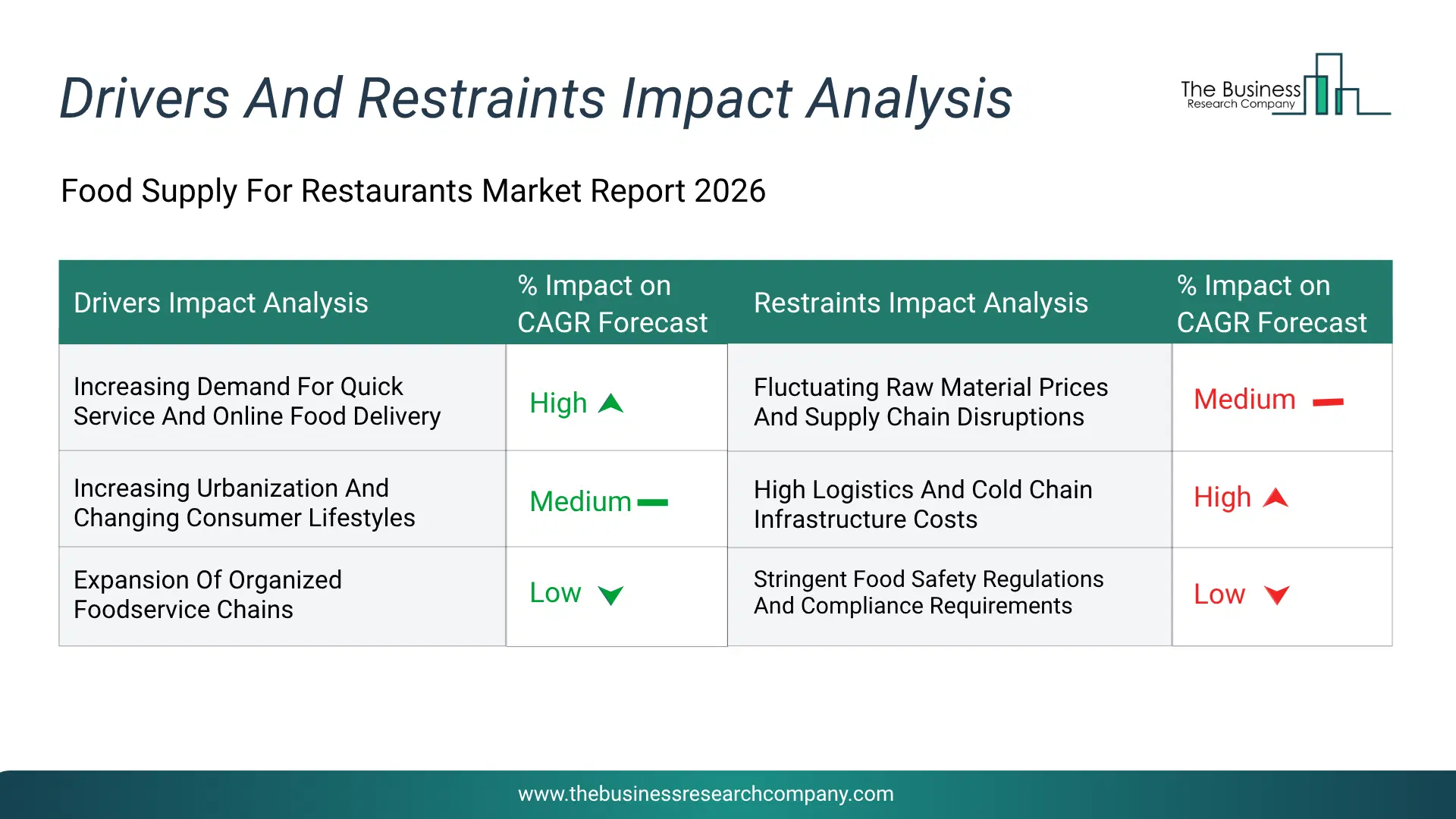
Infographic Chart Showing Key Market Drivers Analysis And Restraints For Food Supply For Restaurants Market
The chart presents an impact analysis of key drivers and restraints, quantifying their relative influence on the market's growth rate and helping assess the balance between growth enablers and limiting factors. This chart offers a high-level perspective; the full report contains more detailed insights.
How Will The Drivers Impact Growth In The Global Food Supply For Restaurants Market?
• Increasing Demand For Quick Service And Online Food Delivery (High) – During the forecast period, the increasing demand for quick service and online food delivery is expected to become a key growth driver for the food supply for restaurants market by 2030. The rising penetration of digital ordering platforms and app-based food delivery services is significantly increasing order volumes for restaurants, requiring consistent and large-scale supply of ingredients and packaged food products. Restaurants are increasingly optimizing their supply chains to ensure faster turnaround times and uninterrupted availability of raw materials. Suppliers are focusing on efficient distribution networks and real-time inventory tracking to meet fluctuating demand patterns. This shift toward convenience-driven consumption is strengthening procurement frequency and supply volumes. • Increasing Urbanization And Changing Consumer Lifestyles (Medium) – During the forecast period, the increasing urbanization and changing consumer lifestyles are expected to emerge as a major factor driving the expansion of the food supply for restaurants market by 2030. The growing urban population and rising disposable incomes are encouraging higher frequency of dining out and dependence on restaurant-based meals. Busy work schedules and preference for convenience are further accelerating demand for ready-to-cook and ready-to-eat food options within the foodservice sector. This trend is prompting restaurants to diversify their menus and source a wider variety of ingredients from suppliers. Additionally, evolving dietary preferences and global cuisine adoption are expanding procurement needs across multiple food categories. • Expansion Of Organized Foodservice Chains (Low) – During the forecast period, the expansion of organized foodservice chains is expected to act as a key growth catalyst for the food supply for restaurants market by 2030. The rapid growth of national and international restaurant chains is increasing demand for standardized, high-quality, and bulk food supplies across multiple locations. These chains rely on structured procurement systems and long-term supplier partnerships to maintain consistency in taste, quality, and service delivery. Suppliers are aligning with centralized sourcing models and contract-based distribution agreements to support large-scale operations. Furthermore, expansion into new cities and regions is driving higher supply volumes and strengthening distribution networks.How Will The Restraints Impact Growth In The Global Food Supply For Restaurants Market?
• Fluctuating Raw Material Prices And Supply Chain Disruptions (High) – During the forecast period, fluctuating raw material prices act as a major restraint for the food supply for restaurants market due to their direct impact on procurement costs and supplier margins. Variations in agricultural output, climate conditions, and global trade disruptions create instability in ingredient availability. This makes it difficult for suppliers to maintain consistent pricing for restaurants. Restaurants may reduce bulk purchasing or frequently switch suppliers, disrupting long-term supply contracts. Supply chain inefficiencies such as delays in transportation further affect timely delivery of perishable goods. These uncertainties reduce operational efficiency and increase risk for suppliers. As a result, market growth is restrained due to inconsistent supply and pricing volatility. • High Logistics And Cold Chain Infrastructure Costs (Medium) – During the forecast period, high logistics and cold chain costs significantly restrain the food supply for restaurants market, especially for perishable goods like meat, seafood, and dairy. Maintaining temperature-controlled storage and transportation requires substantial capital investment. Suppliers must invest in refrigerated vehicles, warehouses, and monitoring systems to ensure food safety and quality. In regions with underdeveloped infrastructure, these challenges become more severe, leading to higher spoilage rates. Rising fuel and transportation costs further increase operational expenses. These factors reduce profitability and limit scalability for suppliers. Consequently, high infrastructure costs act as a barrier to market expansion. • Stringent Food Safety Regulations And Compliance Requirements (Low) – During the forecast period, strict food safety regulations and compliance requirements pose a significant restraint on the food supply for restaurants market. Suppliers must adhere to standards related to hygiene, storage, labeling, and transportation of food products. Compliance requires continuous investment in quality control systems, certifications, and audits. Smaller suppliers often struggle to meet these regulatory standards, limiting their market participation. Failure to comply can lead to penalties, supply disruptions, and reputational damage. Frequent updates in regulations also increase operational complexity for suppliers. Therefore, regulatory pressure restricts smooth operations and slows market growth.Key Players In The Global Food Supply For Restaurants Market
Major companies operating in the food supply for restaurants market are Sysco Corporation, Performance Food Group, Tyson Foods Inc., US Foods, Gordon Food Service, Chefs Warehouse, Reinhart Foodservice, Shamrock Foods Company, Brakes Foodservice, CHEFSTORE, What Chefs Want, Total Foodservice Solutions Ltd, BlueCart Inc., Regency Foods Ltd, Pentagon Food Group, Bidfood, Collectiv Food, Restaurant Depot, Hyperpure, Surya Foods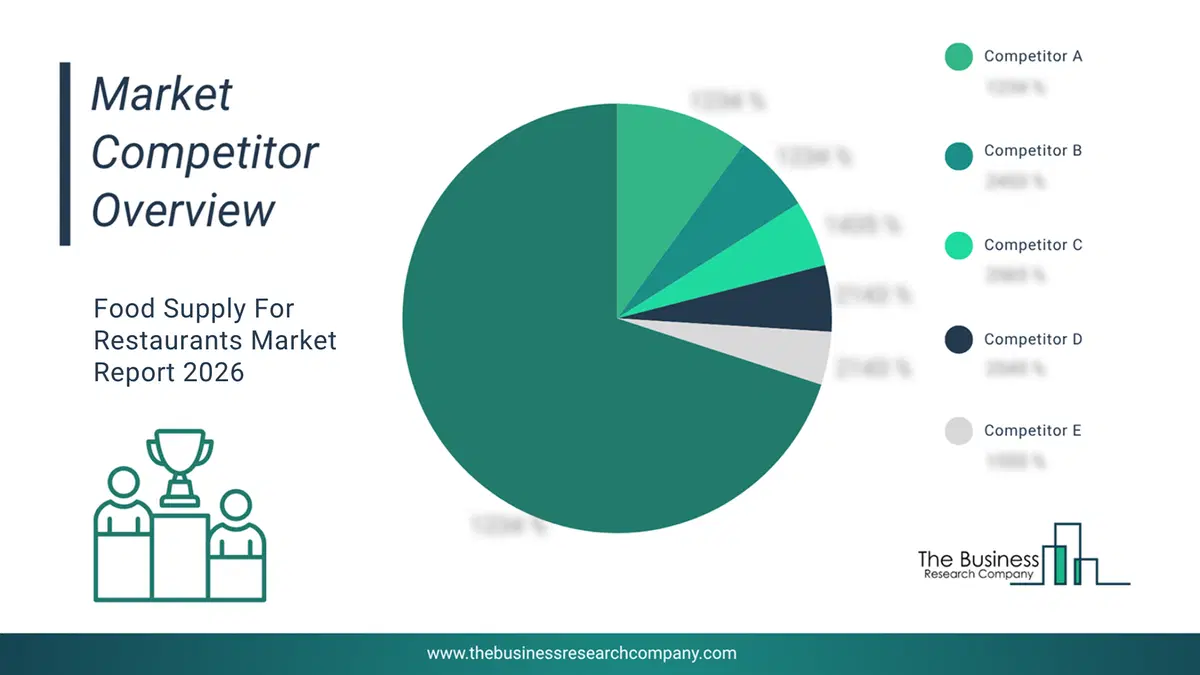
This chart is for illustrative purposes; the full report includes a detailed competitor analysis and comprehensive overview of the top 10 companies in the market.
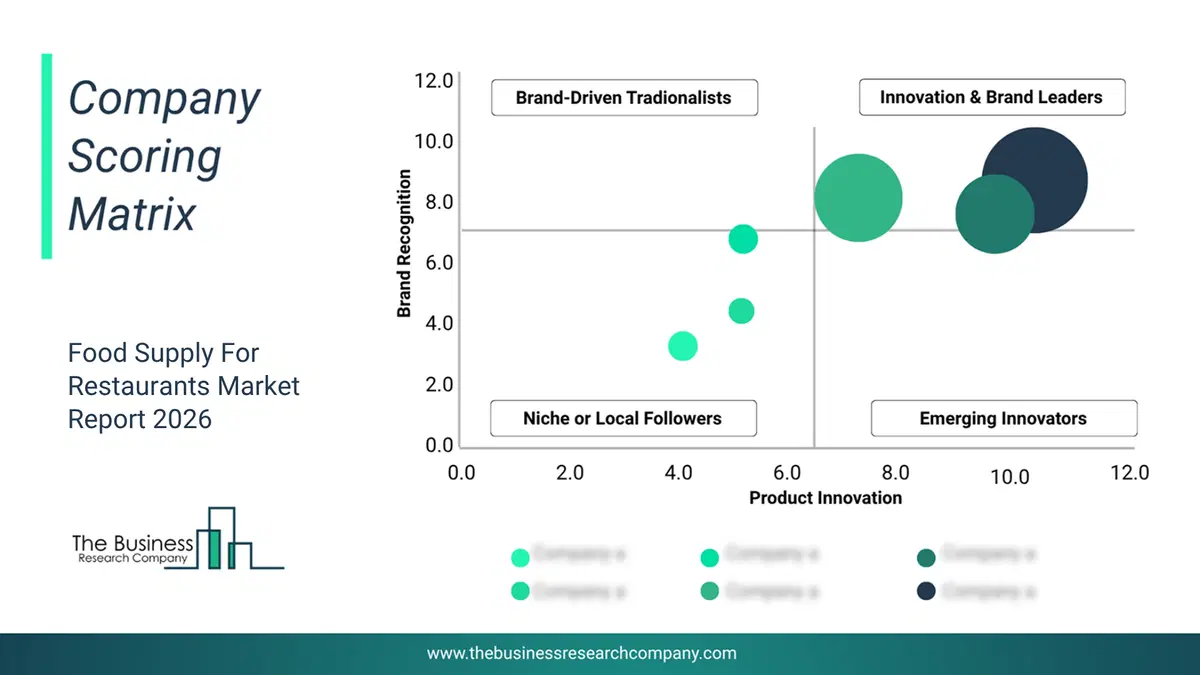
This chart maps companies by product innovation and brand strength, with bubble size indicating relative revenue, helping identify market leaders, challengers, and niche players. This is an illustrative chart; the full report provides a complete and accurate competitive analysis.
Global Food Supply For Restaurants Market Trends and Insights
Major companies operating in the food supply for restaurants market are focusing on developing innovative solutions, such as B2B supply chain management apps, to meet the rising demand for streamlined sourcing, cost efficiency, and real-time inventory management. B2B supply chain management apps are digital platforms designed to connect restaurants directly with suppliers, allowing for seamless ordering, tracking, and payment processes, in contrast to traditional manual or phone-based ordering systems that are often slower and prone to errors. For instance, in March 2025, Swiggy, an India-based food tech company, launched Swiggy Assure, a B2B app for restaurants that enables them to source supplies efficiently. The platform integrates a curated network of suppliers, provides real-time stock availability, and offers competitive pricing, ensuring restaurants can maintain optimal inventory levels while reducing operational overhead. Swiggy Assure also features an intuitive interface, order tracking, and automated invoice generation, enhancing transparency and simplifying procurement for restaurant operators. This technology is particularly beneficial for small to mid-sized restaurants seeking reliability and cost control in their supply chain operations.What Are Latest Mergers And Acquisitions In The Food Supply For Restaurants Market?
In January 2024, Raydia Food Group, a US-based food service distribution company, acquired B & B Food Distributor Inc. for an undisclosed amount. The acquisition aims to enhance its distribution capabilities and expand its product offerings within the food and beverage sector. B & B Foods Distributors Inc. is a US-based wholesale restaurant supplier and food service distributor.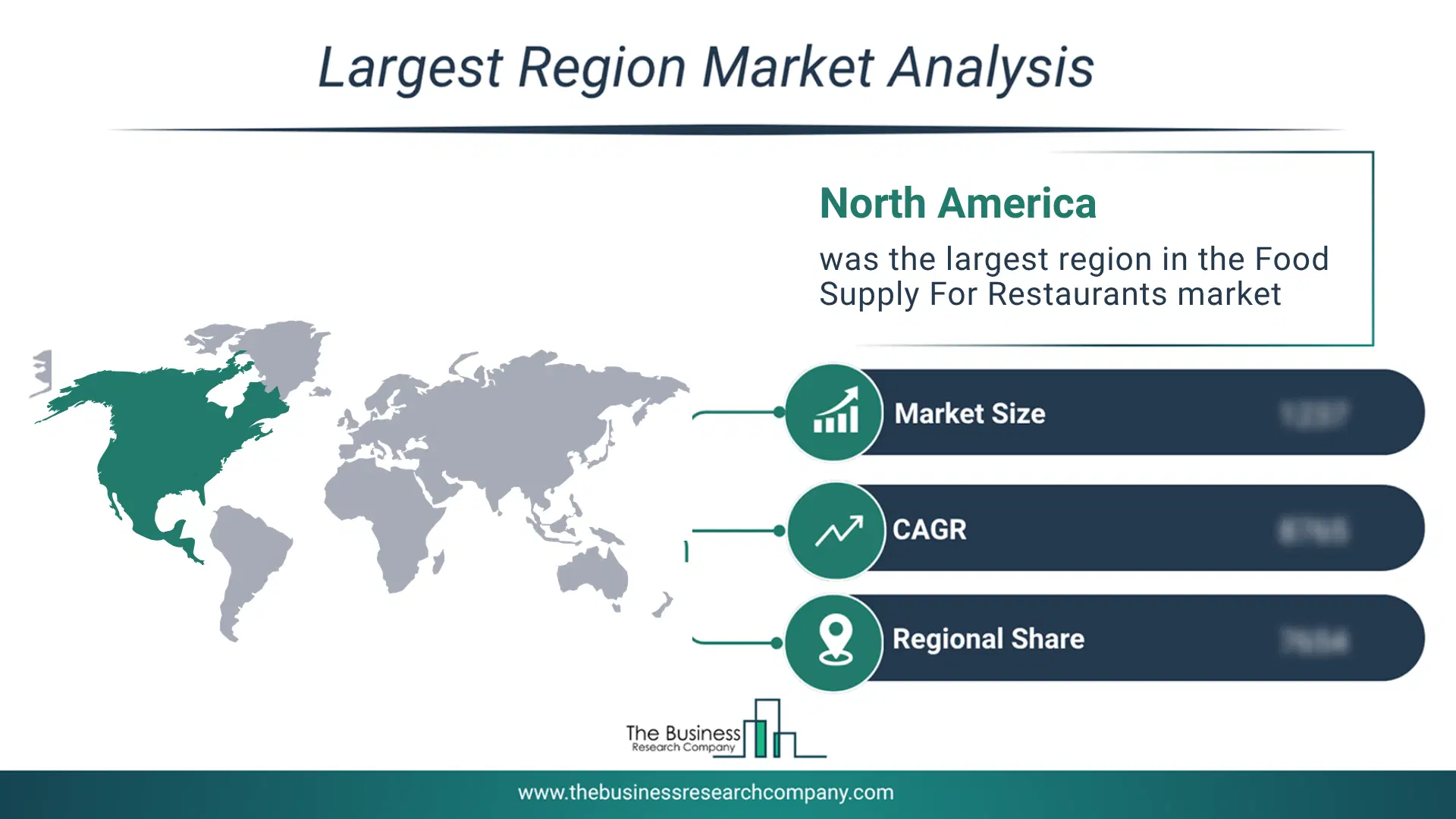
Regional Outlook
North America was the largest region in the food supply for restaurants market in 2025. Asia-Pacific is expected to be the fastest-growing region in the forecast period. The regions covered in this market report are Asia-Pacific, South East Asia, Western Europe, Eastern Europe, North America, South America, Middle East, Africa. The countries covered in this market report are Australia, Brazil, China, France, Germany, India, Indonesia, Japan, Taiwan, Russia, South Korea, UK, USA, Canada, Italy, SpainWhat Defines the Food Supply For Restaurants Market?
The food supply for restaurants market includes revenues earned by entities by providing services such as bulk ingredient supply, meat and seafood supply, and fresh produce delivery. The market value includes the value of related goods sold by the service provider or included within the service offering. Only goods and services traded between entities or sold to end consumers are included.How is Market Value Defined and Measured?
The market value is defined as the revenues that enterprises gain from the sale of goods and/or services within the specified market and geography through sales, grants, or donations in terms of the currency (in USD unless otherwise specified). The revenues for a specified geography are consumption values that are revenues generated by organizations in the specified geography within the market, irrespective of where they are produced. It does not include revenues from resales along the supply chain, either further along the supply chain or as part of other products.
This chart presents market attractiveness based on a quantitative evaluation of growth, competition, strategic alignment, and risk, offering a clear view of opportunity areas for decision-making. This chart is for illustrative purposes; the full report contains the complete analysis.

This chart highlights the Total Addressable Market (TAM) by estimating the maximum revenue opportunity using an assumption-driven approach, supporting strategic planning and opportunity sizing across markets. The chart is illustrative; the full report provides a more comprehensive analysis.
What Key Data and Analysis Are Included in the Food Supply For Restaurants Market Report 2026?
The food supply for restaurants market research report is one of a series of new reports from The Business Research Company that provides market statistics, including industry global market size, regional shares, competitors with the market share, detailed market segments, market trends and opportunities, and any further data you may need to thrive in the food supply for restaurants industry. The market research report delivers a complete perspective of everything you need, with an in-depth analysis of the current and future state of the industry.Food Supply For Restaurants Market Report Forecast Analysis
| Report Attribute | Details |
|---|---|
| Market Size Value In 2026 | $571.97 billion |
| Revenue Forecast In 2030 | $712.67 billion |
| Growth Rate | CAGR of 5.7% from 2026 to 2030 |
| Base Year For Estimation | 2025 |
| Actual Estimates/Historical Data | 2020-2025 |
| Forecast Period | 2026 - 2030 |
| Market Representation | Revenue in USD Billion and CAGR from 2026 to 2030 |
| Segments Covered | Restaurant Type, Order Type, Application |
| Regional Scope | Asia-Pacific, Western Europe, Eastern Europe, North America, South America, Middle East, Africa |
| Country Scope | The countries covered in the report are Australia, Brazil, China, France, Germany, India, Indonesia, Japan, Taiwan, Russia, South Korea, UK, USA, Canada, Italy, Spain. |
| Key Companies Profiled | Sysco Corporation, Performance Food Group, Tyson Foods Inc., US Foods, Gordon Food Service, Chefs Warehouse, Reinhart Foodservice, Shamrock Foods Company, Brakes Foodservice, CHEFSTORE, What Chefs Want, Total Foodservice Solutions Ltd, BlueCart Inc., Regency Foods Ltd, Pentagon Food Group, Bidfood, Collectiv Food, Restaurant Depot, Hyperpure, Surya Foods |
| Customization Scope | Request for Customization |
| Pricing And Purchase Options | Explore Purchase Options |