
Food Waste Management Market Report 2026
Global Outlook – By Waste Type (Cereals, Dairy And Dairy Products, Fruits And Vegetables, Meat And Poultry, Fish And Seafood, Oilseeds And Pulses, Roots And Tubers, Other Waste Types), By Service (Collection, Transportation, Disposal And Recycling), By Source (Residential, Industrial), By Application (Feed, Fertilizers, Biofuel, Power Generation, Other Applications), By End-User (Primary Food Producers, Food Manufacturers, Food Distributors And Suppliers, Food Service Providers, Municipalities And Households) – Market Size, Trends, Strategies, and Forecast to 2030
Food Waste Management Market Overview
• Food Waste Management market size has reached to $78.2 billion in 2025 • Expected to grow to $101.21 billion in 2030 at a compound annual growth rate (CAGR) of 5.3% • Growth Driver: Rising Organic Municipal Waste Fuels Growth In The Food Waste Management Market • North America was the largest region in 2025 and Asia Pacific is the fastest growing region.Market Gains By 2030 – Top Opportunities By Segment
Market Gain identifies the most promising market opportunities by highlighting the segments or products expected to generate the highest incremental revenue growth over the next five years.
What Is Covered Under Food Waste Management Market?
Food waste management refers to the systematic and responsible handling of food waste to reduce its environmental impact, promote sustainability, and ensure the efficient utilization of resources throughout the entire food supply chain. It involves taking measures to prevent food waste from occurring in the first place. The main waste types for food waste management are cereals, dairy and dairy products, fruits and vegetables, meat and poultry, fish and seafood, oilseeds and pulses, roots and tubers, and others. Cereals refer to a group of cultivated grasses that are grown for their edible seeds or grains, and food waste management helps reduce the waste of valuable cereal crops, conserve resources, and minimize the environmental impact associated with cereal production and disposal. Food waste management includes various services such as collection, transportation, disposal, and recycling used for different sources, such as residential and industrial. Food waste management consists of various applications, including feed, fertilizers, biofuel, power generation, and others used by primary food producers, food manufacturers, food distributors and suppliers, food service providers, municipalities, and households.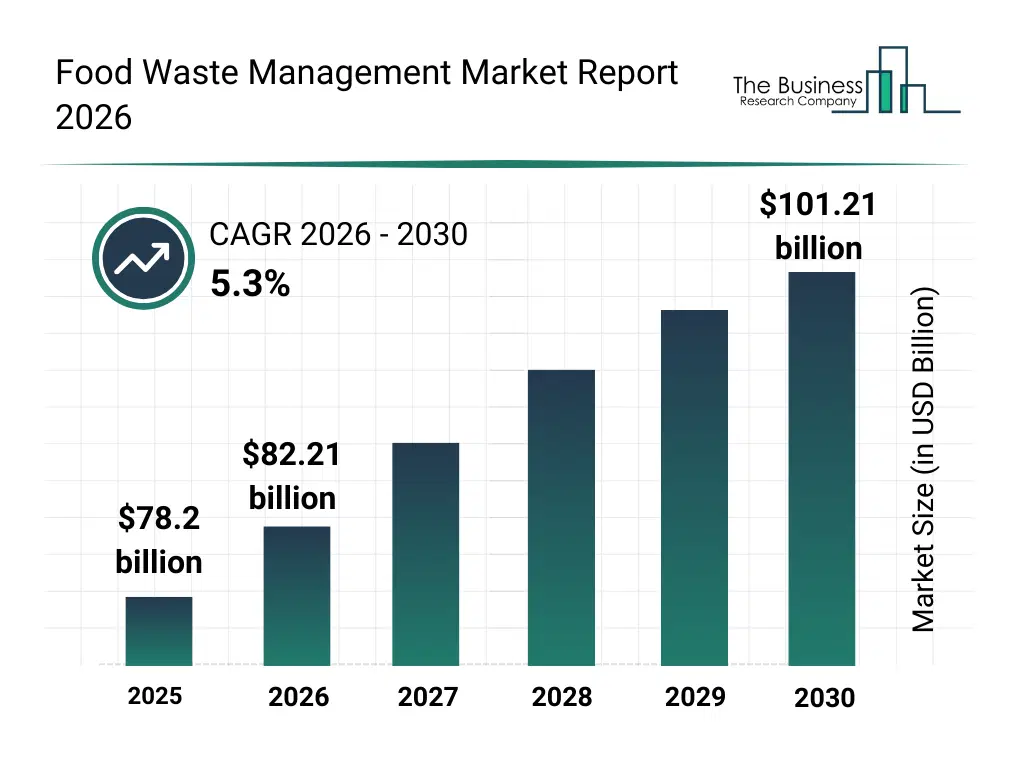
What Is The Food Waste Management Market Size and Share 2026?
The food waste management market size has grown strongly in recent years. It will grow from $78.2 billion in 2025 to $82.21 billion in 2026 at a compound annual growth rate (CAGR) of 5.1%. The growth in the historic period can be attributed to increasing food wastage volumes, rising landfill burden, early government awareness initiatives, expansion of waste collection systems, growing environmental concerns.What Is The Food Waste Management Market Growth Forecast?
The food waste management market size is expected to see strong growth in the next few years. It will grow to $101.21 billion in 2030 at a compound annual growth rate (CAGR) of 5.3%. The growth in the forecast period can be attributed to strengthening sustainability policies, rising demand for circular economy models, increasing development of waste conversion technologies, expanding industrial participation in waste processing, growing focus on resource efficiency. Major trends in the forecast period include growing focus on food waste reduction initiatives, rising emphasis on waste-to-value solutions, increasing adoption of structured food disposal systems, expansion of recycling and reprocessing practices, strengthening global sustainability commitments.
Global Food Waste Management Market Segmentation
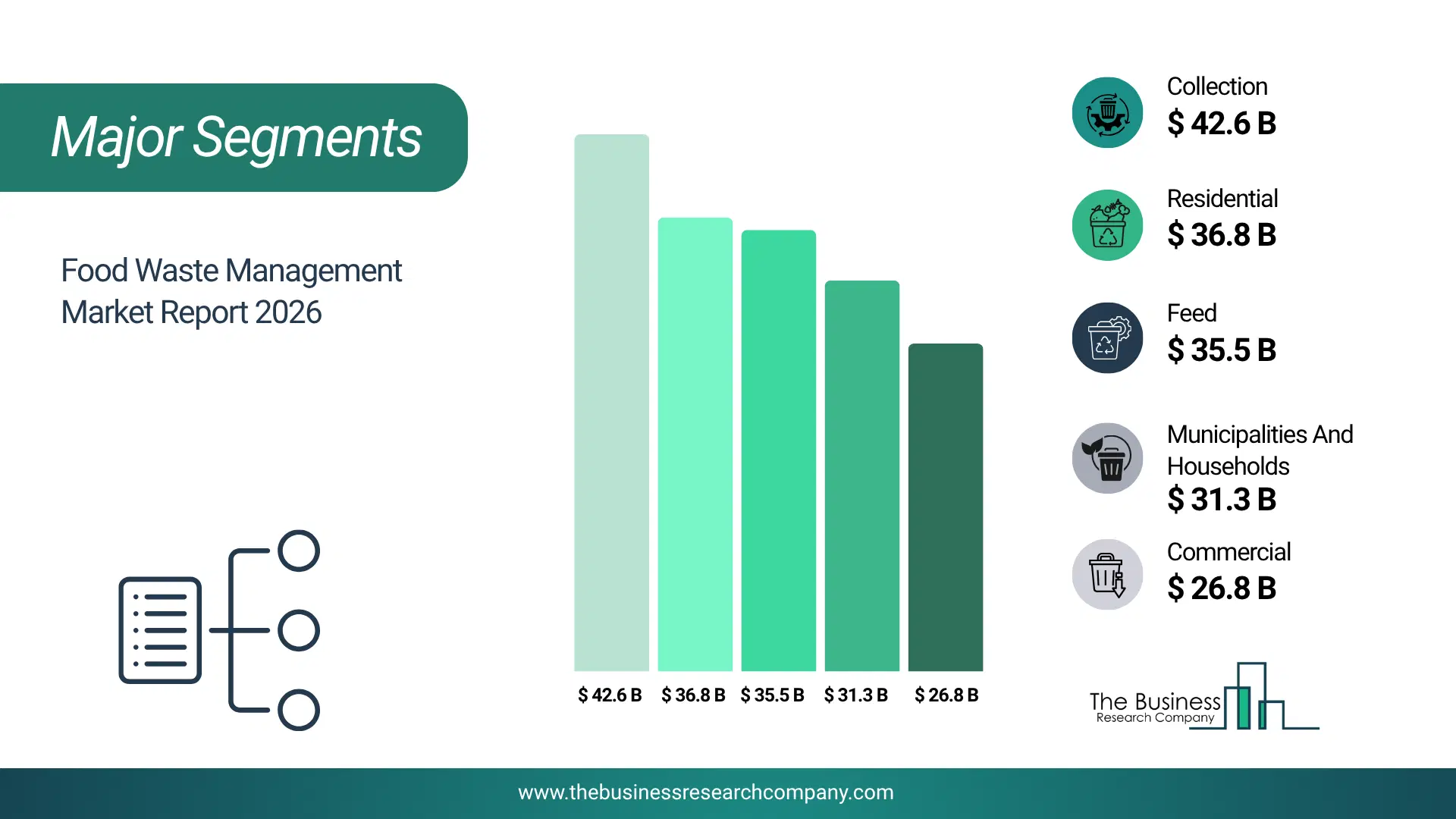
1) By Waste Type: Cereals, Dairy And Dairy Products, Fruits And Vegetables, Meat And Poultry, Fish And Seafood, Oilseeds And Pulses, Roots And Tubers, Other Waste Types 2) By Service: Collection, Transportation, Disposal And Recycling 3) By Source: Residential, Industrial 4) By Application: Feed, Fertilizers, Biofuel, Power Generation, Other Applications 5) By End-User: Primary Food Producers, Food Manufacturers, Food Distributors And Suppliers, Food Service Providers, Municipalities And Households Subsegments: 1) By Cereals: Wheat, Rice, Corn 2) By Dairy And Dairy Products: Milk, Cheese, Yogurt 3) By Fruits And Vegetables: Fresh Produce, Processed Fruits And Vegetables 4) By Meat And Poultry: Beef, Pork, Chicken 5) By Fish And Seafood: Fresh Fish, Processed Seafood 6) By Oilseeds And Pulses: Soybeans, Lentils 7) By Roots And Tubers: Potatoes, Carrots 8) By Other Waste Types: Bakery Products, Packaged Foods The top segments in the food waste management market will be: • Collection will reach $42644.11 Million by 2025. • Residential will reach $36858.24 Million by 2025. • Feed will reach $35584.64 Million by 2025. • Municipalities And Households will reach $31353.29 Million by 2025. • Commercial will reach $26874.68 Million by 2025.What Are The Drivers Of The Food Waste Management Market?
The increasing organic municipal waste is expected to propel the growth of the food waste management market going forward. Organic municipal waste refers to municipal solid waste (MSW) comprising biodegradable organic materials derived from living organisms. Food waste management plays a crucial role in the overall management of organic municipal waste, which includes food waste, yard waste, and other biodegradable materials that can be effectively and sustainably managed through proper food waste management practices. For instance, in February 2024, according to the United Nations Environment Programme, a Norway-based UN agency, in 2023, municipal solid waste generation stood at 2.1 billion tonnes and is expected to rise to 3.8 billion tonnes by 2050. Therefore, the increasing organic municipal waste will drive the growth of the food waste management industry. Increasing government funds for waste disposal is expected to propel the growth of the food waste management market going forward. Government funding refers to the financial support a government entity provides to various organizations, initiatives, projects, programs, or individuals, whether at the federal, state, or local level. Several government authorities are funding waste disposal programs to support food waste management. For instance, in September 2023, the United States Environmental Protection Agency, a US-based government agency, initiated the Solid Waste Infrastructure for Recycling Grant Program. This provides funding to support building a better America by reducing or eliminating pollution of water resources and improving the planning and management of solid waste sites. Save authorizes the program Our Seas 2.0 Act and is funded through the Infrastructure Investment and Jobs Act, which provides $275 million for solid waste infrastructure for recycling grants. Therefore, increasing government funds for waste disposal is driving the growth of the food waste management industry.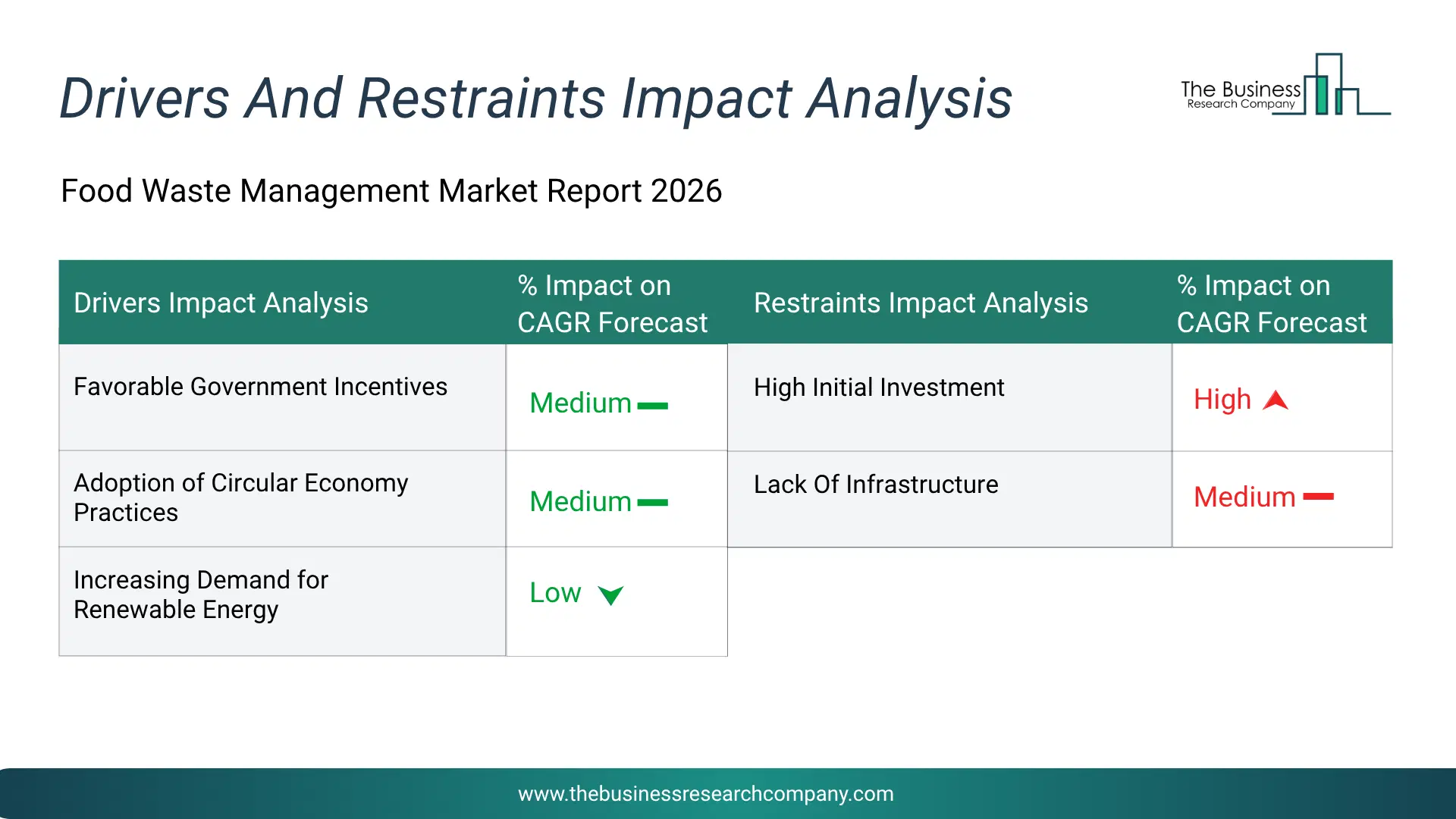
Infographic Chart Showing Key Market Drivers Analysis And Restraints For Food Waste Management Market
The chart presents an impact analysis of key drivers and restraints, quantifying their relative influence on the market's growth rate and helping assess the balance between growth enablers and limiting factors. This chart offers a high-level perspective; the full report contains more detailed insights.
How Will The Drivers Impact Growth In The Global Food Waste Management Market?
• Favorable Government Incentives (Medium) – The favorable government incentives will become a key driver of growth in the food waste management market by 2030. Favorable government incentives refer to financial benefits, tax breaks, grants, or regulatory support provided by the government to encourage specific industries or activities. Favorable government incentives drive food waste management by providing financial support, tax benefits and regulatory frameworks that encourage businesses, farms and organizations to reduce waste and redistribute surplus food. As a result, the favorable government incentives are anticipated to contributing to a 1.5% annual growth in the market. • Adoption of Circular Economy Practices (Medium) – The adoption of circular economy practices will emerge as a major factor driving the expansion of the food waste management market by 2030. Circular economy practices focus on sustainability by reducing waste, improving resource efficiency, and extending product lifecycles through methods like recycling, reusing, refurbishing, and remanufacturing. This shift is gaining traction due to stricter regulations, cost advantages, rising consumer and investor interest, and advancements in recycling and resource recovery technologies. These practices contribute to food waste management by reducing waste, redistributing surplus food, and converting byproducts into valuable resources such as animal feed, bioenergy, and compost. Consequently, the adoption of circular economy practices capabilities is projected to contributing to a 1.0% annual growth in the market. • Increasing Demand for Renewable Energy (Low) – The increasing demand for renewable energy processes will serve as a key growth catalyst for the food waste management market by 2030. Renewable energy, sourced from naturally replenishing resources like solar, wind, and hydropower, provides sustainable and eco-friendly alternatives to fossil fuels. This surge in demand is fueled by environmental concerns, government policies, technological advancements, energy security, and corporate sustainability initiatives. It also supports food waste management by encouraging the use of organic waste for biogas and biofuel production, reducing landfill waste, lowering greenhouse gas emissions, and advancing a circular economy. Therefore, this increasing demand for renewable energy across digital manufacturing operations is projected to supporting to a 1.0% annual growth in the market. • Consumer Demand for Sustainable Practices (Low) – The consumer demand for sustainable practices will become a significant driver contributing to the growth of the food waste management market by 2030. Sustainable practices focus on strategies that reduce environmental impact, enhance resource efficiency, and promote long-term ecological balance. This growing demand is driven by increased consumer awareness, stricter regulations, corporate sustainability initiatives, concerns about climate change, and the economic benefits of resource efficiency. These practices contribute to food waste management by reducing overproduction, encouraging recycling and composting, and supporting circular economy models. Consequently, the consumer demand for sustainable practices is projected to contributing to a 0.5% annual growth in the market.How Will The Restraints Impact Growth In The Global Food Waste Management Market?
• High Initial Investment (Medium) – High Initial Investment will restrict the growth of the Food Waste Management market during the forecast period. Establishing food waste management infrastructure requires significant capital investment in collection systems, processing facilities, and treatment technologies. The high initial costs create barriers for municipalities and private operators, particularly in developing regions with limited budgets. Investment requirements can delay project implementation and limit the scale of food waste management initiatives, affecting market growth. • Lack Of Infrastructure (Medium) – Lack Of Infrastructure will restrict the growth of the Food Waste Management market during the forecast period. Many regions lack adequate infrastructure for food waste collection, sorting, processing, and recycling. The absence of dedicated food waste collection systems and treatment facilities limits the scale of food waste management operations. Infrastructure gaps particularly affect developing economies where waste management systems are underdeveloped, constraining market expansion.Key Players In The Global Food Waste Management Market
Major companies operating in the food waste management market report are Veolia Environnement S A, Waste Management Inc, Suez S A, Republic Services Inc, Remondis SE And Co KG, Waste Connections Inc, Cleanaway Waste Management Limited, Biffa Group Ltd, Casella Waste Systems Inc, Rumpke Consolidated Companies Inc, FCC Environment Limited, Covanta Ltd, Enerkem Inc, Implexians Eco Solutions Pvt Ltd, Ecofast Italia S R L, Biancamano S P A, Missouri Organic Recycling, Copia Pbc, Goodr Inc, Kitro S A, Eoms Recycling Inc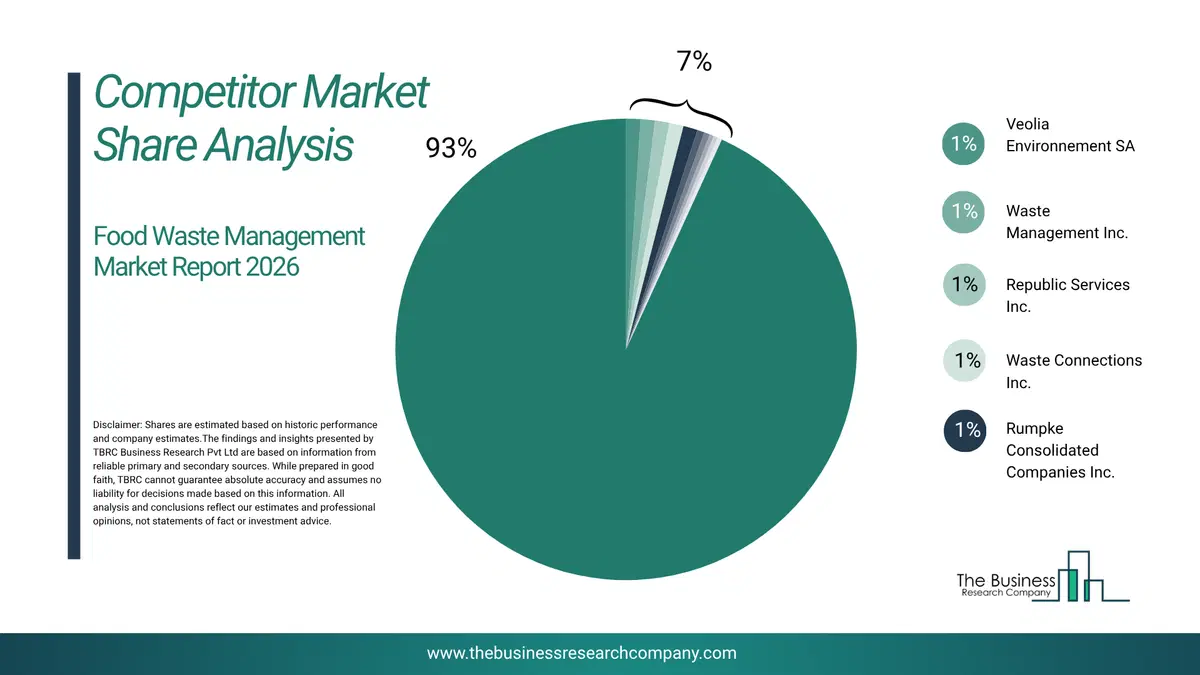
This chart is for illustrative purposes; the full report includes a detailed competitor analysis and comprehensive overview of the top 10 companies in the market.
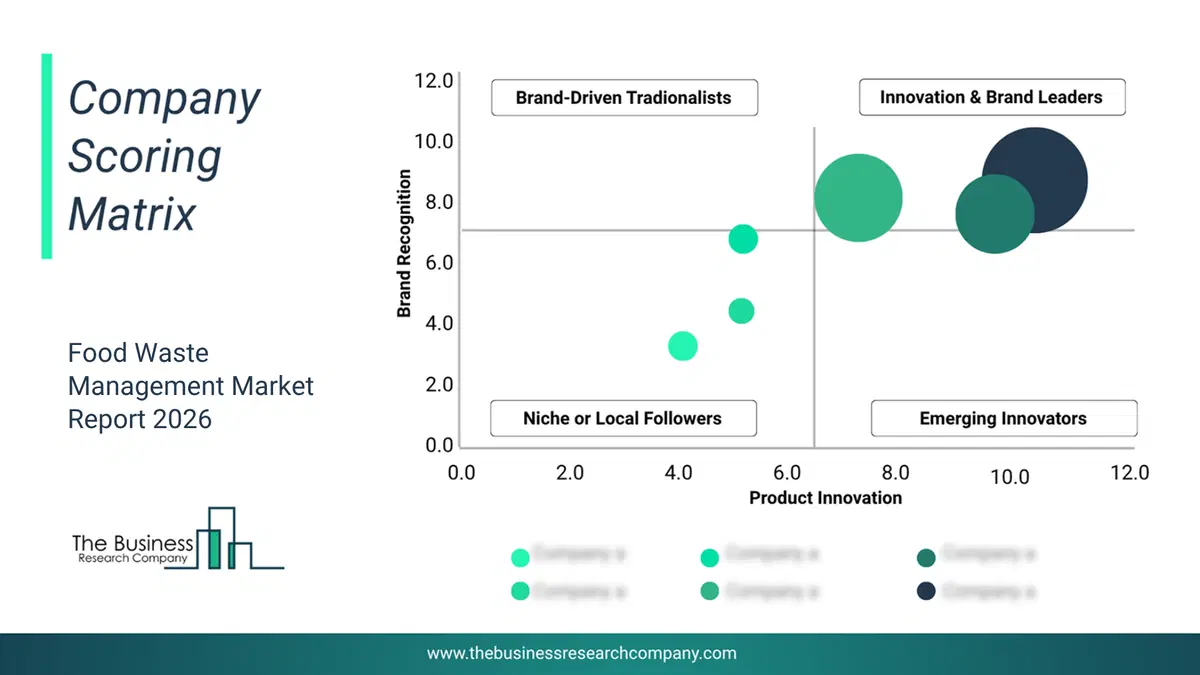
This chart maps companies by product innovation and brand strength, with bubble size indicating relative revenue, helping identify market leaders, challengers, and niche players. This is an illustrative chart; the full report provides a complete and accurate competitive analysis.
What Are Latest Mergers And Acquisitions In The Food Waste Management Market?
In August 2025, Closed Loop Partners, a US-based investment firm focused on circular economy solutions, acquired Agri-Cycle for an undisclosed amount. With this acquisition, Closed Loop Partners aims to accelerate Agri-Cycle’s growth and expand its impact in organics circularity across the U.S. Agri-Cycle is a US-based organic waste management company that specializes in providing industrial and commercial organics collection, anaerobic digestion, composting, and related data analytics and reporting services to maximize landfill diversion.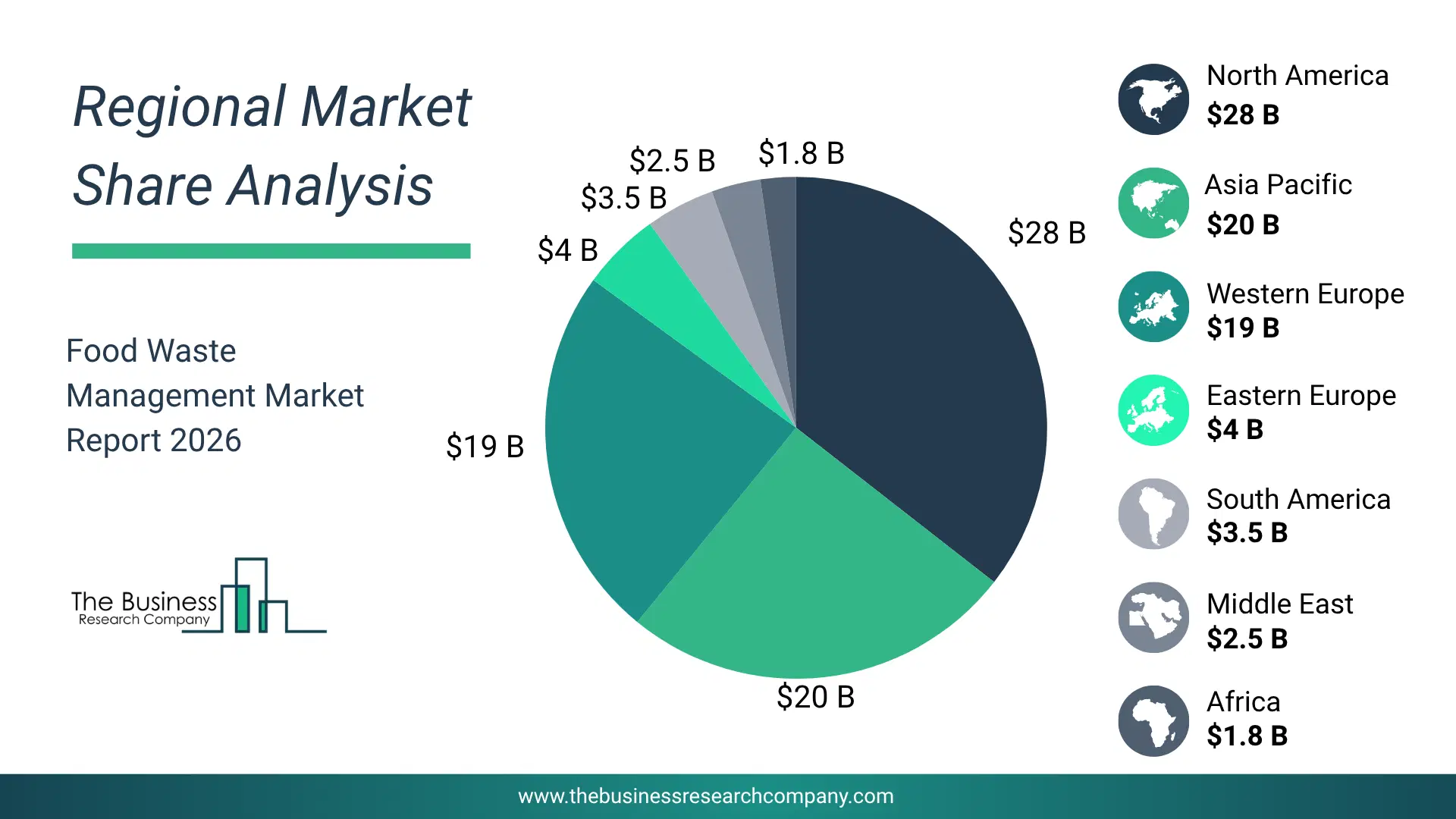
Regional Outlook
North America was the largest region in the food waste management market in 2025. Asia Pacific is expected to be the fastest-growing region in the forecast period. The regions covered in this market report are Asia-Pacific, South East Asia, Western Europe, Eastern Europe, North America, South America, Middle East, Africa. The countries covered in this market report are Australia, Brazil, China, France, Germany, India, Indonesia, Japan, Taiwan, Russia, South Korea, UK, USA, Canada, Italy, SpainWhat Defines the Food Waste Management Market?
The food waste management market consists of revenues earned by entities by providing services such as environmental sustainability, resource conservation, composting, food redistribution, and energy generation. The market value includes the value of related goods sold by the service provider or included within the service offering. The food waste management market also includes sales of food waste disposal systems, biogas systems, and composting equipment. Values in this market are ‘factory gate’ values, that is the value of goods sold by the manufacturers or creators of the goods, whether to other entities (including downstream manufacturers, wholesalers, distributors, and retailers) or directly to end customers. The value of goods in this market includes related services sold by the creators of the goods.How is Market Value Defined and Measured?
The market value is defined as the revenues that enterprises gain from the sale of goods and/or services within the specified market and geography through sales, grants, or donations in terms of the currency (in USD unless otherwise specified). The revenues for a specified geography are consumption values that are revenues generated by organizations in the specified geography within the market, irrespective of where they are produced. It does not include revenues from resales along the supply chain, either further along the supply chain or as part of other products.
This chart presents market attractiveness based on a quantitative evaluation of growth, competition, strategic alignment, and risk, offering a clear view of opportunity areas for decision-making. This chart is for illustrative purposes; the full report contains the complete analysis.

This chart highlights the Total Addressable Market (TAM) by estimating the maximum revenue opportunity using an assumption-driven approach, supporting strategic planning and opportunity sizing across markets. The chart is illustrative; the full report provides a more comprehensive analysis.
What Key Data and Analysis Are Included in the Food Waste Management Market Report 2026?
The food waste management market research report is one of a series of new reports from The Business Research Company that provides market statistics, including industry global market size, regional shares, competitors with the market share, detailed market segments, market trends and opportunities, and any further data you may need to thrive in the food waste management industry. The market research report delivers a complete perspective of everything you need, with an in-depth analysis of the current and future state of the industry.Food Waste Management Market Report Forecast Analysis
| Report Attribute | Details |
|---|---|
| Market Size Value In 2026 | $82.21 billion |
| Revenue Forecast In 2030 | $101.21 billion |
| Growth Rate | CAGR of 5.1% from 2026 to 2030 |
| Base Year For Estimation | 2025 |
| Actual Estimates/Historical Data | 2020-2025 |
| Forecast Period | 2026 - 2030 |
| Market Representation | Revenue in USD Billion and CAGR from 2026 to 2030 |
| Segments Covered | Waste Type, Service, Source, Application, End-User |
| Regional Scope | Asia-Pacific, Western Europe, Eastern Europe, North America, South America, Middle East, Africa |
| Country Scope | The countries covered in the report are Australia, Brazil, China, France, Germany, India, Indonesia, Japan, Taiwan, Russia, South Korea, UK, USA, Canada, Italy, Spain. |
| Key Companies Profiled | Veolia Environnement S A, Waste Management Inc, Suez S A, Republic Services Inc, Remondis SE And Co KG, Waste Connections Inc, Cleanaway Waste Management Limited, Biffa Group Ltd, Casella Waste Systems Inc, Rumpke Consolidated Companies Inc, FCC Environment Limited, Covanta Ltd, Enerkem Inc, Implexians Eco Solutions Pvt Ltd, Ecofast Italia S R L, Biancamano S P A, Missouri Organic Recycling, Copia Pbc, Goodr Inc, Kitro S A, Eoms Recycling Inc |
| Customization Scope | Request for Customization |
| Pricing And Purchase Options | Explore Purchase Options |