
Forage Sorghum Seed Market Report 2026
Global Outlook – By Seed Type (Hybrid Seeds, Open Pollinated Seeds), By Production Method (Conventional Seeds, Organic Seeds), By Distribution Channel (Direct Sales, Agricultural Cooperatives, Seed Distributors, Online Retail Channels), By Application (Animal Feed, Silage Production, Biomass Production), By End Use (Commercial Farming, Smallholder Farming, Research And Development) – Market Size, Trends, Strategies, and Forecast to 2030
Forage Sorghum Seed Market Overview
• Forage Sorghum Seed market size has reached to $2.45 billion in 2025 • Expected to grow to $3.36 billion in 2030 at a compound annual growth rate (CAGR) of 6.5% • Growth Driver: Expansion Of Livestock Farming Boosts Demand For The Market Growth Due To Rising Feed Requirements • Market Trend: Prussic Acid-Free Sorghum Innovations Driving Livestock Safety And Grazing Efficiency • North America was the largest region in 2025 and Asia-Pacific is the fastest growing region.What Is Covered Under Forage Sorghum Seed Market?
Forage sorghum seed is the seed of specially developed sorghum varieties cultivated for producing high-biomass forage crops with strong adaptability to diverse climatic conditions. These seeds are bred to deliver traits such as rapid growth, drought tolerance, and high biomass yield, making them an important component of modern forage crop production. The main seed types of forage sorghum seed include hybrid seeds, and open pollinated seeds. Hybrid seeds are produced by crossing selected parent plants to combine desirable traits such as improved yield, vigor, and environmental adaptability. They are produced using conventional and organic methods, and distributed through direct sales, agricultural cooperatives, seed distributors, and online retail channels. The key applications include animal feed, silage production, and biomass production, while the end-use includes commercial farming, smallholder farming, and research and development.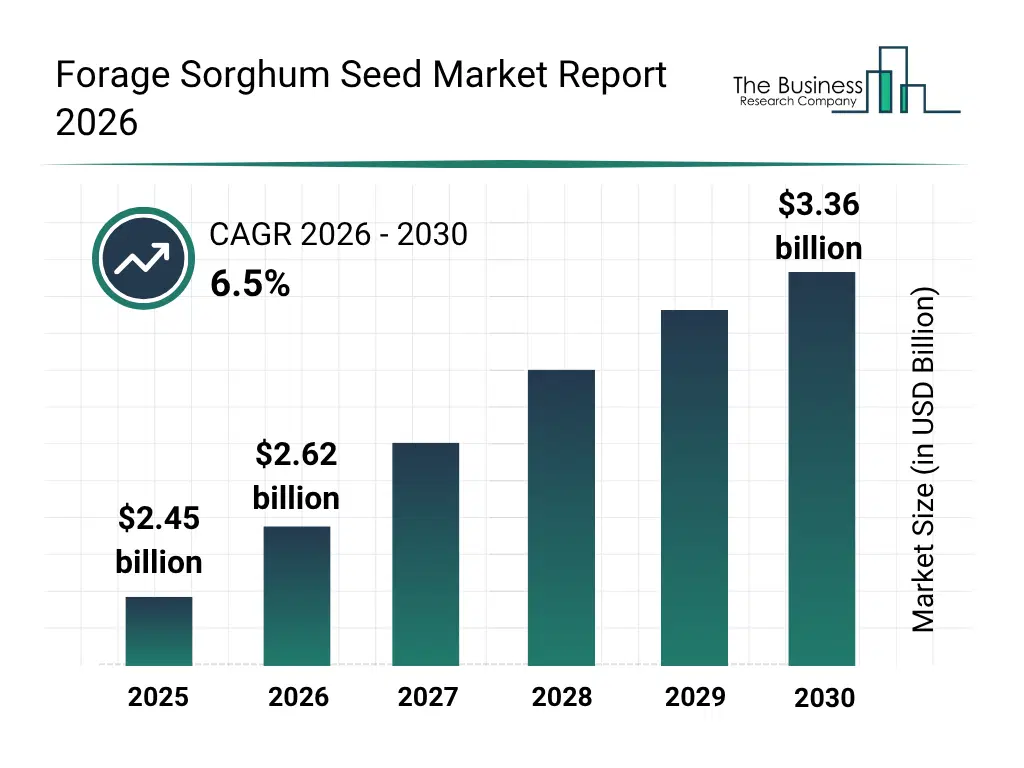
What Is The Forage Sorghum Seed Market Size and Share 2026?
The forage sorghum seed market size has grown strongly in recent years. It will grow from $2.45 billion in 2025 to $2.62 billion in 2026 at a compound annual growth rate (CAGR) of 6.9%. The growth in the historic period can be attributed to rising demand for livestock feed, increasing adoption of drought-tolerant forage crops, expansion of commercial livestock farming, growing need for high-biomass forage production, increasing cultivation of silage crops.What Is The Forage Sorghum Seed Market Growth Forecast?
The forage sorghum seed market size is expected to see strong growth in the next few years. It will grow to $3.36 billion in 2030 at a compound annual growth rate (CAGR) of 6.5%. The growth in the forecast period can be attributed to rising demand for sustainable animal feed, increasing livestock population, growing adoption of climate-resilient forage crops, expansion of commercial dairy farming, increasing demand for high-yield forage seed varieties. Major trends in the forecast period include increasing development of drought-tolerant forage sorghum varieties, growing adoption of high-biomass forage sorghum seeds, increasing demand for multi-cut forage sorghum varieties, rising use of brown mid-rib forage sorghum seeds, growing demand for high-quality silage production seeds.Tariff Impact On Forage Sorghum Seed Market
Tariffs are impacting the forage sorghum seed market by increasing the cost of imported forage seeds, agricultural inputs, seed treatment materials, and farming equipment required for forage crop production. This is increasing cultivation costs and affecting hybrid and open pollinated seed segments used for animal feed, silage production, and biomass production, particularly in regions dependent on imported agricultural inputs such as North America, Europe, and Asia-Pacific. Hybrid seeds and specialty drought-tolerant varieties are most affected due to international seed supply chain dependencies. However, tariffs are also encouraging domestic seed production, regional sourcing, and investment in local breeding and seed multiplication capabilities, creating long-term resilience in the market.
Global Forage Sorghum Seed Market Segmentation
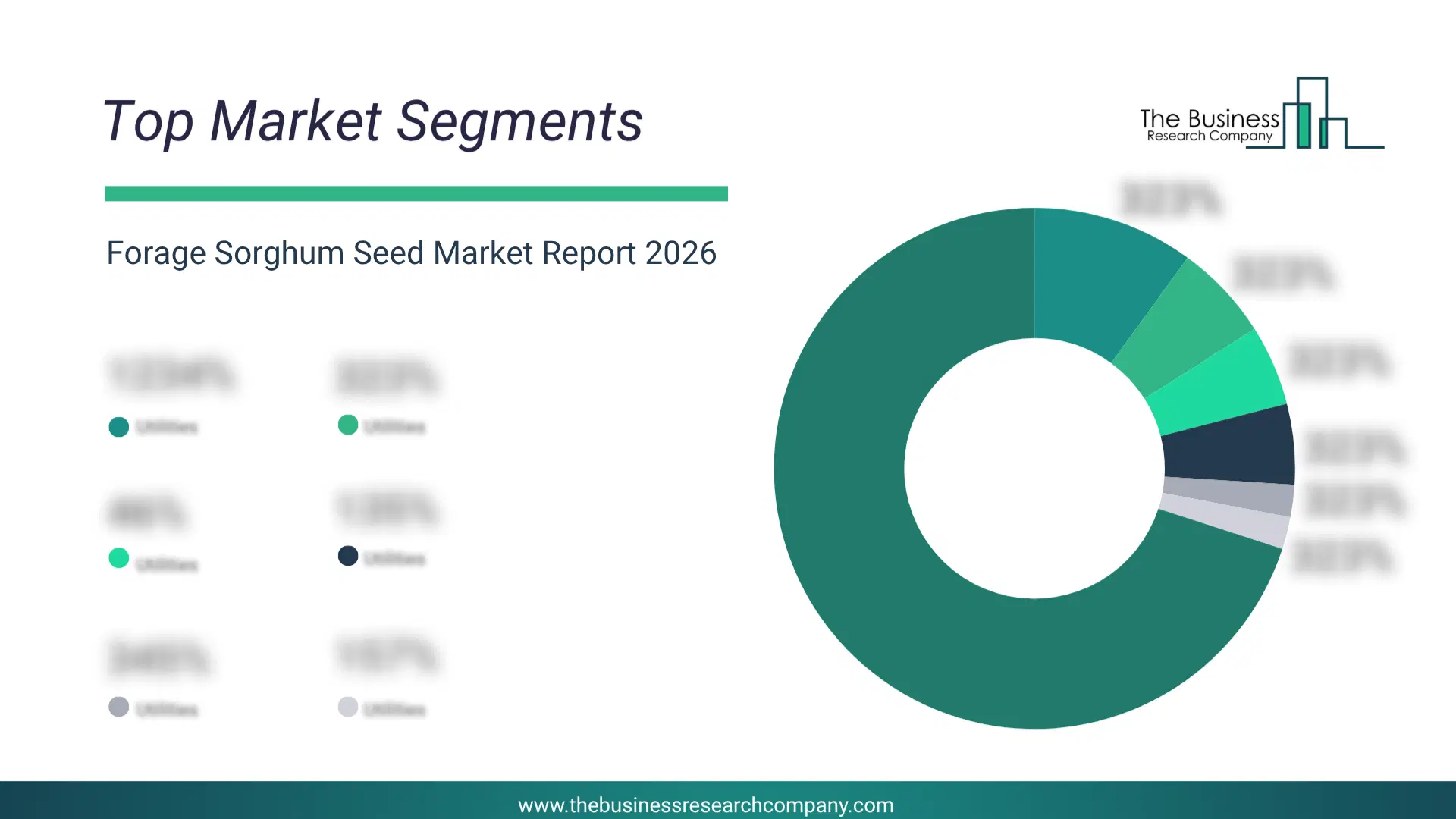
1) By Seed Type: Hybrid Seeds, Open Pollinated Seeds 2) By Production Method: Conventional Seeds, Organic Seeds 3) By Distribution Channel: Direct Sales, Agricultural Cooperatives, Seed Distributors, Online Retail Channels 4) By Application: Animal Feed, Silage Production, Biomass Production 5) By End Use: Commercial Farming, Smallholder Farming, Research And Development Subsegments: 1) By Hybrid Seeds: Single Cross Hybrid Seeds, Three Way Hybrid Seeds, Multi Cut Hybrid Seeds, Brown Mid Rib Hybrid Seeds 2) By Open Pollinated Seeds: Standard Open Pollinated Seeds, Multi Cut Open Pollinated Seeds, Sweet Forage Sorghum Seeds, Sudangrass Open Pollinated SeedsWhat Is The Driver Of The Forage Sorghum Seed Market?
The expansion of livestock farming activities is expected to propel the growth of the forage sorghum seed market going forward. Livestock farming activities involve the rearing and management of domesticated animals to produce food, fiber, and other agricultural products. Livestock farming activities are rising due to increasing demand for meat and dairy products, encouraging farmers to expand production to meet growing consumer needs. Increasing livestock farming activities drive the forage sorghum seed demand by boosting the demand for high-yield, nutritious forage crops to feed expanding livestock populations, encouraging farmers to cultivate more forage sorghum. For instance, in July 2026, according to reports published by GOV.UK, a UK-based public sector information website, the UK’s total livestock output reached $29.21 billion (£22.2 billion) in 2025, marking a $2.76 billion (£2.1 billion) rise of 10.2% compared with 2024. Therefore, the expansion of livestock farming activities is driving the growth of the forage sorghum seed industry.Key Players In The Global Forage Sorghum Seed Market
Major companies operating in the forage sorghum seed market are Bayer AG, Corteva Inc., UPL Limited, KWS SAAT SE & Co. KGaA, DLF Seeds A/S, Royal Barenbrug Group, RAGT Semences SAS, AgReliant Genetics LLC, Nufarm Limited, S&W Seed Company, GreenPoint Ag Holdings LLC, Sharp Bros. Seed Co., Johnston Seed Company, Scott Seed Company Inc., Great Basin Seed LLC, Gayland Ward Seed Company Inc.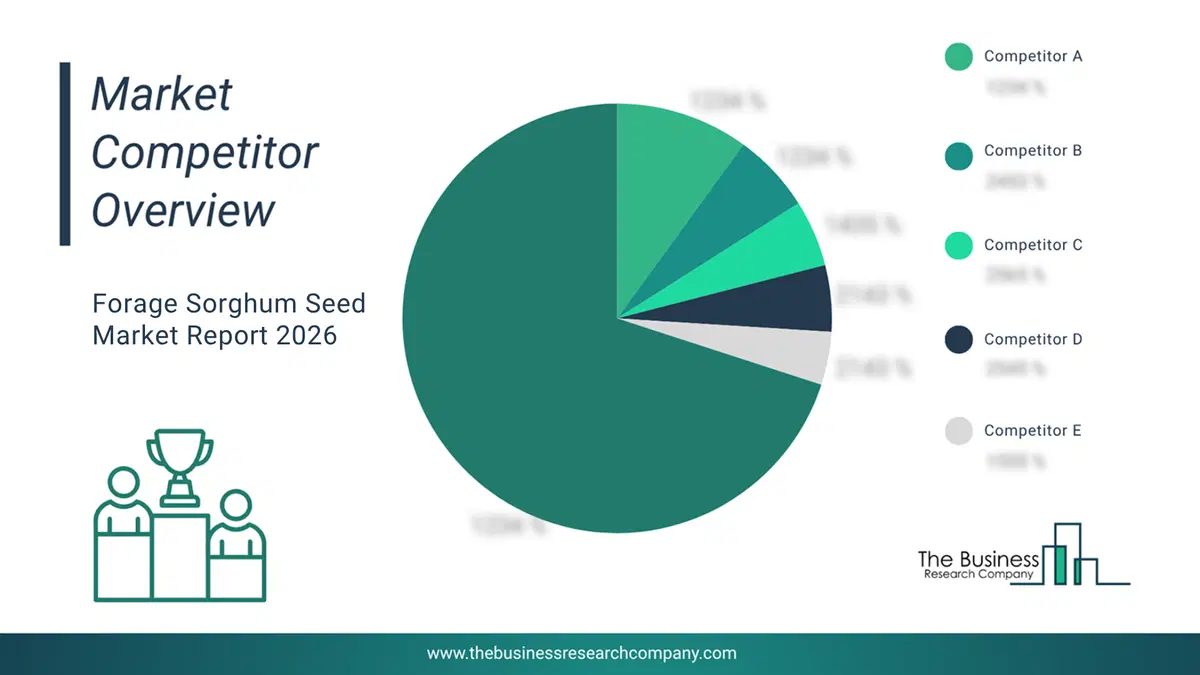
This chart is for illustrative purposes; the full report includes a detailed competitor analysis and comprehensive overview of the top 10 companies in the market.
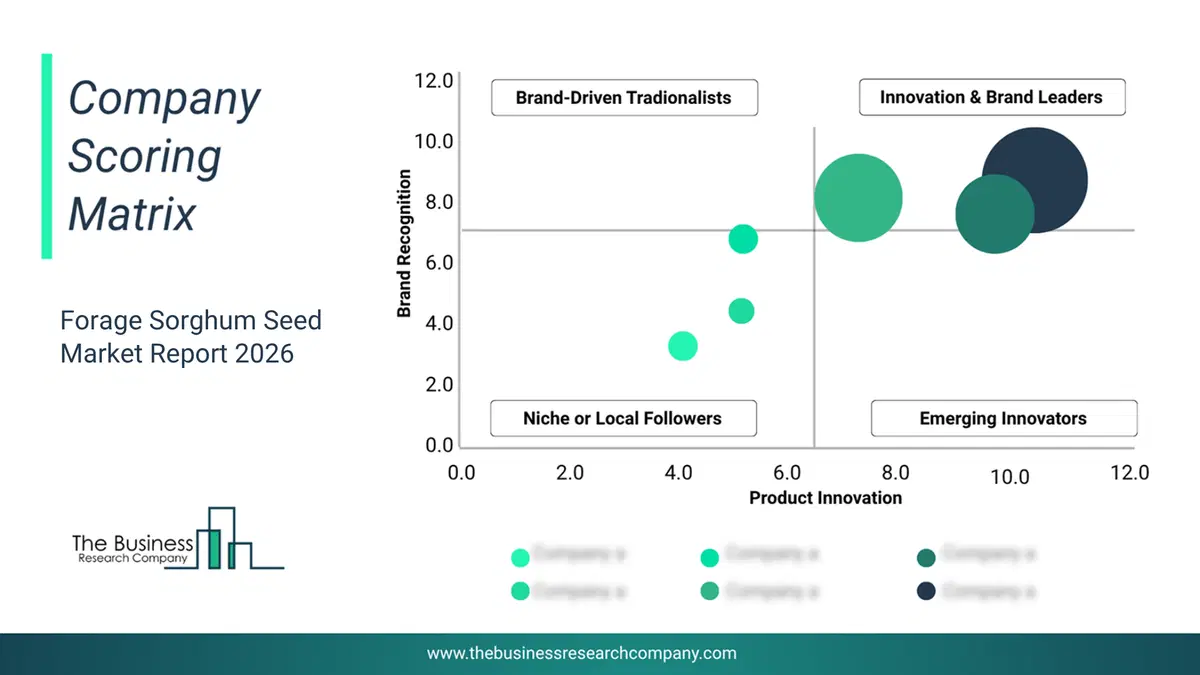
This chart maps companies by product innovation and brand strength, with bubble size indicating relative revenue, helping identify market leaders, challengers, and niche players. This is an illustrative chart; the full report provides a complete and accurate competitive analysis.
Global Forage Sorghum Seed Market Trends and Insights
Major companies operating in the forage sorghum seed market are focusing on developing innovative solutions such as prussic acid-free sorghum traits to improve livestock safety, extend grazing periods, and enhance forage management efficiency. Prussic acid-free sorghum traits refer to genetically developed, non-GMO sorghum characteristics that prevent the production of dhurrin, the compound responsible for forming toxic prussic acid in stressed plants. For instance, in May 2025, S&W Seed Company, a US-based agricultural seed company, launched PF Hybrid (prussic acid-free hybrid), a prussic acid-free sorghum trait designed to eliminate the risk of prussic acid formation in forage sorghum. It offers benefits such as safer livestock grazing, extended grazing windows after frost or drought, and high forage performance without compromising nutritional value. The launch aims to help customers reduce livestock poisoning risks and improve grazing flexibility while supporting advancements in sustainable forage production and livestock management.What Are Latest Mergers And Acquisitions In The Forage Sorghum Seed Market?
In September 2025, Warner Seeds Inc., a US-based seed company, acquired the Sorghum Partners brand, its germplasm portfolio, and all sorghum-related assets from S&W Seed Company for an undisclosed amount. Through this acquisition, Warner Seeds Inc. aims to strengthen its position in the sorghum seed industry by expanding its breeding capabilities, product offerings, and access to advanced sorghum genetics. S&W Seed Company is a US-based agricultural seed company that provides sorghum seed varieties and related germplasm resources for agricultural applications.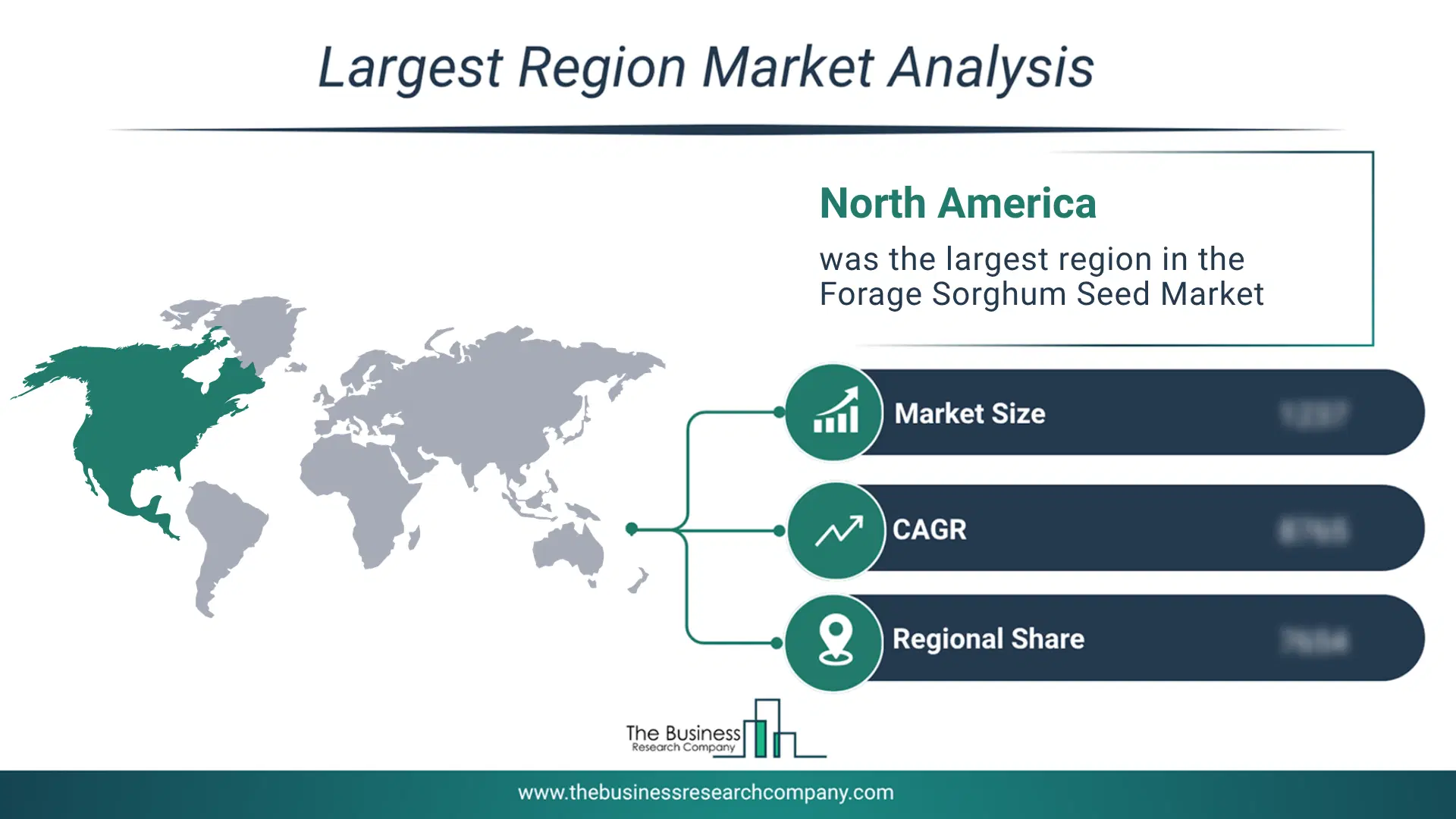
Regional Outlook
North America was the largest region in the forage sorghum seed market in 2025. Asia-Pacific is expected to be the fastest-growing region in the forecast period. The regions covered in this market report are Asia-Pacific, South East Asia, Western Europe, Eastern Europe, North America, South America, Middle East, Africa. The countries covered in this market report are Australia, Brazil, China, France, Germany, India, Indonesia, Japan, Taiwan, Russia, South Korea, UK, USA, Canada, Italy, Spain.What Defines the Forage Sorghum Seed Market?
The forage sorghum seed market consists of sales of conventional forage sorghum seeds, treated forage sorghum seeds, and untreated forage sorghum seeds. Values in this market are ‘factory gate’ values, that is, the value of goods sold by the manufacturers or creators of the goods, whether to other entities (including downstream manufacturers, wholesalers, distributors, and retailers) or directly to end customers. The value of goods in this market includes related services sold by the creators of the goods.How is Market Value Defined and Measured?
The market value is defined as the revenues that enterprises gain from the sale of goods and/or services within the specified market and geography through sales, grants, or donations in terms of the currency (in USD unless otherwise specified). The revenues for a specified geography are consumption values that are revenues generated by organizations in the specified geography within the market, irrespective of where they are produced. It does not include revenues from resales along the supply chain, either further along the supply chain or as part of other products.
This chart presents market attractiveness based on a quantitative evaluation of growth, competition, strategic alignment, and risk, offering a clear view of opportunity areas for decision-making. This chart is for illustrative purposes; the full report contains the complete analysis.

This chart highlights the Total Addressable Market (TAM) by estimating the maximum revenue opportunity using an assumption-driven approach, supporting strategic planning and opportunity sizing across markets. The chart is illustrative; the full report provides a more comprehensive analysis.
What Key Data and Analysis Are Included in the Forage Sorghum Seed Market Report 2026?
The forage sorghum seed market research report is one of a series of new reports from The Business Research Company that provides market statistics, including industry global market size, regional shares, competitors with the market share, detailed market segments, market trends and opportunities, and any further data you may need to thrive in the forage sorghum seed industry. The market research report delivers a complete perspective of everything you need, with an in-depth analysis of the current and future state of the industry.Forage Sorghum Seed Market Report Forecast Analysis
| Report Attribute | Details |
|---|---|
| Market Size Value In 2026 | $2.62 billion |
| Revenue Forecast In 2030 | $3.36 billion |
| Growth Rate | CAGR of 6.5% from 2026 to 2030 |
| Base Year For Estimation | 2025 |
| Actual Estimates/Historical Data | 2020-2025 |
| Forecast Period | 2026 - 2030 |
| Market Representation | Revenue in USD Billion and CAGR from 2026 to 2030 |
| Segments Covered | Seed Type, Production Method, Distribution Channel, Application, End Use |
| Regional Scope | Asia-Pacific, Western Europe, Eastern Europe, North America, South America, Middle East, Africa |
| Country Scope | The countries covered in the report are Australia, Brazil, China, France, Germany, India, Indonesia, Japan, Taiwan, Russia, South Korea, UK, USA, Canada, Italy, Spain. |
| Key Companies Profiled | Bayer AG, Corteva Inc., UPL Limited, KWS SAAT SE & Co. KGaA, DLF Seeds A/S, Royal Barenbrug Group, RAGT Semences SAS, AgReliant Genetics LLC, Nufarm Limited, S&W Seed Company, GreenPoint Ag Holdings LLC, Sharp Bros. Seed Co., Johnston Seed Company, Scott Seed Company Inc., Great Basin Seed LLC, Gayland Ward Seed Company Inc. |
| Customization Scope | Request for Customization |
| Pricing And Purchase Options | Explore Purchase Options |