
Forestry Lubricants Market Report 2026
Global Outlook – By Product Type (Synthetic, Synthetic Blend, Bio-Based, Mineral, Other Types), By Application (Engine, Transmission And Gears, Hydraulics, Greasing, Chain Oils Or Saw Guide Oils, Other Applications), By End-User (Sawmills, Wood Products Manufacturing, Biomass Pellet Mills, Pulp Mills, Harvesting Or Logging, Other End-Users) – Market Size, Trends, Strategies, and Forecast to 2030
Forestry Lubricants Market Overview
• Forestry Lubricants market size has reached to $4.96 billion in 2025 • Expected to grow to $6.13 billion in 2030 at a compound annual growth rate (CAGR) of 4.3% • Growth Driver: Rising Demand For Forestry Equipment Fuels Growth In The Forestry Lubricant Market • Market Trend: Advancements In Biobased Hydrocarbon Oils For Sustainable Forestry Lubrication • Asia-Pacific was the largest region and fastest growing region.What Is Covered Under Forestry Lubricants Market?
Forestry lubricants are specialized oils and greases designed to protect and enhance the performance of machinery and equipment used in the forestry industry. These lubricants are formulated to withstand the harsh environmental conditions often encountered in forestry operations, such as extreme temperatures, heavy loads, and exposure to dirt, moisture, and debris. The main types of forestry lubricant products are synthetic, synthetic blend, bio-based, minerals, and others. Synthetic lubricants are artificial oils created from chemical compounds to improve efficiency and reduce wear on mechanical parts of forestry equipment that operate under demanding conditions. It is used for various applications such as engines, transmissions and gears, hydraulics, greasing, chain oils or saw guide oils, paper machine oils, and others by several end-users, including sawmills, wood product manufacturing, biomass pellet mills, pulp mills, paper and paperboard mills, harvesting or logging, original equipment manufacturers (OEM), and others.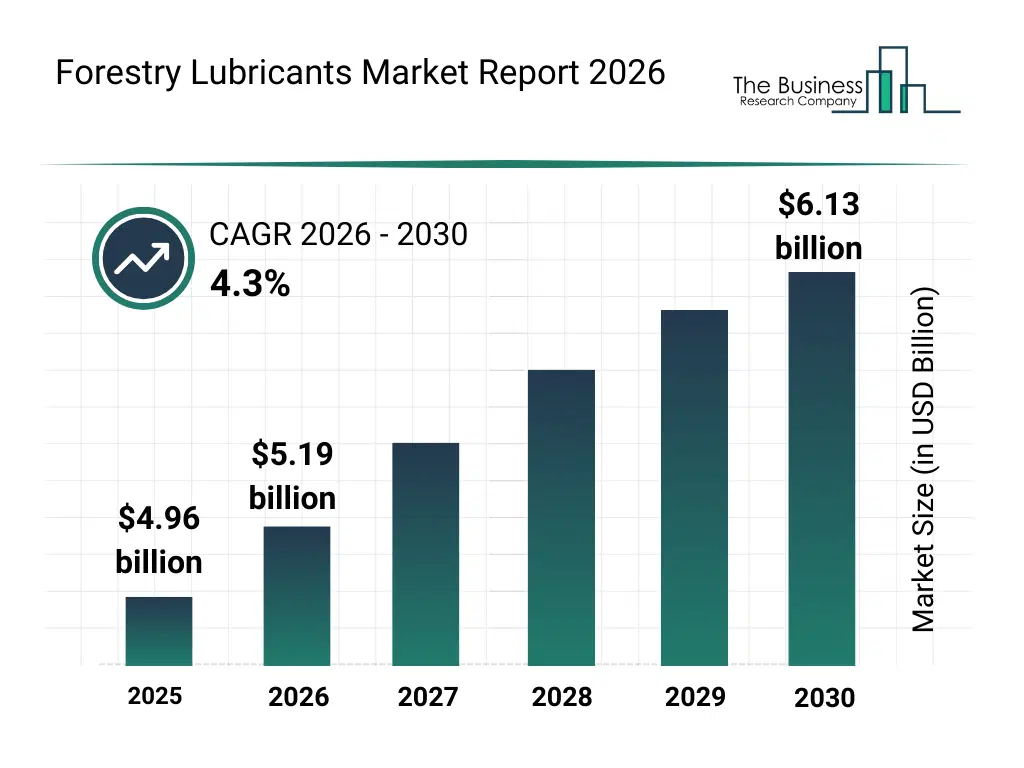
What Is The Forestry Lubricants Market Size and Share 2026?
The forestry lubricants market size has grown steadily in recent years. It will grow from $4.96 billion in 2025 to $5.19 billion in 2026 at a compound annual growth rate (CAGR) of 4.6%. The growth in the historic period can be attributed to growth of forestry mechanization, equipment maintenance needs, mineral oil usage, expansion of logging activities, demand for machinery protection.What Is The Forestry Lubricants Market Growth Forecast?
The forestry lubricants market size is expected to see steady growth in the next few years. It will grow to $6.13 billion in 2030 at a compound annual growth rate (CAGR) of 4.3%. The growth in the forecast period can be attributed to sustainability mandates, adoption of bio lubricants, automation in forestry, equipment efficiency optimization, stricter environmental norms. Major trends in the forecast period include rising use of bio based forestry lubricants, growing demand for heavy duty equipment oils, expansion of mechanized logging operations, increased focus on equipment longevity, adoption of environmentally friendly lubricants.
Global Forestry Lubricants Market Segmentation
1) By Product Type: Synthetic, Synthetic Blend, Bio-Based, Mineral, Other Types 2) By Application: Engine, Transmission And Gears, Hydraulics, Greasing, Chain Oils Or Saw Guide Oils, Other Applications 3) By End-User: Sawmills, Wood Products Manufacturing, Biomass Pellet Mills, Pulp Mills, Harvesting Or Logging, Other End-Users Subsegments: 1) By Synthetic Lubricants: Polyalphaolefin (PAO), Esters, Polyalkylene Glycol (PAG) 2) By Synthetic Blend Lubricants: PAO + Mineral Oil Blend, Ester + Mineral Oil Blend, PAO + Bio-Based Blend, Synthetic Hydrocarbons + Additives 3) By Bio-Based Lubricants: Vegetable Oil-based, Bio-esters, High Oleic Oils, Hydro-treated Vegetable Oils (HVO) 4) By Mineral Lubricants: Paraffinic Oils, Naphthenic Oils, Group I Base Oils, Group II Base Oils, Group III Base Oils 5) By Other Types: Semi-synthetic Lubricants, Re-refined Lubricants, Grease-based LubricantsWhat Is The Driver Of The Forestry Lubricants Market?
The increasing demand for forestry equipment is expected to propel the growth of the forestry lubricant market going forward. Forestry equipment involves the tools and machines required to manage, harvest, process, and transport forest products. The demand for forestry equipment is driven by factors such as timber demand, sustainable forestry practices, and economic growth. Forestry lubricants reduce friction and protect against corrosion, extending machinery life and lowering maintenance costs while increasing fuel efficiency and productivity in tough conditions. For instance, in September 2025, according to a report published by Forest Research, a UK-based government research agency, the world removed about 3.9 billion cubic meters (under-bark) of wood from global forests in 2023. Therefore, the increasing demand for forestry equipment is driving the growth of the forestry lubricant industry.Key Players In The Global Forestry Lubricants Market
Major companies operating in the forestry lubricants market are Exxon Mobil Corporation, Shell plc, Chevron Corporation, Repsol SA, The Lubrizol Corporation, FUCHS PETROLUB SE, Quaker Chemical Corporation, LIQUI MOLY GmbH, Petro-Canada Lubricants Inc., Gulf Oil International Ltd., Penrite Oil Co Pty Ltd., Cortec Corporation, ADDINOL Lube Oil GmbH, RSC Bio Solutions, Ravensberger Schmierstoffvertrieb GmbH, Exol Lubricants Limited, TotalEnergies New Zealand Limited, BioBlend Renewable Resources LLC, KLONDIKE Lubricants Corporation, Tetrosyl Ltd.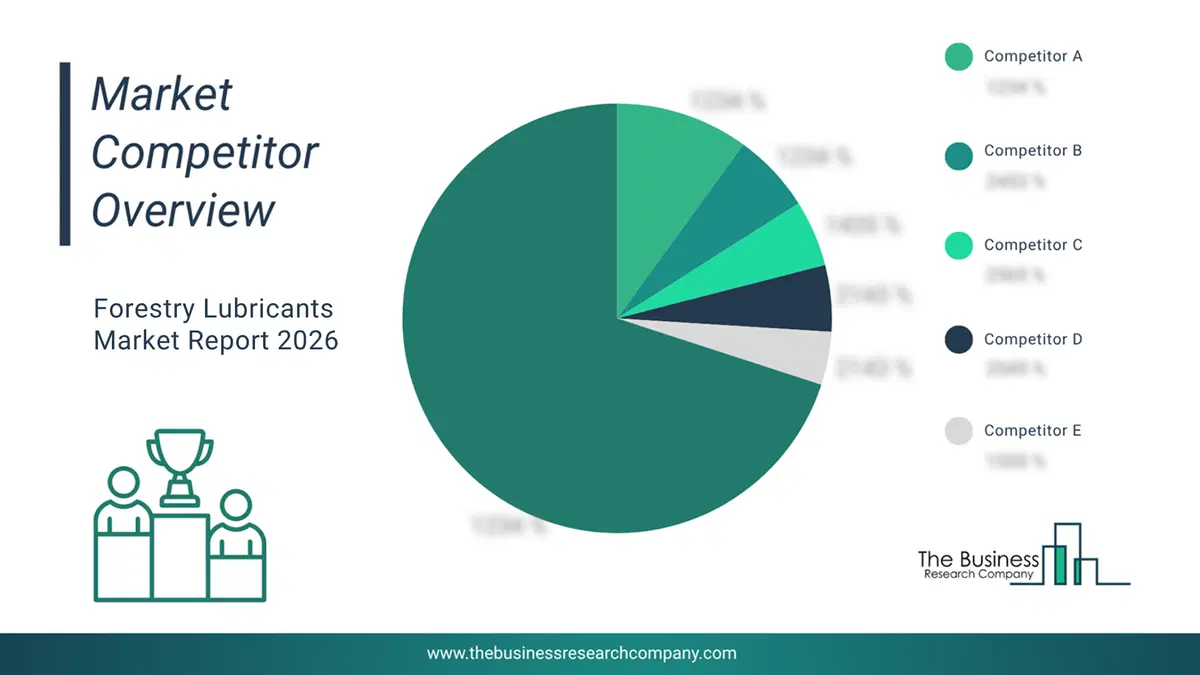
This chart is for illustrative purposes; the full report includes a detailed competitor analysis and comprehensive overview of the top 10 companies in the market.
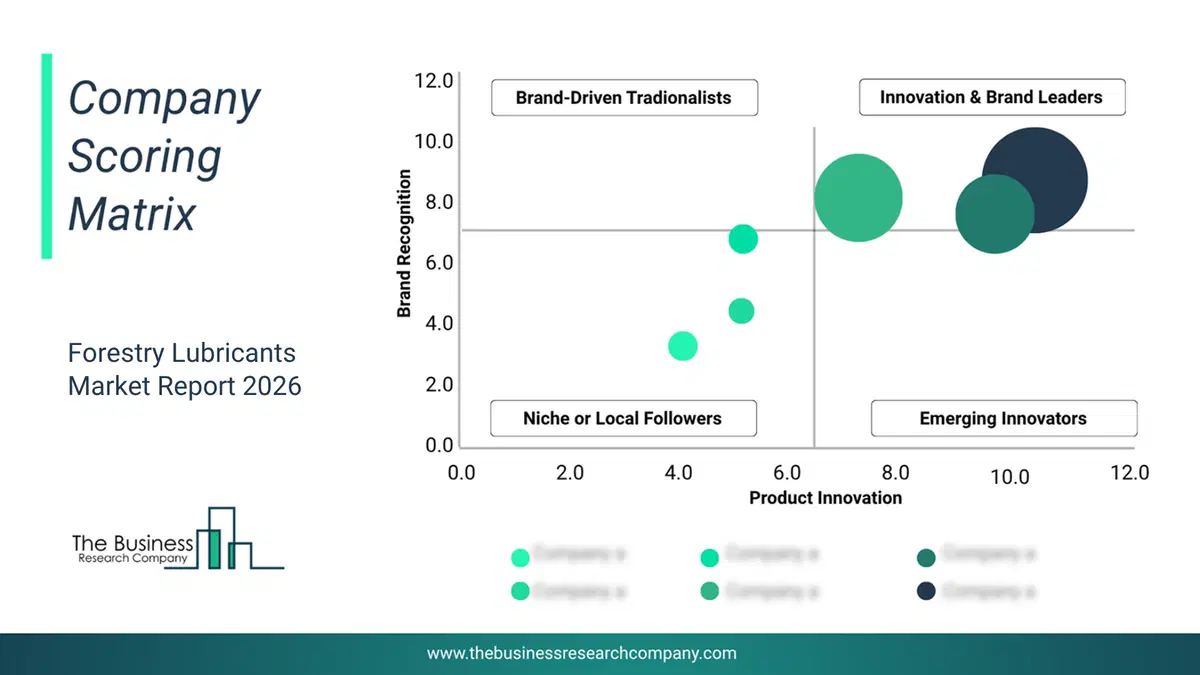
This chart maps companies by product innovation and brand strength, with bubble size indicating relative revenue, helping identify market leaders, challengers, and niche players. This is an illustrative chart; the full report provides a complete and accurate competitive analysis.
Global Forestry Lubricants Market Trends and Insights
Major companies operating in the forestry lubricants market are focused on developing advanced products such as biobased hydrocarbon oils to reduce environmental impact and increase sustainability while retaining excellent performance under hard forestry circumstances. Biobased hydrocarbon oils are lubricants derived from renewable biological sources that offer an environmentally responsible way to lower the carbon footprint and ecological effects of lubricant consumption. For instance, in February 2024, Kraton Corporation, a US-based chemical company, launched SYLVASOLV, a lubricant made from crude tall oil (CTO), a byproduct of the Kraft pulp industry. The CTO is sourced from ethically managed trees to ensure that it does not compete with food crops and helps reduce the carbon footprint. The versatile SYLVASOLV product line is used in various industries, including fertilizer coatings and crop protection. SYLVASOLV 1000 is particularly effective for improving dust control and anti-caking properties. These oils offer high solvency power, reduced viscosity, and excellent performance at low temperatures, providing greater flexibility and safety in the formulation.What Are Latest Mergers And Acquisitions In The Forestry Lubricants Market?
In March 2023, Aramco, a Saudi Arabia-based petroleum refinery company, acquired Valvoline Inc.'s global products business, known as Valvoline Global Operations (VGO), for $2.65 billion. The acquisition aims to expand Aramco's downstream operations and enhance its global presence in the lubricants market. Valvoline Inc. is a US-based lubricant company that manufactures lubricants for agricultural machinery and forestry equipment, such as Bio-Lical lubricating grease.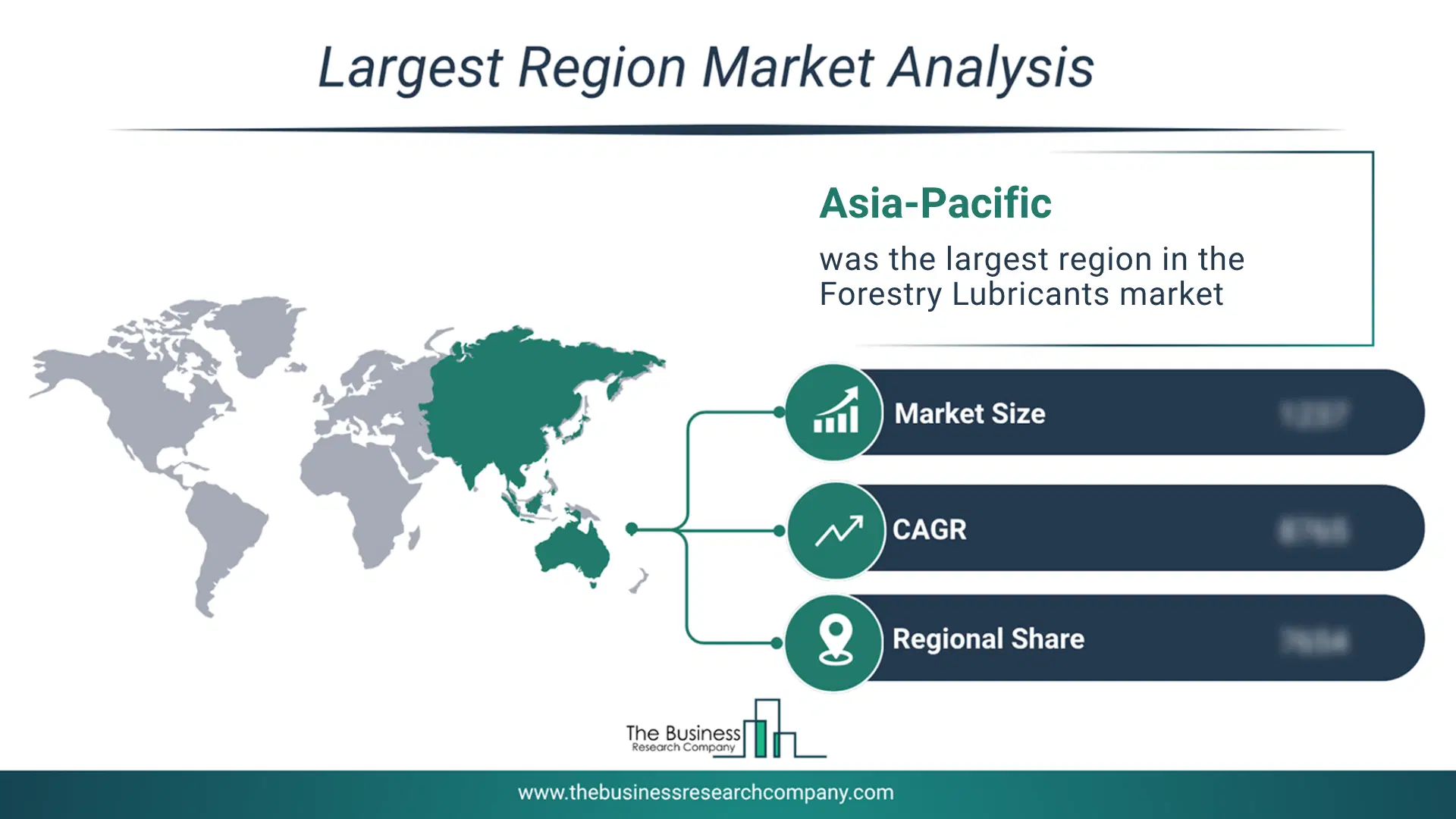
Regional Insights
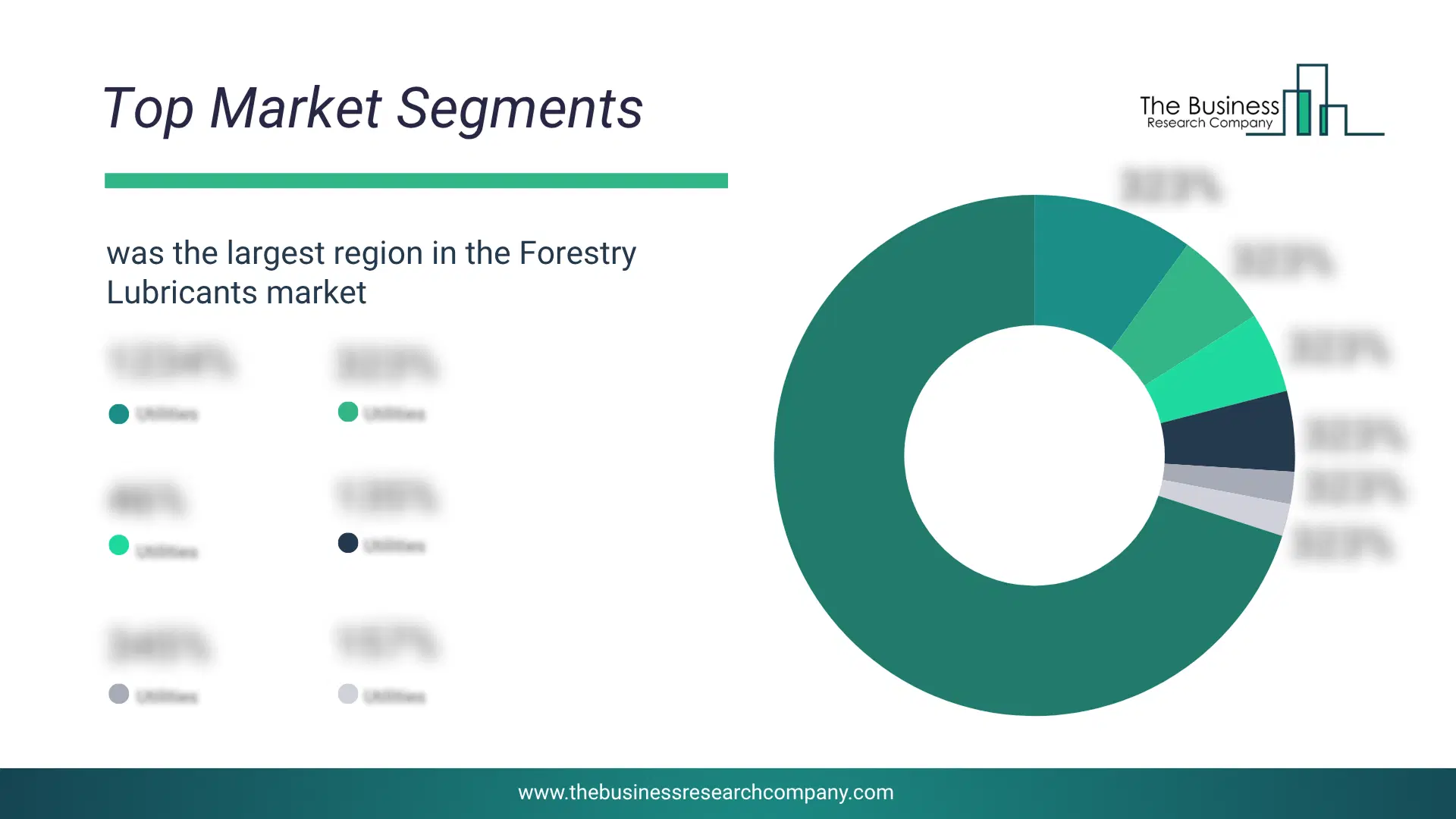
Asia-Pacific was the largest region in the forestry lubricants market in 2025. North America is expected to be the fastest-growing region in the forecast period. The regions covered in this market report are Asia-Pacific, South East Asia, Western Europe, Eastern Europe, North America, South America, Middle East, Africa The countries covered in this market report are Australia, Brazil, China, France, Germany, India, Indonesia, Japan, Taiwan, Russia, South Korea, UK, USA, Canada, Italy, SpainWhat Defines the Forestry Lubricants Market?
The forestry lubricants market consists of sales of hydraulic fluids, greases, engine oils, and gear oils. Values in this market are ‘factory gate’ values, that is, the value of goods sold by the manufacturers or creators of the goods, whether to other entities (including downstream manufacturers, wholesalers, distributors, and retailers) or directly to end customers. The value of goods in this market includes related services sold by the creators of the goods.How is Market Value Defined and Measured?
The market value is defined as the revenues that enterprises gain from the sale of goods and/or services within the specified market and geography through sales, grants, or donations in terms of the currency (in USD unless otherwise specified). The revenues for a specified geography are consumption values that are revenues generated by organizations in the specified geography within the market, irrespective of where they are produced. It does not include revenues from resales along the supply chain, either further along the supply chain or as part of other products.
This chart presents market attractiveness based on a quantitative evaluation of growth, competition, strategic alignment, and risk, offering a clear view of opportunity areas for decision-making. This chart is for illustrative purposes; the full report contains the complete analysis.

This chart highlights the Total Addressable Market (TAM) by estimating the maximum revenue opportunity using an assumption-driven approach, supporting strategic planning and opportunity sizing across markets. The chart is illustrative; the full report provides a more comprehensive analysis.
What Key Data and Analysis Are Included in the Forestry Lubricants Market Report 2026?
The forestry lubricants market research report is one of a series of new reports from The Business Research Company that provides market statistics, including industry global market size, regional shares, competitors with the market share, detailed market segments, market trends and opportunities, and any further data you may need to thrive in the forestry lubricants industry. The market research report delivers a complete perspective of everything you need, with an in-depth analysis of the current and future state of the industry.Forestry Lubricants Market Report Forecast Analysis
| Report Attribute | Details |
|---|---|
| Market Size Value In 2026 | $5.19 billion |
| Revenue Forecast In 2030 | $6.13 billion |
| Growth Rate | CAGR of 4.6% from 2026 to 2030 |
| Base Year For Estimation | 2025 |
| Actual Estimates/Historical Data | 2020-2025 |
| Forecast Period | 2026 - 2030 |
| Market Representation | Revenue in USD Billion and CAGR from 2026 to 2030 |
| Segments Covered | Product Type, Application, End-User |
| Regional Scope | Asia-Pacific, Western Europe, Eastern Europe, North America, South America, Middle East, Africa |
| Country Scope | The countries covered in this market report are Australia, Brazil, China, France, Germany, India, Indonesia, Japan, Taiwan, Russia, South Korea, UK, USA, Canada, Italy, Spain |
| Key Companies Profiled | Exxon Mobil Corporation, Shell plc, Chevron Corporation, Repsol SA, The Lubrizol Corporation, FUCHS PETROLUB SE, Quaker Chemical Corporation, LIQUI MOLY GmbH, Petro-Canada Lubricants Inc., Gulf Oil International Ltd., Penrite Oil Co Pty Ltd., Cortec Corporation, ADDINOL Lube Oil GmbH, RSC Bio Solutions, Ravensberger Schmierstoffvertrieb GmbH, Exol Lubricants Limited, TotalEnergies New Zealand Limited, BioBlend Renewable Resources LLC, KLONDIKE Lubricants Corporation, Tetrosyl Ltd. |
| Customization Scope | Request for Customization |
| Pricing And Purchase Options | Explore Purchase Options |