
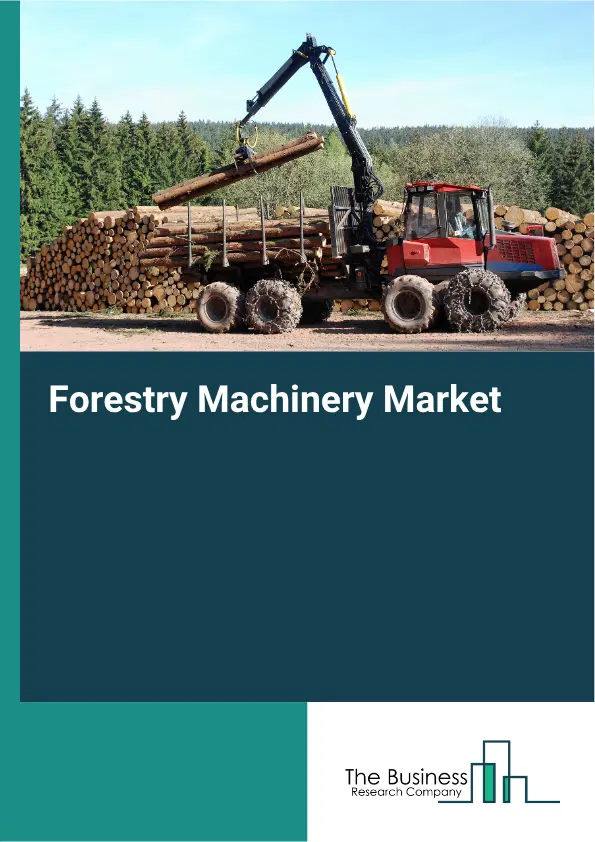
Forestry Machinery Global Market Opportunities And Strategies To 2035
By Type (Feller Bunchers, Harvesters, Skidders, Loaders, Forwarders, Yarders, Other Types), By Operation (Diesel, Electrical Hybrid), By Technology (Manual/Semi-Automatic, Fully Automatic), And By Region, Opportunities And Strategies – Global Forecast To 2035
Forestry Machinery Market Definition
Forestry machinery refers to specialized equipment and mechanical systems used in forestry operations for harvesting, processing, transporting and handling timber and other forest products. These machines are designed to improve the efficiency, productivity and safety of forestry activities carried out in natural forests, plantations and managed woodland areas. Forestry machinery is used by logging contractors, timber harvesting companies, forest management organizations, pulp and paper manufacturers, sawmills and government forestry departments. The machinery is employed throughout the forestry value chain, including tree felling, delimbing, bucking, skidding, loading, forwarding and transportation of logs from forest sites to processing facilities. Forestry machinery is widely used in commercial forestry operations, reforestation projects, biomass production and land-clearing activities across both developed and developing economies. The forestry machinery market consists of revenues generated by entities (organizations, sole traders and partnerships) through the manufacture and sale of machinery and equipment used in forestry and logging operations. These machines are utilized in forestry applications to improve timber extraction efficiency, reduce labor dependency and minimize operational downtime. Forestry machinery is commonly integrated with advanced technologies such as GPS systems, telematics, automation controls and hydraulic systems to optimize machine performance and operational monitoring. The equipment is used in rugged terrains and adverse environmental conditions, enabling the mechanized harvesting and transportation of timber products while improving worker safety and reducing manual intervention.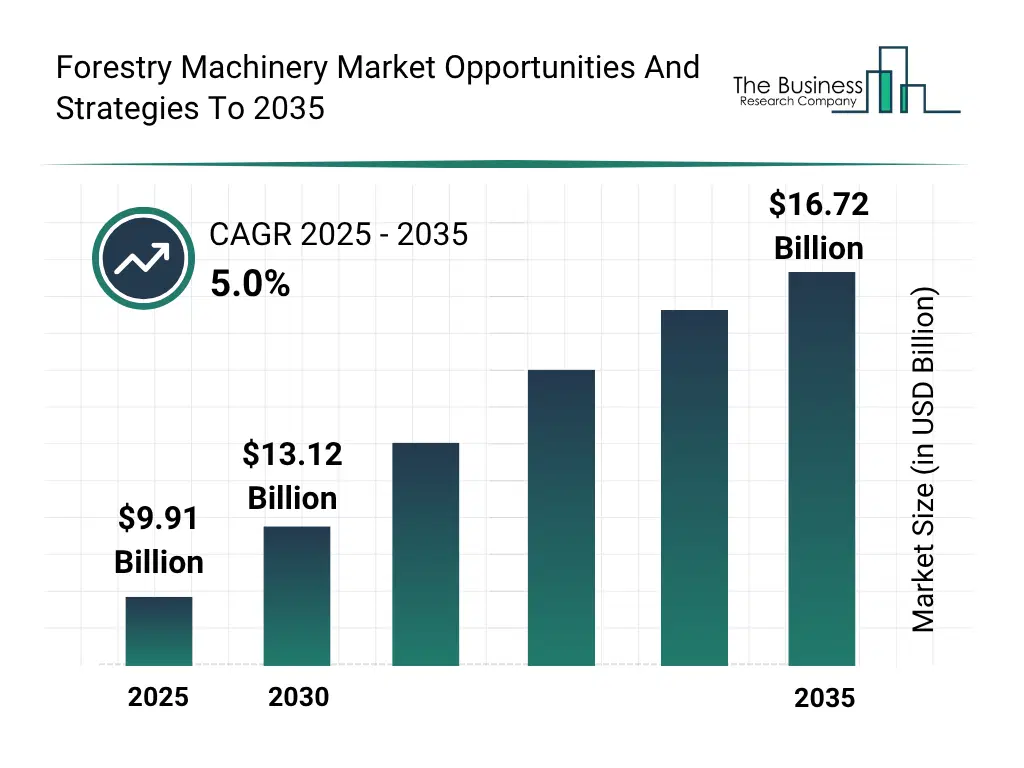
Forestry Machinery Market Size
The global forestry machinery market reached a value of nearly $9,911.6 million in 2025, having grown at a compound annual growth rate (CAGR) of 7.0% since 2020. The market is expected to grow from $9,911.6 million in 2025 to $13,121.4 million in 2030 at a rate of 5.8%. The market is then expected to grow at a CAGR of 5.0% from 2030 and reach $16,722.0 million in 2035. Growth in the historic period resulted from expansion of the pulp and paper industry, growing demand for wood and wood products, rising labor shortages in manual logging operations and rising demand for timber. Factors that negatively affected growth in the historic period were high initial cost of forestry machinery and high fuel and operating costs. Going forward, expansion of reforestation and afforestation projects, rising global demand for sustainable building materials, expansion of wood pellet and biomass fuel production and expansion of bioenergy and biomass power generation will drive the growth. Factors that could hinder the growth of the forestry machinery market in the future include shortage of skilled operators, seasonal and weather-related operational challenges and impact of trade wars and tariffs.
Forestry Machinery Market Segmentation
The forestry machinery market is segmented by type, by operation and by technology.By Type –
The forestry machinery market is segmented by type into:
- a) Feller Bunchers
- b) Harvesters
- c) Skidders
- d) Loaders
- e) Forwarders
- f) Yarders
- g) Other Types
By Operation –
The forestry machinery market is segmented by operation into:
- a) Diesel
- b) Electrical Hybrid
By Technology –
The forestry machinery market is segmented by technology into:
- a) Manual/Semi-Automatic
- b) Fully Automatic
By Geography - The forestry machinery market is segmented by geography into:
- China
- India
- Japan
- Australia
- South Korea
- Indonesia
- USA
- Canada
- Brazil
- France
- Germany
- UK
- Italy
- Spain
- Russia
-
o Asia Pacific
o Africa