
Forestry Software Market Report 2026
Global Outlook – By Product Type (On-Premises Forestry Software, Cloud-Based Forestry Software), By Technology (Cut-To-Length, Geospatial, Fire Detection), By Application (Forest Management, Logging Management, Inventory And Logistics Management, Other Applications) – Market Size, Trends, Strategies, and Forecast to 2030
Forestry Software Market Overview
• Forestry Software market size has reached to $1.48 billion in 2025 • Expected to grow to $3.09 billion in 2030 at a compound annual growth rate (CAGR) of 15.8% • Growth Driver: Fueling Forestry Software Market Growth The Role of Increasing Demand for forest products • Market Trend: Advancing Forestry Efficiency Cloud-Based Log Settlement Solutions By Leading Companies • North America was the largest region in 2025.Market Gains By 2030 – Top Opportunities By Segment
Market Gain identifies the most promising market opportunities by highlighting the segments or products expected to generate the highest incremental revenue growth over the next five years.
What Is Covered Under Forestry Software Market?
Forestry software is specialized technology designed to streamline and optimize various aspects of forest management, including inventory tracking, planning, sustainability assessment, and resource optimization that enhances efficiency and decision-making in the forestry industry. The primary purpose of forestry software is to facilitate efficient management and optimization of forestry operations and resources The main product types of forestry software are on-premises forestry software and cloud-based forestry software. On-premises forestry software refers to software installed and operated on computers located within the organization's premises. The various technologies include cut-to-length, geospatial, and fire detection. These are used in various applications such as forest management, logging management, mapwork harvesting, inventory and logistics management, and others.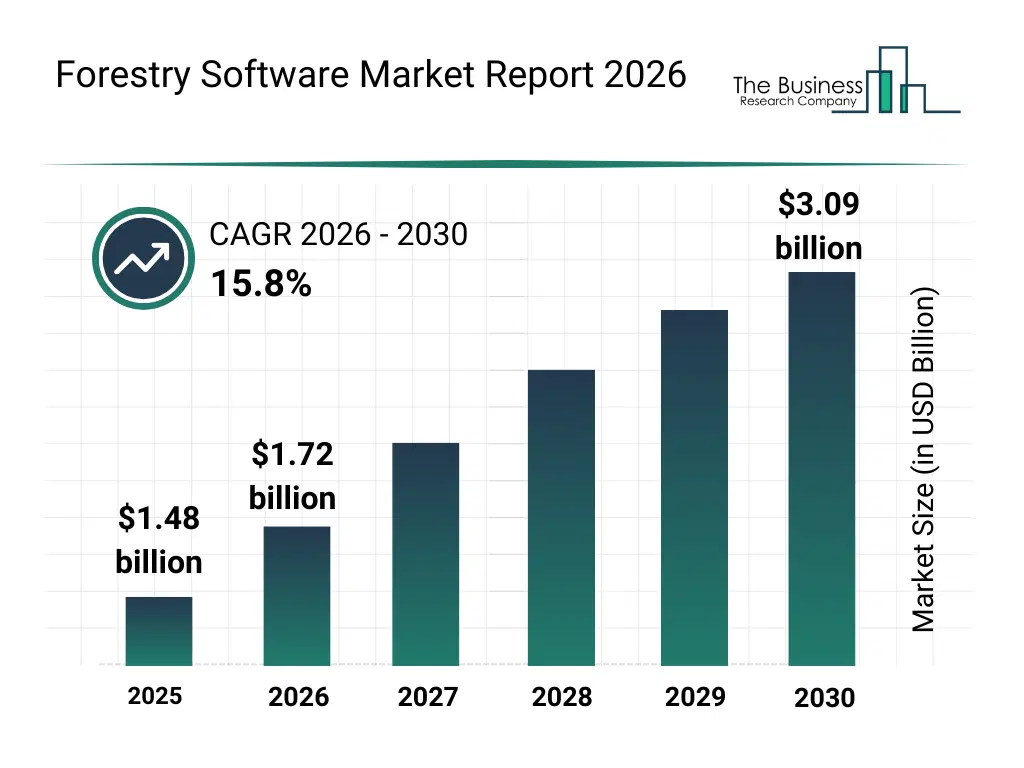
What Is The Forestry Software Market Size and Share 2026?
The forestry software market size has grown rapidly in recent years. It will grow from $1.48 billion in 2025 to $1.72 billion in 2026 at a compound annual growth rate (CAGR) of 16.0%. The growth in the historic period can be attributed to increasing digitization of forest management operations, expansion of commercial forestry activities, rising demand for inventory optimization tools, adoption of gis technologies in land management, growing regulatory reporting requirements.What Is The Forestry Software Market Growth Forecast?
The forestry software market size is expected to see rapid growth in the next few years. It will grow to $3.09 billion in 2030 at a compound annual growth rate (CAGR) of 15.8%. The growth in the forecast period can be attributed to increasing focus on sustainable forest certification, rising adoption of AI-driven forest analytics, expansion of smart forestry initiatives, growing demand for real-time inventory tracking, increased investments in cloud-native forestry solutions. Major trends in the forecast period include increasing adoption of cloud-based forestry platforms, rising use of geospatial and gis-based analytics, growing integration of sustainability monitoring tools, expansion of mobile forestry management applications, enhanced focus on data-driven forest planning.
Global Forestry Software Market Segmentation
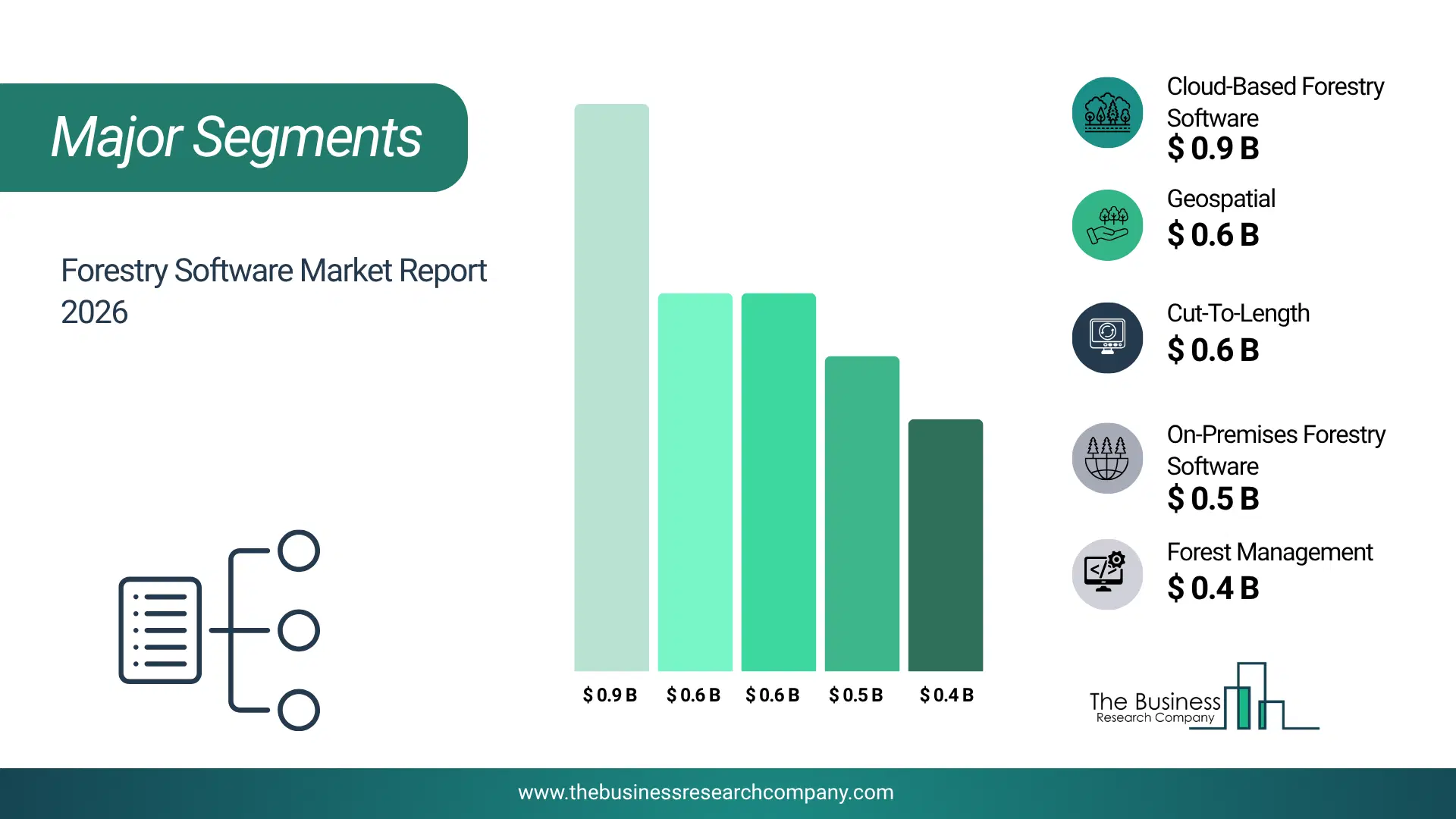
1) By Product Type: On-Premises Forestry Software, Cloud-Based Forestry Software 2) By Technology: Cut-To-Length, Geospatial, Fire Detection 3) By Application: Forest Management, Logging Management, Inventory And Logistics Management, Other Applications Subsegments: 1) By On-Premises Forestry Software: Geographic Information System (GIS) Software, Inventory Management Software, Forest Management Software, Land Use And Management Software 2) By Cloud-Based Forestry Software: Software As A Service (SaaS) Solutions, Forest Management And Planning Tools, GIS And Remote Sensing Solutions, Data Analytics And Reporting Tools, Mobile Forestry Apps The top segments in the forestry software market will be: • Cloud-Based Forestry Software will reach $954.34 Million by 2025. • Geospatial will reach $656.83 Million by 2025. • Cut-To-Length will reach $605.77 Million by 2025. • On-Premises Forestry Software will reach $529.25 Million by 2025. • Forest Management will reach $493.44 Million by 2025.What Is The Driver Of The Forestry Software Market?
The increased demand for forest products is expected to propel the growth of the forestry software market going forward. Forest products refer to a broad range of forest materials, including wood and non-wood resources. Forest products offer environmental benefits compared to non-renewable alternatives such as concrete, steel, and plastic, including environmental sustainability and carbon sequestration awareness. Forestry software empowers forest managers with the tools and insights needed to optimize forest resources, improve operational efficiency, ensure regulatory compliance, and promote sustainable forest management practices, thereby contributing to the increased production of forestry products. For instance, in June 2024, according to the Wood Recyclers Association, a UK-based association, large-scale biomass remained the largest consumer of waste wood in 2023, processing 2.8 million tonnes, which accounts for 63% of the total wood processed, reflecting a 2.6% increase from 2022 and highlighting the crucial role of waste wood biomass in providing secure, low-carbon, baseload power. Therefore, increased demand for forest products is driving the growth of the forestry software industry.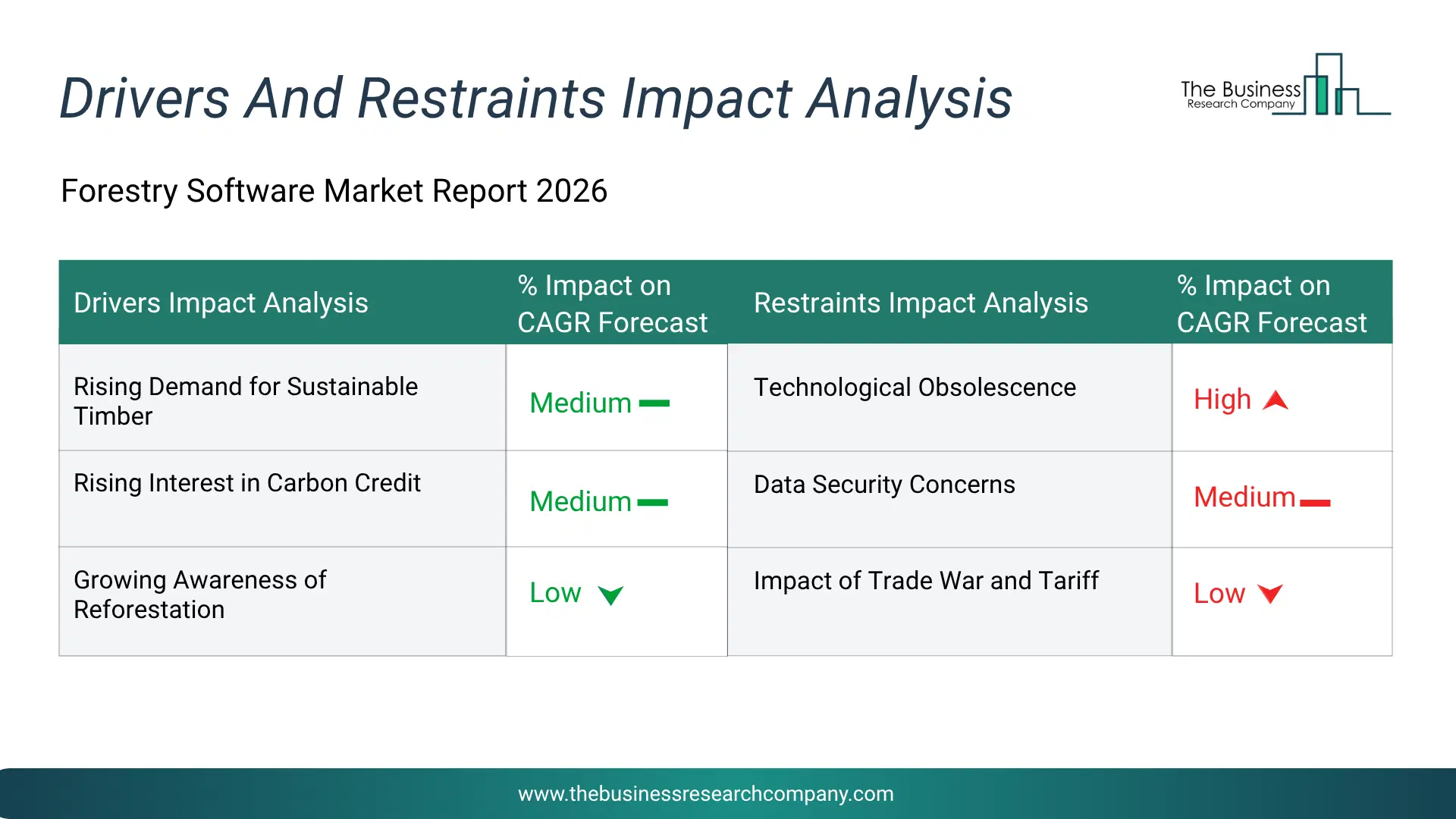
Infographic Chart Showing Key Market Drivers Analysis And Restraints For Forestry Software Market
The chart presents an impact analysis of key drivers and restraints, quantifying their relative influence on the market's growth rate and helping assess the balance between growth enablers and limiting factors. This chart offers a high-level perspective; the full report contains more detailed insights.
How Will The Drivers Impact Growth In The Global Forestry Software Market?
• Rising Demand for Sustainable Timber (Medium) – The rising demand for sustainable timber will become a key driver of growth in the forestry software market by 2030. Forestry software addresses the growing demand for sustainable timber by providing precise tracking of timber origin, growth cycles, and harvesting activities, ensuring adherence to environmental regulations and certification standards. It empowers forest managers to optimize resource utilization, streamline supply chain operations, and maintain transparency, thereby strengthening stakeholder confidence. Furthermore, it enables data-driven decision-making to drive sustainable forestry practices and reduce ecological impact. As a result, the rising demand for sustainable timber is anticipated to contributing to a 1.2% annual growth in the market. • Rising Interest in Carbon Credit (Medium) – The rising interest in carbon credit will emerge as a major factor driving the expansion of the market by 2030. Forestry software is used to accurately measure, monitor, and manage forest carbon stocks, enabling organizations to quantify carbon sequestration for carbon credit programs. By providing data on tree growth, biomass, and land-use changes, it supports verification and reporting required for carbon credit certification. This helps forestry companies and investors capitalize on rising interest in carbon markets while promoting sustainable forest management. Consequently, the rising interest in carbon credit is projected to contributing to a 1.0% annual growth in the market. • Growing Awareness of Reforestation (Low) – The growing awareness of reforestation will serve as a key growth catalyst for the market by 2030. Forestry software promotes reforestation awareness by delivering precise information on forest cover, areas affected by deforestation, and ongoing replanting efforts, which can be visualized and communicated to stakeholders and the public. It allows for tracking tree growth, survival rates, and the effectiveness of reforestation projects, fostering transparency and data-driven decision-making. Moreover, the software aids in educational initiatives and reporting, emphasizing sustainable forest management and encouraging community engagement. Therefore, this growing awareness of reforestation is projected to supporting to a 0.5% annual growth in the market. • Expansion of the Paper Industry (Low) – The expansion of the paper industry will become a significant driver contributing to the growth of the market by 2030 The growth of the paper industry is fuelling demand for forestry software by necessitating more efficient management of timber resources, inventory, and supply chains to satisfy rising raw material requirements. Such software enables paper manufacturers to optimize harvesting operations, monitor wood procurement, and ensure sustainable sourcing practices. Moreover, it facilitates regulatory compliance and enhances production and logistics planning to support scalable and efficient operations. Consequently, the expansion of the paper industry is projected to contributing to a 0.2% annual growth in the market.How Will The Restraints Impact Growth In The Global Forestry Software Market?
• Technological Obsolescence (Medium) – Technological Obsolescence will restrict the growth of the Forestry Software market during the forecast period. The rapid pace of technological advancement in remote sensing, GIS, and AI applications creates challenges for forestry software providers to keep their products current. Software solutions can quickly become outdated as new data collection technologies emerge, requiring continuous investment in research and development. Smaller providers may struggle to sustain the necessary R&D investment, limiting their ability to compete and innovate. • Data Security Concerns (Medium) – Data Security Concerns will restrict the growth of the Forestry Software market during the forecast period. Forestry software platforms increasingly collect and store sensitive data including carbon credit assessments, forest inventory, and geospatial information. The risk of data breaches, cyberattacks, and unauthorized access to proprietary forest data raises concerns among users. Organizations may hesitate to adopt cloud-based solutions due to data sovereignty and privacy concerns, slowing digital transformation in the forestry sector. • Impact of Trade War and Tariff (Low) – Impact of Trade War and Tariff will restrict the growth of the Forestry Software market during the forecast period. Trade tariffs on specialized hardware components, sensors, and drones used in forestry data collection increase costs for software solution providers and end-users. Higher equipment costs can make forestry technology solutions less affordable, particularly for smaller forestry operations with limited budgets. Trade barriers may also restrict the international distribution of forestry software solutions.Key Players In The Global Forestry Software Market
Major companies operating in the forestry software market are Trimble Inc., Environmental Systems Research Institute Inc., Remsoft Inc., Silvacom Ltd., Exacom Inc., Forest Information Technology Systems Inc., Forest Metrix LLC, Assisi Software Corp., LATSYS Pty Ltd., AFRY AB, Metsys Oy, Green Triangle Forest Products Software, Forest Data Solutions Inc., Enfor Consultants Ltd., Woodplan Software Inc., Forsys AB, Planfor SAS, Treemetrics Ltd., Forestreet Ltd., iFOS Forestry Software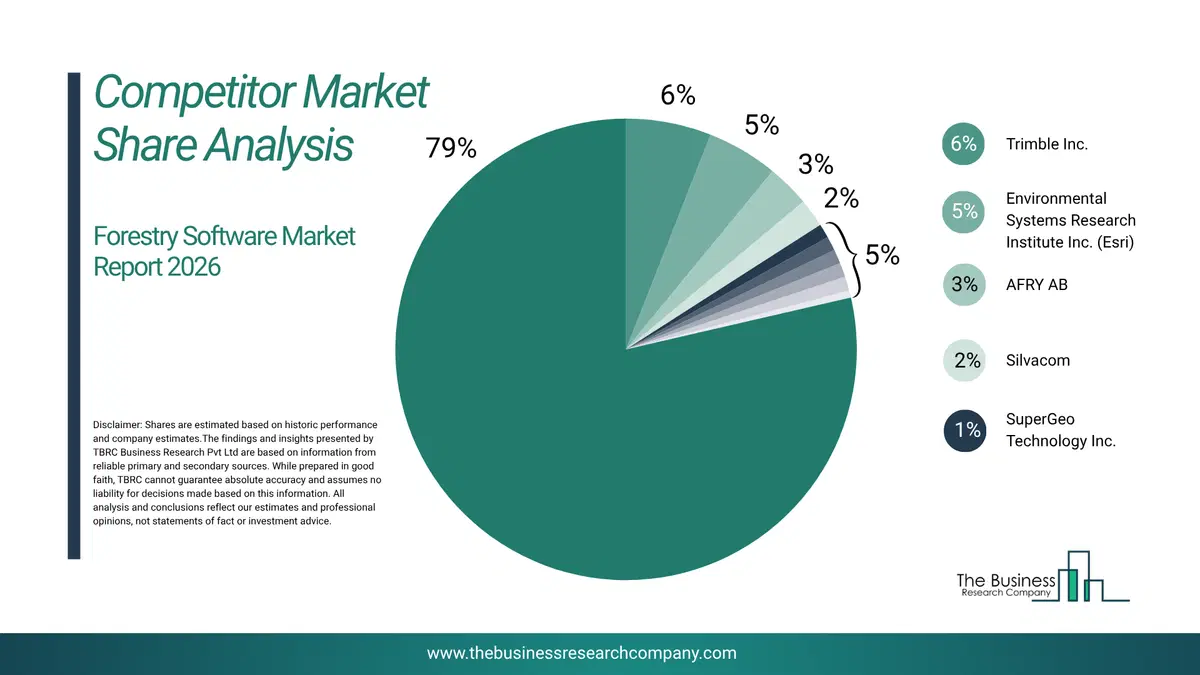
This chart is for illustrative purposes; the full report includes a detailed competitor analysis and comprehensive overview of the top 10 companies in the market.
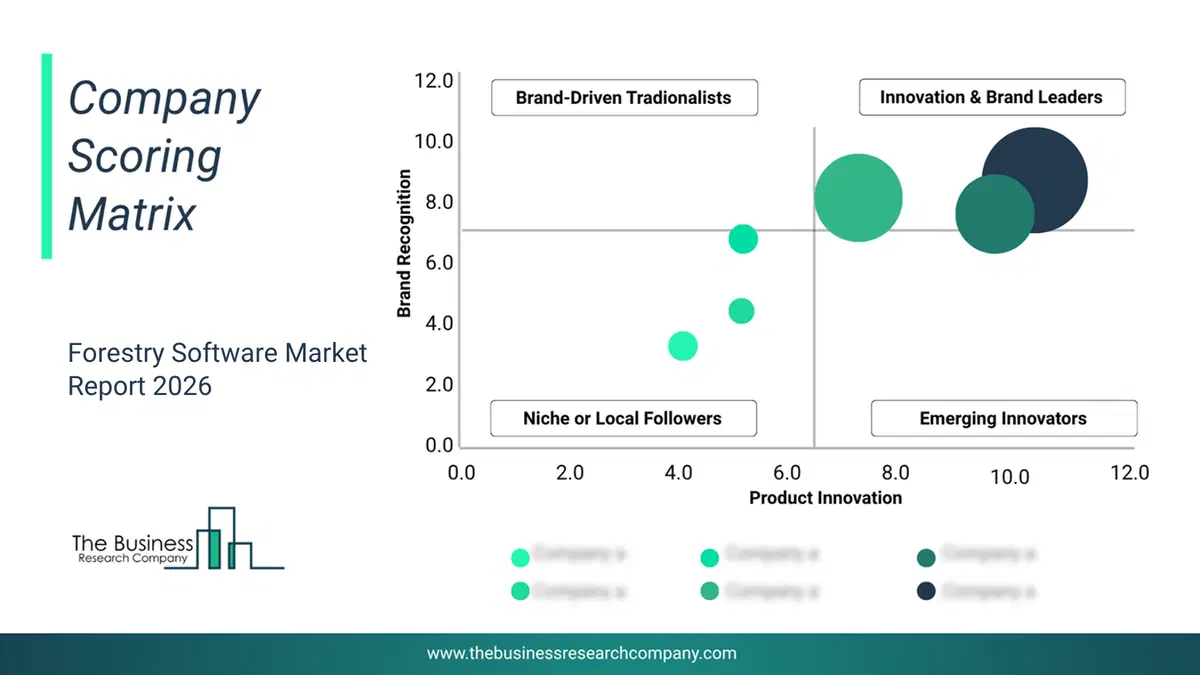
This chart maps companies by product innovation and brand strength, with bubble size indicating relative revenue, helping identify market leaders, challengers, and niche players. This is an illustrative chart; the full report provides a complete and accurate competitive analysis.
Global Forestry Software Market Trends and Insights
Major companies operating in the forestry software market are developing cloud-based log settlement solutions to streamline and automate the process of tracking, valuing, and settling log transactions. This innovative approach enhances efficiency, accuracy, and transparency in forestry operations. Cloud-based log settlement solutions offer forestry companies a scalable, secure, and cost-effective approach to managing log procurement, measurement, valuation, and payment processes, ultimately enhancing operational efficiency, transparency, and compliance in the forestry supply chain. For instance, in July 2023, Trimble, a US-based software company, launched a new cloud-based version of Log Inventory and Management System (LIMS) called LIMS PRO. This new cloud-hosted solution is designed to improve operational visibility and efficiency for small- and medium-sized forest product companies. This enables smaller forestry companies to realize productivity and growth gains previously only accessible to large enterprises. This is achieved by digitizing lumber supply chain workflows and providing features like mobile ticketing, real-time reconciliation, and automated invoicing.What Are Latest Mergers And Acquisitions In The Forestry Software Market?
In April 2023, Waverock Software, a US-based vertical software holding company, acquired PlanIT Geo for an undisclosed amount. The acquisition will provide PlanIT Geo with additional capital, resources, and operational expertise from Waverock Software to help the company scale and innovate its urban forestry software and consulting offerings. PlanIT Geo is a US-based geospatial technology and software company specializing in urban forestry, planning, and natural resources.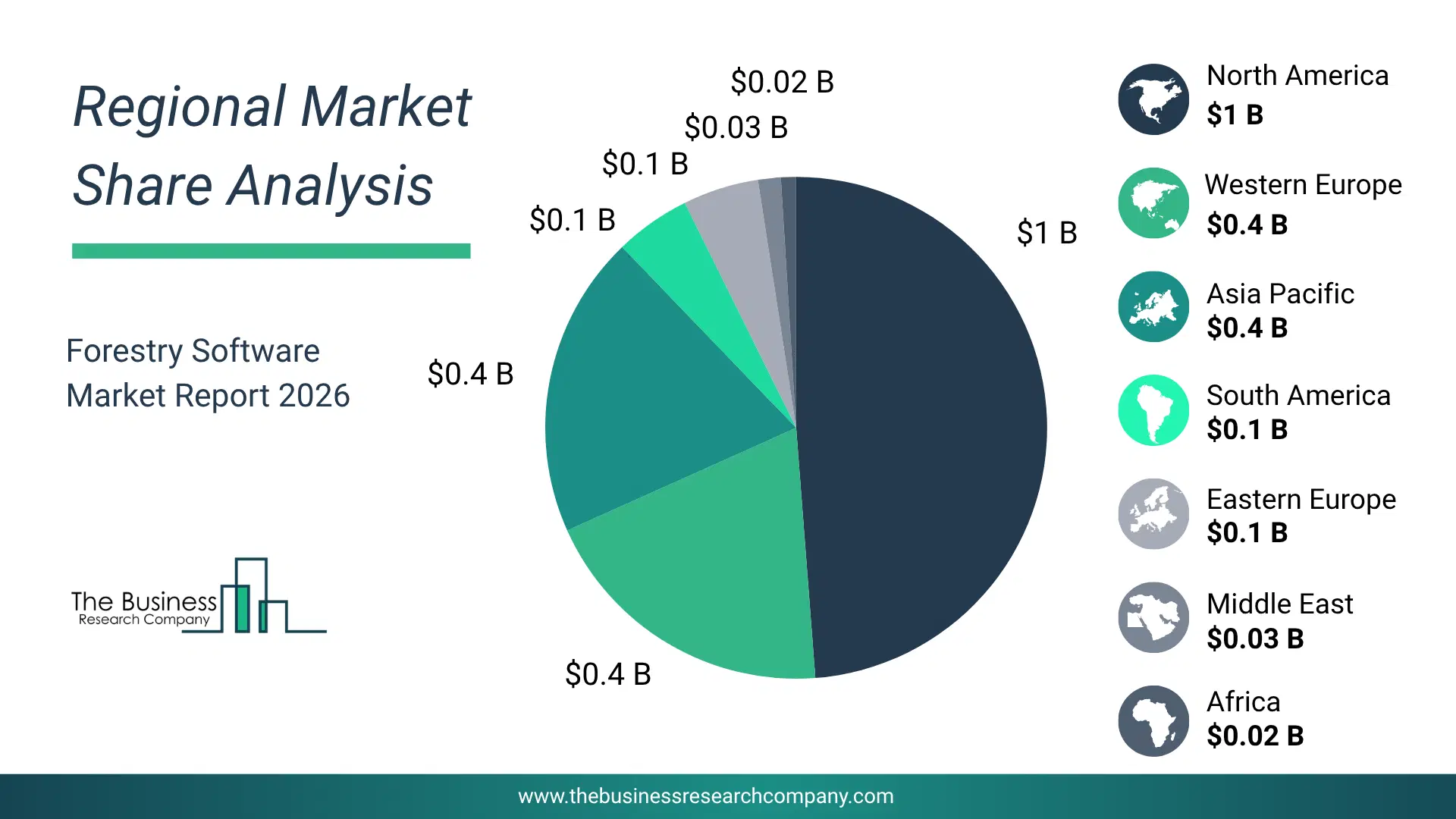
Regional Insights
North America was the largest region in the forestry software market in 2025. The regions covered in this market report are Asia-Pacific, South East Asia, Western Europe, Eastern Europe, North America, South America, Middle East, Africa. The countries covered in this market report are Australia, Brazil, China, France, Germany, India, Indonesia, Japan, Taiwan, Russia, South Korea, UK, USA, Canada, Italy, Spain.What Defines the Forestry Software Market?
The forestry software market consists of revenues earned by entities by providing services such as timber tracking, GIS mapping, harvest planning, sustainability assessment, wildlife habitat management, and carbon sequestration tracking. The market value includes the value of related goods sold by the service provider or included within the service offering. The forestry software market also includes sales of data storage and processing systems, handheld measurement tools, RFID tags and barcode scanners, and remote sensing instruments. Values in this market are ‘factory gate’ values, that is the value of goods sold by the manufacturers or creators of the goods, whether to other entities (including downstream manufacturers, wholesalers, distributors, and retailers) or directly to end customers. The value of goods in this market includes related services sold by the creators of the goods.How is Market Value Defined and Measured?
The market value is defined as the revenues that enterprises gain from the sale of goods and/or services within the specified market and geography through sales, grants, or donations in terms of the currency (in USD unless otherwise specified). The revenues for a specified geography are consumption values that are revenues generated by organizations in the specified geography within the market, irrespective of where they are produced. It does not include revenues from resales along the supply chain, either further along the supply chain or as part of other products.
This chart presents market attractiveness based on a quantitative evaluation of growth, competition, strategic alignment, and risk, offering a clear view of opportunity areas for decision-making. This chart is for illustrative purposes; the full report contains the complete analysis.

This chart highlights the Total Addressable Market (TAM) by estimating the maximum revenue opportunity using an assumption-driven approach, supporting strategic planning and opportunity sizing across markets. The chart is illustrative; the full report provides a more comprehensive analysis.
What Key Data and Analysis Are Included in the Forestry Software Market Report 2026?
The forestry software market research report is one of a series of new reports from The Business Research Company that provides market statistics, including industry global market size, regional shares, competitors with the market share, detailed market segments, market trends and opportunities, and any further data you may need to thrive in the forestry software industry. The market research report delivers a complete perspective of everything you need, with an in-depth analysis of the current and future state of the industry.Forestry Software Market Report Forecast Analysis
| Report Attribute | Details |
|---|---|
| Market Size Value In 2026 | $1.72 billion |
| Revenue Forecast In 2030 | $3.09 billion |
| Growth Rate | CAGR of 16.0% from 2026 to 2030 |
| Base Year For Estimation | 2025 |
| Actual Estimates/Historical Data | 2020-2025 |
| Forecast Period | 2026 - 2030 |
| Market Representation | Revenue in USD Billion and CAGR from 2026 to 2030 |
| Segments Covered | Product Type, Technology, Application |
| Regional Scope | Asia-Pacific, Western Europe, Eastern Europe, North America, South America, Middle East, Africa |
| Country Scope | The countries covered in the report are Australia, Brazil, China, France, Germany, India, Indonesia, Japan, Taiwan, Russia, South Korea, UK, USA, Canada, Italy, Spain. |
| Key Companies Profiled | Trimble Inc., Environmental Systems Research Institute Inc., Remsoft Inc., Silvacom Ltd., Exacom Inc., Forest Information Technology Systems Inc., Forest Metrix LLC, Assisi Software Corp., LATSYS Pty Ltd., AFRY AB, Metsys Oy, Green Triangle Forest Products Software, Forest Data Solutions Inc., Enfor Consultants Ltd., Woodplan Software Inc., Forsys AB, Planfor SAS, Treemetrics Ltd., Forestreet Ltd., iFOS Forestry Software |
| Customization Scope | Request for Customization |
| Pricing And Purchase Options | Explore Purchase Options |