
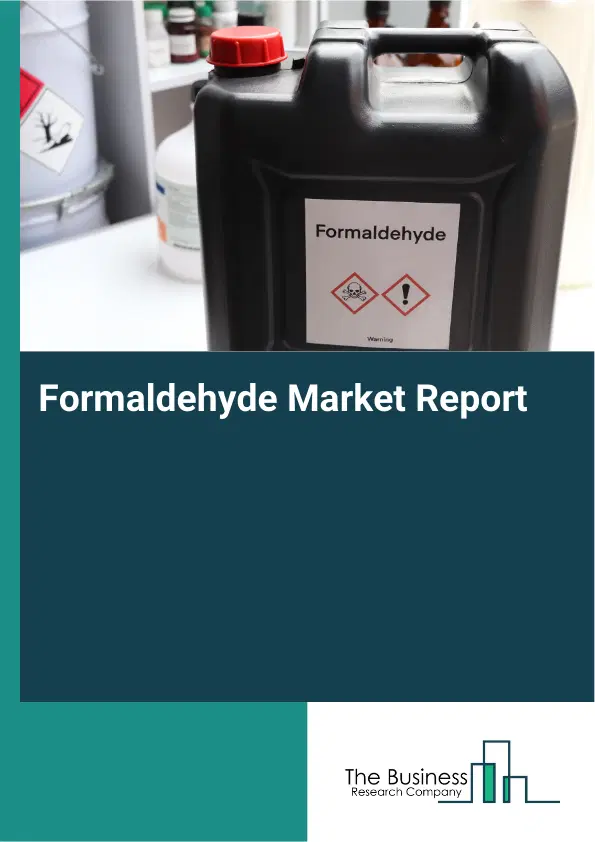
Formaldehyde Market Report 2026
Global Outlook – By Type (Urea Formaldehyde, Phenol Formaldehyde, Melamine Formaldehyde, Polyoxymethylene, Other Types), By Application (Resins, Fibers, Solvents, Plasticizers, Drying Agents, Other Chemical Intermediates), By End-User (Construction, Furniture, Automotive, Healthcare, Other End-Users) – Market Size, Trends, Strategies, and Forecast to 2030
Formaldehyde Market Overview
• Formaldehyde market size has reached to $23.68 billion in 2025 • Expected to grow to $34.08 billion in 2030 at a compound annual growth rate (CAGR) of 7.5% • Growth Driver: Formaldehyde Market Poised For Growth Driven By Surging Demand In The Booming Construction Industry • Market Trend: Expanding Manufacturing Facilities To Boost Production Capacity • Asia-Pacific was the largest region and fastest growing region.What Is Covered Under Formaldehyde Market?
Formaldehyde refers to a colorless pungent irritating gas CH2O is a solution made by oxidizing methanol. Formaldehyde is used as preservatives in food, paints and cosmetics and also to make under-the-hood components and interior molded components that need to withstand high temperatures. The main types of formaldehyde are urea-formaldehyde, phenol-formaldehyde, melamine-formaldehyde, polyoxymethylene, and other types. Urea-formaldehyde refers to a synthetic resin that is made by the process of condensation between urea and formaldehyde that is used mainly for wood-bonding adhesives, colored molded articles, and others. There are various applications for formaldehyde such as resins, fibers, solvents, plasticizers, drying agents, and other chemical intermediates. These are used by various end-users such as in construction furniture, automotive, healthcare, and other end-users.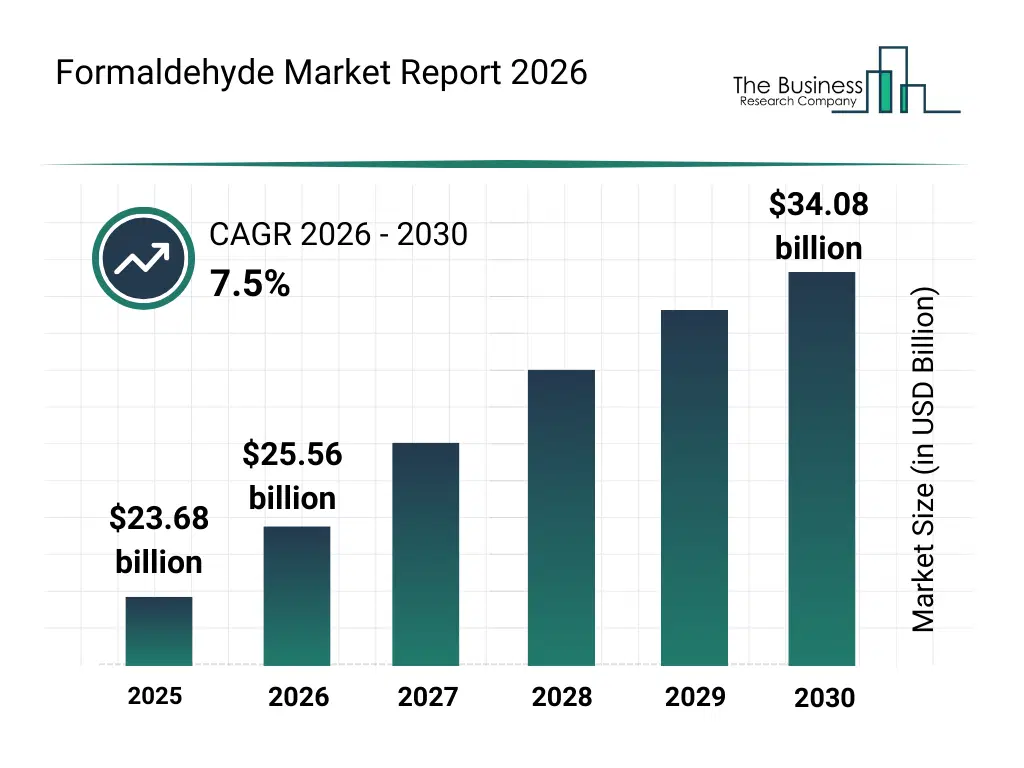
What Is The Formaldehyde Market Size and Share 2026?
The formaldehyde market size has grown strongly in recent years. It will grow from $23.68 billion in 2025 to $25.56 billion in 2026 at a compound annual growth rate (CAGR) of 7.9%. The growth in the historic period can be attributed to expansion of construction and furniture manufacturing, growth in resin-based composites, rising automotive interior production, increased use of preservatives and binders, availability of methanol feedstock.What Is The Formaldehyde Market Growth Forecast?
The formaldehyde market size is expected to see strong growth in the next few years. It will grow to $34.08 billion in 2030 at a compound annual growth rate (CAGR) of 7.5%. The growth in the forecast period can be attributed to increasing demand for low-toxicity formulations, rising adoption of formaldehyde alternatives and blends, expansion of lightweight automotive materials, growing investments in emission control technologies, increasing regulatory oversight on chemical safety. Major trends in the forecast period include increasing use of low-emission resins, rising demand for engineered wood products, growing application in automotive molded components, expansion of high-performance thermoset resins, enhanced focus on product safety compliance.
Global Formaldehyde Market Segmentation
1) By Type: Urea Formaldehyde, Phenol Formaldehyde, Melamine Formaldehyde, Polyoxymethylene, Other Types 2) By Application: Resins, Fibers, Solvents, Plasticizers, Drying Agents, Other Chemical Intermediates 3) By End-User: Construction, Furniture, Automotive, Healthcare, Other End-Users Subsegments: 1) By Urea Formaldehyde: Urea Formaldehyde Resins, Urea Formaldehyde Foam 2) By Phenol Formaldehyde: Phenolic Resins, Laminates 3) By Melamine Formaldehyde: Melamine Resins, Coatings 4) By Polyoxymethylene: POM Copolymers, POM Homopolymers 5) By Other Types: Paraformaldehyde, Formaldehyde SolutionsWhat Are The Drivers Of The Formaldehyde Market?
Growing demand from the construction industry is expected to propel the growth of the formaldehyde market going forward. Construction refers to the process of building, altering, repairing, remodeling, improving, or demolishing any structures. Formaldehyde helps the construction industry in the manufacturing of glues, resins, and other construction materials. For instance, in July 2024, according to the Bureau of National Statistics, a Kazakhstan-based government agency, an estimated in 2023, the total value of construction services was 7,612.8 billion tenge, reflecting a 15.1% increase compared to 2022. Therefore, the growing demand from the construction industry is driving the growth of the formaldehyde industry. The increasing demand in the automotive industry is expected to propel the growth of the formaldehyde market going forward. The automotive industry refers to the collective group of companies, organizations, and activities involved in the design, development, manufacturing, marketing, and sale of motor vehicles. Formaldehyde-based adhesives and resins can be used in the manufacturing of composite materials, contribute to the production of durable and sturdy interior components, insulation, emission control, and used in the textile and leather industries for certain automotive interior components. For instance, according to MarkLines, a Japan-based provider of forecast reports of the automotive industry, in October 2023, auto sales in the USA increased by 2.0% compared to October 2022. The new vehicle sales volume for the month of October 2023 was 1,211,141 units, which represented a 2.0% increase from October 2022. Therefore, the increasing automotive industry is driving the growth of the formaldehyde industry.Key Players In The Global Formaldehyde Market
Major companies operating in the formaldehyde market are BASF SE, Johnson Matthey Process Technologies, Celanese Corporation, Georgia-Pacific Chemicals LLC, Huntsman International LLC, Hexion Inc., Allnex GmbH, Perstorp Holding AB, Acron Group, Arclin Inc., Atul Ltd., Momentive Specialty Chemical Inc., Prefere Resins Holding GmbH, Sprea Misr, Cornerstone Chemical, Metafrax, Metadynea Metafrax Group, Kanoria Chemicals & Industries Ltd., Dynea Oy, Foremark Performance Chemicals, Pacific Texchem Private Limited, Frati Luigi S.p.A, Balaji Formalin Private Limited, Alder S.p.A, Simalin Chemicals Industries Limited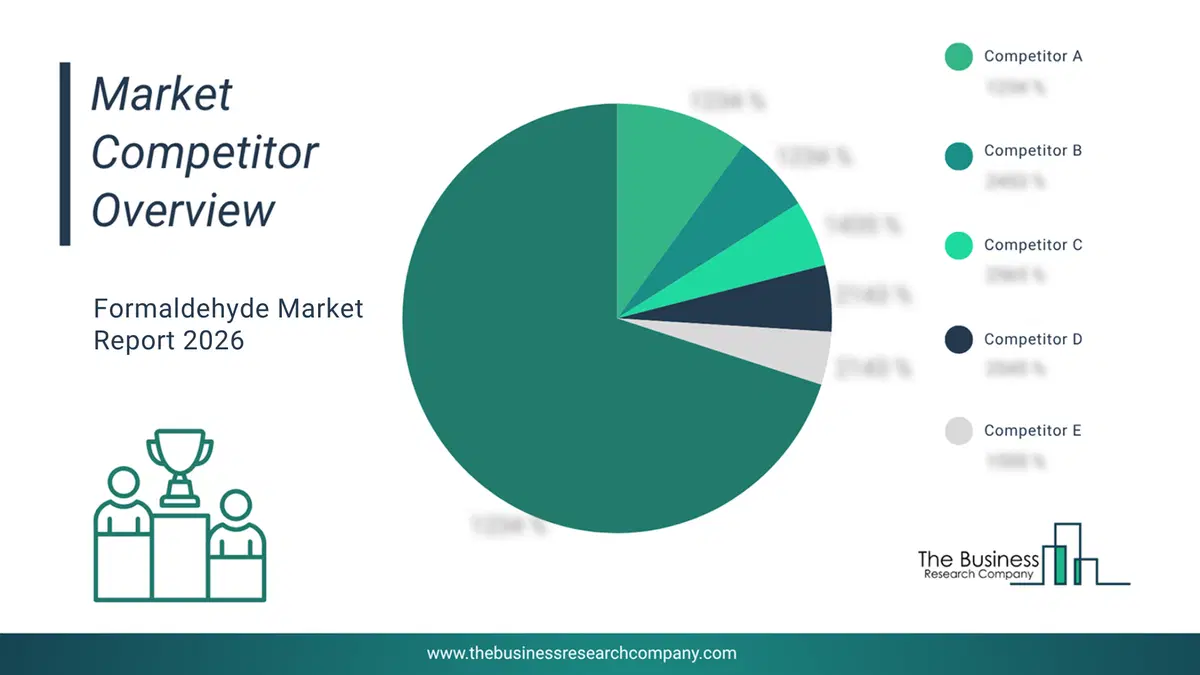
This chart is for illustrative purposes; the full report includes a detailed competitor analysis and comprehensive overview of the top 10 companies in the market.
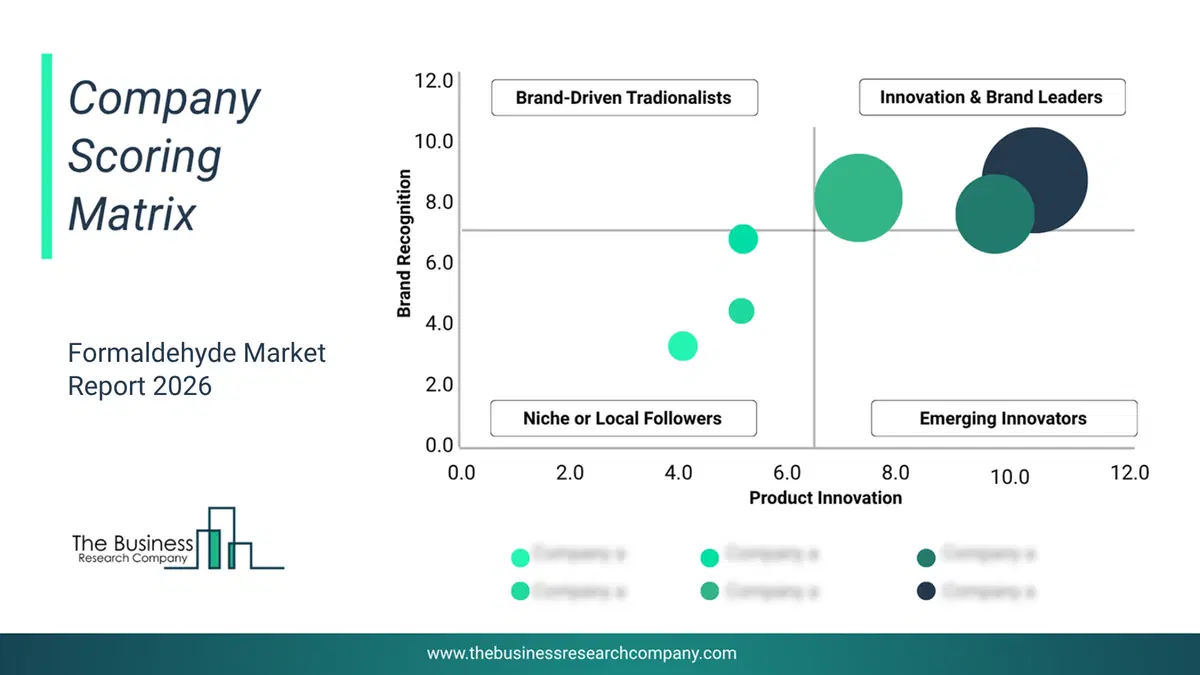
This chart maps companies by product innovation and brand strength, with bubble size indicating relative revenue, helping identify market leaders, challengers, and niche players. This is an illustrative chart; the full report provides a complete and accurate competitive analysis.
Global Formaldehyde Market Trends and Insights
Major companies operating in the formaldehyde market are expanding their manufacturing facilities to boost production capacity. This strategic move allows them to meet the rising demand for formaldehyde across various industries. For instance, in September 2024, Kanoria Chemicals & Industries Limited, a India-based chemical manufacturer, opened a new formaldehyde plant in Ankleshwar, Gujarat, with a production capacity of 345 metric tons per day (MTPD), bringing the company's total output to 763 MTPD. The facility employs advanced metal oxide-based technology to cater to the growing demand from industries like pharmaceuticals, textiles, and agrochemicals, serving both domestic and international markets.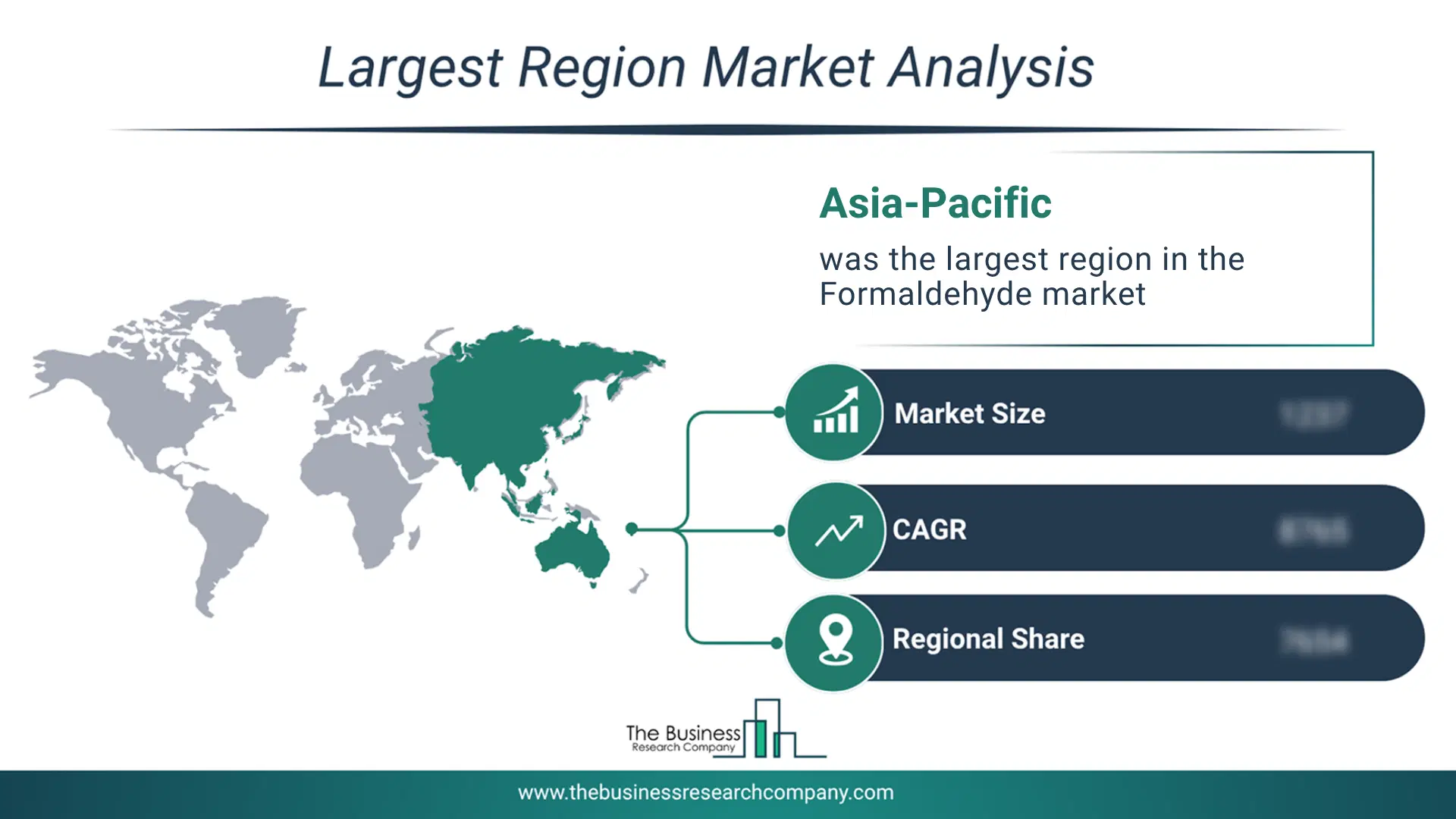
Regional Insights
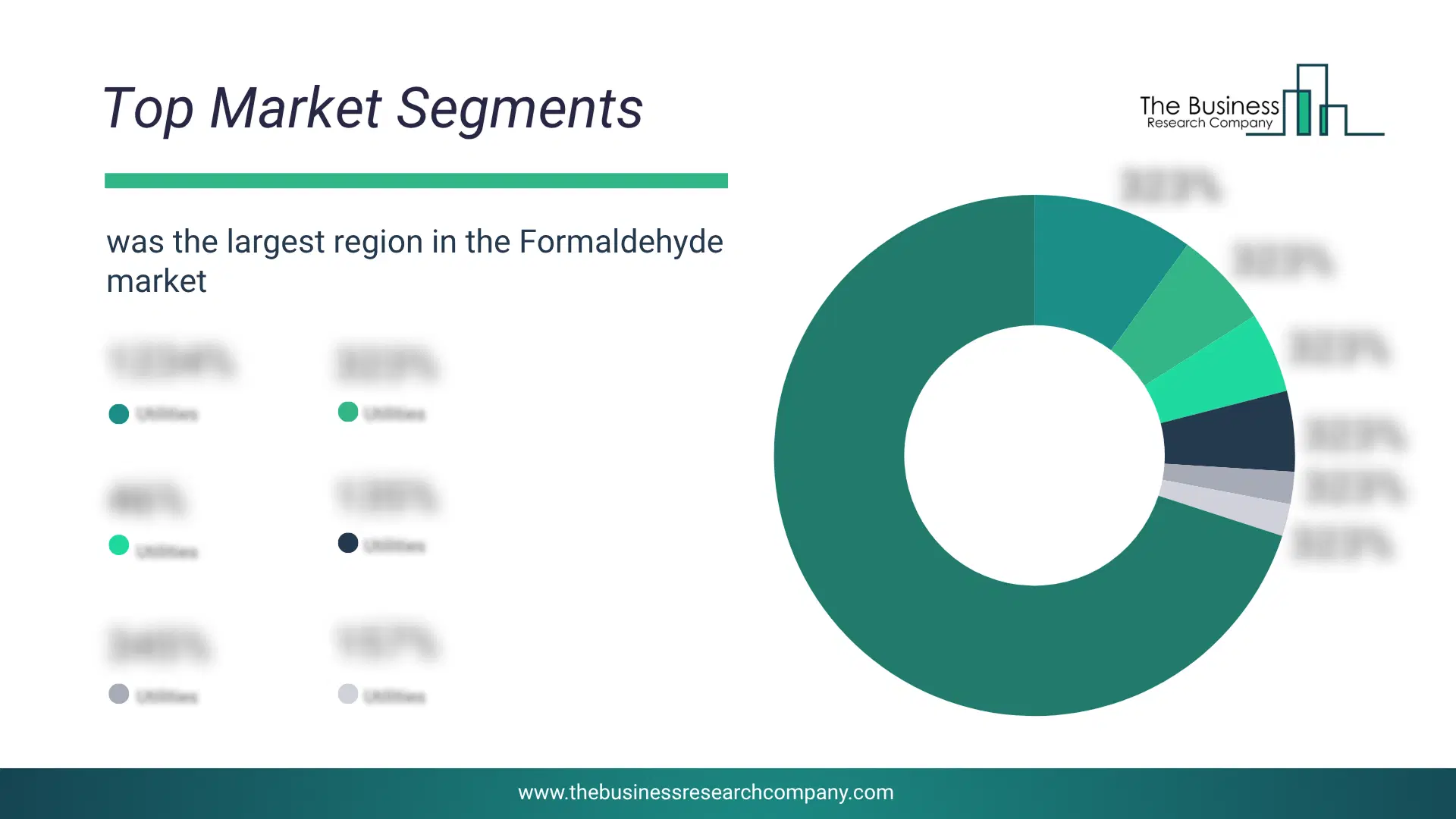
Asia-Pacific was the largest region in the formaldehyde market in 2025. Asia-Pacific is expected to be the fastest-growing region in the forecast period. The regions covered in this market report are Asia-Pacific, South East Asia, Western Europe, Eastern Europe, North America, South America, Middle East, Africa The countries covered in this market report are Australia, Brazil, China, France, Germany, India, Indonesia, Japan, Taiwan, Russia, South Korea, UK, USA, Canada, Italy, SpainWhat Defines the Formaldehyde Market?
The formaldehyde market consists of sales of molecular formaldehyde, 1,3,5-trioxaneand methanediol. Values in this market are ‘factory gate’ values, that is the value of goods sold by the manufacturers or creators of the goods, whether to other entities (including downstream manufacturers, wholesalers, distributors, and retailers) or directly to end customers. The value of goods in this market includes related services sold by the creators of the goods.How is Market Value Defined and Measured?
The market value is defined as the revenues that enterprises gain from the sale of goods and/or services within the specified market and geography through sales, grants, or donations in terms of the currency (in USD unless otherwise specified). The revenues for a specified geography are consumption values that are revenues generated by organizations in the specified geography within the market, irrespective of where they are produced. It does not include revenues from resales along the supply chain, either further along the supply chain or as part of other products.
This chart presents market attractiveness based on a quantitative evaluation of growth, competition, strategic alignment, and risk, offering a clear view of opportunity areas for decision-making. This chart is for illustrative purposes; the full report contains the complete analysis.

This chart highlights the Total Addressable Market (TAM) by estimating the maximum revenue opportunity using an assumption-driven approach, supporting strategic planning and opportunity sizing across markets. The chart is illustrative; the full report provides a more comprehensive analysis.
What Key Data and Analysis Are Included in the Formaldehyde Market Report 2026?
The formaldehyde market research report is one of a series of new reports from The Business Research Company that provides market statistics, including industry global market size, regional shares, competitors with the market share, detailed market segments, market trends and opportunities, and any further data you may need to thrive in the formaldehyde industry. The market research report delivers a complete perspective of everything you need, with an in-depth analysis of the current and future state of the industry.Formaldehyde Market Report Forecast Analysis
| Report Attribute | Details |
|---|---|
| Market Size Value In 2026 | $25.56 billion |
| Revenue Forecast In 2030 | $34.08 billion |
| Growth Rate | CAGR of 7.9% from 2026 to 2030 |
| Base Year For Estimation | 2025 |
| Actual Estimates/Historical Data | 2020-2025 |
| Forecast Period | 2026 - 2030 |
| Market Representation | Revenue in USD Billion and CAGR from 2026 to 2030 |
| Segments Covered | Type, Application, End-User |
| Regional Scope | Asia-Pacific, Western Europe, Eastern Europe, North America, South America, Middle East, Africa |
| Country Scope | The countries covered in this market report are Australia, Brazil, China, France, Germany, India, Indonesia, Japan, Taiwan, Russia, South Korea, UK, USA, Canada, Italy, Spain |
| Key Companies Profiled | BASF SE, Johnson Matthey Process Technologies, Celanese Corporation, Georgia-Pacific Chemicals LLC, Huntsman International LLC, Hexion Inc., Allnex GmbH, Perstorp Holding AB, Acron Group, Arclin Inc., Atul Ltd., Momentive Specialty Chemical Inc., Prefere Resins Holding GmbH, Sprea Misr, Cornerstone Chemical, Metafrax, Metadynea Metafrax Group, Kanoria Chemicals & Industries Ltd., Dynea Oy, Foremark Performance Chemicals, Pacific Texchem Private Limited, Frati Luigi S.p.A, Balaji Formalin Private Limited, Alder S.p.A, Simalin Chemicals Industries Limited |
| Customization Scope | Request for Customization |
| Pricing And Purchase Options | Explore Purchase Options |