

Fruit Pulp Market Report 2026
Global Outlook – By Type (Mango, Apple, Guava, Papaya, Banana, Peach, Kiwi, Citrus Fruits, Berries, Other Types ), By Nature (Organic Fruit Pulp, Conventional Fruit Pulp), By Form (Liquid, Powder), By Distribution (E-Commerce, Convenience Stores, Supermarkets Or Hypermarkets, Specialty Stores, Other Distributions), By End Use (Food And Beverage Industry, Food Service Industry, Retail Or Household) – Market Size, Trends, Strategies, and Forecast to 2030
Fruit Pulp Market Overview
• Fruit Pulp market size has reached to $1.53 billion in 2025 • Expected to grow to $1.91 billion in 2030 at a compound annual growth rate (CAGR) of 4.7% • Growth Driver: Anticipated Surge In Fruit Pulp Market Fueled By Escalating Demand In The Processed Foods Sector • Market Trend: Emphasis On Real Fruit Chunks In The Fruit Pulp Market • North America was the largest region in 2025 and Asia-Pacific is the fastest growing region.What Is Covered Under Fruit Pulp Market?
The fruit pulp is the most fundamental product made by processing fresh fruit. It includes both the juice and the pulp, the fibrous thread that is frequently separated from fruit juice. Fruit pulps retain their color, flavor, and texture even after extensive processing and storage. The main types of fruit pulp are mango, apple, guava, papaya, banana, peach, kiwi, citrus fruits, berries, and other types. Mango fruit pulp is used in preparing juices, drinks, jams, marmalades, and others. These are manufactured in organic and conventional ways. These fruit pulps are distributed by e-commerce, convenience stores, supermarkets or hypermarkets, specialty stores, and others in liquid and powder forms. These are used by the food & beverage industry, food service industry, and retail or household.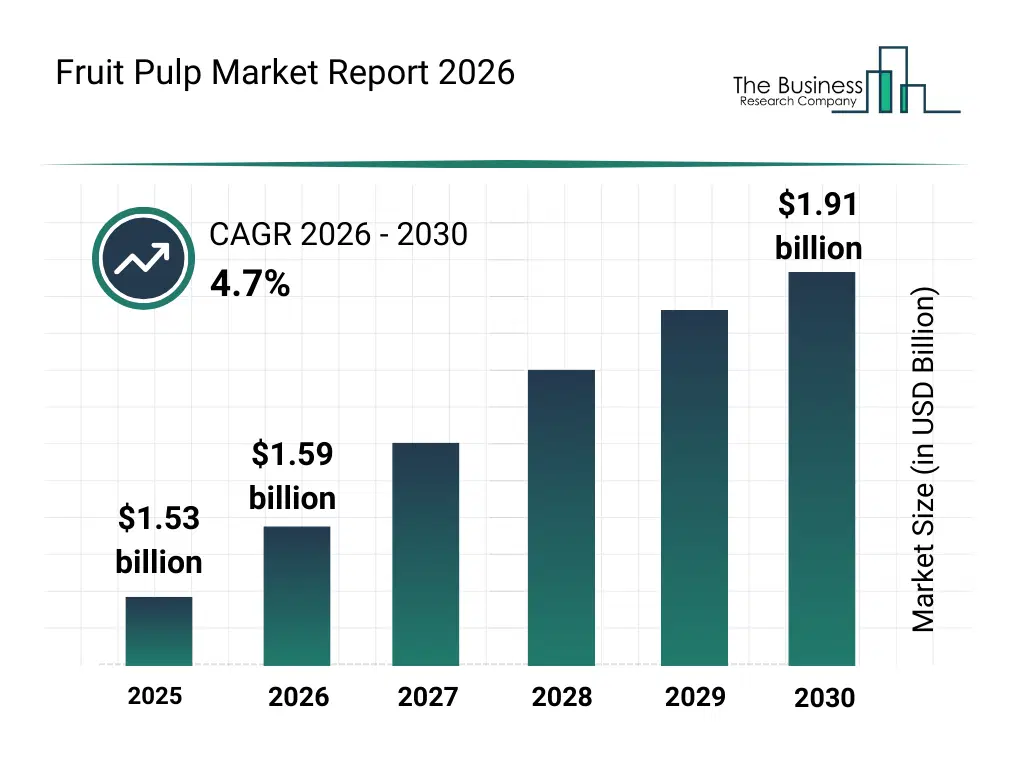
What Is The Fruit Pulp Market Size and Share 2026?
The fruit pulp market size has grown steadily in recent years. It will grow from $1.53 billion in 2025 to $1.59 billion in 2026 at a compound annual growth rate (CAGR) of 4.4%. The growth in the historic period can be attributed to expansion of juice and beverage processing, availability of tropical fruit supply, growth of packaged food consumption, adoption of fruit-based formulations, development of cold-chain infrastructure.What Is The Fruit Pulp Market Growth Forecast?
The fruit pulp market size is expected to see steady growth in the next few years. It will grow to $1.91 billion in 2030 at a compound annual growth rate (CAGR) of 4.7%. The growth in the forecast period can be attributed to increasing demand for natural ingredients, rising consumption of smoothies and purees, expansion of foodservice applications, growing preference for organic fruit pulp, increasing use in functional beverages. Major trends in the forecast period include increasing demand for shelf-stable fruit ingredients, rising use of fruit pulp in beverages, expansion of exotic fruit varieties, growing adoption of clean-label fruit products, enhanced focus on color and flavor retention.
Global Fruit Pulp Market Segmentation
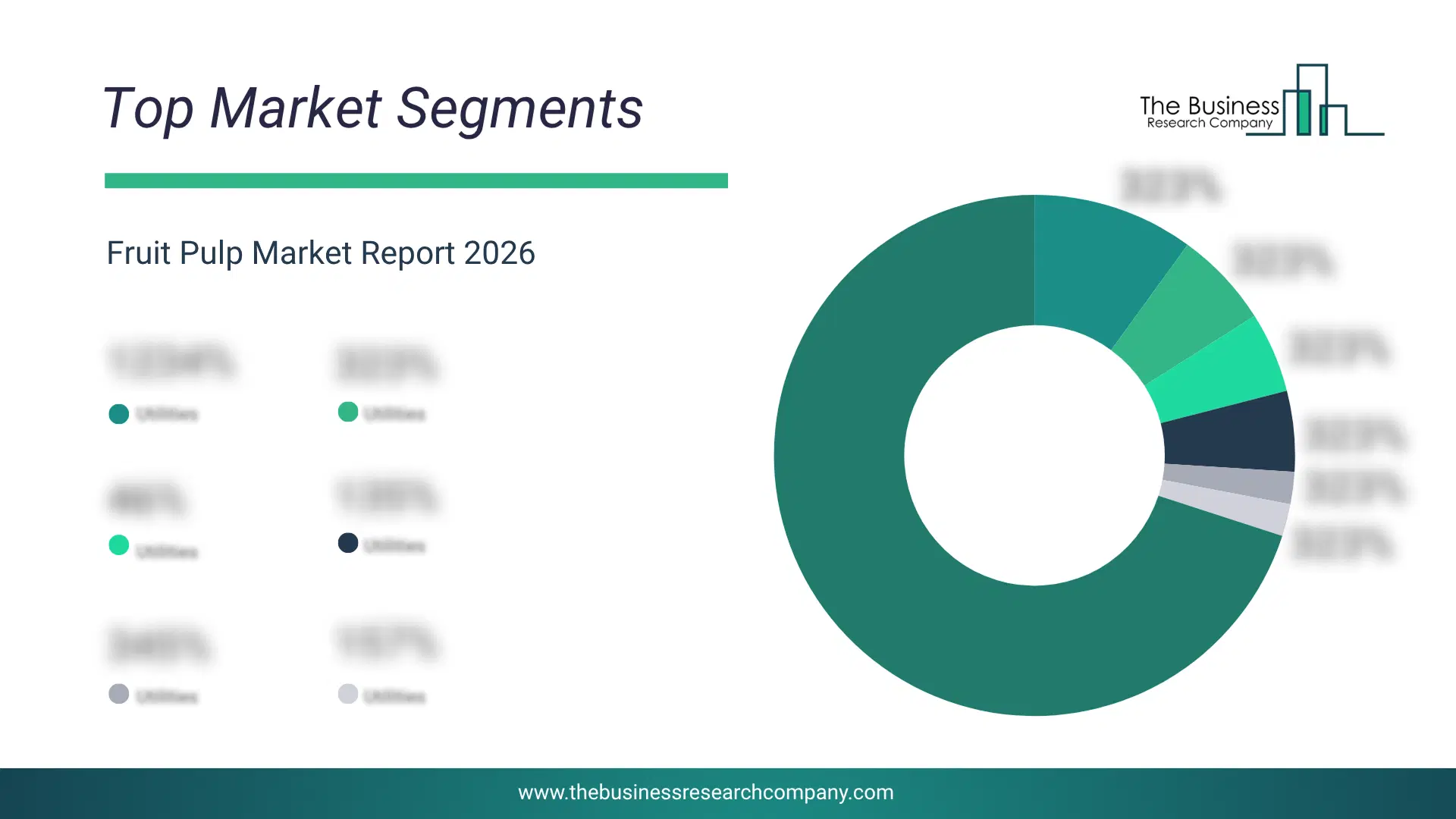
1) By Type: Mango, Apple, Guava, Papaya, Banana, Peach, Kiwi, Citrus Fruits, Berries, Other Types 2) By Nature: Organic Fruit Pulp, Conventional Fruit Pulp 3) By Form: Liquid, Powder 4) By Distribution: E-Commerce, Convenience Stores, Supermarkets Or Hypermarkets, Specialty Stores, Other Distributions 5) By End Use: Food And Beverage Industry, Food Service Industry, Retail Or Household Subsegments: 1) By Mango: Alphonso, Kesar, Haden, Tommy Atkins 2) By Apple: Fuji, Granny Smith, Gala, Red Delicious 3) By Guava: Common Guava, Pineapple Guava, Strawberry Guava 4) By Papaya: Solo, Red Lady, Hawaiian 5) By Banana: Cavendish, Plantain, Red Banana 6) By Peach: Clingstone, Freestone, Donut Peach 7) By Kiwi: Hayward, Arctic Kiwi, Gold Kiwi 8) By Citrus Fruits: Orange, Lemon, Lime, Grapefruit 9) By Berries: Strawberry, Blueberry, Raspberry, Blackberry 10) By Other Types: Pomegranate, Coconut, Dragon Fruit, Passion FruitWhat Is The Driver Of The Fruit Pulp Market?
The growing demand in processed foods is anticipated to propel the growth of the fruit pulp market going forward. Processed foods refers to food items that undergoes deliberate changes to its natural state through various methods of preparation, preservation, cooking, or packaging. Fruit pulps are used to adds natural sweetness to processed foods, reducing the need for excessive amounts of added sugars in products such as jams, jellies, fruit fillings, and fruit-flavored beverages. For instance, in 2023, according to the United States Department of Agriculture, a US-based federal agency, the total value of US processed food products exported from the country increased to $36.59 billion in 2023, an increase of 1.7% compared to previous years. Therefore, the growing demand in processed foods is driving the growth of the fruit pulp industry.Key Players In The Global Fruit Pulp Market
Major companies operating in the fruit pulp market are PepsiCo Inc., ABC Fruits, Conagra Brands Inc., AGRANA Beteiligungs-AG, Allanasons Private Limited, Doehler Group, Goya Foods Inc., SunOpta Inc., Rio Grande Food Products Inc., Keventer Group, Sunrise Naturals Pvt. Ltd., Kiril Mischeff Ltd., Jadli Foods (India) Pvt. Ltd., Pursuit Industries Pvt. Ltd., Alimentos SAS, SVZ International B.V., Iprona The Fruit Company, Fabrica de Mermeladas S.A. de C.V., Tianjin Kunyu International Co. Ltd., Mysore Fruit Products Ltd., Shimla Hills Offerings Pvt. Ltd., Capricorn Food Products India Ltd., Paradise Juice Private Limited, Mor Mukat Marketing Private Limited, Tropifruit GmbH & Co KG, The Fruit Company, Shree Ganesh Frozen Foods Private Limited, Raje Agro Foods Pvt. Ltd.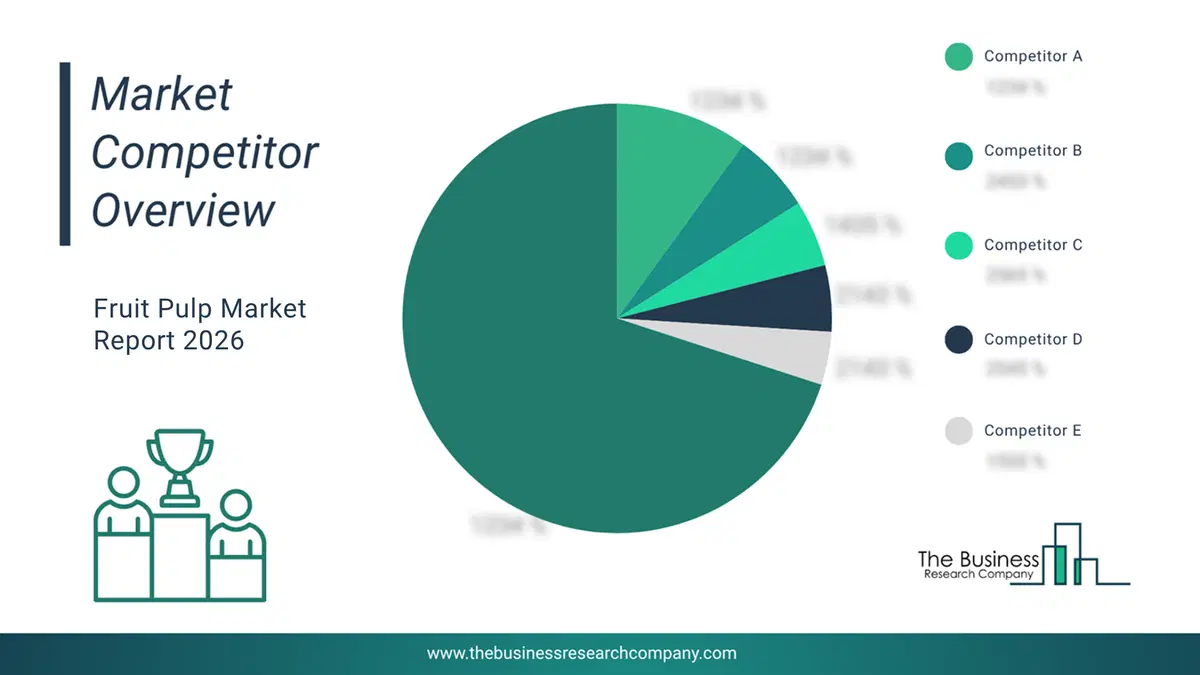
This chart is for illustrative purposes; the full report includes a detailed competitor analysis and comprehensive overview of the top 10 companies in the market.
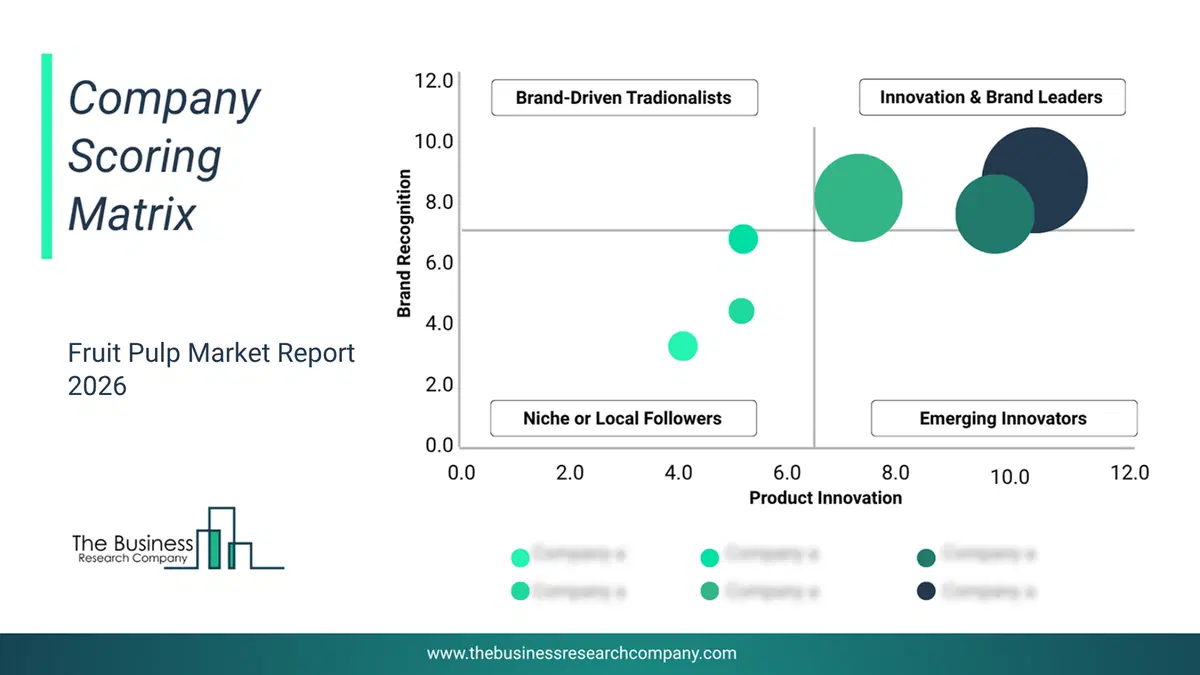
This chart maps companies by product innovation and brand strength, with bubble size indicating relative revenue, helping identify market leaders, challengers, and niche players. This is an illustrative chart; the full report provides a complete and accurate competitive analysis.
Global Fruit Pulp Market Trends and Insights
Major companies operating in the fruit pulp market are increasingly focusing on developing products that incorporate real fruit chunks. Real fruit chunks are pieces of whole fruit incorporated into various food products, such as smoothies, beverages, desserts, and snacks. Unlike fruit purees or juices that may process the fruit extensively, real fruit chunks retain the fruit's natural texture, flavor, and nutritional benefits. For instance, in May 2023, Sunfeast, an Indian-based fresh and packaged fruits company launched Smoothies made with milk and real fruits, aiming to provide a nutritious and flavorful option for consumers seeking healthier beverage choices. The flavor of the Sunfeast Smoothies range has been improved with the addition of ingredients like mango chunks, fruit pieces, chia seeds, and basil seeds. These ingredients are recognized for offering a variety of nutrients beneficial to the human body. This product line is designed to cater to the growing demand for clean-label products that emphasize natural ingredients, which resonates with health-conscious consumers.What Are Latest Mergers And Acquisitions In The Fruit Pulp Market?
In September 2023, Emami Group, an Indian-based conglomerate company, acquired a 26% stake in Axiom Ayurveda for an undisclosed amount. With this acquisition, Emami Group aims to expand its portfolio, strengthen its presence in the Ayurvedic sector, and strengthen the potential for synergies between consumer goods businesses and Axiom Ayurveda healthcare offerings. Axiom Ayurveda Private Limited is an Indian-based company that provides herbal and fruit pulps.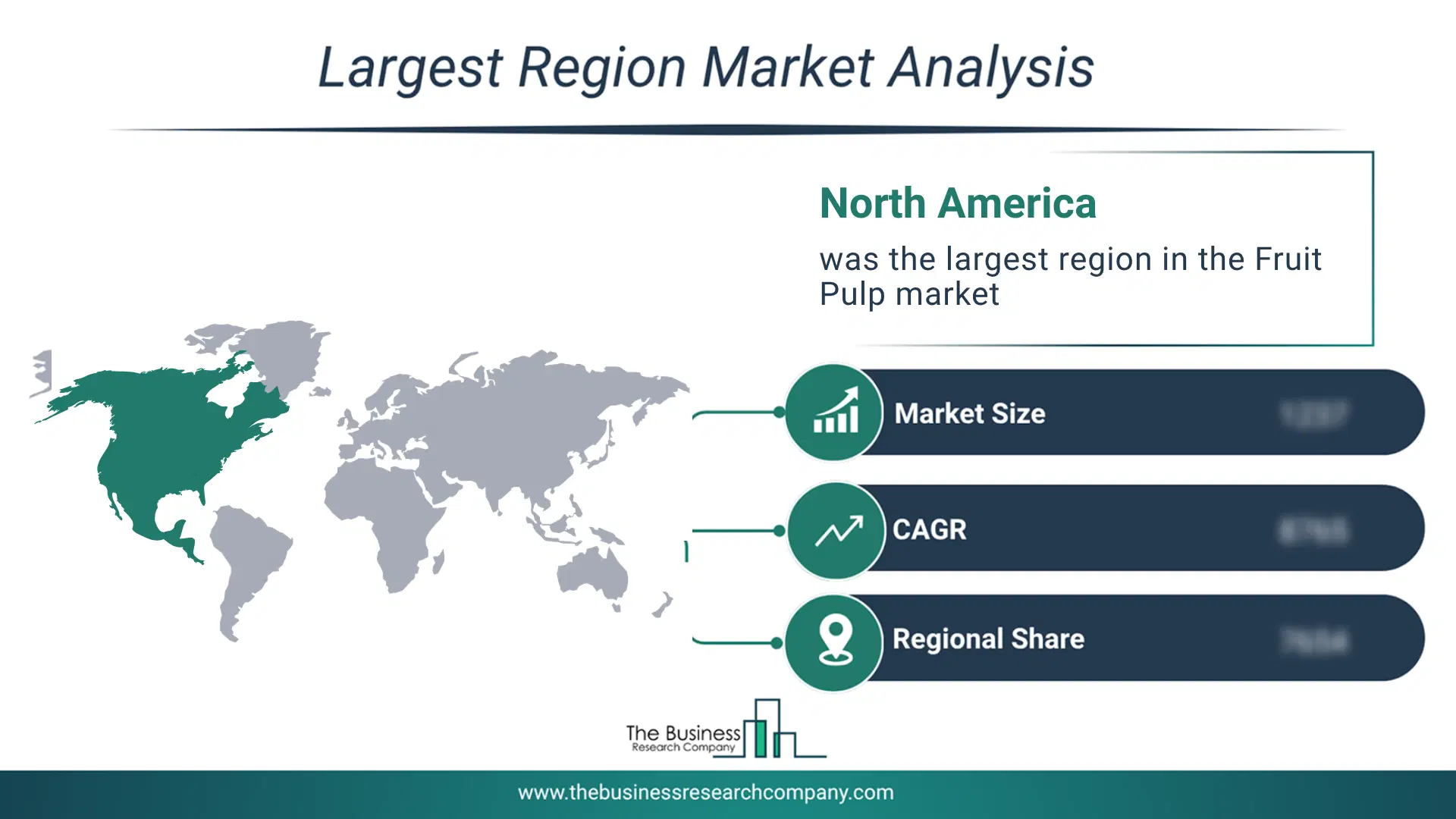
Regional Outlook
North America was the largest region in the fruit pulp market analysis in 2025. Asia-Pacific is expected to be the fastest-growing region in the forecast period. The regions covered in this market report are Asia-Pacific, South East Asia, Western Europe, Eastern Europe, North America, South America, Middle East and Africa. The countries covered in this market report are Australia, Brazil, China, France, Germany, India, Indonesia, Japan, Taiwan, Russia, South Korea, UK, USA, Italy, Spain, CanadaWhat Defines the Fruit Pulp Market?
The fruit pulp market consists of sales of exotic fruit pulp, tropical fruit, orchard fruit pulp, and citrus fruit pulp. Values in this market are ‘factory gate’ values, that is the value of goods sold by the manufacturers or creators of the goods, whether to other entities (including downstream manufacturers, wholesalers, distributors, and retailers) or directly to end customers. The value of goods in this market includes related services sold by the creators of the goods.How is Market Value Defined and Measured?
The market value is defined as the revenues that enterprises gain from the sale of goods and/or services within the specified market and geography through sales, grants, or donations in terms of the currency (in USD unless otherwise specified). The revenues for a specified geography are consumption values that are revenues generated by organizations in the specified geography within the market, irrespective of where they are produced. It does not include revenues from resales along the supply chain, either further along the supply chain or as part of other products.
This chart presents market attractiveness based on a quantitative evaluation of growth, competition, strategic alignment, and risk, offering a clear view of opportunity areas for decision-making. This chart is for illustrative purposes; the full report contains the complete analysis.

This chart highlights the Total Addressable Market (TAM) by estimating the maximum revenue opportunity using an assumption-driven approach, supporting strategic planning and opportunity sizing across markets. The chart is illustrative; the full report provides a more comprehensive analysis.
What Key Data and Analysis Are Included in the Fruit Pulp Market Report 2026?
The fruit pulp market research report is one of a series of new reports from The Business Research Company that provides market statistics, including industry global market size, regional shares, competitors with the market share, detailed market segments, market trends and opportunities, and any further data you may need to thrive in the fruit pulp industry. The market research report delivers a complete perspective of everything you need, with an in-depth analysis of the current and future state of the industry.Fruit Pulp Market Report Forecast Analysis
| Report Attribute | Details |
|---|---|
| Market Size Value In 2026 | $1.59 billion |
| Revenue Forecast In 2030 | $1.91 billion |
| Growth Rate | CAGR of 4.4% from 2026 to 2030 |
| Base Year For Estimation | 2025 |
| Actual Estimates/Historical Data | 2020-2025 |
| Forecast Period | 2026 - 2030 |
| Market Representation | Revenue in USD Billion and CAGR from 2026 to 2030 |
| Segments Covered | Type, Nature, Form, Distribution, End Use |
| Regional Scope | Asia-Pacific, Western Europe, Eastern Europe, North America, South America, Middle East, Africa |
| Country Scope | The countries covered in the report are Australia, Brazil, China, France, Germany, India, Indonesia, Japan, Taiwan, Russia, South Korea, UK, USA, Canada, Italy, Spain. |
| Key Companies Profiled | PepsiCo Inc., ABC Fruits, Conagra Brands Inc., AGRANA Beteiligungs-AG, Allanasons Private Limited, Doehler Group, Goya Foods Inc., SunOpta Inc., Rio Grande Food Products Inc., Keventer Group, Sunrise Naturals Pvt. Ltd., Kiril Mischeff Ltd., Jadli Foods (India) Pvt. Ltd., Pursuit Industries Pvt. Ltd., Alimentos SAS, SVZ International B.V., Iprona The Fruit Company, Fabrica de Mermeladas S.A. de C.V., Tianjin Kunyu International Co. Ltd., Mysore Fruit Products Ltd., Shimla Hills Offerings Pvt. Ltd., Capricorn Food Products India Ltd., Paradise Juice Private Limited, Mor Mukat Marketing Private Limited, Tropifruit GmbH & Co KG, The Fruit Company, Shree Ganesh Frozen Foods Private Limited, Raje Agro Foods Pvt. Ltd. |
| Customization Scope | Request for Customization |
| Pricing And Purchase Options | Explore Purchase Options |