

Fruit Puree Market Report 2026
Global Outlook – By Fruit Type (Apple Puree, Banana Puree, Plum Puree, Strawberry Puree, Other Fruit Types), By Category (Organic, Conventional), By Application (Beverages, Bakery, Baby Food, Other Applications) – Market Size, Trends, Strategies, and Forecast to 2030
Fruit Puree Market Overview
• Fruit Puree market size has reached to $5.17 billion in 2025 • Expected to grow to $7.19 billion in 2030 at a compound annual growth rate (CAGR) of 7% • Growth Driver: Surging Demand For Functional Foods Boosts Growth In The Fruit Puree Market • Market Trend: The Fruit Puree Market Elevates With Pourable Pouches Tailored For Bars And Pubs • Asia-Pacific was the largest region in 2025.Market Gains By 2030 – Top Opportunities By Segment
Market Gain identifies the most promising market opportunities by highlighting the segments or products expected to generate the highest incremental revenue growth over the next five years.
What Is Covered Under Fruit Puree Market?
Fruit purees refer to fruits that have been boiled, crushed, pressed, blended, or sieved until they have the consistency of a creamy paste or liquid. These provide additional calories and antioxidants that support a stronger immune system and prevent excessive cell damage in the body. The main types of fruit puree are apple puree, banana puree, plum puree, strawberry puree, and others. Apple puree refers to a smooth mixture made by pulverizing fully or partially cooked apples. The various categories include organic and conventional which are used in various applications such as beverages, bakery, baby food, and others.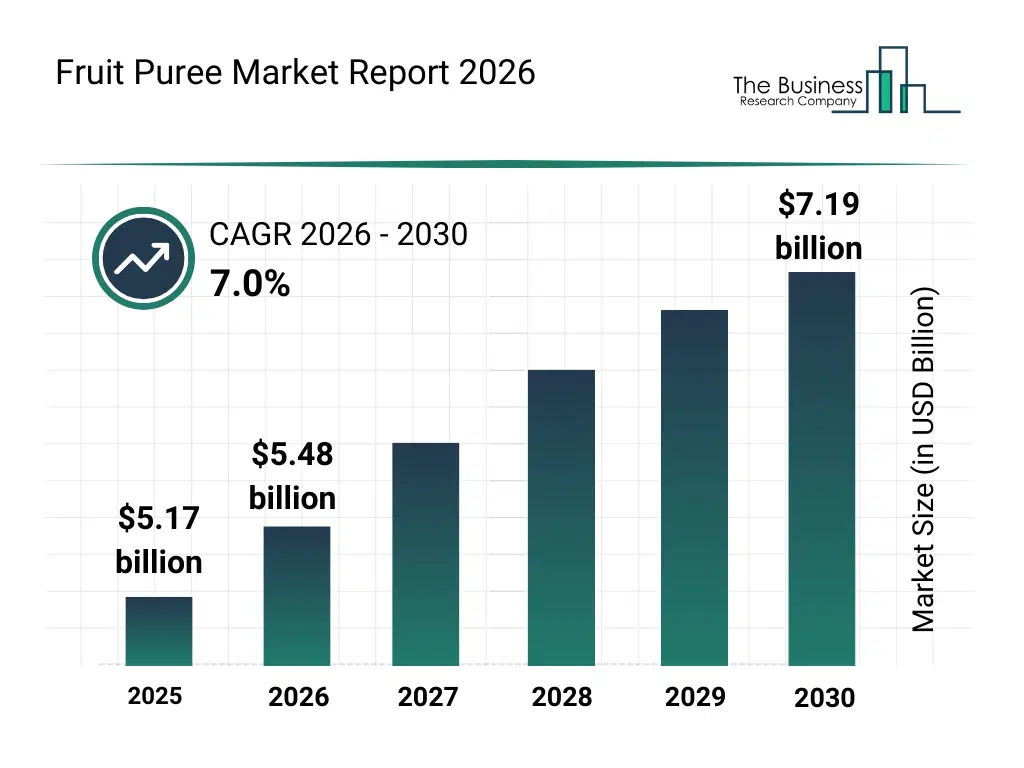
What Is The Fruit Puree Market Size and Share 2026?
The fruit puree market size has grown strongly in recent years. It will grow from $5.17 billion in 2025 to $5.48 billion in 2026 at a compound annual growth rate (CAGR) of 6.0%. The growth in the historic period can be attributed to expansion of baby food manufacturing, rising demand for processed fruit ingredients, growth of beverage and smoothie consumption, availability of fruit processing technologies, increasing preference for natural food additives.What Is The Fruit Puree Market Growth Forecast?
The fruit puree market size is expected to see strong growth in the next few years. It will grow to $7.19 billion in 2030 at a compound annual growth rate (CAGR) of 7.0%. The growth in the forecast period can be attributed to increasing demand for clean-label food products, rising use of fruit purees in plant-based formulations, expansion of health-focused food segments, growing investments in advanced fruit processing, increasing adoption of sustainable packaging solutions. Major trends in the forecast period include increasing demand for natural fruit-based ingredients, rising use of fruit purees in functional foods, expansion of organic fruit puree production, enhanced focus on nutrient retention processing, growing adoption of aseptic packaging.
Global Fruit Puree Market Segmentation
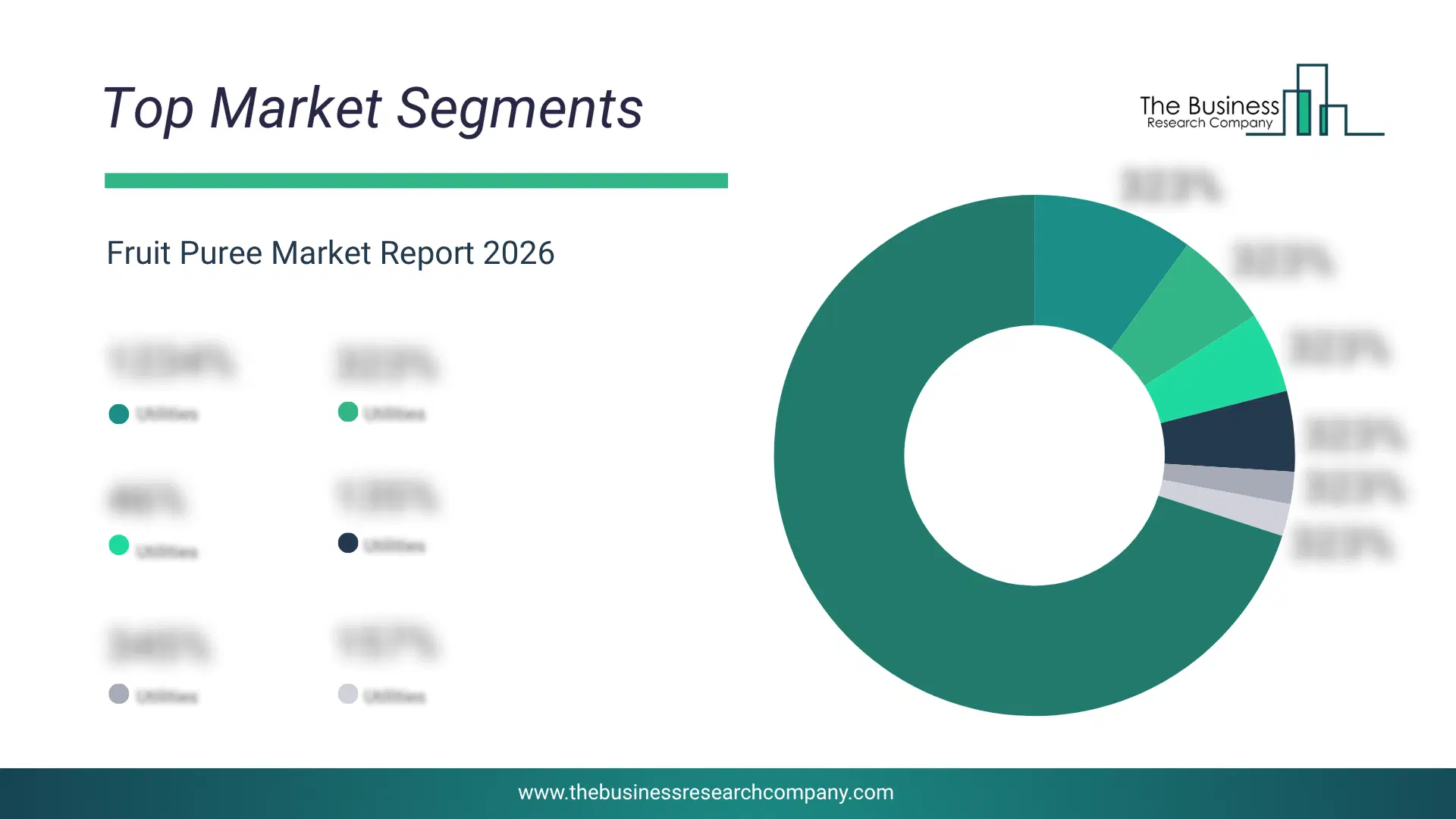
1) By Fruit Type: Apple Puree, Banana Puree, Plum Puree, Strawberry Puree, Other Fruit Types 2) By Category: Organic, Conventional 3) By Application: Beverages, Bakery, Baby Food, Other Applications Subsegments: 1) By Apple Puree: Organic Apple Puree, Conventional Apple Puree 2) By Banana Puree: Organic Banana Puree, Conventional Banana Puree 3) By Plum Puree: Organic Plum Puree, Conventional Plum Puree 4) By Strawberry Puree: Organic Strawberry Puree, Conventional Strawberry Puree 5) By Other Fruit Types: Mango Puree, Peach Puree, Pear Puree, Mixed Fruit Puree The top segments in the fruit puree market will be: • Apple Puree will reach $2.45 Billion by 2030. • Banana Puree will reach $1.57 Billion by 2030. • Other Fruit Types will reach $1.26 Billion by 2030. • Plum Puree will reach $1.24 Billion by 2030. • Strawberry Puree will reach $0.63 Billion by 2030.What Is The Driver Of The Fruit Puree Market?
Rising demand for functional food and beverages is expected to propel the growth of the fruit puree market going forward. Functional foods and beverages are dietary components with additional nutrients and energy supplements. Functional foods, such as probiotic drinks or food, are blended with natural options such as fruit purees of fruits such as berries, apples, and bananas to make the drink or food healthier. For instance, in February 2024, according to Monster Beverage Corporation, a US-based beverage company that manufactures energy drinks, net sales for the company's Monster Energy Drinks sector increased to $1.60 billion in the fourth quarter of 2023, compared with $1.39 billion in the same quarter of 2022. Therefore, the rising demand for functional food and beverages is driving the growth of the fruit puree industry.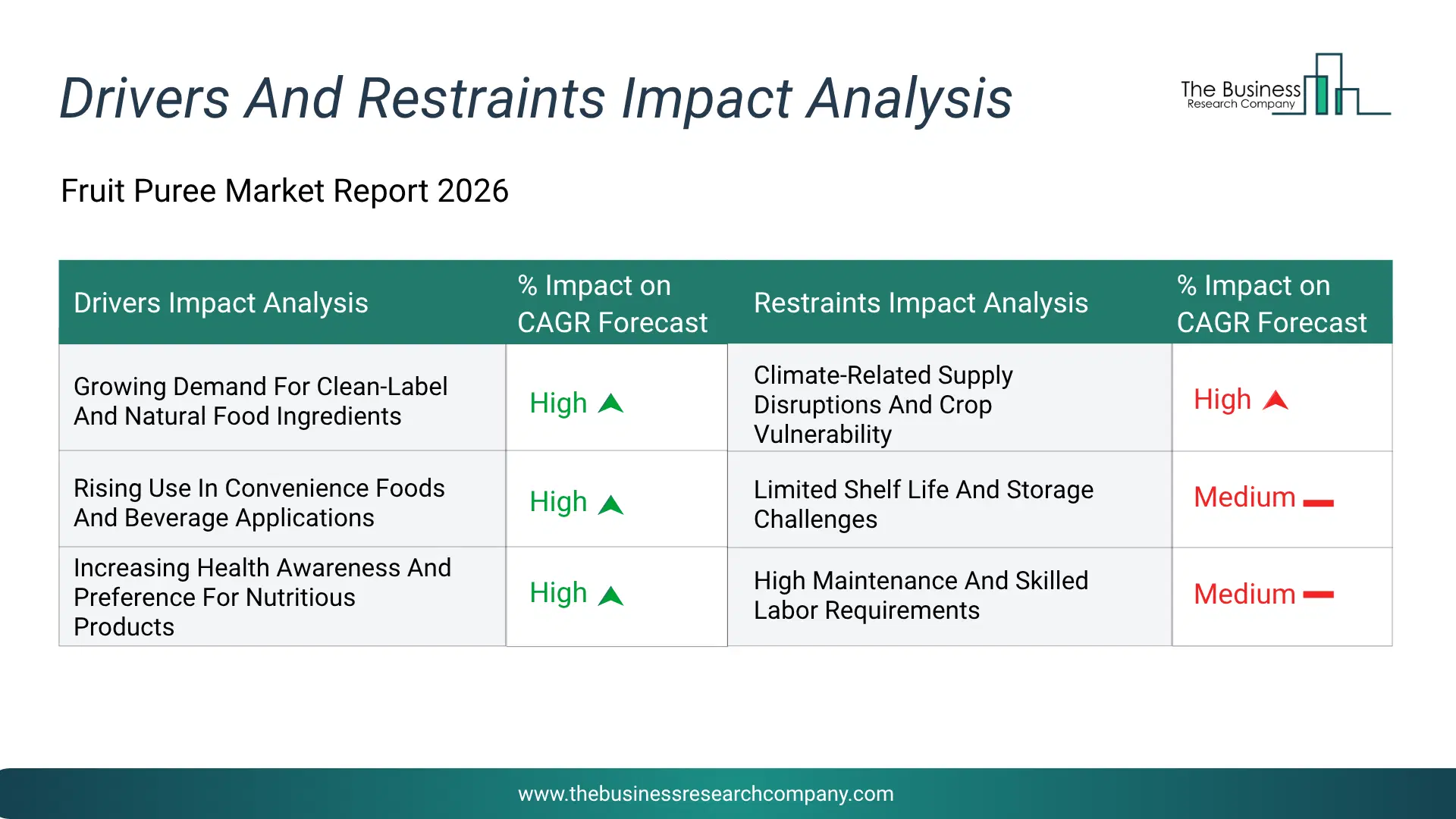
Infographic Chart Showing Key Market Drivers Analysis And Restraints For Fruit Puree Market
The chart presents an impact analysis of key drivers and restraints, quantifying their relative influence on the market's growth rate and helping assess the balance between growth enablers and limiting factors. This chart offers a high-level perspective; the full report contains more detailed insights.
How Will The Drivers Impact Growth In The Global Fruit Puree Market?
• Growing Demand For Clean-Label And Natural Food Ingredients (High) – During the forecast period, the growing demand for clean-label and natural food ingredients is expected to become a key growth driver for the fruit puree market by 2030. Growing demand for clean-label and natural food ingredients is driving growth in the fruit puree market as consumers increasingly prefer products made with recognizable, minimally processed, and natural ingredients without artificial colors, flavors, or preservatives. Fruit puree is widely used as a natural flavoring, coloring, and sweetening ingredient in beverages, baby food, dairy, bakery, and snack products, supporting rising market demand. • Rising Use In Convenience Foods And Beverage Applications (High) – During the forecast period, the rising use in convenience foods and beverage applications is expected to emerge as a major factor driving the expansion of the fruit puree market by 2030. Rising use in convenience foods and beverage applications is driving growth in the fruit puree market as food manufacturers increasingly incorporate fruit puree into smoothies, yogurts, desserts, sauces, ready-to-eat foods, and beverages for consistent flavor, texture, and nutritional value. Its ease of processing and versatility make it a preferred ingredient in modern convenience product formulations. • Increasing Health Awareness And Preference For Nutritious Products (High) – During the forecast period, the increasing health awareness and preference for nutritious products is expected to act as a key growth catalyst for the fruit puree market by 2030. Increasing health awareness and preference for nutritious products are driving growth in the fruit puree market as consumers increasingly seek foods and beverages rich in vitamins, minerals, antioxidants, and natural fiber. Fruit puree is viewed as a healthier ingredient option for snacks, baby food, dairy products, and beverages, supporting demand for nutritious and naturally sourced products.How Will The Restraints Impact Growth In The Global Fruit Puree Market?
• Climate-Related Supply Disruptions And Crop Vulnerability (High) – During the forecast period, the climate-related supply disruptions and crop vulnerability are restraining growth in the fruit puree market as fruit production is highly dependent on weather conditions and agricultural stability. Droughts, floods, irregular rainfall, heatwaves, and plant diseases can reduce crop yields, disrupt raw material availability, and increase sourcing costs for puree manufacturers. • Limited Shelf Life And Storage Challenges (High) – During the forecast period, the limited shelf life and storage challenges are restraining growth in the fruit puree market as puree products are susceptible to spoilage, microbial contamination, and quality degradation if not properly processed and stored. Maintaining freshness often requires refrigeration, aseptic packaging, or controlled logistics, which increases operational costs and supply chain complexity. • High Maintenance And Skilled Labor Requirements (High) – During the forecast period, the high maintenance and skilled labor requirements are restraining growth in the fruit puree market as processing facilities require regular equipment cleaning, maintenance, quality checks, and trained personnel to ensure hygiene, consistency, and safe production. Shortages of skilled workers and rising maintenance costs can reduce operational efficiency and increase overall production expenses.Key Players In The Global Fruit Puree Market
Major companies operating in the fruit puree market are Symrise AG, Welch Foods Inc., Boiron Freres SAS, Tree Top Industries Inc., SunOpta Inc., Archer Daniels Midland Company, Capricorn Food Products India Ltd., Grünewald GmbH, Westfalia Fruit, FruitSmart Inc., Aseptic Fruit Purees, Milne Fruit Products Inc., SVZ International B.V., ABC Fruits, Sicoly Cooperative, iTi Tropicals Inc., Uren Food Group Limited, China Kunyu Industrial Co. Ltd., Dennick Fruitsource LLC, David Berryman Ltd., Agrana Beteiligungs-AG, Doehler Group SE, Del Monte Pacific Limited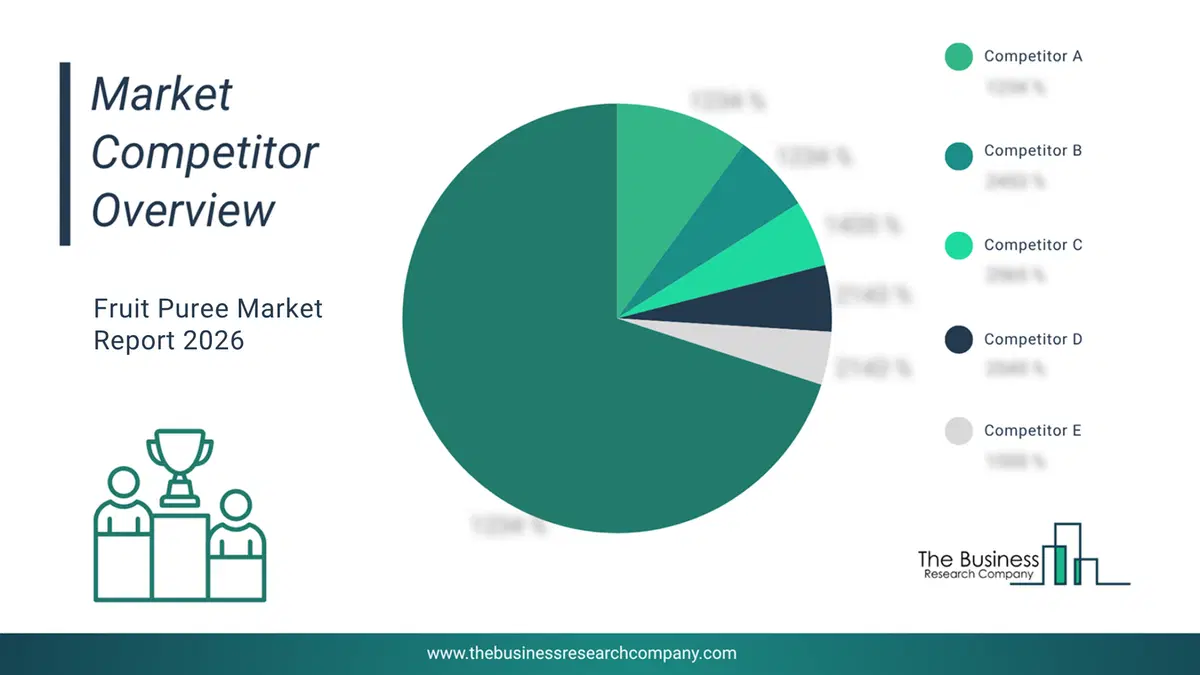
This chart is for illustrative purposes; the full report includes a detailed competitor analysis and comprehensive overview of the top 10 companies in the market.
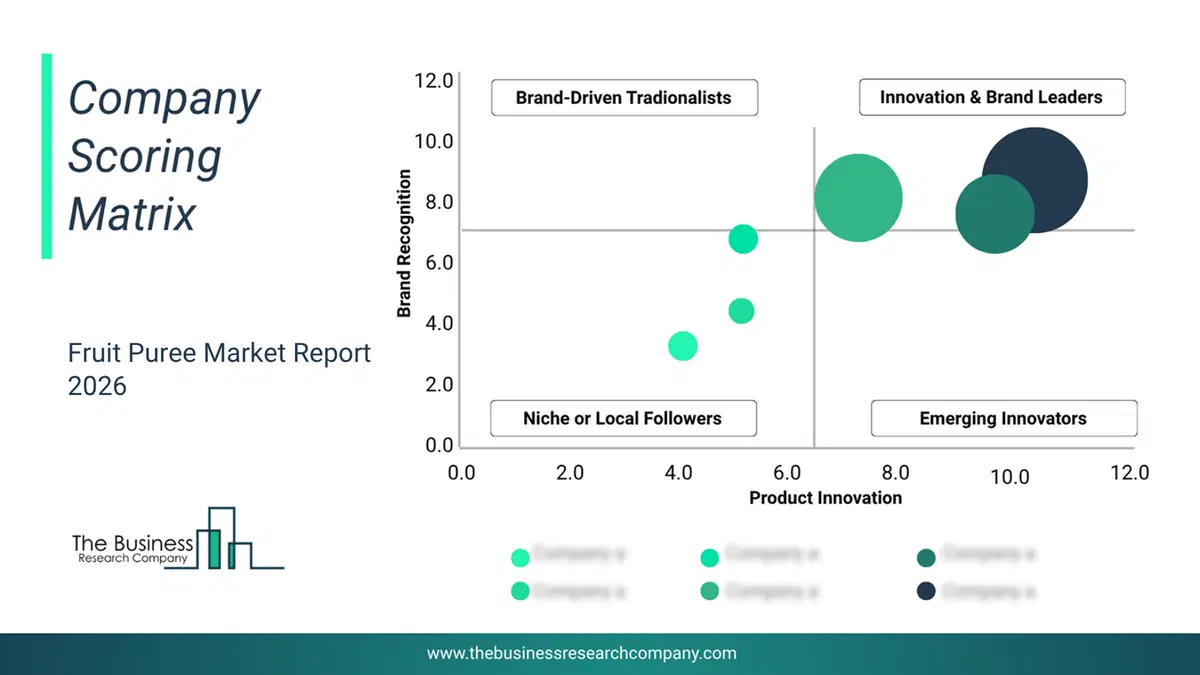
This chart maps companies by product innovation and brand strength, with bubble size indicating relative revenue, helping identify market leaders, challengers, and niche players. This is an illustrative chart; the full report provides a complete and accurate competitive analysis.
Global Fruit Puree Market Trends and Insights
Major companies operating in the fruit puree market are introducing products with tailored packaging, such as fruit purée pouches, to sustain their position in the market. Fruit purée pouches refer to flexible, sealed containers typically made of materials like plastic or foil that are used to package and store fruit purées. For instance, in July 2023, Bristol Syrup Co., a UK-based provider of fruit-based products, introduced a fresh lineup of fruit purées tailored for pubs and bars. The range boasts seven fruit flavors, featuring a remarkable 90–100% fresh fruit content and utilizing natural ingredients. Packaged in recyclable 600-ml pourable pouches with convenient resealable screw-cap lids, these purées are designed to ensure consistently excellent fruit quality, streamline staff operations, cut costs, and minimize waste. Once opened, the pouches remain fresh for up to seven days when stored in the refrigerator. Exciting flavors in the collection include passionfruit, mango, raspberry, and zesty lemon and lime juice.What Are Latest Mergers And Acquisitions In The Fruit Puree Market?
In July 2023, Döhler Group, a Germany-based producer, marketer, and provider of technology-based natural ingredients, acquired SVZ International B.V. for an undisclosed amount. This acquisition strengthens Döhler's portfolio of natural red fruit and vegetable ingredients and its global market presence, expanding its operations in the USA and Japan. SVZ International B.V. is a Nederland-based producer of liquid fruit and vegetable ingredients for the global food and beverage industry.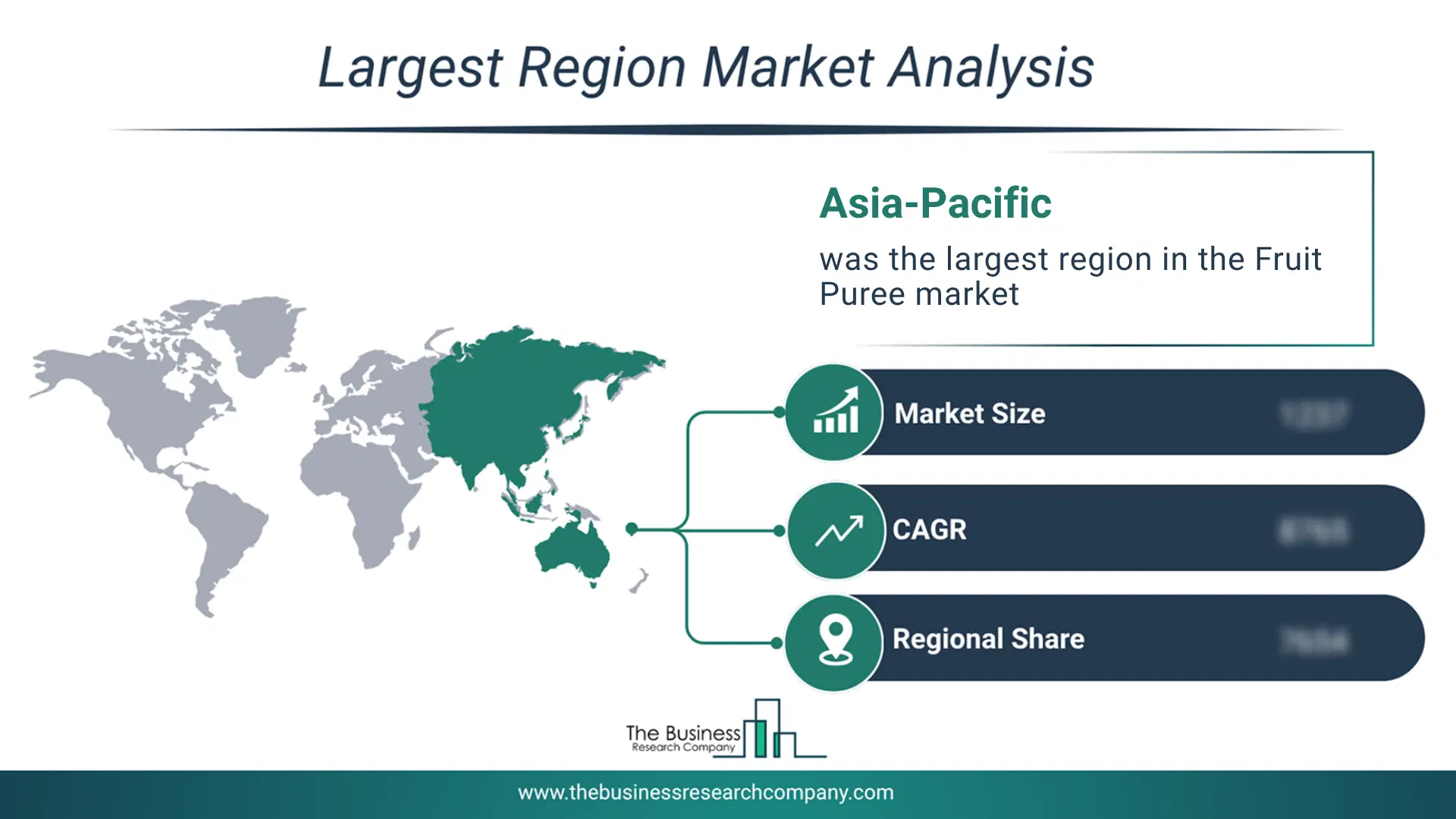
Regional Outlook
Asia-Pacific was the largest region in the fruit puree market in 2025. The regions covered in this market report are Asia-Pacific, South East Asia, Western Europe, Eastern Europe, North America, South America, Middle East and Africa. The countries covered in this market report are Australia, Brazil, China, France, Germany, India, Indonesia, Japan, Taiwan, Russia, South Korea, UK, USA, Italy, Spain, CanadaWhat Defines the Fruit Puree Market?
The fruit puree market consists of sales of blueberry puree, mango puree, and raspberry puree. Values in this market are ‘factory gate’ values, that is, the value of goods sold by the manufacturers or creators of the goods, whether to other entities (including downstream manufacturers, wholesalers, distributors, and retailers) or directly to end customers. The value of goods in this market includes related services sold by the creators of the goods.How is Market Value Defined and Measured?
The market value is defined as the revenues that enterprises gain from the sale of goods and/or services within the specified market and geography through sales, grants, or donations in terms of the currency (in USD unless otherwise specified). The revenues for a specified geography are consumption values that are revenues generated by organizations in the specified geography within the market, irrespective of where they are produced. It does not include revenues from resales along the supply chain, either further along the supply chain or as part of other products.
This chart presents market attractiveness based on a quantitative evaluation of growth, competition, strategic alignment, and risk, offering a clear view of opportunity areas for decision-making. This chart is for illustrative purposes; the full report contains the complete analysis.

This chart highlights the Total Addressable Market (TAM) by estimating the maximum revenue opportunity using an assumption-driven approach, supporting strategic planning and opportunity sizing across markets. The chart is illustrative; the full report provides a more comprehensive analysis.
What Key Data and Analysis Are Included in the Fruit Puree Market Report 2026?
The fruit puree market research report is one of a series of new reports from The Business Research Company that provides market statistics, including industry global market size, regional shares, competitors with the market share, detailed market segments, market trends and opportunities, and any further data you may need to thrive in the fruit puree industry. The market research report delivers a complete perspective of everything you need, with an in-depth analysis of the current and future state of the industry.Fruit Puree Market Report Forecast Analysis
| Report Attribute | Details |
|---|---|
| Market Size Value In 2026 | $5.48 billion |
| Revenue Forecast In 2030 | $7.19 billion |
| Growth Rate | CAGR of 6.0% from 2026 to 2030 |
| Base Year For Estimation | 2025 |
| Actual Estimates/Historical Data | 2020-2025 |
| Forecast Period | 2026 - 2030 |
| Market Representation | Revenue in USD Billion and CAGR from 2026 to 2030 |
| Segments Covered | Fruit Type, Category, Application |
| Regional Scope | Asia-Pacific, Western Europe, Eastern Europe, North America, South America, Middle East, Africa |
| Country Scope | The countries covered in the report are Australia, Brazil, China, France, Germany, India, Indonesia, Japan, Taiwan, Russia, South Korea, UK, USA, Canada, Italy, Spain. |
| Key Companies Profiled | Symrise AG, Welch Foods Inc., Boiron Freres SAS, Tree Top Industries Inc., SunOpta Inc., Archer Daniels Midland Company, Capricorn Food Products India Ltd., Grünewald GmbH, Westfalia Fruit, FruitSmart Inc., Aseptic Fruit Purees, Milne Fruit Products Inc., SVZ International B.V., ABC Fruits, Sicoly Cooperative, iTi Tropicals Inc., Uren Food Group Limited, China Kunyu Industrial Co. Ltd., Dennick Fruitsource LLC, David Berryman Ltd., Agrana Beteiligungs-AG, Doehler Group SE, Del Monte Pacific Limited |
| Customization Scope | Request for Customization |
| Pricing And Purchase Options | Explore Purchase Options |