
Fuel Ethanol Market Report 2026
Global Outlook – By Product (Starch-Based, Sugar-Based, Cellulosic ), By Raw Material (Maize, Wheat, Industrial Beets, Sugarcane, Cereal And Starch, Other Raw Materials ), By Application (Conventional Vehicles, Flexible Fuel Vehicles), By End-User (Automotive, Power Generation And Industrial Energy, Government And Pilot-Scale Fuel Programs) – Market Size, Trends, Strategies, and Forecast to 2030
Fuel Ethanol Market Overview
• Fuel Ethanol market size has reached to $106.73 billion in 2025 • Expected to grow to $147.71 billion in 2030 at a compound annual growth rate (CAGR) of 6.6% • Growth Driver: Fuel Ethanol Market Growth Fueled By Expanding Opportunities In The Oil And Gas Industry • Market Trend: Advancements In Electrified Flex-Fuel Technologies Driving Fuel Ethanol Market Innovation • North America was the largest region in 2025 and Asia-Pacific is the fastest growing region.Market Gains By 2030 – Top Opportunities By Segment
Market Gain identifies the most promising market opportunities by highlighting the segments or products expected to generate the highest incremental revenue growth over the next five years.
What Is Covered Under Fuel Ethanol Market?
Fuel ethanol, also referred to as ethyl alcohol, is a type of alcohol made from corn, sugarcane, grains, and occasionally paper waste. It is also the primary form of alcohol in most alcoholic drinks made from the fermentation of a mash of grains or sugarcane. Fuel ethanol is a fuel source that is regularly combined with gasoline to oxygenate the fuel at the gas station. Additionally, ethanol fuel is used to power automobiles. The main fuel ethanol products are starch-based, sugar-based, and cellulosic-based fuel ethanol. Starch-based crops are processed in dry or wet mills to create ethanol. In the dry-milling process, corn is ground into flour and then fermented into ethanol with the help of byproducts like distillers' grains and carbon dioxide. The starch-based ethanol is used to produce bioenergy. The various sources include synthetic and natural that are used in making fuel ethanol from raw materials such as fuel, maize, wheat, industrial beets, sugarcane, cereal and starch, and other raw materials. It is used in several applications, such as conventional vehicles and flexible fuel vehicles. It is used by various end-users, such as, automotive, oil and gas, and others.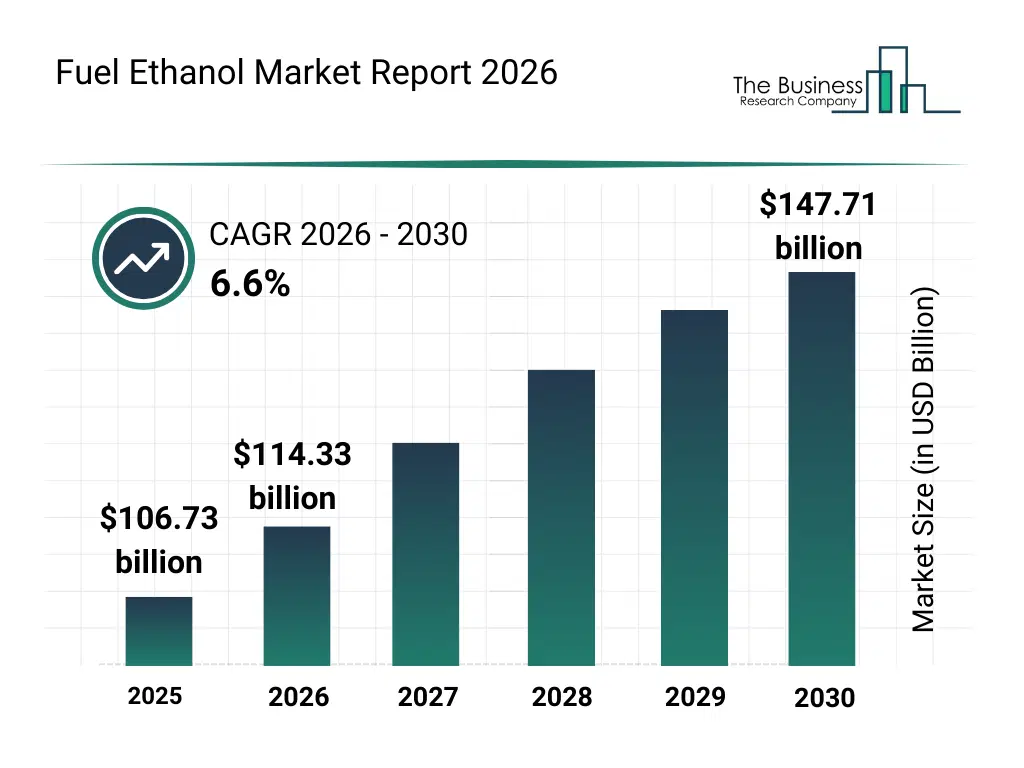
What Is The Fuel Ethanol Market Size and Share 2026?
The fuel ethanol market size has grown strongly in recent years. It will grow from $106.73 billion in 2025 to $114.33 billion in 2026 at a compound annual growth rate (CAGR) of 7.1%. The growth in the historic period can be attributed to government biofuel policies, expansion of corn and sugarcane cultivation, rising gasoline consumption, growth of fermentation technologies, availability of agricultural feedstocks.What Is The Fuel Ethanol Market Growth Forecast?
The fuel ethanol market size is expected to see strong growth in the next few years. It will grow to $147.71 billion in 2030 at a compound annual growth rate (CAGR) of 6.6%. The growth in the forecast period can be attributed to increasing decarbonization targets, rising investments in second-generation biofuels, expansion of ethanol export markets, growing demand for renewable fuels, increasing focus on waste-to-fuel technologies. Major trends in the forecast period include increasing adoption of ethanol blending mandates, rising production of bio-based fuels, growing use of cellulosic ethanol, expansion of flexible fuel vehicle infrastructure, enhanced focus on energy security.
Global Fuel Ethanol Market Segmentation
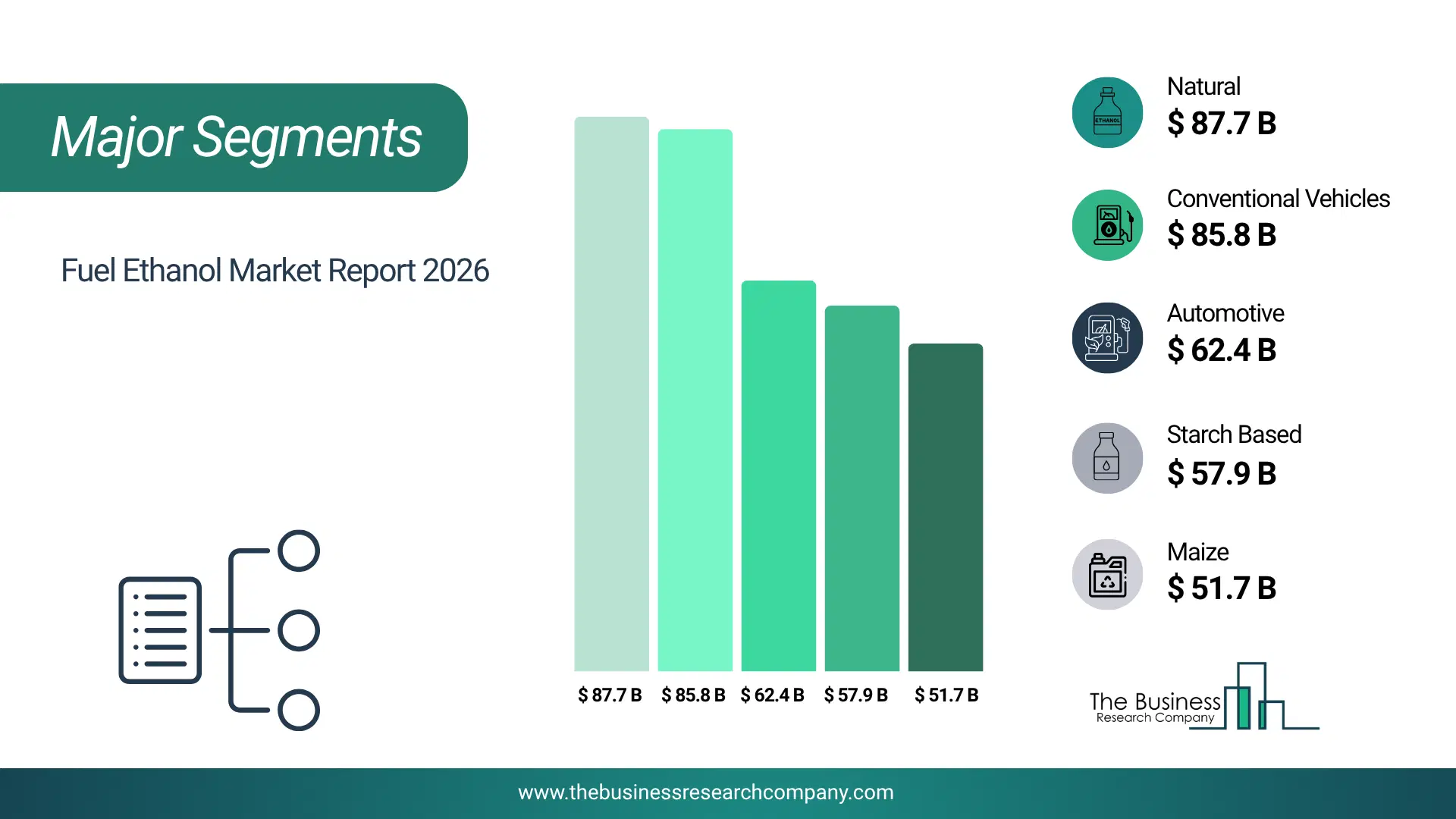
1) By Product: Starch-Based, Sugar-Based, Cellulosic 2) By Raw Material: Maize, Wheat, Industrial Beets, Sugarcane, Cereal And Starch, Other Raw Materials 3) By Application: Conventional Vehicles, Flexible Fuel Vehicles 4) By End-User: Automotive, Power Generation And Industrial Energy, Government And Pilot-Scale Fuel Programs Subsegments: 1) By Starch Based: Corn Ethanol, Wheat Ethanol, Barley Ethanol, Potato Ethanol 2) By Sugar Based: Cane Ethanol, Beet Ethanol, Molasses Ethanol 3) By Cellulosic: Agricultural Residues, Forestry Residues, Dedicated Energy Crops, Municipal Solid Waste The top segments in the fuel ethanol market will be: • Natural will reach $87748.72 Million by 2025. • Conventional Vehicles will reach $85805.5 Million by 2025. • Automotive will reach $62484.42 Million by 2025. • Starch Based will reach $57936.4 Million by 2025. • Maize will reach $51720.37 Million by 2025.What Is The Driver Of The Fuel Ethanol Market?
The expansion of the oil and gas industry is expected to propel the growth of the fuel ethanol market going forward. The oil and gas industry is a sector encompassing the exploration, extraction, refining, transportation, and marketing of petroleum products. Fuel ethanol has been utilized in the oil and gas industry primarily as a biofuel as it offers reduced greenhouse gas emissions, enhanced octane levels, improving combustion efficiency and reducing carbon monoxide and particulate emissions, and contribute to improved engine performance. For instance, in November 2023, according to the US Energy Information Administration, a US-based federal statistical system for gathering, processing, and disseminating energy data, there is an increase in U.S. crude oil output to 12.4 million b/d in 2023 from the record high of 11.7 million b/d in 2022. Therefore, the expansion of the oil and gas industry is driving the growth of the fuel ethanol industry.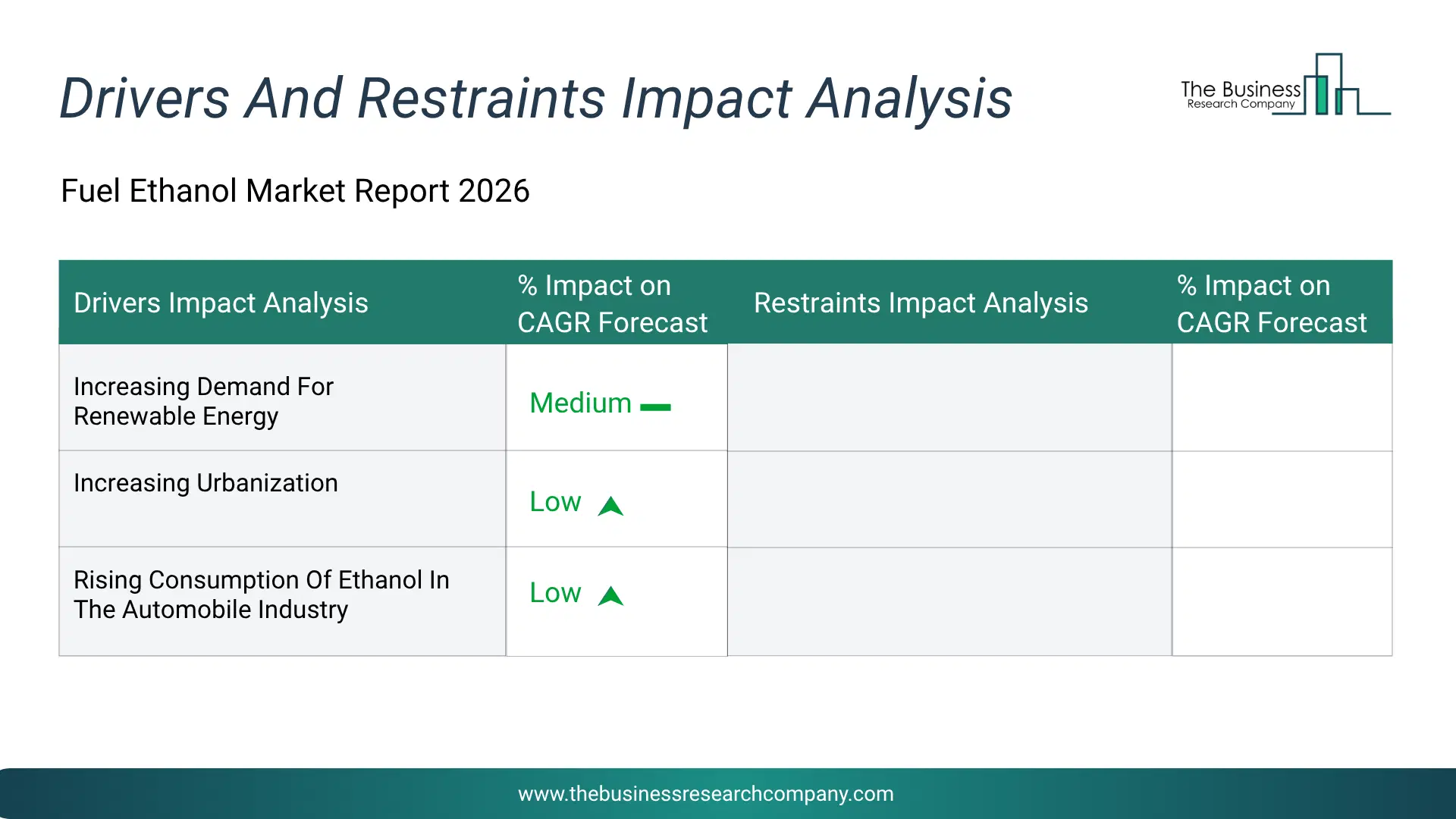
Infographic Chart Showing Key Market Drivers Analysis And Restraints For Fuel Ethanol Market
The chart presents an impact analysis of key drivers and restraints, quantifying their relative influence on the market's growth rate and helping assess the balance between growth enablers and limiting factors. This chart offers a high-level perspective; the full report contains more detailed insights.
How Will The Drivers Impact Growth In The Global Fuel Ethanol Market?
• Increasing Demand For Renewable Energy (Medium) – The increasing demand for renewable energy will become a key driver of growth in the fuel ethanol market by 2030. As nations and industries work towards reducing greenhouse gas emissions and combating climate change, ethanol is increasingly recognized as a more sustainable alternative to conventional fossil fuels. Its ability to burn more efficiently and generate fewer pollutants makes it an effective solution for lowering carbon emissions. As a result, increasing demand for renewable energy is anticipated to contributing to annual growth in the market. • Increasing Urbanization (Low) – The increasing urbanization will become a key driver of growth in the fuel ethanol market by 2030. As urbanization accelerates, there is a concurrent rise in disposable income and vehicle ownership, resulting in increased fuel demand. Ethanol-blend fuel, recognized for its environmental advantages and cost-effectiveness, is gaining popularity as a preferred alternative to traditional gasoline. As a result, increasing urbanization is anticipated to contributing to annual growth in the market. • Rising Consumption Of Ethanol In The Automobile Industry (Low) – The rising consumption of ethanol in the automobile industry will serve as a key growth catalyst fuel ethanol market by 2030. Several governments, including those of India and the U.S., have established ambitious ethanol blending mandates aimed at reducing carbon emissions and decreasing reliance on fossil fuels. These regulatory requirements necessitate the integration of ethanol-blended fuels into the operations of the automobile industry, thereby driving increased demand for ethanol fuel. Therefore, this rising consumption of ethanol in the automobile industry is projected to supporting to annual growth in the market. • Economic Growth In Emerging Markets (High) – The economic growth in emerging markets will serve as a key growth catalyst for fuel ethanol market by 2030. As economies expand, there is typically a rise in industrial activity, transportation, and overall energy consumption. This increased demand for energy, especially in emerging markets, creates significant opportunities for alternative fuels such as ethanol to address the growing fuel requirements. Therefore, this economic growth in emerging markets will is projected to supporting to annual growth in the market.How Will The Restraints Impact Growth In The Global Fuel Ethanol Market?
• High Production Costs (Medium) – High Production Costs will restrict the growth of the Fuel Ethanol market during the forecast period. Fuel ethanol production involves significant costs for feedstocks, processing, and distribution, affecting competitiveness with fossil fuels. High production costs can limit the economic viability of ethanol projects without government support. Cost pressures may affect the adoption of ethanol blends and limit market growth, particularly in price-sensitive regions.Key Players In The Global Fuel Ethanol Market
Major companies operating in the fuel ethanol market are Valero Energy Corporation, Aemetis, Inc., British Petroleum Company plc, Cargill, Incorporated, Archer Daniels Midland Company, Delta-T Corporation, Raízen S.A., Green Plains Inc., Renewable Energy Group, Inc., Flint Hills Resources, LP, CropEnergies AG, Abengoa Bioenergy S.A., Aventine Renewable Energy Holdings, Inc., Big River Resources LLC, Red Trail Energy LLC, Marquis Energy LLC, ICM, Inc., POET, LLC, Pacific Ethanol, Inc., BlueFire Renewables, LLC, Advanced BioEnergy LLC, White Energy, Inc., The Andersons Ethanol Group LLC, Glacial Lakes Energy LLC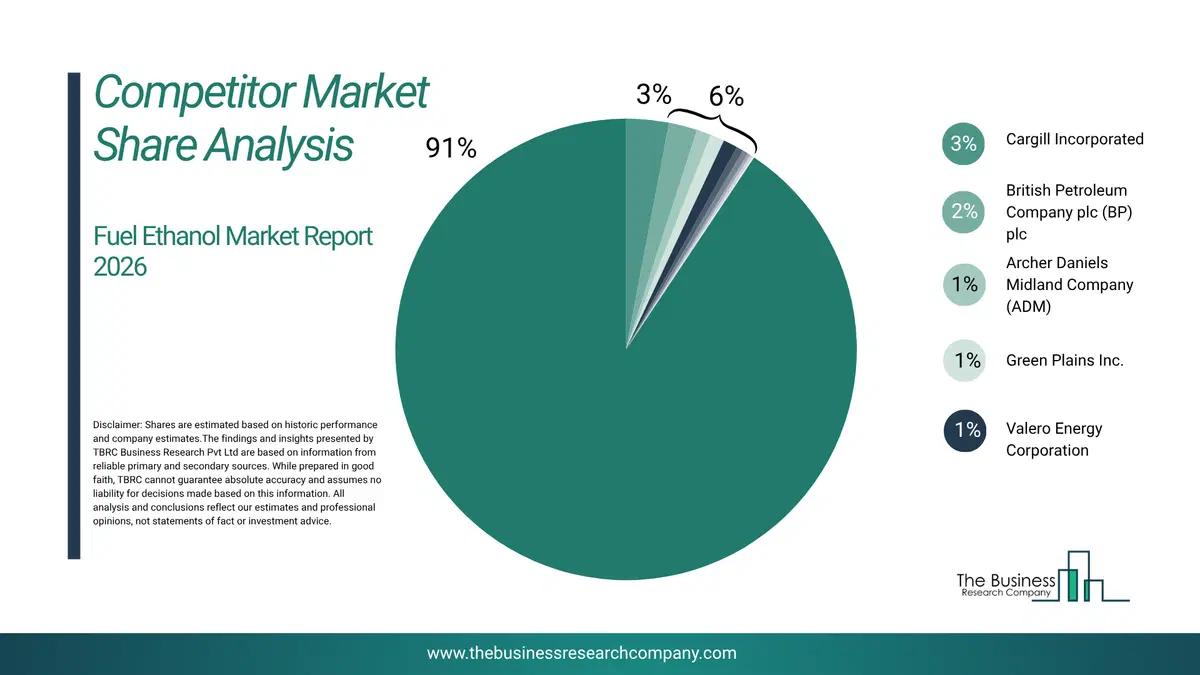
This chart is for illustrative purposes; the full report includes a detailed competitor analysis and comprehensive overview of the top 10 companies in the market.
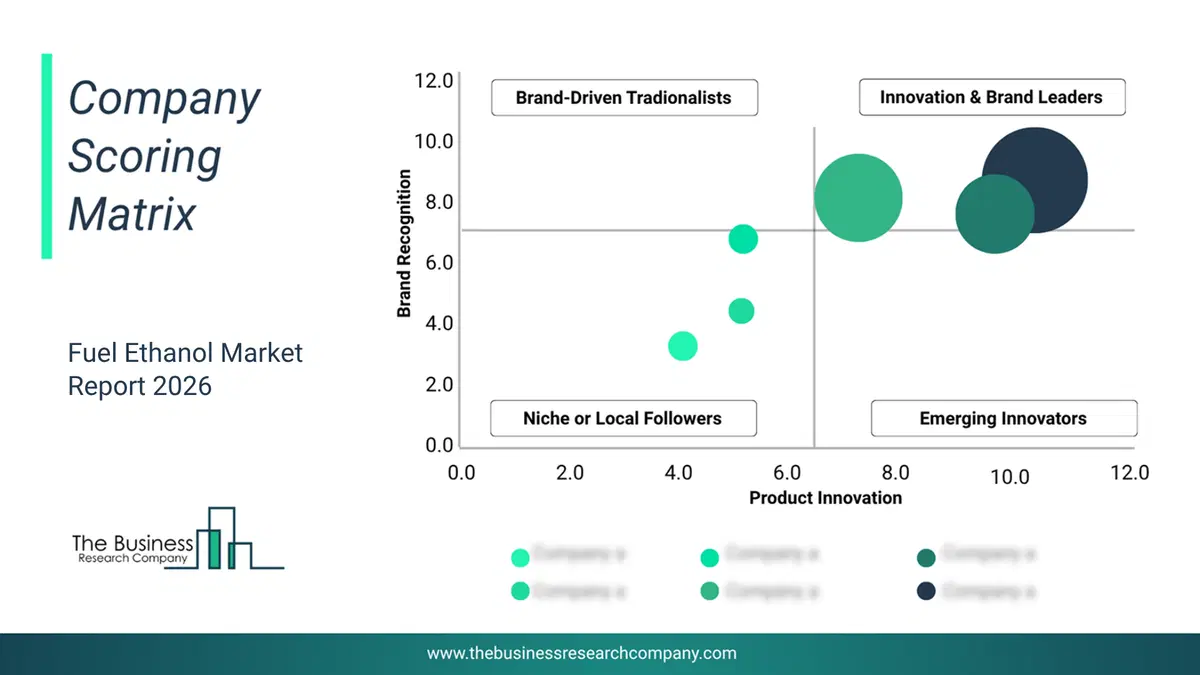
This chart maps companies by product innovation and brand strength, with bubble size indicating relative revenue, helping identify market leaders, challengers, and niche players. This is an illustrative chart; the full report provides a complete and accurate competitive analysis.
Global Fuel Ethanol Market Trends and Insights
Major companies operating in the fuel ethanol market are focusing on developing innovative solutions, such as hybrid ethanol-powered vehicles, to improve fuel efficiency, lower carbon emissions, and advance the shift toward sustainable mobility. A hybrid ethanol-powered vehicle (e-HEV) is a type of hybrid vehicle capable of running on multiple ethanol–gasoline blends (such as E20, E85, or even 100% ethanol depending on design) while also incorporating an electric powertrain. For instance, in August 2023, Toyota Kirloskar Motor, an India-based automobile manufacturer, unveiled the prototype of the world’s first BS 6 (Stage II) electrified flex fuel vehicle, built on the popular Innova Hycross platform. The vehicle combines a flex-fuel engine capable of utilizing higher ethanol blends with a strong-hybrid electric powertrain, using minimal battery capacity (≈1.3–1.5 kWh vs 40–60 kWh typical of battery-electric vehicles), enabling a significant portion of driving to occur in electric mode, thereby enhancing fuel efficiency and reducing emissions without heavy dependence on large batteries. This development demonstrates how the fuel-ethanol market is advancing beyond simple ethanol–petrol blends toward sophisticated hybrid mobility solutions that integrate renewable biofuels with electrification.What Are Latest Mergers And Acquisitions In The Fuel Ethanol Market?
In September 2024, Gevo, a US-based biofuel company that specializes in the creation of bioethanol, acquired Red Trail Energy for an undisclosed amount. The acquisition is expected to enhance Gevo’s ethanol production capabilities while expanding carbon capture and sequestration efforts. Red Trail Energy is a US-based refining, chemicals, polymers, and biofuels company that operates ethanol plants.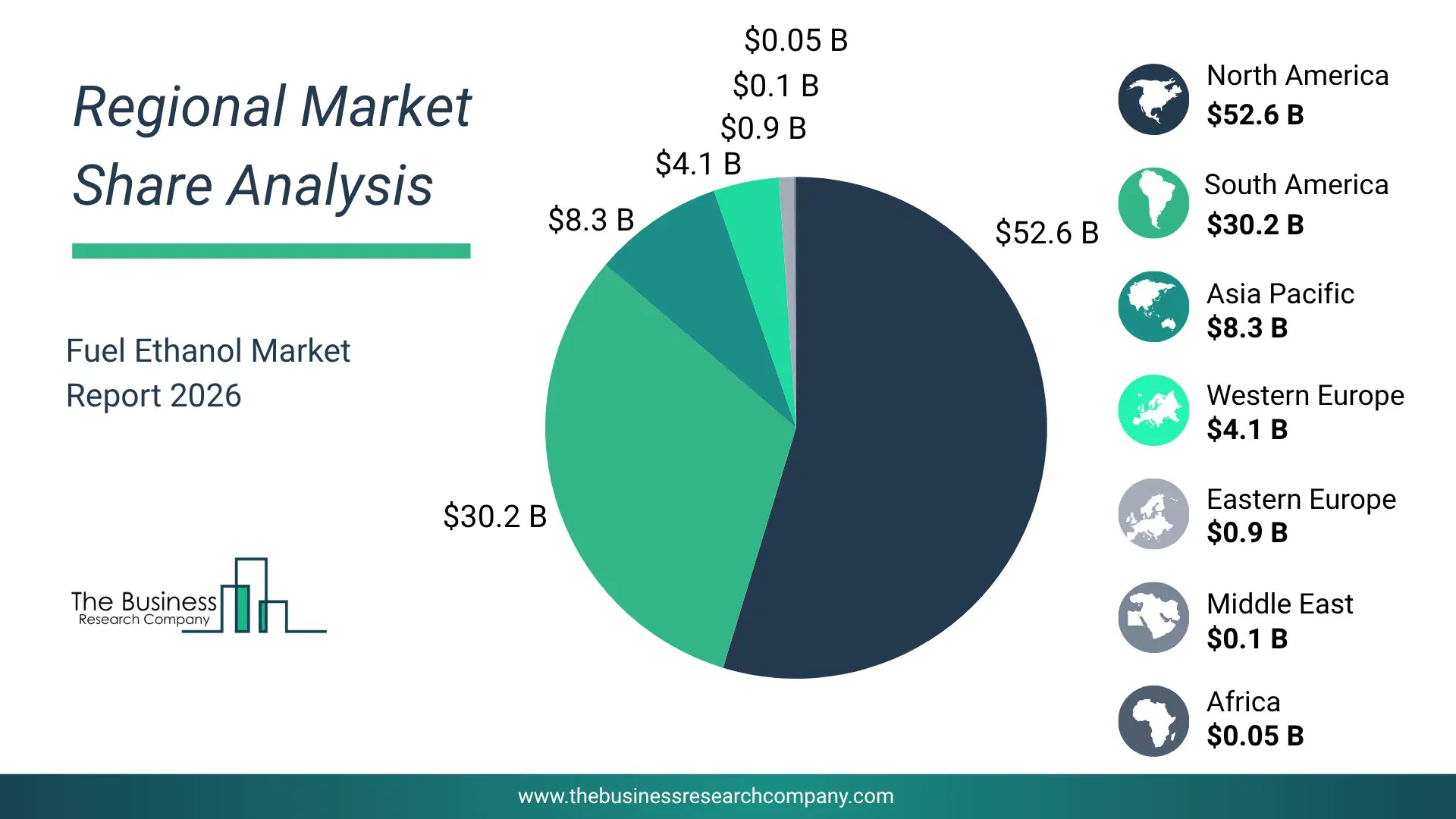
Regional Insights
North America was the largest region in the fuel ethanol market in 2025. Asia-Pacific is expected to be the fastest-growing region in the forecast period. The regions covered in this market report are Asia-Pacific, South East Asia, Western Europe, Eastern Europe, North America, South America, Middle East, Africa The countries covered in this market report are Australia, Brazil, China, France, Germany, India, Indonesia, Japan, Taiwan, Russia, South Korea, UK, USA, Canada, Italy, SpainWhat Defines the Fuel Ethanol Market?
The fuel ethanol market consists of sales of gasoline, flex fuel, and ethanol blended petrol. Values in this market are ‘factory gate’ values, that is the value of goods sold by the manufacturers or creators of the goods, whether to other entities (including downstream manufacturers, wholesalers, distributors, and retailers) or directly to end customers. The value of goods in this market includes related services sold by the creators of the goods.How is Market Value Defined and Measured?
The market value is defined as the revenues that enterprises gain from the sale of goods and/or services within the specified market and geography through sales, grants, or donations in terms of the currency (in USD unless otherwise specified). The revenues for a specified geography are consumption values that are revenues generated by organizations in the specified geography within the market, irrespective of where they are produced. It does not include revenues from resales along the supply chain, either further along the supply chain or as part of other products.
This chart presents market attractiveness based on a quantitative evaluation of growth, competition, strategic alignment, and risk, offering a clear view of opportunity areas for decision-making. This chart is for illustrative purposes; the full report contains the complete analysis.

This chart highlights the Total Addressable Market (TAM) by estimating the maximum revenue opportunity using an assumption-driven approach, supporting strategic planning and opportunity sizing across markets. The chart is illustrative; the full report provides a more comprehensive analysis.
What Key Data and Analysis Are Included in the Fuel Ethanol Market Report 2026?
The fuel ethanol market research report is one of a series of new reports from The Business Research Company that provides market statistics, including industry global market size, regional shares, competitors with the market share, detailed market segments, market trends and opportunities, and any further data you may need to thrive in the fuel ethanol industry. The market research report delivers a complete perspective of everything you need, with an in-depth analysis of the current and future state of the industry.Fuel Ethanol Market Report Forecast Analysis
| Report Attribute | Details |
|---|---|
| Market Size Value In 2026 | $114.33 billion |
| Revenue Forecast In 2030 | $147.71 billion |
| Growth Rate | CAGR of 7.1% from 2026 to 2030 |
| Base Year For Estimation | 2025 |
| Actual Estimates/Historical Data | 2020-2025 |
| Forecast Period | 2026 - 2030 |
| Market Representation | Revenue in USD Billion and CAGR from 2026 to 2030 |
| Segments Covered | Product, Raw Material, Application, End-User |
| Regional Scope | Asia-Pacific, Western Europe, Eastern Europe, North America, South America, Middle East, Africa |
| Country Scope | The countries covered in the report are Australia, Brazil, China, France, Germany, India, Indonesia, Japan, Taiwan, Russia, South Korea, UK, USA, Canada, Italy, Spain. |
| Key Companies Profiled | Valero Energy Corporation, Aemetis, Inc., British Petroleum Company plc, Cargill, Incorporated, Archer Daniels Midland Company, Delta-T Corporation, Raízen S.A., Green Plains Inc., Renewable Energy Group, Inc., Flint Hills Resources, LP, CropEnergies AG, Abengoa Bioenergy S.A., Aventine Renewable Energy Holdings, Inc., Big River Resources LLC, Red Trail Energy LLC, Marquis Energy LLC, ICM, Inc., POET, LLC, Pacific Ethanol, Inc., BlueFire Renewables, LLC, Advanced BioEnergy LLC, White Energy, Inc., The Andersons Ethanol Group LLC, Glacial Lakes Energy LLC |
| Customization Scope | Request for Customization |
| Pricing And Purchase Options | Explore Purchase Options |