
Functional Dyspepsia Drug Market Report 2026
Global Outlook – By Drug Type (Proton Pump Inhibitors, H-2-Receptor Antagonists, Antacids, Antibiotics, Prokinetics, Antidepressants), By Indication (Functional Dyspepsia, Postprandial Distress Syndrome, Epigastric Pain Syndrome, Helicobacter Pylori-Associated Dyspepsia (Functional Presentation)), By Distribution Channel (Retail Pharmacies, Hospital Pharmacies, Online Pharmacies) – Market Size, Trends, Strategies, and Forecast to 2030
Functional Dyspepsia Drug Market Overview
• Functional Dyspepsia Drug market size has reached to $9.06 billion in 2025 • Expected to grow to $12.24 billion in 2030 at a compound annual growth rate (CAGR) of 6.2% • Growth Driver: Rise In Metabolic Disorders Driving The Growth Of The Market Due To Increasing Prevalence And Related Gastrointestinal Complications • Market Trend: Neuromodulation Therapies Using PENFS Drive Innovation in Functional Dyspepsia Treatment • North America was the largest region in 2025 and Asia-Pacific is the fastest growing region.What Is Covered Under Functional Dyspepsia Drug Market?
Functional dyspepsia drug refers to a class of medications used to manage and alleviate symptoms associated with functional dyspepsia (FD), a gastrointestinal disorder characterized by persistent or recurrent upper abdominal discomfort without any identifiable structural or biochemical cause. These drugs aim to reduce symptoms such as bloating, early satiety, nausea, and epigastric pain. The main types of functional dyspepsia drugs are proton pump inhibitors, H-2 receptor antagonists, antacids, antibiotics, prokinetics, and antidepressants. A proton pump inhibitor (PPI) is a type of medication that reduces stomach acid production by blocking the action of the gastric proton pump (H⁺/K⁺-ATPase) in the stomach lining. Various indications include functional dyspepsia and organic dyspepsia and are distributed through various channels, including retail pharmacies, hospital pharmacies, and online pharmacies.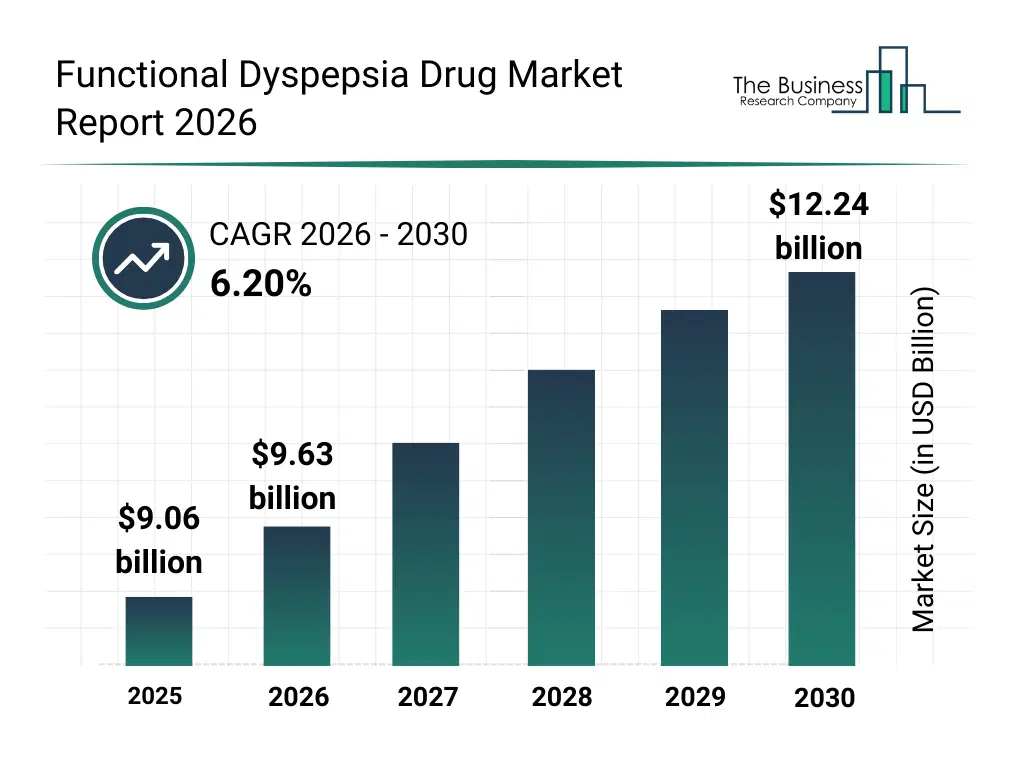
What Is The Functional Dyspepsia Drug Market Size and Share 2026?
The functional dyspepsia drug market size has grown strongly in recent years. It will grow from $9.06 billion in 2025 to $9.63 billion in 2026 at a compound annual growth rate (CAGR) of 6.2%. The growth in the historic period can be attributed to increasing gastrointestinal disorder diagnosis, widespread use of acid suppression therapies, expansion of gastroenterology clinics, improved patient awareness of dyspepsia, availability of generic GI drugs.What Is The Functional Dyspepsia Drug Market Growth Forecast?
The functional dyspepsia drug market size is expected to see strong growth in the next few years. It will grow to $12.24 billion in 2030 at a compound annual growth rate (CAGR) of 6.2%. The growth in the forecast period can be attributed to rising stress-related digestive disorders, growing demand for chronic symptom management, expansion of outpatient GI care, increased adoption of prokinetic therapies, innovation in functional GI treatments. Major trends in the forecast period include rising prevalence of functional gastrointestinal disorders, increasing use of combination drug therapies, growing preference for symptom-based treatment approaches, expansion of over-the-counter to prescription transitions, increased focus on gut-brain axis management.
Global Functional Dyspepsia Drug Market Segmentation
1) By Drug Type: Proton Pump Inhibitors, H-2-Receptor Antagonists, Antacids, Antibiotics, Prokinetics, Antidepressants 2) By Indication: Functional Dyspepsia, Postprandial Distress Syndrome, Epigastric Pain Syndrome, Helicobacter Pylori-Associated Dyspepsia (Functional Presentation) 3) By Distribution Channel: Retail Pharmacies, Hospital Pharmacies, Online Pharmacies Subsegments: 1) By Proton Pump Inhibitors: Omeprazole, Esomeprazole, Lansoprazole, Pantoprazole, Rabeprazole 2) By H-2-Receptor Antagonists: Ranitidine, Famotidine, Cimetidine, Nizatidine 3) By Antacids: Aluminum Hydroxide, Magnesium Hydroxide, Calcium Carbonate, Sodium Bicarbonate 4) By Antibiotics: Clarithromycin, Amoxicillin, Metronidazole, Tetracycline 5) By Prokinetics: Domperidone, Metoclopramide, Itopride, Mosapride 6) By Antidepressants: Tricyclic Antidepressants, Selective Serotonin Reuptake Inhibitors, Serotonin-Norepinephrine Reuptake InhibitorsWhat Are The Drivers Of The Functional Dyspepsia Drug Market?
The increase in the prevalence of metabolic disorders is expected to drive the growth of the functional dyspepsia drug market going forward. A metabolic disorder is a condition that occurs when the body's normal metabolic processes are disrupted, leading to an imbalance in the processing of nutrients, energy, or waste. The increasing prevalence of metabolic disorders is driven by factors such as poor diet, sedentary lifestyles, genetic predispositions, and rising obesity rates. Functional dyspepsia drugs are used in metabolic disorders to manage gastrointestinal symptoms and improve digestive function. For instance, in December 2023, according to Diabetes Australia, an Australia-based organization that works to raise awareness about diabetes, in 2022, approximately 134,000 Australians were living with Type 1 diabetes. This figure increased to 135,423 in 2023. Therefore, the increasing prevalence of metabolic disorders is driving the growth of the functional dyspepsia drug industry. The rising healthcare expenditure is expected to propel the growth of the functional dyspepsia drug market going forward. Healthcare expenditure refers to the total financial resources spent on medical goods and services to maintain and improve population health. Healthcare expenditure is rising as an aging population requires more frequent medical care and long-term health services. Higher healthcare expenditure helps uptake of functional dyspepsia drugs by expanding coverage and reimbursement, enabling wider patient access to prescribed therapies. For instance, in April 2025, according to the Office for National Statistics, a UK-based government department, between 2023 and 2024, total healthcare spending increased by 6.5% in nominal terms, and by 2.4% in real terms after accounting for inflation. Therefore, the rising healthcare expenditure driving the growth of the functional dyspepsia drug industry.Key Players In The Global Functional Dyspepsia Drug Market
Major companies operating in the functional dyspepsia drug market are Pfizer Inc., Abbvie Inc., Bayer AG, AstraZeneca plc, Astellas Pharma Inc., Eisai Co. Ltd., Menarini Group, Dr. Reddy’s Laboratories Ltd., Lupin Limited, Daewoong Pharmaceutical Co. Ltd., Phathom Pharmaceuticals, Zeria Pharmaceutical Co. Ltd., Ironwood Pharmaceuticals Inc., Salix Pharmaceuticals Inc., RedHill Biopharma, RaQualia Pharma Inc., MetaMe Health, Renexxion LLC, Processa Pharmaceuticals, Evoke Pharma Inc.
This chart is for illustrative purposes; the full report includes a detailed competitor analysis and comprehensive overview of the top 10 companies in the market.
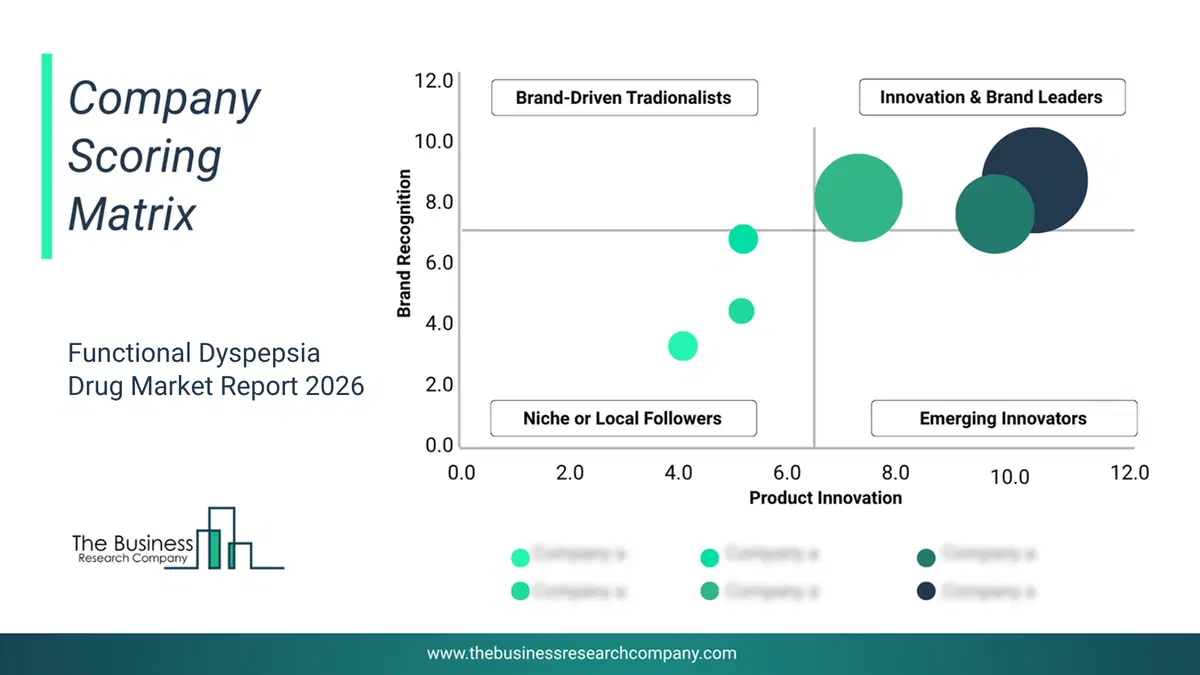
This chart maps companies by product innovation and brand strength, with bubble size indicating relative revenue, helping identify market leaders, challengers, and niche players. This is an illustrative chart; the full report provides a complete and accurate competitive analysis.
Global Functional Dyspepsia Drug Market Trends and Insights
Major companies operating in the functional dyspepsia drug market are advancing neuromodulation therapies through regulatory approvals to expand treatment options, improve symptom management, and address unmet needs in patients who do not respond adequately to conventional pharmacological therapies. Regulatory approvals refer to official authorizations from health authorities that allow new drugs or therapies to be marketed and used after meeting required safety and efficacy standards. For instance, in July 2023, Meiji Seika Pharma, a Japan-based pharmaceutical company, and Zeria Pharmaceutical, a Japan-based company focused on the development and manufacturing of ethical and consumer healthcare products, received regulatory approval for their drug Acofide (acotiamide) to treat functional dyspepsia in Thailand. Acofide is the world’s first drug specifically proven effective for functional dyspepsia, targeting symptoms like postprandial fullness, abdominal bloating, and early satiety. This approval expands the companies' presence in Southeast Asia, addressing a significant patient population with this chronic gastrointestinal condition. The drug has marketing approval in multiple countries, including Japan, and is recognized as a prokinetic agent that modulates upper gastrointestinal motility to relieve symptoms in patients diagnosed by established clinical criteria.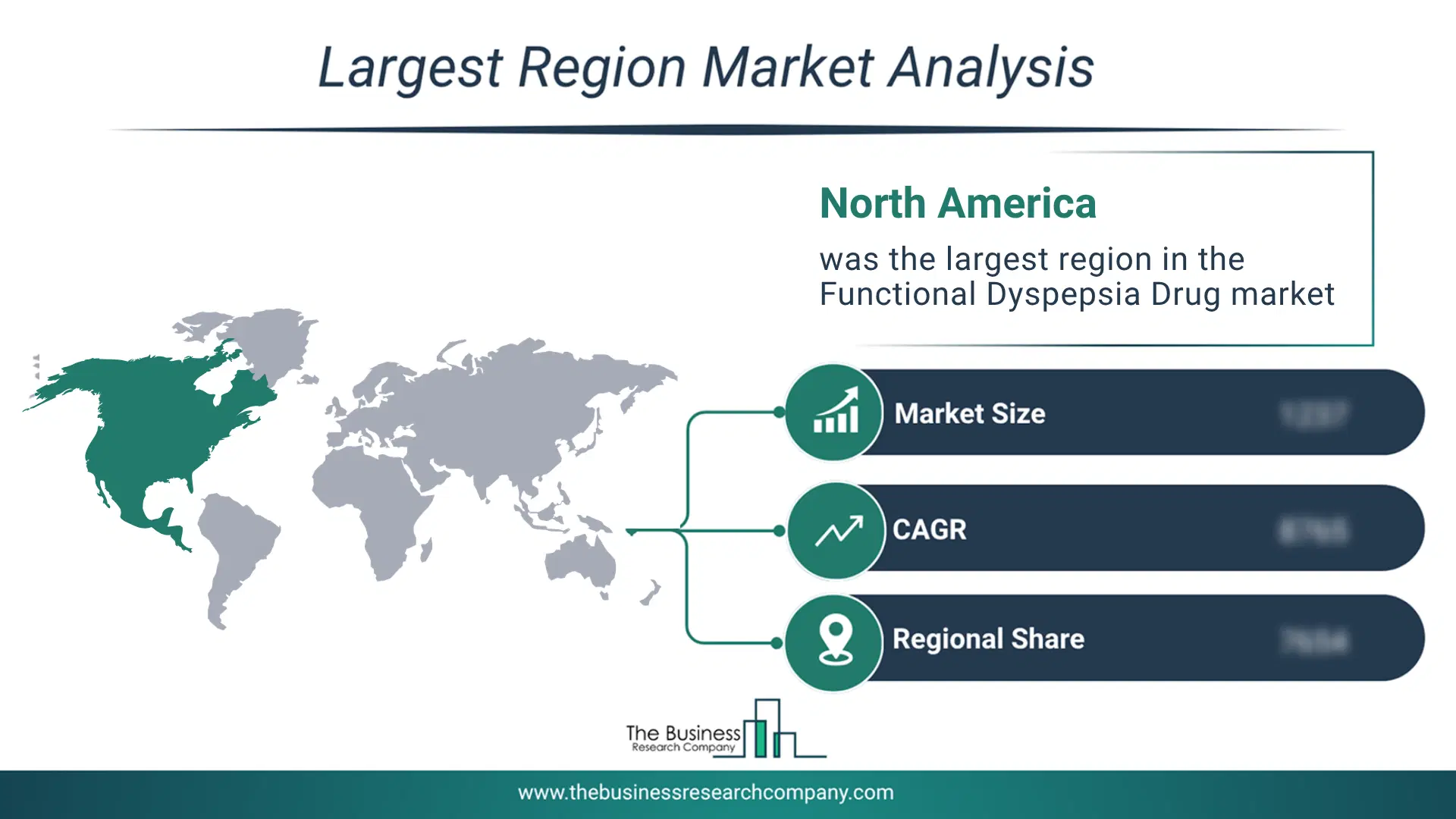
Regional Insights
North America was the largest region in the functional dyspepsia drug market in 2025. Asia-Pacific is expected to be the fastest-growing region in the forecast period. The regions covered in this market report are Asia-Pacific, South East Asia, Western Europe, Eastern Europe, North America, South America, Middle East, Africa. The countries covered in this market report are Australia, Brazil, China, France, Germany, India, Indonesia, Japan, Taiwan, Russia, South Korea, UK, USA, Canada, Italy, Spain.What Defines the Functional Dyspepsia Drug Market?
The functional dyspepsia drug market consists of sales of mucosal protectants, neuromodulators, serotonin modulators, and herbal drugs. Values in this market are ‘factory gate’ values, that is the value of goods sold by the manufacturers or creators of the goods, whether to other entities (including downstream manufacturers, wholesalers, distributors and retailers) or directly to end customers. The value of goods in this market includes related services sold by the creators of the goods.How is Market Value Defined and Measured?
The market value is defined as the revenues that enterprises gain from the sale of goods and/or services within the specified market and geography through sales, grants, or donations in terms of the currency (in USD unless otherwise specified). The revenues for a specified geography are consumption values that are revenues generated by organizations in the specified geography within the market, irrespective of where they are produced. It does not include revenues from resales along the supply chain, either further along the supply chain or as part of other products.
This chart presents market attractiveness based on a quantitative evaluation of growth, competition, strategic alignment, and risk, offering a clear view of opportunity areas for decision-making. This chart is for illustrative purposes; the full report contains the complete analysis.

This chart highlights the Total Addressable Market (TAM) by estimating the maximum revenue opportunity using an assumption-driven approach, supporting strategic planning and opportunity sizing across markets. The chart is illustrative; the full report provides a more comprehensive analysis.
What Key Data and Analysis Are Included in the Functional Dyspepsia Drug Market Report 2026?
The functional dyspepsia drug market research report is one of a series of new reports from The Business Research Company that provides market statistics, including industry global market size, regional shares, competitors with the market share, detailed market segments, market trends and opportunities, and any further data you may need to thrive in the functional dyspepsia drug industry. The market research report delivers a complete perspective of everything you need, with an in-depth analysis of the current and future state of the industry.Functional Dyspepsia Drug Market Report Forecast Analysis
| Report Attribute | Details |
|---|---|
| Market Size Value In 2026 | $9.63 billion |
| Revenue Forecast In 2030 | $12.24 billion |
| Growth Rate | CAGR of 6.2% from 2026 to 2030 |
| Base Year For Estimation | 2025 |
| Actual Estimates/Historical Data | 2020-2025 |
| Forecast Period | 2026 - 2030 |
| Market Representation | Revenue in USD Billion and CAGR from 2026 to 2030 |
| Segments Covered | Drug Type, Indication, Distribution Channel |
| Regional Scope | Asia-Pacific, Western Europe, Eastern Europe, North America, South America, Middle East, Africa |
| Country Scope | The countries covered in the report are Australia, Brazil, China, France, Germany, India, Indonesia, Japan, Taiwan, Russia, South Korea, UK, USA, Canada, Italy, Spain. |
| Key Companies Profiled | Pfizer Inc., Abbvie Inc., Bayer AG, AstraZeneca plc, Astellas Pharma Inc., Eisai Co. Ltd., Menarini Group, Dr. Reddy’s Laboratories Ltd., Lupin Limited, Daewoong Pharmaceutical Co. Ltd., Phathom Pharmaceuticals, Zeria Pharmaceutical Co. Ltd., Ironwood Pharmaceuticals Inc., Salix Pharmaceuticals Inc., RedHill Biopharma, RaQualia Pharma Inc., MetaMe Health, Renexxion LLC, Processa Pharmaceuticals, Evoke Pharma Inc. |
| Customization Scope | Request for Customization |
| Pricing And Purchase Options | Explore Purchase Options |