

Functional Polymers Market Report 2026
Global Outlook – By Functional Polymer Type (Conductive Polymers, Ion Exchange Polymers, Stimuli-Responsive Polymers, Self-Healing Polymers, Shape Memory Polymers, Superabsorbent Polymers, Functionalized Polyolefins, Biofunctional Polymers, Flame-Retardant Polymers, Photoresponsive Polymers), By Functional Property (Electrical Conductivity, Ionic Conductivity, Ion Exchange, Stimuli Responsiveness, Self-Healing, Shape Memory, Superabsorbency, Biocompatibility, Flame Retardancy, Optical Responsiveness), By Form (Pellets And Granules, Powders, Films And Sheets, Fibers, Liquid Resins, Coatings And Dispersions), By End User Industry (Automotive, Electronics And Electrical, Healthcare And Pharmaceuticals, Packaging, Construction, Water Treatment And Environmental, Aerospace And Defense) – Market Size, Trends, Strategies, and Forecast to 2030
Functional Polymers Market Overview
• Functional Polymers market size has reached to $9.94 billion in 2025 • Expected to grow to $14.97 billion in 2030 at a compound annual growth rate (CAGR) of 8.5% • Growth Driver: Rising Adoption Of Electric Vehicles Fueling The Growth Of The Market Due To Increasing Demand For Lightweight, Electrically Insulating, And Thermally Resistant Materials • Market Trend: Advancements In pH-Responsive Functional Polymer Capsules For Targeted Drug Delivery • North America was the largest region in 2025 and Asia-Pacific is the fastest growing region.What Is Covered Under Functional Polymers Market?
Functional polymers are polymers containing specific chemical groups that provide specialized physical, chemical, biological, electrical or pharmacological properties beyond basic structural performance. Their primary purpose is to perform targeted functions such as conductivity, adhesion, sensing, filtration, ion exchange, controlled drug delivery, environmental responsiveness or surface modification in industrial, electronic, medical and environmental applications. The main types of functional polymers include conductive polymers, ion exchange polymers, stimuli-responsive polymers, self-healing polymers, shape memory polymers, superabsorbent polymers, functionalized polyolefins, biofunctional polymers, flame-retardant polymers, and photoresponsive polymers. These polymers are engineered or chemically modified to provide specialized properties such as electrical and ionic conductivity, ion exchange, stimuli responsiveness, self-healing, shape memory, superabsorbency, biocompatibility, flame retardancy, and optical responsiveness. Functional polymers are available in various forms, including pellets and granules, powders, films and sheets, fibers, liquid resins, and coatings and dispersions. They are used across end user industries such as automotive, electronics and electrical, healthcare and pharmaceuticals, packaging, construction, water treatment and environmental, and aerospace and defense.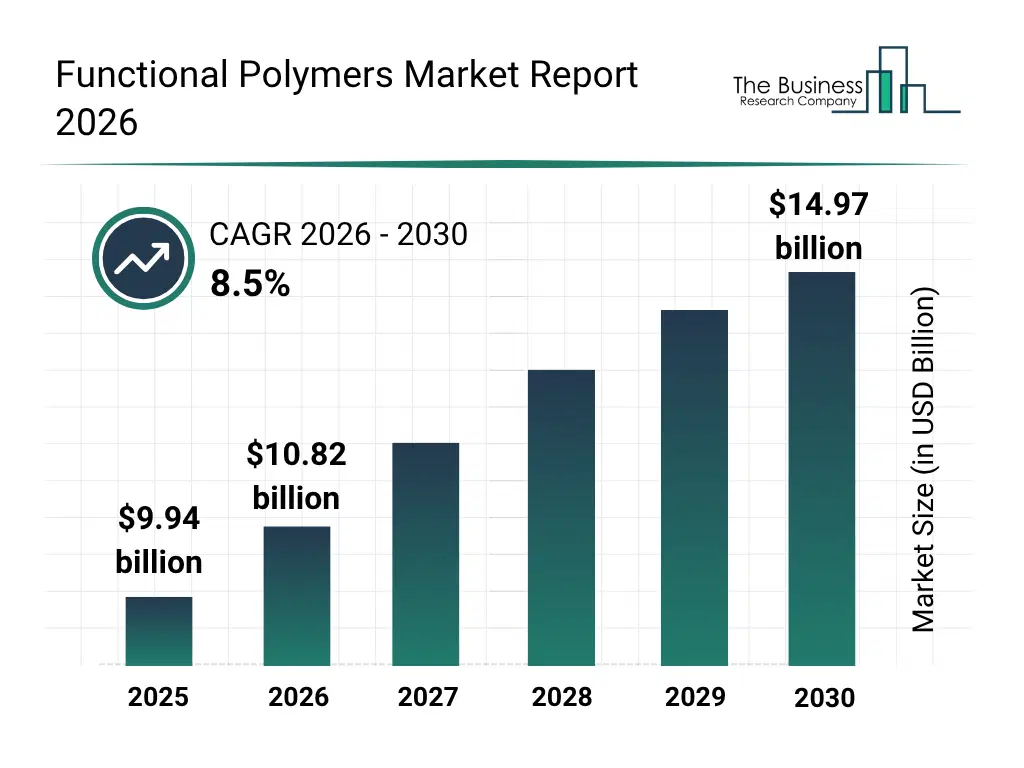
What Is The Functional Polymers Market Size and Share 2026?
The functional polymers market size has grown strongly in recent years. It will grow from $9.94 billion in 2025 to $10.82 billion in 2026 at a compound annual growth rate (CAGR) of 8.9%. The growth in the historic period can be attributed to increasing demand for specialty polymer materials, growth in electronics and electrical applications, rising adoption in healthcare and pharmaceutical applications, expansion of water treatment activities, increasing demand for high-performance automotive materials.What Is The Functional Polymers Market Growth Forecast?
The functional polymers market size is expected to see strong growth in the next few years. It will grow to $14.97 billion in 2030 at a compound annual growth rate (CAGR) of 8.5%. The growth in the forecast period can be attributed to rising demand for smart and responsive polymer materials, increasing adoption of advanced drug delivery systems, growing need for high-performance membrane technologies, expansion of functional polymer applications in aerospace and defense, increasing demand for environmentally sustainable polymer solutions. Major trends in the forecast period include increasing development of high-performance conductive polymers, growing adoption of advanced ion-exchange polymer materials, rising demand for self-healing and shape-memory polymer technologies, increasing development of multifunctional polymer formulations, growing use of functional polymers for advanced surface modification.Tariff Impact On Functional Polymers Market
Tariffs are impacting the functional polymers market by increasing the cost of imported specialty chemicals, polymer feedstocks, additives, processing equipment, and advanced polymer intermediates used for functional polymer production. These higher input costs can affect conductive, ion-exchange, stimuli-responsive, self-healing, and biofunctional polymers, particularly in electronics, healthcare, automotive, and water treatment applications across Asia-Pacific, North America, and Europe. Manufacturers may face higher production costs and supply-chain disruptions where specialty raw materials depend on international suppliers. However, tariffs are also encouraging regional sourcing, domestic production, supplier diversification, and increased investment in localized functional polymer manufacturing capacity, creating long-term resilience in the market.
Global Functional Polymers Market Segmentation
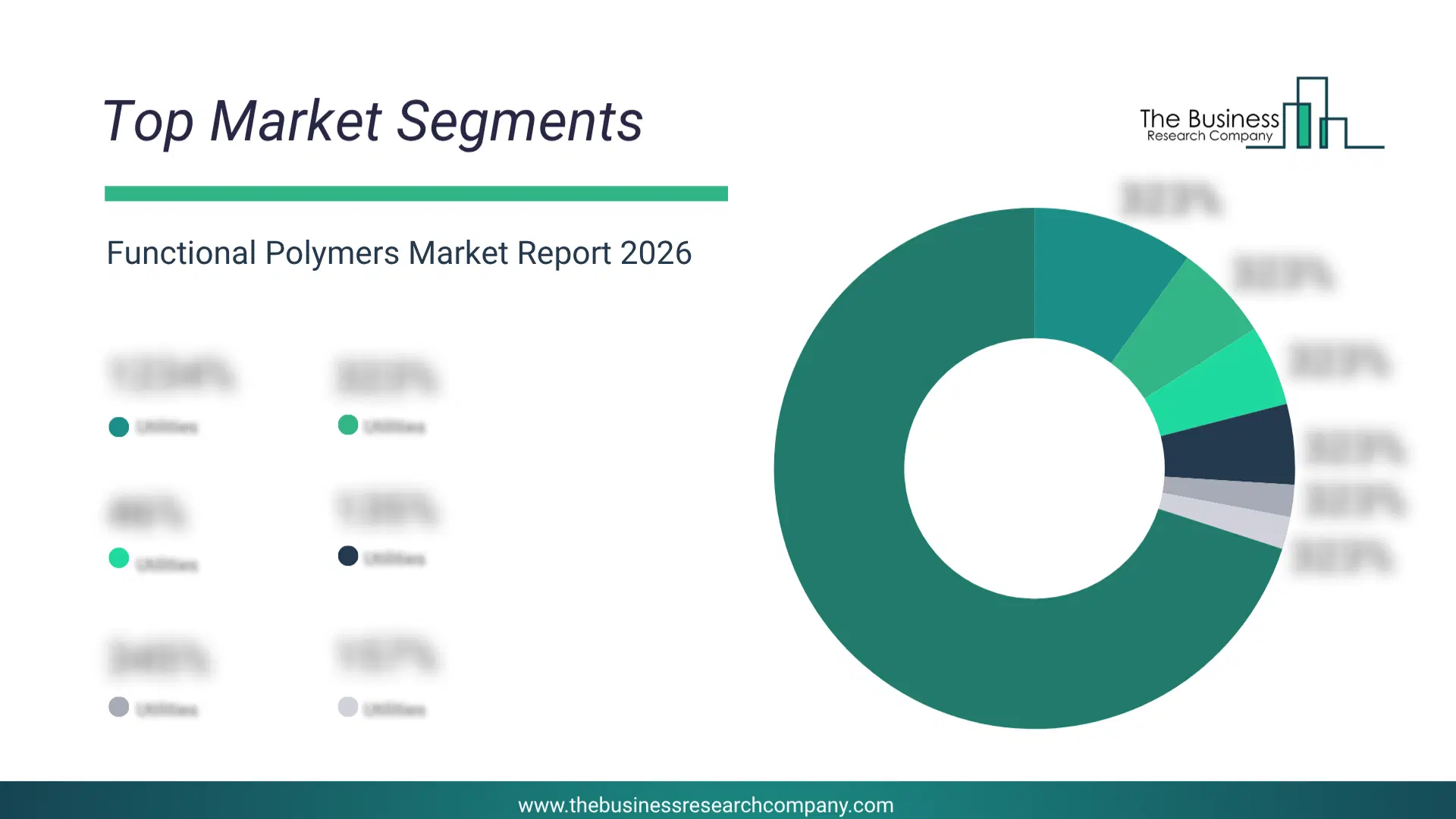
1) By Functional Polymer Type: Conductive Polymers, Ion Exchange Polymers, Stimuli-Responsive Polymers, Self-Healing Polymers, Shape Memory Polymers, Superabsorbent Polymers, Functionalized Polyolefins, Biofunctional Polymers, Flame-Retardant Polymers, Photoresponsive Polymers 2) By Functional Property: Electrical Conductivity, Ionic Conductivity, Ion Exchange, Stimuli Responsiveness, Self-Healing, Shape Memory, Superabsorbency, Biocompatibility, Flame Retardancy, Optical Responsiveness 3) By Form: Pellets And Granules, Powders, Films And Sheets, Fibers, Liquid Resins, Coatings And Dispersions 4) By End User Industry: Automotive, Electronics And Electrical, Healthcare And Pharmaceuticals, Packaging, Construction, Water Treatment And Environmental, Aerospace And Defense Subsegments: 1) By Conductive Polymers: Polyaniline, Polypyrrole, Polythiophene, PEDOT-Based Polymers, Conductive Polymer Composites 2) By Ion Exchange Polymers: Cation Exchange Polymers, Anion Exchange Polymers, Amphoteric Ion Exchange Polymers, Chelating Ion Exchange Polymers, Ion-Exchange Membrane Polymers 3) By Stimuli-Responsive Polymers: pH-Responsive Polymers, Temperature-Responsive Polymers, Light-Responsive Polymers, Magnetic-Responsive Polymers, Chemical-Responsive Polymers 4) By Self-Healing Polymers: Microcapsule-Based Self-Healing Polymers, Reversible Bond-Based Self-Healing Polymers, Supramolecular Self-Healing Polymers, Intrinsic Self-Healing Polymer Networks, Dynamic Covalent Polymer Networks 5) By Shape Memory Polymers: Thermally Responsive Shape Memory Polymers, Light-Responsive Shape Memory Polymers, Chemically Responsive Shape Memory Polymers, Electrically Responsive Shape Memory Polymers, Multi-Shape Memory Polymers 6) By Superabsorbent Polymers: Sodium Polyacrylate, Potassium Polyacrylate, Polyacrylamide-Based Superabsorbents, Starch-Grafted Superabsorbents, Cellulose-Based Superabsorbents 7) By Functionalized Polyolefins: Maleic Anhydride-Grafted Polyolefins, Glycidyl Methacrylate-Grafted Polyolefins, Acrylic Acid-Functionalized Polyolefins, Silane-Functionalized Polyolefins, Other Reactive Polyolefins 8) By Biofunctional Polymers: Biodegradable Functional Polymers, Biocompatible Polymers, Drug-Delivery Polymers, Tissue-Engineering Polymers, Bioactive Polymers 9) By Flame-Retardant Polymers: Halogenated Flame-Retardant Polymers, Phosphorus-Containing Polymers, Nitrogen-Containing Polymers, Intumescent Polymer Systems, Inherently Flame-Retardant Polymers 10) By Photoresponsive Polymers: Photochromic Polymers, Photocrosslinkable Polymers, Photodegradable Polymers, Photoconductive Polymers, Photoisomerizable PolymersWhat Is The Driver Of The Functional Polymers Market?
The rising adoption of electric vehicles is expected to propel the growth of the functional polymers market going forward. Electric vehicles refer to automobiles powered fully or partly by electricity using rechargeable batteries, electric motors, power electronics, and related control systems. The rising adoption of electric vehicles is due to government incentives and stringent emission regulations encouraging the transition to cleaner transportation. The rising adoption of electric vehicles supports functional polymers by increasing the demand for advanced materials that provide electrical insulation, thermal protection, lightweighting, impact resistance, sealing, and vibration control across battery housings, power electronics, and structural components. For instance, in January 2026, according to the Electric Vehicle Council (EVC), an Australia-based electric vehicle industry association, total electric vehicle sales in Australia increased by 38% in 2025 compared with 2024, exceeding 157,000 units, while electric vehicle market share of new-car sales increased from 9.6% in 2024 to 13.1% in 2025. Therefore, the rising adoption of electric vehicles is driving the growth of the functional polymers industry.Key Players In The Global Functional Polymers Market
Major companies operating in the functional polymers market are BASF SE, Dow Inc., SABIC, LyondellBasell Industries N.V., Mitsubishi Chemical Group Corporation, DuPont de Nemours Inc., Syensqo SA, Asahi Kasei Corporation, Sumitomo Chemical Co. Ltd., Toray Industries Inc., LG Chem Ltd., Evonik Industries AG, Celanese Corporation, Arkema S.A., Shin-Etsu Chemical Co. Ltd., 3M Company, Eastman Chemical Company, Henkel AG & Co. KGaA, Wacker Chemie AG, LANXESS AG, Huntsman Corporation, Kuraray Co. Ltd., SEKISUI CHEMICAL CO. LTD., Avient Corporation, Tosoh Corporation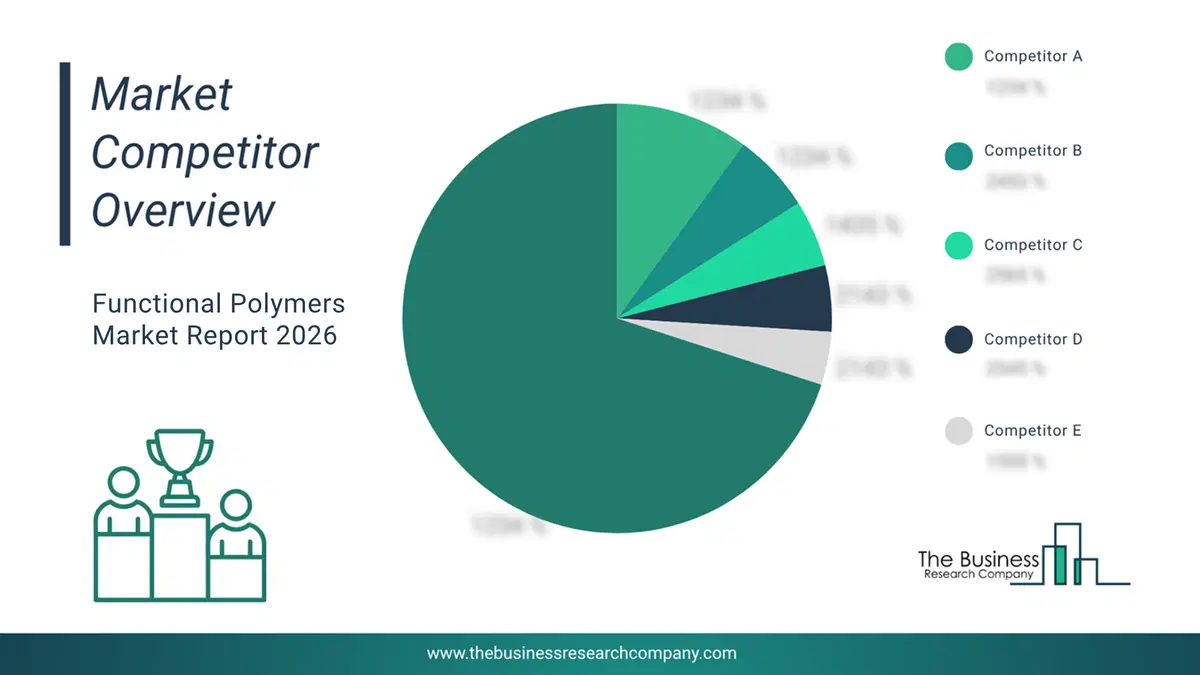
This chart is for illustrative purposes; the full report includes a detailed competitor analysis and comprehensive overview of the top 10 companies in the market.
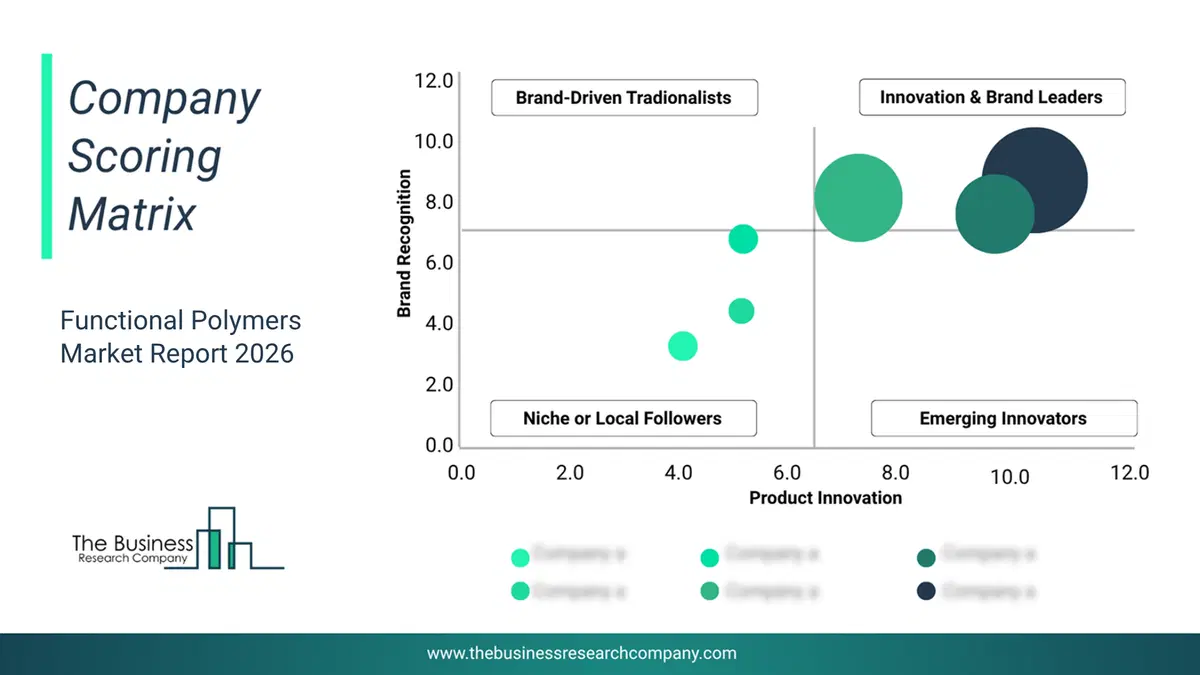
This chart maps companies by product innovation and brand strength, with bubble size indicating relative revenue, helping identify market leaders, challengers, and niche players. This is an illustrative chart; the full report provides a complete and accurate competitive analysis.
Global Functional Polymers Market Trends and Insights
Major companies operating in the functional polymers market are focusing on developing advanced solutions, such as pH-responsive functional polymer capsules, to enable precise drug release, protect sensitive active ingredients, and accelerate pharmaceutical development. pH-responsive functional polymer capsules use specialized polymer coatings that remain intact under acidic stomach conditions and release their contents after reaching a targeted intestinal region with a suitable pH level. For instance, in October 2025, Evonik Industries AG, a Germany-based specialty chemicals company, launched EUDRACAP colon functional capsules in good manufacturing practice quality for clinical and commercial use, providing the first ready-to-fill functional capsule specifically designed to target the ileo-colonic region. The solution enables the safe oral delivery of sensitive active ingredients, including live biotherapeutic products, RNA, and biologics, while eliminating complex formulation steps and helping pharmaceutical companies accelerate clinical development timelines. The adoption of pH-responsive functional polymer capsules helps improve site-specific drug delivery, protect sensitive ingredients from degradation, simplify manufacturing, and shorten the development of advanced oral therapies.What Are Latest Mergers And Acquisitions In The Functional Polymers Market?
In January 2026, Gannet BioChem, a US-based specialty contract development and manufacturing organization (CDMO), acquired Laysan Bio for an undisclosed amount. Through this acquisition, Gannet BioChem aims to expand its capabilities in activated polymer technologies and bioconjugation while strengthening its ability to support partners from early-stage development through good manufacturing practice (GMP) manufacturing. Laysan Bio Inc. is a US-based life sciences company that provides activated polymer reagents, including polyethylene glycol (PEG) reagents and custom functional polymers, for biotechnology, pharmaceutical, drug delivery, and medical device applications.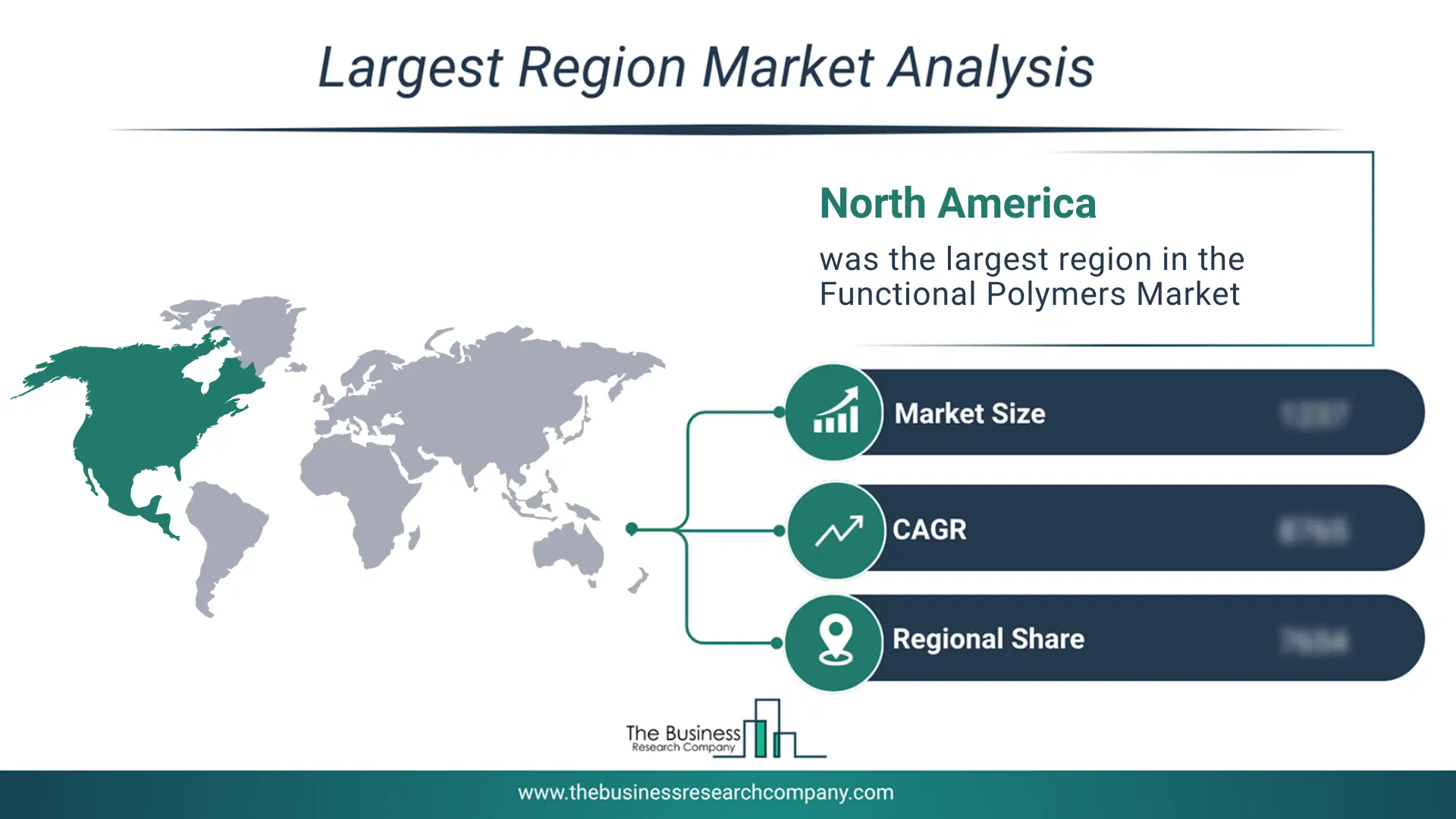
Regional Outlook
North America was the largest region in the functional polymers market in 2025. Asia-Pacific is expected to be the fastest-growing region in the forecast period. The regions covered in this market report are Asia-Pacific, South East Asia, Western Europe, Eastern Europe, North America, South America, Middle East, Africa. The countries covered in this market report are Australia, Brazil, China, France, Germany, India, Indonesia, Japan, Taiwan, Russia, South Korea, UK, USA, Canada, Italy, Spain.What Defines the Functional Polymers Market?
The functional polymers market consists of sales of polymeric ion-conducting materials, polymeric sensing materials, electrically active polymer materials, polymeric barrier materials, polymeric encapsulation materials, and polymeric surface-modification materials. Values in this market are ‘factory gate’ values, that is, the value of goods sold by the manufacturers or creators of the goods, whether to other entities (including downstream manufacturers, wholesalers, distributors, and retailers) or directly to end customers. The value of goods in this market includes related services sold by the creators of the goods.How is Market Value Defined and Measured?
The market value is defined as the revenues that enterprises gain from the sale of goods and/or services within the specified market and geography through sales, grants, or donations in terms of the currency (in USD unless otherwise specified). The revenues for a specified geography are consumption values that are revenues generated by organizations in the specified geography within the market, irrespective of where they are produced. It does not include revenues from resales along the supply chain, either further along the supply chain or as part of other products.
This chart presents market attractiveness based on a quantitative evaluation of growth, competition, strategic alignment, and risk, offering a clear view of opportunity areas for decision-making. This chart is for illustrative purposes; the full report contains the complete analysis.

This chart highlights the Total Addressable Market (TAM) by estimating the maximum revenue opportunity using an assumption-driven approach, supporting strategic planning and opportunity sizing across markets. The chart is illustrative; the full report provides a more comprehensive analysis.
What Key Data and Analysis Are Included in the Functional Polymers Market Report 2026?
The functional polymers market research report is one of a series of new reports from The Business Research Company that provides market statistics, including industry global market size, regional shares, competitors with the market share, detailed market segments, market trends and opportunities, and any further data you may need to thrive in the functional polymers industry. The market research report delivers a complete perspective of everything you need, with an in-depth analysis of the current and future state of the industry.Functional Polymers Market Report Forecast Analysis
| Report Attribute | Details |
|---|---|
| Market Size Value In 2026 | $10.82 billion |
| Revenue Forecast In 2030 | $14.97 billion |
| Growth Rate | CAGR of 8.5% from 2026 to 2030 |
| Base Year For Estimation | 2025 |
| Actual Estimates/Historical Data | 2020-2025 |
| Forecast Period | 2026 - 2030 |
| Market Representation | Revenue in USD Billion and CAGR from 2026 to 2030 |
| Segments Covered | Functional Polymer Type, Functional Property, Form, End User Industry |
| Regional Scope | Asia-Pacific, Western Europe, Eastern Europe, North America, South America, Middle East, Africa |
| Country Scope | The countries covered in the report are Australia, Brazil, China, France, Germany, India, Indonesia, Japan, Taiwan, Russia, South Korea, UK, USA, Canada, Italy, Spain. |
| Key Companies Profiled | BASF SE, Dow Inc., SABIC, LyondellBasell Industries N.V., Mitsubishi Chemical Group Corporation, DuPont de Nemours Inc., Syensqo SA, Asahi Kasei Corporation, Sumitomo Chemical Co. Ltd., Toray Industries Inc., LG Chem Ltd., Evonik Industries AG, Celanese Corporation, Arkema S.A., Shin-Etsu Chemical Co. Ltd., 3M Company, Eastman Chemical Company, Henkel AG & Co. KGaA, Wacker Chemie AG, LANXESS AG, Huntsman Corporation, Kuraray Co. Ltd., SEKISUI CHEMICAL CO. LTD., Avient Corporation, Tosoh Corporation |
| Customization Scope | Request for Customization |
| Pricing And Purchase Options | Explore Purchase Options |