
Fungal Protein Market Report 2026
Global Outlook – By Type (Fusarium Venenatum Extract, Mushrooms), By Nature (Organic, Conventional), By Application (Food And Beverages, Bakery, Processed Food, Dairy, Other Applications) – Market Size, Trends, Strategies, and Forecast to 2030
Fungal Protein Market Overview
• Fungal Protein market size has reached to $4.31 billion in 2025 • Expected to grow to $6.05 billion in 2030 at a compound annual growth rate (CAGR) of 7% • Growth Driver: Surging Demand For Processed Foods Propels Growth In The Fungal Protein Market • Market Trend: Innovation Takes Center Stage Advancements In Fungal Protein Market • Europe was the largest region in 2025.What Is Covered Under Fungal Protein Market?
Fungal protein refers to the food-grade protein ingredient made from a type of fungus for human consumption. Fungal protein is used to substitute traditional protein sources such as meat in the food industry. The major types of fungal proteins are fusarium venenatum extract, mushrooms, and yeast extract. Fusarium venenatum refers to a protein-rich microfungus belonging to the genus Fusarium. It includes organic and conventional nature. Major applications include food and beverages, bakery, processed food, dairy, and others.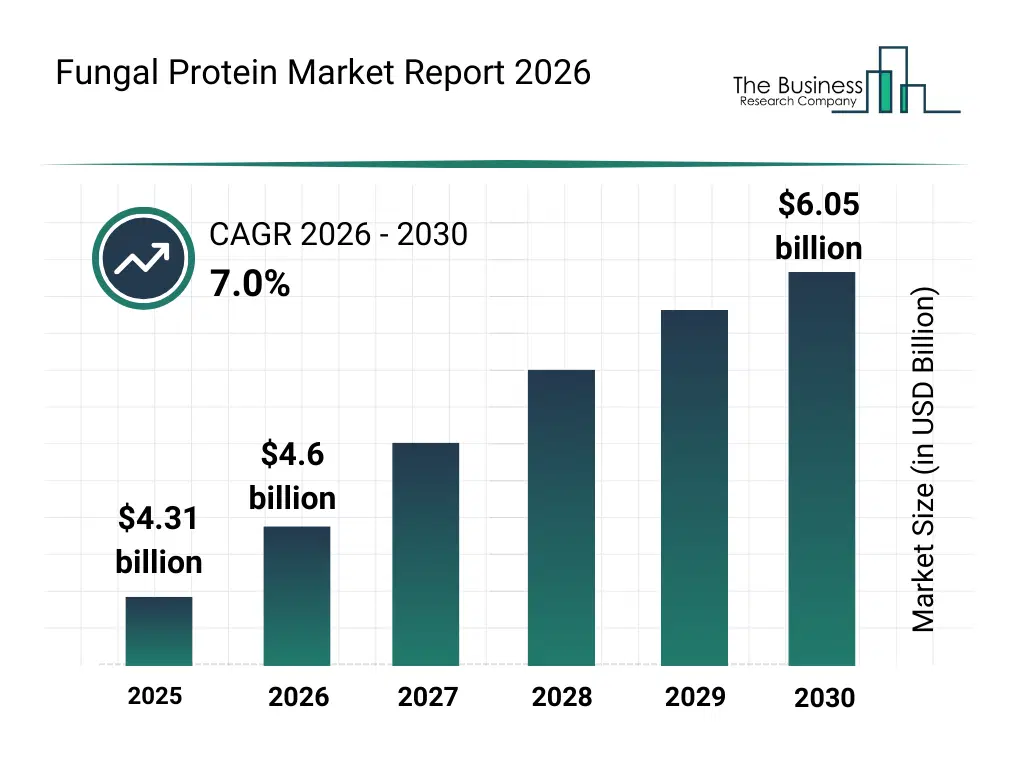
What Is The Fungal Protein Market Size and Share 2026?
The fungal protein market size has grown strongly in recent years. It will grow from $4.31 billion in 2025 to $4.6 billion in 2026 at a compound annual growth rate (CAGR) of 6.9%. The growth in the historic period can be attributed to rising consumer interest in plant-based diets, increasing environmental concerns related to meat consumption, growth of vegetarian and vegan populations, expansion of food processing technologies, availability of fermentation-based protein production.What Is The Fungal Protein Market Growth Forecast?
The fungal protein market size is expected to see strong growth in the next few years. It will grow to $6.05 billion in 2030 at a compound annual growth rate (CAGR) of 7.0%. The growth in the forecast period can be attributed to growing investments in alternative protein research, rising demand for sustainable and low-carbon foods, expansion of functional protein applications, increasing acceptance of fungal protein products, innovation in large-scale fermentation technologies. Major trends in the forecast period include increasing adoption of alternative protein sources, rising demand for meat substitutes, expansion of fungal protein in processed foods, growing focus on sustainable protein production, enhanced product texture and flavor innovations.
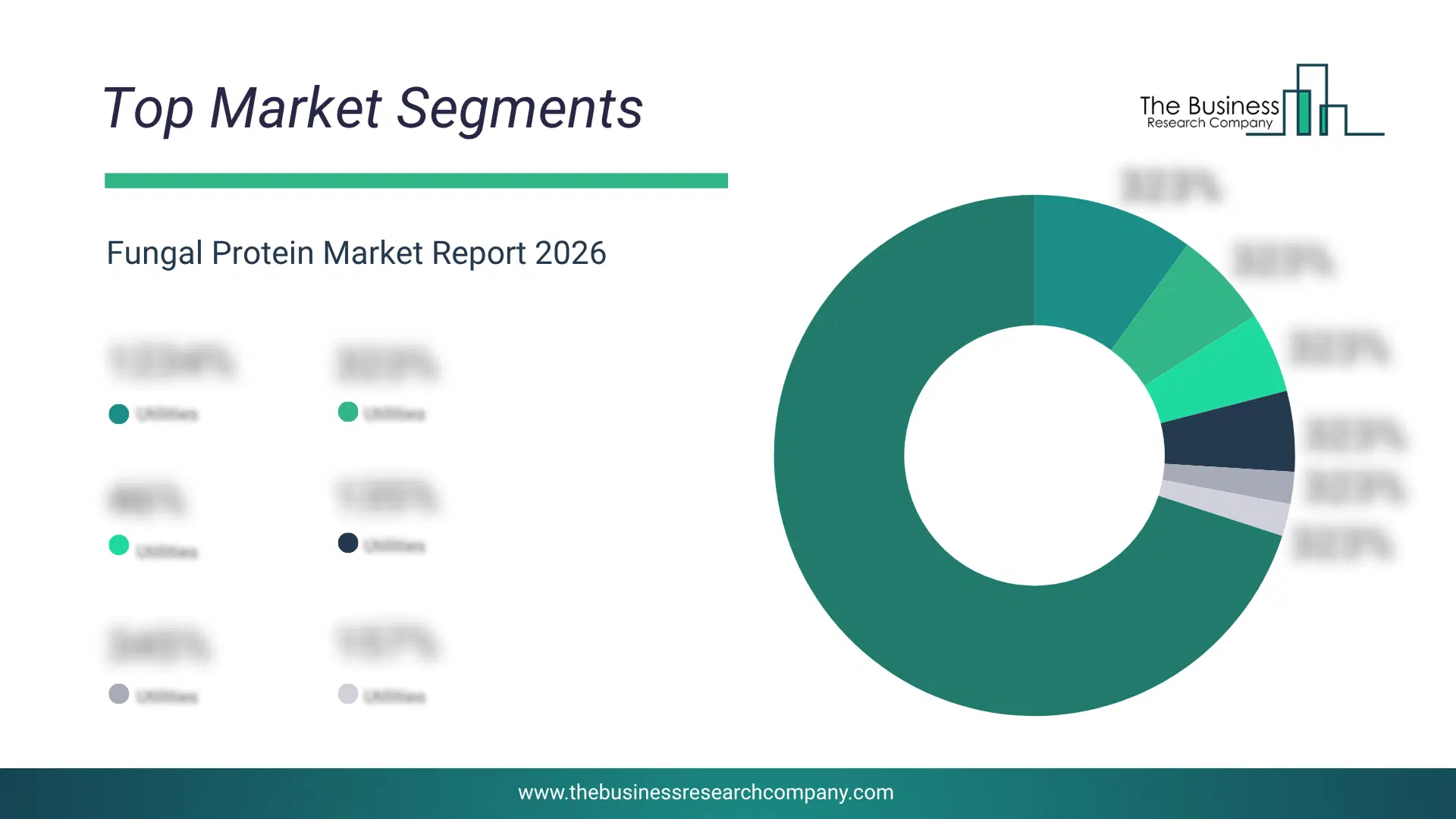
Global Fungal Protein Market Segmentation
1) By Type: Fusarium Venenatum Extract, Mushrooms 2) By Nature: Organic, Conventional 3) By Application: Food And Beverages, Bakery, Processed Food, Dairy, Other Applications Subsegments: 1) By Fusarium Venenatum Extract: Whole Biomass, Protein Isolates 2) By Mushrooms: Edible Mushrooms, Medicinal MushroomsWhat Is The Driver Of The Fungal Protein Market?
The rising consumption of processed foods is significantly contributing to the growth of the fungal protein market going forward. Processed food refers to a food item that has gone through several mechanical or chemical processes in order to change or preserve it. Fungal protein is used as a substitute for meat and other forms of protein in processed foods due to it being significantly less polluting and sustainable than protein from livestock. For instance, in April 2024, according to the data published by the National Association of Convenience Stores (NACS), a US-based trade association, total industry foodservice sales made up 26.9% of in-store sales in 2023, rising from 25.6% in 2022, with prepared food sales increasing by 12.2% per store per month, making it the leading in-store category. Therefore, the rising consumption of processed food will drive the fungal protein industry.Key Players In The Global Fungal Protein Market
Major companies operating in the fungal protein market are Quorn Foods, Meati Foods, Nature's Fynd, Solar Foods, MycoTechnology, 3F BIO, Sustainable Bioproducts, White Dog Labs, Prime Roots, MyForest Foods, ENOUGH, Infinite Roots, The Protein Brewery, Mycorena, Better Meat Co, Mushlabs, Libre Foods, Fybraworks Foods, Atlast Food Co, MycoWorks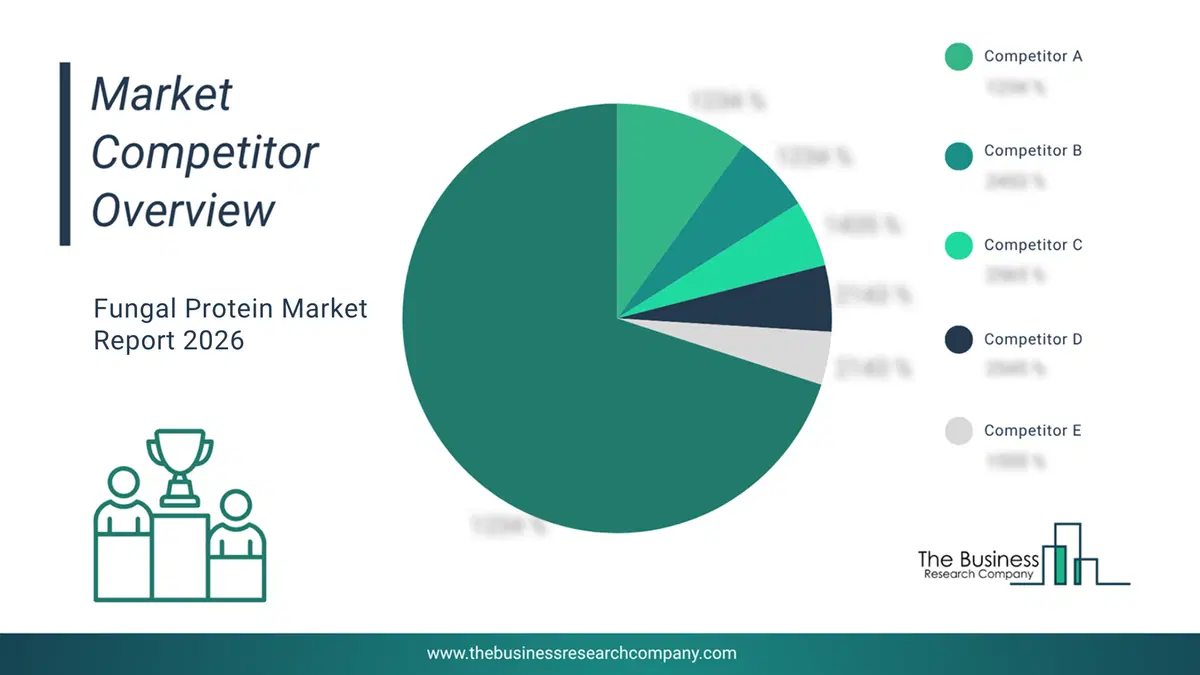
This chart is for illustrative purposes; the full report includes a detailed competitor analysis and comprehensive overview of the top 10 companies in the market.
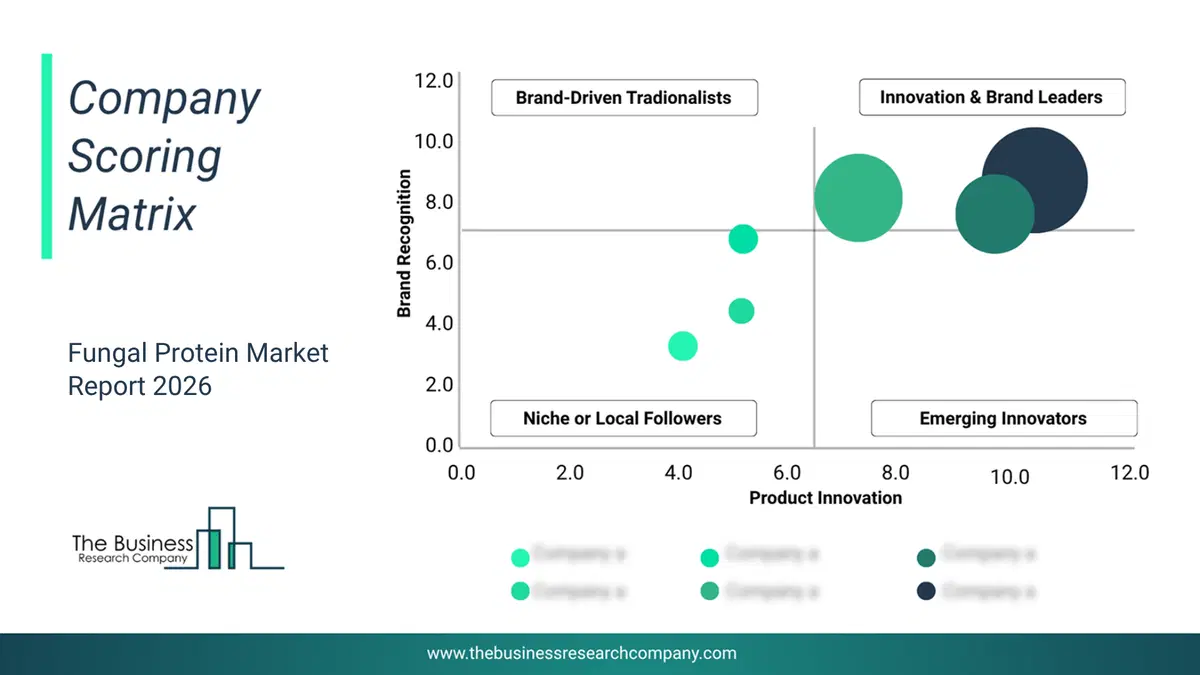
This chart maps companies by product innovation and brand strength, with bubble size indicating relative revenue, helping identify market leaders, challengers, and niche players. This is an illustrative chart; the full report provides a complete and accurate competitive analysis.
Global Fungal Protein Market Trends and Insights
Major companies operating in the fungal protein market are focusing on developing innovative solutions such as advanced fermentation to enhance protein yield, improve texture and taste, and expand applications in alternative foods. Advanced fermentation refers to the use of optimized microbial strains, precision bioprocessing, and controlled production systems to efficiently produce high-quality proteins, enzymes, or bio-ingredients at scale. For instance, in August 2024, Calysta, a UK-based biotechnology company, launched a new line of single-cell protein products derived from natural gas fermentation. This launch aimed at providing a sustainable alternative to traditional animal proteins. This innovative approach utilizes a patented fermentation platform that converts methane into high-quality protein, addressing the growing demand for sustainable food sources. Calysta's products, including FeedKind and Positive Protein, are designed for use in both animal feed and human food applications, promoting environmental sustainability by reducing reliance on arable land and traditional protein sources.What Are Latest Mergers And Acquisitions In The Fungal Protein Market?
In August 2024, Naplasol, a Belgium-based plant-based meat alternative company, acquired Mycorena for an undisclosed amount. This aims to enhance Naplasol's mycoprotein product portfolio and expand sustainable solutions for the food, pet food, and feed industries, enabling the production of Mycorena's Promyc at its facility in Bree, Belgium, thereby contributing to the growing demand for alternative protein sources and reinforcing its commitment to sustainable practices in food production. Mycorena is a Sweden-based biotechnology company that uses fungi to create alternative protein ingredients.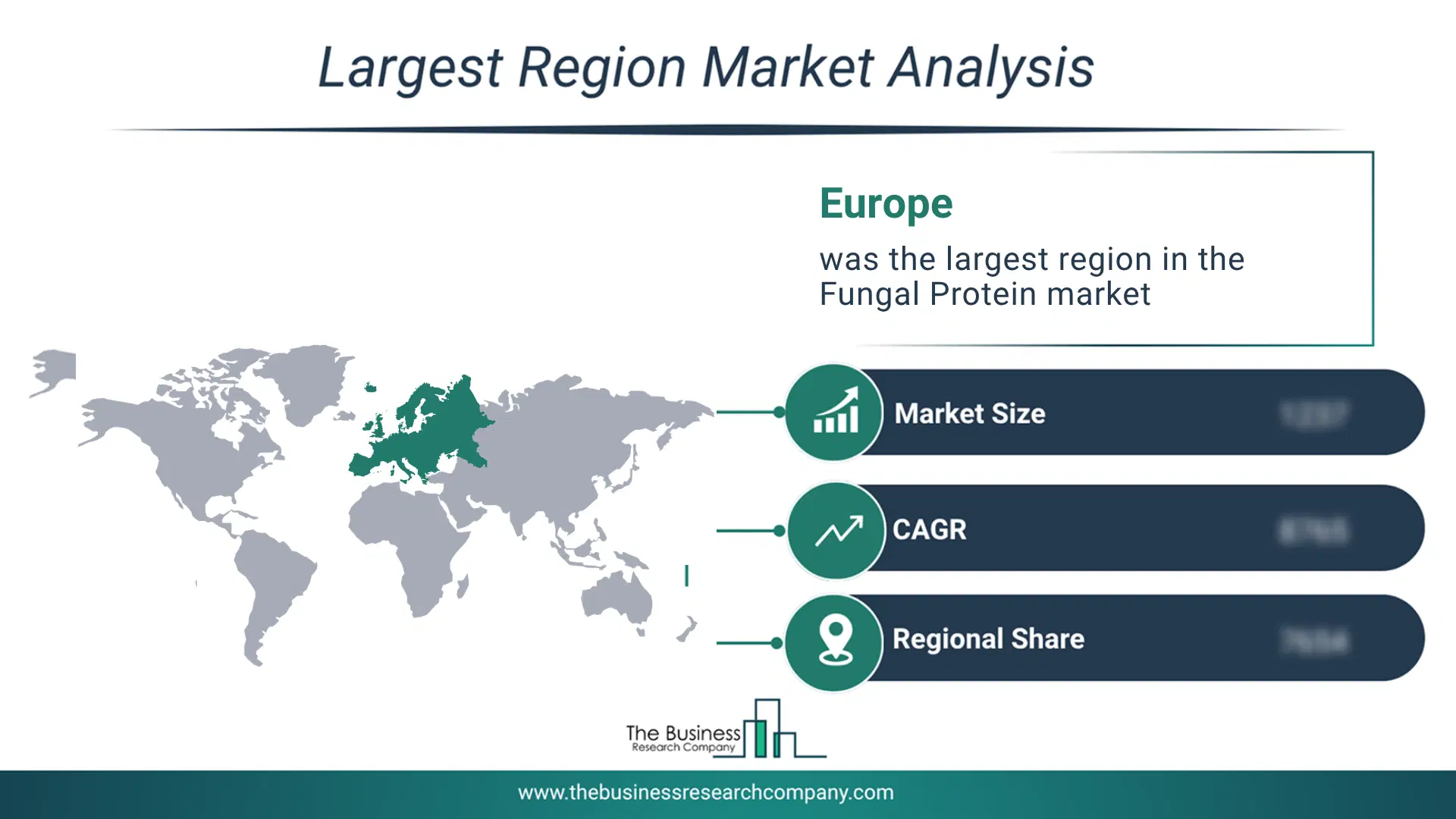
Regional Outlook
Europe was the largest region in the fungal protein market in 2025. The regions covered in this market report are Asia-Pacific, South East Asia, Western Europe, Eastern Europe, North America, South America, Middle East and Africa. The countries covered in this market report are Australia, Brazil, China, France, Germany, India, Indonesia, Japan, Taiwan, Russia, South Korea, UK, USA, Italy, Spain, CanadaWhat Defines the Fungal Protein Market?
The fungal protein market consists of sales of mycoproteins. Values in this market are ‘factory gate’ values, that is the value of goods sold by the manufacturers or creators of the goods, whether to other entities (including downstream manufacturers, wholesalers, distributors and retailers) or directly to end customers. The value of goods in this market includes related services sold by the creators of the goods.How is Market Value Defined and Measured?
The market value is defined as the revenues that enterprises gain from the sale of goods and/or services within the specified market and geography through sales, grants, or donations in terms of the currency (in USD unless otherwise specified). The revenues for a specified geography are consumption values that are revenues generated by organizations in the specified geography within the market, irrespective of where they are produced. It does not include revenues from resales along the supply chain, either further along the supply chain or as part of other products.
This chart presents market attractiveness based on a quantitative evaluation of growth, competition, strategic alignment, and risk, offering a clear view of opportunity areas for decision-making. This chart is for illustrative purposes; the full report contains the complete analysis.

This chart highlights the Total Addressable Market (TAM) by estimating the maximum revenue opportunity using an assumption-driven approach, supporting strategic planning and opportunity sizing across markets. The chart is illustrative; the full report provides a more comprehensive analysis.
What Key Data and Analysis Are Included in the Fungal Protein Market Report 2026?
The fungal protein market research report is one of a series of new reports from The Business Research Company that provides market statistics, including industry global market size, regional shares, competitors with the market share, detailed market segments, market trends and opportunities, and any further data you may need to thrive in the fungal protein industry. The market research report delivers a complete perspective of everything you need, with an in-depth analysis of the current and future state of the industry.Fungal Protein Market Report Forecast Analysis
| Report Attribute | Details |
|---|---|
| Market Size Value In 2026 | $4.6 billion |
| Revenue Forecast In 2030 | $6.05 billion |
| Growth Rate | CAGR of 6.9% from 2026 to 2030 |
| Base Year For Estimation | 2025 |
| Actual Estimates/Historical Data | 2020-2025 |
| Forecast Period | 2026 - 2030 |
| Market Representation | Revenue in USD Billion and CAGR from 2026 to 2030 |
| Segments Covered | Type, Nature, Application |
| Regional Scope | Asia-Pacific, Western Europe, Eastern Europe, North America, South America, Middle East, Africa |
| Country Scope | The countries covered in the report are Australia, Brazil, China, France, Germany, India, Indonesia, Japan, Taiwan, Russia, South Korea, UK, USA, Canada, Italy, Spain. |
| Key Companies Profiled | Quorn Foods, Meati Foods, Nature's Fynd, Solar Foods, MycoTechnology, 3F BIO, Sustainable Bioproducts, White Dog Labs, Prime Roots, MyForest Foods, ENOUGH, Infinite Roots, The Protein Brewery, Mycorena, Better Meat Co, Mushlabs, Libre Foods, Fybraworks Foods, Atlast Food Co, MycoWorks |
| Customization Scope | Request for Customization |
| Pricing And Purchase Options | Explore Purchase Options |