
Fungicides Market Report 2026
Global Outlook – By Type (Synthetic Fungicides, Bio-fungicides ), By Active Ingredient (Dithiocarbamates, Benzimidazoles, Chloronitriles, Triazoles, Phenylamides, Strobilurins, Other Active Ingredients ), By Treatment (Seed Treatment, Soil Treatment, Foliar Spray, Chemigation, Post-Harvest), By Application (Cereals And Grains, Oilseeds And Pulses, Fruits And Vegetables, Other Applications) – Market Size, Trends, Strategies, and Forecast to 2030
Fungicides Market Overview
• Fungicides market size has reached to $24.64 billion in 2025 • Expected to grow to $36.23 billion in 2030 at a compound annual growth rate (CAGR) of 8.1% • Growth Driver: Plant Disease Surge Fuels Fungicide Market Growth • Market Trend: Innovations In Fungicide Technology Enhance Disease Management And Crop Yield In Soybean Cultivation • Asia-Pacific was the largest region and fastest growing region.What Is Covered Under Fungicides Market?
Fungicides refer to chemical or biological agents used to prevent, control, or eliminate fungal infections in plants. Fungicides work by either killing the fungi or inhibiting their growth, protecting crops from diseases such as mildew, rust, and blight. Fungicides play a vital role in agriculture, helping to maintain healthy crops and improve yields by reducing crop loss due to fungal infections. The main types of fungicides are synthetic fungicides and bio-fungicides. Fungicides control fungal diseases by killing or inhibiting fungi or fungal spores. The active ingredients involved are dithiocarbamates, benzimidazoles, chloronitriles, triazoles, phenylamides, strobilurins, and other active ingredients that are used for seed treatment, soil treatment, foliar spray, chemigation, and post-harvest. The various applications are cereals and grains, oilseeds and pulses, fruits and vegetables, and other applications.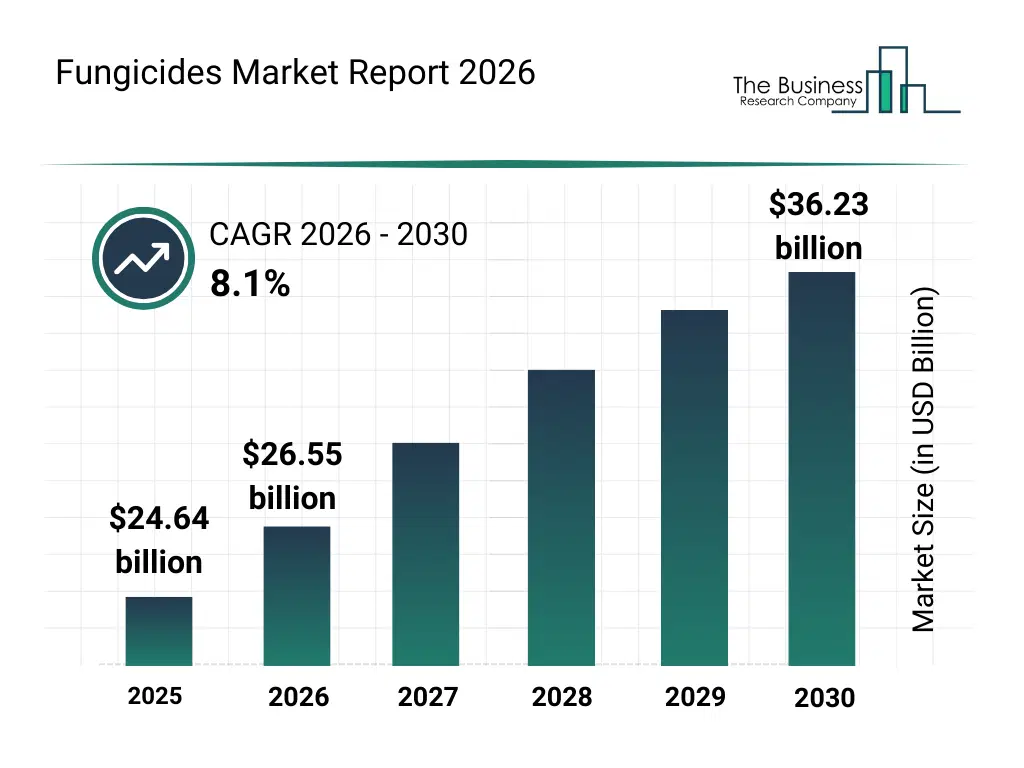
What Is The Fungicides Market Size and Share 2026?
The fungicides market size has grown strongly in recent years. It will grow from $24.64 billion in 2025 to $26.55 billion in 2026 at a compound annual growth rate (CAGR) of 7.7%. The growth in the historic period can be attributed to crop yield protection needs, widespread fungal disease outbreaks, expansion of commercial agriculture, availability of synthetic fungicides, government support for crop protection.What Is The Fungicides Market Growth Forecast?
The fungicides market size is expected to see strong growth in the next few years. It will grow to $36.23 billion in 2030 at a compound annual growth rate (CAGR) of 8.1%. The growth in the forecast period can be attributed to demand for sustainable crop protection, growth of organic farming, climate driven disease pressure, innovation in bio based fungicides, precision agriculture adoption. Major trends in the forecast period include rising adoption of bio fungicides, growing resistance management practices, increased use of seed treatment solutions, expansion of foliar spray applications, focus on broad spectrum crop protection.
Global Fungicides Market Segmentation
1) By Type: Synthetic Fungicides, Bio-fungicides 2) By Active Ingredient: Dithiocarbamates, Benzimidazoles, Chloronitriles, Triazoles, Phenylamides, Strobilurins, Other Active Ingredients 3) By Treatment: Seed Treatment, Soil Treatment, Foliar Spray, Chemigation, Post-Harvest 4) By Application: Cereals And Grains, Oilseeds And Pulses, Fruits And Vegetables, Other Applications Subsegments: 1) By Synthetic Fungicides: Chloronitriles, Dithiocarbamates, Benzimidazoles, Triazoles, Strobilurins, Phthalimides, Copper-based Fungicides 2) By Bio-Fungicides: Microbial Fungicides (Bacillus, Trichoderma), Botanical Fungicides (Neem Oil, Garlic Extract), Plant Extract-Based Fungicides, Biochemical Fungicides (Bicarbonates, Pheromones)What Is The Driver Of The Fungicides Market?
The rise in plant diseases is expected to propel the growth of the fungicide market going forward. Plant diseases are caused by pathogenic fungi, bacteria, viruses, and other microorganisms that reduce crop yield, quality, and overall agricultural productivity. The surge in plant diseases is driven by factors such as climate change, global trade, and intensive farming practices, which increase disease incidence and severity. Fungicides support crop health by preventing and controlling fungal infections, protecting yields, and contributing to global food security. For instance, in September 2025, according to the Food and Agriculture Organization of the United Nations, an Italy-based specialized agency, every year, plant pests destroy up to 40% of global food crops, leading to trade losses in agricultural products exceeding USD 220 billion, with invasive pests contributing at least USD 70 billion in worldwide economic losses. Therefore, the rise in plant diseases is driving the growth of the fungicide industry.Key Players In The Global Fungicides Market
Major companies operating in the fungicides market are American Vanguard Corporation, BASF SE, Bayer AG, Bioworks Inc., Dow AgroSciences LLC, DuPont de Nemours Inc., FMC Corporation, Marrone Bio Innovations Inc., Nufarm Ltd, Sumitomo Chemical, Syngenta International AG, UPL Limited, Cheminova A/S, Lanxess AG, Corteva Inc., Isagro SpA, Nippon Soda Co. Ltd., Certis USA LLC, Valent BioSciences LLC, Arysta LifeScience Corporation, Sipcam Agro USA Inc., Gowan Company LLC, Albaugh LLC, Rotam CropSciences Ltd., Sharda Cropchem Limited, PI Industries Limited, Adama Agricultural Solutions Ltd, Agbiochem Inc., Jiangsu Yangnong Chemical Co. Ltd., Kumiai Chemical Industry Co. Ltd., Novozymes A/S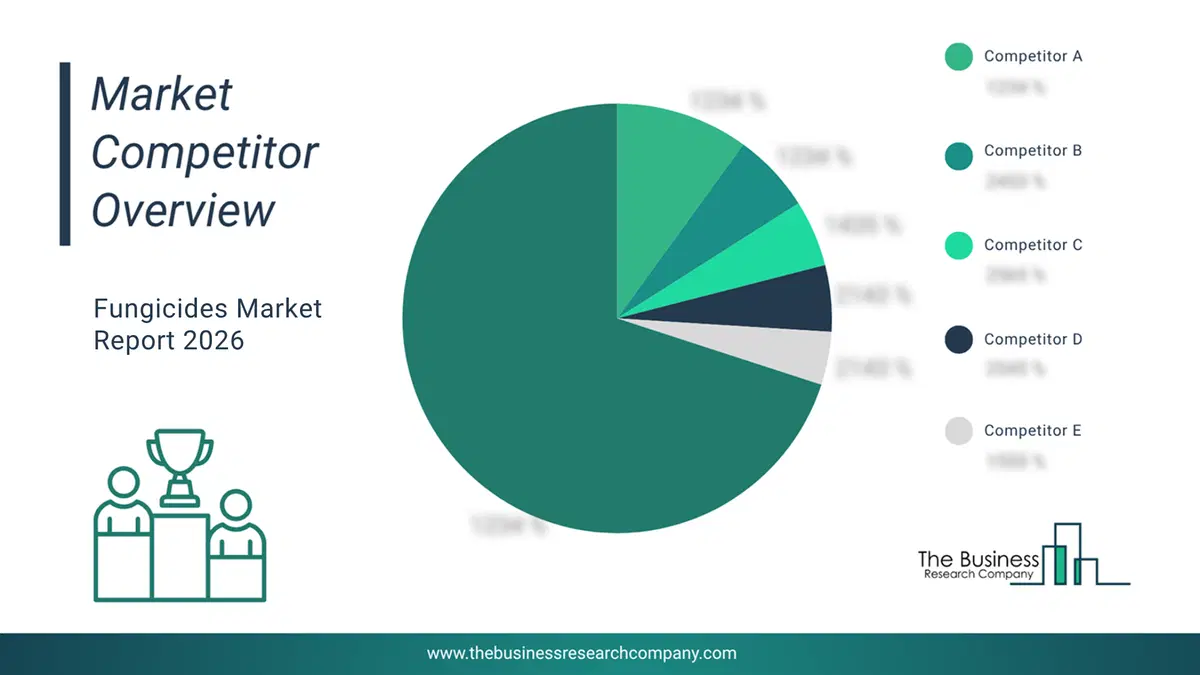
This chart is for illustrative purposes; the full report includes a detailed competitor analysis and comprehensive overview of the top 10 companies in the market.
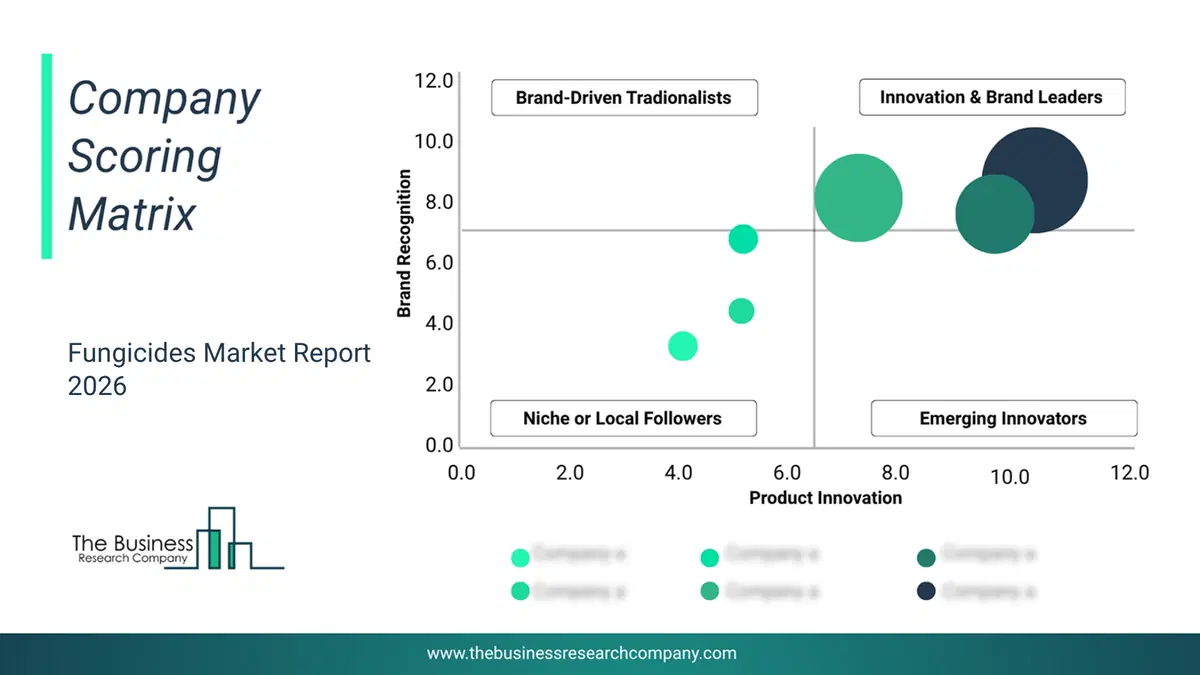
This chart maps companies by product innovation and brand strength, with bubble size indicating relative revenue, helping identify market leaders, challengers, and niche players. This is an illustrative chart; the full report provides a complete and accurate competitive analysis.
Global Fungicides Market Trends and Insights
Major companies operating in the fungicide market are focusing on developing next-generation histone deacetylase (HDAC) inhibitor-based fungicides to improve disease control, support resistance management, and enhance overall crop yield. A histone deacetylase (HDAC) inhibitor-based fungicide is a chemical agent that disrupts fungal growth by blocking HDAC enzymes, leading to altered gene expression and impaired fungal development, effectively controlling fungal infections by targeting epigenetic regulation mechanisms. For instance, in June 2025, BASF SE, a Germany-based chemical and agricultural solutions company, launched Adapzo Active, a next-generation HDAC-inhibitor fungicide for soybean crops, now registered in Brazil and Paraguay. Designed to assist farmers with effective management of Asian soybean rust while offering resistance management benefits, the solution reflects a broader trend toward more sustainable and targeted crop protection technologies.What Are Latest Mergers And Acquisitions In The Fungicides Market?
In January 2025, Dhanuka Agritech Ltd., an India-based agricultural solutions company, acquired global rights to the fungicides Iprovalicarb and Triadimenol from Bayer AG for an undisclosed amount. Through this acquisition, Dhanuka aims to strengthen its fungicide portfolio, expand its global reach, and provide farmers with trusted crop protection solutions across more than 20 countries in Latin America, EMEA, Asia, and India. Bayer AG is a Germany-based chemical and life sciences company that specializes in providing crop protection solutions such as fungicides.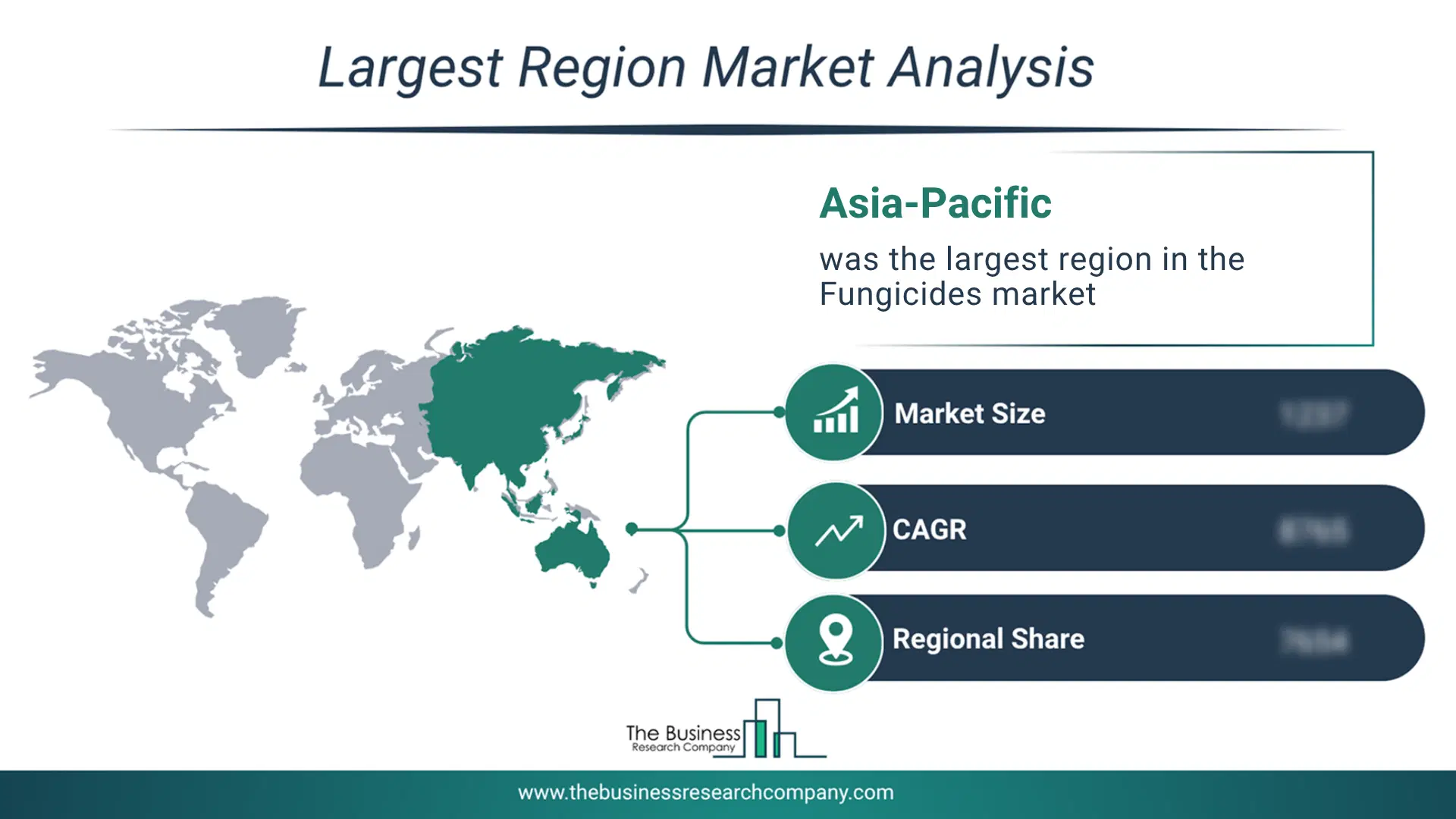
Regional Insights
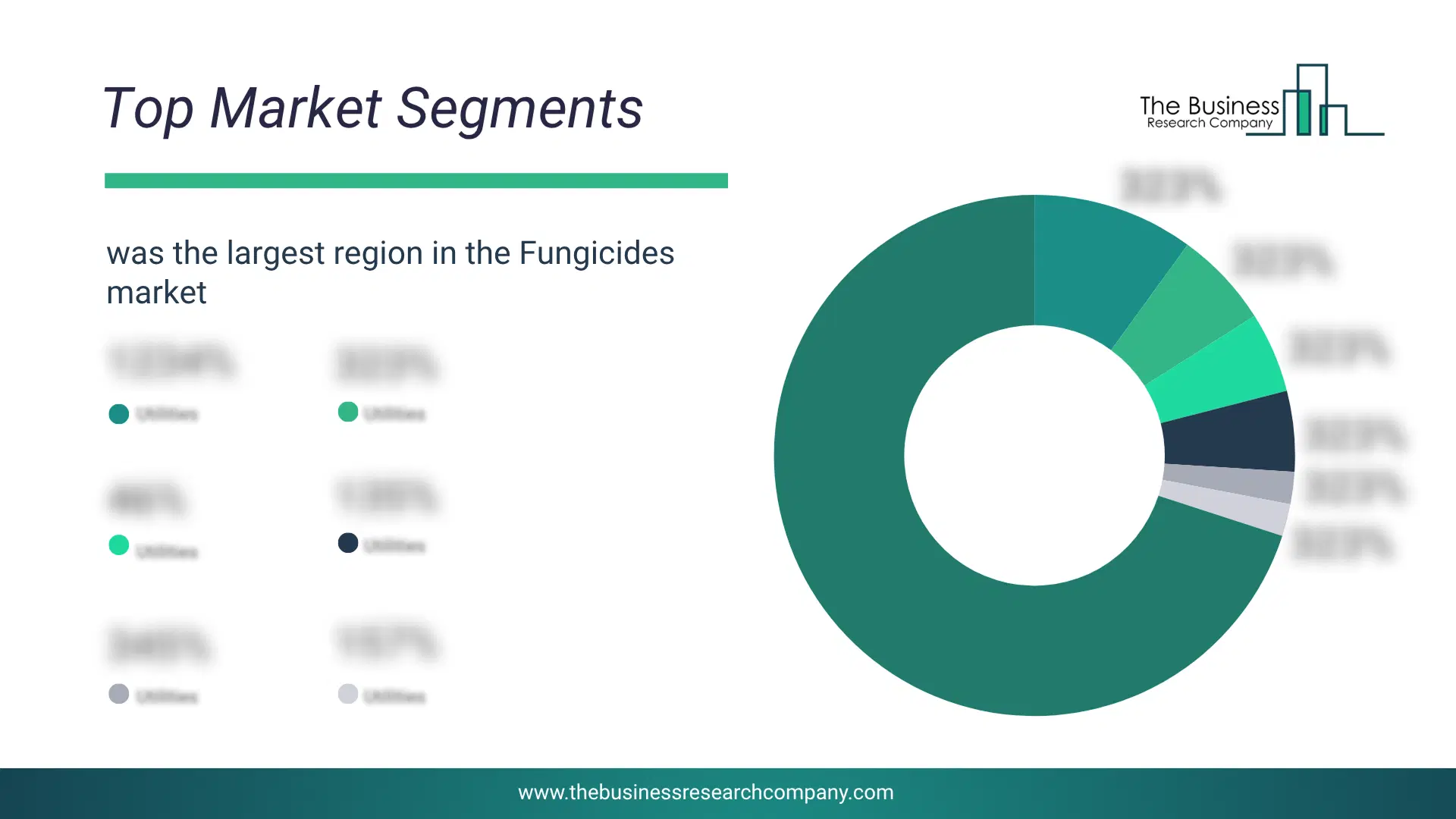
Asia-Pacific was the largest region in the fungicides market in 2025. South America was the second-largest region in the global fungicides market. The regions covered in this market report are Asia-Pacific, South East Asia, Western Europe, Eastern Europe, North America, South America, Middle East, Africa The countries covered in this market report are China, India, Japan, Australia, Indonesia, South Korea, Bangladesh, Thailand, Vietnam, Malaysia, Singapore, Philippines, Hong Kong, Taiwan, New Zealand, UK, Germany, France, Italy, Spain, Austria, Belgium, Denmark, Finland, Ireland, Netherlands, Norway, Portugal, Sweden, Switzerland, Russia, Czech Republic, Poland, Romania, Ukraine, USA, Canada, Mexico, Brazil, Chile, Argentina, Colombia, Peru, Saudi Arabia, Israel, Iran, Turkey, UAE, Egypt, Nigeria, South Africa.What Defines the Fungicides Market?
The fungicides market consists of the sales of captan, folpet, dithiocarbamates, pentachlorophenol, and mercurial fungicides. Values in this market are factory gate values, that is the value of goods sold by the manufacturers or creators of the goods, whether to other entities (including downstream manufacturers, wholesalers, distributors, and retailers) or directly to end customers. The value of goods in this market includes related services sold by the creators of the goods.How is Market Value Defined and Measured?
The market value is defined as the revenues that enterprises gain from the sale of goods and/or services within the specified market and geography through sales, grants, or donations in terms of the currency (in USD unless otherwise specified). The revenues for a specified geography are consumption values that are revenues generated by organizations in the specified geography within the market, irrespective of where they are produced. It does not include revenues from resales along the supply chain, either further along the supply chain or as part of other products.
This chart presents market attractiveness based on a quantitative evaluation of growth, competition, strategic alignment, and risk, offering a clear view of opportunity areas for decision-making. This chart is for illustrative purposes; the full report contains the complete analysis.

This chart highlights the Total Addressable Market (TAM) by estimating the maximum revenue opportunity using an assumption-driven approach, supporting strategic planning and opportunity sizing across markets. The chart is illustrative; the full report provides a more comprehensive analysis.
What Key Data and Analysis Are Included in the Fungicides Market Report 2026?
The fungicides market research report is one of a series of new reports from The Business Research Company that provides market statistics, including industry global market size, regional shares, competitors with the market share, detailed market segments, market trends and opportunities, and any further data you may need to thrive in the fungicides industry. The market research report delivers a complete perspective of everything you need, with an in-depth analysis of the current and future state of the industry.Fungicides Market Report Forecast Analysis
| Report Attribute | Details |
|---|---|
| Market Size Value In 2026 | $26.55 billion |
| Revenue Forecast In 2030 | $36.23 billion |
| Growth Rate | CAGR of 7.7% from 2026 to 2030 |
| Base Year For Estimation | 2025 |
| Actual Estimates/Historical Data | 2020-2025 |
| Forecast Period | 2026 - 2030 |
| Market Representation | Revenue in USD Billion and CAGR from 2026 to 2030 |
| Segments Covered | Type, Active Ingredient, Treatment, Application |
| Regional Scope | Asia-Pacific, Western Europe, Eastern Europe, North America, South America, Middle East, Africa |
| Country Scope | The countries covered in this market report are Australia, Brazil, China, France, Germany, India, Indonesia, Japan, Taiwan, Russia, South Korea, UK, USA, Canada, Italy, Spain |
| Key Companies Profiled | American Vanguard Corporation, BASF SE, Bayer AG, Bioworks Inc., Dow AgroSciences LLC, DuPont de Nemours Inc., FMC Corporation, Marrone Bio Innovations Inc., Nufarm Ltd, Sumitomo Chemical, Syngenta International AG, UPL Limited, Cheminova A/S, Lanxess AG, Corteva Inc., Isagro SpA, Nippon Soda Co. Ltd., Certis USA LLC, Valent BioSciences LLC, Arysta LifeScience Corporation, Sipcam Agro USA Inc., Gowan Company LLC, Albaugh LLC, Rotam CropSciences Ltd., Sharda Cropchem Limited, PI Industries Limited, Adama Agricultural Solutions Ltd, Agbiochem Inc., Jiangsu Yangnong Chemical Co. Ltd., Kumiai Chemical Industry Co. Ltd., Novozymes A/S |
| Customization Scope | Request for Customization |
| Pricing And Purchase Options | Explore Purchase Options |