
Furniture Foam Market Report 2026
Global Outlook – By Product Type (Polyurethane Foam, Latex Foam, Other Types), By Application (Chair, Sofa, Beds, Recliners, Other Applications), By End-Use (Residential Furniture, Commercial Furniture, Institutional Furniture, Hospitality Furniture, Healthcare Furniture, Other Furniture End-Uses) – Market Size, Trends, Strategies, and Forecast to 2030
Furniture Foam Market Overview
• Furniture Foam market size has reached to $60.94 billion in 2025 • Expected to grow to $79.38 billion in 2030 at a compound annual growth rate (CAGR) of 5.3% • Growth Driver: Rising Residential And Commercial Projects Drive Growth In The Furniture Foam Market • Market Trend: Innovative Recycled PU Foam Leads In Sustainability And Performance • Asia-Pacific was the largest region in 2025 and North America is the fastest growing region.Market Gains By 2030 – Top Opportunities By Segment
Market Gain identifies the most promising market opportunities by highlighting the segments or products expected to generate the highest incremental revenue growth over the next five years.
What Is Covered Under Furniture Foam Market?
Furniture foam refers to a soft, flexible material commonly used to construct upholstered furniture to provide comfort, support, and durability. The foam has various densities and firmness levels to suit different furniture applications, ensuring durability and shape retention. It also helps absorb impact and enhances the overall seating or sleeping experience. The main product types of furniture foam are polyurethane foam, latex foam, and others. Polyurethane foam is a versatile material known for its cushioning properties and adaptability, widely used in furniture and insulation for comfort and durability. It is categorized as rigid and flexible for various applications such as chairs, sofas, beds, recliners, and others. It is used in several end uses, including building and construction, automotive, hospitals, and others.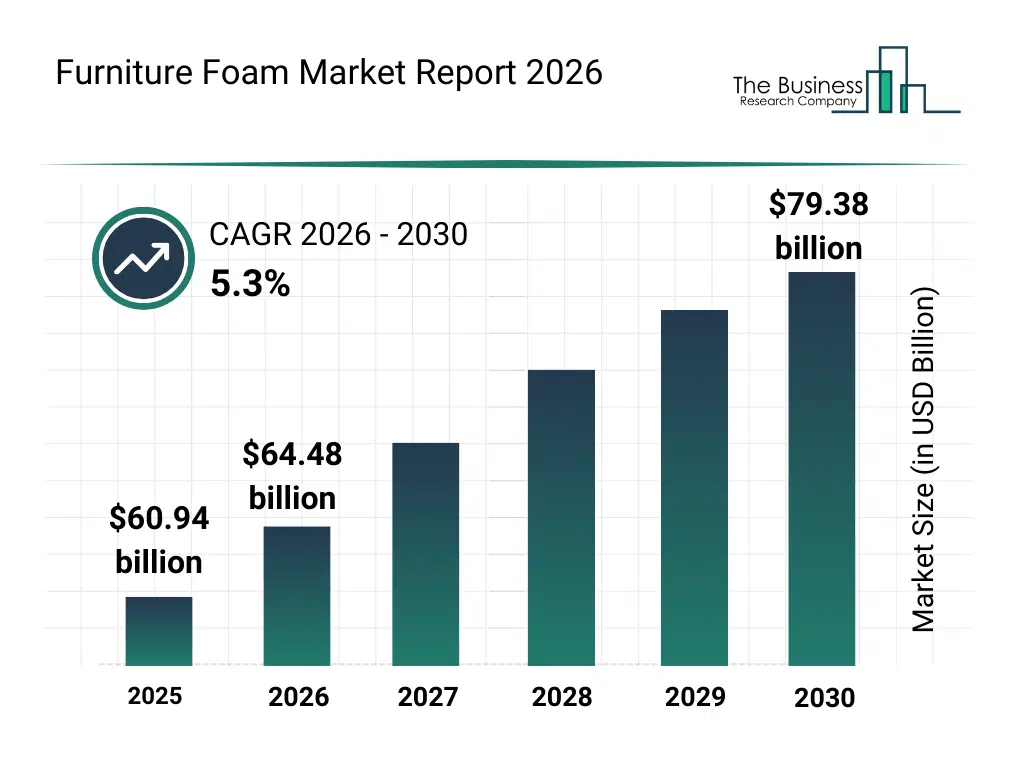
What Is The Furniture Foam Market Size and Share 2026?
The furniture foam market size has grown strongly in recent years. It will grow from $60.94 billion in 2025 to $64.48 billion in 2026 at a compound annual growth rate (CAGR) of 5.8%. The growth in the historic period can be attributed to growth in housing construction, expansion of furniture manufacturing, demand for upholstered seating, availability of polyurethane foam materials, rise in consumer spending on home furniture.What Is The Furniture Foam Market Growth Forecast?
The furniture foam market size is expected to see strong growth in the next few years. It will grow to $79.38 billion in 2030 at a compound annual growth rate (CAGR) of 5.3%. The growth in the forecast period can be attributed to increasing urbanization rates, rising demand for premium furniture, growth in hospitality sector, advancements in foam manufacturing processes, focus on sustainable foam materials. Major trends in the forecast period include rising demand for comfort oriented furniture, growing use of high density foams, increased adoption of memory foam products, focus on durable and long lasting cushions, expansion of residential furniture consumption.
Global Furniture Foam Market Segmentation
1) By Product Type: Polyurethane Foam, Latex Foam, Other Types 2) By Application: Chair, Sofa, Beds, Recliners, Other Applications 3) By End-Use: Residential Furniture, Commercial Furniture, Institutional Furniture, Hospitality Furniture, Healthcare Furniture, Other Furniture End-Uses Subsegments: 1) By Polyurethane Foam: Flexible Polyurethane Foam, High-Density Polyurethane Foam, Low-Density Polyurethane Foam, Memory Foam 2) By Latex Foam: Natural Latex Foam, Synthetic Latex Foam, Blended Latex Foam, Talalay Latex Foam, Dunlop Latex Foam 3) By Other Types: Polyester Foam, Gel Foam, Fire-Retardant Foam The top segments in the furniture foam market will be: • Other Types will reach $33.37 Billion by 2030. • Polyurethane Foam will reach $30.28 Billion by 2030. • Latex Foam will reach $14.93 Billion by 2030.What Is The Driver Of The Furniture Foam Market?
The rising residential and commercial building projects are expected to propel the growth of the furniture foam market going forward. A residential building is designed primarily for people, such as houses, apartments, or condos. A commercial building is used for business purposes, such as offices, retail stores, or warehouses. The rise in residential and commercial building projects can be attributed to several key factors, such as economic growth, government policies and incentives, and post-pandemic recovery. Furniture foam is used in residential and commercial building projects for seating, mattresses, and cushioning, providing comfort and durability in furniture and interior design applications. For instance, in July 2024, according to Trading Economics, a US-based economic indicator, around 621 thousand units of single-family houses were sold in May 2024, increasing to 668 thousand units in June and 739 thousand units in July. This represents a 7.6% growth from May to June and an additional 10.6% increase from June to July. Therefore, rising residential and commercial buildings are driving the furniture foam industry.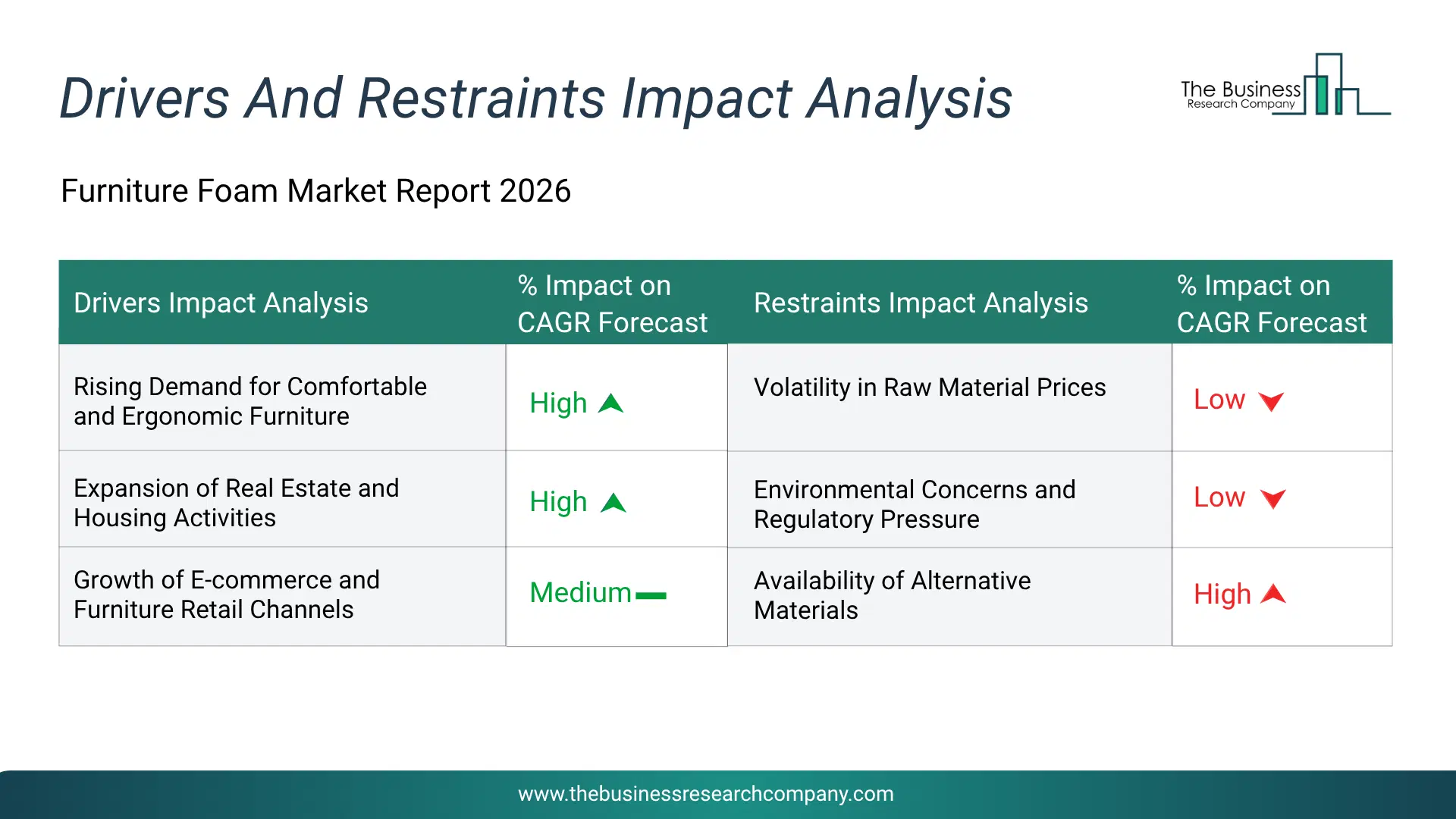
Infographic Chart Showing Key Market Drivers Analysis And Restraints For Furniture Foam Market
The chart presents an impact analysis of key drivers and restraints, quantifying their relative influence on the market's growth rate and helping assess the balance between growth enablers and limiting factors. This chart offers a high-level perspective; the full report contains more detailed insights.
How Will The Drivers Impact Growth In The Global Furniture Foam Market?
• Rising Demand for Comfortable and Ergonomic Furniture (High) – During the forecast period, the rising demand for comfortable and ergonomic furniture is expected to become a key growth driver for the furniture foam market by 2030. Consumers are increasingly prioritizing seating and bedding solutions that provide superior comfort, posture support, and pressure relief, particularly in home and office environments. The growing awareness of health and wellness, coupled with longer working hours and hybrid work models, is accelerating demand for high-performance foam materials such as memory foam and high-resilience foam. Manufacturers are focusing on enhancing cushioning performance, durability, and breathability to meet evolving consumer expectations. This shift toward comfort-centric furniture is reinforcing steady market expansion. • Expansion of Real Estate and Housing Activities (High) – During the forecast period, the expansion of real estate and housing activities is expected to emerge as a major factor driving the growth of the furniture foam market by 2030. Rapid urbanization, population growth, and increasing residential construction across emerging and developed economies are significantly boosting demand for furniture products. New housing developments and renovation projects are creating consistent demand for sofas, beds, and chairs that require foam-based cushioning materials. Additionally, growth in commercial infrastructure such as offices, retail spaces, and hospitality establishments is further driving bulk furniture procurement. This sustained expansion in construction and housing sectors is strengthening demand for furniture foam. • Growth of E-commerce and Furniture Retail Channels (Medium) – During the forecast period, the growth of e-commerce and furniture retail channels is expected to act as a key growth catalyst for the furniture foam market by 2030. The increasing penetration of online furniture platforms is transforming purchasing behavior by offering a wide range of products, competitive pricing, and convenient delivery options. Direct-to-consumer brands and digital marketplaces are accelerating furniture sales, particularly in urban and semi-urban regions. This expansion is encouraging manufacturers to optimize packaging, develop modular furniture designs, and enhance foam durability for transportation efficiency. Additionally, omnichannel retail strategies are improving product accessibility and market reach.How Will The Restraints Impact Growth In The Global Furniture Foam Market?
• Volatility in Raw Material Prices (High) – During the forecast period, volatility in raw material prices is significantly restricting the growth of the furniture foam market. Fluctuations in the prices of petrochemical-based inputs such as polyols and isocyanates are increasing production costs, reducing profit margins, and creating uncertainty in long-term procurement and pricing strategies. • Environmental Concerns and Regulatory Pressure (High) – During the forecast period, environmental concerns and regulatory pressure are significantly restricting the growth of the furniture foam market. Strict regulations on volatile organic compound (VOC) emissions, sustainability mandates, and restrictions on certain chemical components are compelling manufacturers to adopt eco-friendly alternatives, increasing compliance costs and operational complexity. • Availability of Alternative Materials (Medium) – During the forecast period, the availability of alternative materials is restricting the growth of the furniture foam market. Increasing adoption of substitutes such as latex, gel-based materials, and natural fiber fillings is gradually shifting consumer preference away from conventional polyurethane foam, limiting market expansion opportunities.Key Players In The Global Furniture Foam Market
Major companies operating in the furniture foam market are Carpenter Co., Recticel, Future Foam Inc., Sheela Foam Ltd., Vitafoam Nigeria Plc, Flexible Foam Products Inc., Foamcraft Inc., Foam Products Corporation, Fagerdala World Foams, Duroflex, Sharp Foam Industries Pvt. Ltd., Joy Foam Pvt. Ltd., Karefoam, Master Foam, American Foam Products Inc., Cenflex, Vita Group, Relyon Softech Ltd., MM Foam, Sleepwell Industries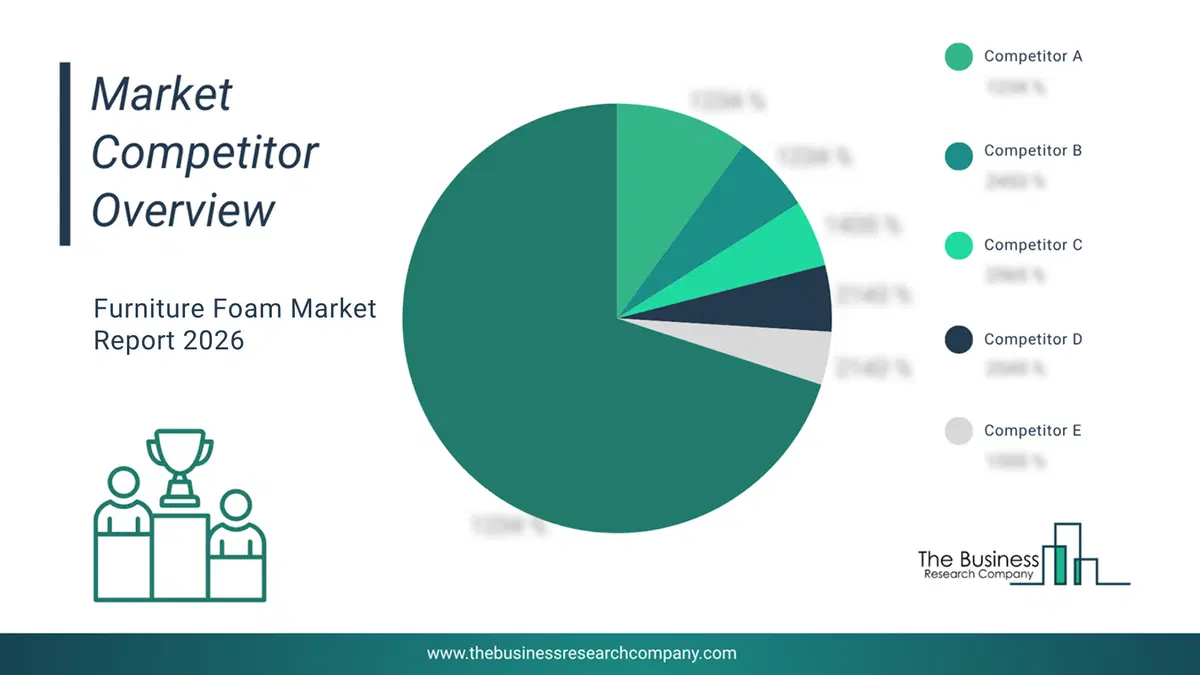
This chart is for illustrative purposes; the full report includes a detailed competitor analysis and comprehensive overview of the top 10 companies in the market.
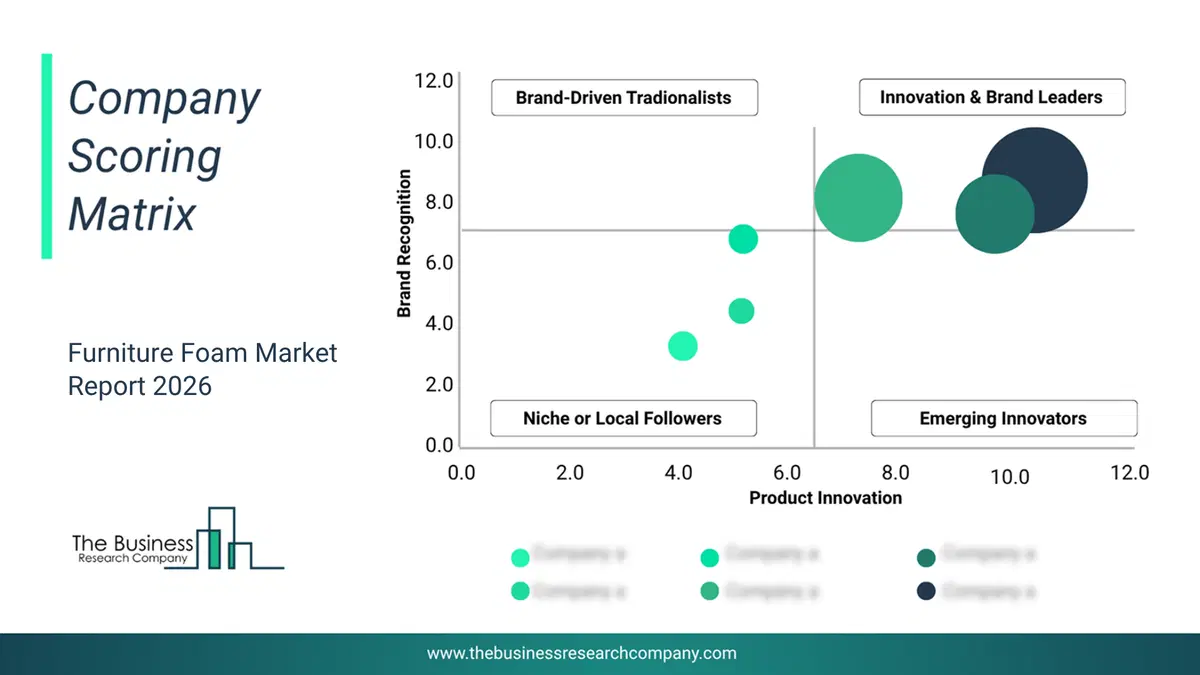
This chart maps companies by product innovation and brand strength, with bubble size indicating relative revenue, helping identify market leaders, challengers, and niche players. This is an illustrative chart; the full report provides a complete and accurate competitive analysis.
Global Furniture Foam Market Trends and Insights
Major companies in the furniture foam market are focusing on developing advanced materials such as recycled polyurethane (PU) foam to gain a competitive advantage. Flexible polyurethane (PU) foam is a versatile and lightweight material widely used in various industries, particularly furniture, bedding, automotive, and packaging. It is created by combining polyols and diisocyanates through a chemical reaction, resulting in a foam that is both flexible and resilient. For instance, in January 2024, The Vita Group, a UK-based manufacturer of flexible PU foam solutions, launched its Orbis, a flexible polyurethane (PU) foam. Orbis is partially made from post-consumer foam mattresses, making it an environmentally responsible option. This foam reduces the need for landfill or incineration and maintains the quality, durability, and comfort expected from traditional PU foam. The Vita Group highlights that Orbis contributes to reducing carbon footprints and supports a circular economy, aligning with global sustainability goals. The foam is suitable for bedding and furniture applications and is commercially available in standard ether and high-resilience foam.What Are Latest Mergers And Acquisitions In The Furniture Foam Market?
In July 2024, Domfoam Inc., a Canada-based manufacturer of polyurethane foam, acquired Foamco for an undisclosed amount. The acquisition allows Domfoam to expand its production capacity, giving it a competitive advantage by providing customers with a third manufacturing option. Foamco is a Canada-based foam fabricator specializing in various foam products, including furniture foam.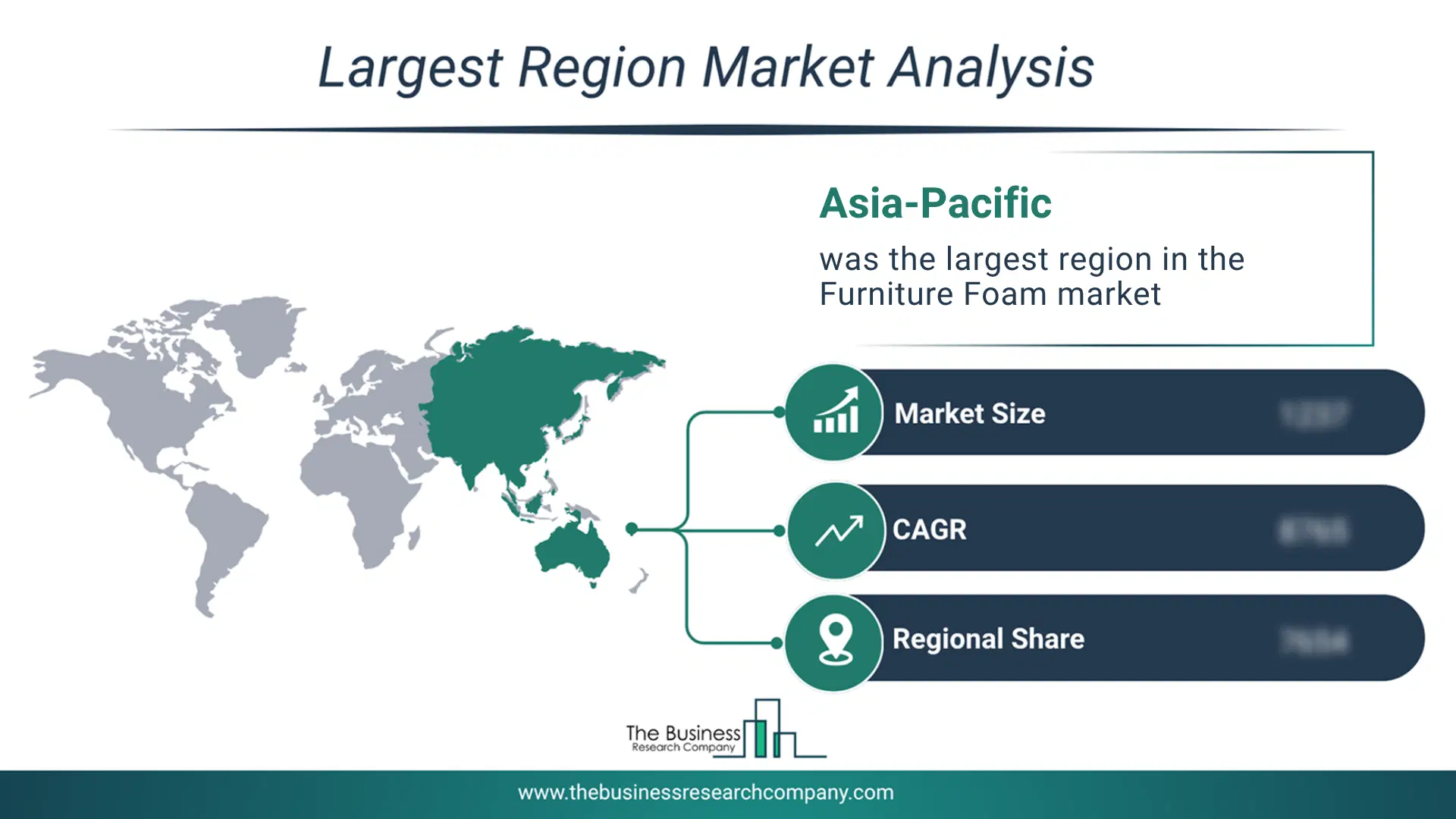
Regional Insights
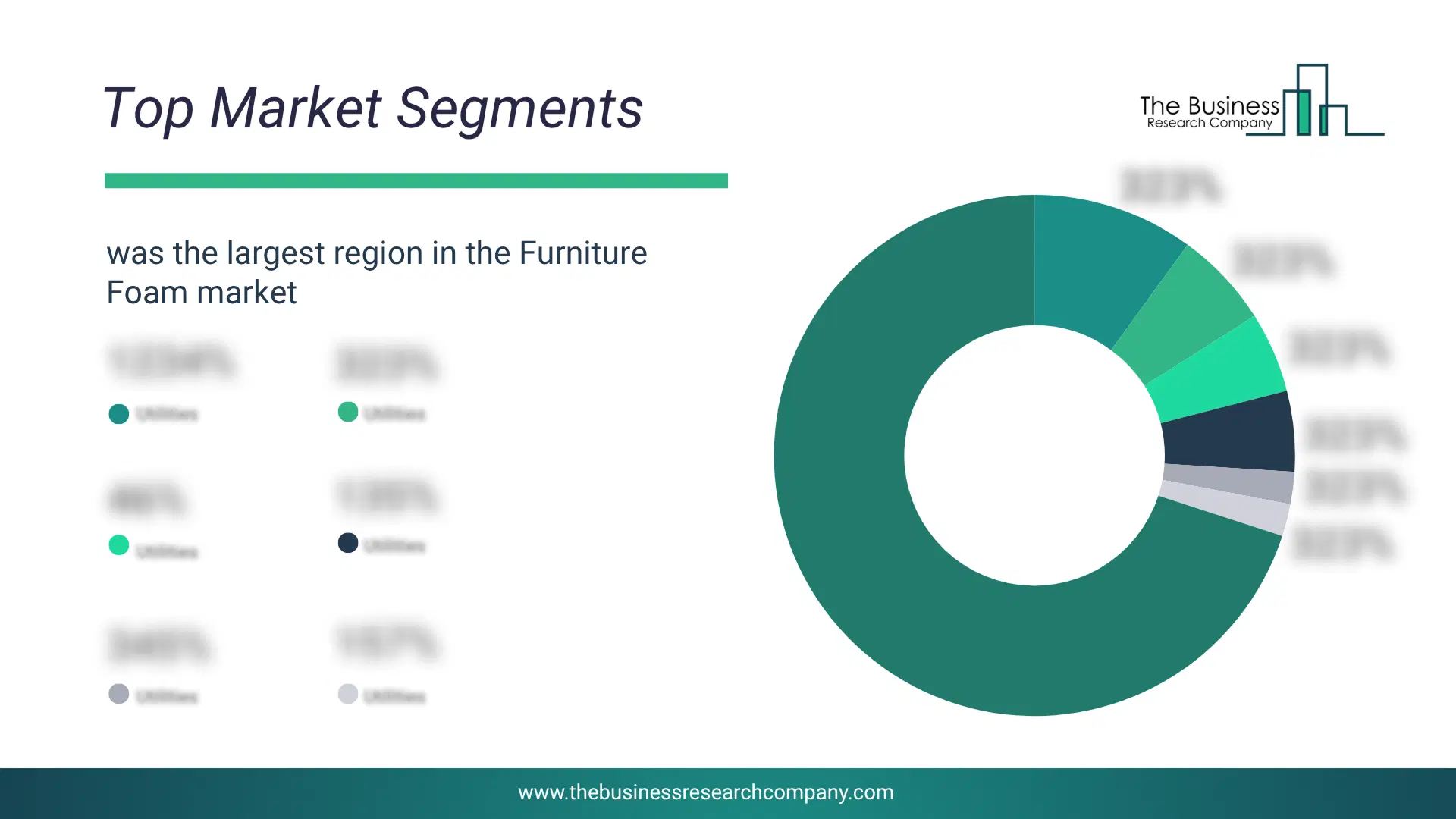
Asia-Pacific was the largest region in the furniture foam market in 2025. The regions covered in this market report are Asia-Pacific, South East Asia, Western Europe, Eastern Europe, North America, South America, Middle East, Africa The countries covered in this market report are Australia, Brazil, China, France, Germany, India, Indonesia, Japan, Taiwan, Russia, South Korea, UK, USA, Canada, Italy, SpainWhat Defines the Furniture Foam Market?
The furniture foam market consists of sales of viscoelastic foam, gel memory foam, and chip foam. Values in this market are ‘factory gate’ values, that is the value of goods sold by the manufacturers or creators of the goods, whether to other entities (including downstream manufacturers, wholesalers, distributors and retailers) or directly to end customers. The value of goods in this market includes related services sold by the creators of the goods.How is Market Value Defined and Measured?
The market value is defined as the revenues that enterprises gain from the sale of goods and/or services within the specified market and geography through sales, grants, or donations in terms of the currency (in USD unless otherwise specified). The revenues for a specified geography are consumption values that are revenues generated by organizations in the specified geography within the market, irrespective of where they are produced. It does not include revenues from resales along the supply chain, either further along the supply chain or as part of other products.
This chart presents market attractiveness based on a quantitative evaluation of growth, competition, strategic alignment, and risk, offering a clear view of opportunity areas for decision-making. This chart is for illustrative purposes; the full report contains the complete analysis.

This chart highlights the Total Addressable Market (TAM) by estimating the maximum revenue opportunity using an assumption-driven approach, supporting strategic planning and opportunity sizing across markets. The chart is illustrative; the full report provides a more comprehensive analysis.
What Key Data and Analysis Are Included in the Furniture Foam Market Report 2026?
The furniture foam market research report is one of a series of new reports from The Business Research Company that provides market statistics, including industry global market size, regional shares, competitors with the market share, detailed market segments, market trends and opportunities, and any further data you may need to thrive in the furniture foam industry. The market research report delivers a complete perspective of everything you need, with an in-depth analysis of the current and future state of the industry.Furniture Foam Market Report Forecast Analysis
| Report Attribute | Details |
|---|---|
| Market Size Value In 2026 | $64.48 billion |
| Revenue Forecast In 2030 | $79.38 billion |
| Growth Rate | CAGR of 5.8% from 2026 to 2030 |
| Base Year For Estimation | 2025 |
| Actual Estimates/Historical Data | 2020-2025 |
| Forecast Period | 2026 - 2030 |
| Market Representation | Revenue in USD Billion and CAGR from 2026 to 2030 |
| Segments Covered | Product Type, Application, End-Use |
| Regional Scope | Asia-Pacific, Western Europe, Eastern Europe, North America, South America, Middle East, Africa |
| Country Scope | The countries covered in the report are Australia, Brazil, China, France, Germany, India, Indonesia, Japan, Taiwan, Russia, South Korea, UK, USA, Canada, Italy, Spain. |
| Key Companies Profiled | Carpenter Co., Recticel, Future Foam Inc., Sheela Foam Ltd., Vitafoam Nigeria Plc, Flexible Foam Products Inc., Foamcraft Inc., Foam Products Corporation, Fagerdala World Foams, Duroflex, Sharp Foam Industries Pvt. Ltd., Joy Foam Pvt. Ltd., Karefoam, Master Foam, American Foam Products Inc., Cenflex, Vita Group, Relyon Softech Ltd., MM Foam, Sleepwell Industries |
| Customization Scope | Request for Customization |
| Pricing And Purchase Options | Explore Purchase Options |