
G Protein-Coupled Receptors (GPCR) Structure-Based Drug Design Market Report 2026
Global Outlook – By Drug Type (Small Molecule Drugs, Biologics, Peptides, Other Drug Types), By Technology (X-Ray Crystallography, Cryo-Electron Microscopy, Computational Modeling, Nuclear Magnetic Resonance Spectroscopy, Other Technologies), By Application (Oncology, Cardiovascular Diseases, Neurological Disorders, Metabolic Disorders, Other Applications), By End-User (Pharmaceutical Companies, Biotechnology Companies, Academic And Research Institutes, Other End-Users) – Market Size, Trends, Strategies, and Forecast to 2030
G Protein-Coupled Receptors (GPCR) Structure-Based Drug Design Market Overview
• G Protein-Coupled Receptors (GPCR) Structure-Based Drug Design market size has reached to $2.64 billion in 2025 • Expected to grow to $4.89 billion in 2030 at a compound annual growth rate (CAGR) of 13% • Growth Driver: Increasing Demand For Precision Medicine Driving The Market Growth Due To Growing Need For Receptor-Specific Drug Development • Market Trend: Driving Next-Generation Therapeutics Through Structural Innovation • North America was the largest region in 2025.What Is Covered Under G Protein-Coupled Receptors (GPCR) Structure-Based Drug Design Market?
G protein-coupled receptors (GPCR) structure-based drug design refers to the approach of developing drugs by leveraging the detailed three-dimensional structures of GPCRs to optimize the binding and selectivity of new compounds. This method enables researchers to design molecules that precisely interact with atomic-level features of GPCR binding sites, improving specificity and minimizing off-target effects. The main drug types of G protein-coupled receptor (GPCR) structure-based drug design are small molecules, biologics, peptides, and other drug types. Small-molecule drugs are low-molecular-weight compounds that can easily enter cells to selectively modulate biological targets, such as enzymes or receptors. Various technologies are used for drug development, including X-ray crystallography, cryo-electron microscopy, computational modeling, and nuclear magnetic resonance (NMR) spectroscopy. These approaches are applied to multiple therapeutic areas, such as oncology, cardiovascular diseases, neurological disorders, and metabolic disorders, and are utilized by end-users including pharmaceutical companies, biotechnology companies, academic institutions, and research institutes.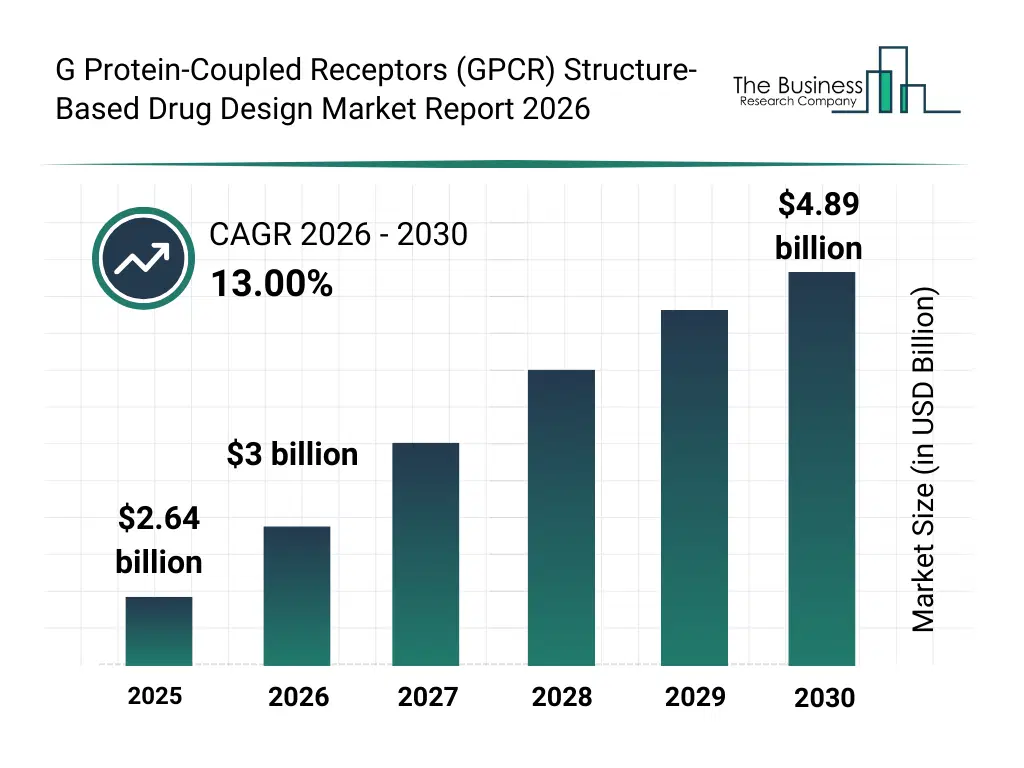
What Is The G Protein-Coupled Receptors (GPCR) Structure-Based Drug Design Market Size and Share 2026?
The g protein-coupled receptors (gpcr) structure-based drug design market size has grown rapidly in recent years. It will grow from $2.64 billion in 2025 to $3 billion in 2026 at a compound annual growth rate (CAGR) of 13.3%. The growth in the historic period can be attributed to advancements in gpcr crystallography techniques, increased pharmaceutical r&d spending, availability of high-resolution receptor structures, growing understanding of gpcr signaling pathways, expansion of small molecule drug discovery platforms.What Is The G Protein-Coupled Receptors (GPCR) Structure-Based Drug Design Market Growth Forecast?
The g protein-coupled receptors (gpcr) structure-based drug design market size is expected to see rapid growth in the next few years. It will grow to $4.89 billion in 2030 at a compound annual growth rate (CAGR) of 13.0%. The growth in the forecast period can be attributed to rising adoption of ai-assisted molecular design, increasing focus on precision medicine drug development, expansion of gpcr targets in oncology and neurology, growing investments in next-generation structural biology tools, rising demand for highly selective therapeutics. Major trends in the forecast period include increasing use of structure-guided ligand optimization, rising adoption of cryo-electron microscopy for gpcr analysis, growing integration of computational modeling in drug discovery, expansion of allosteric modulator development, enhanced focus on receptor selectivity improvement.
Global G Protein-Coupled Receptors (GPCR) Structure-Based Drug Design Market Segmentation
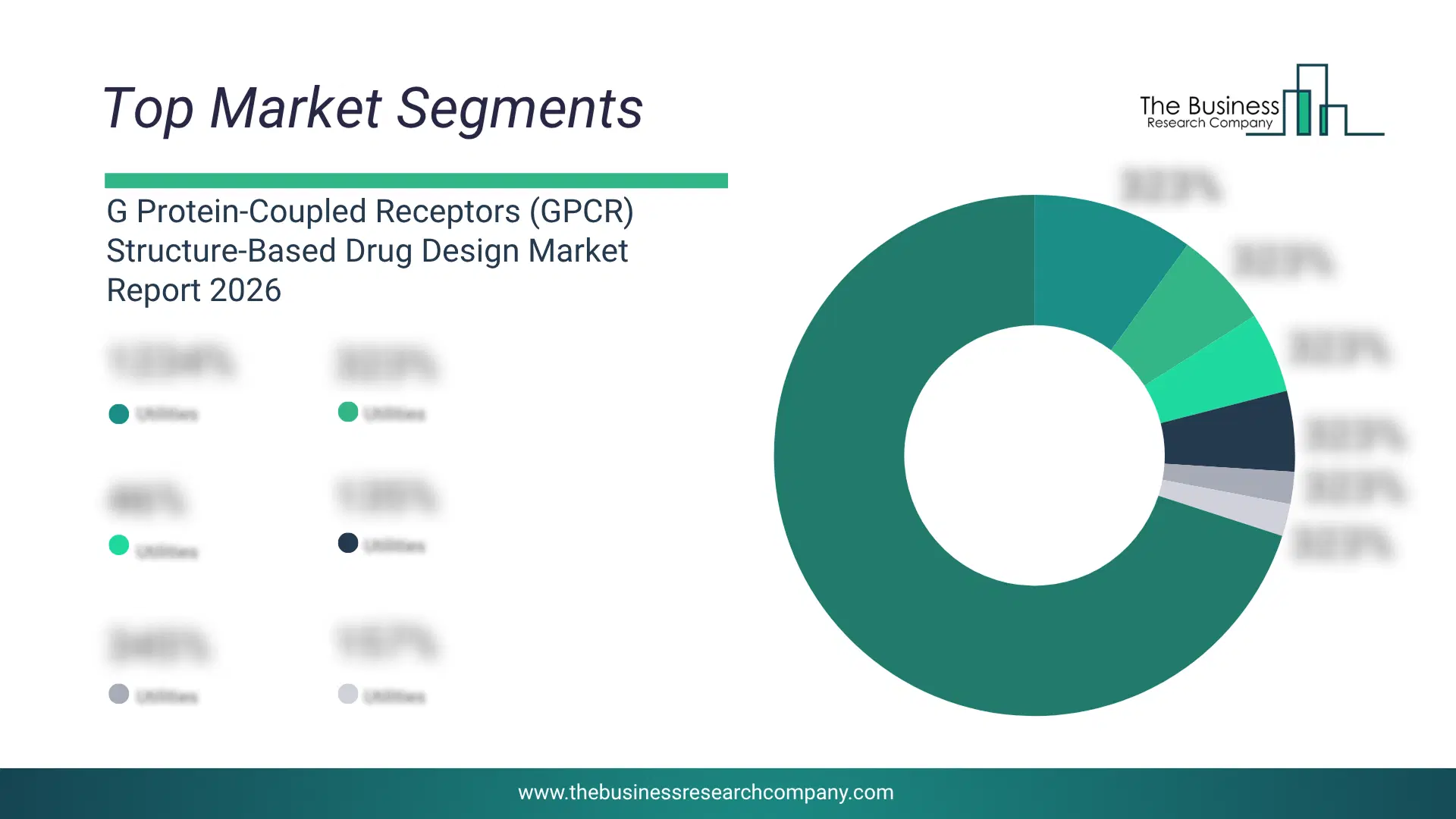
1) By Drug Type: Small Molecule Drugs, Biologics, Peptides, Other Drug Types 2) By Technology: X-Ray Crystallography, Cryo-Electron Microscopy, Computational Modeling, Nuclear Magnetic Resonance Spectroscopy, Other Technologies 3) By Application: Oncology, Cardiovascular Diseases, Neurological Disorders, Metabolic Disorders, Other Applications 4) By End-User: Pharmaceutical Companies, Biotechnology Companies, Academic And Research Institutes, Other End-Users Subsegments: 1) By Small Molecule Drugs: Agonists, Antagonists, Allosteric Modulators, Enzyme Inhibitors 2) By Biologics: Monoclonal Antibodies, Therapeutic Proteins, Vaccines, Fusion Proteins 3) By Peptides: Linear Peptides, Cyclic Peptides, Modified Peptides, Peptidomimetics 4) By Other Drug Types: Nucleic Acid Based Drugs, Cell Based Therapies, Gene Therapies, Conjugated DrugsWhat Is The Driver Of The G Protein-Coupled Receptors (GPCR) Structure-Based Drug Design Market?
The increasing demand for precision medicine is expected to propel the growth of the G protein-coupled receptors (GPCR) structure-based drug design market going forward. Precision medicine are treatment approaches that use specific biological markers to guide the selection and development of therapies tailored to individual patient characteristics and disease profiles. The rising demand for precision medicine is driven by their superior efficacy and reduced side effects compared to traditional treatments, as healthcare systems increasingly prioritize personalized approaches that target specific molecular pathways rather than broad-spectrum interventions. Growing emphasis on precision medicine directly accelerates the adoption of GPCR structure-based drug design platforms as pharmaceutical companies increasingly require sophisticated computational tools to identify and optimize receptor-specific compounds that can deliver the molecular precision demanded by personalized treatment approaches. For instance, in February 2024, Personalized Medicine Coalition, a US-based non-profit organization, in 2023, the FDA approved 16 new personalized treatments for patients with rare diseases, a significant increase from the six approvals in 2022. Among these newly approved treatments, seven are cancer drugs, while three address other diseases and conditions. Therefore, the increasing demand for precision medicine is driving the growth of the G protein-coupled receptors (GPCR) structure-based drug design industry.Key Players In The Global G Protein-Coupled Receptors (GPCR) Structure-Based Drug Design Market
Major companies operating in the g protein-coupled receptors (gpcr) structure-based drug design market are F. Hoffmann-La Roche Ltd., Pfizer Inc., Sanofi S.A., AstraZeneca plc, Thermo Fisher Scientific Inc., Boehringer Ingelheim International GmbH, WuXi AppTec Co. Ltd., Charles River Laboratories International Inc., Evotec SE, Acadia Pharmaceuticals Inc., Promega Corporation, Domain Therapeutics SA, Schrödinger Inc., Kallyope Inc., Domainex Ltd., Structure Therapeutics Inc., Creative Biolabs Inc., InterAx Biotech Inc., Abalone Bio Inc., Octant Inc.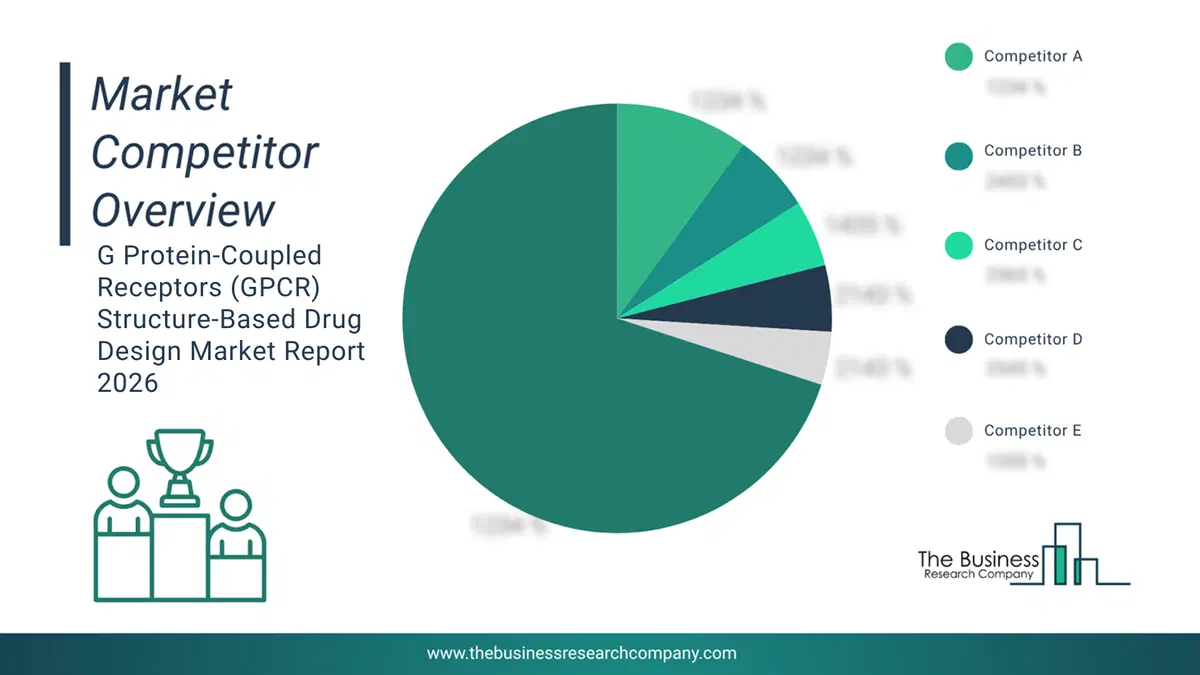
This chart is for illustrative purposes; the full report includes a detailed competitor analysis and comprehensive overview of the top 10 companies in the market.
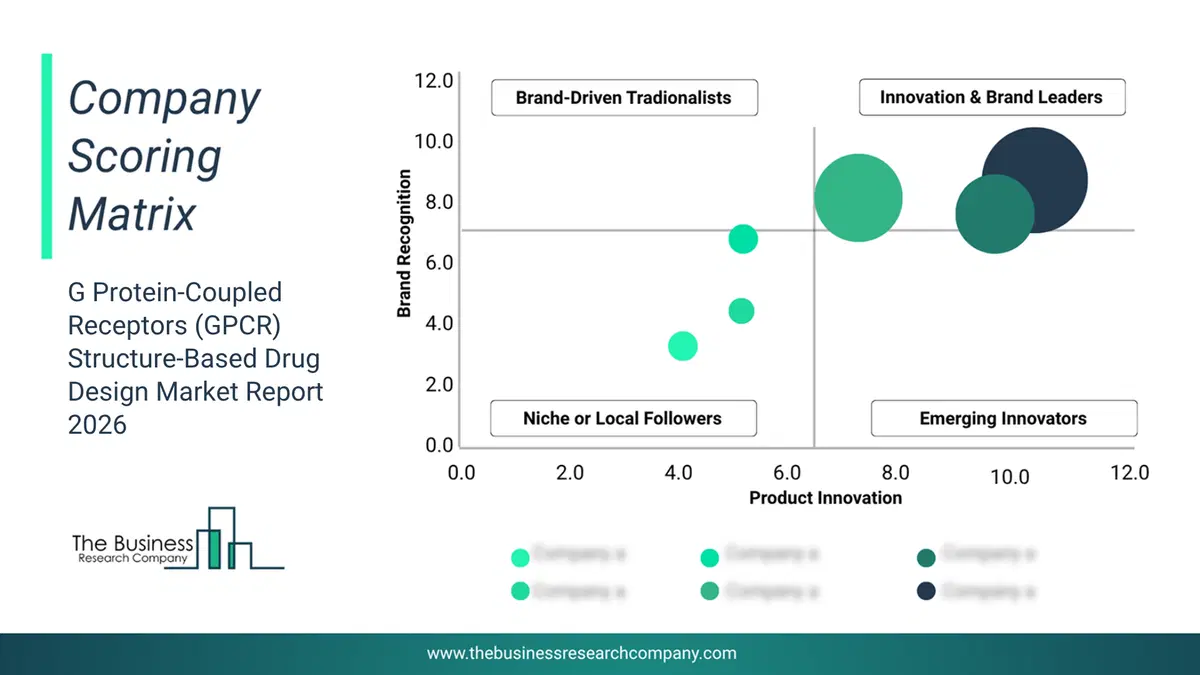
This chart maps companies by product innovation and brand strength, with bubble size indicating relative revenue, helping identify market leaders, challengers, and niche players. This is an illustrative chart; the full report provides a complete and accurate competitive analysis.
Global G Protein-Coupled Receptors (GPCR) Structure-Based Drug Design Market Trends and Insights
Major companies operating in the G-protein coupled receptor (GPCR) structure-based drug design market are focusing on developing innovative solutions such as structure-based drug design platforms to accelerate novel drug discovery and improve therapeutic targeting. Structure-based drug design platforms are computational and experimental tools that use the three-dimensional (3D) structure of target proteins to design and optimize drug candidates, helping identify more precise, effective, and safer therapies. For instance, in January 2025, Septerna Inc., a US-based pharmaceutical company, launched new initiatives to advance its Native Complex Platform, building on the $100 million Series A financing it had secured. The platform enables structure-based drug design for GPCRs by maintaining their native structure and dynamics outside of the cellular environment, supporting the development of a pipeline of GPCR-targeted therapies aimed at previously undruggable targets across multiple therapeutic areas, while also providing a scalable foundation for industrialized drug discovery, integration of novel screening technologies, and discovery of new mechanisms of GPCR modulation. The platform also creates opportunities to systematically explore the entire GPCR superfamily, opening the door to a wider range of therapeutic interventions.What Are Latest Mergers And Acquisitions In The G Protein-Coupled Receptors (GPCR) Structure-Based Drug Design Market?
In May 2024, Incyte Corporation, a US-based biopharmaceutical company, acquired Escient Pharmaceuticals, Inc. for $750 million. With this acquisition, Incyte aims to strengthen its Inflammation and Autoimmunity pipeline by adding first-in-class oral GPCR-targeting MRGPR antagonists, EP262 and EP547, which block key Mas-related G protein-coupled receptors involved in mast cell activation and severe pruritus, thereby advancing innovative therapies for a broad range of mast cell-mediated and cholestatic pruritus-related diseases with high unmet medical need. Escient Pharmaceuticals Inc. is a US-based biopharmaceutical company that specializes in developing first-in-class oral antagonists targeting mas-related G protein-coupled receptor X2 (MRGPRX2) and mas-related G protein-coupled receptor X4 (MRGPRX4).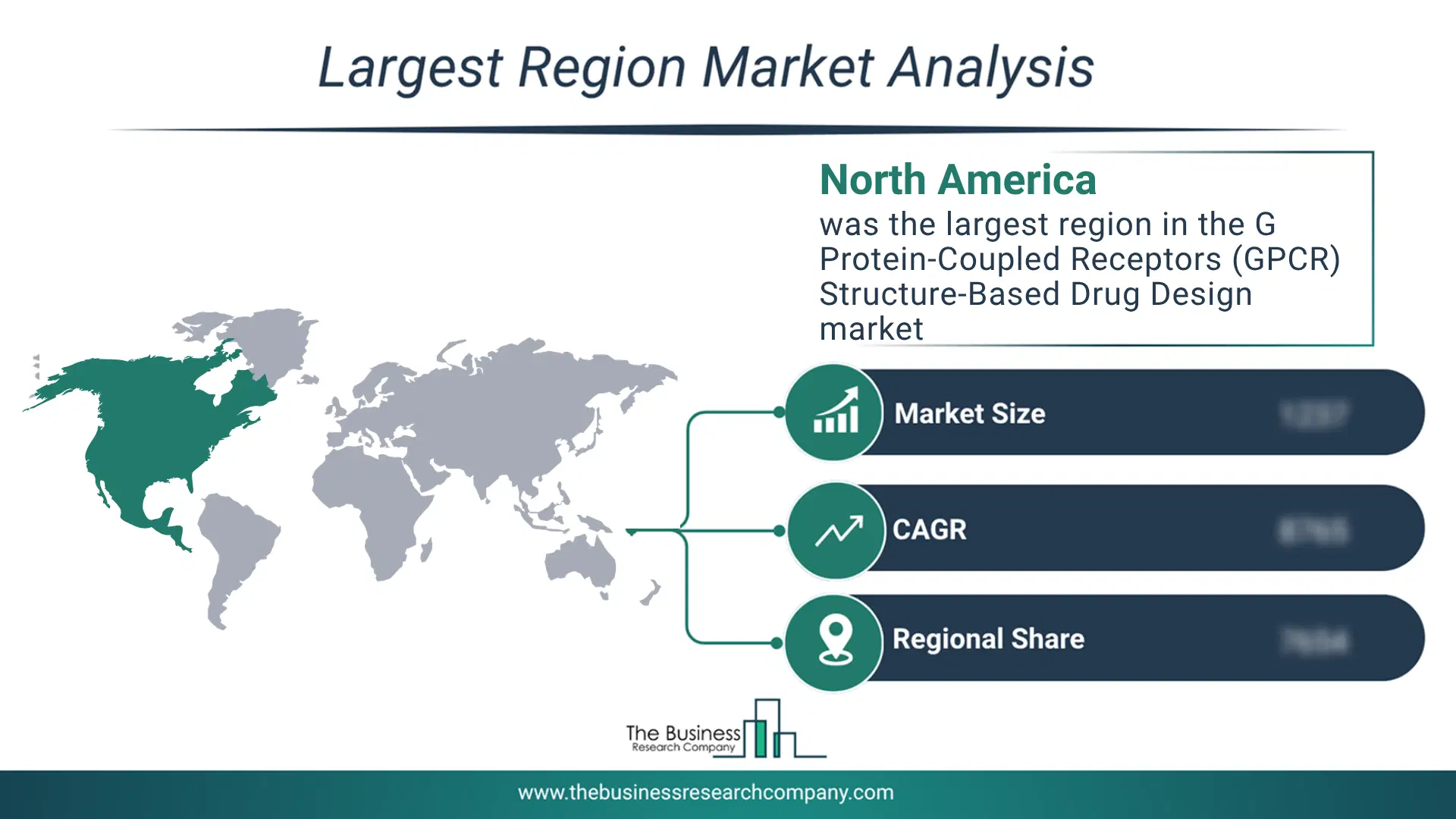
Regional Insights
North America was the largest region in the G protein-coupled receptors (GPCR) structure-based drug design market in 2025. The regions covered in this market report are Asia-Pacific, South East Asia, Western Europe, Eastern Europe, North America, South America, Middle East, Africa. The countries covered in this market report are Australia, Brazil, China, France, Germany, India, Indonesia, Japan, Taiwan, Russia, South Korea, UK, USA, Canada, Italy, Spain.What Defines the G Protein-Coupled Receptors (GPCR) Structure-Based Drug Design Market?
The G protein-coupled receptors (GPCR) structure-based drug design market consists of revenues earned by entities by providing services such as computational modeling, assay development and screening, hit identification and lead optimization, medicinal chemistry and compound synthesis, biologics and antibody development, specialized assay services for safety, efficacy, and biomarker discovery. The market value includes the value of related goods sold by the service provider or included within the service offering. The G protein-coupled receptors (GPCR) structure-based drug design market also includes sales of GPCR-expressing cell lines, detection kits, cell culture reagents, ligands, and assay systems. Values in this market are ‘factory gate’ values, that is the value of goods sold by the manufacturers or creators of the goods, whether to other entities (including downstream manufacturers, wholesalers, distributors and retailers) or directly to end customers. The value of goods in this market includes related services sold by the creators of the goods.How is Market Value Defined and Measured?
The market value is defined as the revenues that enterprises gain from the sale of goods and/or services within the specified market and geography through sales, grants, or donations in terms of the currency (in USD unless otherwise specified). The revenues for a specified geography are consumption values that are revenues generated by organizations in the specified geography within the market, irrespective of where they are produced. It does not include revenues from resales along the supply chain, either further along the supply chain or as part of other products.
This chart presents market attractiveness based on a quantitative evaluation of growth, competition, strategic alignment, and risk, offering a clear view of opportunity areas for decision-making. This chart is for illustrative purposes; the full report contains the complete analysis.

This chart highlights the Total Addressable Market (TAM) by estimating the maximum revenue opportunity using an assumption-driven approach, supporting strategic planning and opportunity sizing across markets. The chart is illustrative; the full report provides a more comprehensive analysis.
What Key Data and Analysis Are Included in the G Protein-Coupled Receptors (GPCR) Structure-Based Drug Design Market Report 2026?
The g protein-coupled receptors (gpcr) structure-based drug design market research report is one of a series of new reports from The Business Research Company that provides market statistics, including industry global market size, regional shares, competitors with the market share, detailed market segments, market trends and opportunities, and any further data you may need to thrive in the g protein-coupled receptors (gpcr) structure-based drug design industry. The market research report delivers a complete perspective of everything you need, with an in-depth analysis of the current and future state of the industry.G Protein-Coupled Receptors (GPCR) Structure-Based Drug Design Market Report Forecast Analysis
| Report Attribute | Details |
|---|---|
| Market Size Value In 2026 | $3 billion |
| Revenue Forecast In 2030 | $4.89 billion |
| Growth Rate | CAGR of 13.3% from 2026 to 2030 |
| Base Year For Estimation | 2025 |
| Actual Estimates/Historical Data | 2020-2025 |
| Forecast Period | 2026 - 2030 |
| Market Representation | Revenue in USD Billion and CAGR from 2026 to 2030 |
| Segments Covered | Drug Type, Technology, Application, End-User |
| Regional Scope | Asia-Pacific, Western Europe, Eastern Europe, North America, South America, Middle East, Africa |
| Country Scope | The countries covered in the report are Australia, Brazil, China, France, Germany, India, Indonesia, Japan, Taiwan, Russia, South Korea, UK, USA, Canada, Italy, Spain. |
| Key Companies Profiled | F. Hoffmann-La Roche Ltd., Pfizer Inc., Sanofi S.A., AstraZeneca plc, Thermo Fisher Scientific Inc., Boehringer Ingelheim International GmbH, WuXi AppTec Co. Ltd., Charles River Laboratories International Inc., Evotec SE, Acadia Pharmaceuticals Inc., Promega Corporation, Domain Therapeutics SA, Schrödinger Inc., Kallyope Inc., Domainex Ltd., Structure Therapeutics Inc., Creative Biolabs Inc., InterAx Biotech Inc., Abalone Bio Inc., Octant Inc. |
| Customization Scope | Request for Customization |
| Pricing And Purchase Options | Explore Purchase Options |