
Gallium Arsenide (GaAs) Wafer Market Report 2026
Global Outlook – By Type ( Vertical Gradient Freeze Gallium Arsenide (GaAs), Liquid-Encapsulated Czochralski Gallium Arsenide (GaAs), Other Types), By Application ( Radio Frequency, Light Emitting Diode, Vertical-Cavity Surface-Emitting Laser (VCSEL), Photovoltaic), By End-Use ( Telecommunication, Consumer Devices, Aerospace, Defense And Satcom, Automotive, Community Antenna Television (CATV) And Wired Broadband, Other End-Users) – Market Size, Trends, Strategies, and Forecast to 2030
Gallium Arsenide (GaAs) Wafer Market Overview
• Gallium Arsenide (GaAs) Wafer market size has reached to $1.33 billion in 2025 • Expected to grow to $2.33 billion in 2030 at a compound annual growth rate (CAGR) of 12% • Growth Driver: Growth In 5G Adoption Fuels Gallium Arsenide (GaAs) Wafer Market Expansion • Market Trend: Advanced GaN And GaAs Epitaxial Wafers Enhance Electronic And Optoelectronic Devices • North America was the largest region in 2025 and Asia-Pacific is the fastest growing region.Market Gains By 2030 – Top Opportunities By Segment
Market Gain identifies the most promising market opportunities by highlighting the segments or products expected to generate the highest incremental revenue growth over the next five years.
What Is Covered Under Gallium Arsenide (GaAs) Wafer Market?
A gallium arsenide (GaAs) wafer is a thin slice of semiconductor material composed of gallium and arsenic, used primarily in the fabrication of electronic devices. It is used in electronics and optoelectronics for their efficient performance in high-frequency and light-emitting applications. The main types of gallium arsenide (GaAs) wafers are vertical gradient freeze gallium arsenide (GaAs), liquid-encapsulated czochralsky gallium arsenide (GaAs), and others. Vertical gradient freeze GaAs (VGF) wafers are manufactured using a method that involves slowly freezing molten gallium arsenide from the bottom to the top, resulting in a crystal with high purity and minimal defects. The various applications include radio frequency, a light-emitting diode, a vertical-cavity surface-emitting laser (VCSEL), photovoltaic in varying end-uses such as telecommunication, consumer devices, aerospace, defense and satcom, automotive, community antenna television (CATV), wired broadband, and others.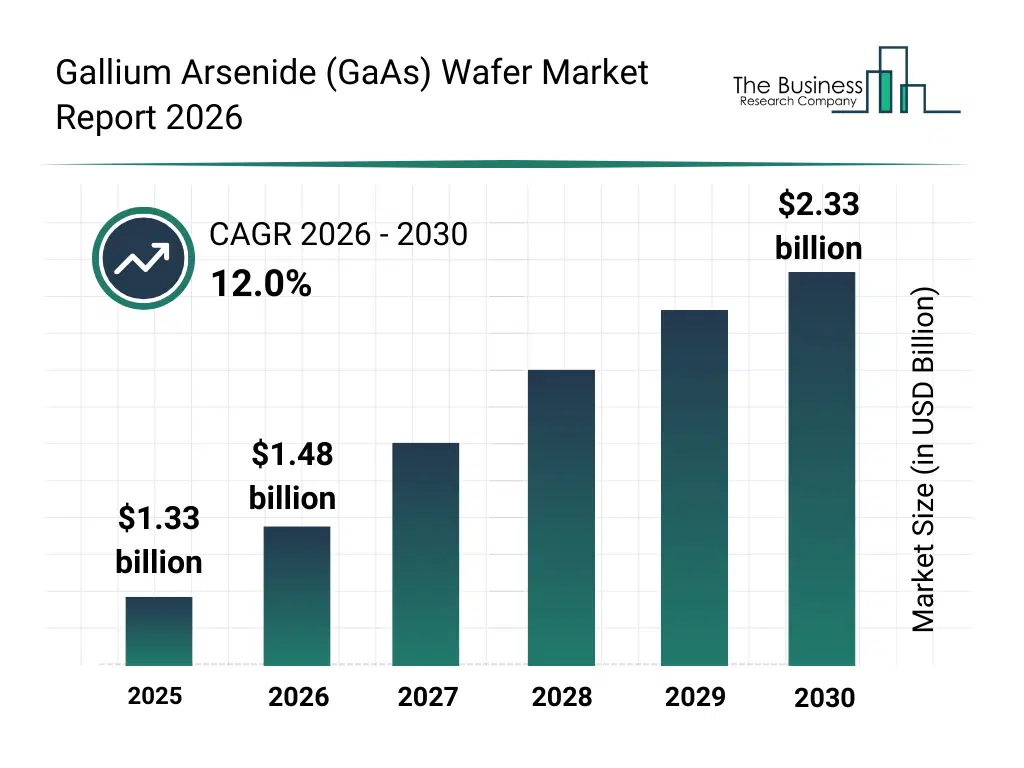
What Is The Gallium Arsenide (GaAs) Wafer Market Size 2026 And Growth Rate?
The gallium arsenide (gaas) wafer market size has grown rapidly in recent years. It will grow from $1.33 billion in 2025 to $1.48 billion in 2026 at a compound annual growth rate (CAGR) of 11.8%. The growth in the historic period can be attributed to adoption of gaas in microwave electronics, growth of rf and wireless communication devices, expansion of led and laser technologies, demand for high speed semiconductor materials, use of gaas in defense electronics.What Is The Gallium Arsenide (GaAs) Wafer Market Growth Forecast?
The gallium arsenide (gaas) wafer market size is expected to see rapid growth in the next few years. It will grow to $2.33 billion in 2030 at a compound annual growth rate (CAGR) of 12.0%. The growth in the forecast period can be attributed to deployment of 5g and beyond networks, rising adoption of vcsel based sensing systems, growth of electric and connected vehicles, expansion of satellite communication systems, increasing demand for compound semiconductors. Major trends in the forecast period include growing demand for gaas wafers in high frequency rf applications, rising adoption of gaas in optoelectronic and laser devices, increasing use of gaas wafers in 5g and advanced communication systems, expansion of gaas based devices in automotive electronics, growing focus on high purity and low defect density gaas wafers.
Global Gallium Arsenide (GaAs) Wafer Market Segmentation
1) By Type: Vertical Gradient Freeze Gallium Arsenide (GaAs), Liquid-Encapsulated Czochralski Gallium Arsenide (GaAs), Other Types 2) By Application: Radio Frequency, Light Emitting Diode, Vertical-Cavity Surface-Emitting Laser (VCSEL), Photovoltaic 3) By End-Use: Telecommunication, Consumer Devices, Aerospace, Defense And Satcom, Automotive, Community Antenna Television (CATV) And Wired Broadband, Other End-Users Subsegments: 1) By Vertical Gradient Freeze Gallium Arsenide (GaAs): High Purity Gaas Wafer, Low Defect Density Gaas Wafer, High-Performance Gaas For Optoelectronic Applications 2) By Liquid-Encapsulated Czochralsky Gallium Arsenide (GaAs): Czochralsky Gaas Wafers For Semiconductor Devices, Gaas For High-Speed Electronics, Gaas For Microwave And Rf Applications 3) By Other Types: Horizontal Gradient Freeze Gaas, Epitaxial Gaas Wafers, Gaas For Photovoltaic Applications, Gaas For Photonics And Laser Technology The top segments in the gallium arsenide (gaas) wafer market will be: • Liquid-Encapsulated Czochralski Gallium Arsenide (GaAs) will reach $1.34 Billion by 2030. • Vertical Gradient Freeze Gallium Arsenide (GaAs) will reach $0.82 Billion by 2030. • Other Types will reach $0.24 Billion by 2030.What Is The Driver Of The Gallium Arsenide (GaAs) Wafer Market?
The rise in the adoption of 5G infrastructure is expected to propel the growth of the gallium arsenide (GaAs) wafer market going forward. 5G infrastructure encompasses the hardware and technology required for the fifth generation of mobile networks, providing faster data speeds, low latency, and connectivity for many devices simultaneously. The surge in 5G infrastructure adoption is driven by the demand for faster internet, the proliferation of connected devices, and the need for more dependable and efficient communication networks. GaAs wafers play a key role in 5G infrastructure by enabling high-frequency signal processing, which is necessary for the fast data speeds and enhanced performance of 5G networks. For instance, in September 2023, according to 5G Americas, a US-based industry trade organization, North America's 5G penetration rate reached an exceptional 40 percent, with a growth rate of 25.5% in the first half of 2023. Moreover, projections indicate North America's 5G connections will reach a remarkable 669 million by 2028. Therefore, the rise in the adoption of 5G infrastructure is driving the growth of the gallium arsenide (GaAs) wafer industry going forward.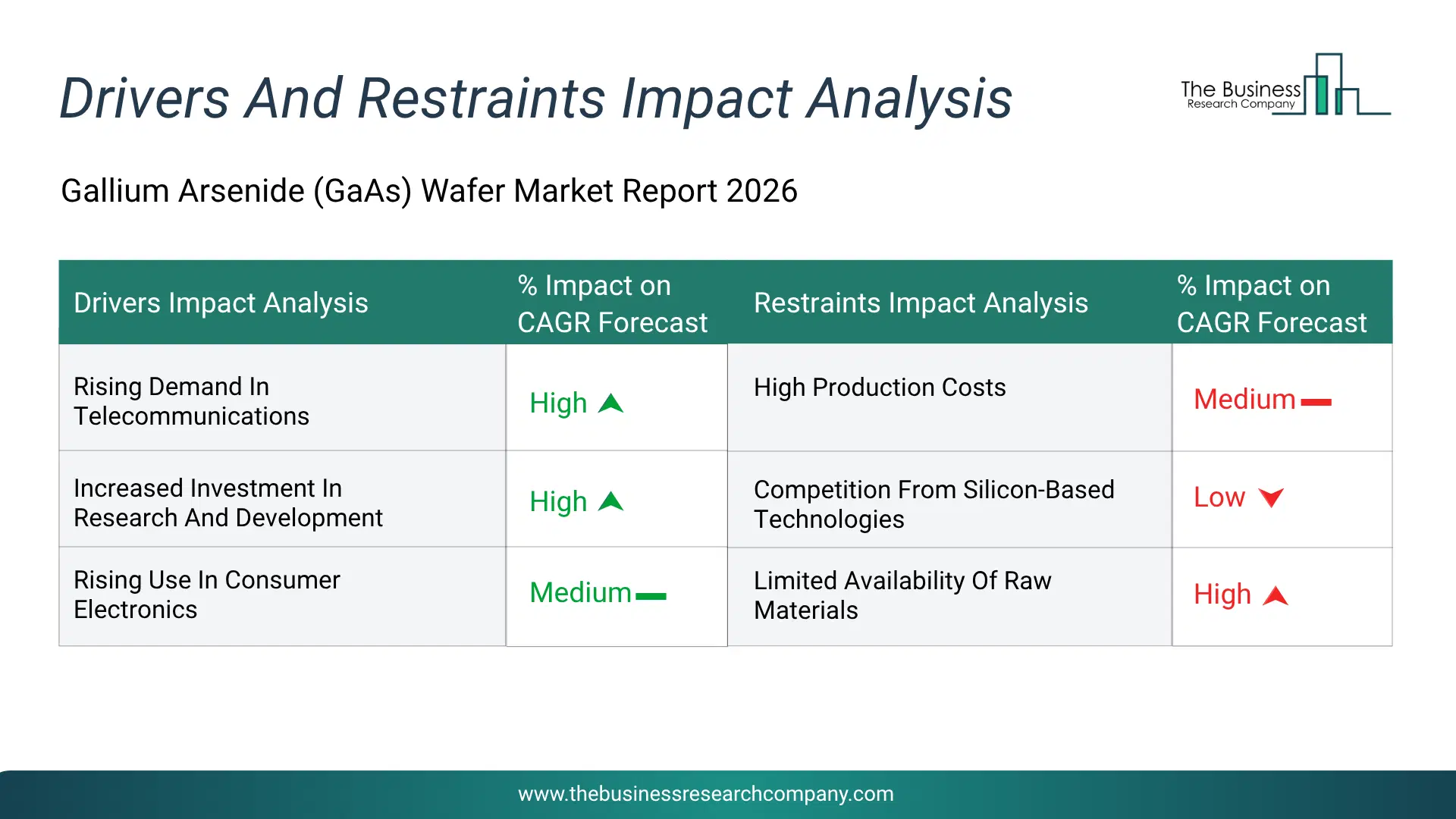
Infographic Chart Showing Key Market Drivers Analysis And Restraints For Gallium Arsenide (Gaas) Wafer Market
The chart presents an impact analysis of key drivers and restraints, quantifying their relative influence on the market's growth rate and helping assess the balance between growth enablers and limiting factors. This chart offers a high-level perspective; the full report contains more detailed insights.
How Will The Drivers Impact Growth In The Global Gallium Arsenide (GaAs) Wafer Market?
• Rising Demand In Telecommunications (High) – During the forecast period, the rising demand in telecommunications is expected to become a key growth driver for the gallium arsenide (GaAs) wafer market by 2030. Rising Demand in Telecommunications acts as a significant driver for the gallium arsenide (GaAs) wafer market because GaAs offers superior electron mobility and high-frequency performance compared to conventional semiconductor materials. These characteristics make it highly suitable for telecommunications equipment such as RF amplifiers, antennas, and wireless communication modules. The ongoing deployment of 5G networks and advanced communication infrastructure is increasing the need for components capable of handling higher frequencies and faster data transmission. GaAs wafers enable efficient signal processing with lower power consumption, improving network performance and reliability. Telecommunications providers are continuously upgrading their systems to support growing data traffic and connectivity requirements. This trend is creating sustained demand for GaAs-based semiconductor devices. • Increased Investment In Research And Development (High) – During the forecast period, the increased investment in research and development is expected to emerge as a major factor driving the expansion of the gallium arsenide (GaAs) wafer market by 2030. Increased investment in research and development serves as an important driver for the Gallium Arsenide (GaAs) Wafer market by accelerating technological innovation and expanding application possibilities. Research activities are focused on improving wafer quality, production efficiency, and device performance to meet evolving industry requirements. Continuous advancements in semiconductor technologies are enabling GaAs wafers to be used in increasingly sophisticated electronic and photonic systems. Investments from governments, research institutions, and private companies are supporting the development of next-generation communication, aerospace, and sensing technologies. These efforts help reduce manufacturing challenges while enhancing product capabilities. As new applications emerge, demand for high-performance semiconductor materials grows steadily. • Rising Use In Consumer Electronics (Medium) – During the forecast period, the rising use in consumer electronics is expected to act as a key growth catalyst for the gallium arsenide (GaAs) wafer market by 2030. Rising use in consumer electronics is driving the gallium arsenide (GaAs) wafer market as manufacturers seek high-speed and energy-efficient semiconductor solutions for modern devices. Smartphones, tablets, wearable electronics, and wireless gadgets increasingly require advanced RF components capable of supporting faster connectivity and improved performance. GaAs wafers are widely used in power amplifiers and communication chips due to their excellent frequency handling capabilities. The growing popularity of feature-rich consumer electronics is encouraging manufacturers to integrate more advanced semiconductor technologies. Increasing consumer demand for better battery life, stronger signal quality, and enhanced device functionality further supports GaAs adoption.How Will The Restraints Impact Growth In The Global Gallium Arsenide (GaAs) Wafer Market?
• High Production Costs (High) – During the forecast period, the high production costs act as a significant restraint on the gallium arsenide (gaas) wafer market because the manufacturing process is more complex and expensive than that of conventional semiconductor materials. Producing high-quality GaAs wafers requires specialized equipment, stringent process controls, and costly raw materials, which increase overall production expenses. These higher costs are often passed on to end users, limiting adoption in price-sensitive applications. Small and medium-sized manufacturers may face challenges in investing in GaAs-based technologies due to budget constraints. Additionally, the cost difference compared to alternative semiconductor materials can reduce its competitiveness in certain markets. While GaAs offers superior performance, the economic barrier can slow large-scale deployment. As a result, high production costs remain a key factor restricting broader market growth. • Competition From Silicon-Based Technologies (High) – During the forecast period, the competition from silicon-based technologies serves as a major restraint for the gallium arsenide (gaas) wafer market because silicon remains the dominant semiconductor material across numerous electronic applications. Silicon benefits from a well-established manufacturing ecosystem, lower production costs, and extensive industry experience, making it highly attractive to device manufacturers. Continuous advancements in silicon technologies have improved performance levels, narrowing the gap with GaAs in several applications. Many companies prefer silicon-based solutions due to their cost-effectiveness and widespread availability. In addition, the large-scale production capabilities of silicon wafers enable greater economies of scale. This strong market presence limits the adoption of GaAs in applications where performance advantages do not justify higher costs. Consequently, ongoing competition from silicon-based technologies can constrain the growth potential of the GaAs wafer market. • Limited Availability Of Raw Materials (Medium) – During the forecast period, the limited availability of raw materials acts as a significant restraint for the Gallium Arsenide (GaAs) wafer market because the production of GaAs wafers depends on a stable supply of high-purity gallium and arsenic. Fluctuations in the availability of these materials, supply chain disruptions, and geopolitical factors can increase procurement costs and affect manufacturing schedules. Limited raw material availability also creates pricing uncertainty for wafer manufacturers and device producers. These supply-side challenges can restrict production capacity and delay product deliveries, thereby limiting market growth.Key Players In The Global Gallium Arsenide (GaAs) Wafer Market
Major companies operating in the gallium arsenide (gaas) wafer market are AXT Inc., IQE PLC, WIN Semiconductors Corp., IntelliEPI Inc., Wafer Technology Ltd., Freiberger Compound Materials GmbH, Vital Materials Co. Ltd., Xiamen Powerway Advanced Material Co., Ltd., Xinxiang Shenzhou Crystal Technology Co., Ltd., Sumitomo Electric Device Innovations Inc., Compound Semiconductor Technologies Global Ltd., LandMark Optoelectronics Corporation, San’an Optoelectronics Co., Ltd., Qingdao Jiaying Semiconductor Co., Ltd., Mitsubishi Chemical Group, Hitachi Cable Fine Tech Ltd., Sumitomo Chemical Co., Ltd., Wafer Works Corporation, EpiWorks Inc., Ommic SAS.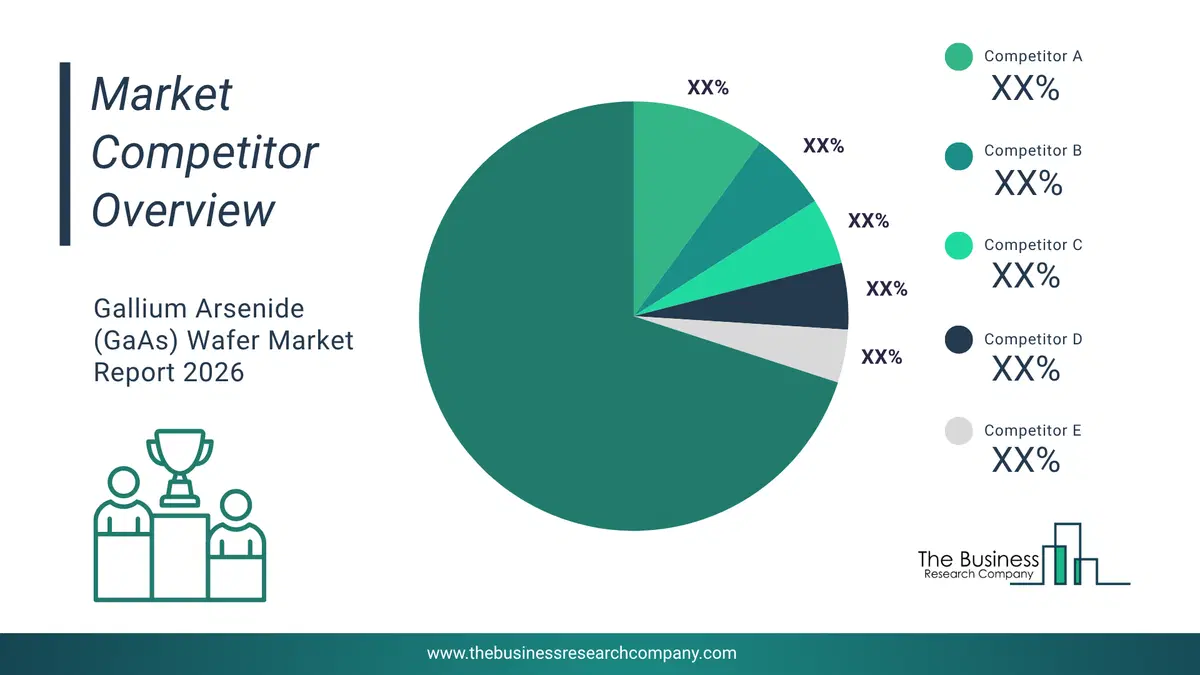
This chart is for illustrative purposes; the full report includes a detailed competitor analysis and comprehensive overview of the top 10 companies in the market.
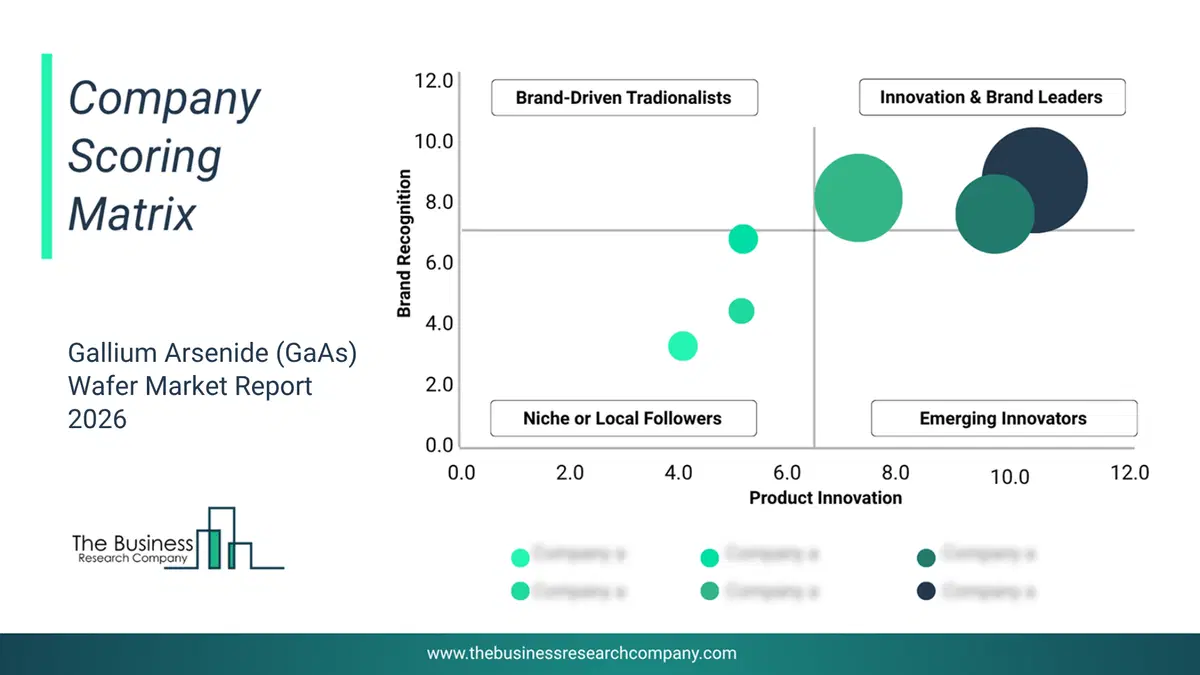
This chart maps companies by product innovation and brand strength, with bubble size indicating relative revenue, helping identify market leaders, challengers, and niche players. This is an illustrative chart; the full report provides a complete and accurate competitive analysis.
Global Gallium Arsenide (GaAs) Wafer Market Trends and Insights
Major companies operating in the gallium arsenide (GaAs) wafer market are focusing on advanced technologies, such as epitaxial gallium nitride (GaN) and gallium arsenide (GaAs) wafers, to enhance the performance and efficiency of electronic and optoelectronic devices. Epitaxial GaN and GaAs wafers are thin semiconductor layers used in electronic and optical devices. For instance, in May 2023, IQE, a UK-based epiwafer foundry company, launched a 200mm RGB epi for micro-LED display qualification. These wafers use gallium nitride (GaN) and gallium arsenide (GaAs) and are designed for micro-LED displays. It is crucial for new display technologies in wearables, augmented reality (AR) or virtual reality (VR) headsets, and large screens.What Are Latest Mergers And Acquisitions In The Gallium Arsenide (GaAs) Wafer Market?
In April 2024, IQE, a UK-based semiconductor company, partnered with Advanced Wireless Semiconductor Company (AWSC). This partnership involves IQE supplying AWSC with gallium arsenide (GaAs) wafers, which are used in manufacturing smartphone power amplifier devices for Lansus, a Chinese RF technology supplier. Advanced Wireless Semiconductor Company (AWSC) is a Taiwan-based company that manufactures high-frequency and high-power semiconductor components, including gallium arsenide (GaAs) wafers.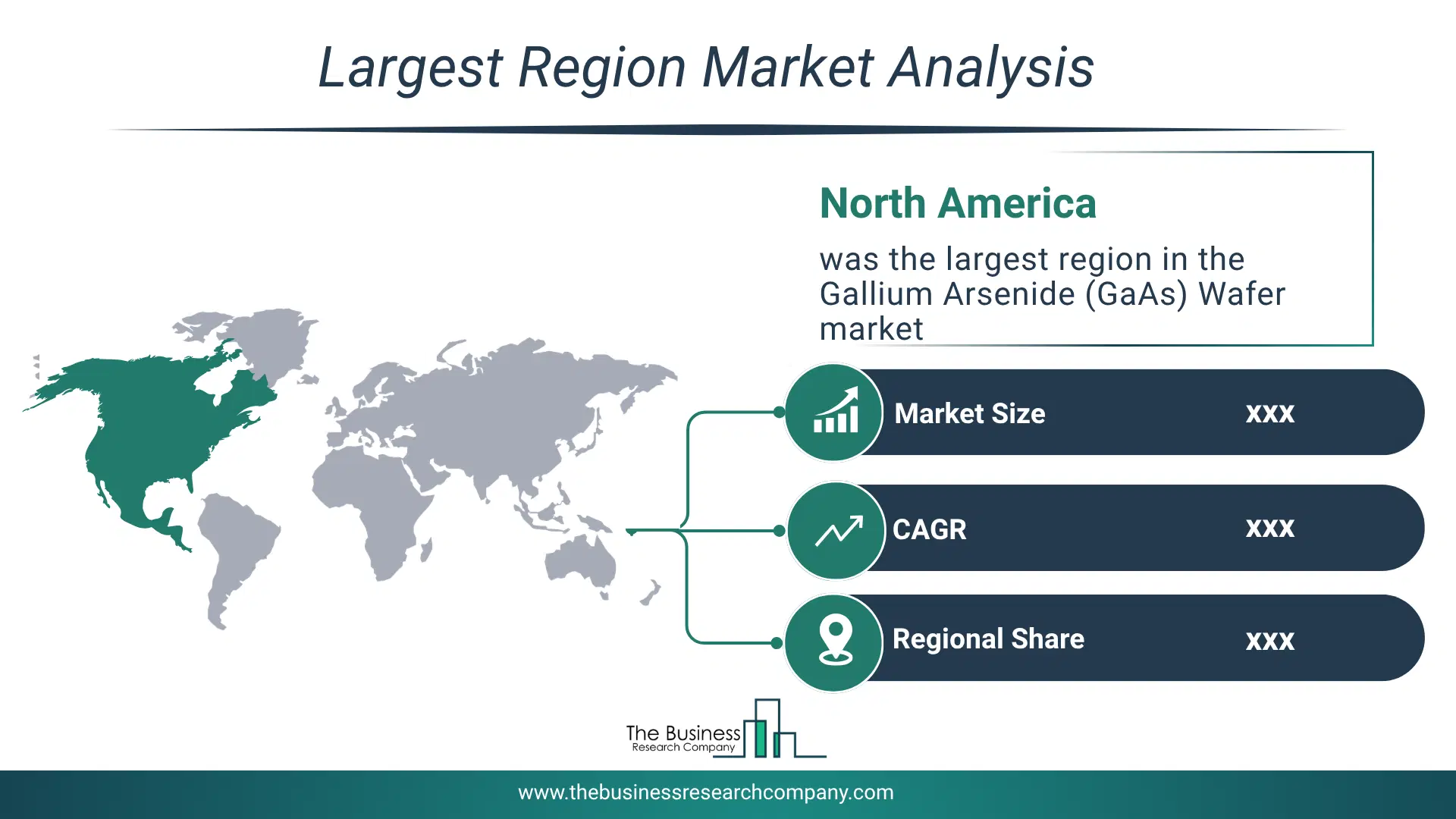
Regional Outlook
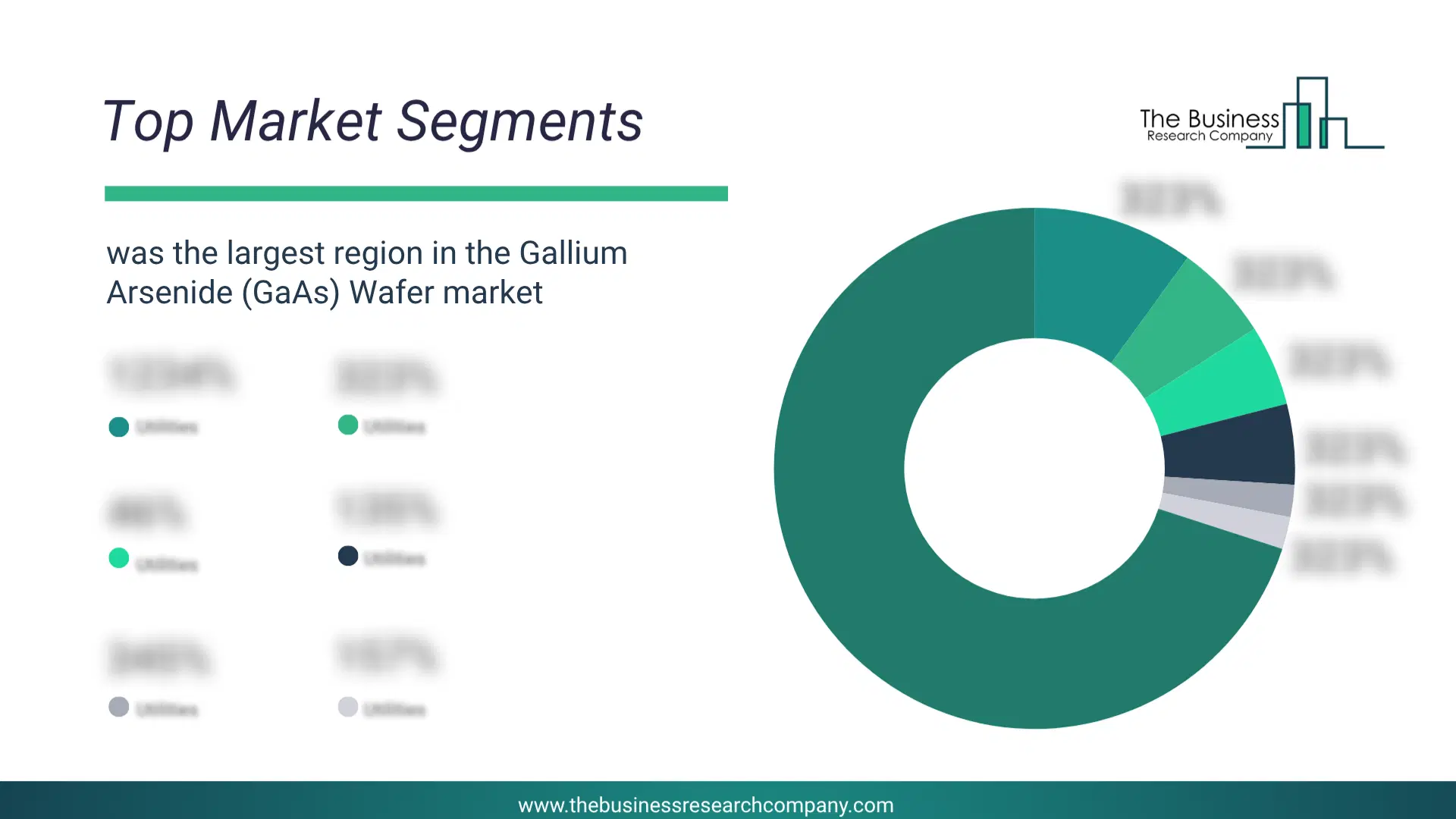
North America was the largest region in the gallium arsenide (GaAs) wafer market in 2025. Asia-Pacific is expected to be the fastest-growing region in the forecast period. The regions covered in this market report are Asia-Pacific, South East Asia, Western Europe, Eastern Europe, North America, South America, Middle East, Africa. The countries covered in this market report are Australia, Brazil, China, France, Germany, India, Indonesia, Japan, Taiwan, Russia, South Korea, UK, USA, Canada, Italy, Spain.What Defines the Gallium Arsenide (GaAs) Wafer Market?
The gallium arsenide (GaAs) wafer market consists of sales of semi-insulating gallium arsenide (GaAs) wafer, semi-conducting gallium arsenide (GaAs) wafer, and epitaxial gallium arsenide (GaAs) wafer. Values in this market are ‘factory gate’ values, that is, the value of goods sold by the manufacturers or creators of the goods, whether to other entities (including downstream manufacturers, wholesalers, distributors, and retailers) or directly to end customers. The value of goods in this market includes related services sold by the creators of the goods.How is Market Value Defined and Measured?
The market value is defined as the revenues that enterprises gain from the sale of goods and/or services within the specified market and geography through sales, grants, or donations in terms of the currency (in USD unless otherwise specified). The revenues for a specified geography are consumption values that are revenues generated by organizations in the specified geography within the market, irrespective of where they are produced. It does not include revenues from resales along the supply chain, either further along the supply chain or as part of other products.
This chart presents market attractiveness based on a quantitative evaluation of growth, competition, strategic alignment, and risk, offering a clear view of opportunity areas for decision-making. This chart is for illustrative purposes; the full report contains the complete analysis.

This chart highlights the Total Addressable Market (TAM) by estimating the maximum revenue opportunity using an assumption-driven approach, supporting strategic planning and opportunity sizing across markets. The chart is illustrative; the full report provides a more comprehensive analysis.
What Key Data and Analysis Are Included in the Gallium Arsenide (GaAs) Wafer Market Report 2026?
The gallium arsenide (gaas) wafer market research report is one of a series of new reports from The Business Research Company that provides market statistics, including industry global market size, regional shares, competitors with the market share, detailed market segments, market trends and opportunities, and any further data you may need to thrive in the gallium arsenide (gaas) wafer industry. The market research report delivers a complete perspective of everything you need, with an in-depth analysis of the current and future state of the industry.Gallium Arsenide (GaAs) Wafer Market Report 2026 Market Report Forecast Analysis
| Report Attribute | Details |
|---|---|
| Market Size Value In 2026 | $1.48 billion |
| Revenue Forecast In 2030 | $2.33 billion |
| Growth Rate | CAGR of 11.8% from 2026 to 2030 |
| Base Year For Estimation | 2025 |
| Actual Estimates/Historical Data | 2020-2025 |
| Forecast Period | 2026 - 2030 |
| Market Representation | Revenue in USD Billion and CAGR from 2026 to 2030 |
| Segments Covered | Type, Application, End-Use |
| Regional Scope | Asia-Pacific, Western Europe, Eastern Europe, North America, South America, Middle East, Africa |
| Country Scope | The countries covered in the report are Australia, Brazil, China, France, Germany, India, ... |
| Key Companies Profiled | AXT Inc., IQE PLC, WIN Semiconductors Corp., IntelliEPI Inc., Wafer Technology Ltd., Freiberger Compound Materials GmbH, Vital Materials Co. Ltd., Xiamen Powerway Advanced Material Co., Ltd., Xinxiang Shenzhou Crystal Technology Co., Ltd., Sumitomo Electric Device Innovations Inc., Compound Semiconductor Technologies Global Ltd., LandMark Optoelectronics Corporation, San’an Optoelectronics Co., Ltd., Qingdao Jiaying Semiconductor Co., Ltd., Mitsubishi Chemical Group, Hitachi Cable Fine Tech Ltd., Sumitomo Chemical Co., Ltd., Wafer Works Corporation, EpiWorks Inc., Ommic SAS. |
| Customization Scope | Request for Customization |
| Pricing And Purchase Options | Explore Purchase Options |