

Gardner Syndrome Treatment Market Report 2026
Global Outlook – By Cancer Type (Colorectal Cancer, Osteomas, Other Cancer Types), By Therapeutics Type (NonSteroidal Anti-Inflammatory Drugs (NSAIDs), COX-2 Inhibitor ), By Application (Hospitals, Specialty Clinics, Other Applications) - Market Size, Trends, Strategies, and Forecast to 2030
Gardner Syndrome Treatment Market Overview
• Gardner Syndrome Treatment market size has reached to $20.13 billion in 2025 • Expected to grow to $26.09 billion in 2030 at a compound annual growth rate (CAGR) of 5.3% • Growth Driver: Increasing Medical Tourism Drives The Gardner Syndrome Treatment Market • Market Trend: Product Launches To Sustain Position • North America was the largest region in 2025.What Is Covered Under Gardner Syndrome Treatment Market?
Gardner syndrome refers to a type of familial adenomatous polyposis (FAP), that causes multiple colon polyps (growths) and various types of cancerous or noncancerous tumors. Gardner syndrome treatment uses close monitoring of the polyps with lower GI tract endoscopy which helps limit the growth of colon polyps. The main cancer types involved in gardner syndrome treatment are dilated cardiomyopathy, skeletal myopathy, neutropenia and others. Dilated cardiomyopathy refers to a type of heart muscle disease that causes the heart chambers (ventricles) to thin and stretch, growing larger. The therapeutics types involved are nonsteroidal anti-inflammatory drugs (NSAIDs) and COX-2 inhibitors that are used for hospitals, specialty clinics, and other applications.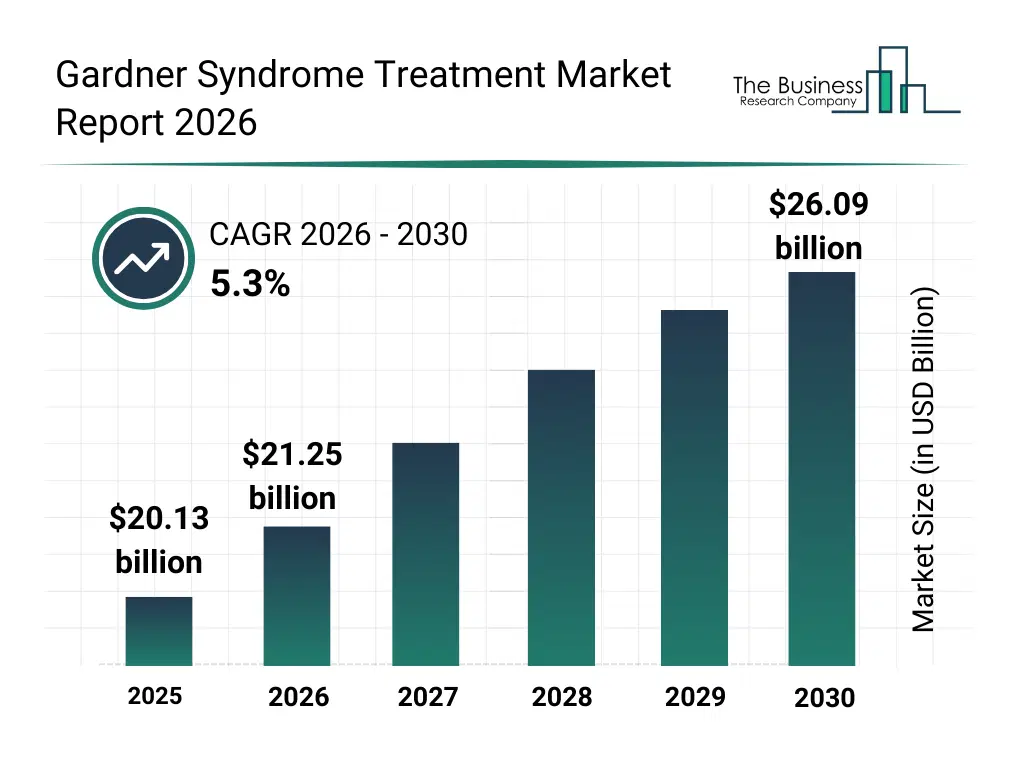
What Is The Gardner Syndrome Treatment Market Size and Share 2026?
The gardner syndrome treatment market size has grown strongly in recent years. It will grow from $20.13 billion in 2025 to $21.25 billion in 2026 at a compound annual growth rate (CAGR) of 5.5%. The growth in the historic period can be attributed to identification of fap-related syndromes, advancement in endoscopic monitoring, availability of surgical interventions, improved cancer surveillance, genetic testing adoption.What Is The Gardner Syndrome Treatment Market Growth Forecast?
The gardner syndrome treatment market size is expected to see strong growth in the next few years. It will grow to $26.09 billion in 2030 at a compound annual growth rate (CAGR) of 5.3%. The growth in the forecast period can be attributed to growth in precision oncology approaches, expansion of prophylactic treatment strategies, increased awareness of inherited cancer syndromes, development of targeted therapies, integration of genetic counseling services. Major trends in the forecast period include increased focus on early genetic screening, rising use of preventive surgical interventions, expansion of long-term surveillance programs, growing role of multidisciplinary cancer care, emphasis on family-based genetic counseling.
Global Gardner Syndrome Treatment Market Segmentation
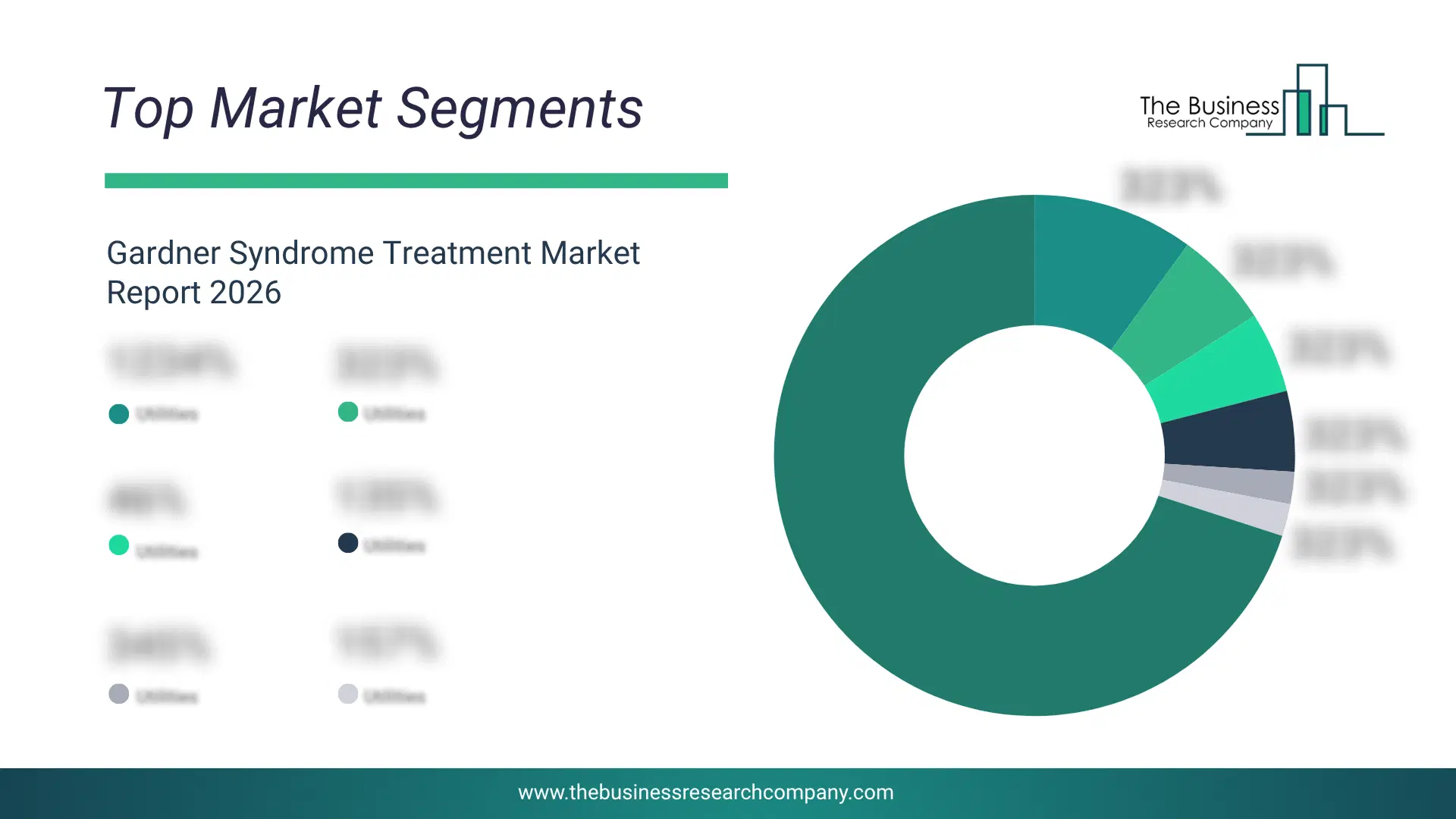
1) By Cancer Type: Colorectal Cancer, Osteomas, Other Cancer Types 2) By Therapeutics Type: NonSteroidal Anti-Inflammatory Drugs (NSAIDs), COX-2 Inhibitor 3) By Application: Hospitals, Specialty Clinics, Other Applications Subsegments: 1) By Colorectal Cancer: Pharmacological Treatments, Surgical Interventions 2) By Osteomas: Surgical Interventions, Supportive Care 3) By Other Cancer Types: Pharmacological Treatments, Surgical InterventionsWhat Are The Drivers Of The Gardner Syndrome Treatment Market?
The increasing medical tourism is expected to propel the growth of the Gardner syndrome treatment market going forward. Medical tourism refers to the practice of individuals traveling to another country or region for the purpose of receiving medical treatment, healthcare services, or surgical procedures. Medical tourism destinations provide medical technologies and treatment modalities for patients seeking the latest advancements in Gardner syndrome treatment. For instance, in May 2024, according to the Ministry of Health and Welfare (MOHW), a South Korea-based national health and social-welfare ministry, in 2023, South Korea welcomed 606,000 foreign patients, a 2.4-times increase compared with prior years. Therefore, the increasing medical tourism is driving the growth of the Gardner syndrome treatment industry. The rising demand for personalized medicine is expected to propel the growth of the Gardner syndrome treatment market going forward. Personalized medicine refers to a medical approach that tailors treatments and therapies to an individual's genetic, environmental, and lifestyle factors to improve healthcare outcomes. Demand for personalized medicine is rising primarily because patients and healthcare providers increasingly seek treatments tailored to an individual’s genetic profile, ensuring higher efficacy and reduced adverse effects. Gardner syndrome treatment contributes to the rising demand for personalized medicine by requiring targeted, genetics-based interventions that align with each patient’s unique mutation profile, driving adoption of personalized therapeutic approaches. For instance, in February 2024, the Personalized Medicine Coalition, a US-based non-profit organization, reported that in 2023, the FDA approved 16 new personalized treatments for rare disease patients, an increase from six in 2022. Among these approvals, seven were cancer drugs, while three targeted other diseases and conditions. Therefore, the rising demand for personalized medicine is driving the growth of the Gardner syndrome treatment industry.Key Players In The Global Gardner Syndrome Treatment Market
Major companies operating in the gardner syndrome treatment market are Pfizer Inc., Sanofi S.A., Johnson & Johnson Private Limited, F. Hoffmann-La Roche Ltd., GlaxoSmithKline plc, Novartis AG, Merck & Co. Inc., AstraZeneca plc, Bristol Myers Squibb Company, Eli Lilly and Company, AbbVie Inc., Amgen Inc., Takeda Pharmaceutical Company Limited, Cipla Ltd., Dr. Reddy’s Laboratories Ltd., Cadila Healthcare Ltd., Torrent Pharmaceuticals Ltd., Daiichi Sankyo Company Ltd., Mirati Therapeutics Inc., Plus Therapeutics Inc., Processa Pharmaceuticals Inc., Shanghai Henlius Biotech Inc.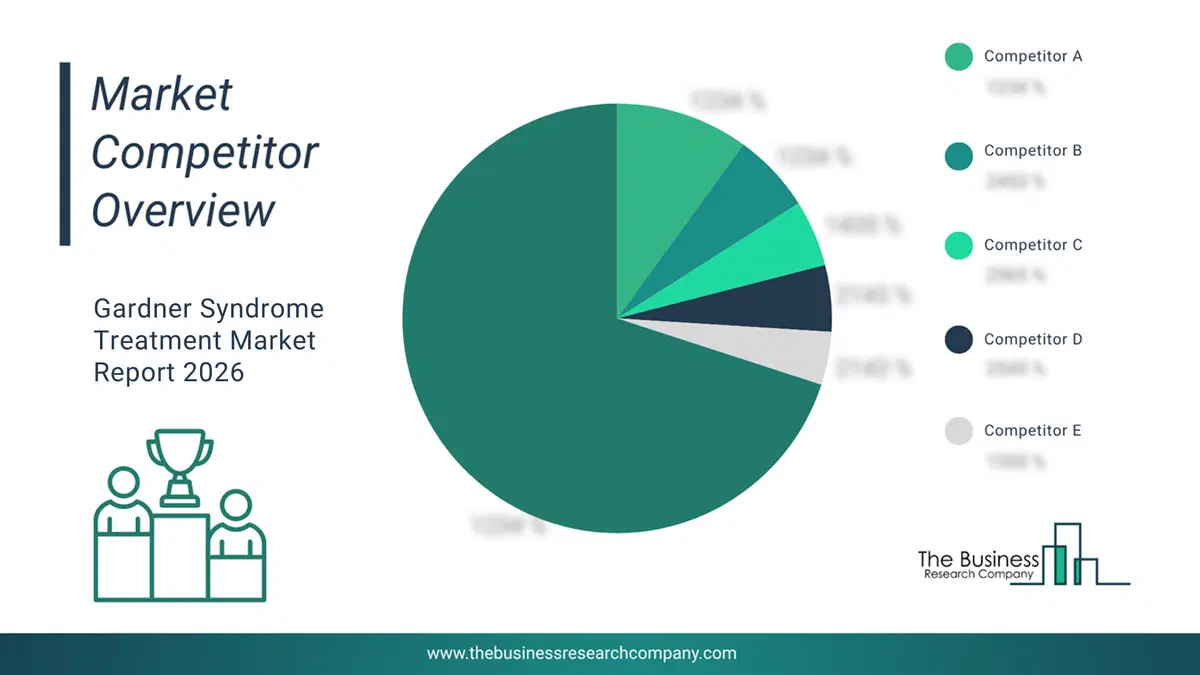
This chart is for illustrative purposes; the full report includes a detailed competitor analysis and comprehensive overview of the top 10 companies in the market.
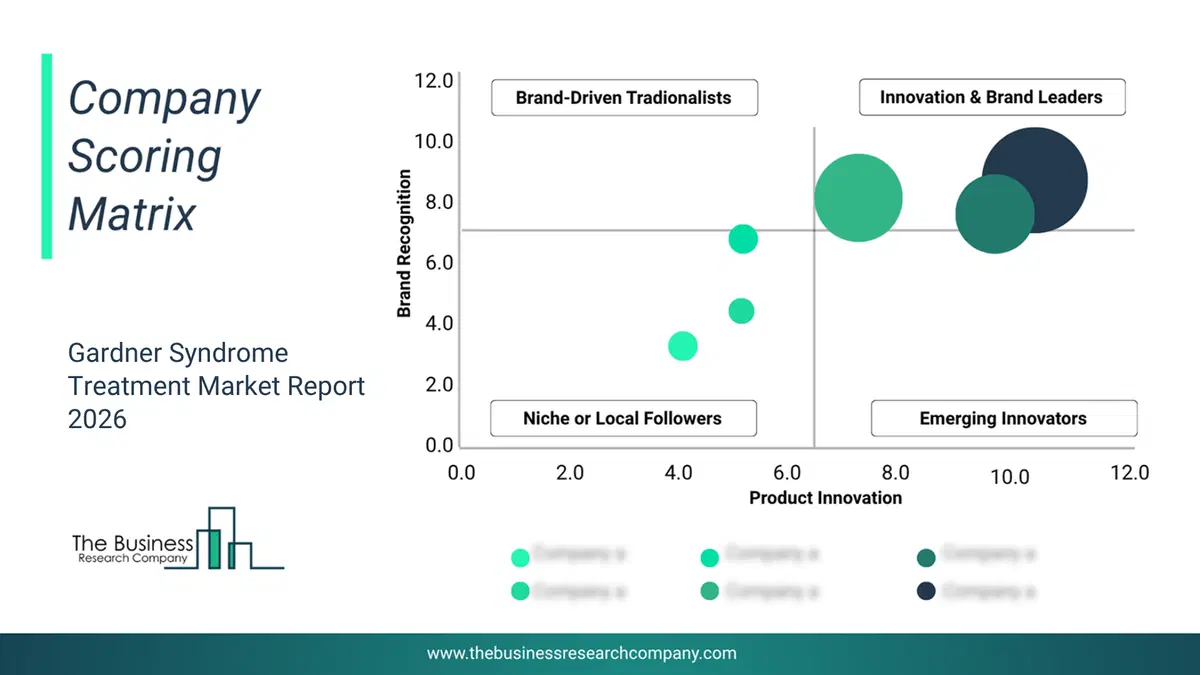
This chart maps companies by product innovation and brand strength, with bubble size indicating relative revenue, helping identify market leaders, challengers, and niche players. This is an illustrative chart; the full report provides a complete and accurate competitive analysis.
Global Gardner Syndrome Treatment Market Trends and Insights
Major companies operating in the Gardner syndrome treatment market are launching new products to sustain their position in the market. For instance, in November 2023, Takeda Pharmaceutical Company Limited, a Japan-based pharmaceutical company, launched Fruzaqla (fruquintinib), approved by the Food and Drug Administration (FDA), a US-based federal government agency. Fruzaqla (fruquintinib) is a targeted therapy approved for the treatment of metastatic colorectal cancer (mCRC) in adults. Fruzaqla (fruquintinib) is the first drug that targets all three subtypes of the vascular endothelial growth factor (VEGF) receptor kinases. Patients with Gardner syndrome are at a greater risk for developing colorectal cancer that is treated with Fruzaqla (fruquintinib).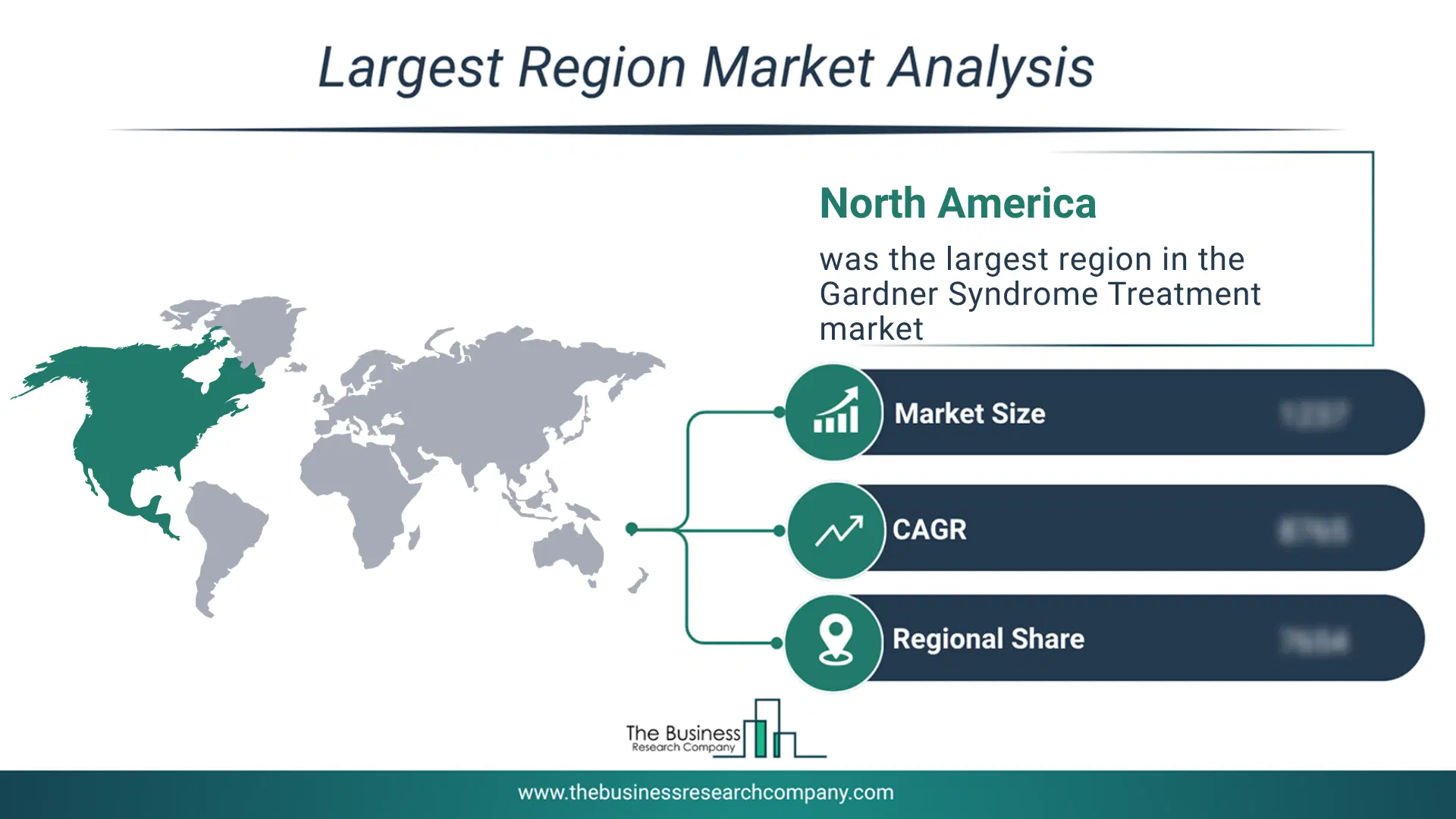
Regional Outlook
North America was the largest region in the gardner syndrome treatment market in 2025. The regions covered in this market report are Asia-Pacific, South East Asia, Western Europe, Eastern Europe, North America, South America, Middle East, Africa. The countries covered in this market report are Australia, Brazil, China, France, Germany, India, Indonesia, Japan, Taiwan, Russia, South Korea, UK, USA, Canada, Italy, Spain.What Defines the Gardner Syndrome Treatment Market?
The gardner syndrome treatment market includes revenues earned by entities by providing services such as screenings of colonoscopy, sigmoidoscopy, and EGD (esophagogastroduodenoscopy) services. The market value includes the value of related goods sold by the service provider or included within the service offering. Only goods and services traded between entities or sold to end consumers are included.How is Market Value Defined and Measured?
The market value is defined as the revenues that enterprises gain from the sale of goods and/or services within the specified market and geography through sales, grants, or donations in terms of the currency (in USD unless otherwise specified). The revenues for a specified geography are consumption values that are revenues generated by organizations in the specified geography within the market, irrespective of where they are produced. It does not include revenues from resales along the supply chain, either further along the supply chain or as part of other products.
This chart presents market attractiveness based on a quantitative evaluation of growth, competition, strategic alignment, and risk, offering a clear view of opportunity areas for decision-making. This chart is for illustrative purposes; the full report contains the complete analysis.

This chart highlights the Total Addressable Market (TAM) by estimating the maximum revenue opportunity using an assumption-driven approach, supporting strategic planning and opportunity sizing across markets. The chart is illustrative; the full report provides a more comprehensive analysis.
What Key Data and Analysis Are Included in the Gardner Syndrome Treatment Market Report 2026?
The gardner syndrome treatment market research report is one of a series of new reports from The Business Research Company that provides market statistics, including industry global market size, regional shares, competitors with the market share, detailed market segments, market trends and opportunities, and any further data you may need to thrive in the gardner syndrome treatment industry. The market research report delivers a complete perspective of everything you need, with an in-depth analysis of the current and future state of the industry.Gardner Syndrome Treatment Market Report Forecast Analysis
| Report Attribute | Details |
|---|---|
| Market Size Value In 2026 | $21.25 billion |
| Revenue Forecast In 2030 | $26.09 billion |
| Growth Rate | CAGR of 5.3% from 2026 to 2030 |
| Base Year For Estimation | 2025 |
| Actual Estimates/Historical Data | 2020-2025 |
| Forecast Period | 2026 - 2030 |
| Market Representation | Revenue in USD Billion and CAGR from 2026 to 2030 |
| Segments Covered | Cancer Type, Therapeutics Type, Application |
| Regional Scope | Asia-Pacific, Western Europe, Eastern Europe, North America, South America, Middle East, Africa |
| Country Scope | The countries covered in the report are Australia, Brazil, China, France, Germany, India, Indonesia, Japan, Taiwan, Russia, South Korea, UK, USA, Canada, Italy, Spain |
| Key Companies Profiled | Pfizer Inc., Sanofi S.A., Johnson & Johnson Private Limited, F. Hoffmann-La Roche Ltd., GlaxoSmithKline plc, Novartis AG, Merck & Co. Inc., AstraZeneca plc, Bristol Myers Squibb Company, Eli Lilly and Company, AbbVie Inc., Amgen Inc., Takeda Pharmaceutical Company Limited, Cipla Ltd., Dr. Reddy’s Laboratories Ltd., Cadila Healthcare Ltd., Torrent Pharmaceuticals Ltd., Daiichi Sankyo Company Ltd., Mirati Therapeutics Inc., Plus Therapeutics Inc., Processa Pharmaceuticals Inc., Shanghai Henlius Biotech Inc. |
| Customization Scope | Request for Customization |
| Pricing And Purchase Options | Explore Purchase Options |