
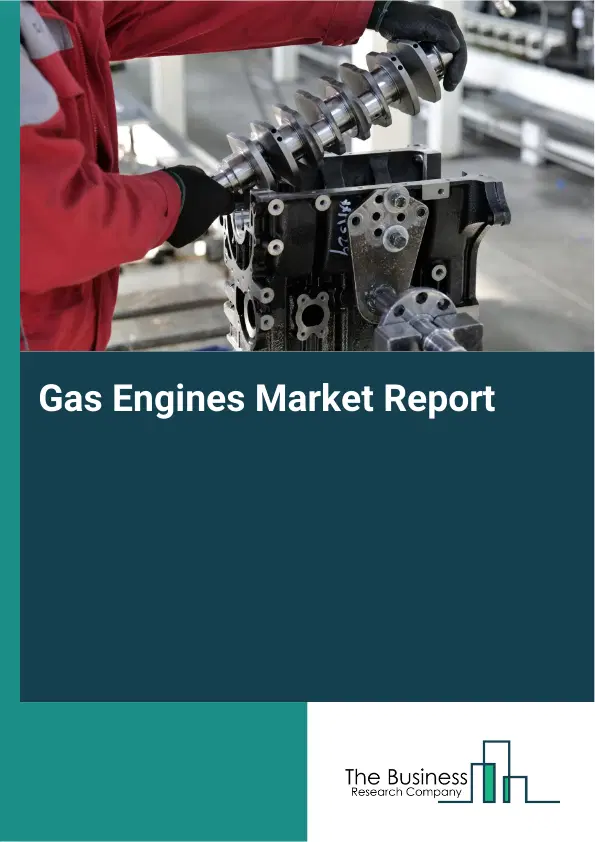
Gas Engines Market Report 2026
Global Outlook – By Fuel Type (Natural Gas, Special Gas, Other Fuel Type), By Power Output (1-2 MW, 2-5 MW, 5-15 MW, Above 15 MW), By Application (Power Generation, Mechanical Drive, Cogenerations, Other Applications), By End User (Utilities, Marine, Oil And Gas, Manufacturing, Other End Users) – Market Size, Trends, Strategies, and Forecast to 2030
Gas Engines Market Overview
• Gas Engines market size has reached to $5.38 billion in 2025 • Expected to grow to $6.92 billion in 2030 at a compound annual growth rate (CAGR) of 5.2% • Growth Driver: Surging Natural Gas Utilization In Power Generation Fuels Growth Of The Gas Engine Market • Market Trend: Advancements In High-Efficiency Natural Gas Engine Cogeneration Systems Transforming The Market • North America was the largest region in 2025.Market Gains By 2030 – Top Opportunities By Segment
Market Gain identifies the most promising market opportunities by highlighting the segments or products expected to generate the highest incremental revenue growth over the next five years.
What Is Covered Under Gas Engines Market?
A gas engine refers to an internal combustion engine that burns gaseous fuels such as natural gas, and blast furnace gas for producing gas. These are also used for renewable energy production, and grid balancing. The main fuel types of gas engines are natural gas, special gas, and other fuel types. Natural gas engines refer to spark-ignited internal combustion engines that use natural gas as their fuel to run vehicles. The various power output includes 1-2 MW, 2-5 MW, 5-15 MW, above 15 MW. These are used in various applications such as power generation, mechanical drive, cogenerations, and other applications and by end users such as utilities, marine, oil and gas, manufacturing, and other end users.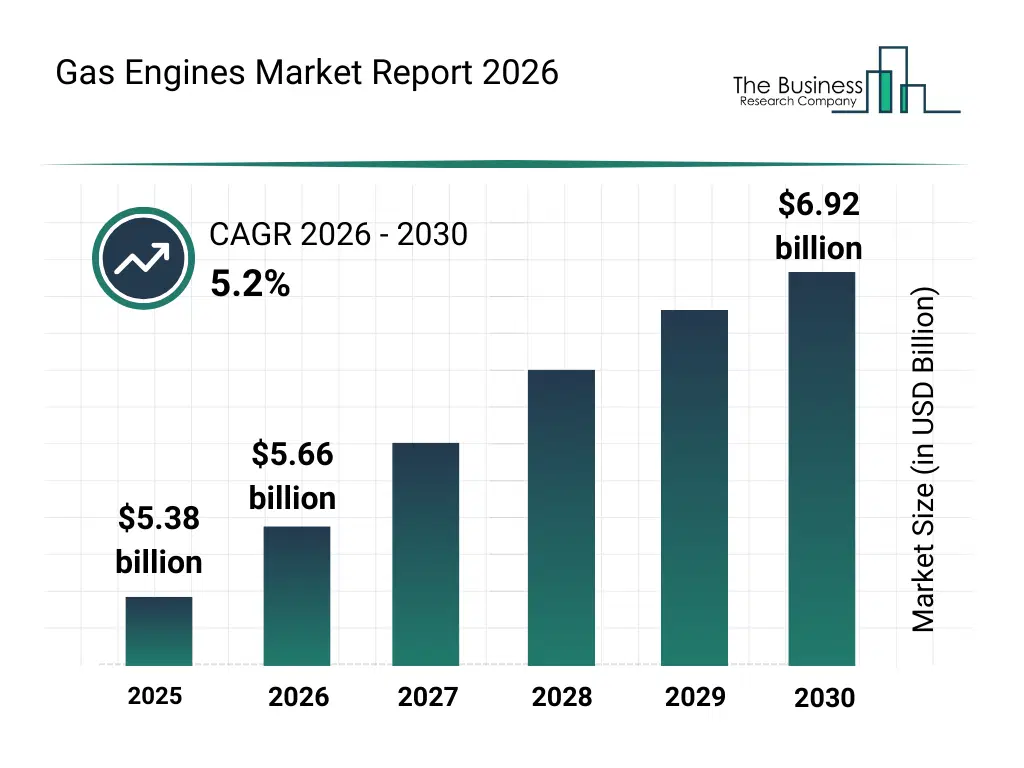
What Is The Gas Engines Market Size and Share 2026?
The gas engines market size has grown strongly in recent years. It will grow from $5.38 billion in 2025 to $5.66 billion in 2026 at a compound annual growth rate (CAGR) of 5.2%. The growth in the historic period can be attributed to expansion of natural gas infrastructure, increased use in power generation facilities, growing industrial demand for captive power, adoption of gas engines in marine applications, availability of cost-effective gas fuels.What Is The Gas Engines Market Growth Forecast?
The gas engines market size is expected to see strong growth in the next few years. It will grow to $6.92 billion in 2030 at a compound annual growth rate (CAGR) of 5.2%. The growth in the forecast period can be attributed to increasing investments in renewable-integrated power systems, rising demand for low-emission engines, expansion of hydrogen-ready engine technologies, growth in decentralized energy generation, increasing adoption in microgrid systems. Major trends in the forecast period include expansion of gas engines for distributed power, increasing use of biogas and alternative fuels, growing demand for high-efficiency gas engines, rising adoption in grid balancing applications, integration of digital engine management systems.
Global Gas Engines Market Segmentation
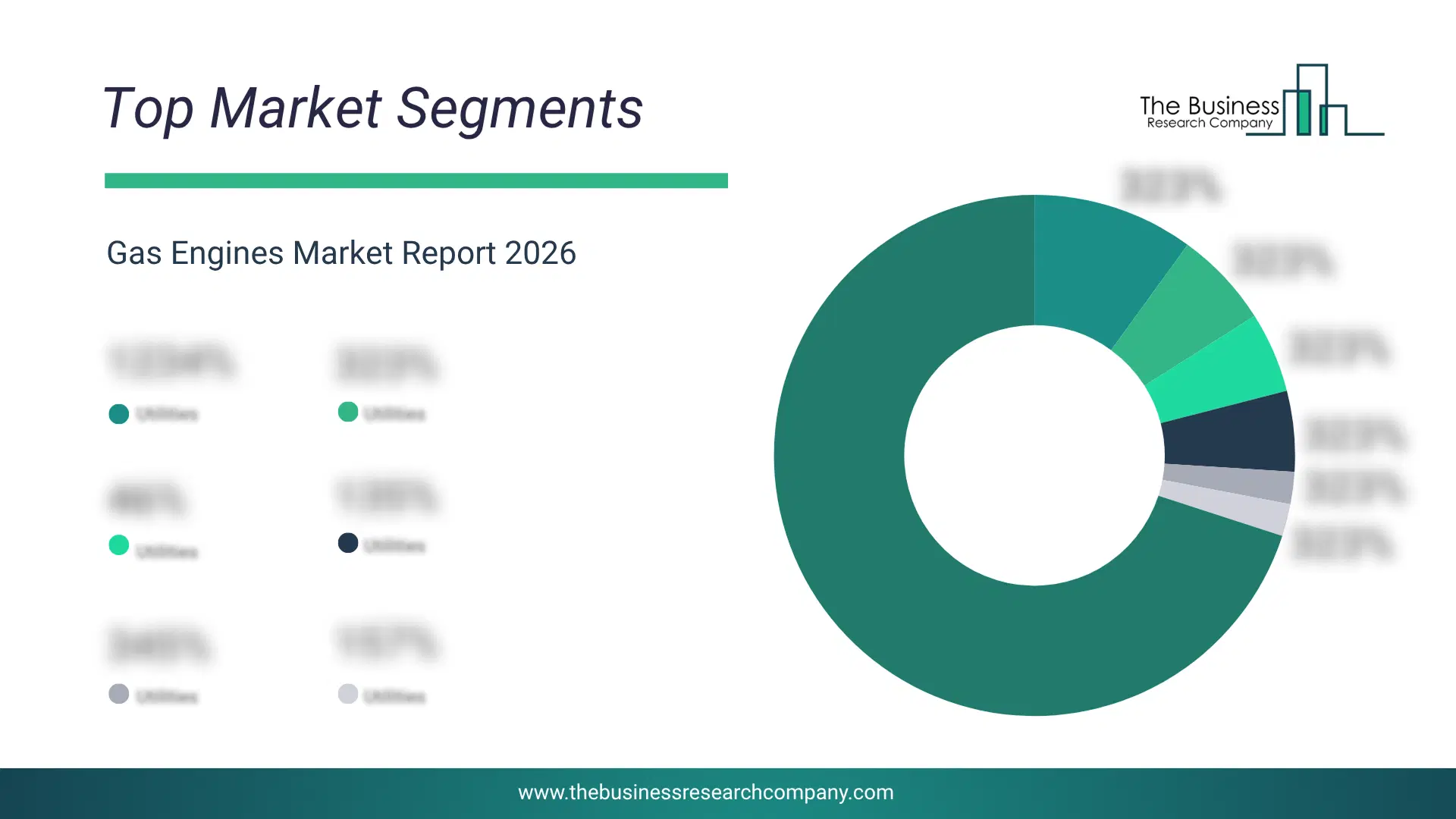
1) By Fuel Type: Natural Gas, Special Gas, Other Fuel Type 2) By Power Output: 1-2 MW, 2-5 MW, 5-15 MW, Above 15 MW 3) By Application: Power Generation, Mechanical Drive, Cogenerations, Other Applications 4) By End User: Utilities, Marine, Oil And Gas, Manufacturing, Other End Users Subsegments: 1) By Natural Gas: Compressed Natural Gas (CNG), Liquefied Natural Gas (LNG) 2) By Special Gas: Biogas, Landfill Gas, Synthesis Gas 3) By Other Fuel Types: Propane, Hydrogen The top segments in the gas engines market will be: • Natural Gas will reach $4.69 Billion by 2030. • Special Gas will reach $1.73 Billion by 2030. • Other Fuel Type will reach $0.66 Billion by 2030.What Is The Driver Of The Gas Engines Market?
The rising usage of natural gas for power generation is expected to propel the growth of the gas engine market going forward. Power generation refers to electricity produced by various factors such as fossil fuels, nuclear power plants, and hydropower that comprises electricity generated in combined heat and power and electricity-only facilities. The modularity and high cost-efficiency of gas engines provide an optimal solution for steady power requirements. As a result, the rising usage of natural gas for power generation increases the demand for the gas engine market. For instance, in December 2023, according to the data published by the International Energy Agency, a France-based energy authority, natural gas supplied more than half of U.S. electricity demand for the first time on August 28, 2023, with its share of the summer power mix rising from 40% to 45% over the past two years. Therefore, the rising usage of natural gas for power generation drives the gas engine industry.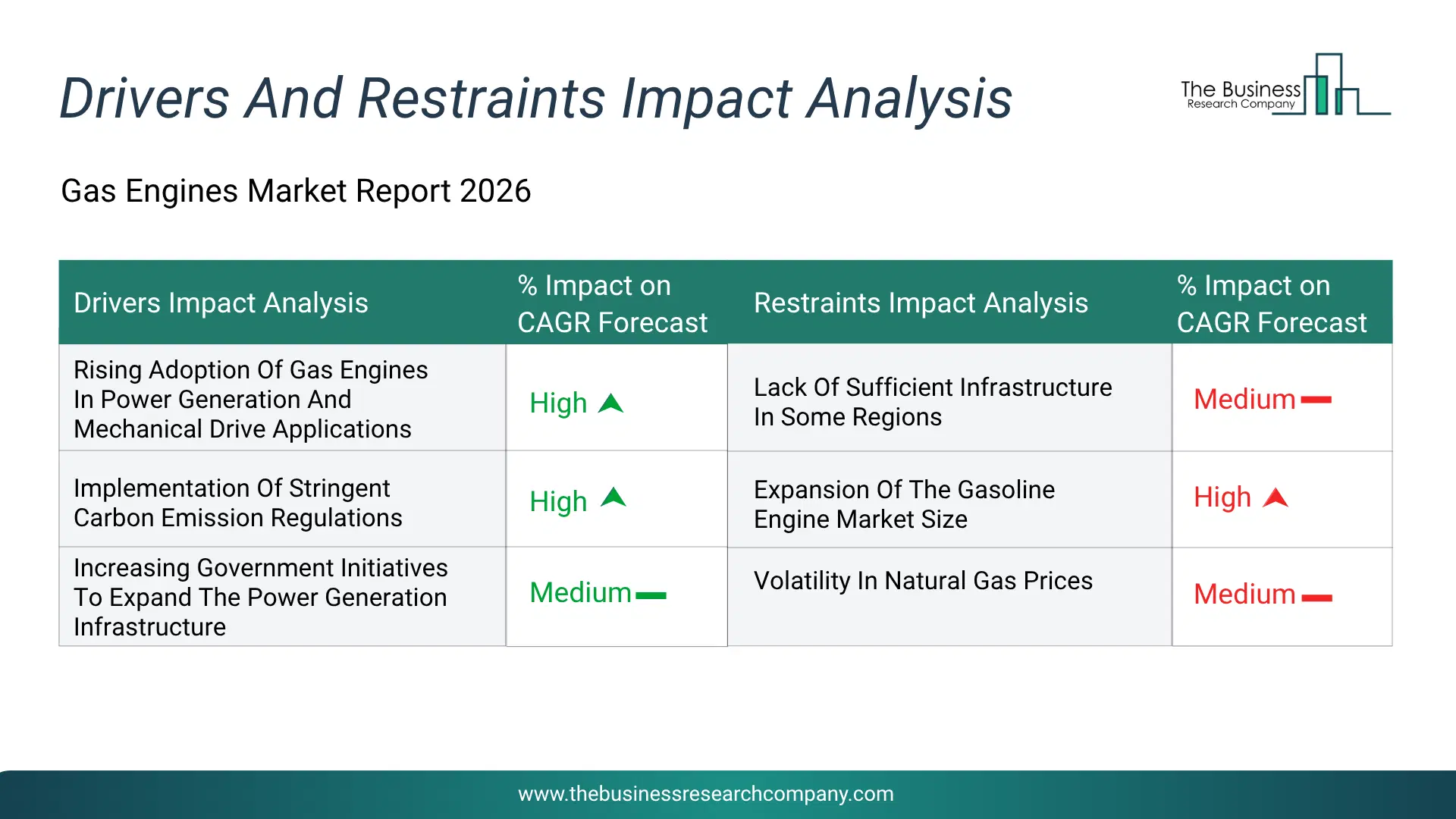
Infographic Chart Showing Key Market Drivers Analysis And Restraints For Gas Engines Market
The chart presents an impact analysis of key drivers and restraints, quantifying their relative influence on the market's growth rate and helping assess the balance between growth enablers and limiting factors. This chart offers a high-level perspective; the full report contains more detailed insights.
How Will The Drivers Impact Growth In The Global Gas Engines Market?
• Rising Adoption Of Gas Engines In Power Generation And Mechanical Drive Applications (High) – During the forecast period, the rising adoption of gas engines in power generation and mechanical drive applications is expected to become a key growth driver for the gas engines market by 2030. Rising Adoption of gas engines in power generation and mechanical drive applications is a major driver for the Gas Engines market because these systems provide reliable, efficient, and flexible energy solutions across multiple industries. Gas engines are increasingly used in power plants, manufacturing facilities, oil and gas operations, and distributed energy projects due to their ability to deliver continuous and stable power output. Their quick start-up capability and operational flexibility make them suitable for balancing fluctuating electricity demand. Industries are also adopting gas engines to reduce operating costs and improve energy efficiency. The growing preference for decentralized power generation further strengthens demand for gas engine installations. • Implementation Of Stringent Carbon Emission Regulations (High) – During the forecast period, the implementation of stringent carbon emission regulations is expected to emerge as a major factor driving the expansion of the gas engines market by 2030. Implementation of stringent carbon emission regulations acts as a significant driver for the Gas Engines market by encouraging the transition toward cleaner energy technologies. Governments and environmental agencies worldwide are introducing stricter emission standards to reduce greenhouse gas emissions and improve air quality. Compared with conventional coal- and diesel-based systems, gas engines produce lower levels of carbon dioxide, sulfur oxides, and particulate matter. This environmental advantage makes them an attractive option for utilities and industrial users seeking compliance with evolving regulations. Businesses are increasingly investing in gas-based power solutions to avoid penalties and meet sustainability targets. The shift toward lower-emission energy systems accelerates the deployment of gas engines across various sectors. • Increasing Government Initiatives To Expand The Power Generation Infrastructure (Medium) – During the forecast period, the increasing government initiatives to expand the power generation infrastructure is expected to act as a key growth catalyst for the gas engines market by 2030. Increasing Government initiatives to expand the power generation infrastructure is driving the Gas Engines market by creating new opportunities for electricity generation projects. Many countries are investing heavily in strengthening grid networks, enhancing energy access, and meeting rising power consumption requirements. Gas engines are widely adopted in these initiatives because they can be deployed quickly and offer dependable power generation capabilities. Their suitability for distributed generation, backup power, and rural electrification projects supports broader infrastructure development goals. Governments also promote natural gas-based energy systems to diversify energy sources and improve power reliability. These investments stimulate demand for engine installations and related equipment. As power infrastructure expansion remains a priority, the gas engines market benefits from continuous project development.How Will The Restraints Impact Growth In The Global Gas Engines Market?
• Lack Of Sufficient Infrastructure In Some Regions (High) – During the forecast period, the lack of sufficient infrastructure in some regions acts as a restraint for the Gas Engines market because the effective operation of gas engines depends on reliable natural gas supply networks, storage facilities, and distribution systems. In many developing and remote areas, inadequate pipeline connectivity limits access to fuel required for gas engine operations. The absence of supporting energy infrastructure increases installation complexity and operational challenges for end users. Businesses may hesitate to invest in gas engine projects where fuel availability remains uncertain. Infrastructure gaps can also lead to higher transportation and fuel procurement costs, reducing the economic advantages of gas-based power generation. Limited infrastructure development slows the adoption of advanced gas engine technologies across industrial and utility sectors. As a result, market growth is constrained in regions where energy distribution networks remain underdeveloped. • Expansion Of The Gasoline Engine Market Size (High) – During the forecast period, the expansion of the gasoline engine market size serves as a restraint for the Gas Engines market by intensifying competition from alternative engine technologies. Gasoline engines are widely available and supported by established manufacturing, distribution, and service networks across many regions. Their familiarity among consumers and businesses often influences purchasing decisions, particularly in applications where existing gasoline infrastructure is already in place. Continuous advancements in gasoline engine performance, efficiency, and emissions control further strengthen their market position. Some end users may prefer gasoline-powered systems due to lower initial investment requirements and easier accessibility of fuel. This competitive pressure can reduce the pace of gas engine adoption in certain applications and industries. Consequently, the growing presence of gasoline engines may limit the overall expansion potential of the gas engines market. • Volatility In Natural Gas Prices (Medium) – During the forecast period, the volatility in natural gas prices acts as a significant restraint for the gas engines market because fluctuations in natural gas prices directly affect the operating costs and economic viability of gas engine installations. Changes in global energy markets, geopolitical tensions, supply disruptions, and seasonal demand can result in unpredictable fuel prices. This uncertainty makes it difficult for businesses and utilities to accurately forecast operating expenses and returns on investment. Rising fuel costs can reduce the cost advantage of gas engines compared to alternative power generation technologies. Consequently, price volatility can discourage new investments and slow the adoption of gas engine solutions.Key Players In The Global Gas Engines Market
Major companies operating in the gas engines market are Caterpillar Inc., Cummins Inc., Wärtsilä Oyj Abp, Mitsubishi Heavy Industries Ltd., Hyundai Heavy Industries Co. Ltd., Maschinenfabrik Augsburg-Nürnberg AG (MAN Energy Solutions), General Electric Company, Kawasaki Heavy Industries Ltd., Liebherr-International AG, Kohler Co., Yanmar Co. Ltd., Perkins Engines Company Limited, Doosan Group, INNIO Jenbacher GmbH & Co. OG, Deutz AG, Guascor Power, Dresser-Rand, Motoren- und Turbinen-Union Friedrichshafen GmbH (Rolls-Royce Power Systems / MTU), Fairbanks Morse LLC, Jinan Lvneng Power Machinery Equipment Co. Ltd., Ningbo C.S.I. Power & Machinery Group Co. Ltd., Baudouin, CNPC Jichai Power Complex, Googol Engine Tech Co. Ltd., Lombardini Srl, Chongqing Winyou Power Co. Ltd., Briggs & Stratton Corporation, KUBOTA Corporation, Generac Power Systems Inc.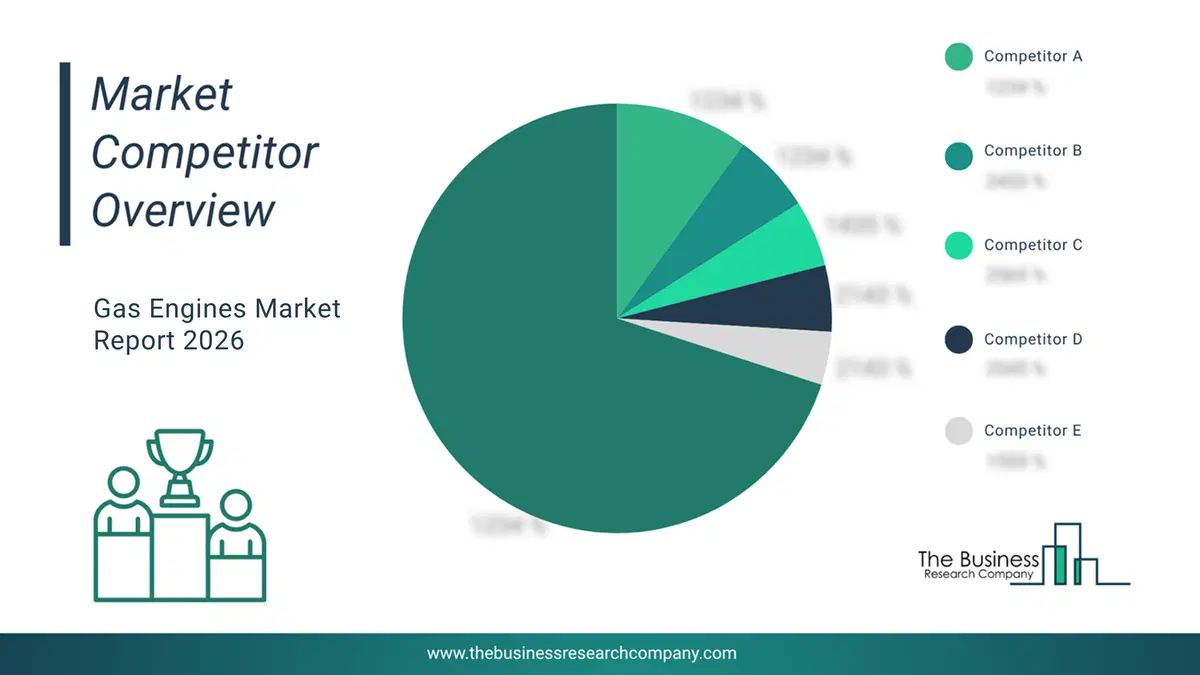
This chart is for illustrative purposes; the full report includes a detailed competitor analysis and comprehensive overview of the top 10 companies in the market.
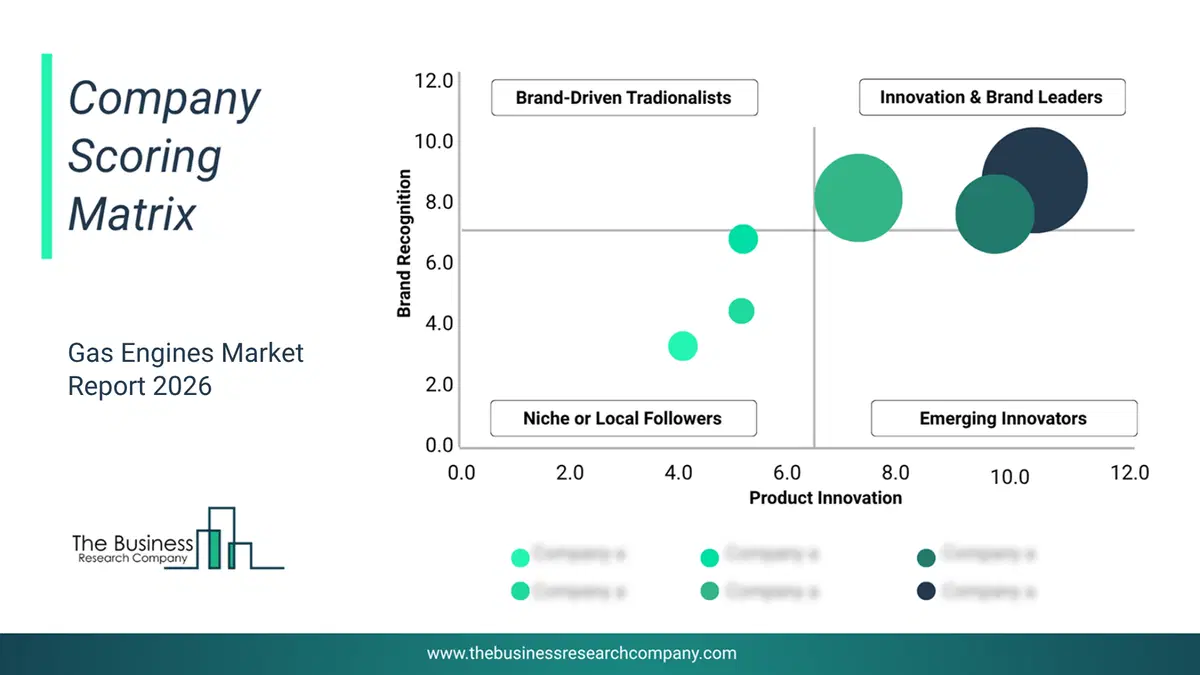
This chart maps companies by product innovation and brand strength, with bubble size indicating relative revenue, helping identify market leaders, challengers, and niche players. This is an illustrative chart; the full report provides a complete and accurate competitive analysis.
Global Gas Engines Market Trends and Insights
Major companies operating in the gas engine market are developing new high efficiency natural gas engine cogeneration systems to gain a competitive edge in the market. An engine cogeneration system, also known as a combined heat and power (CHP) system, is a technology that simultaneously generates electricity and useful heat from a single energy source, typically an internal combustion engine. For instance, in March 2023, Mitsubishi Heavy Industries Engine & Turbocharger, Ltd., a Japan-based engines and power systems company, launched the SGP M2000, a natural gas engine cogeneration system with a generation output of 2,000kW. The system features a 16-cylinder natural gas-fired engine, the G16NB, boasting an electrical efficiency of 44.3% for a 2,000kW-class engine. The SGP M2000 offers a remarkable 1.8 percentage point increase in electrical efficiency compared to MHIET's existing 1,000kW gas engine cogeneration system. Notably, the system achieves this while reducing its footprint by 40%, making it a compact and energy-efficient solution. With applications in distributed energy resources (DER), the SGP M2000 contributes to carbon neutrality efforts by maximizing efficiency and minimizing environmental impact.What Are Latest Mergers And Acquisitions In The Gas Engines Market?
In August 2024, DEUTZ AG, a Germany-based engine industrial machinery and equipment company, acquired Blue Star Power Systems, Inc. for an undisclosed amount. This acquisition serves the purpose of transforming DEUTZ from a component manufacturer into a comprehensive solutions provider for decentralized electricity generation, enabling the company to tap into the rapidly growing market for gensets in the USA. Blue Star Power Systems, Inc. is a US-based power generation system including a diesel and gaseous-driven generator.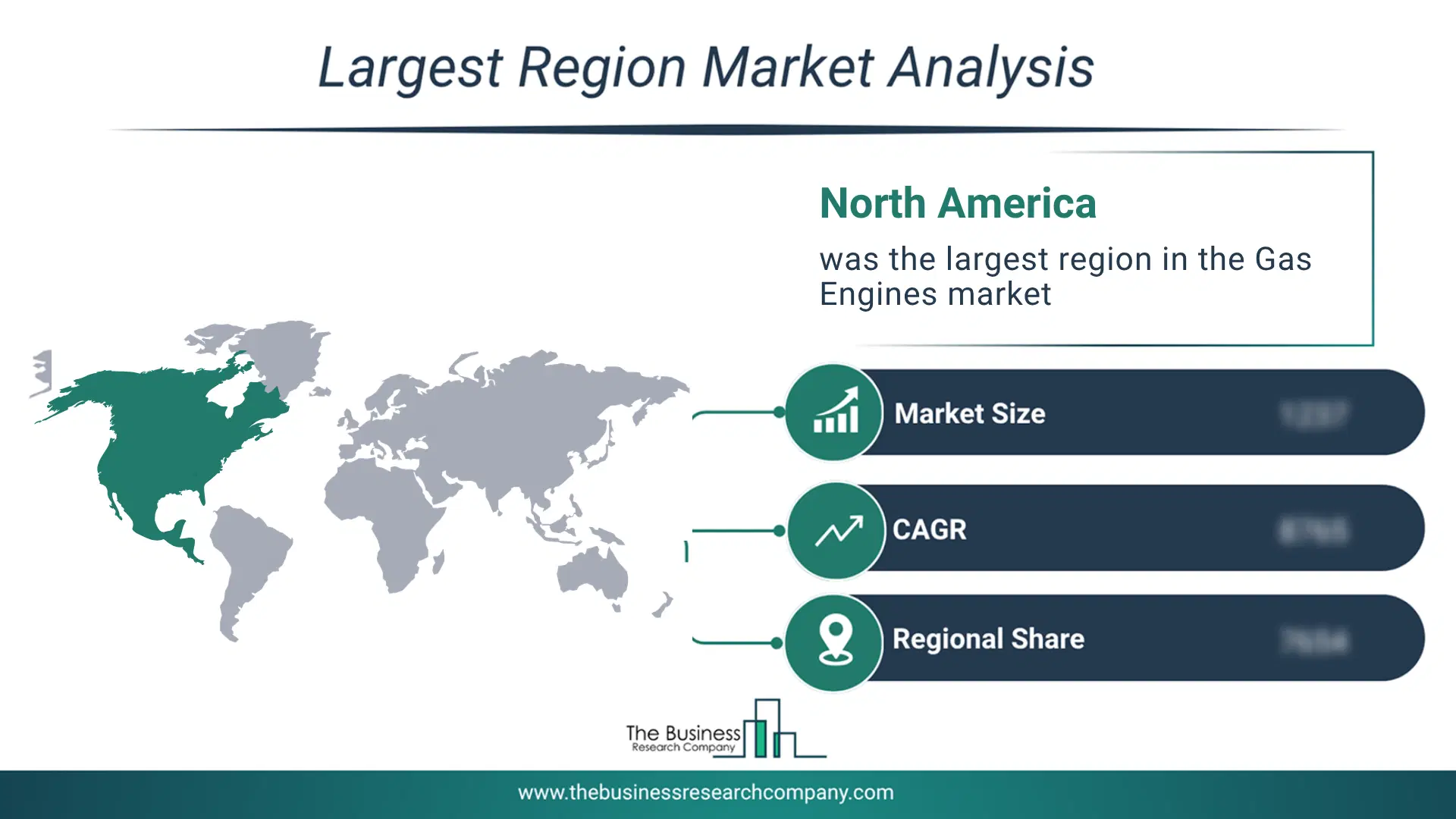
Regional Outlook
North America was the largest region in the gas engines market in 2025. The regions covered in this market report are Asia-Pacific, South East Asia, Western Europe, Eastern Europe, North America, South America, Middle East, Africa The countries covered in this market report are Australia, Brazil, China, France, Germany, India, Indonesia, Japan, Taiwan, Russia, South Korea, UK, USA, Canada, Italy, Spain.What Defines the Gas Engines Market?
The gas engine market consists of sales of stoichiometric Otto cycle engines, biogas engines, and shale gas engines. Values in this market are ‘factory gate’ values, that is the value of goods sold by the manufacturers or creators of the goods, whether to other entities (including downstream manufacturers, wholesalers, distributors, and retailers) or directly to end customers. The value of goods in this market includes related services sold by the creators of the goods.How is Market Value Defined and Measured?
The market value is defined as the revenues that enterprises gain from the sale of goods and/or services within the specified market and geography through sales, grants, or donations in terms of the currency (in USD unless otherwise specified). The revenues for a specified geography are consumption values that are revenues generated by organizations in the specified geography within the market, irrespective of where they are produced. It does not include revenues from resales along the supply chain, either further along the supply chain or as part of other products.
This chart presents market attractiveness based on a quantitative evaluation of growth, competition, strategic alignment, and risk, offering a clear view of opportunity areas for decision-making. This chart is for illustrative purposes; the full report contains the complete analysis.

This chart highlights the Total Addressable Market (TAM) by estimating the maximum revenue opportunity using an assumption-driven approach, supporting strategic planning and opportunity sizing across markets. The chart is illustrative; the full report provides a more comprehensive analysis.
What Key Data and Analysis Are Included in the Gas Engines Market Report 2026?
The gas engines market research report is one of a series of new reports from The Business Research Company that provides market statistics, including industry global market size, regional shares, competitors with the market share, detailed market segments, market trends and opportunities, and any further data you may need to thrive in the gas engines industry. The market research report delivers a complete perspective of everything you need, with an in-depth analysis of the current and future state of the industry.Gas Engines Market Report Forecast Analysis
| Report Attribute | Details |
|---|---|
| Market Size Value In 2026 | $5.66 billion |
| Revenue Forecast In 2030 | $6.92 billion |
| Growth Rate | CAGR of 5.2% from 2026 to 2030 |
| Base Year For Estimation | 2025 |
| Actual Estimates/Historical Data | 2020-2025 |
| Forecast Period | 2026 - 2030 |
| Market Representation | Revenue in USD Billion and CAGR from 2026 to 2030 |
| Segments Covered | Fuel Type, Power Output, Application, End User |
| Regional Scope | Asia-Pacific, Western Europe, Eastern Europe, North America, South America, Middle East, Africa |
| Country Scope | The countries covered in the report are Australia, Brazil, China, France, Germany, India, ... |
| Key Companies Profiled | Caterpillar Inc., Cummins Inc., Wärtsilä Oyj Abp, Mitsubishi Heavy Industries Ltd., Hyundai Heavy Industries Co. Ltd., Maschinenfabrik Augsburg-Nürnberg AG (MAN Energy Solutions), General Electric Company, Kawasaki Heavy Industries Ltd., Liebherr-International AG, Kohler Co., Yanmar Co. Ltd., Perkins Engines Company Limited, Doosan Group, INNIO Jenbacher GmbH & Co. OG, Deutz AG, Guascor Power, Dresser-Rand, Motoren- und Turbinen-Union Friedrichshafen GmbH (Rolls-Royce Power Systems / MTU), Fairbanks Morse LLC, Jinan Lvneng Power Machinery Equipment Co. Ltd., Ningbo C.S.I. Power & Machinery Group Co. Ltd., Baudouin, CNPC Jichai Power Complex, Googol Engine Tech Co. Ltd., Lombardini Srl, Chongqing Winyou Power Co. Ltd., Briggs & Stratton Corporation, KUBOTA Corporation, Generac Power Systems Inc. |
| Customization Scope | Request for Customization |
| Pricing And Purchase Options | Explore Purchase Options |