
Gas Separation Membrane Market Report 2026
Global Outlook – By Product Type (Polyimide And Polyaramid, Polysulfone, Cellulose Acetate, Other Products), By Module (Hollow Fiber, Spiral Wound, Plate And Frame, Other Modules), By Application (Nitrogen Generation And Oxygen Enrichment, Hydrogen Recovery, Carbon Dioxide Removal, Air Dehydration, Other Application), By End Use Industry (Chemical, Oil And Gas Industry, Electric Power, Food And Beverages, Other End Use Industry) – Market Size, Trends, Strategies, and Forecast to 2030
Gas Separation Membrane Market Overview
• Gas Separation Membrane market size has reached to $2.48 billion in 2025 • Expected to grow to $3.94 billion in 2030 at a compound annual growth rate (CAGR) of 9.7% • Growth Driver: Biogas Demand Sparks Surge In Gas Separation Membrane Market • Market Trend: Advancements in Biogas Membrane Technology • Asia-Pacific was the largest region and fastest growing region.Market Gains By 2030 – Top Opportunities By Segment
Market Gain identifies the most promising market opportunities by highlighting the segments or products expected to generate the highest incremental revenue growth over the next five years.
What Is Covered Under Gas Separation Membrane Market?
A gas separation membrane is used when there is a pressure difference between the inlet raw material and the outlet of the product, and the gases are separated according to the membrane pore size, particle diameter, and others. Ammonia plants, petrochemical industries, natural gas processing units, and others use the gas separation membrane to separate gases such as hydrogen and nitrogen in ammonia plants and hydrogen and hydrocarbon separations in petrochemical applications and many more. The main types of gas separation membranes are polyimide and polyaramid, polysulfone, cellulose acetate, and other products. The polyimide and polyaramid gas separation membranes are used for the separation of gases because of their excellent thermal, chemical, and mechanical properties as well as their extraordinary membrane-forming ability. Polyimide-based membranes for gas separation include microporous polyimide membranes, hydroxyl-functionalized polyimide, and polyimide-based carbon molecular sieve membranes. The gas separation membrane module consists of hollow fiber, spiral wound, plate and frame, and other modules. The gas separation membrane is applied in nitrogen generation and oxygen enrichment, hydrogen recovery, carbon dioxide removal, vapor/gas separation, vapor/vapor separation, air dehydration, and other applications. The gas separation membrane is used by various industries including chemical, oil and gas industry, electric power, food and beverages, and other end-users.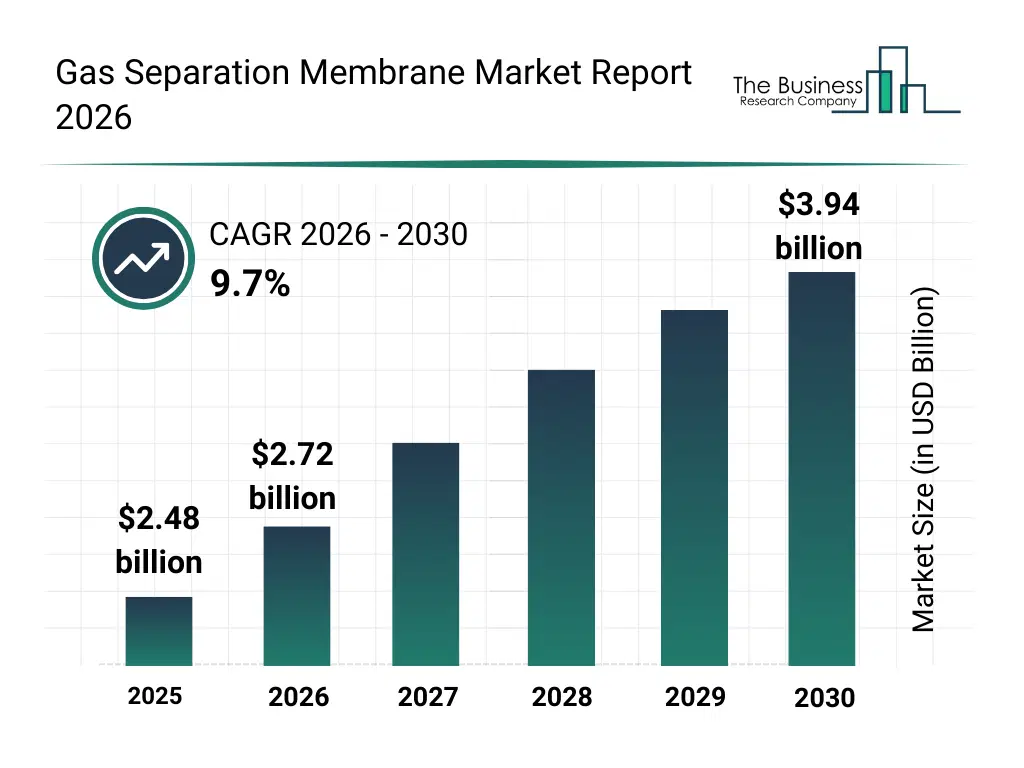
What Is The Gas Separation Membrane Market Size and Share 2026?
The gas separation membrane market size has grown strongly in recent years. It will grow from $2.48 billion in 2025 to $2.72 billion in 2026 at a compound annual growth rate (CAGR) of 9.8%. The growth in the historic period can be attributed to growth in ammonia production plants, expansion of petrochemical industries, rising demand for nitrogen and hydrogen separation, adoption of membrane technology in natural gas processing, increase in air dehydration and vapor separation processes.What Is The Gas Separation Membrane Market Growth Forecast?
The gas separation membrane market size is expected to see strong growth in the next few years. It will grow to $3.94 billion in 2030 at a compound annual growth rate (CAGR) of 9.7%. The growth in the forecast period can be attributed to rising demand for high-purity hydrogen, growth in carbon capture and storage applications, advancements in composite and ceramic membrane materials, increasing adoption in food and beverage processing, expansion of electric power and chemical industry applications. Major trends in the forecast period include advancements in high-performance polyimide and polyaramid membranes, integration of smart monitoring in gas separation systems, development of energy-efficient polysulfone and cellulose acetate membranes, expansion of hydrogen recovery and carbon dioxide removal applications, adoption of modular and customizable gas separation solutions.
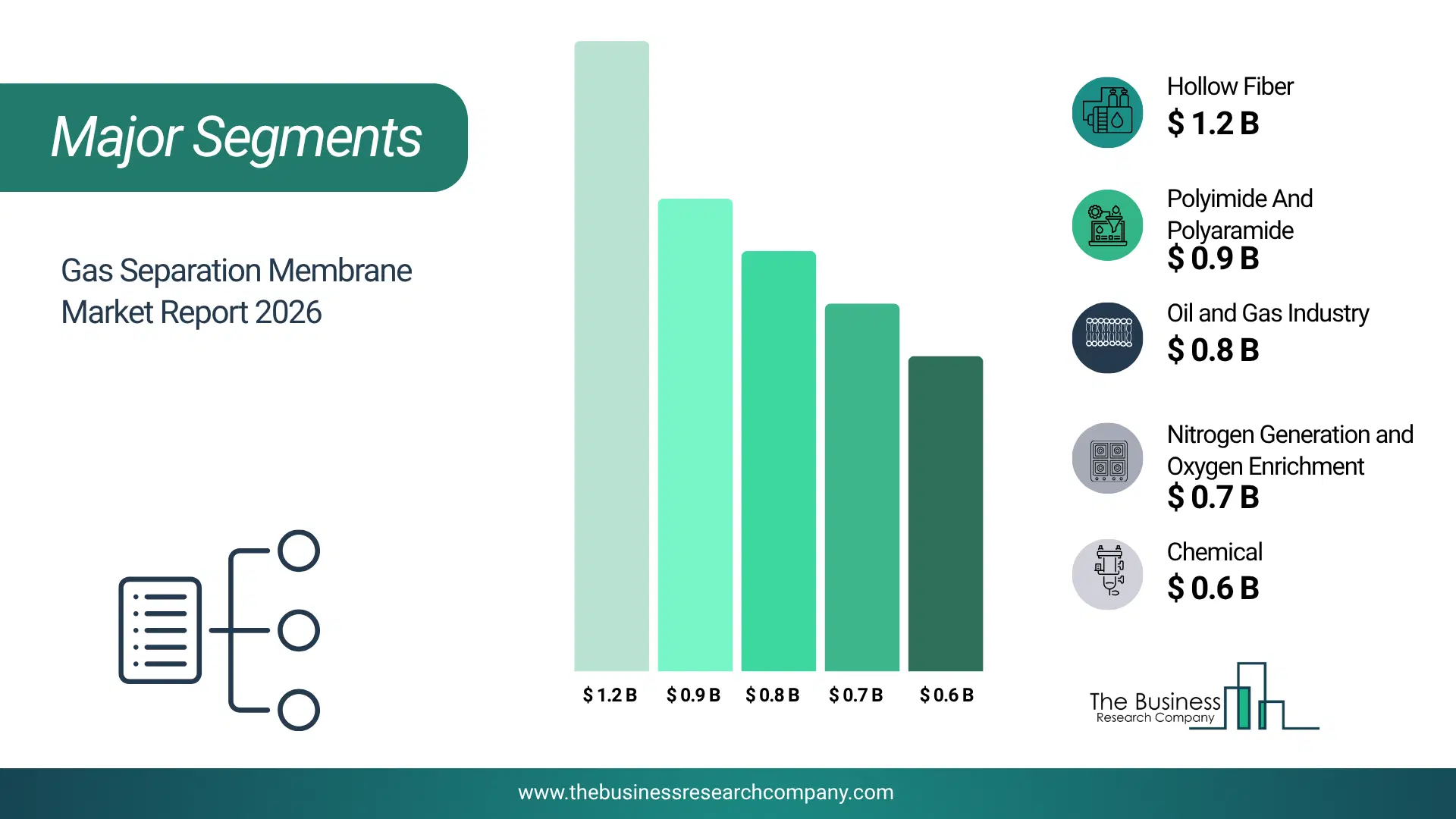
Global Gas Separation Membrane Market Segmentation
1) By Product Type: Polyimide And Polyaramid, Polysulfone, Cellulose Acetate, Other Products 2) By Module: Hollow Fiber, Spiral Wound, Plate And Frame, Other Modules 3) By Application: Nitrogen Generation And Oxygen Enrichment, Hydrogen Recovery, Carbon Dioxide Removal, Air Dehydration, Other Application 4) By End Use Industry: Chemical, Oil And Gas Industry, Electric Power, Food And Beverages, Other End Use Industry Subsegments: 1) By Polyimide And Polyaramid: High-performance Polyimide Membranes, Polyaramid Membranes 2) By Polysulfone: Asymmetric Polysulfone Membranes, Composite Polysulfone Membranes 3) By Cellulose Acetate: Flat Sheet Cellulose Acetate Membranes, Hollow Fiber Cellulose Acetate Membranes 4) By Other Products: Ceramic Membranes, Mixed Matrix Membranes, Metal Membranes The top segments in the gas separation membrane market will be: • Hollow Fiber will reach $1267.45 Million by 2025. • Polyimide And Polyaramide will reach $939.37 Million by 2025. • Oil and Gas Industry will reach $851.05 Million by 2025. • Nitrogen Generation and Oxygen Enrichment will reach $704.86 Million by 2025. • Chemical will reach $617.9 Million by 2025.What Is The Driver Of The Gas Separation Membrane Market?
The growing demand for biogas is driving the gas separation membrane market. Biogas is a mixture of methane, carbon dioxide, and trace amounts of other gases created by the anaerobic decomposition of organic materials in an oxygen-free environment. Biogas is high in demand due to rising environmental safety issues and the demand for sustainable energy. Gas separation membranes are used in manufacturing biogas. For instance, in February 2024, the American Biogas Council, a US-based national trade association, reported that 2023 marked the third consecutive year of record growth in the biogas industry, with nearly 100 new projects launched, totaling $1.8 billion in capital investments. This momentum is expected to carry into 2024, with projections indicating over 100 new projects set to become operational this year. Thus, the increase in the usage of biogas will propel the demand for the gas separation membrane industry.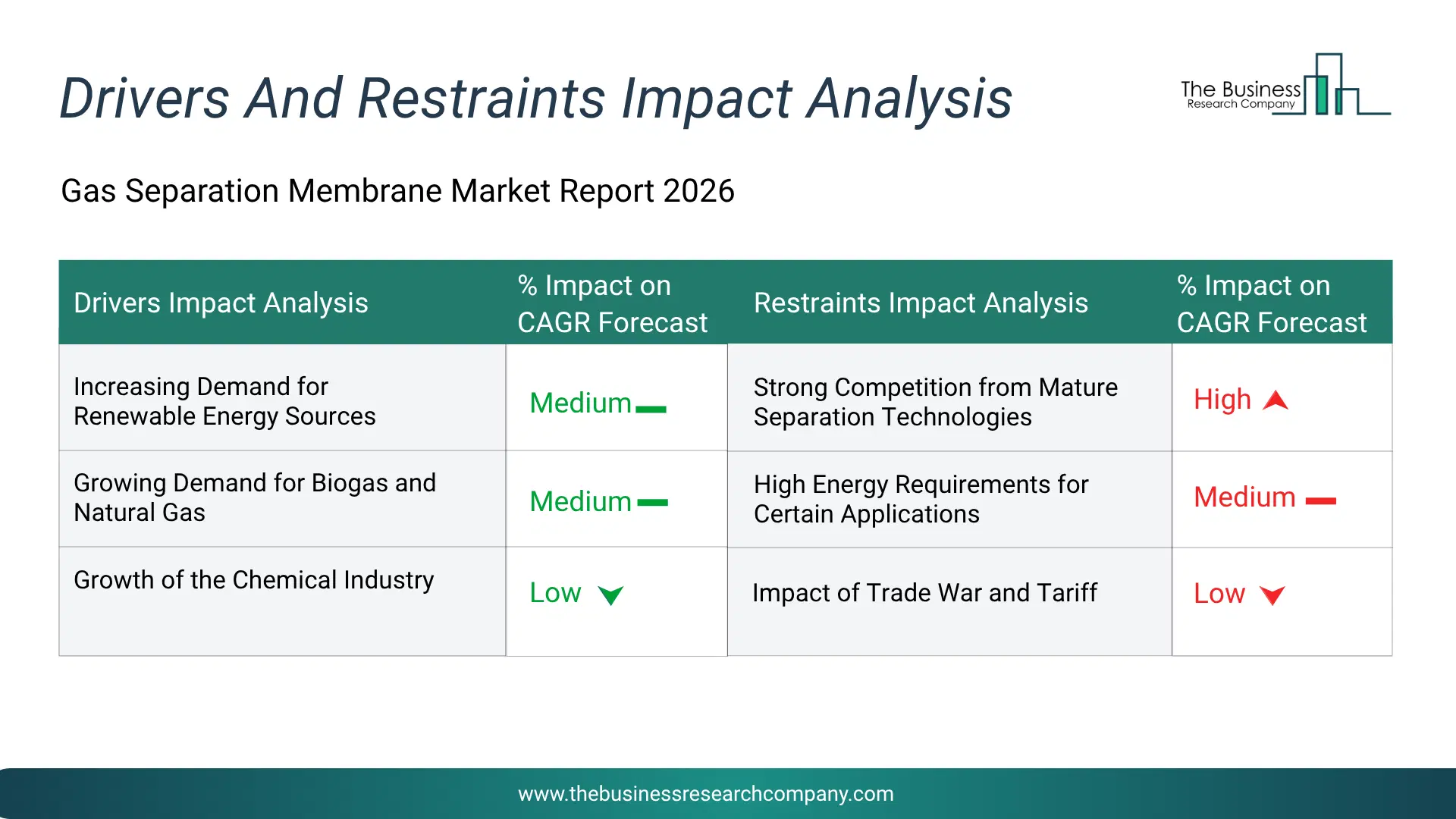
Infographic Chart Showing Key Market Drivers Analysis And Restraints For Gas Separation Membrane Market
The chart presents an impact analysis of key drivers and restraints, quantifying their relative influence on the market's growth rate and helping assess the balance between growth enablers and limiting factors. This chart offers a high-level perspective; the full report contains more detailed insights.
How Will The Drivers Impact Growth In The Global Gas Separation Membrane Market?
• Increasing Demand for Renewable Energy Sources (Medium) – The increasing demand for renewable energy sources will become a key driver of growth in the gas separation membrane market by 2030. As nations intensify efforts to decarbonize their energy systems, demand is growing for technologies that enable efficient gas purification, recovery, and conversion within renewable energy processes. Gas separation membranes are crucial in applications such as biogas upgrading, hydrogen production, and carbon capture, all key components of sustainable energy generation. Their capability to selectively separate gases with low energy use and minimal environmental impact makes them highly suitable for renewable energy initiatives. Moreover, the modular and scalable design of membrane systems supports flexible implementation in both distributed and small-scale renewable energy installations. As a result, the increasing demand for renewable energy sources is anticipated to contributing to a 1.5% annual growth in the market. • Growing Demand for Biogas and Natural Gas (Medium) – The growing demand for biogas and natural gas will emerge as a major factor driving the expansion of the gas separation membrane market by 2030. Membrane technology plays a vital role in upgrading raw biogas into biomethane by efficiently removing carbon dioxide and other impurities, enabling its use in natural gas grids or as a vehicle fuel. Likewise, in natural gas processing, membranes are employed to separate hydrogen, carbon dioxide, and hydrocarbons, thereby improving fuel quality and overall efficiency. As industries and utilities continue to adopt cleaner energy sources to achieve emission reduction targets, the need for reliable and energy-efficient gas separation solutions is anticipated to grow significantly. Consequently, the growing demand for biogas and natural gas capabilities is projected to contributing to a 1.0% annual growth in the market. • Growth of the Chemical Industry (Low) – The growth of the chemical industry will serve as a key growth catalyst for the gas separation membrane market by 2030. Membrane technologies are integral for the separation and recovery of gases such as hydrogen, nitrogen, oxygen, and carbon dioxide—key components in synthesis, polymerization, and refining processes. As the chemical sector focuses on enhancing process efficiency and sustainability, gas separation membranes will become increasingly important for minimizing waste, optimizing gas recovery, and reducing energy use. Their versatility under diverse process conditions also enables chemical manufacturers to replace or supplement conventional separation systems with more energy-efficient and cost-effective solutions. Therefore, this growth of the chemical industry is projected to supporting to a 0.8% annual growth in the market. • Environmental Consciousness in Manufacturing (Low) – The environmental consciousness in manufacturing will become a significant driver contributing to the growth of the gas separation membrane market by 2030. Companies across various industries are facing increasing pressure to cut emissions, reduce waste, and implement sustainable production methods. Gas separation membranes support these objectives by providing energy-efficient solutions for gas purification, recycling, and emission control. Unlike traditional separation technologies, membrane systems operate without hazardous solvents and consume less energy, resulting in reduced carbon emissions. Consequently, they are becoming the preferred option for manufacturers striving to meet stringent environmental regulations and achieve corporate sustainability goals. Consequently, the environmental consciousness in manufacturing strategies is projected to contributing to a 0.5% annual growth in the market.How Will The Restraints Impact Growth In The Global Gas Separation Membrane Market?
• Strong Competition from Mature Separation Technologies (Medium) – Strong Competition from Mature Separation Technologies will restrict the growth of the Gas Separation Membrane market during the forecast period. Gas separation membranes face competition from mature separation technologies including pressure swing adsorption and cryogenic distillation. Established technologies offer proven performance and existing infrastructure advantages. Competition from mature alternatives can limit membrane market share and growth potential. • High Energy Requirements for Certain Applications (Low) – High Energy Requirements for Certain Applications will restrict the growth of the Gas Separation Membrane market during the forecast period. Gas separation membrane systems can have high energy requirements for compression and operation. Energy costs affect the economic viability of membrane systems compared to alternatives. High energy consumption can limit adoption in applications with strict energy efficiency requirements. • Impact of Trade War and Tariff (Low) – Impact of Trade War and Tariff will restrict the growth of the Gas Separation Membrane market during the forecast period. Gas separation membrane production relies on imported polymers and components subject to trade tariffs. Trade barriers can increase production costs and affect product pricing. Trade tensions may also impact chemical industry investment and gas processing activities.Key Players In The Global Gas Separation Membrane Market
Major companies operating in the gas separation membrane market are Air Liquide Advanced Separations, Air Products and Chemicals Inc., Honeywell UOP LLC, Membrane Technology and Research MTR Inc., Parker‑Hannifin Corporation, Evonik Industries AG, UBE Corporation, Generon IGS Inc., Fujifilm Corporation, DIC Corporation, Atlas Copco AB, GMT Membrantechnik GmbH, JSC Grasys, Mahler AGS GmbH, Toray Industries Inc., Mitsubishi Chemical Corporation, JIUWU HI‑TECH Membrane Technology, Solvay SA, Nitto Denko Corporation, GTS Membrane Technologies.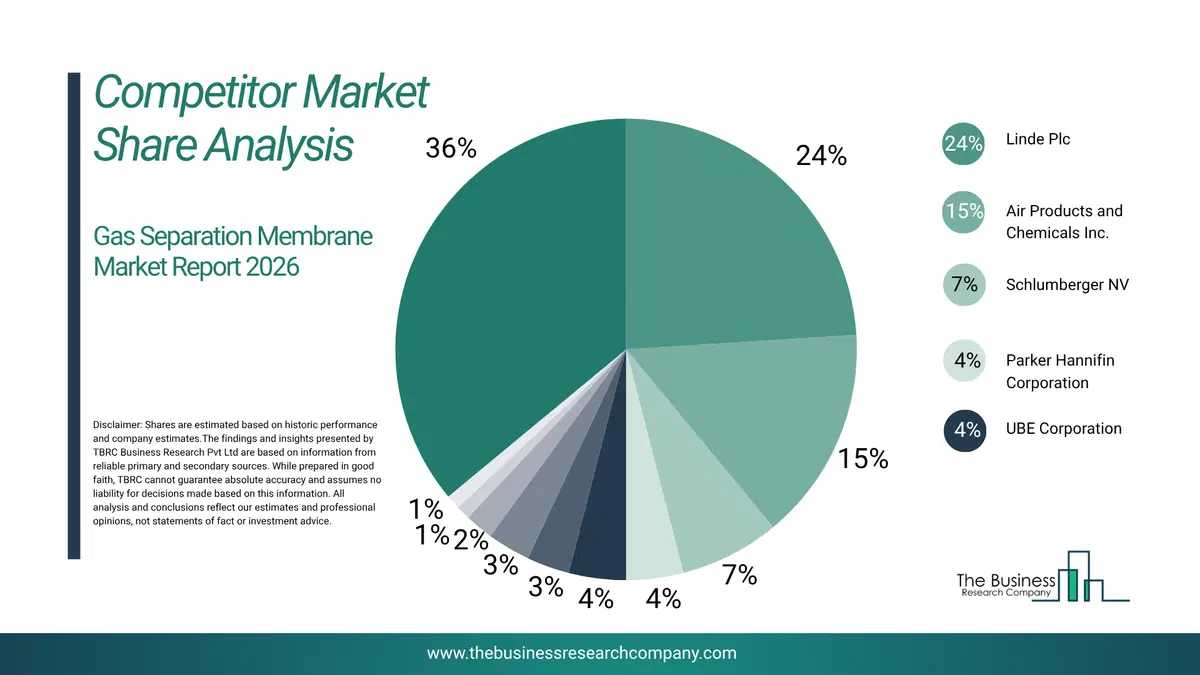
This chart is for illustrative purposes; the full report includes a detailed competitor analysis and comprehensive overview of the top 10 companies in the market.
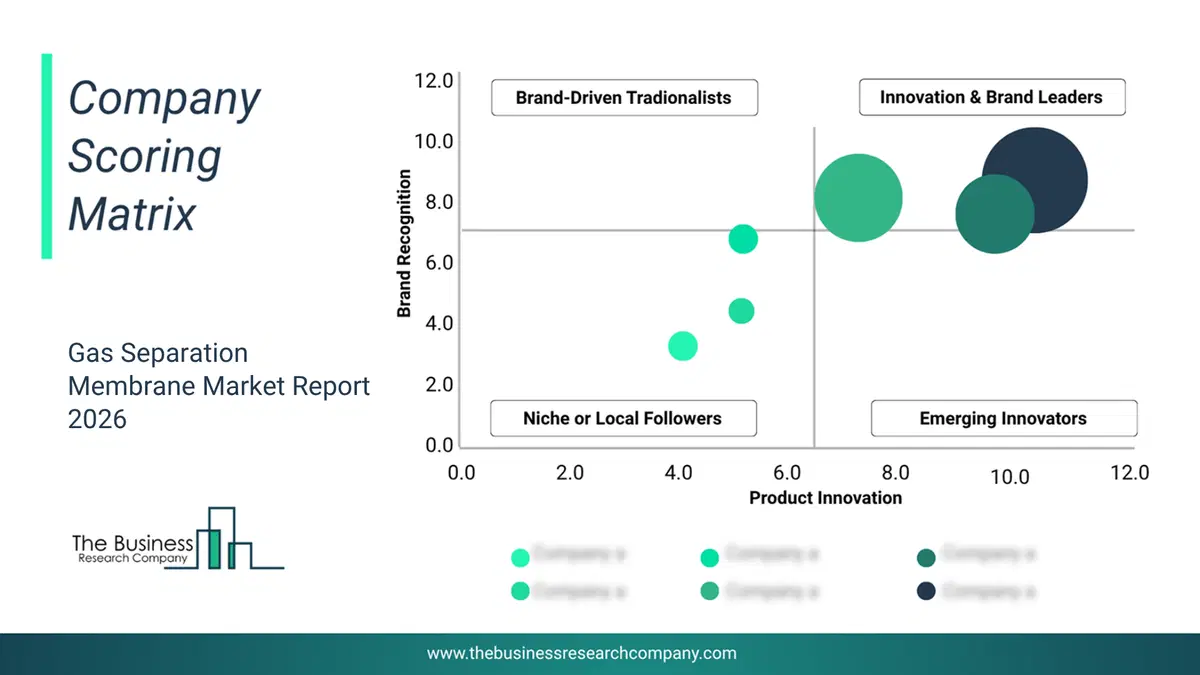
This chart maps companies by product innovation and brand strength, with bubble size indicating relative revenue, helping identify market leaders, challengers, and niche players. This is an illustrative chart; the full report provides a complete and accurate competitive analysis.
Global Gas Separation Membrane Market Trends and Insights
Major companies operating in gas separation membranes are focused on developing biogas membrane technology to enhance the efficiency and effectiveness of biogas purification processes. Biogas membrane technology refers to specialized filtration systems that selectively separate gases, particularly methane and carbon dioxide, from biogas, enabling the purification and upgrading of biogas for use as a renewable energy source. This technology is widely used in waste management and renewable energy sectors to improve the quality of biogas for applications such as electricity generation, vehicle fuel, and injection into natural gas grids. For instance, in September 2024, Evonik, a Germany-based chemical company, launched its latest biogas membrane, the SEPURAN Green G5X 11. This new membrane is specifically designed to enhance the efficiency of converting biogas into renewable natural gas (RNG) across large-scale projects, including landfills, agricultural sites, and wastewater treatment facilities.What Are Latest Mergers And Acquisitions In The Gas Separation Membrane Market?
In October 2023, Sun Capital Partners, Inc., a US-based private equity firm, acquired Koch Separation Solutions for an undisclosed amount. This acquisition will empower KSS to bolster its market position and enhance operational efficiencies through increased economies of scale, innovation, and continuous improvement to best serve our customers. Koch Separation Solutions (KSS) is a US-based membrane separation technology manufacturing company that offers gas separation membranes.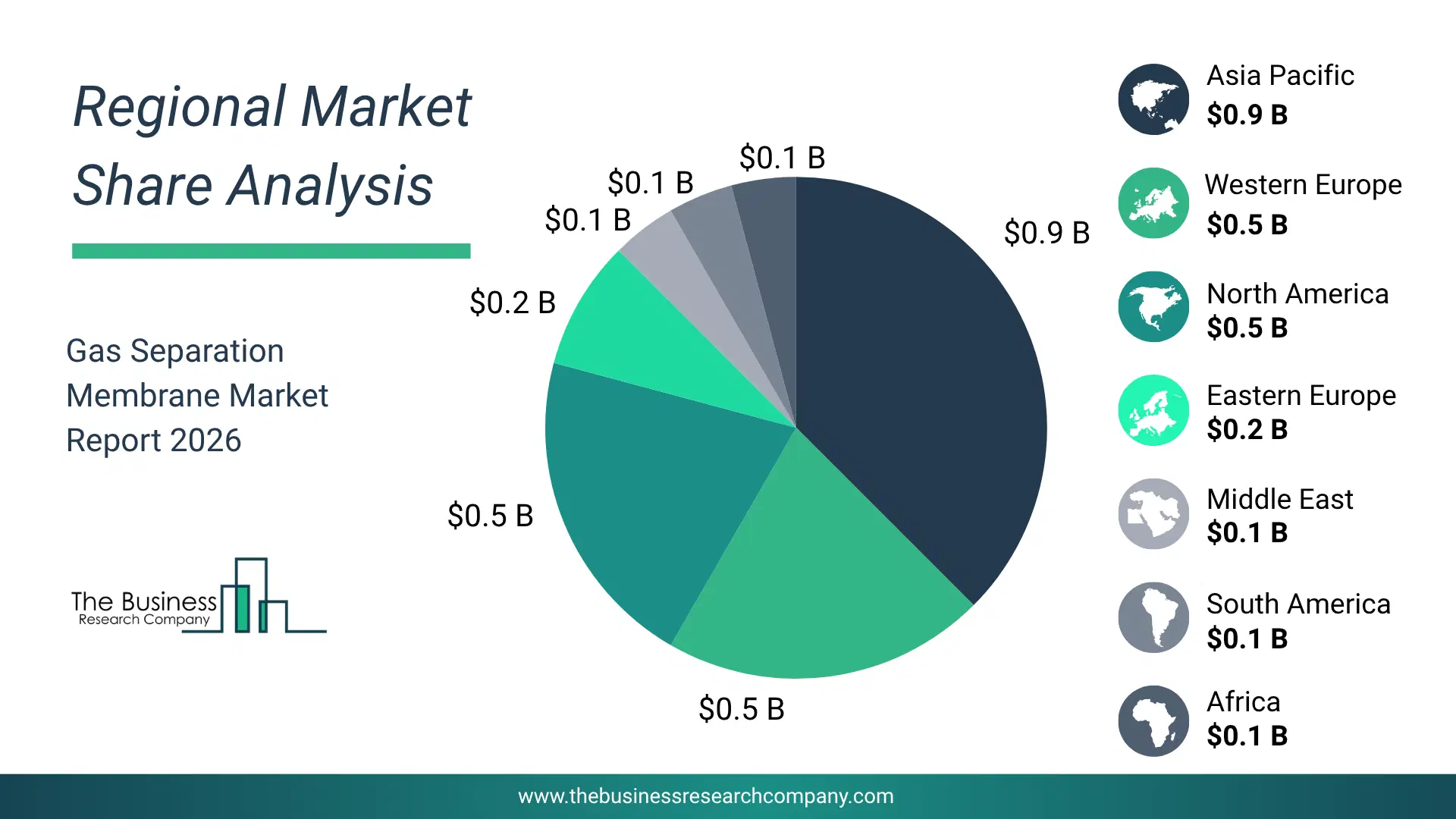
Regional Outlook
Asia-Pacific was the largest region in the gas separation membrane market in 2025. Asia-Pacific region is expected to be the fastest-growing region in the gas separation membrane market share during the forecast period. The regions covered in this market report are Asia-Pacific, South East Asia, Western Europe, Eastern Europe, North America, South America, Middle East, Africa. The countries covered in this market report are Australia, Brazil, China, France, Germany, India, Indonesia, Japan, Taiwan, Russia, South Korea, UK, USA, Canada, Italy, SpainWhat Defines the Gas Separation Membrane Market?
The gas separation membrane market consists of sales of polymeric membranes, inorganic membranes, and metallic membranes. Values in this market are ‘factory gate’ values, that is the value of goods sold by the manufacturers or creators of the goods, whether to other entities (including downstream manufacturers, wholesalers, distributors, and retailers) or directly to end customers.How is Market Value Defined and Measured?
The market value is defined as the revenues that enterprises gain from the sale of goods and/or services within the specified market and geography through sales, grants, or donations in terms of the currency (in USD unless otherwise specified). The revenues for a specified geography are consumption values that are revenues generated by organizations in the specified geography within the market, irrespective of where they are produced. It does not include revenues from resales along the supply chain, either further along the supply chain or as part of other products.
This chart presents market attractiveness based on a quantitative evaluation of growth, competition, strategic alignment, and risk, offering a clear view of opportunity areas for decision-making. This chart is for illustrative purposes; the full report contains the complete analysis.

This chart highlights the Total Addressable Market (TAM) by estimating the maximum revenue opportunity using an assumption-driven approach, supporting strategic planning and opportunity sizing across markets. The chart is illustrative; the full report provides a more comprehensive analysis.
What Key Data and Analysis Are Included in the Gas Separation Membrane Market Report 2026?
The gas separation membrane market research report is one of a series of new reports from The Business Research Company that provides market statistics, including Market Report 2026?global market size, regional shares, competitors with the market share, detailed market segments, market trends and opportunities, and any further data you may need to thrive in the gas separation membrane Market Report 2026? The market research report delivers a complete perspective of everything you need, with an in-depth analysis of the current and future state of the Market Report 2026?Gas Separation Membrane Market Report Forecast Analysis
| Report Attribute | Details |
|---|---|
| Market Size Value In 2026 | $2.72 billion |
| Revenue Forecast In 2030 | $3.94 billion |
| Growth Rate | CAGR of 9.8% from 2026 to 2030 |
| Base Year For Estimation | 2025 |
| Actual Estimates/Historical Data | 2020-2025 |
| Forecast Period | 2026 - 2030 |
| Market Representation | Revenue in USD Billion and CAGR from 2026 to 2030 |
| Segments Covered | Product Type, Module, Application, End Use Industry |
| Regional Scope | Asia-Pacific, Western Europe, Eastern Europe, North America, South America, Middle East, Africa |
| Country Scope | The countries covered in the report are Australia, Brazil, China, France, Germany, India, Indonesia, Japan, Taiwan, Russia, South Korea, UK, USA, Canada, Italy, Spain. |
| Key Companies Profiled | Air Liquide Advanced Separations, Air Products and Chemicals Inc., Honeywell UOP LLC, Membrane Technology and Research MTR Inc., Parker‑Hannifin Corporation, Evonik Industries AG, UBE Corporation, Generon IGS Inc., Fujifilm Corporation, DIC Corporation, Atlas Copco AB, GMT Membrantechnik GmbH, JSC Grasys, Mahler AGS GmbH, Toray Industries Inc., Mitsubishi Chemical Corporation, JIUWU HI‑TECH Membrane Technology, Solvay SA, Nitto Denko Corporation, GTS Membrane Technologies. |
| Customization Scope | Request for Customization |
| Pricing And Purchase Options | Explore Purchase Options |