

Gasoline Port Fuel Injection Market Report 2026
Global Outlook – By Component (Fuel Injectors, Pressure Regulators, Fuel Rail, Electronic Control Unit, Sensors, Other Components), By Vehicle Type (Passenger Cars, Light Commercial Vehicles, Heavy Commercial Vehicles, Other Vehicle Types), By Fuel Type (Gasoline, Alternative Fuels), By Application (Original Equipment Manufacturer, Aftermarket) – Market Size, Trends, Strategies, and Forecast to 2030
Gasoline Port Fuel Injection Market Overview
• Gasoline Port Fuel Injection market size has reached to $5.69 billion in 2025 • Expected to grow to $7.45 billion in 2030 at a compound annual growth rate (CAGR) of 5.5% • Growth Driver: The Increasing Production Of Passenger Cars Driving The Growth Of The Market Due To Higher Disposable Incomes • Market Trend: Next-Generation Engine Control Units Advancing Multi-Fuel Efficiency, Precision Combustion, And Emissions Reduction • Asia-Pacific was the largest region and fastest growing region.What Is Covered Under Gasoline Port Fuel Injection Market?
Gasoline port fuel injection (PFI) is a fuel delivery system in which gasoline is injected into the intake port of an engine, just upstream of the intake valve, rather than directly into the combustion chamber. This system mixes fuel with incoming air before it enters the cylinder, helping improve fuel atomization, combustion efficiency, and overall engine performance. The main components of gasoline port fuel injection include fuel injectors, pressure regulators, fuel rail, electronic control unit, sensors, and other components. Fuel injectors refer to precision components that deliver atomized gasoline into the intake port of an engine in controlled quantities to ensure efficient combustion and engine performance. These systems are used in passenger cars, light commercial vehicles, heavy commercial vehicles, and other vehicle types. They are compatible with gasoline and alternative fuels and are applied for original equipment manufacturer and aftermarket applications.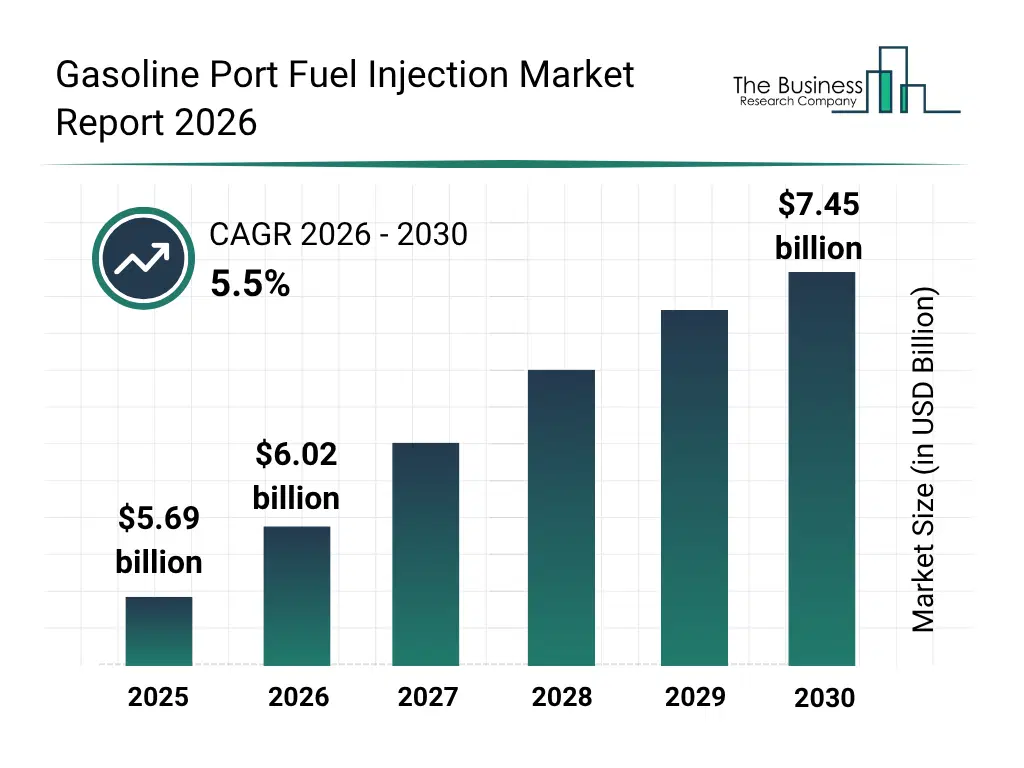
What Is The Gasoline Port Fuel Injection Market Size and Share 2026?
The gasoline port fuel injection market size has grown strongly in recent years. It will grow from $5.69 billion in 2025 to $6.02 billion in 2026 at a compound annual growth rate (CAGR) of 5.9%. The growth in the historic period can be attributed to increasing production of gasoline powered vehicles, growing demand for improved engine fuel efficiency, rising adoption of electronic fuel injection systems, increasing automotive industry focus on emission reduction, growing replacement demand for fuel injection components.What Is The Gasoline Port Fuel Injection Market Growth Forecast?
The gasoline port fuel injection market size is expected to see strong growth in the next few years. It will grow to $7.45 billion in 2030 at a compound annual growth rate (CAGR) of 5.5%. The growth in the forecast period can be attributed to increasing integration of advanced engine management systems, rising demand for optimized gasoline combustion technologies, growing adoption of hybrid vehicle powertrains using gasoline engines, increasing development of efficient fuel injection components, rising focus on reducing fuel consumption and exhaust emissions. Major trends in the forecast period include advanced fuel injection system optimization for improved combustion efficiency, development of high precision fuel delivery components, increasing adoption of low emission gasoline engine technologies, expansion of compact and lightweight fuel injection systems, growing demand for improved fuel atomization and engine performance.
Global Gasoline Port Fuel Injection Market Segmentation
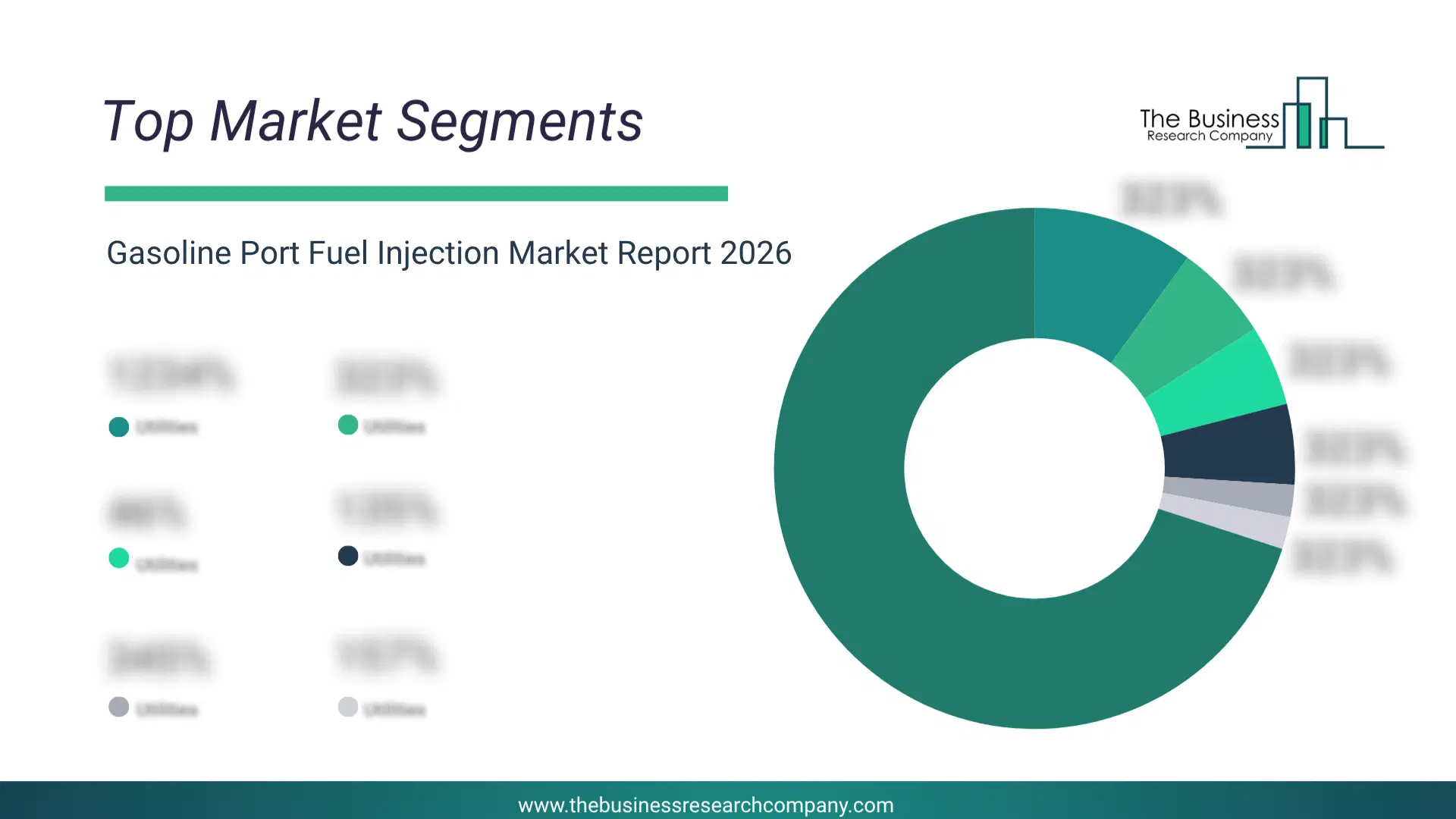
2) By Vehicle Type: Passenger Cars, Light Commercial Vehicles, Heavy Commercial Vehicles, Other Vehicle Types 3) By Fuel Type: Gasoline, Alternative Fuels 4) By Application: Original Equipment Manufacturer, Aftermarket Subsegments: 1) By Fuel Injectors: Single Point Fuel Injectors, Multi Point Fuel Injectors, Top Feed Fuel Injectors, Side Feed Fuel Injectors, High Flow Fuel Injectors, Low Flow Fuel Injectors 2) By Pressure Regulators: Mechanical Pressure Regulators, Vacuum Controlled Pressure Regulators, Adjustable Pressure Regulators, Return Style Pressure Regulators, Returnless Pressure Regulators, Electronic Pressure Regulators 3) By Fuel Rail: Aluminum Fuel Rail, Stainless Steel Fuel Rail, High Capacity Fuel Rail, Single Feed Fuel Rail, Dual Feed Fuel Rail, Integrated Fuel Rail 4) By Electronic Control Unit: Engine Management Control Unit, Powertrain Control Unit, Fuel Injection Control Unit, Programmable Control Unit, Integrated Vehicle Control Unit, Advanced Engine Control Unit 5) By Sensors: Oxygen Sensors, Manifold Pressure Sensors, Throttle Position Sensors, Temperature Sensors, Air Flow Sensors, Crankshaft Position Sensors 6) By Other Components: Fuel Pumps, Throttle Bodies, Fuel Filters, Intake Manifolds, Wiring Harnesses, Fuel Delivery ModulesWhat Is The Driver Of The Gasoline Port Fuel Injection Market?
The increasing production of passenger cars is expected to propel the growth of the gasoline port fuel injection market going forward. Passenger cars refer to motor vehicles designed primarily for the transportation of passengers, typically accommodating up to nine occupants including the driver, and used for personal or private mobility rather than commercial goods transport. Increasing production of passenger cars is due to higher disposable incomes, which enable more consumers to afford personal vehicles and drive greater demand in the automotive market. Gasoline port fuel injection improves passenger car performance by precisely delivering fuel into the intake port, enhancing fuel efficiency, reducing emissions, and ensuring smoother engine operation. For instance, in April 2024, according to the Serbian Association of Vehicle and Parts Importers, a Serbia-based professional automotive organization, 93,546,599 vehicles (cars and light commercial vehicles), including 67,133,570 passenger vehicles, were produced worldwide in 2023, up from 84,830,376 vehicles in 2022. Therefore, the increasing production of passenger cars is driving the growth of the gasoline port fuel injection industry.Key Players In The Global Gasoline Port Fuel Injection Market
Major companies operating in the gasoline port fuel injection market are Robert Bosch GmbH, DENSO Corporation, Hitachi Astemo Ltd., Continental AG, BorgWarner Inc., PHINIA Inc., TI Fluid Systems plc, MAHLE GmbH, Aisin Corporation, Mitsubishi Electric Corporation, Marelli Holdings Co. Ltd. Holdings Co. Ltd., Aisan Industry Co. Ltd., Woodward Inc., Hyundai KEFICO Corporation, Standard Motor Products Inc., UCAL Fuel Systems Limited, Walker Products Inc., Dumarey Group, Stanadyne LLC, Ricardo plc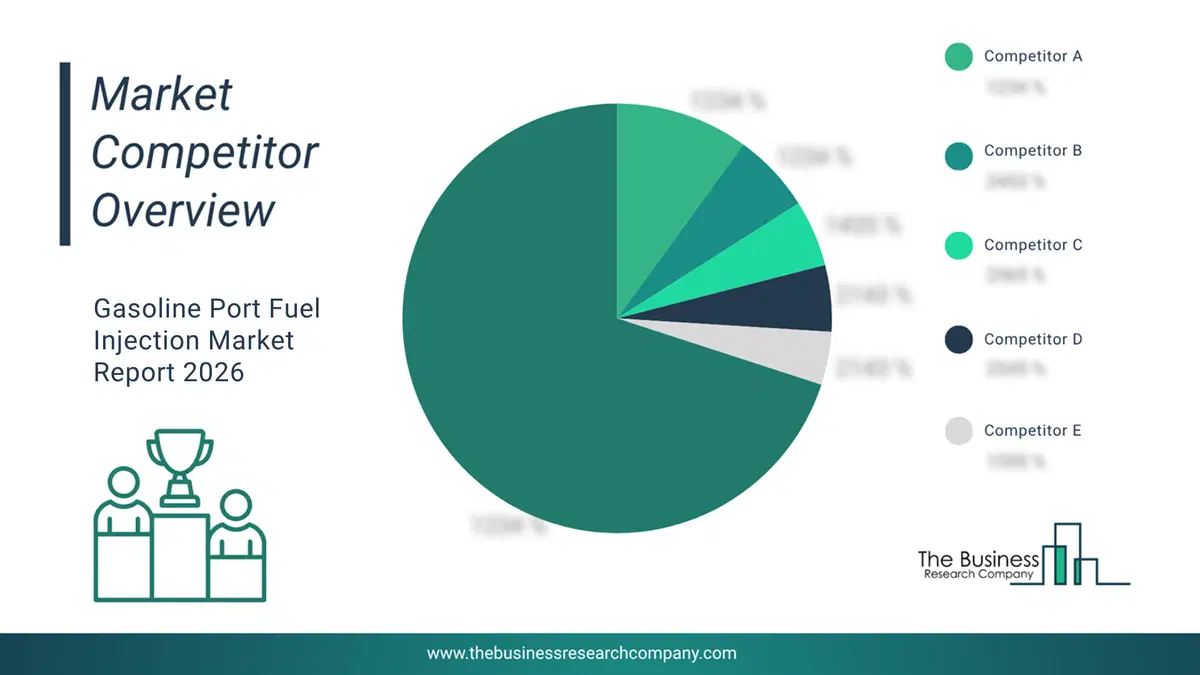
This chart is for illustrative purposes; the full report includes a detailed competitor analysis and comprehensive overview of the top 10 companies in the market.
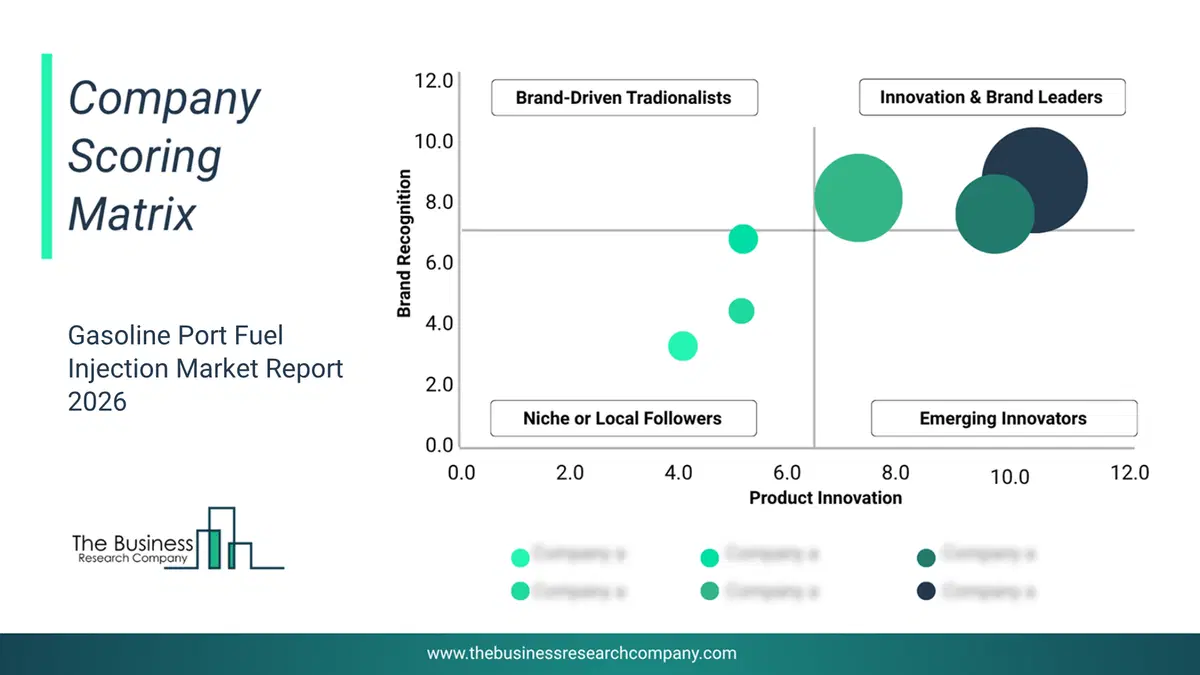
This chart maps companies by product innovation and brand strength, with bubble size indicating relative revenue, helping identify market leaders, challengers, and niche players. This is an illustrative chart; the full report provides a complete and accurate competitive analysis.
Global Gasoline Port Fuel Injection Market Trends and Insights
Major companies operating in the gasoline port fuel injection market are focusing on developing advanced engine management solutions, such as next-generation engine control units (ECUs) to enhance fuel efficiency, improve combustion precision, reduce emissions, and support multi-fuel compatibility across evolving vehicle powertrains. Engine control units for port fuel injection (PFI ECUs) are electronic systems that manage and optimize the timing and quantity of fuel injected into the intake port of an internal combustion engine, ensuring efficient air–fuel mixing and combustion. For instance, in March 2026, Marelli Holdings Co. Ltd. Europe S.p.A., an Italy-based automotive mobility technology company, launched a new generation of port fuel injection engine control units designed for gasoline, flex fuels (ethanol, methanol, and synthetic fuels), and compressed natural gas applications across Brazil, India, and the EMEA region. These ECUs are engineered to optimize engine performance by precisely managing fuel injection timing, air–fuel ratios, and combustion efficiency, enabling improved power output and lower tailpipe emissions in modern vehicle architectures. The platform supports regional customization, with variants tailored to specific regulatory and operating conditions, helping automakers achieve faster deployment and cost optimization through localized design, validation, and manufacturing.What Are Latest Mergers And Acquisitions In The Gasoline Port Fuel Injection Market?
In August 2023, Cerberus Capital Management L.P., a US-based private investment firm, acquired Stanadyne LLC for an undisclosed amount. With this acquisition, Cerberus Capital Management aims to strengthen its presence in the automotive and industrial manufacturing components space, particularly in fuel systems, by leveraging Stanadyne’s engineering capabilities and established customer base in engine fuel delivery technologies. Stanadyne LLC is a US-based provider of diesel and gasoline fuel injection systems, fuel pumps, injectors, and related engine fuel management solutions.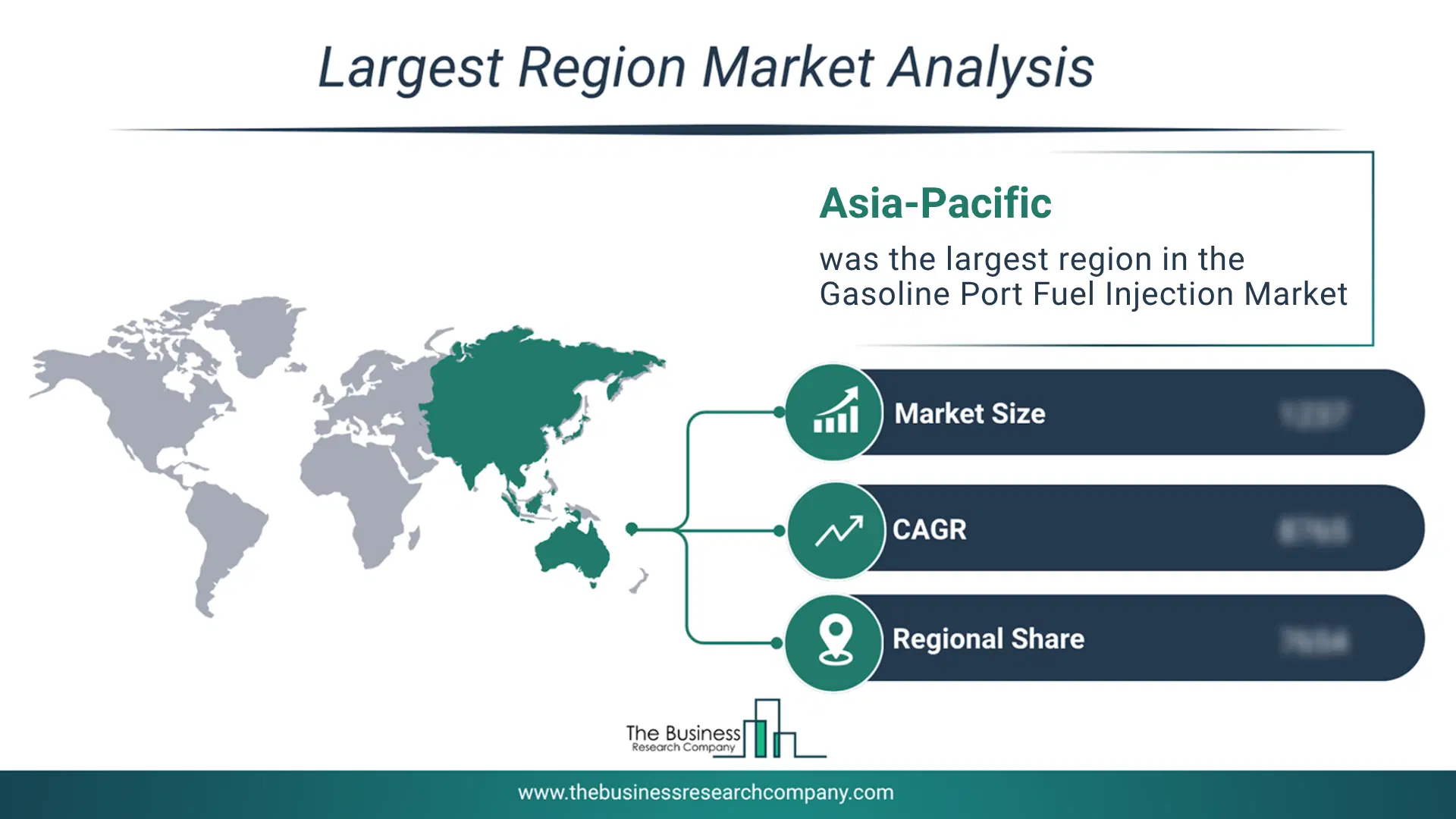
Regional Outlook/Insights
Asia-Pacific was the largest region in the gasoline port fuel injection market in 2025. Asia-Pacific is expected to be the fastest-growing region in the forecast period. The regions covered in this market report are Asia-Pacific, South East Asia, Western Europe, Eastern Europe, North America, South America, Middle East, Africa. The countries covered in this market report are Australia, Brazil, China, France, Germany, India, Indonesia, Japan, Taiwan, Russia, South Korea, UK, USA, Canada, Italy, Spain.What Defines the Gasoline Port Fuel Injection Market?
The gasoline port fuel injection market consists of sales of electric fuel pump, fuel filter, fuel lines and hoses, intake manifold, and throttle body. Values in this market are ‘factory gate’ values, that is, the value of goods sold by the manufacturers or creators of the goods, whether to other entities (including downstream manufacturers, wholesalers, distributors, and retailers) or directly to end customers. The value of goods in this market includes related services sold by the creators of the goods.How is Market Value Defined and Measured?
The market value is defined as the revenues that enterprises gain from the sale of goods and/or services within the specified market and geography through sales, grants, or donations in terms of the currency (in USD unless otherwise specified). The revenues for a specified geography are consumption values that are revenues generated by organizations in the specified geography within the market, irrespective of where they are produced. It does not include revenues from resales along the supply chain, either further along the supply chain or as part of other products.
This chart presents market attractiveness based on a quantitative evaluation of growth, competition, strategic alignment, and risk, offering a clear view of opportunity areas for decision-making. This chart is for illustrative purposes; the full report contains the complete analysis.

This chart highlights the Total Addressable Market (TAM) by estimating the maximum revenue opportunity using an assumption-driven approach, supporting strategic planning and opportunity sizing across markets. The chart is illustrative; the full report provides a more comprehensive analysis.
What Key Data and Analysis Are Included in the Gasoline Port Fuel Injection Market Report 2026?
The gasoline port fuel injection market research report is one of a series of new reports from The Business Research Company that provides gasoline port fuel injection market statistics, including gasoline port fuel injection industry global market size, regional shares, competitors with a gasoline port fuel injection market share, detailed gasoline port fuel injection market segments, market trends and opportunities, and any further data you may need to thrive in the gasoline port fuel injection industry. This gasoline port fuel injection market research report delivers a complete perspective of everything you need, with an in-depth analysis of the current and future scenario of the industry.Gasoline Port Fuel Injection Market Report Forecast Analysis
| Report Attribute | Details |
|---|---|
| Market Size Value In 2026 | $6.02 billion |
| Revenue Forecast In 2030 | $7.45 billion |
| Growth Rate | CAGR of 5.5% from 2026 to 2030 |
| Base Year For Estimation | 2025 |
| Actual Estimates/Historical Data | 2020-2025 |
| Forecast Period | 2026 - 2030 |
| Market Representation | Revenue in USD Billion and CAGR from 2026 to 2030 |
| Segments Covered | Component, Vehicle Type, Fuel Type, Application |
| Regional Scope | Asia-Pacific, Western Europe, Eastern Europe, North America, South America, Middle East, Africa |
| Country Scope | The countries covered in the report are Australia, Brazil, China, France, Germany, India, Indonesia, Japan, Taiwan, Russia, South Korea, UK, USA, Canada, Italy, Spain. |
| Key Companies Profiled | Robert Bosch GmbH, DENSO Corporation, Hitachi Astemo Ltd., Continental AG, BorgWarner Inc., PHINIA Inc., TI Fluid Systems plc, MAHLE GmbH, Aisin Corporation, Mitsubishi Electric Corporation, Marelli Holdings Co. Ltd. Holdings Co. Ltd., Aisan Industry Co. Ltd., Woodward Inc., Hyundai KEFICO Corporation, Standard Motor Products Inc., UCAL Fuel Systems Limited, Walker Products Inc., Dumarey Group, Stanadyne LLC, Ricardo plc |
| Customization Scope | Request for Customization |
| Pricing And Purchase Options | Explore Purchase Options |