
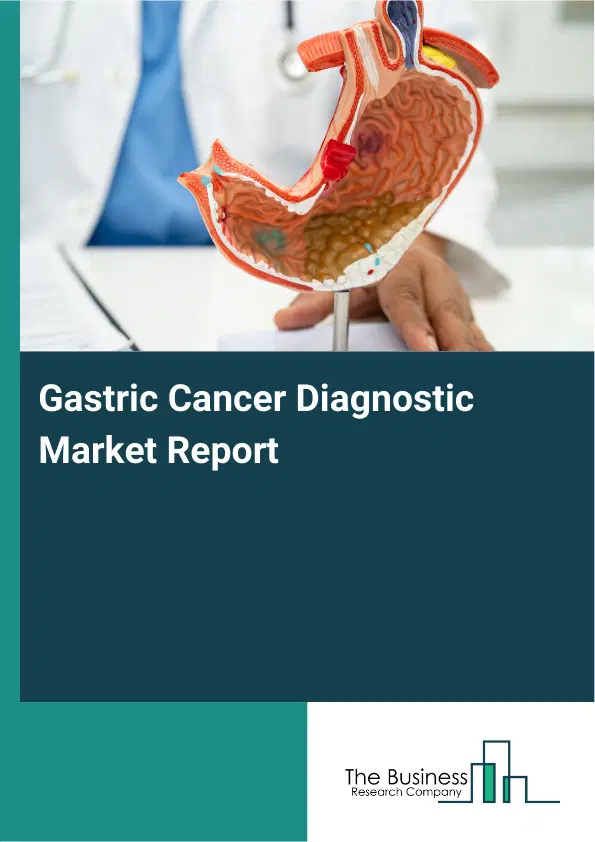
Gastric Cancer Diagnostic Market Report 2026
Global Outlook – By Diagnostic Type (Endoscopy, Imaging, Biopsy, Laboratory Tests, Biomarker-Based Testing), By Product (Reagents And Consumables, Instruments), By Technology (Molecular Diagnostics, Immunoassays, Next-Generation Sequencing, Other Technologies), By Application (Early Diagnosis, Screening, Monitoring), By End User (Hospitals, Clinics, Diagnostic Laboratories, Other End Users) – Market Size, Trends, Strategies, and Forecast to 2030
Gastric Cancer Diagnostic Market Overview
• Gastric Cancer Diagnostic market size has reached to $2.78 billion in 2025 • Expected to grow to $3.87 billion in 2030 at a compound annual growth rate (CAGR) of 6.8% • Growth Driver: Rising Incidence Of Gastric Cancer Fueling The Growth Of The Market Due To Unhealthy Dietary Habits And Increasing Case Numbers • Market Trend: AI-Powered Endoscopic Tool Enhances Early Gastric Cancer Detection • North America was the largest region in 2025 and Asia Pacific is the fastest growing region.What Is Covered Under Gastric Cancer Diagnostic Market?
Gastric cancer diagnostic refers to the set of tests and procedures used to detect and confirm the presence of cancer in the stomach. Its primary purpose is to identify gastric tumors early, determine their type and stage, and guide treatment planning. The main diagnostic types of gastric cancer diagnostics are endoscopy, imaging, biopsy, laboratory tests, and biomarker-based testing. Endoscopy is a medical procedure that involves inserting a flexible tube with a camera and light into the body to visually examine internal organs and tissues. The various products used are reagents and consumables, and instruments and various technologies utilized include molecular diagnostics, immunoassays, next-generation sequencing, and others. These diagnostics are applied in early diagnosis, screening, and monitoring, serving wide range of end users, including hospitals, clinics, diagnostic laboratories, and others.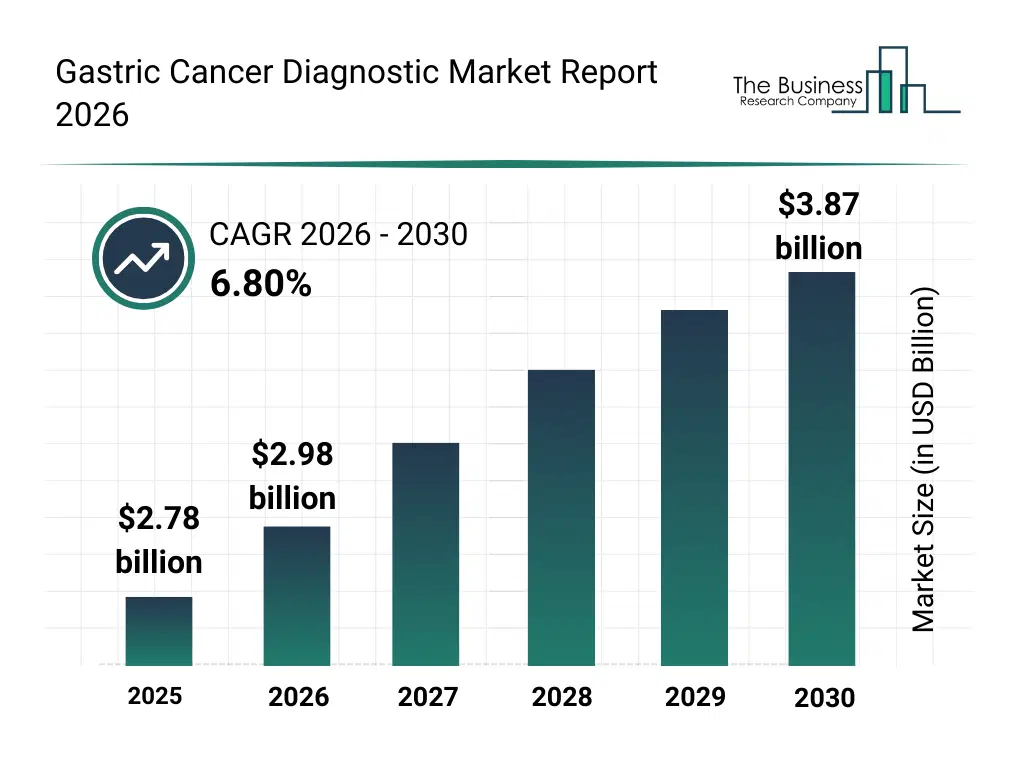
What Is The Gastric Cancer Diagnostic Market Size and Share 2026?
The gastric cancer diagnostic market size has grown strongly in recent years. It will grow from $2.78 billion in 2025 to $2.98 billion in 2026 at a compound annual growth rate (CAGR) of 7.2%. The growth in the historic period can be attributed to limited availability of fluorescent probes, reliance on traditional single-color FISH methods, growing genetic research initiatives, increasing hospital and laboratory infrastructure, adoption of basic cytogenetic diagnostics.What Is The Gastric Cancer Diagnostic Market Growth Forecast?
The gastric cancer diagnostic market size is expected to see strong growth in the next few years. It will grow to $3.87 billion in 2030 at a compound annual growth rate (CAGR) of 6.8%. The growth in the forecast period can be attributed to development of multiplex and high-throughput probes, rising demand for precision medicine, expansion of genetic and pharmaceutical research, technological advancements in imaging and quantification, increasing regulatory compliance and quality standards. Major trends in the forecast period include rising adoption of multiplex and high-throughput fish probes, expansion of genetic and molecular diagnostic applications, growing use in clinical and pharmaceutical research, integration with advanced imaging and analysis technologies, increased focus on probe accuracy and sensitivity.
Global Gastric Cancer Diagnostic Market Segmentation
1) By Diagnostic Type: Endoscopy, Imaging, Biopsy, Laboratory Tests, Biomarker-Based Testing 2) By Product: Reagents And Consumables, Instruments 3) By Technology: Molecular Diagnostics, Immunoassays, Next-Generation Sequencing, Other Technologies 4) By Application: Early Diagnosis, Screening, Monitoring 5) By End User: Hospitals, Clinics, Diagnostic Laboratories, Other End Users Subsegments: 1) By Endoscopy: Conventional Endoscopy, Chromoendoscopy, Narrow Band Imaging, Confocal Laser Endomicroscopy, Capsule Endoscopy 2) By Imaging: Computed Tomography, Magnetic Resonance Imaging, Positron Emission Tomography, Ultrasound 3) By Biopsy: Forceps Biopsy, Needle Biopsy, Endoscopic Ultrasound-Guided Biopsy, Laparoscopic Biopsy 4) By Laboratory Tests: Blood Tests, Stool Tests, Urea Breath Test, Serology 5) By Biomarker-Based Testing: Genetic Testing, Protein Biomarker Testing, Circulating Tumor DNA Testing, Microribonucleic Acid TestingWhat Is The Driver Of The Gastric Cancer Diagnostic Market?
The rising incidence of gastric cancer is expected to propel the growth of the gastric cancer diagnostic market going forward. Gastric cancer refers to a malignant tumor in the stomach lining, where cells grow uncontrollably, forming a mass that can invade nearby tissues and spread to other parts of the body. The rising incidence of gastric cancer is due to unhealthy dietary habits, as high consumption of salted, smoked, and processed foods increases stomach lining damage and cancer risk. Gastric cancer diagnostic aids in gastric cancer diagnosis by enabling early detection of malignant lesions, making it ideal for timely treatment and improved patient outcomes. They enhance clinical efficiency by providing accurate and rapid results, supporting better disease management. For instance, in May 2024, according to the American Cancer Society, a US-based nonprofit organization, the number of new stomach cancer cases reached 26,890 in 2024, an increase from 26,500 cases in 2023. Therefore, the rising incidence of gastric cancer is driving the growth of the gastric cancer diagnostic industry.Key Players In The Global Gastric Cancer Diagnostic Market
Major companies operating in the gastric cancer diagnostic market are F. Hoffmann-La Roche Ltd., Thermo Fisher Scientific Inc., Abbott Laboratories, Becton Dickinson and Company, Quest Diagnostics Incorporated, Agilent Technologies Inc., Illumina Inc., bioMérieux SA, Qiagen N.V., DiaSorin S.p.A, Natera Inc., Myriad Genetics Inc., Fulgent Genetics Inc., Foundation Medicine Inc., Invitae Corporation, NeoGenomics Laboratories Inc., Fujirebio Inc., MiRXES Pte Ltd., BIOCEPT Inc., Pillar Biosciences Inc.
This chart is for illustrative purposes; the full report includes a detailed competitor analysis and comprehensive overview of the top 10 companies in the market.
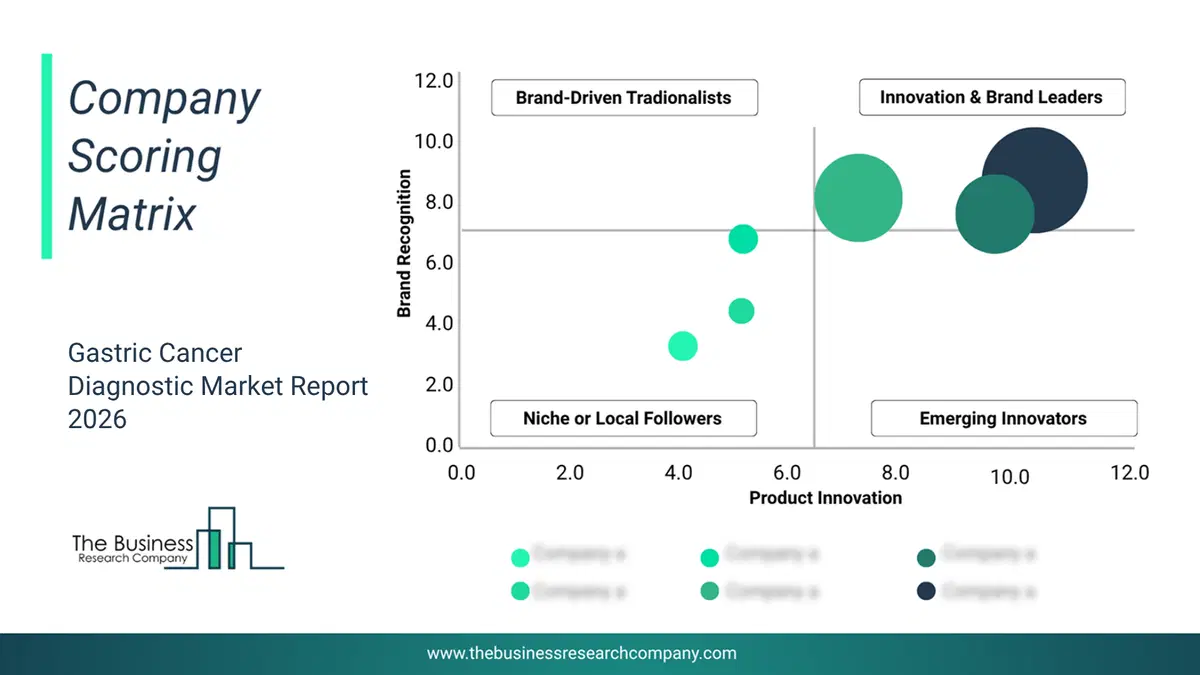
This chart maps companies by product innovation and brand strength, with bubble size indicating relative revenue, helping identify market leaders, challengers, and niche players. This is an illustrative chart; the full report provides a complete and accurate competitive analysis.
Global Gastric Cancer Diagnostic Market Trends and Insights
Major companies operating in the gastric cancer diagnostic market are focusing on developing innovative diagnostic tools, such as artificial intelligence-based endoscopic diagnostic support devices, to enhance early detection and accuracy. Artificial intelligence-based endoscopic diagnostic support devices are AI-powered tools that assist in detecting and assessing gastrointestinal abnormalities during endoscopy. For instance, in March 2024, AI Medical Service Inc., a Japan-based medical technology company, launched GastroAI-model G, an AI-powered endoscopic diagnostic support system. This system assists gastroenterologists during endoscopy by analyzing video images in real time to identify potential cancerous lesions. It uses deep learning to detect suspicious areas indicative of early gastric cancer, which may require biopsy or further examination. When such lesions are identified, the system instantly alerts the physician by highlighting the area with a rectangle on the endoscopic screen, improving diagnostic accuracy and enabling early cancer detection.What Are Latest Mergers And Acquisitions In The Gastric Cancer Diagnostic Market?
In April 2025, SSI Diagnostica Group, a Denmark-based microbiology company, acquired Gulf Coast Scientific Corporation for an undisclosed amount. With this acquisition, SSI Diagnostica Group aims to expand its gastrointestinal disease testing capabilities, strengthen its position in the U.S. diagnostics market, and support rapid growth through innovation and complementary quality products in new technological areas. Gulf Coast Scientific Corporation is a US-based diagnostics company specializing in H. pylori testing for gastric cancer risk detection.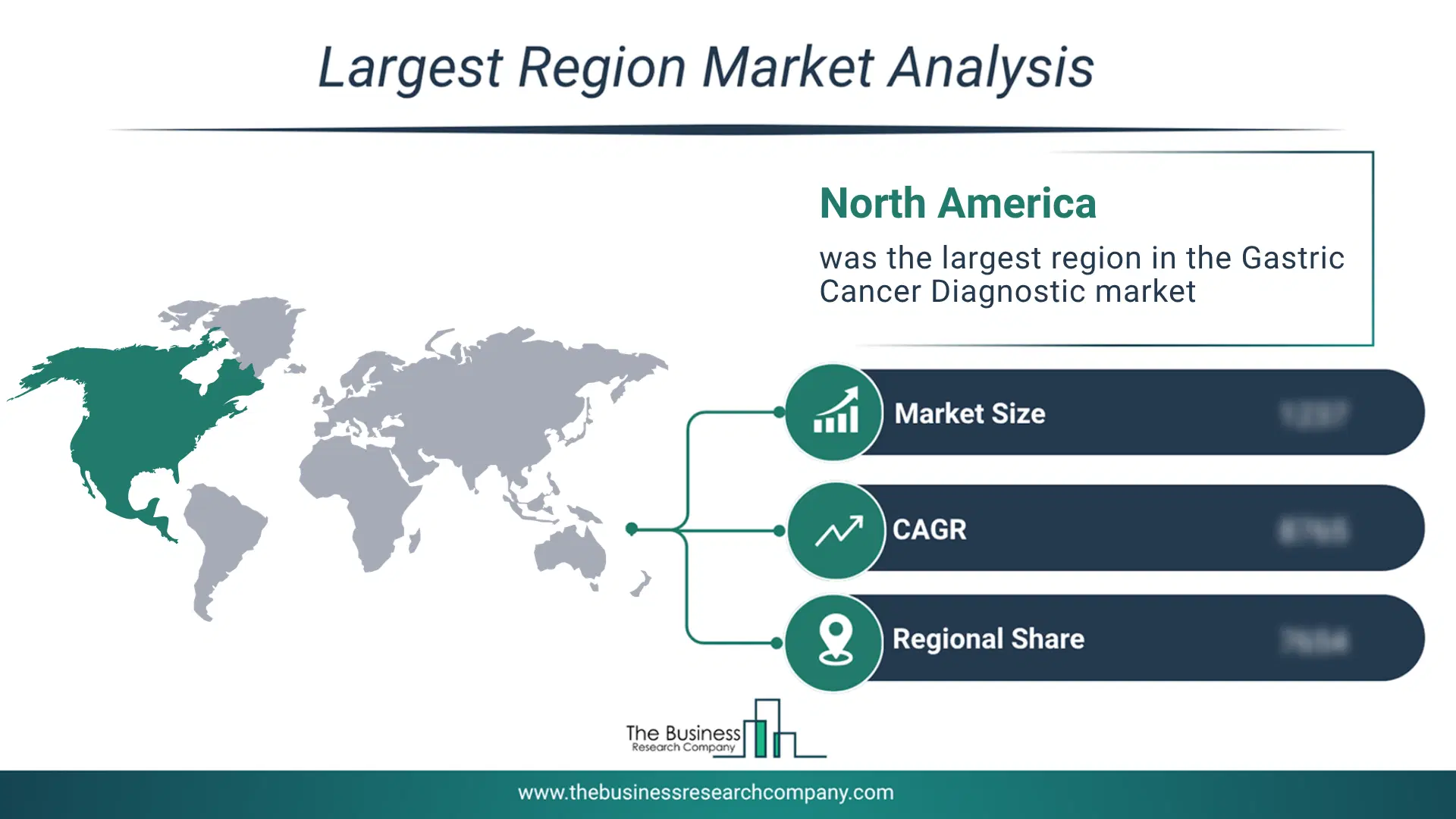
Regional Outlook
North America was the largest region in the gastric cancer diagnostic market in 2025. Asia Pacific is expected to be the fastest-growing region in the forecast period. The regions covered in this market report are Asia-Pacific, South East Asia, Western Europe, Eastern Europe, North America, South America, Middle East, Africa. The countries covered in this market report are Australia, Brazil, China, France, Germany, India, Indonesia, Japan, Taiwan, Russia, South Korea, UK, USA, Canada, Italy, SpainWhat Defines the Gastric Cancer Diagnostic Market?
The gastric cancer diagnostic market consists of revenues earned by entities by providing services such as genetic counselling, risk assessment programmes, telepathology consultations, and patient navigation services. The market value includes the value of related goods sold by the service provider or included within the service offering. The gastric cancer diagnostics market also includes sales of liquid biopsy kits, rapid diagnostic test (RDT) devices, digital pathology scanners, contrast agents for imaging, and lab-on-a-chip systems. Values in this market are ‘factory gate’ values, that is, the value of goods sold by the manufacturers or creators of the goods, whether to other entities (including downstream manufacturers, wholesalers, distributors, and retailers) or directly to end customers. The value of goods in this market includes related services sold by the creators of the goods.How is Market Value Defined and Measured?
The market value is defined as the revenues that enterprises gain from the sale of goods and/or services within the specified market and geography through sales, grants, or donations in terms of the currency (in USD unless otherwise specified). The revenues for a specified geography are consumption values that are revenues generated by organizations in the specified geography within the market, irrespective of where they are produced. It does not include revenues from resales along the supply chain, either further along the supply chain or as part of other products.
This chart presents market attractiveness based on a quantitative evaluation of growth, competition, strategic alignment, and risk, offering a clear view of opportunity areas for decision-making. This chart is for illustrative purposes; the full report contains the complete analysis.

This chart highlights the Total Addressable Market (TAM) by estimating the maximum revenue opportunity using an assumption-driven approach, supporting strategic planning and opportunity sizing across markets. The chart is illustrative; the full report provides a more comprehensive analysis.
What Key Data and Analysis Are Included in the Gastric Cancer Diagnostic Market Report 2026?
The gastric cancer diagnostic market research report is one of a series of new reports from The Business Research Company that provides market statistics, including industry global market size, regional shares, competitors with the market share, detailed market segments, market trends and opportunities, and any further data you may need to thrive in the gastric cancer diagnostic industry. The market research report delivers a complete perspective of everything you need, with an in-depth analysis of the current and future state of the industry.Gastric Cancer Diagnostic Market Report Forecast Analysis
| Report Attribute | Details |
|---|---|
| Market Size Value In 2026 | $2.98 billion |
| Revenue Forecast In 2030 | $3.87 billion |
| Growth Rate | CAGR of 6.8% from 2026 to 2030 |
| Base Year For Estimation | 2025 |
| Actual Estimates/Historical Data | 2020-2025 |
| Forecast Period | 2026 - 2030 |
| Market Representation | Revenue in USD Billion and CAGR from 2026 to 2030 |
| Segments Covered | Diagnostic Type, Product, Technology, Application, End User |
| Regional Scope | Asia-Pacific, Western Europe, Eastern Europe, North America, South America, Middle East, Africa |
| Country Scope | The countries covered in the report are Australia, Brazil, China, France, Germany, India, Indonesia, Japan, Taiwan, Russia, South Korea, UK, USA, Canada, Italy, Spain. |
| Key Companies Profiled | F. Hoffmann-La Roche Ltd., Thermo Fisher Scientific Inc., Abbott Laboratories, Becton Dickinson and Company, Quest Diagnostics Incorporated, Agilent Technologies Inc., Illumina Inc., bioMérieux SA, Qiagen N.V., DiaSorin S.p.A, Natera Inc., Myriad Genetics Inc., Fulgent Genetics Inc., Foundation Medicine Inc., Invitae Corporation, NeoGenomics Laboratories Inc., Fujirebio Inc., MiRXES Pte Ltd., BIOCEPT Inc., Pillar Biosciences Inc. |
| Customization Scope | Request for Customization |
| Pricing And Purchase Options | Explore Purchase Options |