

Gastrointestinal Bleeding Treatment Devices Market Report 2026
Global Outlook – By Product (Endoscopic Thermal Hemostasis Devices, Mechanical Hemostasis Devices, Injection-Based Hemostasis Devices, Topical Hemostatic Agents & Powders, Combination Or Multimodal Hemostasis Devices), By GI Tract Division (Upper GI Tract, Lower GI Tract), By End User (Hospitals Or Clinics, Ambulatory Surgical Centers, Other End-users) – Market Size, Trends, Strategies, and Forecast to 2030
Gastrointestinal Bleeding Treatment Devices Market Overview
• Gastrointestinal Bleeding Treatment Devices market size has reached to $0.92 billion in 2025 • Expected to grow to $1.39 billion in 2030 at a compound annual growth rate (CAGR) of 8.6% • Growth Driver: Increasing Prevalence Of Gastrointestinal Diseases • Market Trend: Investment In Artificial Intelligence For Gastroenterology • North America was the largest region in 2025 and Asia-Pacific is the fastest growing region.What Is Covered Under Gastrointestinal Bleeding Treatment Devices Market?
Gastrointestinal (GI) bleeding is a sign of an illness in which the gastrointestinal system bleeds. The bleeding could occur anywhere in the gastrointestinal system, including the large intestine, anus, esophagus, small intestine, rectum, and stomach. The main type of products used in gastrointestinal bleeding treatment devices market are endoscopic mechanical devices, endoscopic thermal devices, and others. Endoscopic mechanical devices are used in the management of GI arterial bleeding. These include hemostatic clips, also known as through-the-scope (TTS) clips, endoscopic detachable snare ligation (EDSL) devices, endoscopic suturing, and over-the-scope clips (OTSC), and will be reviewed for their technology use and clinical application. The gastrointestinal bleeding treatment devices market is also segmented by GI tract division into the lower GI tract and upper GI tract and is used in hospitals or clinics, ambulatory surgical centers, others.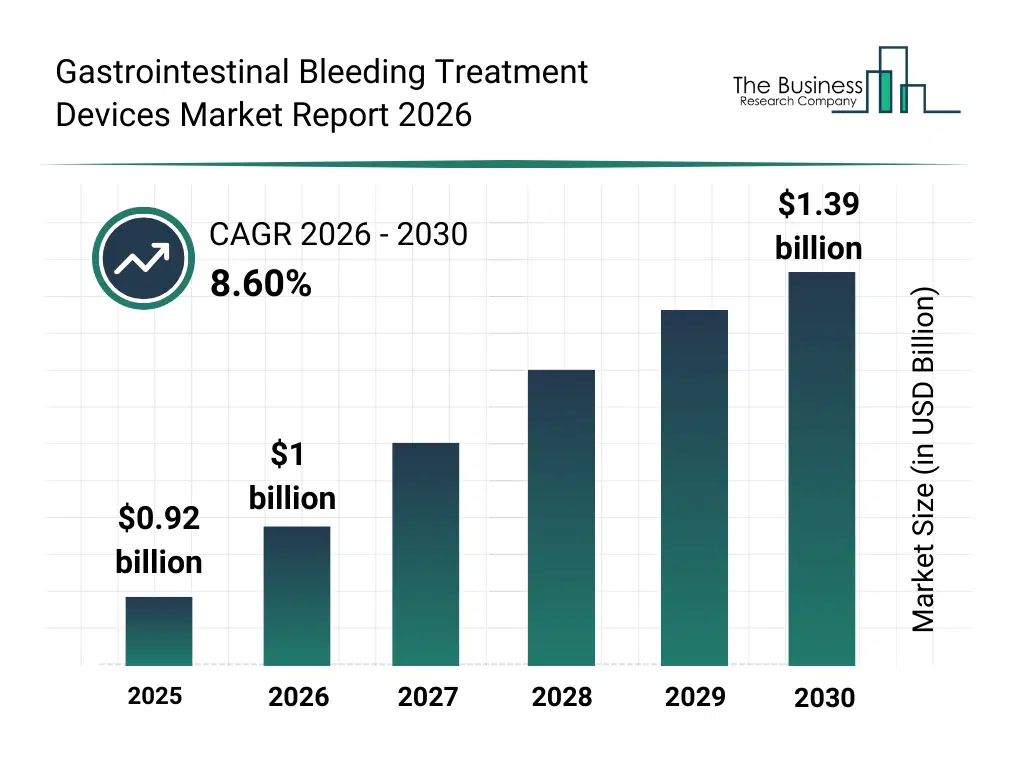
What Is The Gastrointestinal Bleeding Treatment Devices Market Size and Share 2026?
The gastrointestinal bleeding treatment devices market size has grown strongly in recent years. It will grow from $0.92 billion in 2025 to $1 billion in 2026 at a compound annual growth rate (CAGR) of 8.7%. The growth in the historic period can be attributed to increasing incidence of gastrointestinal disorders, rising prevalence of peptic ulcer disease, expansion of endoscopic diagnostic procedures, growing hospital-based gi interventions, availability of advanced endoscopy equipment.What Is The Gastrointestinal Bleeding Treatment Devices Market Growth Forecast?
The gastrointestinal bleeding treatment devices market size is expected to see strong growth in the next few years. It will grow to $1.39 billion in 2030 at a compound annual growth rate (CAGR) of 8.6%. The growth in the forecast period can be attributed to increasing adoption of next-generation endoscopic devices, rising demand for outpatient gi procedures, growing focus on early bleeding detection, expansion of ambulatory surgical centers, increasing investments in advanced gi care technologies. Major trends in the forecast period include increasing adoption of advanced endoscopic hemostasis devices, rising use of minimally invasive gi bleeding treatments, growing demand for precision thermal ablation tools, expansion of mechanical hemostatic solutions, enhanced focus on rapid bleeding control technologies.
Global Gastrointestinal Bleeding Treatment Devices Market Segmentation
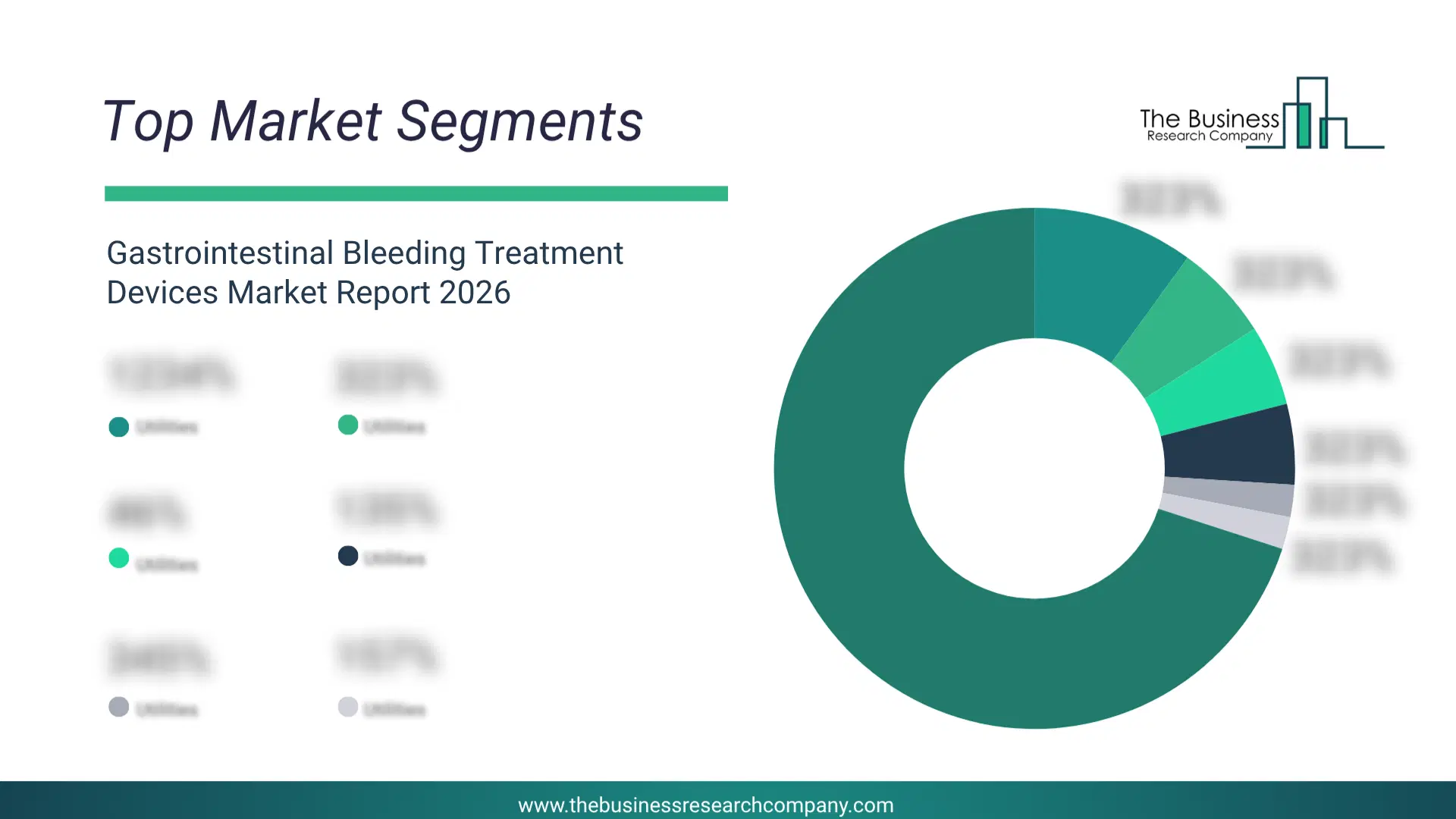
1) By Product: Endoscopic Thermal Hemostasis Devices, Mechanical Hemostasis Devices, Injection-Based Hemostasis Devices, Topical Hemostatic Agents & Powders, Combination Or Multimodal Hemostasis Devices 2) By GI Tract Division: Upper GI Tract, Lower GI Tract 3) By End User: Hospitals Or Clinics, Ambulatory Surgical Centers, Other End-users Subsegments: 1) By Endoscopic Thermal Hemostasis Devices: Electrocautery And Electrosurgical Coagulation Devices, Argon Plasma Coagulation (APC) Devices, Radiofrequency Ablation (RFA) Devices, Laser Coagulation Devices, Heater Probe Devices 2) By Mechanical Hemostasis Devices: Hemostatic Clips (Through-the-Scope And Over-the-Scope Clips), Endoscopic Band Ligation Devices, Endoscopic Suturing Devices, Compression And Tamponade Devices 3) By Injection-Based Hemostasis Devices: Epinephrine Injection Systems, Sclerosant Injection Devices, Cyanoacrylate Glue Injection Devices, Saline And Combination Injection Systems 4) By Topical Hemostatic Agents And Powders: Hemostatic Powder Sprays, Absorbable Hemostatic Agents, Fibrin-Based Sealants, Collagen-Based Hemostatic Agents 5) By Combination And Multimodal Hemostasis Devices: Thermal And Mechanical Combination Systems, Injection And Mechanical Combination Systems, Integrated Multimodal Endoscopic Hemostasis PlatformsWhat Is The Driver Of The Gastrointestinal Bleeding Treatment Devices Market?
The increasing burden of gastrointestinal disorders is expected to make the market more lucrative. Gastrointestinal diseases can be caused due to a low fiber diet, being stressed, not drinking enough water, eating a lot of dairy foods, inactive lifestyle, aging, and genetic factors. For instance, in October 2024, according to the National Library of Medicine, a US-based national library, reported in 2023, an 825 per 100,000 Canadians have inflammatory bowel disease (IBD), affecting over 320,000 individuals, with projections indicating this number could rise to 1.1% of the population, or around 470,000 Canadians, by 2035. Therefore, increase in prevalence of disorders related to GI tract is driving the market.Key Players In The Global Gastrointestinal Bleeding Treatment Devices Market
Major companies operating in the gastrointestinal bleeding treatment devices market are CONMED Corporation, Boston Scientific Corporation, Ovesco Endoscopy AG, Olympus Corporation, Cook Medical, Erbe Elektromedizin GmbH, Steris plc, Medtronic plc, Johnson & Johnson, Abbott Laboratories, Fujifilm Holdings Corporation, Pentax Medical, Merit Medical Systems, Teleflex Incorporated, AngioDynamics, BTG International Ltd., Smiths Medical, Terumo Corporation, Nipro Corporation, C. R. Bard Inc., EndoChoice Holdings Inc., GI Supply Inc., Hemostasis LLC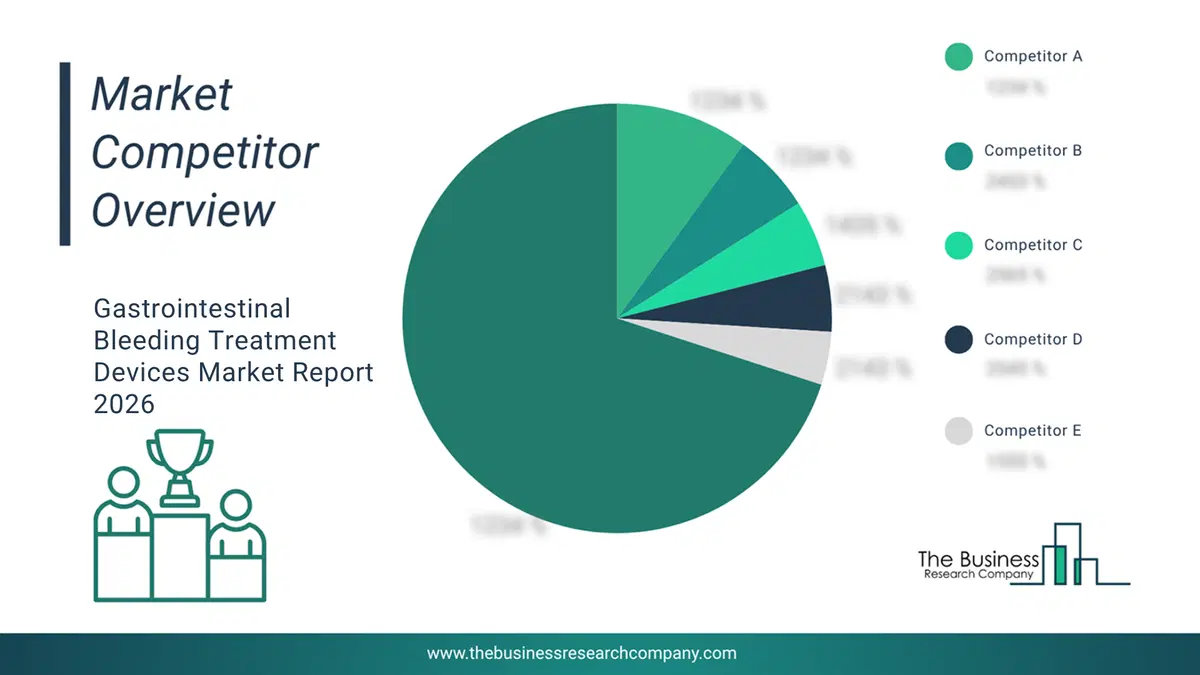
This chart is for illustrative purposes; the full report includes a detailed competitor analysis and comprehensive overview of the top 10 companies in the market.
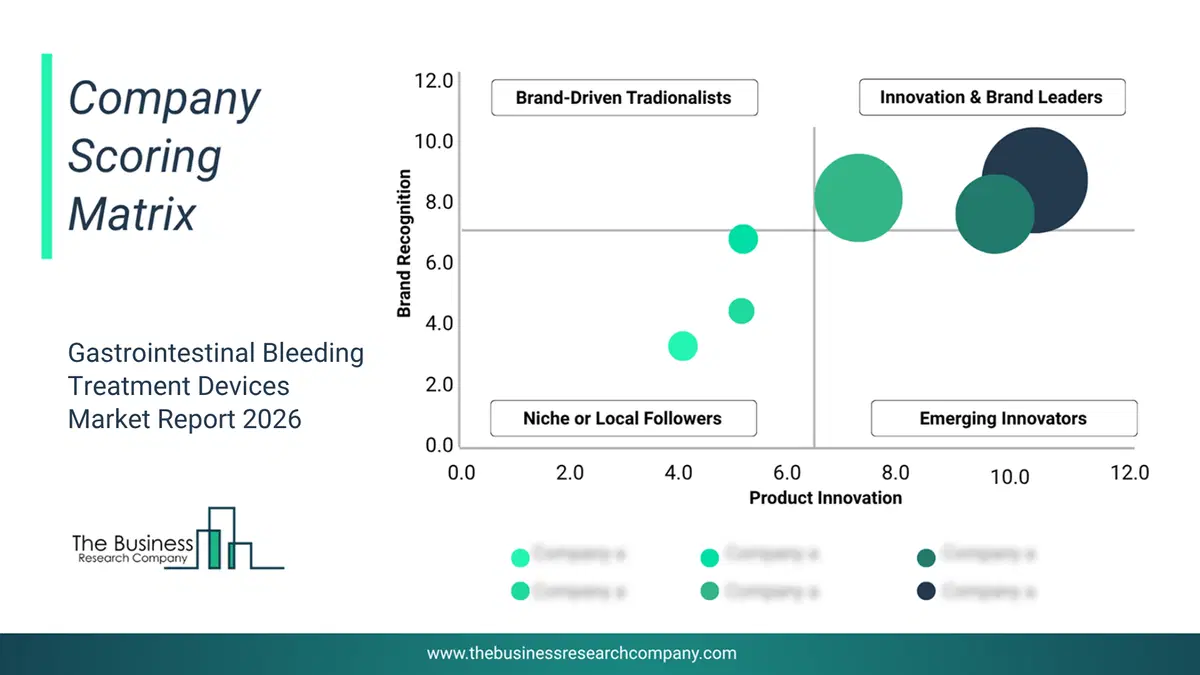
This chart maps companies by product innovation and brand strength, with bubble size indicating relative revenue, helping identify market leaders, challengers, and niche players. This is an illustrative chart; the full report provides a complete and accurate competitive analysis.
Global Gastrointestinal Bleeding Treatment Devices Market Trends and Insights
Major companies operating in the gastrointestinal bleeding treatment devices market are focusing on developing advanced solutions, such as Hemospray to enhance the effectiveness of treating acute bleeding in the gastrointestinal (GI) tract. Hemospray is a hemostatic powder designed to manage and control active bleeding in the gastrointestinal (GI) tract. For instance in January 2024, AIG Hospitals, a India -based hospital launched Hemospray, a breakthrough in controlling GI bleeding. Hemospray is a hemostatic agent specifically designed for use in endoscopic procedures to control acute gastrointestinal (GI) bleeding. Hemospray is notable for its ease of use, safety profile, and ability to control a wide variety of GI bleeds, from peptic ulcers to variceal hemorrhages.What Are Latest Mergers And Acquisitions In The Gastrointestinal Bleeding Treatment Devices Market?
In June 2023, Merck, a US-based global pharmaceutical company, acquired Prometheus Biosciences, Inc. for approximately $10.8 billion. This acquisition significantly enhances Merck's presence in the immunology sector, an area where the company previously had limited involvement. Prometheus Biosciences, Inc. is a US-based biotechnology company that focuses on the discovery, development, and commercialization of novel precision therapies and diagnostics for patients with gastrointestinal (GI) and immune-mediated diseases.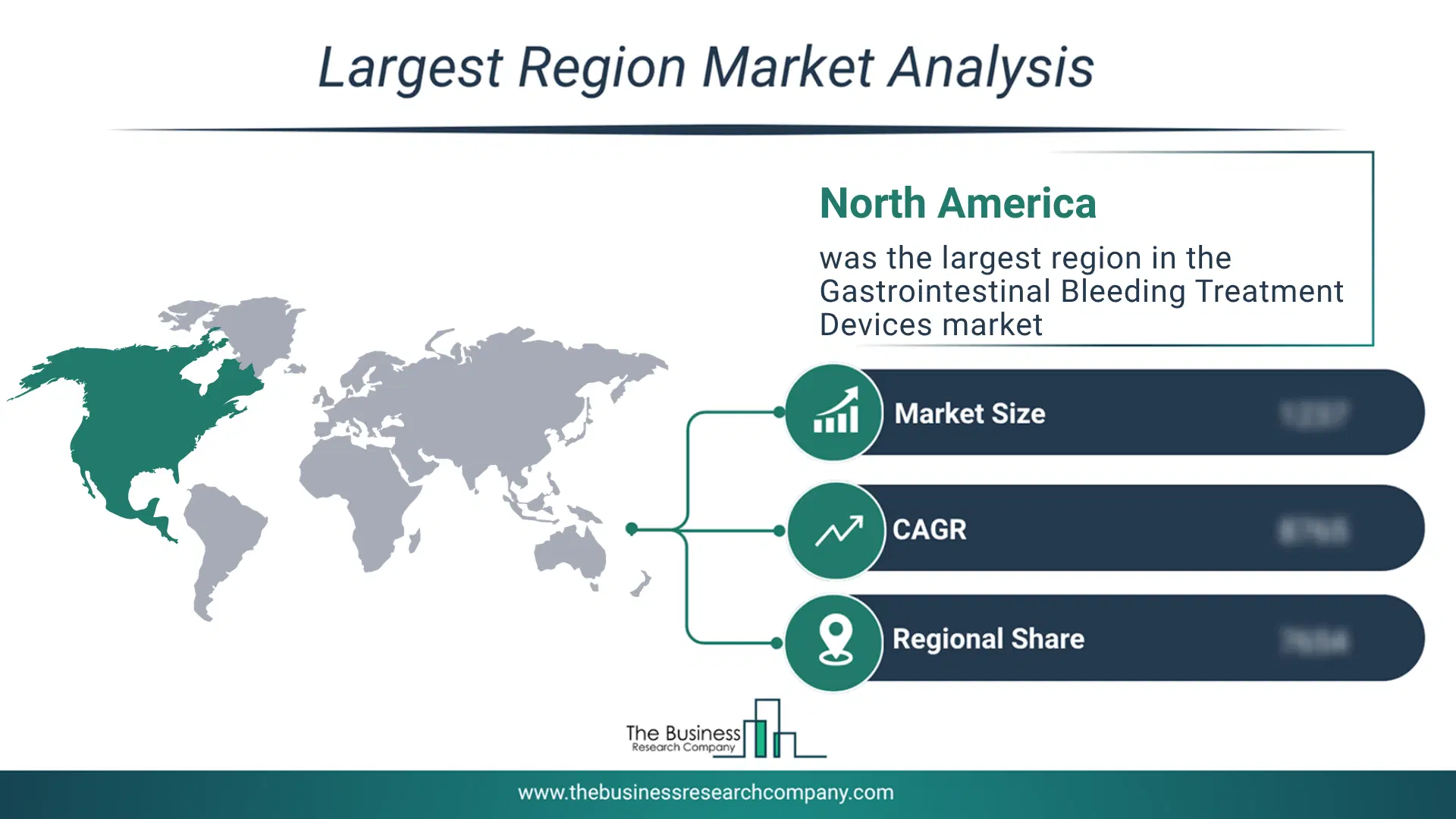
Regional Outlook
North America was the largest region in the gastrointestinal bleeding treatment devices market in 2025. Asia-Pacific is expected to be the fastest-growing region in the forecast period. The regions covered in this market report are Asia-Pacific, South East Asia, Western Europe, Eastern Europe, North America, South America, Middle East, Africa. The countries covered in this market report are Australia, Brazil, China, France, Germany, India, Indonesia, Japan, Taiwan, Russia, South Korea, UK, USA, Canada, Italy, SpainWhat Defines the Gastrointestinal Bleeding Treatment Devices Market?
The gastrointestinal bleeding treatment devices market consists of sales of thermal therapy, multipolar electrocoagulation probe, heater probe, hemostatic foreceps, and argon plasma coagulation. Values in this market are ‘factory gate’ values, that is the value of goods sold by the manufacturers or creators of the goods, whether to other entities (including downstream manufacturers, wholesalers, distributors and retailers) or directly to end customers. The value of goods in this market includes related services sold by the creators of the goods.How is Market Value Defined and Measured?
The market value is defined as the revenues that enterprises gain from the sale of goods and/or services within the specified market and geography through sales, grants, or donations in terms of the currency (in USD unless otherwise specified). The revenues for a specified geography are consumption values that are revenues generated by organizations in the specified geography within the market, irrespective of where they are produced. It does not include revenues from resales along the supply chain, either further along the supply chain or as part of other products.
This chart presents market attractiveness based on a quantitative evaluation of growth, competition, strategic alignment, and risk, offering a clear view of opportunity areas for decision-making. This chart is for illustrative purposes; the full report contains the complete analysis.

This chart highlights the Total Addressable Market (TAM) by estimating the maximum revenue opportunity using an assumption-driven approach, supporting strategic planning and opportunity sizing across markets. The chart is illustrative; the full report provides a more comprehensive analysis.
What Key Data and Analysis Are Included in the Gastrointestinal Bleeding Treatment Devices Market Report 2026?
The gastrointestinal bleeding treatment devices market research report is one of a series of new reports from The Business Research Company that provides market statistics, including industry global market size, regional shares, competitors with the market share, detailed market segments, market trends and opportunities, and any further data you may need to thrive in the gastrointestinal bleeding treatment devices industry. The market research report delivers a complete perspective of everything you need, with an in-depth analysis of the current and future state of the industry.Gastrointestinal Bleeding Treatment Devices Market Report Forecast Analysis
| Report Attribute | Details |
|---|---|
| Market Size Value In 2026 | $1 billion |
| Revenue Forecast In 2030 | $1.39 billion |
| Growth Rate | CAGR of 8.6% from 2026 to 2030 |
| Base Year For Estimation | 2025 |
| Actual Estimates/Historical Data | 2020-2025 |
| Forecast Period | 2026 - 2030 |
| Market Representation | Revenue in USD Billion and CAGR from 2026 to 2030 |
| Segments Covered | Product, GI Tract Division, End User |
| Regional Scope | Asia-Pacific, Western Europe, Eastern Europe, North America, South America, Middle East, Africa |
| Country Scope | The countries covered in the report are Australia, Brazil, China, France, Germany, India, Indonesia, Japan, Taiwan, Russia, South Korea, UK, USA, Canada, Italy, Spain. |
| Key Companies Profiled | CONMED Corporation, Boston Scientific Corporation, Ovesco Endoscopy AG, Olympus Corporation, Cook Medical, Erbe Elektromedizin GmbH, Steris plc, Medtronic plc, Johnson & Johnson, Abbott Laboratories, Fujifilm Holdings Corporation, Pentax Medical, Merit Medical Systems, Teleflex Incorporated, AngioDynamics, BTG International Ltd., Smiths Medical, Terumo Corporation, Nipro Corporation, C. R. Bard Inc., EndoChoice Holdings Inc., GI Supply Inc., Hemostasis LLC |
| Customization Scope | Request for Customization |
| Pricing And Purchase Options | Explore Purchase Options |