
Gender-Inclusive Health Insurance Market Report 2026
Global Outlook – By Coverage Type (Individual, Family, Group), By Plan Type (Public, Private, Employer Sponsored), By Service Provider (Insurance Companies, Third Party Administrators, Government Agencies), By Distribution Channel (Direct Sales, Insurance Brokers And Agents, Online Insurance Platforms, Employer Benefit Programs), By End User (Lesbian, Gay, Bisexual, Transgender, Queer And Other Gender And Sexual Minority Community, Transgender Individuals, Non Binary Individuals, Other End Users) – Market Size, Trends, Strategies, and Forecast to 2030
Gender-Inclusive Health Insurance Market Overview
• Gender-Inclusive Health Insurance market size has reached to $17.86 billion in 2025 • Expected to grow to $33.39 billion in 2030 at a compound annual growth rate (CAGR) of 13.2% • Growth Driver: The Growth In Transgender And Non-Binary Populations Driving The Growth Of The Market Due To Increased Social Acceptance • North America was the largest region in 2025 and Asia-Pacific is the fastest growing region.What Is Covered Under Gender-Inclusive Health Insurance Market?
Gender-inclusive health insurance refers to health insurance policies designed to provide equitable healthcare coverage for individuals of all gender identities, including men, women, transgender, non-binary, and gender-diverse people. These plans may cover a broad range of medical services, including preventive care, mental health support, reproductive healthcare, and gender-affirming treatments, ensuring inclusive access to healthcare benefits. The main coverage types of gender-inclusive health insurance include individual, family, and group. Individual refers to health insurance plans purchased by a single person that provide inclusive healthcare benefits designed to address diverse medical needs while promoting equitable access to healthcare services. These plans are available as public, private, and employer sponsored plans and are offered by insurance companies, third party administrators, and government agencies. They are distributed through direct sales, insurance brokers and agents, online insurance platforms, and employer benefit programs and are utilized by end users including lesbian, gay, bisexual, transgender, queer and other gender and sexual minority community, transgender individuals, non binary individuals, and others.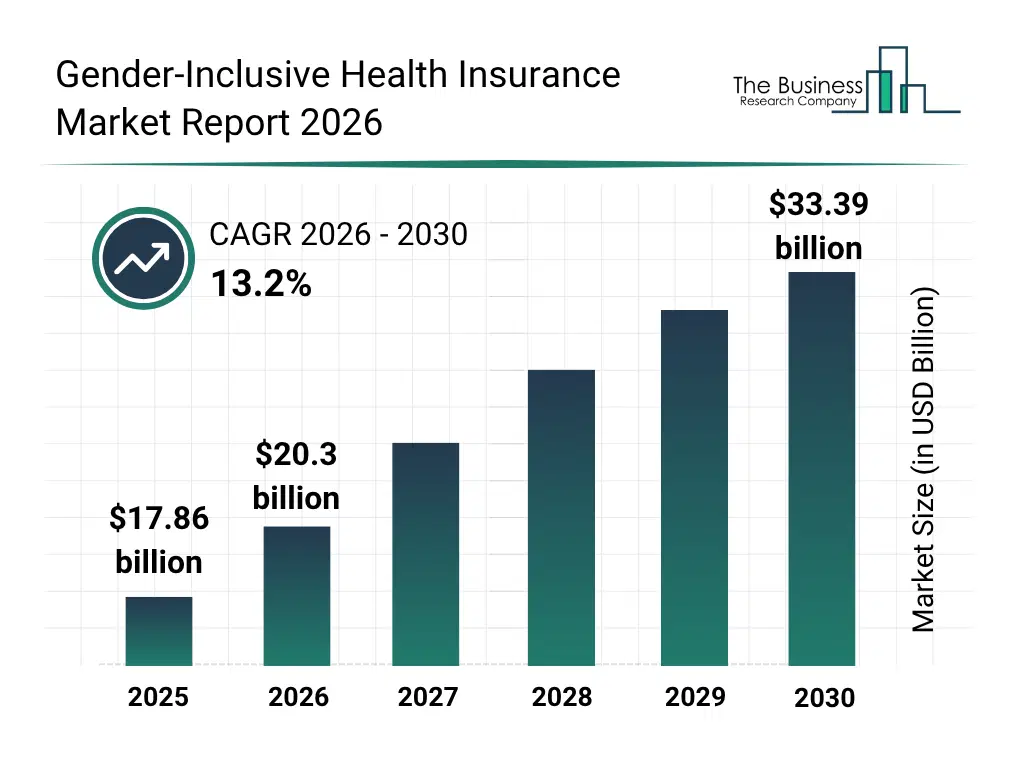
What Is The Gender-Inclusive Health Insurance Market Size and Share 2026?
The gender-inclusive health insurance market size has grown rapidly in recent years. It will grow from $17.86 billion in 2025 to $20.3 billion in 2026 at a compound annual growth rate (CAGR) of 13.7%. The growth in the historic period can be attributed to growing awareness of gender inclusive healthcare, increasing employer adoption of inclusive health benefits, rising demand for equitable insurance coverage, expanding access to preventive healthcare services, higher focus on healthcare equality.What Is The Gender-Inclusive Health Insurance Market Growth Forecast?
The gender-inclusive health insurance market size is expected to see rapid growth in the next few years. It will grow to $33.39 billion in 2030 at a compound annual growth rate (CAGR) of 13.2%. The growth in the forecast period can be attributed to increasing demand for gender affirming healthcare coverage, rising adoption of personalized insurance plans, growing investment in inclusive employee wellness programs, expanding access to comprehensive mental health benefits, higher focus on policy inclusivity and benefit expansion. Major trends in the forecast period include growing demand for inclusive health coverage policies, increasing coverage for gender affirming healthcare services, rising focus on mental health benefit expansion, expansion of preventive and wellness coverage programs, higher adoption of equitable employee health benefits.
Global Gender-Inclusive Health Insurance Market Segmentation
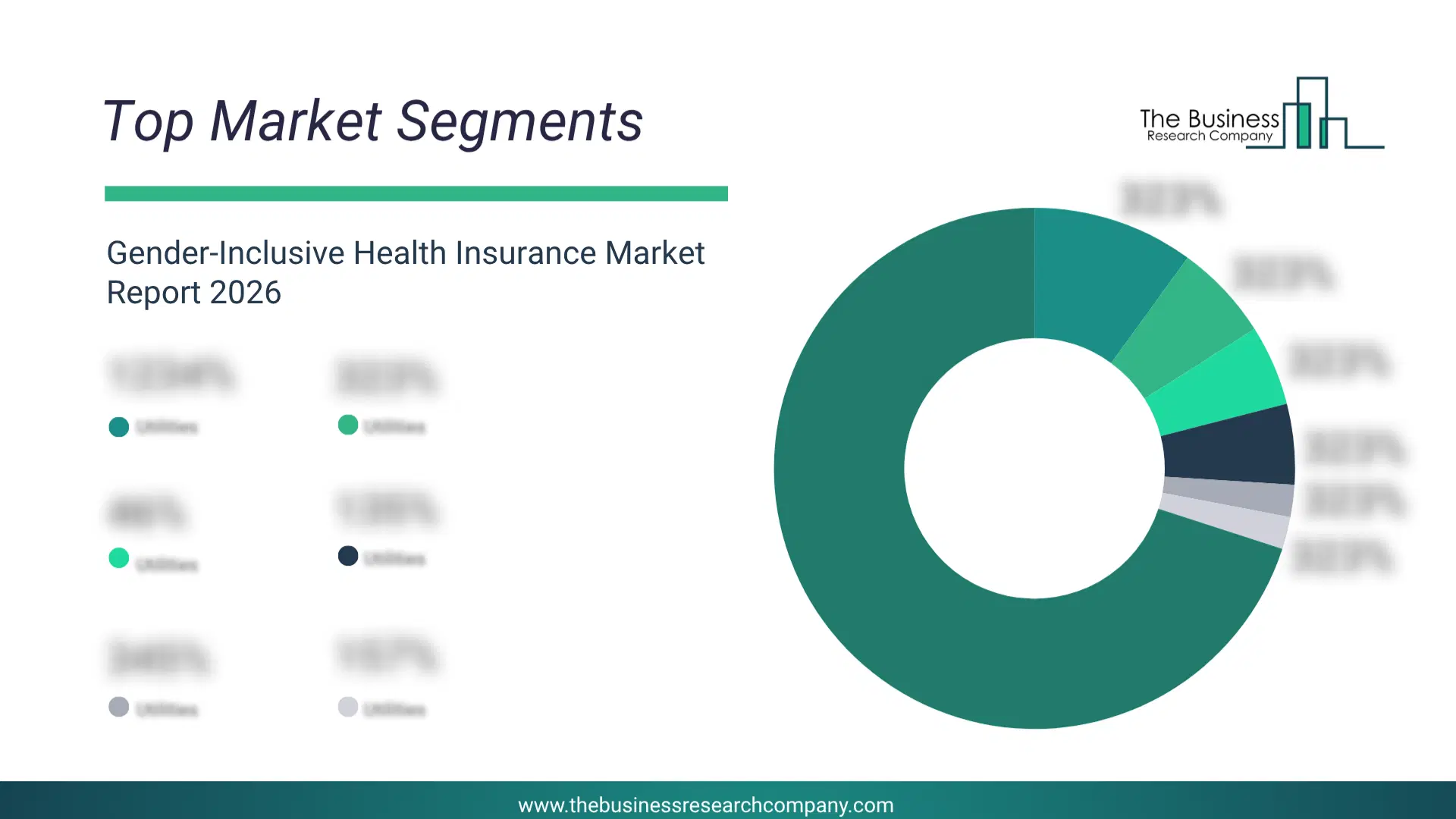
1) By Coverage Type: Individual, Family, Group 2) By Plan Type: Public, Private, Employer Sponsored 3) By Service Provider: Insurance Companies, Third Party Administrators, Government Agencies 4) By Distribution Channel: Direct Sales, Insurance Brokers And Agents, Online Insurance Platforms, Employer Benefit Programs 5) By End User: Lesbian, Gay, Bisexual, Transgender, Queer And Other Gender And Sexual Minority Community, Transgender Individuals, Non Binary Individuals, Other End Users Subsegments: 1) By Individual: Individual Health Coverage, Transgender Specific Health Plans, Non Binary Inclusive Health Plans, Gender Affirming Care Coverage Plans, Comprehensive Individual Medical Plans, Preventive And Wellness Coverage Plans 2) By Family: Family Health Coverage Plans, Inclusive Family Medical Plans, Family Plans With Gender Affirming Care Coverage, Parent And Dependent Coverage Plans, Comprehensive Household Health Plans, Family Wellness And Preventive Care Plans 3) By Group: Employer Sponsored Group Health Plans, Corporate Inclusive Health Coverage Plans, Small Business Group Health Plans, Large Enterprise Health Coverage Plans, Association Health Coverage Plans, Group Plans With Gender Affirming Care CoverageWhat Are The Drivers Of The Gender-Inclusive Health Insurance Market?
The growth in transgender and non-binary populations is expected to propel the growth of the gender-inclusive health insurance market going forward. The transgender and non-binary population refers to individuals whose gender identity differs from the sex assigned to them at birth (transgender) and those who do not identify exclusively as male or female, encompassing a range of gender identities outside the traditional binary classification (non-binary). The growth in transgender and non-binary populations is primarily due to increasing social acceptance, which has made people more comfortable openly identifying and reporting their gender identity. Growth in transgender and non-binary populations drives the expansion of gender-inclusive health insurance by increasing demand for tailored coverage and prompting insurers to design policies that address diverse medical, mental health, and transition-related care needs. For instance, in October 2025, according to the Society for Evidence-Based Gender Medicine (SEGM), a US-based non-profit group, nonbinary individuals rose slightly from 3.5% in 2023 to 3.7% in 2024. Therefore, the growth in transgender and non-binary populations is driving the growth of the gender-inclusive health insurance industry. The increasing mental health awareness is expected to propel the growth of the gender-inclusive health insurance market going forward. Mental health awareness refers to the understanding and recognition of mental health conditions, their impact on individuals and society, and the importance of reducing stigma while promoting early support and care. Increasing mental health awareness is due to greater public education, which helps people understand mental health conditions better, recognize symptoms early, and encourage open conversations that reduce stigma. Increasing mental health awareness contributes to gender-inclusive health insurance by encouraging insurers to recognize diverse mental health needs, reduce stigma in coverage decisions, and design more equitable and accessible benefits for all gender identities. For instance, in July 2024, according to the NHS Alliance, a UK-based independent membership body, in April 2024, approximately 426,000 mental health referrals were recorded, marking a 15% rise compared with the previous year. Therefore, increasing mental health awareness is driving the growth of the gender-inclusive health insurance industry.Key Players In The Global Gender-Inclusive Health Insurance Market
Major companies operating in the gender-inclusive health insurance market are UnitedHealth Group, CVS Health, The Cigna Group, Elevance Health, Allianz Partners, Centene Corporation, Humana, Kaiser Foundation Health Plan, AXA, Health Care Service Corporation, Zurich Insurance Group, Molina Healthcare, Sun Life Financial, Aviva, Blue Shield of California, BUPA, Independence Blue Cross, CareFirst of Maryland, Oscar Health, Medibank Private, ICICI Lombard General Insurance Company, HDFC ERGO General Insurance Company, Star Health And Allied Insurance Company, Niva Bupa Health Insurance Company, Aditya Birla Health Insurance Company, ManipalCigna Health Insurance Company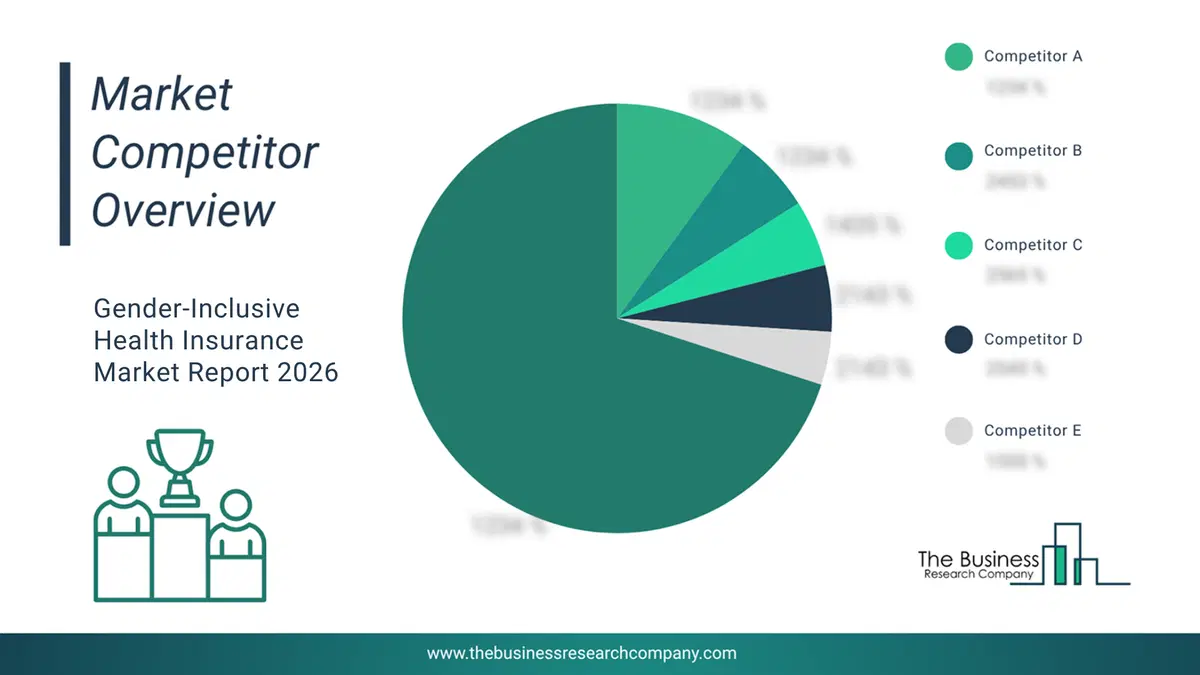
This chart is for illustrative purposes; the full report includes a detailed competitor analysis and comprehensive overview of the top 10 companies in the market.
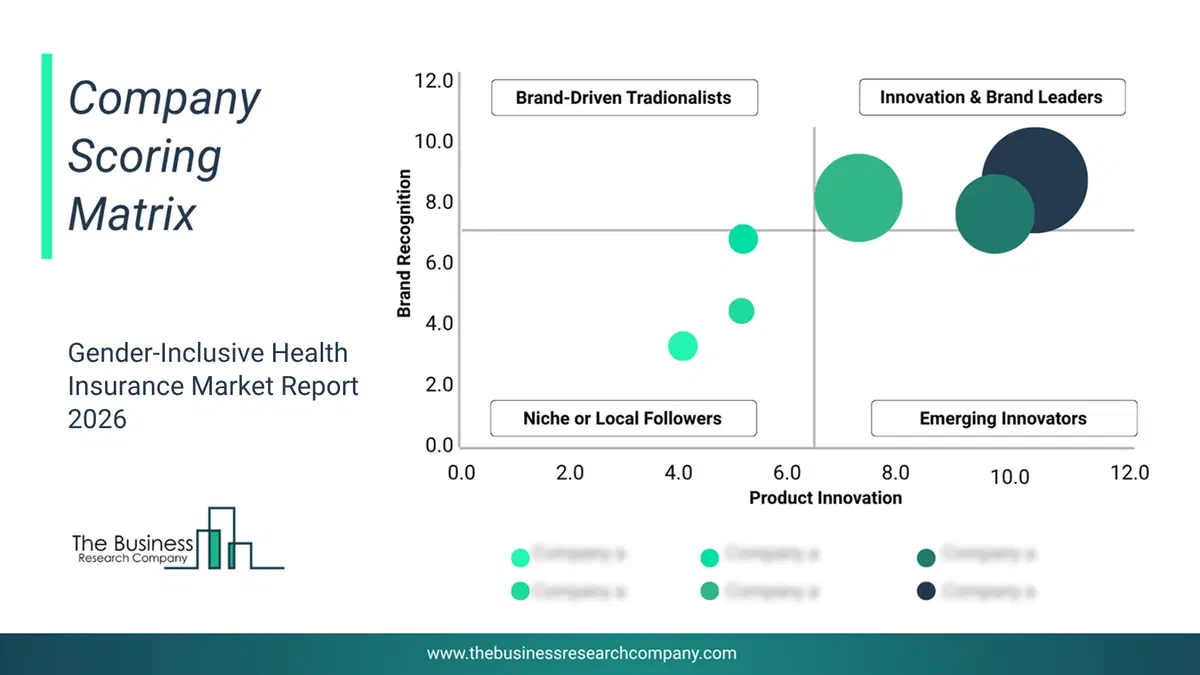
This chart maps companies by product innovation and brand strength, with bubble size indicating relative revenue, helping identify market leaders, challengers, and niche players. This is an illustrative chart; the full report provides a complete and accurate competitive analysis.
What Are Latest Mergers And Acquisitions In The Gender-Inclusive Health Insurance Market?
In July 2025, Fertifa Limited, a UK-based reproductive health benefits company, acquired Juniper Reproductive Health for an undisclosed amount. With this acquisition, Fertifa aims to expand its European reproductive health and inclusive benefits ecosystem by integrating Juniper’s digital-first care platform and strengthening its employer-focused offerings across fertility and family-building services. Juniper Reproductive Health Ltd is a UK-based provider of gender-inclusive reproductive health benefits and insurance.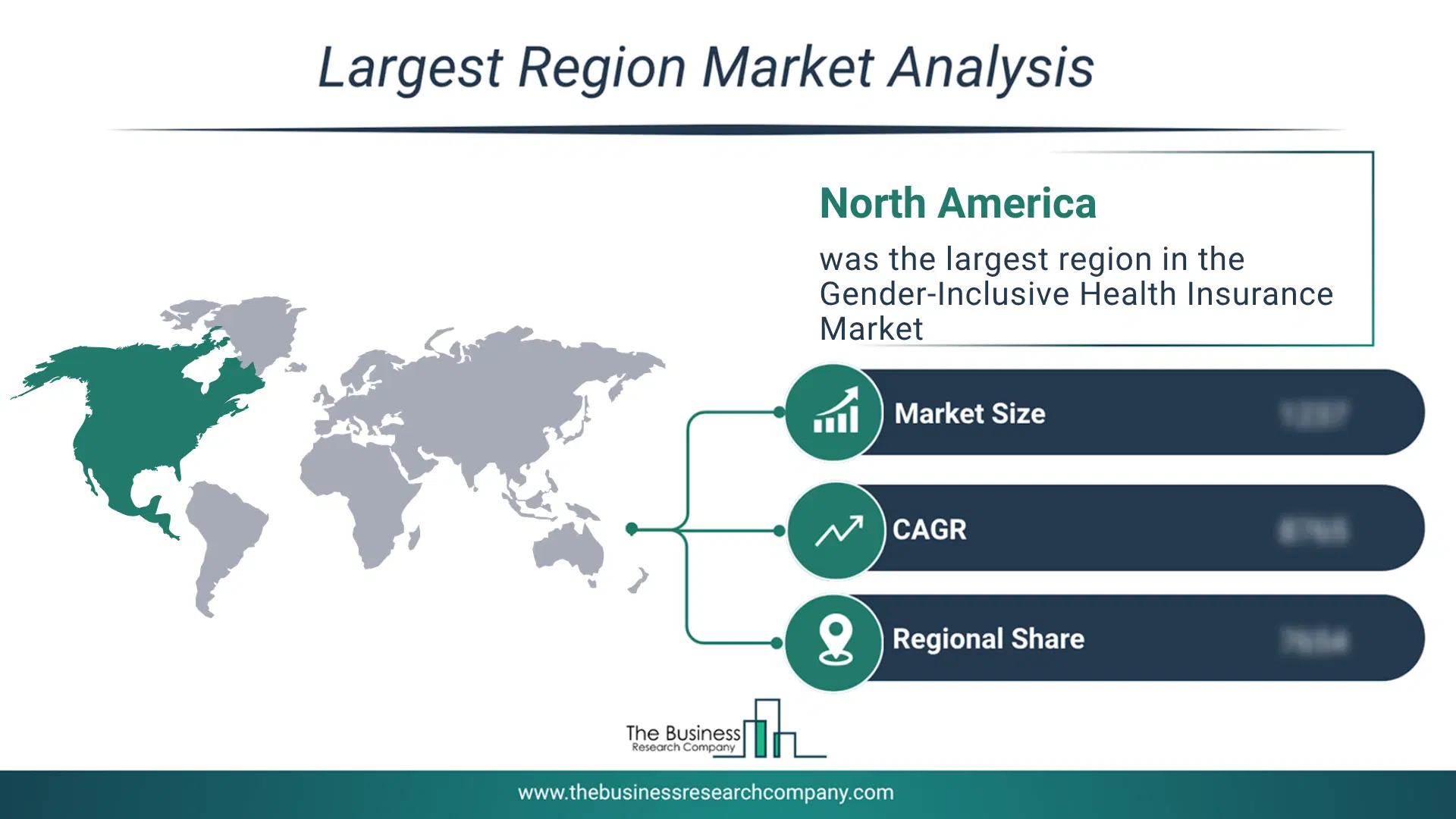
Regional Insights
North America was the largest region in the gender-inclusive health insurance market in 2025. Asia-Pacific is expected to be the fastest-growing region in the forecast period. The regions covered in this market report are Asia-Pacific, South East Asia, Western Europe, Eastern Europe, North America, South America, Middle East, Africa. The countries covered in this market report are Australia, Brazil, China, France, Germany, India, Indonesia, Japan, Taiwan, Russia, South Korea, UK, USA, Canada, Italy, Spain.What Defines the Gender-Inclusive Health Insurance Market?
The gender-inclusive health insurance market includes revenues earned by entities through inclusive health insurance policies, gender-affirming care coverage, reproductive health benefits, mental health coverage, and employer-sponsored insurance plans. The market value includes the value of related goods sold by the service provider or included within the service offering. Only goods and services traded between entities or sold to end consumers are included.How is Market Value Defined and Measured?
The market value is defined as the revenues that enterprises gain from the sale of goods and/or services within the specified market and geography through sales, grants, or donations in terms of the currency (in USD unless otherwise specified). The revenues for a specified geography are consumption values that are revenues generated by organizations in the specified geography within the market, irrespective of where they are produced. It does not include revenues from resales along the supply chain, either further along the supply chain or as part of other products.
This chart presents market attractiveness based on a quantitative evaluation of growth, competition, strategic alignment, and risk, offering a clear view of opportunity areas for decision-making. This chart is for illustrative purposes; the full report contains the complete analysis.

This chart highlights the Total Addressable Market (TAM) by estimating the maximum revenue opportunity using an assumption-driven approach, supporting strategic planning and opportunity sizing across markets. The chart is illustrative; the full report provides a more comprehensive analysis.
What Key Data and Analysis Are Included in the Gender-Inclusive Health Insurance Market Report 2026?
The gender-inclusive health insurance market research report is one of a series of new reports from The Business Research Company that provides market statistics, including industry global market size, regional shares, competitors with the market share, detailed market segments, market trends and opportunities, and any further data you may need to thrive in the gender-inclusive health insurance industry. The market research report delivers a complete perspective of everything you need, with an in-depth analysis of the current and future state of the industry.Gender-Inclusive Health Insurance Market Report Forecast Analysis
| Report Attribute | Details |
|---|---|
| Market Size Value In 2026 | $20.3 billion |
| Revenue Forecast In 2030 | $33.39 billion |
| Growth Rate | CAGR of 13.2% from 2026 to 2030 |
| Base Year For Estimation | 2025 |
| Actual Estimates/Historical Data | 2020-2025 |
| Forecast Period | 2026 - 2030 |
| Market Representation | Revenue in USD Billion and CAGR from 2026 to 2030 |
| Segments Covered | Coverage Type, Plan Type, Service Provider, Distribution Channel, End User |
| Regional Scope | Asia-Pacific, Western Europe, Eastern Europe, North America, South America, Middle East, Africa |
| Country Scope | The countries covered in the report are Australia, Brazil, China, France, Germany, India, Indonesia, Japan, Taiwan, Russia, South Korea, UK, USA, Canada, Italy, Spain. |
| Key Companies Profiled | UnitedHealth Group, CVS Health, The Cigna Group, Elevance Health, Allianz Partners, Centene Corporation, Humana, Kaiser Foundation Health Plan, AXA, Health Care Service Corporation, Zurich Insurance Group, Molina Healthcare, Sun Life Financial, Aviva, Blue Shield of California, BUPA, Independence Blue Cross, CareFirst of Maryland, Oscar Health, Medibank Private, ICICI Lombard General Insurance Company, HDFC ERGO General Insurance Company, Star Health And Allied Insurance Company, Niva Bupa Health Insurance Company, Aditya Birla Health Insurance Company, ManipalCigna Health Insurance Company |
| Customization Scope | Request for Customization |
| Pricing And Purchase Options | Explore Purchase Options |