

Gene Therapy For Hearing Loss Market Report 2026
Global Outlook – By Therapy Type (Gene Replacement Therapy, Gene Editing Therapy, Ribonucleic Acid Based Therapy, Cell Based Gene Therapy, Combination Gene Therapy), By Age Group (Pediatric Patients, Adult Patients, Geriatric Patients), By Application Type (Congenital Deafness Treatment, Hearing Restoration, Rare Genetic Disorder Treatment, Auditory Nerve Regeneration, Precision Medicine Applications), By End User (Hospitals And Clinics, Specialty Ear Care Centers, Research Institutes, Academic Institutions, Pharmaceutical And Biotechnology Companies) – Market Size, Trends, Strategies, and Forecast to 2030
Gene Therapy For Hearing Loss Market Report 2026 Market Overview
• Gene Therapy For Hearing Loss Market Report 2026 market size has reached to $0.66 billion in 2025 • Expected to grow to $1.71 billion in 2030 at a compound annual growth rate (CAGR) of 20.7% • Growth Driver: The Rising Prevalence Of Congenital Hearing Loss Driving The Growth Of The Market Due To Genetic Mutations • Market Trend: Advancements In Adeno-Associated Virus-Based Gene Replacement Therapies For Restoring Genetic Hearing Function • North America was the largest region in 2025 and Asia-Pacific is the fastest growing region.What Is Covered Under Gene Therapy For Hearing Loss Market?
Gene therapy for hearing loss refers to a medical approach that aims to treat or restore hearing by delivering functional genes into the inner ear cells to correct or compensate for genetic mutations that cause hearing impairment. It works by using engineered vectors, often viruses, to target specific auditory cells and enable the production of essential proteins needed for normal hearing function. The main therapy types of gene therapy for hearing loss include gene replacement therapy, gene editing therapy, ribonucleic acid based therapy, cell based gene therapy, and combination gene therapy. Gene replacement therapy refers to a treatment approach that introduces functional genes into cells to replace defective or missing genes responsible for hearing impairment. These therapies are designed for age groups including pediatric patients, adult patients, and geriatric patients. The key applications of congenital deafness treatment, hearing restoration, rare genetic disorder treatment, auditory nerve regeneration, and precision medicine applications, while the end-users hospitals and clinics, specialty ear care centers, research institutes, academic institutions, and pharmaceutical and biotechnology companies.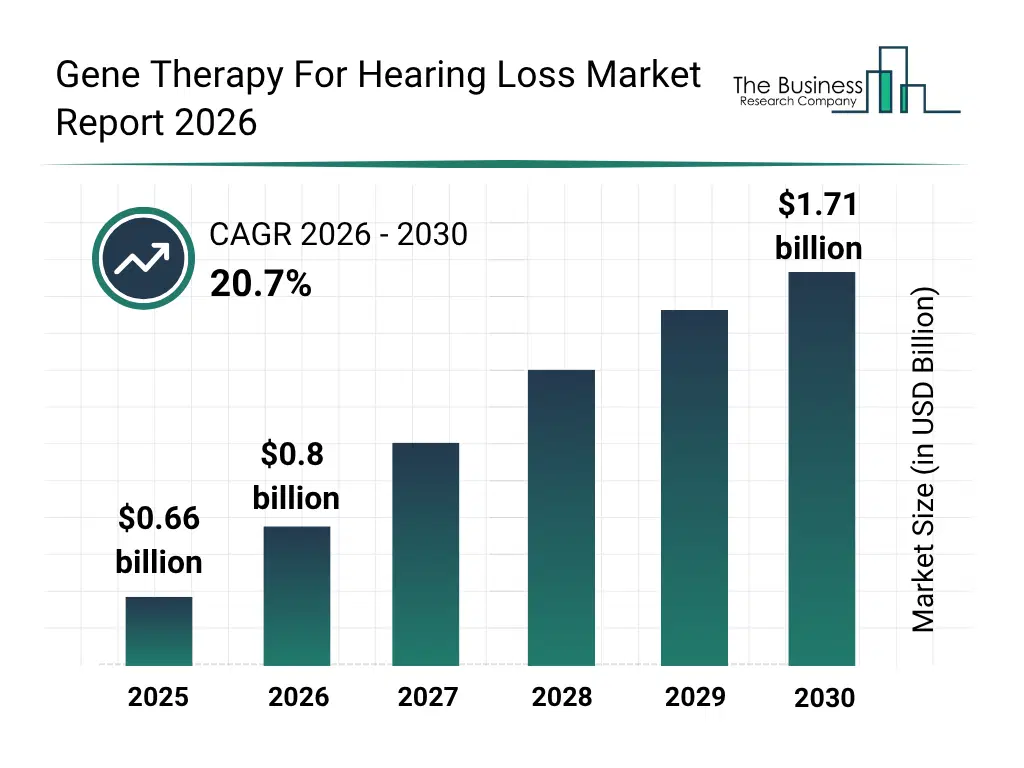
What Is The Gene Therapy For Hearing Loss Market Size and Share 2026?
The gene therapy for hearing loss market size has grown exponentially in recent years. It will grow from $0.66 billion in 2025 to $0.8 billion in 2026 at a compound annual growth rate (CAGR) of 21.2%. The growth in the historic period can be attributed to advancements in molecular genetics research for hearing disorders, development of cochlear implant technologies, increasing identification of hereditary hearing loss genes, growth in regenerative medicine research, rising prevalence of congenital hearing impairment cases.What Is The Gene Therapy For Hearing Loss Market Growth Forecast?
The gene therapy for hearing loss market size is expected to see exponential growth in the next few years. It will grow to $1.71 billion in 2030 at a compound annual growth rate (CAGR) of 20.7%. The growth in the forecast period can be attributed to expansion of crispr and gene editing clinical trials, increasing investment in regenerative auditory therapies, growth in personalized genomic medicine adoption, development of advanced inner ear drug delivery systems, rising regulatory approvals for gene-based hearing treatments. Major trends in the forecast period include gene therapy vector optimization for inner ear targeted delivery systems, precision genomic sequencing for identification of hearing loss mutations, regenerative hair cell therapy for auditory nerve restoration, advanced viral and non-viral delivery platforms for cochlear gene targeting, personalized medicine approaches for hereditary hearing impairment treatment.
Global Gene Therapy For Hearing Loss Market Segmentation
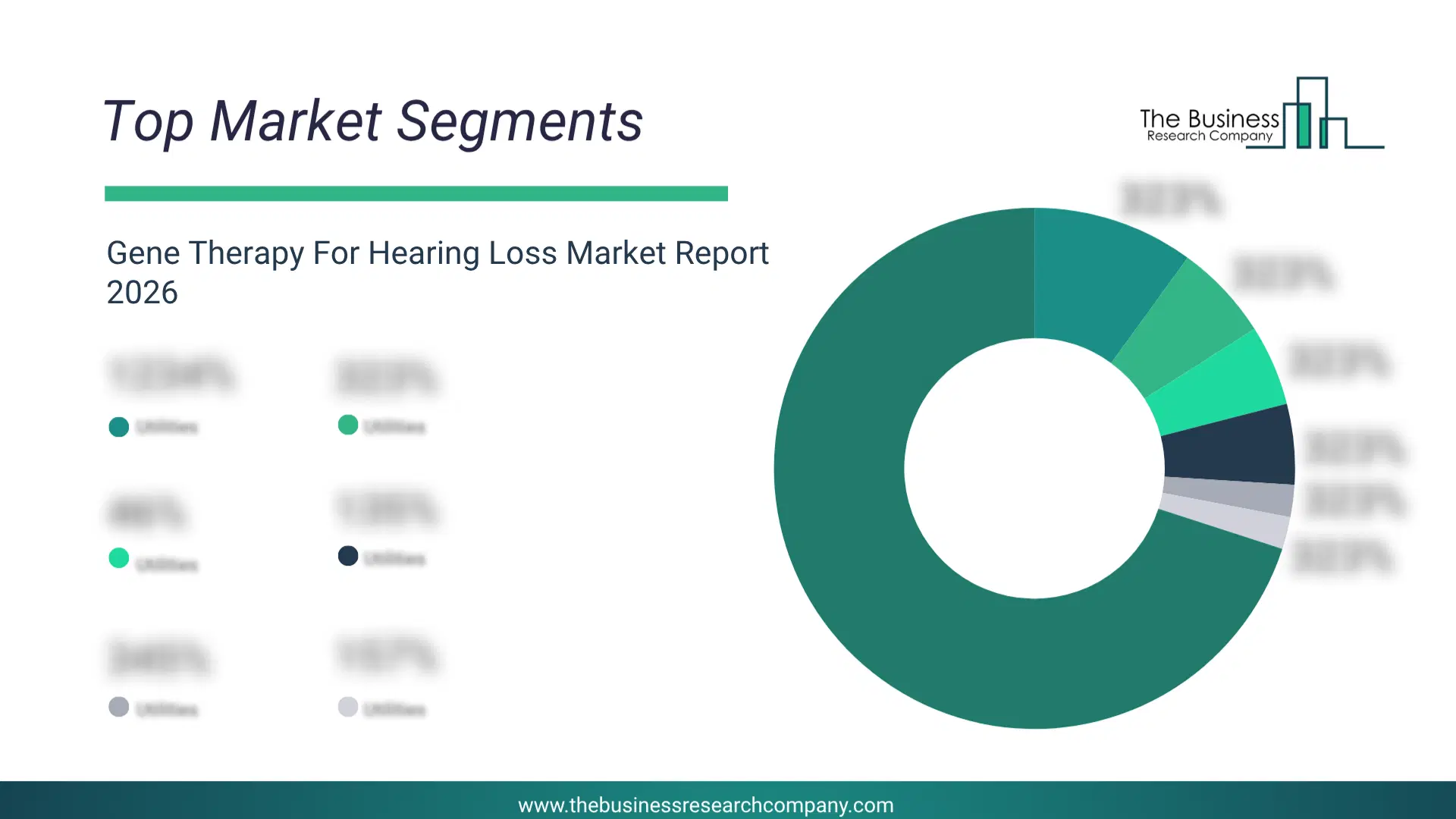
1) By Therapy Type: Gene Replacement Therapy, Gene Editing Therapy, Ribonucleic Acid Based Therapy, Cell Based Gene Therapy, Combination Gene Therapy 2) By Age Group: Pediatric Patients, Adult Patients, Geriatric Patients 3) By Application Type: Congenital Deafness Treatment, Hearing Restoration, Rare Genetic Disorder Treatment, Auditory Nerve Regeneration, Precision Medicine Applications 4) By End User: Hospitals And Clinics, Specialty Ear Care Centers, Research Institutes, Academic Institutions, Pharmaceutical And Biotechnology Companies Subsegments: 1) By Gene Replacement Therapy: Autosomal Dominant Hearing Loss Therapy, Autosomal Recessive Hearing Loss Therapy, Syndromic Hearing Loss Therapy, Non Syndromic Hearing Loss Therapy, Congenital Deafness Therapy, Hair Cell Regeneration Therapy 2) By Gene Editing Therapy: Clustered Regularly Interspaced Short Palindromic Repeats Based Therapy, Base Editing Therapy, Prime Editing Therapy, Zinc Finger Nuclease Therapy, Transcription Activator Like Effector Nuclease Therapy, Epigenetic Gene Modulation Therapy 3) By Ribonucleic Acid Based Therapy: Antisense Oligonucleotide Therapy, Small Interfering Ribonucleic Acid Therapy, Messenger Ribonucleic Acid Therapy, Micro Ribonucleic Acid Modulation Therapy, Splice Switching Therapy, Ribonucleic Acid Silencing Therapy 4) By Cell Based Gene Therapy: Stem Cell Mediated Gene Therapy, Induced Pluripotent Stem Cell Therapy, Progenitor Cell Gene Therapy, Hair Cell Regenerative Therapy, Mesenchymal Stem Cell Therapy, Neural Stem Cell Therapy 5) By Combination Gene Therapy: Gene And Drug Combination Therapy, Gene And Cochlear Implant Combination Therapy, Multi Gene Therapy, Gene And Cell Combination Therapy, Regenerative And Gene Combination Therapy, Precision Medicine Combination TherapyWhat Is The Driver Of The Gene Therapy For Hearing Loss Market?
The rising prevalence of congenital hearing loss is expected to propel the growth of the gene therapy for hearing loss market going forward. Congenital hearing loss refers to partial or complete hearing impairment present at birth that results from genetic mutations, prenatal infections, or developmental abnormalities affecting the auditory system. The rising prevalence of congenital hearing loss is due to genetic mutations that affect the development and function of the inner ear, leading to hearing impairment present at birth. Gene therapy for hearing loss supports congenital hearing loss treatment by targeting defective genes in inner ear cells to restore or improve auditory function through long-term therapeutic correction. For instance, in March 2026, according to the World Health Organization, a Switzerland-based intergovernmental organization, more than 430 million people worldwide, including 34 million children, currently require rehabilitation for disabling hearing loss, and this number is projected to exceed 700 million people nearly 10% of the global population by 2050. Therefore, the rising prevalence of congenital hearing loss is expected to propel the growth of the gene therapy for hearing loss industry.Key Players In The Global Gene Therapy For Hearing Loss Market
Major companies operating in the gene therapy for hearing loss market report are Regeneron Pharmaceuticals Inc., Eli Lilly and Company, Sensorion, Astellas Pharma Inc., BridgeBio Pharma Inc., Suzhou Otovia Therapeutics Co. Ltd.
This chart is for illustrative purposes; the full report includes a detailed competitor analysis and comprehensive overview of the top 10 companies in the market.
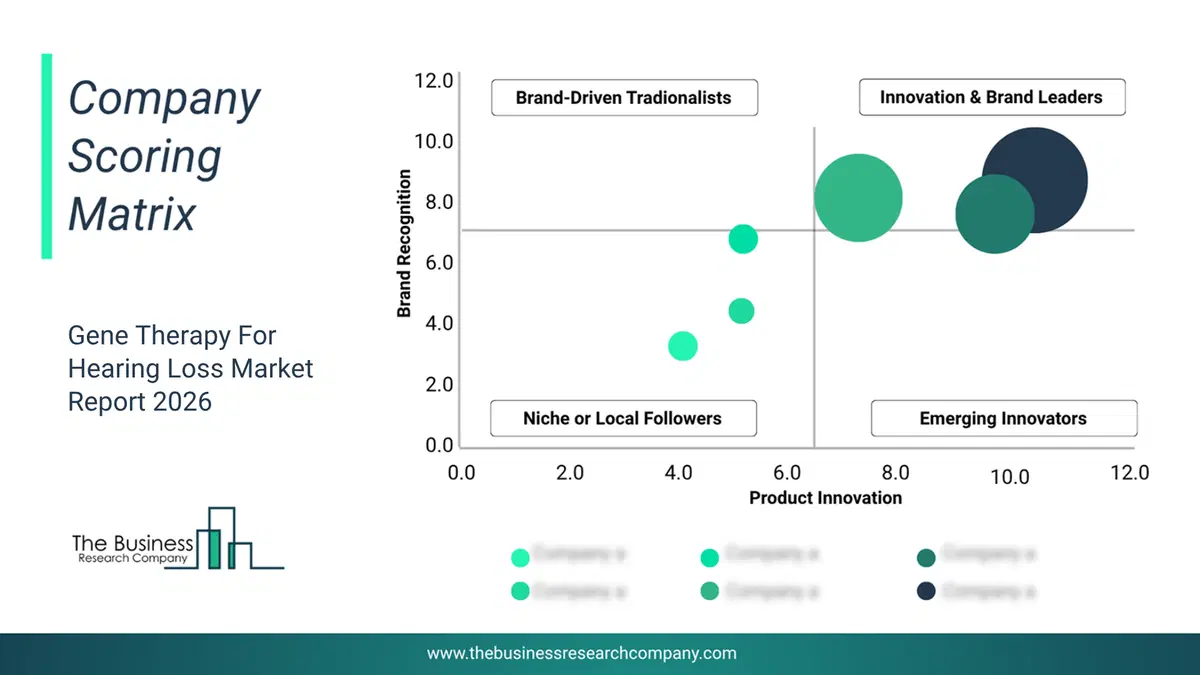
This chart maps companies by product innovation and brand strength, with bubble size indicating relative revenue, helping identify market leaders, challengers, and niche players. This is an illustrative chart; the full report provides a complete and accurate competitive analysis.
Global Gene Therapy For Hearing Loss Market Trends and Insights
Major companies operating in the gene therapy for hearing loss market are focusing on developing innovative solutions, such as adeno-associated virus (AAV)-based gene replacement therapies, to deliver functional copies of defective genes into inner ear cells, restore auditory function, and enable long-lasting treatment of genetic hearing impairment. Adeno-associated virus (AAV)-based gene replacement therapies are treatments that use a harmless virus called AAV as a delivery vehicle to carry and insert a healthy copy of a gene into a patient’s cells to replace a faulty or missing gene and restore normal function. For instance, in April 2026, Regeneron Pharmaceuticals Inc., a US-based biotechnology company, received approval from the U.S. Food and Drug Administration (FDA) for Otarmeni, designed as a single-dose, inner-ear-administered treatment using a targeted gene delivery vector that transports functional genetic material to cochlear cells responsible for sound transduction, aiming to restore physiological hearing pathways at the molecular level. It offers key benefits such as long-term or potentially durable hearing improvement, reduced dependence on external auditory devices, and early intervention potential in pediatric and adult patients with inherited hearing loss conditions.What Are Latest Mergers And Acquisitions In The Gene Therapy For Hearing Loss Market?
In September 2023, Regeneron Pharmaceuticals Inc., a US-based biotechnology company, acquired Decibel Therapeutics Inc. for $109 million. With this acquisition, Regeneron aims to strengthen its hearing loss gene therapy pipeline, expand its capabilities in genetic medicines, and accelerate the development of innovative treatments for congenital monogenic hearing disorders through Decibel’s advanced auditory gene therapy programs. Decibel Therapeutics Inc. is a US-based biotechnology company that develops precision gene therapies for hearing loss.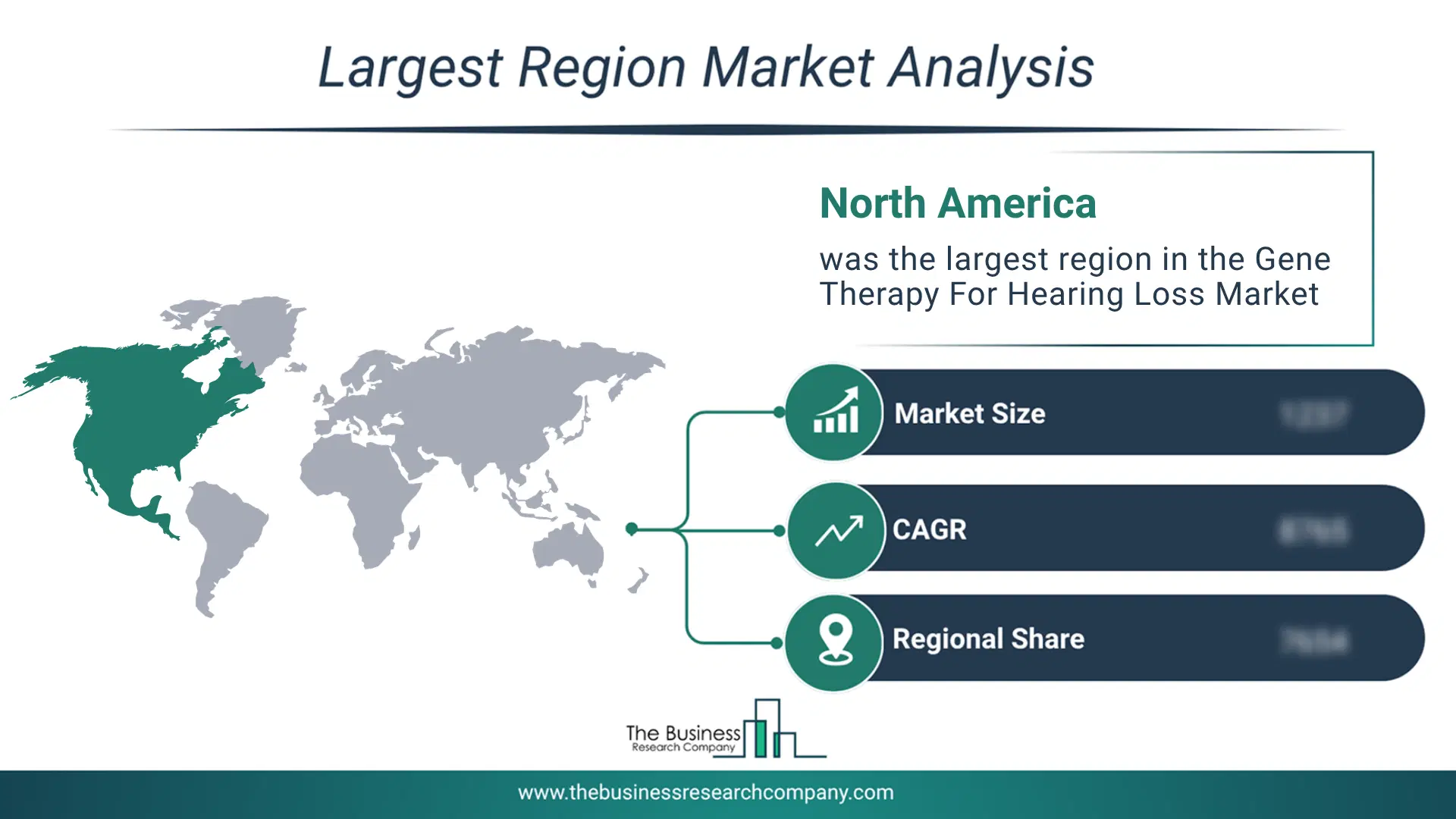
Regional Outlook
North America was the largest region in the gene therapy for hearing loss market in 2025. Asia-Pacific is expected to be the fastest-growing region in the forecast period. The regions covered in this market report are Asia-Pacific, South East Asia, Western Europe, Eastern Europe, North America, South America, Middle East, Africa. The countries covered in this market report are Australia, Brazil, China, France, Germany, India, Indonesia, Japan, Taiwan, Russia, South Korea, UK, USA, Canada, Italy, Spain.What Defines the Gene Therapy For Hearing Loss Market?
The gene therapy for hearing loss market includes revenues earned by entities by providing services such as genetic testing, vector development, preclinical research, clinical trial management, and post-treatment monitoring. The market value includes the value of related goods sold by the service provider or included within the service offering. Only goods and services traded between entities or sold to end consumers are included.How is Market Value Defined and Measured?
The market value is defined as the revenues that enterprises gain from the sale of goods and/or services within the specified market and geography through sales, grants, or donations in terms of the currency (in USD unless otherwise specified). The revenues for a specified geography are consumption values that are revenues generated by organizations in the specified geography within the market, irrespective of where they are produced. It does not include revenues from resales along the supply chain, either further along the supply chain or as part of other products.
This chart presents market attractiveness based on a quantitative evaluation of growth, competition, strategic alignment, and risk, offering a clear view of opportunity areas for decision-making. This chart is for illustrative purposes; the full report contains the complete analysis.

This chart highlights the Total Addressable Market (TAM) by estimating the maximum revenue opportunity using an assumption-driven approach, supporting strategic planning and opportunity sizing across markets. The chart is illustrative; the full report provides a more comprehensive analysis.
What Key Data and Analysis Are Included in the Gene Therapy For Hearing Loss Market Report 2026?
The gene therapy for hearing loss market research report is one of a series of new reports from The Business Research Company that provides market statistics, including industry global market size, regional shares, competitors with the market share, detailed market segments, market trends and opportunities, and any further data you may need to thrive in the gene therapy for hearing loss industry. The market research report delivers a complete perspective of everything you need, with an in-depth analysis of the current and future state of the industry.Gene Therapy for Hearing Loss Market Report Forecast Analysis
| Report Attribute | Details |
|---|---|
| Market Size Value In 2026 | $0.8 billion |
| Revenue Forecast In 2030 | $1.71 billion |
| Growth Rate | CAGR of 20.7% from 2026 to 2030 |
| Base Year For Estimation | 2025 |
| Actual Estimates/Historical Data | 2020-2025 |
| Forecast Period | 2026 - 2030 |
| Market Representation | Revenue in USD Billion and CAGR from 2026 to 2030 |
| Segments Covered | Therapy Type, Age Group, Application Type, End User |
| Regional Scope | Asia-Pacific, Western Europe, Eastern Europe, North America, South America, Middle East, Africa |
| Country Scope | The countries covered in the report are Australia, Brazil, China, France, Germany, India, Indonesia, Japan, Taiwan, Russia, South Korea, UK, USA, Canada, Italy, Spain. |
| Key Companies Profiled | Regeneron Pharmaceuticals Inc., Eli Lilly and Company, Sensorion, Astellas Pharma Inc., BridgeBio Pharma Inc., Suzhou Otovia Therapeutics Co. Ltd. |
| Customization Scope | Request for Customization |
| Pricing And Purchase Options | Explore Purchase Options |