
General Anesthesia Drugs Market Report 2026
Global Outlook – By Drug (Sevoflurane, Propofol, Dexmedetomidine, Remifentanil, Desflurane, Midazolam, Other Drugs), By Route Of Administration (Intravenous, Inhaled), By Application (Cardiovascular Surgery, Orthopedic Surgery, Neurosurgery, General Surgery, Cosmetic Surgery, Other Applications), By End-Use (Hospitals, Ambulatory Surgical Centers, Clinics, Other End-Users) – Market Size, Trends, Strategies, and Forecast to 2030
General Anesthesia Drugs Market Overview
• General Anesthesia Drugs market size has reached to $5.17 billion in 2025 • Expected to grow to $6.16 billion in 2030 at a compound annual growth rate (CAGR) of 3.6% • Growth Driver: Increase In Surgical Procedures Driving The Growth Of The Market Due To Rising Prevalence Of Chronic Diseases • Market Trend: Advancements In Short-Acting Anesthetic Drugs Enhancing Patient Safety And Surgical Efficiency • North America was the largest region in 2025 and Asia-Pacific is the fastest growing region.What Is Covered Under General Anesthesia Drugs Market?
General anesthesia drugs are pharmacological agents that induce a controlled, reversible state of unconsciousness, analgesia, and immobility during surgical or medical procedures. These drugs work by depressing the central nervous system, preventing the perception of pain and the formation of memories related to the procedure. General anesthesia drugs are administered intravenously or through inhalation and are carefully titrated to achieve the desired anesthetic depth, ensuring patient safety and comfort throughout the operation. The main general anesthesia drugs include sevoflurane, propofol, dexmedetomidine, remifentanil, desflurane, midazolam, and other medications. Sevoflurane, a volatile anesthetic, is commonly used for both inducing and maintaining general anesthesia during surgical procedures. It can be administered through intravenous or inhalation routes and is applied for cardiovascular, orthopedic, neurosurgery, general, cosmetic, and other surgeries. The drug serves a wide range of end users, such as hospitals, ambulatory surgical centers, clinics, and others.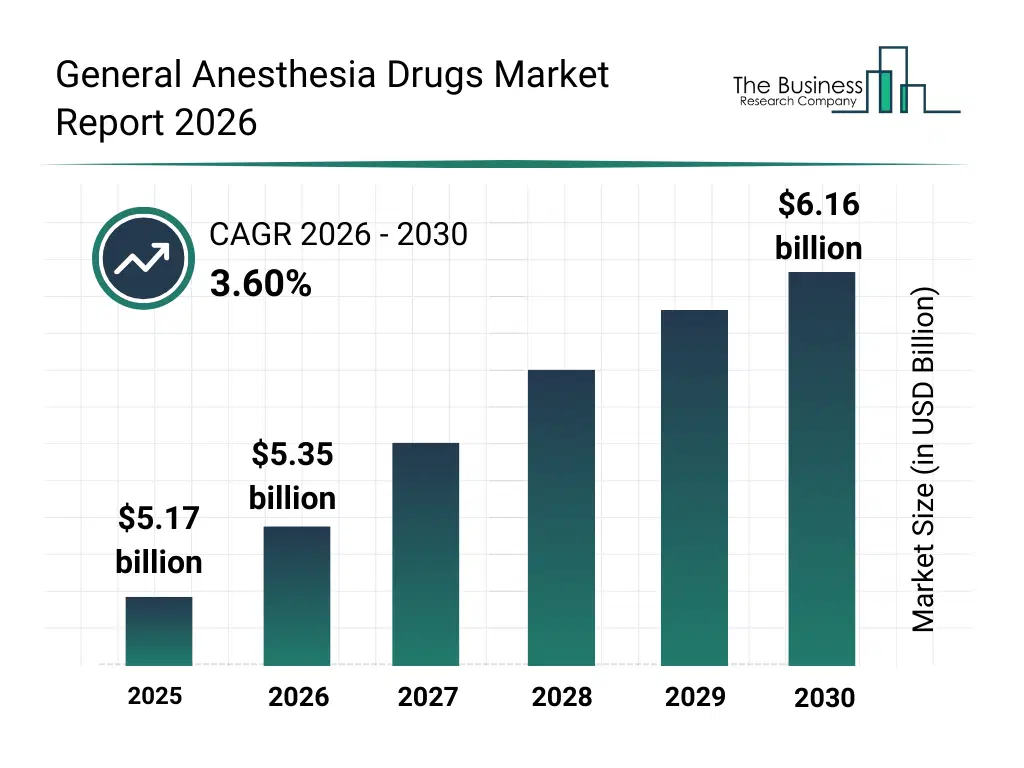
What Is The General Anesthesia Drugs Market Size and Share 2026?
The general anesthesia drugs market size has grown steadily in recent years. It will grow from $5.17 billion in 2025 to $5.35 billion in 2026 at a compound annual growth rate (CAGR) of 3.5%. The growth in the historic period can be attributed to growth in surgical interventions, hospital expansion worldwide, established clinical efficacy of anesthetic agents, rise in trauma and emergency surgeries, advancements in surgical infrastructure.What Is The General Anesthesia Drugs Market Growth Forecast?
The general anesthesia drugs market size is expected to see steady growth in the next few years. It will grow to $6.16 billion in 2030 at a compound annual growth rate (CAGR) of 3.6%. The growth in the forecast period can be attributed to increase in minimally invasive surgeries, growth of ambulatory surgical centers, rising geriatric population, higher demand for cosmetic and elective surgeries, technological improvements in anesthesia monitoring. Major trends in the forecast period include increasing volume of surgical procedures globally, rising preference for short-acting anesthetic agents, growing use in outpatient and day-care surgeries, expansion of multimodal anesthesia protocols, higher demand from aging surgical population.
Global General Anesthesia Drugs Market Segmentation
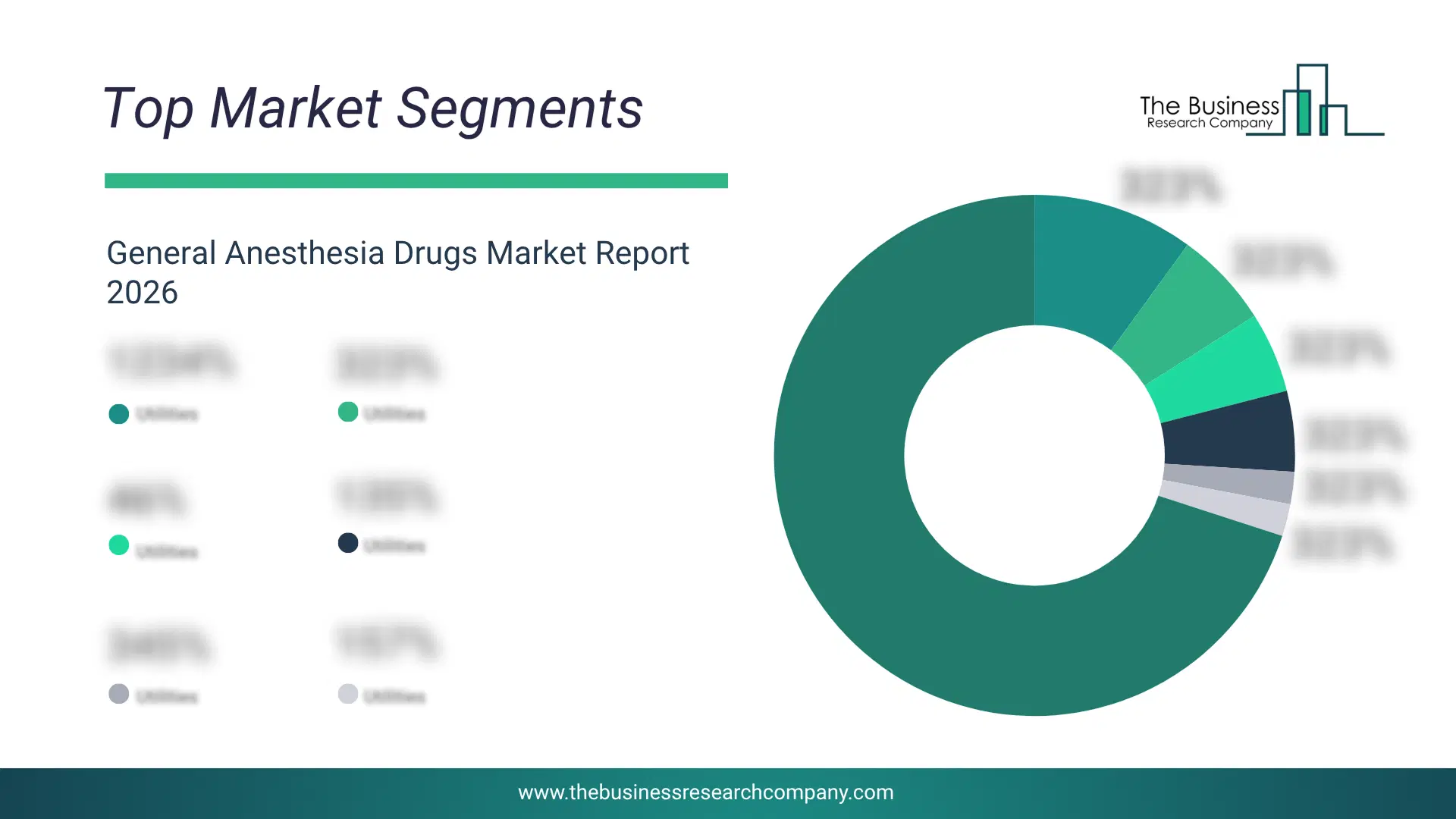
1) By Drug: Sevoflurane, Propofol, Dexmedetomidine, Remifentanil, Desflurane, Midazolam, Other Drugs 2) By Route Of Administration: Intravenous, Inhaled 3) By Application: Cardiovascular Surgery, Orthopedic Surgery, Neurosurgery, General Surgery, Cosmetic Surgery, Other Applications 4) By End-Use: Hospitals, Ambulatory Surgical Centers, Clinics, Other End-Users Subsegments: 1) By Sevoflurane: Inhalation Anesthesia, Pediatric Anesthesia, Outpatient Procedures 2) By Propofol: Induction Anesthesia, Maintenance Anesthesia, ICU Sedation 3) By Dexmedetomidine: Procedural Sedation, ICU Sedation, Postoperative Sedation 4) By Remifentanil: Opioid-Based Anesthesia, Short Surgical Procedures, Pain Management 5) By Desflurane: Inhalation Anesthesia, Rapid Recovery Procedures, Outpatient Surgeries 6) By Midazolam: Preoperative Sedation, Procedural Sedation, ICU Sedation 7) By Other Drugs: Thiopental Sodium, Etomidate, Isoflurane, KetamineWhat Are The Drivers Of The General Anesthesia Drugs Market?
The increasing number of surgical procedures is expected to propel the growth of the general anesthesia drugs market going forward. Surgical procedures refer to medical operations performed by trained professionals to treat diseases, injuries, or abnormalities, often involving an incision or using specialized instruments to access internal structures and tissues. The rise in surgical procedures is driven by the increasing prevalence of chronic diseases, which often require surgical intervention for effective treatment. General anesthesia drugs are needed for surgical procedures to induce unconsciousness and eliminate pain, ensuring that patients remain immobile and unaware during complex or invasive surgeries. For instance, in June 2024, the American Society of Plastic Surgeons, a US-based non-profit organization that manages minimally invasive procedures, experienced a 7% growth in 2023, an increase of 2% from 2022. Therefore, the increasing volume of surgical procedures drives the growth of the general anesthesia drugs industry. The expansion in healthcare infrastructure is expected to propel the growth of the general anesthesia drugs market going forward. Healthcare infrastructure refers to the network of hospitals, clinics, diagnostic centers, and supporting medical facilities that provide access to quality healthcare services for the population. The expansion of healthcare infrastructure is driven by increasing government and private sector investments, rising population, and growing demand for advanced medical care. General Anesthesia Drugs drive expansion in healthcare infrastructure by enabling higher surgical capacity and supporting investments in modern operating rooms and advanced anesthesia systems. For instance, in April 2024, according to American Medical Association, a US-based professional organizations company, U.S. health spending rose by 7.5% in 2023, reaching $4.9 trillion or $14,570 per person, marking a sharp acceleration compared with the 4.6% increase recorded in 2022. Therefore, the expansion in healthcare infrastructure is driving growth in the general anesthesia drugs industry.Key Players In The Global General Anesthesia Drugs Market
Major companies operating in the general anesthesia drugs market are Baxter International Inc., Fresenius Kabi USA LLC, Piramal Critical Care, B. Braun SE, Hikma Pharmaceuticals PLC, Mylan N.V., Viatris Inc., Jiangsu Hengrui Pharmaceutical Co. Ltd., Sun Pharmaceutical Industries Ltd., Aspen Pharmacare Holdings Limited, Claris Lifesciences Limited, Pfizer CentreOne, Abbott Laboratories Inc., Dr. Reddy’s Laboratories Ltd., Aurobindo Pharma Limited, Lupin Limited, Sini Pharma Pvt Ltd., Safeline Pharmaceuticals (Pty) Ltd, Rouzel Pharma Pvt Ltd, Avet Pharmaceuticals Inc.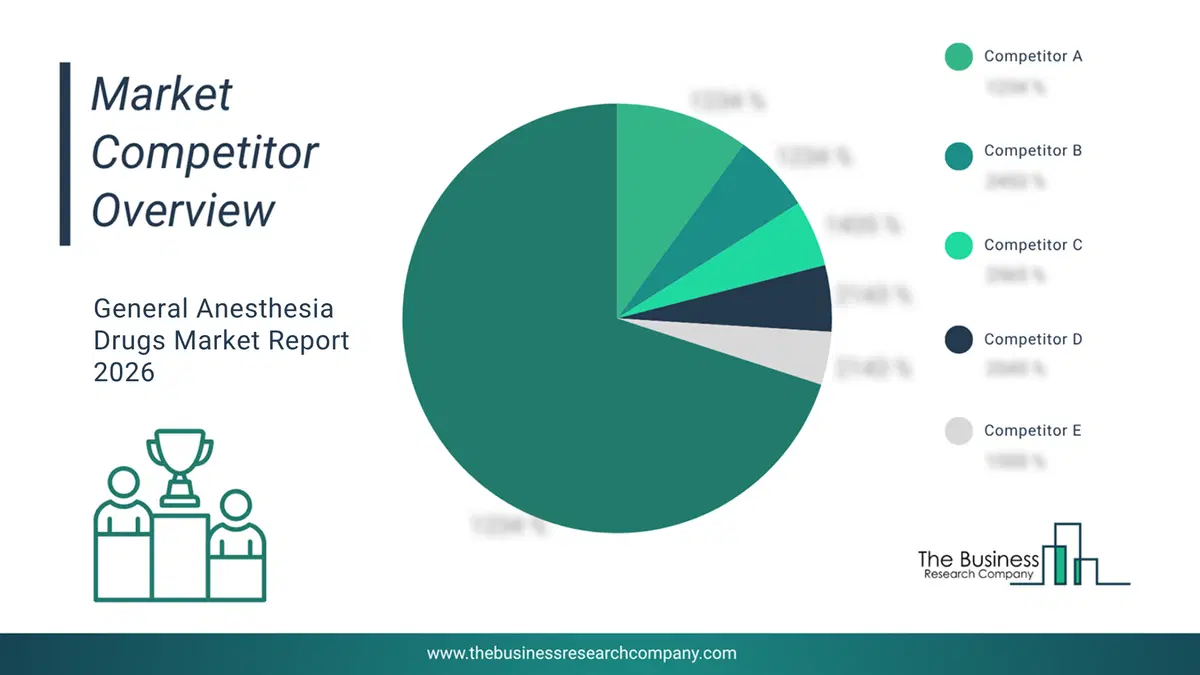
This chart is for illustrative purposes; the full report includes a detailed competitor analysis and comprehensive overview of the top 10 companies in the market.
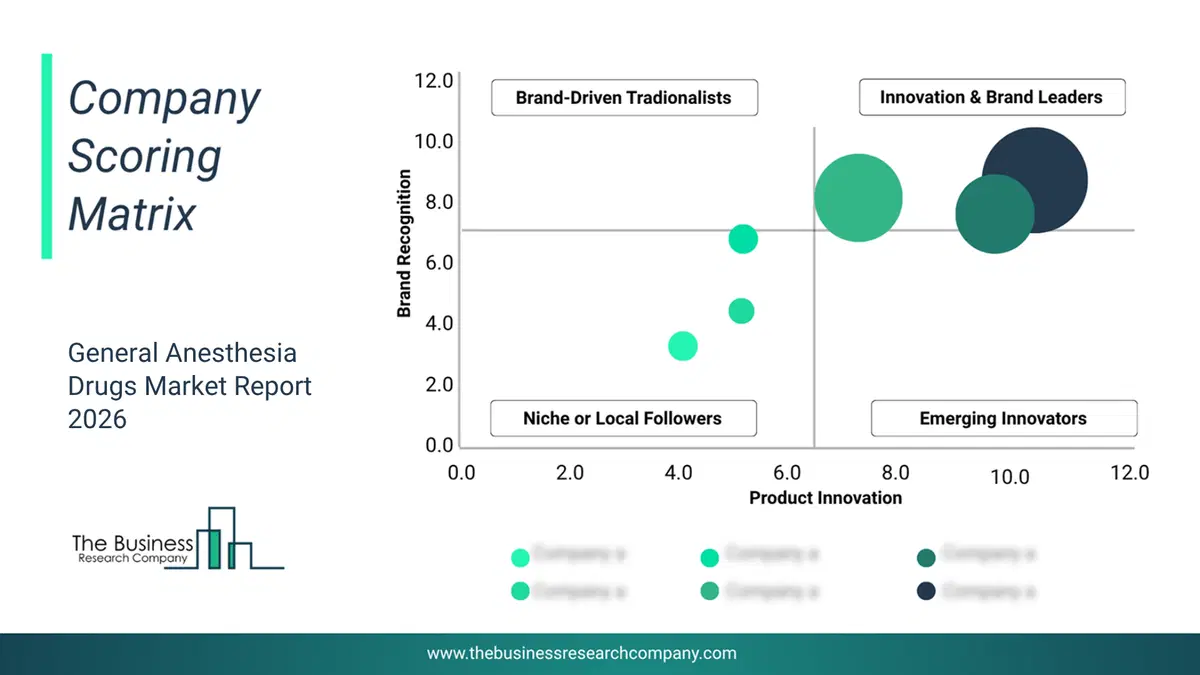
This chart maps companies by product innovation and brand strength, with bubble size indicating relative revenue, helping identify market leaders, challengers, and niche players. This is an illustrative chart; the full report provides a complete and accurate competitive analysis.
Global General Anesthesia Drugs Market Trends and Insights
Major companies operating in the general anesthesia drugs market are focusing on developing innovative anesthetic drugs, such as short-acting benzodiazepines, to enhance patient safety, enable faster recovery, and improve surgical efficiency. A short-acting benzodiazepine, such as midazolam, is commonly used for procedural sedation due to its rapid onset and brief duration of action. For instance, in August 2023, PAION AG, a Germany-based biotechnology company, launched Byfavo (remimazolam) for general anesthesia in the Netherlands, marking its first commercial availability in Europe. It features rapid onset and offset of action, with effects typically manifesting within 1 to 1.5 minutes and recovery occurring within 11 to 14 minutes post-administration, making it a highly effective option for short surgical interventions. It is primarily broken down by hepatic esterases, which are widely distributed enzymes rather than cytochrome-dependent liver pathways in humans. Like other benzodiazepines, it has a readily available antidote, flumazenil, which can rapidly reverse sedation or anesthesia if necessary.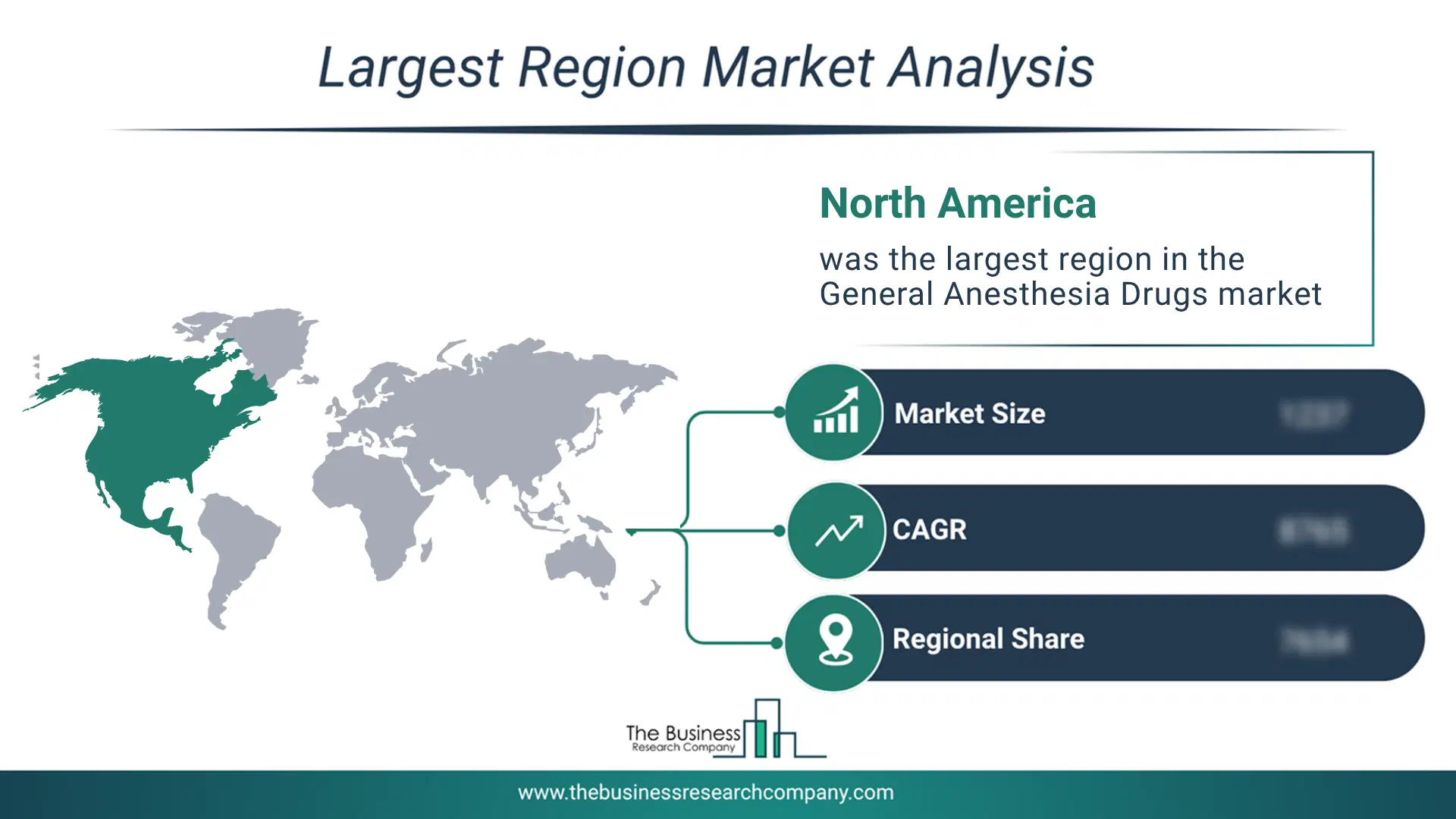
Regional Insights
North America was the largest region in the general anesthesia drugs market in 2025. Asia-Pacific is expected to be the fastest-growing region in the forecast period. The regions covered in this market report are Asia-Pacific, South East Asia, Western Europe, Eastern Europe, North America, South America, Middle East, Africa. The countries covered in this market report are Australia, Brazil, China, France, Germany, India, Indonesia, Japan, Taiwan, Russia, South Korea, UK, USA, Canada, Italy, Spain.What Defines the General Anesthesia Drugs Market?
The general anesthesia drugs market consists of sales of neuromuscular blocking agents, opioid analgesics, anesthesia adjuncts and reversal agents. Values in this market are ‘factory gate’ values, that is, the value of goods sold by the manufacturers or creators of the goods, whether to other entities (including downstream manufacturers, wholesalers, distributors, and retailers) or directly to end customers. The value of goods in this market includes related services sold by the creators of the goods.How is Market Value Defined and Measured?
The market value is defined as the revenues that enterprises gain from the sale of goods and/or services within the specified market and geography through sales, grants, or donations in terms of the currency (in USD unless otherwise specified). The revenues for a specified geography are consumption values that are revenues generated by organizations in the specified geography within the market, irrespective of where they are produced. It does not include revenues from resales along the supply chain, either further along the supply chain or as part of other products.
This chart presents market attractiveness based on a quantitative evaluation of growth, competition, strategic alignment, and risk, offering a clear view of opportunity areas for decision-making. This chart is for illustrative purposes; the full report contains the complete analysis.

This chart highlights the Total Addressable Market (TAM) by estimating the maximum revenue opportunity using an assumption-driven approach, supporting strategic planning and opportunity sizing across markets. The chart is illustrative; the full report provides a more comprehensive analysis.
What Key Data and Analysis Are Included in the General Anesthesia Drugs Market Report 2026?
The general anesthesia drugs market research report is one of a series of new reports from The Business Research Company that provides market statistics, including industry global market size, regional shares, competitors with the market share, detailed market segments, market trends and opportunities, and any further data you may need to thrive in the general anesthesia drugs industry. The market research report delivers a complete perspective of everything you need, with an in-depth analysis of the current and future state of the industry.General Anesthesia Drugs Market Report Forecast Analysis
| Report Attribute | Details |
|---|---|
| Market Size Value In 2026 | $5.35 billion |
| Revenue Forecast In 2030 | $6.16 billion |
| Growth Rate | CAGR of 3.5% from 2026 to 2030 |
| Base Year For Estimation | 2025 |
| Actual Estimates/Historical Data | 2020-2025 |
| Forecast Period | 2026 - 2030 |
| Market Representation | Revenue in USD Billion and CAGR from 2026 to 2030 |
| Segments Covered | Drug, Route Of Administration, Application, End-Use |
| Regional Scope | Asia-Pacific, Western Europe, Eastern Europe, North America, South America, Middle East, Africa |
| Country Scope | The countries covered in the report are Australia, Brazil, China, France, Germany, India, Indonesia, Japan, Taiwan, Russia, South Korea, UK, USA, Canada, Italy, Spain. |
| Key Companies Profiled | Baxter International Inc., Fresenius Kabi USA LLC, Piramal Critical Care, B. Braun SE, Hikma Pharmaceuticals PLC, Mylan N.V., Viatris Inc., Jiangsu Hengrui Pharmaceutical Co. Ltd., Sun Pharmaceutical Industries Ltd., Aspen Pharmacare Holdings Limited, Claris Lifesciences Limited, Pfizer CentreOne, Abbott Laboratories Inc., Dr. Reddy’s Laboratories Ltd., Aurobindo Pharma Limited, Lupin Limited, Sini Pharma Pvt Ltd., Safeline Pharmaceuticals (Pty) Ltd, Rouzel Pharma Pvt Ltd, Avet Pharmaceuticals Inc. |
| Customization Scope | Request for Customization |
| Pricing And Purchase Options | Explore Purchase Options |