

Transportation Management Systems Market Report 2026
Global Outlook – By Component (Solution, Services), By Deployment (On-premise, Cloud), By Mode of Transportation (Roadways, Railways, Waterways, Airways), By Industry Vertical (Retail, Healthcare And Pharmaceutical, Manufacturing, Energy And Utilities, Government Sector, Other Industry Verticals) – Market Size, Trends, Strategies, and Forecast to 2030
Transportation Management Systems Market Overview
• Transportation Management Systems market size has reached to $13.17 billion in 2025 • Expected to grow to $25.66 billion in 2030 at a compound annual growth rate (CAGR) of 14.1% • Growth Driver: Role Of Transportation Management Systems In E-Commerce Boom • Market Trend: Rise Of Intelligent Transport Management Solutions • North America was the largest region in 2025 and Asia-Pacific is the fastest growing region.Market Gains By 2030 – Top Opportunities By Segment
Market Gain identifies the most promising market opportunities by highlighting the segments or products expected to generate the highest incremental revenue growth over the next five years.
What Is Covered Under Transportation Management Systems Market?
Transportation management system is a platform for logistics that uses technology to help businesses plan, carry out, and optimize the physical movement of goods, both coming into and going out, while also making sure there is compliance and enough paperwork. The transportation management system is used to help businesses execute, plan, and optimize the physical movement of goods. The main component type of transportation management system includes solutions and services. The solution is used for visibility into transportation operations. The solution in the transportation management system gives visibility into day-to-day transportation operations, trade compliance information, and documentation, and ensures the timely delivery of freight and goods. The main types of solutions include planning & execution, order management, audit, payment, and claims, reporting & analytics, and routing & tracking, and are deployed on-premises and on the cloud. Transportation management systems include roadways, railways, airways, and maritime and are used in industries such as retail, healthcare & pharmaceutical, manufacturing, energy & utilities, government sector, and others.
What Is The Transportation Management Systems Market Size and Share 2026?
The transportation management systems market size has grown rapidly in recent years. It will grow from $13.17 billion in 2025 to $15.12 billion in 2026 at a compound annual growth rate (CAGR) of 14.8%. The growth in the historic period can be attributed to rising complexity in logistics operations, increasing focus on timely goods delivery, growth of digital logistics solutions, rising need for route optimization, expansion of global trade activities.What Is The Transportation Management Systems Market Growth Forecast?
The transportation management systems market size is expected to see rapid growth in the next few years. It will grow to $25.66 billion in 2030 at a compound annual growth rate (CAGR) of 14.1%. The growth in the forecast period can be attributed to increasing demand for real time logistics visibility, rising integration of intelligent management platforms, growing emphasis on efficient transportation execution, increasing need for scalable transport management systems, expansion of automated logistics ecosystems. Major trends in the forecast period include growing adoption of technology driven logistics platforms, increasing focus on optimized goods movement solutions, rising demand for efficient transportation planning tools, increasing use of centralized logistics management systems, growing importance of real time visibility in goods movement.
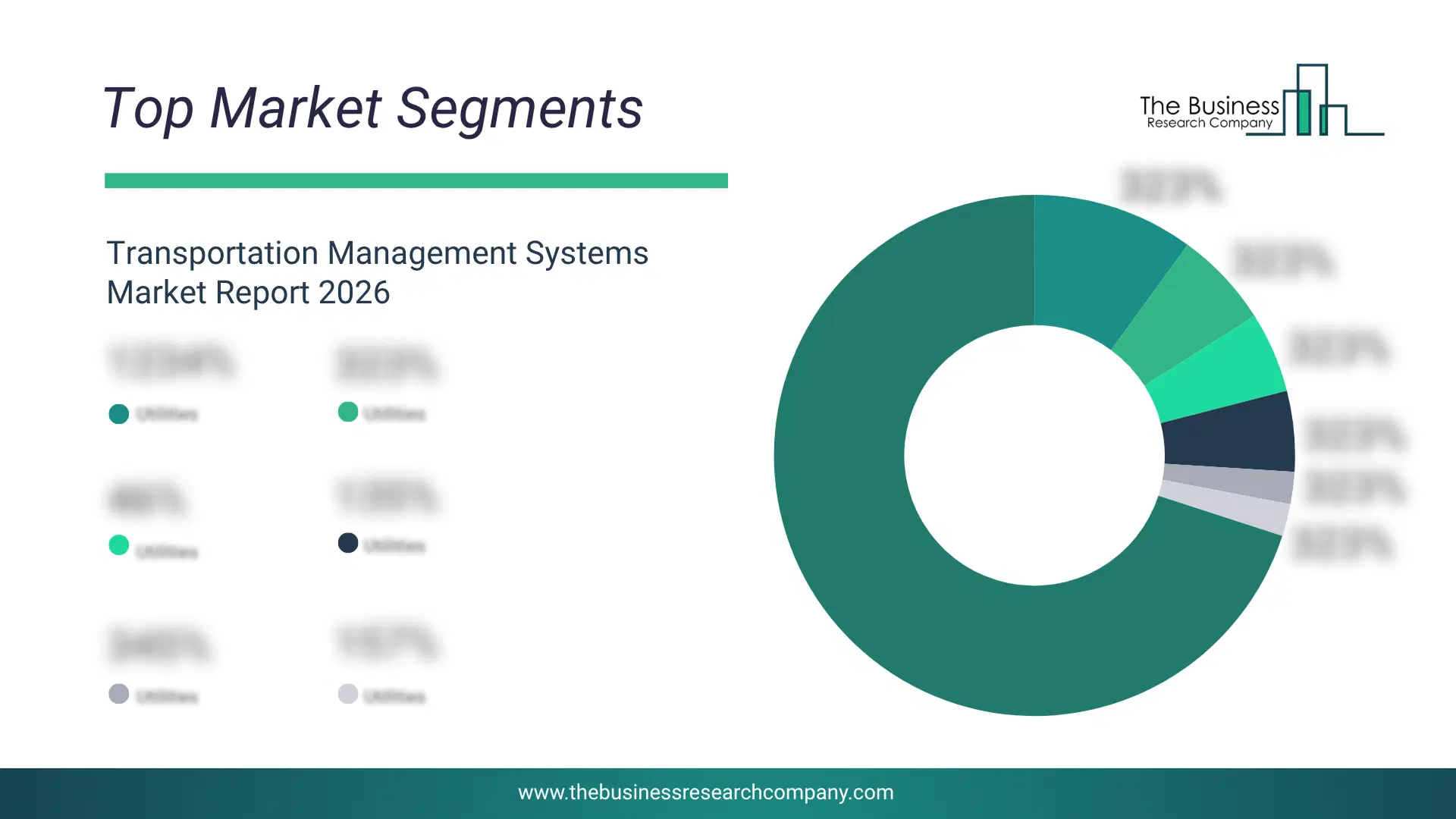
Global Transportation Management Systems Market Segmentation
1) By Component: Solution, Services 2) By Deployment: On-premise, Cloud 3) By Mode of Transportation: Roadways, Railways, Waterways, Airways 4) By Industry Vertical: Retail, Healthcare And Pharmaceutical, Manufacturing, Energy And Utilities, Government Sector, Other Industry Verticals Subsegments: 1) By Solution: Freight Management Solutions, Route Optimization Solutions, Carrier Management Solutions, Load Optimization Solutions, Visibility Solutions, Analytics And Reporting Tools 2) By Services: Consulting Services, Integration Services, Training And Support Services, Managed Services, Maintenance And Upgrade Services The top segments in the transportation management systems market will be: • Solution will reach $17 Billion by 2030. • Services will reach $8 Billion by 2030.What Is The Driver Of The Transportation Management Systems Market?
Rapid growth in e-commerce is expected to propel the growth of the transportation management system market going forward. E-commerce is the online exchange of goods and services, encompassing internet-based transactions, electronic funds transfer, and data exchange. A transportation management system empowers e-commerce businesses by enhancing efficiency, cutting costs, improving customer satisfaction, and ensuring a seamless flow of goods through effective supply chain and logistics management. For instance, in November 2023, according to the United States Census Bureau, a US-based government agency, during the third quarter of 2023, retail e-commerce sales reached an estimated $284.1 billion, reflecting a notable growth of 7.8% compared to the same period in 2022. Therefore, the rapid growth in e-commerce is driving the growth of the transportation management system industry.
Infographic Chart Showing Key Market Drivers Analysis And Restraints For Transportation Management Systems Market
The chart presents an impact analysis of key drivers and restraints, quantifying their relative influence on the market's growth rate and helping assess the balance between growth enablers and limiting factors. This chart offers a high-level perspective; the full report contains more detailed insights.
How Will The Drivers Impact Growth In The Global Transportation Management Systems Market?
• Rapid Expansion Of E-Commerce And Omnichannel Retail (Medium) – During the forecast period, the rapid expansion of e-commerce and omnichannel retail is expected to emerge as a major factor driving the expansion of the transportation management systems market by 2030. rising online order volumes and increasing customer expectations for faster deliveries are encouraging organizations to implement advanced transportation platforms that automate shipment planning, optimize routing, improve carrier management, and provide real-time delivery tracking. the growing complexity of coordinating warehouses, fulfillment centers, retail outlets, and third-party logistics providers is further accelerating investment in transportation management systems. • Increasing Adoption Of Cloud-Based And AI-Enabled Transportation Solutions (Medium) – During the forecast period, the increasing adoption of cloud-based and AI-enabled transportation solutions is expected to emerge as a major factor driving the expansion of the transportation management systems market by 2030. cloud-native platforms offer scalable and cost-efficient deployment, while artificial intelligence, machine learning, and predictive analytics enhance transportation planning through intelligent route optimization, automated load management, demand forecasting, and proactive disruption mitigation. these capabilities improve fleet efficiency, reduce operating costs, and strengthen overall logistics performance. • Growing Need For Transportation Cost Optimization And Supply Chain Visibility (Medium) – During the forecast period, the growing need for transportation cost optimization and supply chain visibility is expected to act as a key growth catalyst for the transportation management systems market by 2030. businesses are increasingly deploying TMS platforms to minimize freight expenses through optimized carrier selection, shipment consolidation, automated freight auditing, and improved route planning while gaining real-time visibility into transportation operations. enhanced operational transparency enables faster responses to disruptions, inventory challenges, and customer service requirements, strengthening overall supply chain resilience.How Will The Restraints Impact Growth In The Global Transportation Management Systems Market?
• High Implementation And Integration Costs (Medium) – During the forecast period, high Implementation And Integration Costs remain one of the most significant challenges limiting Transportation Management System adoption, especially among small and medium-sized enterprises. Deploying a comprehensive TMS often requires substantial investments in software licensing, cloud subscriptions, infrastructure modernization, customization, employee training, and integration with existing enterprise systems such as ERP, Warehouse Management Systems (WMS), Enterprise Asset Management (EAM), and Customer Relationship Management (CRM) platforms. The implementation process may also involve business process redesign and extensive testing, increasing deployment time and project complexity. For organizations with constrained IT budgets or limited technical expertise, these high upfront investments and extended return-on-investment periods may delay adoption despite the long-term operational benefits offered by TMS platforms. • Data Security And Privacy Concerns (Medium) – During the forecast period, data Security And Privacy Concerns continue to restrain market growth because Transportation Management Systems process large volumes of sensitive operational, shipment, supplier, customer, and financial information across highly interconnected digital ecosystems. As cloud-based deployments become increasingly common, organizations remain concerned about cybersecurity threats including ransomware attacks, unauthorized system access, data breaches, and regulatory compliance risks. Businesses operating in regulated industries or managing international logistics networks must also comply with stringent data protection regulations, further increasing implementation complexity. These concerns often encourage organizations to adopt hybrid deployment models or postpone migration to cloud-based TMS platforms until robust cybersecurity measures, encryption standards, and compliance frameworks are fully established. • Complex Integration With Legacy Enterprise Systems (Medium) – During the forecast period, complex Integration With Legacy Enterprise Systems acts as a major restraint because many organizations continue operating older ERP, warehouse management, fleet management, and logistics platforms that were not originally designed to integrate with modern cloud-based Transportation Management Systems. Establishing seamless connectivity between multiple enterprise applications, transportation partners, carriers, suppliers, and external data sources often requires extensive software customization, middleware development, API configuration, and data migration. These technical complexities increase project costs, extend deployment timelines, and create risks of operational disruption during implementation. Furthermore, inconsistent data formats and incompatible legacy infrastructure may reduce the effectiveness of advanced analytics and automation features, discouraging organizations from upgrading to next-generation TMS platforms despite their long-term efficiency benefits.Key Players In The Global Transportation Management Systems Market
Major companies operating in the transportation management systems market report are Oracle Corporation, SAP SE, Manhattan Associates Inc., Blue Yonder Group Inc., E2open LLC, The Descartes Systems Group Inc., MercuryGate International Inc., Trimble Inc., Transporeon Group, Alpega Group, Generix Group SA, 3GTMS Inc., Kuebix LLC, TMW Systems Inc., LeanLogistics Inc., project44 Inc., Shipwell Inc., Unifaun AB, InMotion Global Inc., MP Objects B.V., Revenova LLC, Supplystack NV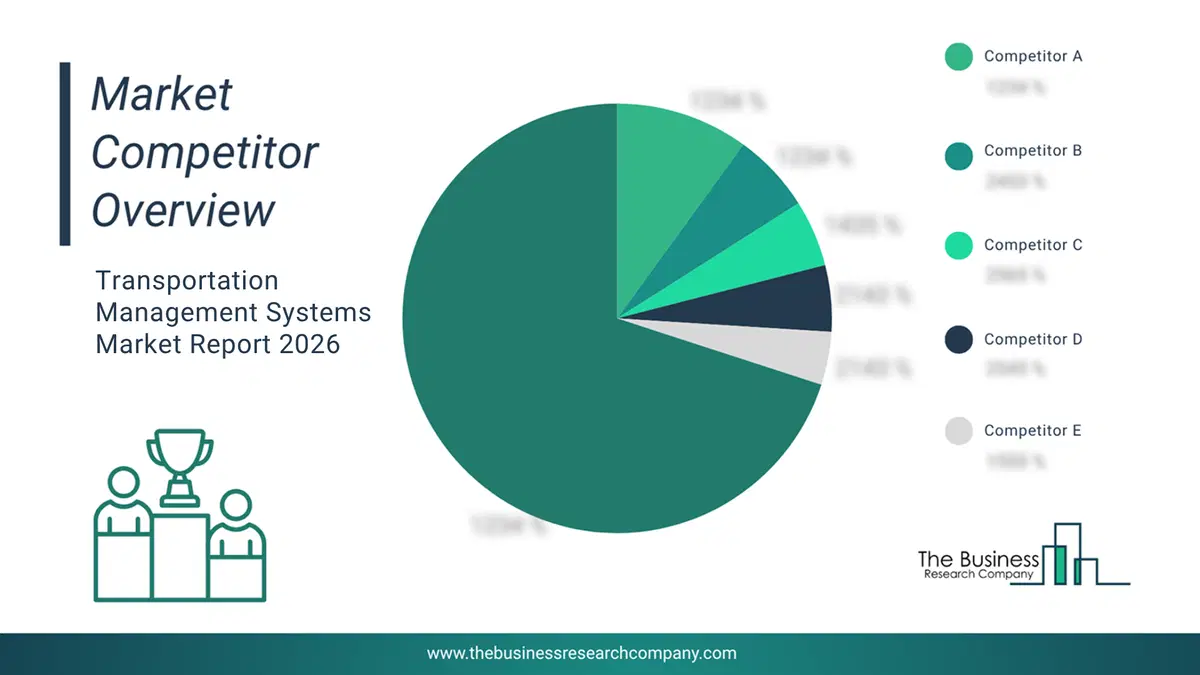
This chart is for illustrative purposes; the full report includes a detailed competitor analysis and comprehensive overview of the top 10 companies in the market.
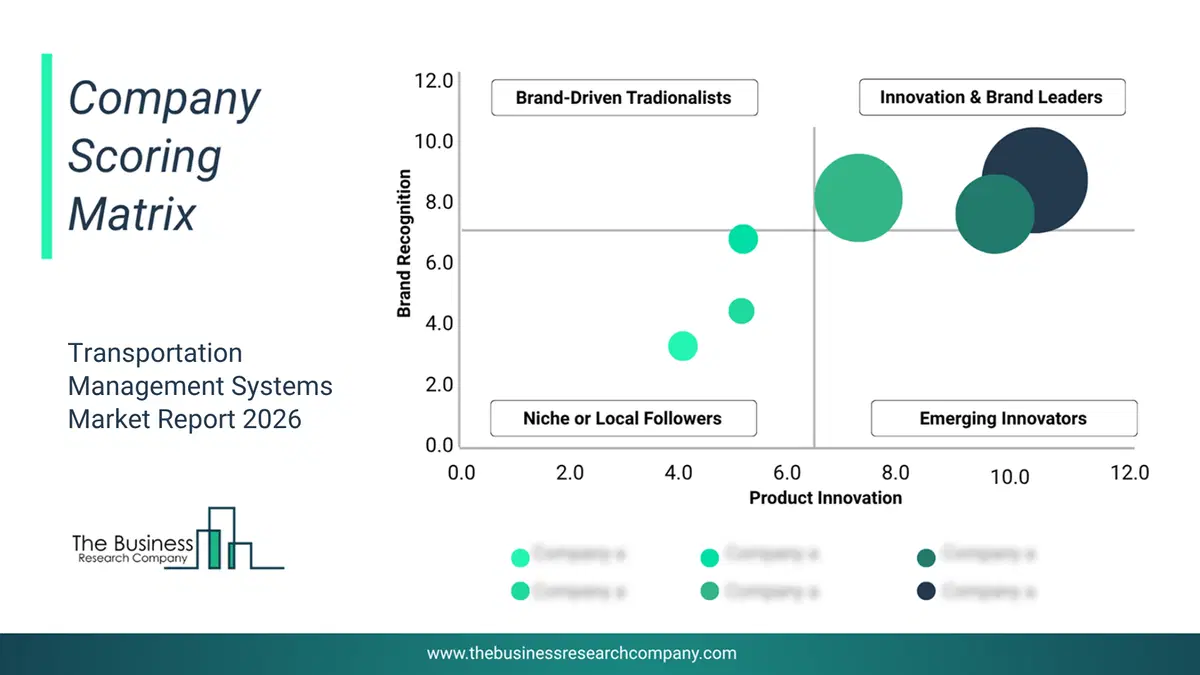
This chart maps companies by product innovation and brand strength, with bubble size indicating relative revenue, helping identify market leaders, challengers, and niche players. This is an illustrative chart; the full report provides a complete and accurate competitive analysis.
Global Transportation Management Systems Market Trends and Insights
Major companies operating in the transportation management system market are focused on developing intelligent solutions to increase their profitability in the market. Intelligent solutions in TMS leverage advanced technologies and data analytics to enhance the efficiency, visibility, and decision-making processes within transportation operations. For instance, in September 2023, 3SC Solutions, an India-based data analytics company launched Intelligent Transport Management Solution (iTMS). This solution synergizes AI and data analytics, optimizing the entire transportation cycle. iTMS employs AI to analyze extensive data, enabling precise demand predictions and informed decision-making for planners. This advanced platform integrates various facets of transport management, enhancing efficiency and providing a holistic solution for logistics and supply chain management. It incorporates automated order acquisition, AI-driven shipment planning, real-time execution orchestration, and advanced tools for contract management and financial auditing in global logistics.What Are Latest Mergers And Acquisitions In The Transportation Management Systems Market?
In September 2024, AMCS, an Ireland-based provider of sustainability software for foundational industries, acquired Qv21 Technologies for an undisclosed amount. This acquisition allows AMCS to strengthen its capabilities in the transportation sector, particularly in managing logistics for bulk material transport. Qv21 Technologies is a US-based provider of transportation management systems.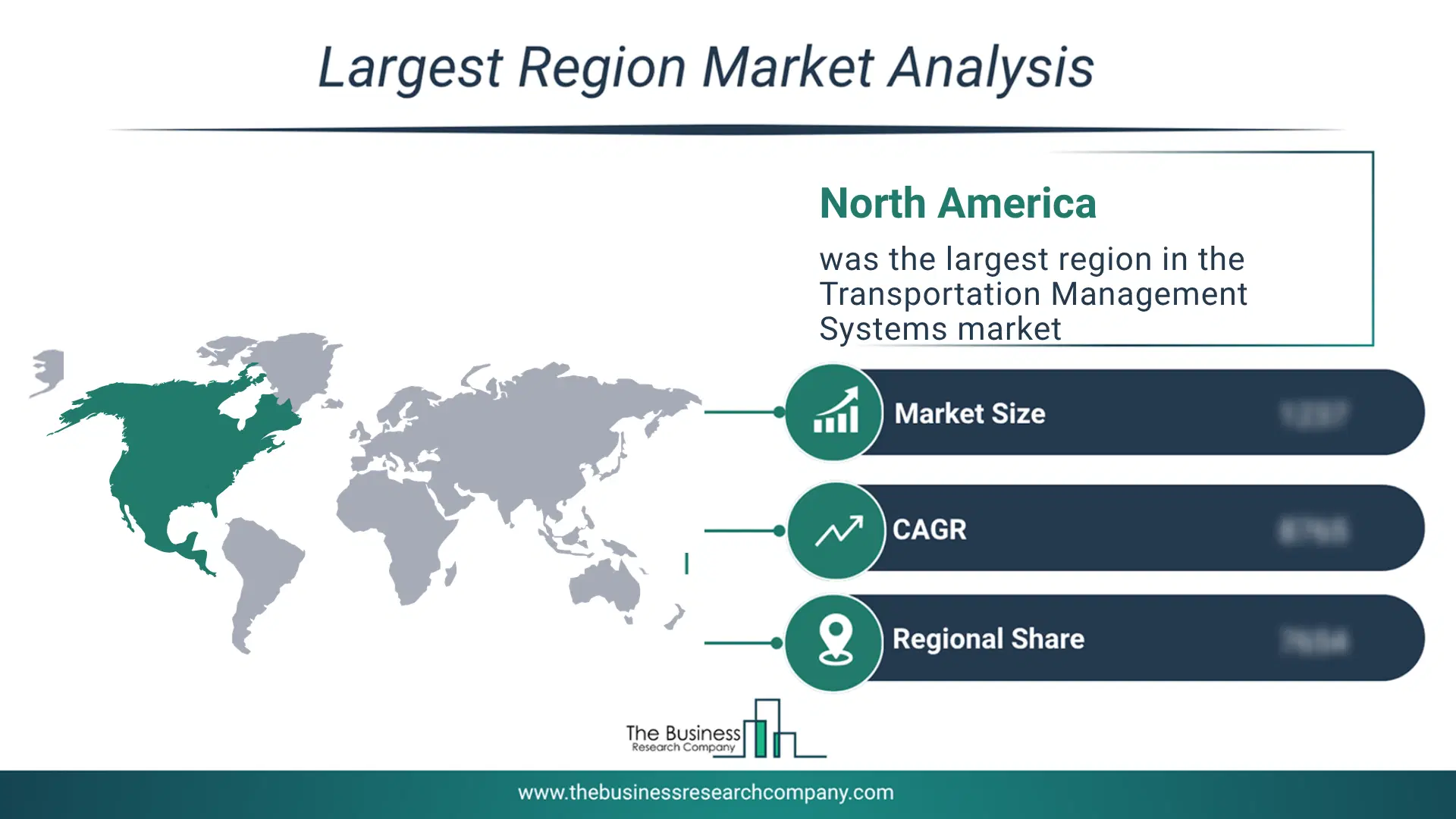
Regional Outlook
North America was the largest region in the transportation management system market in 2025. Asia-Pacific is expected to be the fastest-growing region in the forecast period. The regions covered in this market report are Asia-Pacific, South East Asia, Western Europe, Eastern Europe, North America, South America, Middle East, Africa. The countries covered in this market report are Australia, Brazil, China, France, Germany, India, Indonesia, Japan, Taiwan, Russia, South Korea, UK, USA, Canada, Italy, SpainWhat Defines the Transportation Management Systems Market?
The transportation management system market consists of revenues earned by entities by traffic & route management, order management, audit rating, billing, payment & claims management, and fleet monitoring & tracking. The market value includes the value of related goods sold by the service provider or included within the service offering. Only goods and services traded between entities or sold to end consumers are included.How is Market Value Defined and Measured?
The market value is defined as the revenues that enterprises gain from the sale of goods and/or services within the specified market and geography through sales, grants, or donations in terms of the currency (in USD unless otherwise specified). The revenues for a specified geography are consumption values that are revenues generated by organizations in the specified geography within the market, irrespective of where they are produced. It does not include revenues from resales along the supply chain, either further along the supply chain or as part of other products.
This chart presents market attractiveness based on a quantitative evaluation of growth, competition, strategic alignment, and risk, offering a clear view of opportunity areas for decision-making. This chart is for illustrative purposes; the full report contains the complete analysis.

This chart highlights the Total Addressable Market (TAM) by estimating the maximum revenue opportunity using an assumption-driven approach, supporting strategic planning and opportunity sizing across markets. The chart is illustrative; the full report provides a more comprehensive analysis.
What Key Data and Analysis Are Included in the Transportation Management Systems Market Report 2026?
The transportation management systems market research report is one of a series of new reports from The Business Research Company that provides market statistics, including industry global market size, regional shares, competitors with the market share, detailed market segments, market trends and opportunities, and any further data you may need to thrive in the transportation management systems industry. The market research report delivers a complete perspective of everything you need, with an in-depth analysis of the current and future state of the industry.Transportation Management Systems Market Report Forecast Analysis
| Report Attribute | Details |
|---|---|
| Market Size Value In 2026 | $15.12 billion |
| Revenue Forecast In 2030 | $25.66 billion |
| Growth Rate | CAGR of 14.1% from 2026 to 2030 |
| Base Year For Estimation | 2025 |
| Actual Estimates/Historical Data | 2020-2025 |
| Forecast Period | 2026 - 2030 |
| Market Representation | Revenue in USD Billion and CAGR from 2026 to 2030 |
| Segments Covered | Component, Deployment, Mode of Transportation, Industry Vertical |
| Regional Scope | Asia-Pacific, Western Europe, Eastern Europe, North America, South America, Middle East, Africa |
| Country Scope | The countries covered in the report are Australia, Brazil, China, France, Germany, India, Indonesia, Japan, Taiwan, Russia, South Korea, UK, USA, Canada, Italy, Spain. |
| Key Companies Profiled | Oracle Corporation, SAP SE, Manhattan Associates Inc., Blue Yonder Group Inc., E2open LLC, The Descartes Systems Group Inc., MercuryGate International Inc., Trimble Inc., Transporeon Group, Alpega Group, Generix Group SA, 3GTMS Inc., Kuebix LLC, TMW Systems Inc., LeanLogistics Inc., project44 Inc., Shipwell Inc., Unifaun AB, InMotion Global Inc., MP Objects B.V., Revenova LLC, Supplystack NV |
| Customization Scope | Request for Customization |
| Pricing And Purchase Options | Explore Purchase Options |