
Generative Artificial Intelligence (AI) In Material Science Market Report 2026
Global Outlook – By Type (Materials Discovery And Design, Predictive Modeling And Simulation, Process Optimization), By Deployment (Cloud-Based, On-Premises, Hybrid), By Application (Pharmaceuticals And Chemicals, Electronics And Semiconductors, Energy Storage And Conversion, Automotive And Aerospace, Construction And Infrastructure, Consumer Goods, Other Applications) – Market Size, Trends, Strategies, and Forecast to 2030
Generative Artificial Intelligence (AI) In Material Science Market Overview
• Generative Artificial Intelligence (AI) In Material Science market size has reached to $1.68 billion in 2025 • Expected to grow to $7.01 billion in 2030 at a compound annual growth rate (CAGR) of 33% • Growth Driver: Artificial Intelligence Technologies Propel Growth Of The Generative Artificial Intelligence In The Material Science Market • Market Trend: Transformative Advances In Generative Artificial Intelligence For Material Science Through Cloud-Based Solutions • North America was the largest region in 2025 and Asia-Pacific is the fastest growing region.Market Gains By 2030 – Top Opportunities By Segment
Market Gain identifies the most promising market opportunities by highlighting the segments or products expected to generate the highest incremental revenue growth over the next five years.
What Is Covered Under Generative Artificial Intelligence (AI) In Material Science Market?
Generative artificial intelligence in material science involves the use of advanced algorithms to create new materials by predicting their properties and behaviors based on vast datasets and simulations. It is employed to accelerate the discovery of novel materials, optimize existing ones, and streamline the development of innovative materials for various industrial applications. The main types of generative artificial intelligence in material science are materials discovery and design, predictive modeling and simulation, and process optimization. Materials discovery and design involve using computational methods and algorithms to identify new materials and optimize their properties for specific applications. These AI systems are deployed in various ways, including cloud-based, on-premises, or hybrid models, and are used in various applications, such as pharmaceuticals and chemicals, electronics and semiconductors, energy storage and conversion, automotive and aerospace, construction and infrastructure, consumer goods, and others.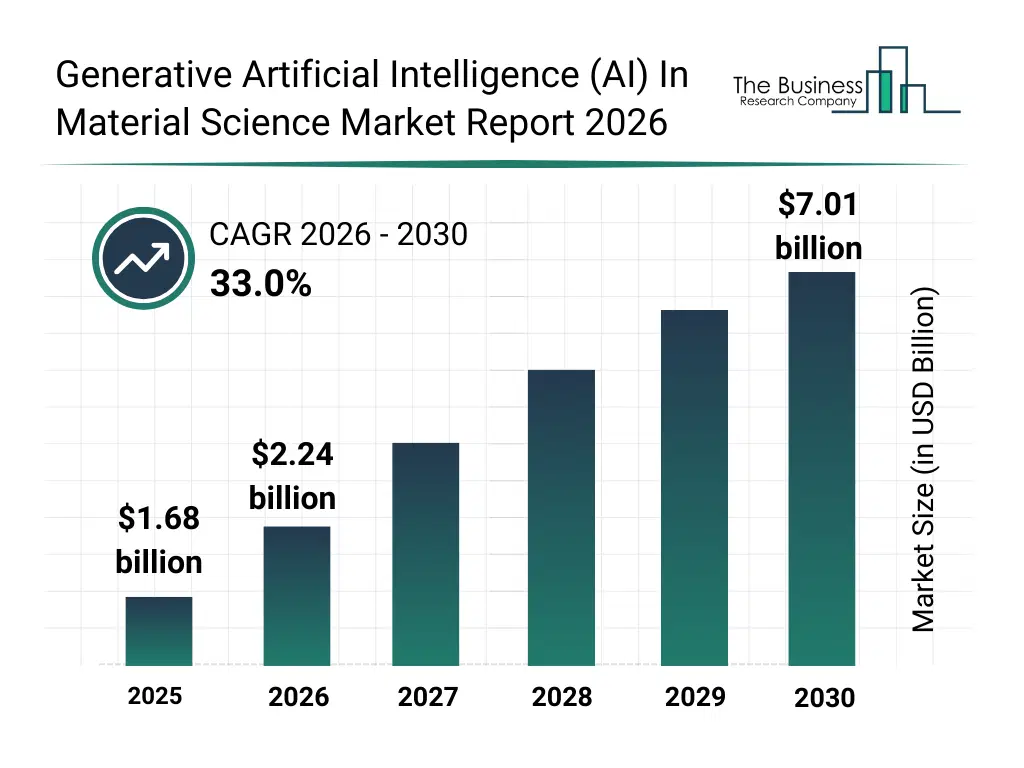
What Is The Generative Artificial Intelligence (AI) In Material Science Market Size and Share 2026?
The generative artificial intelligence (AI) in material science market size has grown exponentially in recent years. It will grow from $1.68 billion in 2025 to $2.24 billion in 2026 at a compound annual growth rate (CAGR) of 33.6%. The growth in the historic period can be attributed to need for faster material development, high cost of traditional experimentation, growth of computational chemistry, demand for high performance materials, industrial r and d investments.What Is The Generative Artificial Intelligence (AI) In Material Science Market Growth Forecast?
The generative artificial intelligence (AI) in material science market size is expected to see exponential growth in the next few years. It will grow to $7.01 billion in 2030 at a compound annual growth rate (CAGR) of 33.0%. The growth in the forecast period can be attributed to acceleration of AI led discovery, demand for sustainable materials, integration with digital twins, expansion of advanced manufacturing, growth of cloud based simulation platforms. Major trends in the forecast period include AI driven materials discovery, predictive material property modeling, simulation based material design, AI enabled process optimization, sustainable material innovation.
Global Generative Artificial Intelligence (AI) In Material Science Market Segmentation
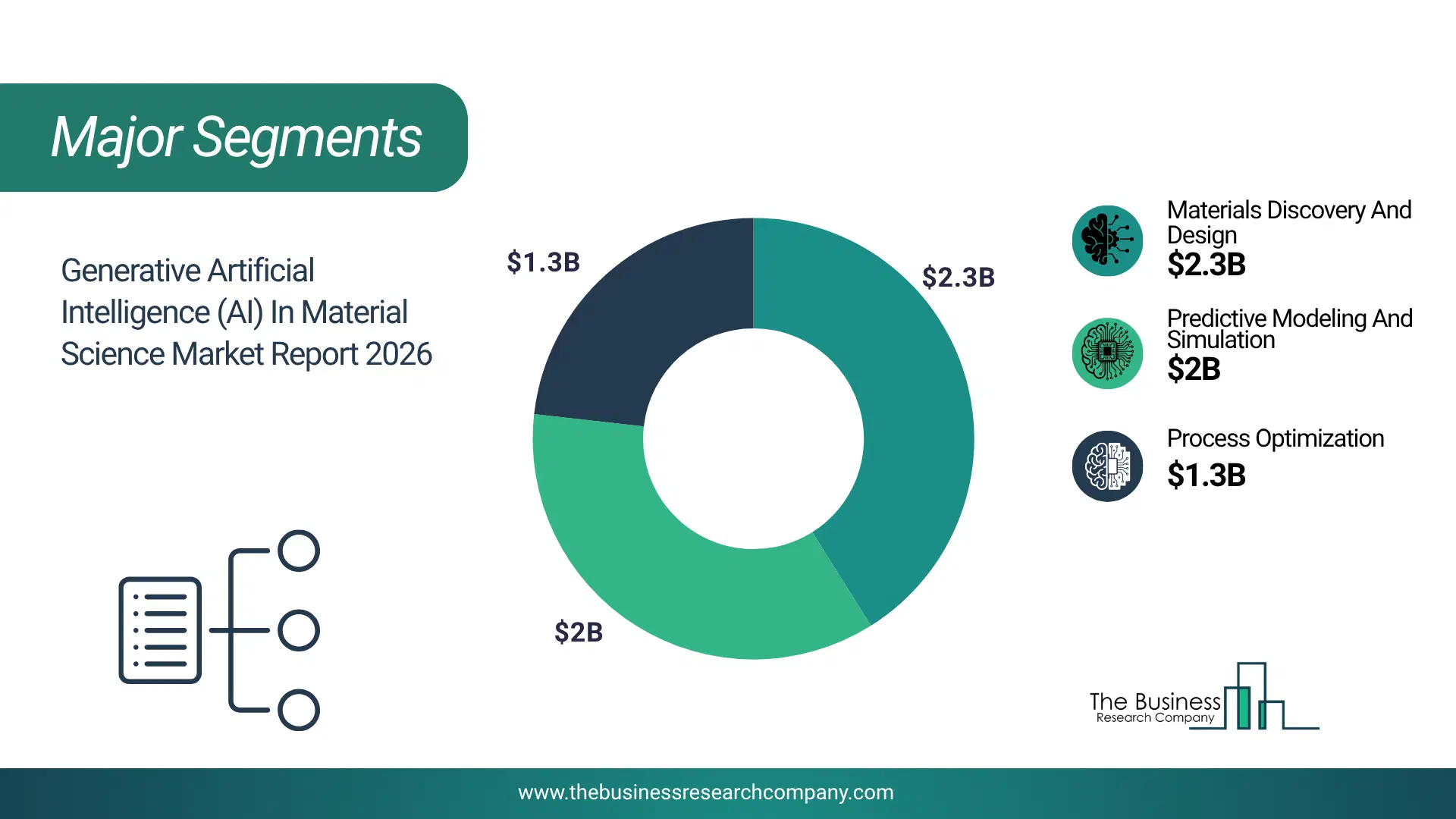
1) By Type: Materials Discovery And Design, Predictive Modeling And Simulation, Process Optimization 2) By Deployment: Cloud-Based, On-Premises, Hybrid 3) By Application: Pharmaceuticals And Chemicals, Electronics And Semiconductors, Energy Storage And Conversion, Automotive And Aerospace, Construction And Infrastructure, Consumer Goods, Other Applications Subsegments: 1) By Materials Discovery And Design: AI-Driven Materials Screening, AI-Based Computational Chemistry, Quantum Materials Design, Material Property Prediction 2) By Predictive Modeling And Simulation: AI-Based Simulation For Material Behavior, Predictive Analytics For Material Performance, Failure Prediction And Reliability Analysis, Thermal And Mechanical Property Simulation 3) By Process Optimization: AI For Manufacturing Process Optimization, Energy Efficiency In Material Processing, AI-Driven Quality Control In Material Production, Supply Chain Optimization For Materials The top segments in the generative artificial intelligence (ai) in material science market will be: • Materials Discovery And Design will reach $2.26 billion by 2030. • Predictive Modeling And Simulation will reach $1.98 billion by 2030. • Process Optimization will reach $1.21 billion by 2030.What Is The Driver Of The Generative Artificial Intelligence (AI) In Material Science Market?
Increasing investment in artificial intelligence technologies is expected to propel the growth of generative artificial intelligence in material science market going forward. Investments in artificial intelligence are rising due to several reasons, including increased demand for automation, enhanced data analytics, innovative applications, and government and private sector support. Generative AI in material science accelerates discovery and innovation by optimizing material properties and processes, driving significant investment in artificial intelligence technologies. For instance, in September 2025, according to the Department for Science, Innovation & Technology, a UK-based government department, AI-related inward investment into the UK grew in 2024, with 51 projects bringing more than £15 billion in capital and projected to generate over 6,500 jobs. Therefore, the increasing investment in artificial intelligence technologies is driving the growth of the generative artificial intelligence in material science market.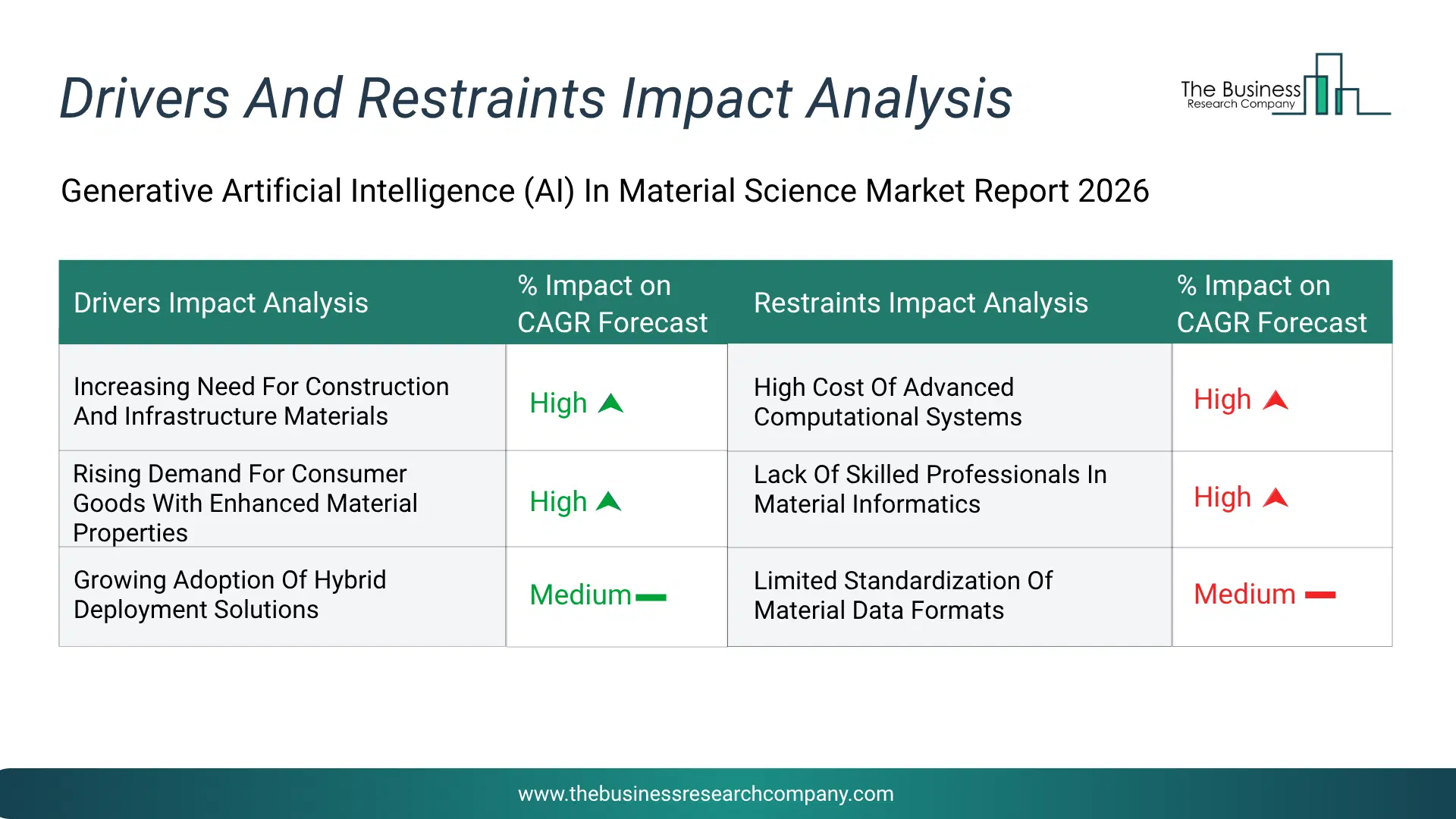
Infographic Chart Showing Key Market Drivers Analysis And Restraints For Generative Artificial Intelligence (Ai) In Material Science Market
The chart presents an impact analysis of key drivers and restraints, quantifying their relative influence on the market's growth rate and helping assess the balance between growth enablers and limiting factors. This chart offers a high-level perspective; the full report contains more detailed insights.
How Will The Drivers Impact Growth In The Global Generative Artificial Intelligence (AI) In Material Science Market?
• Increasing Need For Construction And Infrastructure Materials (High) – During the forecast period, the increasing need for construction and infrastructure materials is expected to be a key driver of the generative artificial intelligence (ai) in material science market by 2030. Rapid urbanization, population expansion, and large -scale infrastructure development are creating strong demand for high -performance, durable, and sustainable construction materials. Generative ai enables researchers to design and optimize advanced materials by analyzing extensive datasets and predicting performance prior to physical testing. This accelerates the discovery of innovative materials such as advanced concrete, lightweight alloys, and eco -friendly composites that enhance structural integrity and reduce environmental impact. Additionally, it shortens development cycles and lowers r&d costs, making material innovation more efficient. Increasing reliance on data -driven approaches by governments and construction firms further strengthens adoption. As global infrastructure investments continue to rise, the demand for ai -enabled material design solutions is also increasing, supporting market expansion. • Rising Demand For Consumer Goods With Enhanced Material Properties (High) – During the forecast period, the rising demand for consumer goods with enhanced material properties is anticipated to drive substantial growth in the generative artificial intelligence (ai) in material science market by 2030. Industries such as electronics, automotive, packaging, and consumer goods are increasingly seeking materials with superior strength, flexibility, thermal stability, and lightweight characteristics. Generative ai allows researchers to evaluate numerous material combinations rapidly and identify optimal solutions with desired properties. Through digital simulations, companies can enhance product performance, improve durability, and reduce manufacturing costs. These innovations support advancements such as improved battery efficiency, stronger automotive components, and high-performance everyday products. Faster material discovery also enables quicker product commercialization, helping companies stay competitive. With rising consumer expectations for advanced and reliable products, the adoption of ai-driven material innovation tools is accelerating. • Growing Adoption Of Hybrid Deployment Solutions (Medium) – During the forecast period, the growing adoption of hybrid deployment solutions is set to be a major growth catalyst for the generative artificial intelligence (ai) in material science market by 2030. Hybrid models integrate cloud computing with on-premise infrastructure, enabling organizations to efficiently handle large datasets and perform complex simulations required for material discovery. Generative ai applications demand high computational power, and hybrid environments provide the scalability and flexibility needed while ensuring data security for sensitive research. This setup allows organizations to optimize resource utilization, accelerate model training, and enhance collaboration across geographically dispersed teams. By combining cloud scalability with local control, companies can overcome infrastructure limitations and improve research efficiency. As enterprises increasingly adopt hybrid computing to support ai workloads, the utilization of generative ai in material science is expanding steadily.How Will The Restraints Impact Growth In The Global Generative Artificial Intelligence (AI) In Material Science Market?
• High Cost Of Advanced Computational Systems (High) – During the forecast period, the the high cost of advanced computational systems acts as a major restraint for the generative artificial intelligence in material science market. Generative ai models used for material discovery require powerful computing infrastructure such as high-performance computing systems, graphics processing units (gpus), cloud computing platforms, and specialized software tools capable of processing large volumes of scientific data. These systems are necessary to simulate material structures, analyze complex datasets, and generate new material candidates with specific properties. However, the acquisition, maintenance, and operation of such infrastructure require substantial financial investment. Many research institutions, startups, and small organizations may not have sufficient funding to adopt these advanced computational resources. In addition, continuous software upgrades, data storage, and system optimization further increase operational costs. Organizations must also invest in reliable data management platforms and ai frameworks to handle material datasets effectively. These high capital and operational costs can limit the accessibility of generative ai technologies, especially for smaller research laboratories and institutions. As a result, the expensive computational infrastructure required for ai-driven materials discovery slows market adoption and restrains the overall growth of the generative artificial intelligence in material science market. • Lack Of Skilled Professionals In Material Informatics (High) – During the forecast period, the another important restraint in the generative artificial intelligence in material science market is the shortage of skilled professionals with expertise in both artificial intelligence and materials science. Generative ai applications in this field require specialists who understand machine learning algorithms, computational modelling, and the physical and chemical properties of materials. However, the number of professionals trained in both domains remains relatively limited. Many organizations face challenges in recruiting experts capable of developing and managing advanced ai models for materials discovery. Training new professionals also requires significant time and educational resources, which slows the development of skilled talent in this interdisciplinary field. Without qualified researchers and engineers, companies may struggle to implement generative ai systems effectively or interpret the results generated by these models. This shortage of expertise can delay research projects and reduce the efficiency of ai-driven material development processes. Consequently, the lack of skilled professionals limits innovation and slows the overall growth of the generative ai in material science market. • Limited Standardization Of Material Data Formats (Medium) – During the forecast period, the limited standardization of material data formats is another major challenge that restricts the growth of the generative artificial intelligence in material science market. Generative ai systems rely heavily on large volumes of high-quality material data to train predictive models and generate new material designs. However, material datasets are often collected from different laboratories, research institutions, and industrial sources, which may use varying formats, measurement methods, and documentation standards. These inconsistencies make it difficult to integrate datasets into a unified framework suitable for ai analysis. In many cases, researchers must spend considerable time cleaning, converting, and organizing data before it can be used for machine learning models. The absence of widely accepted standards for material data storage and sharing also complicates collaboration between organizations and research groups. This lack of uniformity reduces the efficiency of ai training processes and can affect the reliability of generated results. As a result, limited data standardization creates operational challenges that slow the development and adoption of generative ai technologies in material science.Key Players In The Global Generative Artificial Intelligence (AI) In Material Science Market
Major companies operating in the generative artificial intelligence (AI) in material science market are Microsoft Corporation, Siemens AG, International Business Machines Corporation IBM, NVIDIA Corporation, Hexagon AB, ANSYS Inc., DeepMind Technologies Limited, Altair Engineering Inc., OpenAI, Schrödinger Inc., XtalPi, Alchemy Insights Inc., Citrine Informatics Inc., QuesTek Innovations LLC, Materials Zone, Kebotix Inc., Nanotronics Imaging Inc., AION Labs, Exabyte io, DeepMatter Group Plc, Orbital Materials, PostEra, Polymerize, Quantum Motion, NNAISENSE, Dassault Systèmes BIOVIA, Turbine ai, NobleAI, Newfound Materials Inc, Osium AI, KoBold Metals, Albert Invent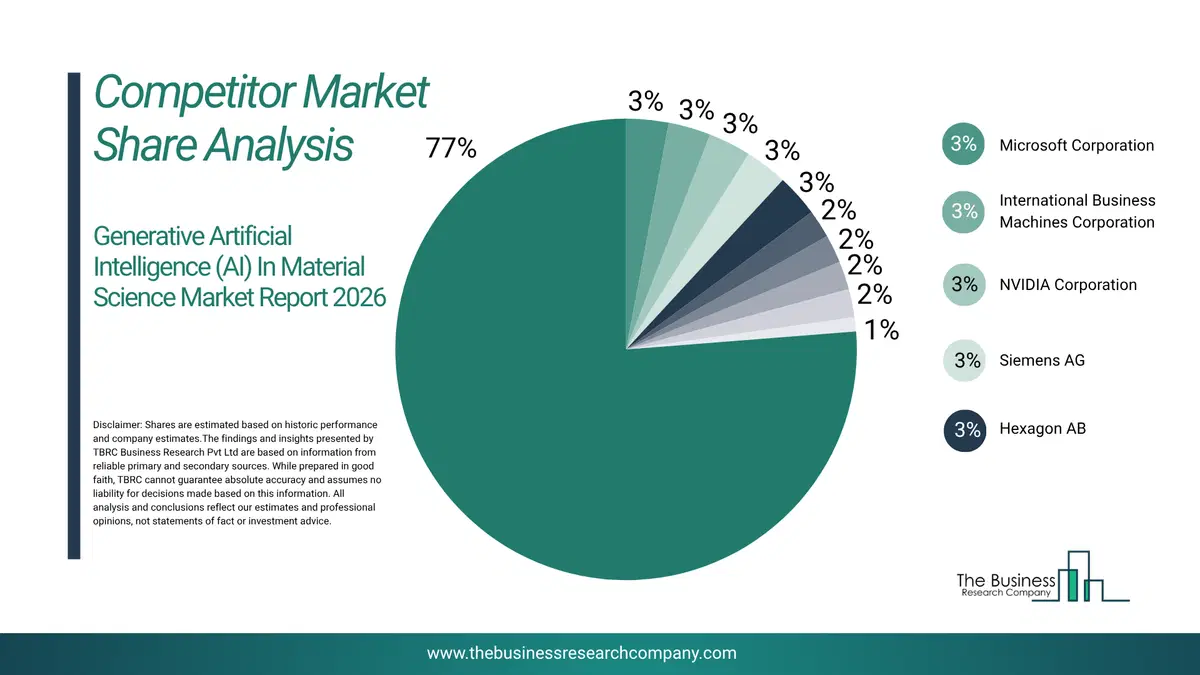
This chart is for illustrative purposes; the full report includes a detailed competitor analysis and comprehensive overview of the top 10 companies in the market.
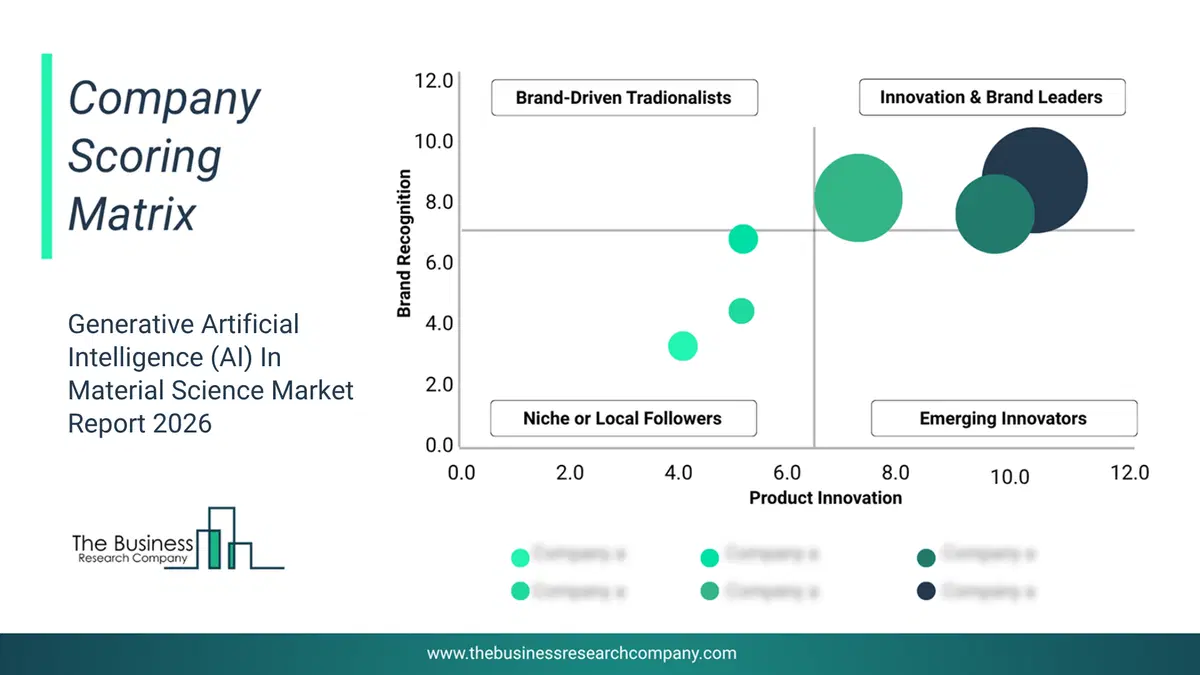
This chart maps companies by product innovation and brand strength, with bubble size indicating relative revenue, helping identify market leaders, challengers, and niche players. This is an illustrative chart; the full report provides a complete and accurate competitive analysis.
Global Generative Artificial Intelligence (AI) In Material Science Market Trends and Insights
Major companies operating in the generative artificial intelligence in material science market are focusing on developing innovative solutions, such as accelerated generative artificial intelligence (AI) models for drug discovery, to speed up drug discovery and life sciences research through advanced generative AI tools. Accelerated generative artificial intelligence (AI) models for drug discovery are advanced computational systems that use machine learning algorithms to quickly and efficiently design and predict potential new drugs. For instance, in March 2023, Nvidia Corporation, a US-based computer hardware manufacturing company, launched BioNeMo Cloud Service. This features pre-trained and customizable generative AI models for drug discovery, including AlphaFold2 and MoFlow, which accelerate molecular design and optimization. Its significance lies in drastically reducing the time and cost of research and development in drug discovery and life sciences, enabling faster identification and creation of new therapeutic candidates and materials.What Are Latest Mergers And Acquisitions In The Generative Artificial Intelligence (AI) In Material Science Market?
In January 2024, SandboxAQ, a US-based enterprise SaaS company, acquired Good Chemistry for $0.075 billion. The acquisition aims to enhance SandboxAQ's AI simulation capabilities in drug discovery and materials design by integrating Good Chemistry’s quantum and computational chemistry platforms, expanding its technology portfolio, and accelerating new materials and pharmaceutical development through Good Chemistry’s expertise and industry partnerships. Good Chemistry Company is a Canada-based computer application company that uses cloud computing technology designed to predict chemical properties.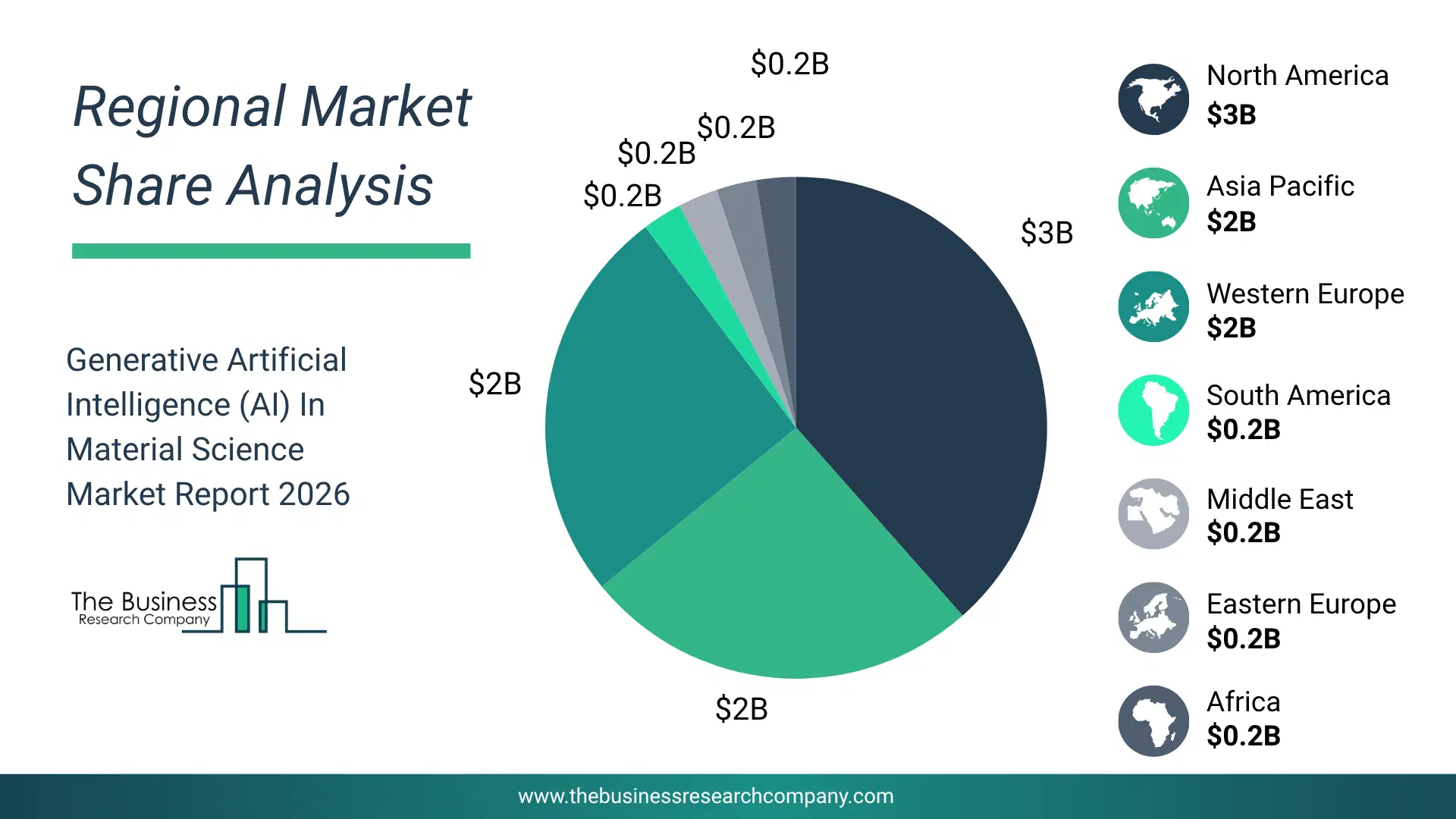
Regional Insights
North America was the largest region in the generative artificial intelligence in material science market in 2025. Asia-Pacific is expected to be the fastest-growing region in the forecast period. The regions covered in this market report are Asia-Pacific, South East Asia, Western Europe, Eastern Europe, North America, South America, Middle East, Africa. The countries covered in this market report are Australia, Brazil, China, France, Germany, India, Indonesia, Japan, Taiwan, Russia, South Korea, UK, USA, Canada, Italy, Spain.What Defines the Generative Artificial Intelligence (AI) In Material Science Market?
The generative artificial intelligence in material science market includes revenues earned by entities by providing services such as material property analysis consulting, integration services for AI tools in workflows, and technical support and training. The market value includes the value of related goods sold by the service provider or included within the service offering. Only goods and services traded between entities or sold to end consumers are included.How is Market Value Defined and Measured?
The market value is defined as the revenues that enterprises gain from the sale of goods and/or services within the specified market and geography through sales, grants, or donations in terms of the currency (in USD unless otherwise specified). The revenues for a specified geography are consumption values that are revenues generated by organizations in the specified geography within the market, irrespective of where they are produced. It does not include revenues from resales along the supply chain, either further along the supply chain or as part of other products.
This chart presents market attractiveness based on a quantitative evaluation of growth, competition, strategic alignment, and risk, offering a clear view of opportunity areas for decision-making. This chart is for illustrative purposes; the full report contains the complete analysis.

This chart highlights the Total Addressable Market (TAM) by estimating the maximum revenue opportunity using an assumption-driven approach, supporting strategic planning and opportunity sizing across markets. The chart is illustrative; the full report provides a more comprehensive analysis.
What Key Data and Analysis Are Included in the Generative Artificial Intelligence (AI) In Material Science Market Report 2026?
The generative artificial intelligence (ai) in material science market research report is one of a series of new reports from The Business Research Company that provides market statistics, including industry global market size, regional shares, competitors with the market share, detailed market segments, market trends and opportunities, and any further data you may need to thrive in the generative artificial intelligence (ai) in material science industry. The market research report delivers a complete perspective of everything you need, with an in-depth analysis of the current and future state of the industry.Generative Artificial Intelligence (AI) In Material Science Market Report Forecast Analysis
| Report Attribute | Details |
|---|---|
| Market Size Value In 2026 | $2.24 billion |
| Revenue Forecast In 2030 | $7.01 billion |
| Growth Rate | CAGR of 33% from 2026 to 2030 |
| Base Year For Estimation | 2025 |
| Actual Estimates/Historical Data | 2020-2025 |
| Forecast Period | 2026 - 2030 |
| Market Representation | Revenue in USD Billion and CAGR from 2026 to 2030 |
| Segments Covered | Type, Deployment, Application |
| Regional Scope | Asia-Pacific, Western Europe, Eastern Europe, North America, South America, Middle East, Africa |
| Country Scope | The countries covered in the report are Australia, Brazil, China, France, Germany, India, ... |
| Key Companies Profiled | Microsoft Corporation, Siemens AG, International Business Machines Corporation IBM, NVIDIA Corporation, Hexagon AB, ANSYS Inc., DeepMind Technologies Limited, Altair Engineering Inc., OpenAI, Schrödinger Inc., XtalPi, Alchemy Insights Inc., Citrine Informatics Inc., QuesTek Innovations LLC, Materials Zone, Kebotix Inc., Nanotronics Imaging Inc., AION Labs, Exabyte io, DeepMatter Group Plc, Orbital Materials, PostEra, Polymerize, Quantum Motion, NNAISENSE, Dassault Systèmes BIOVIA, Turbine ai, NobleAI, Newfound Materials Inc, Osium AI, KoBold Metals, Albert Invent |
| Customization Scope | Request for Customization |
| Pricing And Purchase Options | Explore Purchase Options |