
Generative Artificial Intelligence (AI) In Pharmaceutical Market Report 2026
Global Outlook – By Type (Small Molecule, Large Molecule), By Technology (Deep Learning, Natural Language Processing, Querying Method, Context-Aware Processing, Other Technologies), By Application (Clinical Trial Research, Drug Discovery, Research And Development, Other Applications) – Market Size, Trends, Strategies, and Forecast to 2030
Generative Artificial Intelligence (AI) In Pharmaceutical Market Overview
• Generative Artificial Intelligence (AI) In Pharmaceutical market size has reached to $2.43 billion in 2025 • Expected to grow to $9.36 billion in 2030 at a compound annual growth rate (CAGR) of 30.9% • Growth Driver: Rising Emphasis On Personalized Medicine Drive Generative AI in pharmaceutical Market • Market Trend: Advancements In Drug Discovery With Generative AI • North America was the largest region in 2025.What Is Covered Under Generative Artificial Intelligence (AI) In Pharmaceutical Market?
Generative artificial intelligence (AI) in pharmaceuticals leverages advanced algorithms and machine learning to design new drug compounds, predict molecular behaviors, and optimize drug discovery processes. It uses techniques such as deep learning and generative adversarial networks (GANs) to create novel molecular structures and simulate their interactions. The main types of generative artificial intelligence (AI) in pharmaceuticals are small molecules and large molecules. Small-molecule drugs are low-molecular-weight compounds that can easily enter cells and affect biological processes. The various technologies include deep learning, natural language processing, querying methods, context-aware processing, and others for varying applications such as clinical trial research, drug discovery, research and development, and others.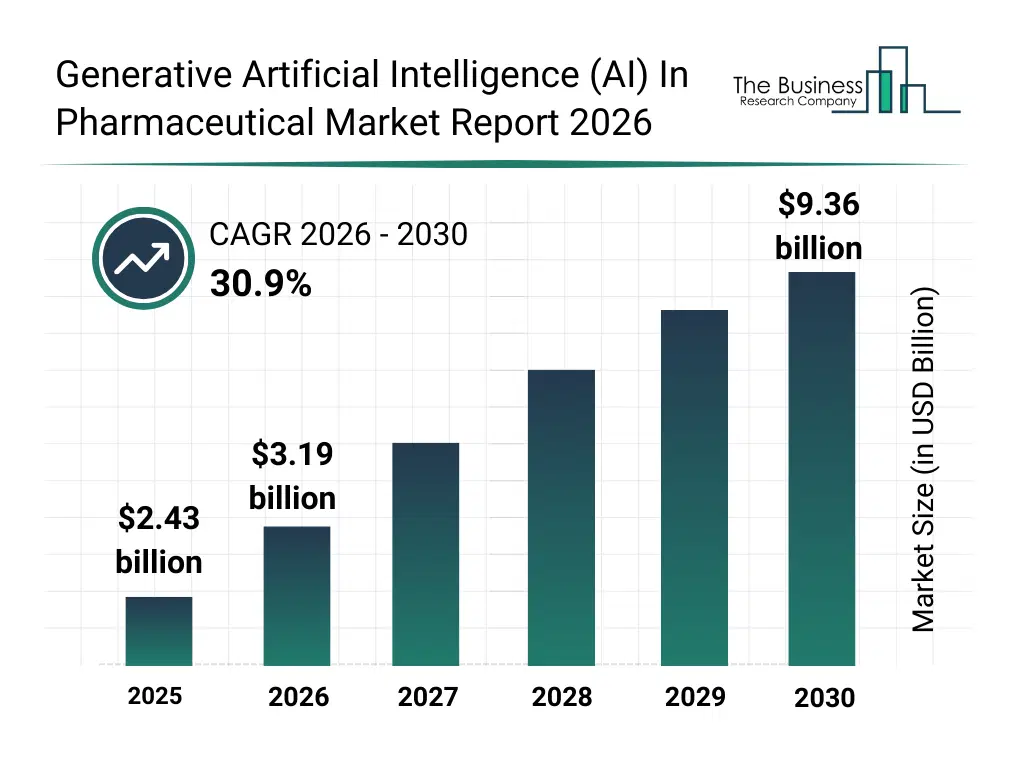
What Is The Generative Artificial Intelligence (AI) In Pharmaceutical Market Size and Share 2026?
The generative artificial intelligence (AI) in pharmaceutical market size has grown exponentially in recent years. It will grow from $2.43 billion in 2025 to $3.19 billion in 2026 at a compound annual growth rate (CAGR) of 31.2%. The growth in the historic period can be attributed to increasing r&d investments in pharmaceuticals, rise in chronic diseases, growing adoption of AI in early-stage drug discovery, expansion of biologics market, availability of large-scale molecular datasets.What Is The Generative Artificial Intelligence (AI) In Pharmaceutical Market Growth Forecast?
The generative artificial intelligence (AI) in pharmaceutical market size is expected to see exponential growth in the next few years. It will grow to $9.36 billion in 2030 at a compound annual growth rate (CAGR) of 30.9%. The growth in the forecast period can be attributed to advancements in generative AI algorithms, growth of precision medicine, expansion of virtual clinical trials, rising demand for biologics optimization, integration of AI with cloud computing. Major trends in the forecast period include AI-driven drug design optimization, predictive molecular modeling, virtual screening of compound libraries, personalized medicine development, biopharmaceutical efficacy simulation.
Global Generative Artificial Intelligence (AI) In Pharmaceutical Market Segmentation
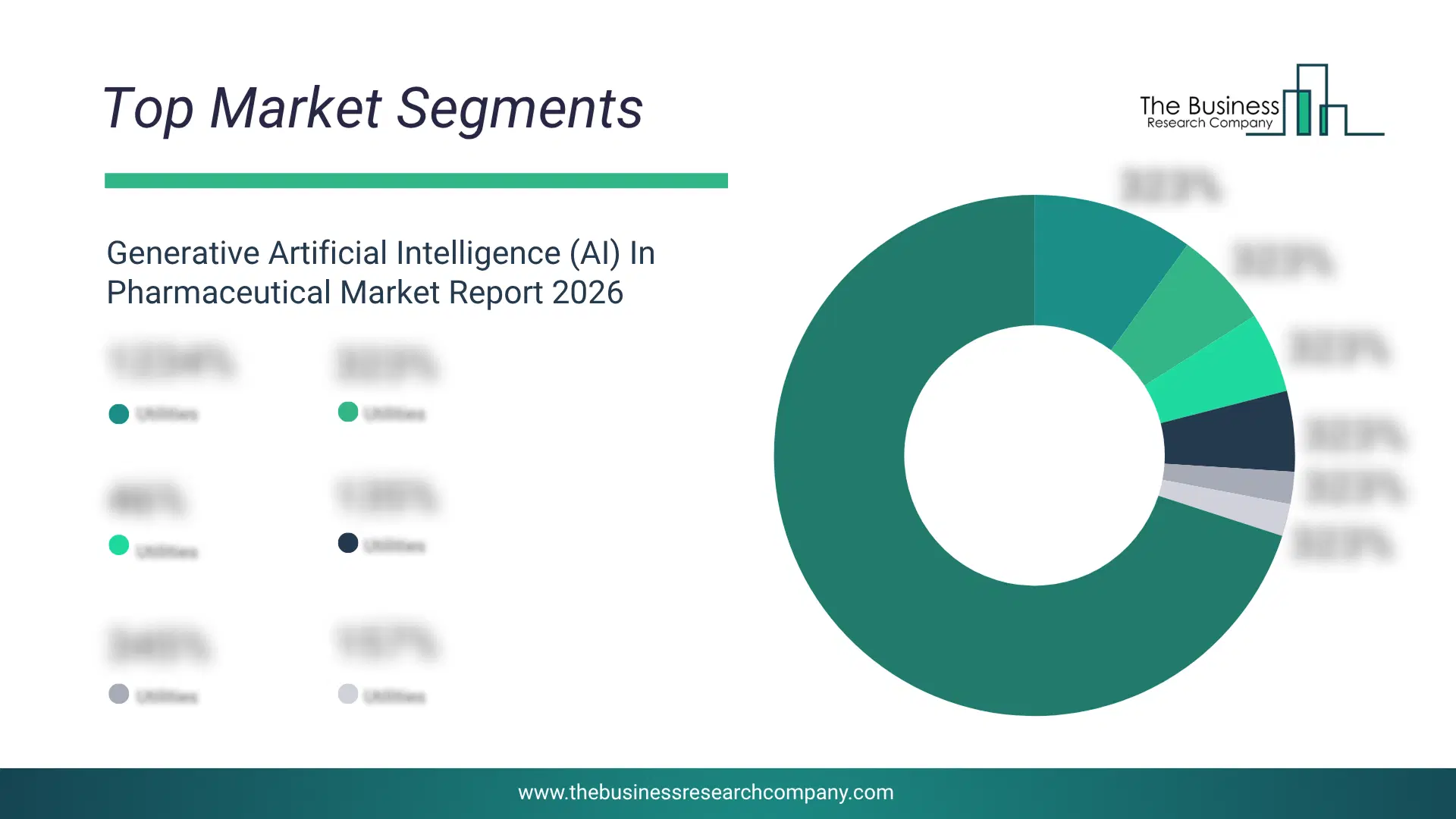
1) By Type: Small Molecule, Large Molecule 2) By Technology: Deep Learning, Natural Language Processing, Querying Method, Context-Aware Processing, Other Technologies 3) By Application: Clinical Trial Research, Drug Discovery, Research And Development, Other Applications Subsegments: 1) By Small Molecule: Drug Discovery And Design, Lead Optimization For Small Molecule Compounds, Predictive Modeling For Pharmacokinetics And Toxicity, Virtual Screening Of Compound Libraries, Personalized Medicine Approaches For Small Molecule Therapies 2) By Large Molecule: Biologics Discovery And Development, Monoclonal Antibody Design, Protein Engineering And Optimization, Vaccine Development And Optimization, Predictive Models For Biopharmaceutical Efficacy And Safety.What Is The Driver Of The Generative Artificial Intelligence (AI) In Pharmaceutical Market?
The increasing focus on personalized medicine is expected to propel the growth of generative artificial intelligence (AI) in the pharmaceutical market going forward. Personalized medicine tailors medical treatment to the individual characteristics, needs, and preferences of each patient based on genetic, environmental, and lifestyle factors. The focus on personalized medicine is increasing due to advancements in genetic research and technology, enabling more precise and effective treatments tailored to individual patients. Personalized medicine leverages generative AI in pharmaceuticals to develop tailored drug therapies, improving treatment efficacy and patient outcomes. For instance, in February 2024, according to the Personalized Medicine Coalition, a US-based non-profit organization, the FDA approved 16 novel personalized therapies for patients with rare diseases in 2023, compared to six in 2022. Therefore, the increasing focus on personalized medicine is driving the growth of generative artificial intelligence (AI) in the pharmaceutical market.Key Players In The Global Generative Artificial Intelligence (AI) In Pharmaceutical Market
Major companies operating in the generative artificial intelligence (AI) in pharmaceutical market are Pfizer Inc., Johnson & Johnson, Roche Holding AG, Merck & Co. Inc., AbbVie Inc., Bayer AG, Sanofi S.A., Bristol-Myers Squibb Company, AstraZeneca PLC, Novartis AG, GlaxoSmithKline plc, Fujitsu Limited, Takeda Pharmaceutical Company Limited, Eli Lilly and Company, Amgen Inc., Gilead Sciences Inc., NVIDIA Corporation, Conduent Incorporated, XtalPi Inc., Insilico Medicine Inc., Numerate Inc., Atomwise Inc., BenevolentAI Limited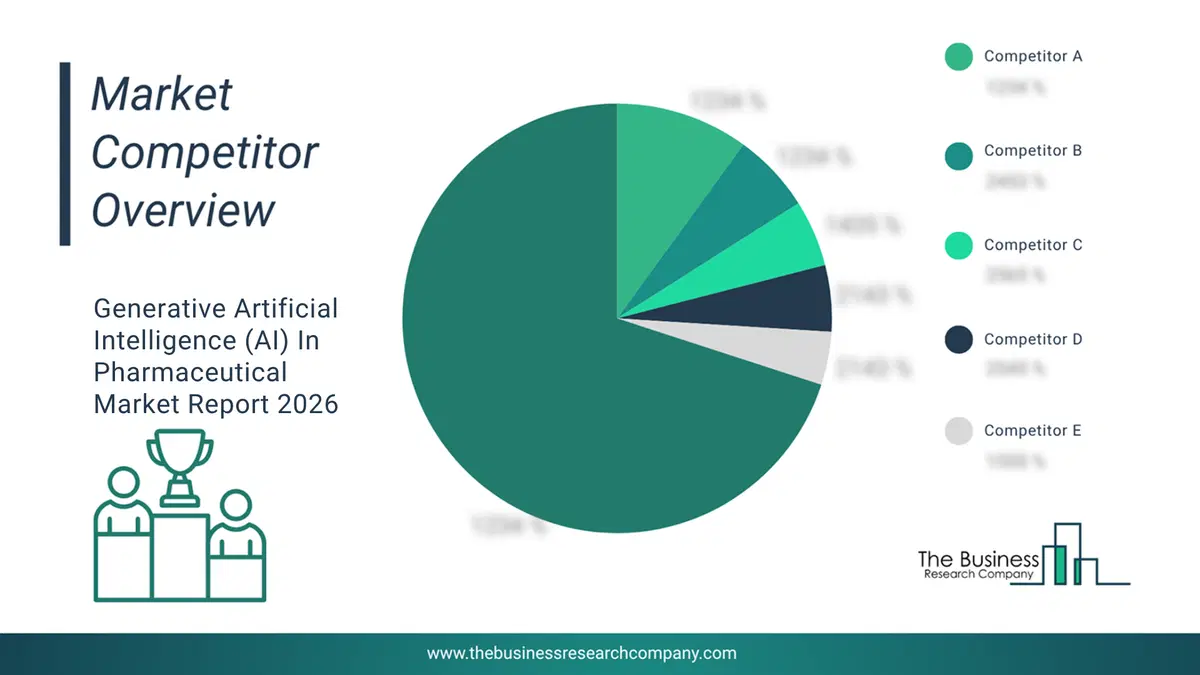
This chart is for illustrative purposes; the full report includes a detailed competitor analysis and comprehensive overview of the top 10 companies in the market.
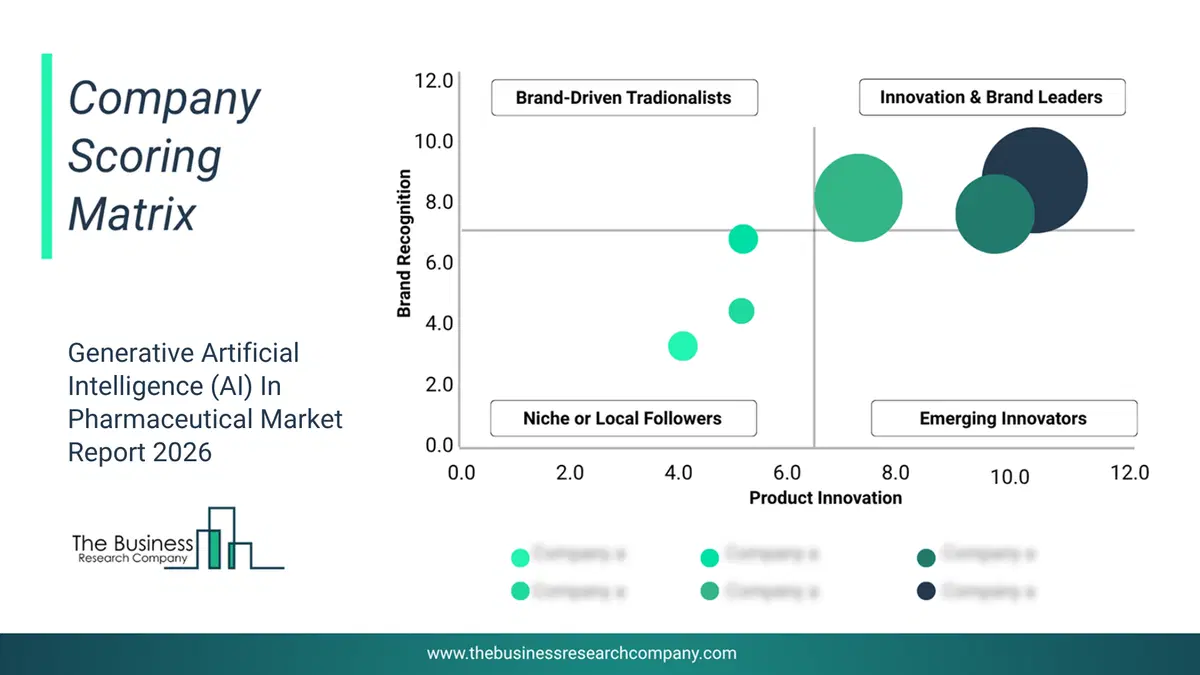
This chart maps companies by product innovation and brand strength, with bubble size indicating relative revenue, helping identify market leaders, challengers, and niche players. This is an illustrative chart; the full report provides a complete and accurate competitive analysis.
Global Generative Artificial Intelligence (AI) In Pharmaceutical Market Trends and Insights
Major companies operating in generative artificial intelligence (AI) in pharmaceutical market are developing new products, such as AI healthcare microservices, to streamline drug discovery processes. AI healthcare microservices are modular, cloud-based services that use artificial intelligence to improve healthcare functions such as drug discovery, medical imaging, and diagnostics. For instance, in March 2024, Nvidia Corporation, a US-based technology company, launched generative AI microservices. It features optimized NIM AI models and workflows with APIs for building cloud-native applications. It provides advanced imaging, natural language, and speech recognition, along with digital biology capabilities. The key tools included are Parabricks, MONAI, NeMo, Riva, and Metropolis are accessible as CUDA-X microservices, enhancing workflows in drug discovery and genomics.What Are Latest Mergers And Acquisitions In The Generative Artificial Intelligence (AI) In Pharmaceutical Market?
In June 2023, Eli Lilly and Company, a US-based company engaged in research-based pharmaceutical and biomedical research, collaborated with XtalPi Inc. The partnership will use XtalPi’s advanced AI-driven drug discovery platform, ID4Inno, to design and develop drug candidates targeting a specific, undisclosed goal. This collaboration aims to leverage XtalPi's technology to explore extensive chemical spaces and identify promising drug candidates through a process of iterative design, synthesis, testing, and analysis, all supported by autonomous robotic systems to ensure efficiency and precision. XtalPi Inc. is a China-based AI-powered drug research and development company.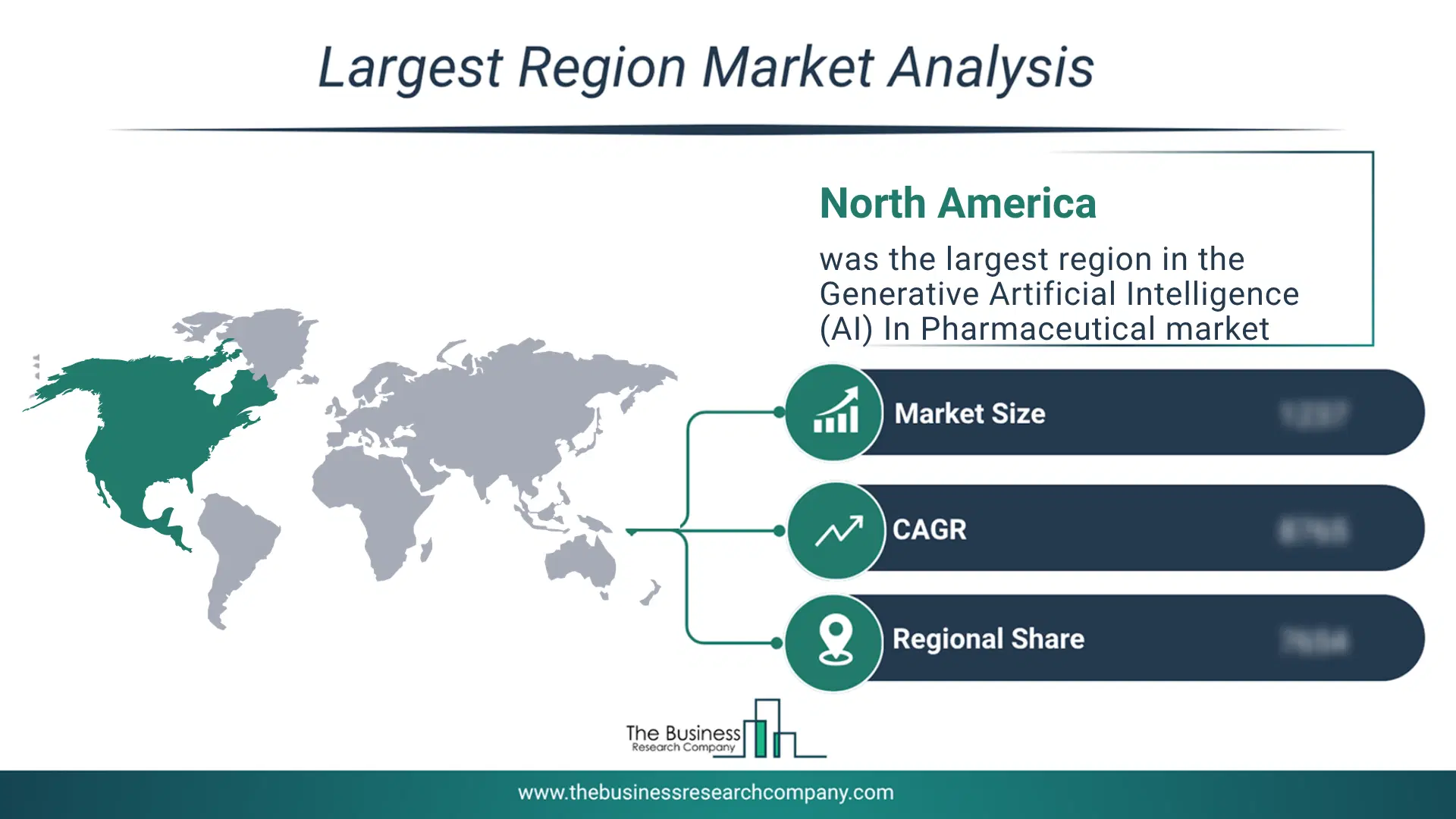
Regional Insights
North America was the largest region in the generative artificial intelligence (AI) in the pharmaceutical market in 2025. The regions covered in this market report are Asia-Pacific, South East Asia, Western Europe, Eastern Europe, North America, South America, Middle East, Africa. The countries covered in this market report are Australia, Brazil, China, France, Germany, India, Indonesia, Japan, Taiwan, Russia, South Korea, UK, USA, Canada, Italy, Spain.What Defines the Generative Artificial Intelligence (AI) In Pharmaceutical Market?
The generative artificial intelligence (AI) in pharmaceutical market includes revenues earned by entities through drug design, clinical trial optimization, biomarker discovery, and virtual screening. The market value includes the value of related goods sold by the service provider or included within the service offering. Only goods and services traded between entities or sold to end consumers are included.How is Market Value Defined and Measured?
The market value is defined as the revenues that enterprises gain from the sale of goods and/or services within the specified market and geography through sales, grants, or donations in terms of the currency (in USD unless otherwise specified). The revenues for a specified geography are consumption values that are revenues generated by organizations in the specified geography within the market, irrespective of where they are produced. It does not include revenues from resales along the supply chain, either further along the supply chain or as part of other products.
This chart presents market attractiveness based on a quantitative evaluation of growth, competition, strategic alignment, and risk, offering a clear view of opportunity areas for decision-making. This chart is for illustrative purposes; the full report contains the complete analysis.

This chart highlights the Total Addressable Market (TAM) by estimating the maximum revenue opportunity using an assumption-driven approach, supporting strategic planning and opportunity sizing across markets. The chart is illustrative; the full report provides a more comprehensive analysis.
What Key Data and Analysis Are Included in the Generative Artificial Intelligence (AI) In Pharmaceutical Market Report 2026?
The generative artificial intelligence (ai) in pharmaceutical market research report is one of a series of new reports from The Business Research Company that provides market statistics, including industry global market size, regional shares, competitors with the market share, detailed market segments, market trends and opportunities, and any further data you may need to thrive in the generative artificial intelligence (ai) in pharmaceutical industry. The market research report delivers a complete perspective of everything you need, with an in-depth analysis of the current and future state of the industry.Generative Artificial Intelligence (AI) In Pharmaceutical Market Report Forecast Analysis
| Report Attribute | Details |
|---|---|
| Market Size Value In 2026 | $3.19 billion |
| Revenue Forecast In 2030 | $9.36 billion |
| Growth Rate | CAGR of 30.9% from 2026 to 2030 |
| Base Year For Estimation | 2025 |
| Actual Estimates/Historical Data | 2020-2025 |
| Forecast Period | 2026 - 2030 |
| Market Representation | Revenue in USD Billion and CAGR from 2026 to 2030 |
| Segments Covered | Type, Technology, Application |
| Regional Scope | Asia-Pacific, Western Europe, Eastern Europe, North America, South America, Middle East, Africa |
| Country Scope | The Countries Covered In This Market Report Are Australia, Brazil, China, France, Germany, India, Indonesia, Japan, Taiwan, Russia, South Korea, Uk, Usa, Canada, Italy, Spain. |
| Key Companies Profiled | Pfizer Inc., Johnson & Johnson, Roche Holding AG, Merck & Co. Inc., AbbVie Inc., Bayer AG, Sanofi S.A., Bristol-Myers Squibb Company, AstraZeneca PLC, Novartis AG, GlaxoSmithKline plc, Fujitsu Limited, Takeda Pharmaceutical Company Limited, Eli Lilly and Company, Amgen Inc., Gilead Sciences Inc., NVIDIA Corporation, Conduent Incorporated, XtalPi Inc., Insilico Medicine Inc., Numerate Inc., Atomwise Inc., BenevolentAI Limited |
| Customization Scope | Request for Customization |
| Pricing And Purchase Options | Explore Purchase Options |