
Generic Central Nervous System Drugs Market Report 2026
Global Outlook – By Type (Multiple Sclerosis (MS), Anti-Psychotic, Analgesics, Anti-Parkinson Drugs, Anesthetics, Anti-Epileptics, Anti-Depressants, Other Types), By Drug Classification (Branded Drugs, Generic Drugs), By Disease (Neurovascular Diseases, CNS Trauma, Mental Health, Neurodegenerative Diseases, Infectious Diseases, CNS Cancer), By Route Of Administration (Oral, Intravenous, Intranasal Or Inhalation, Other Route Of Administrations), By Mode Of Purchase (Over-The-counter drugs, Prescription-Based Drugs6) By Distribution Channel (Hospital Pharmacies, Retail Pharmacies, Other Distribution Channels) – Market Size, Trends, Strategies, and Forecast to 2030
Generic Central Nervous System Drugs Market Overview
• Generic Central Nervous System Drugs market size has reached to $93.53 billion in 2025 • Expected to grow to $132.44 billion in 2030 at a compound annual growth rate (CAGR) of 7.2% • Growth Driver: Rising Incidence Of Mental Health Disorders Fuels Growth In The Generic Central Nervous System (CNS) Drug Market • Market Trend: Generic CNS Drugs Market Embraces Biosimilar Development For Enhanced Treatment Options • North America was the largest region in 2025.What Is Covered Under Generic Central Nervous System Drugs Market?
Generic central nervous system (CNS) drugs refer to the drugs that have an impact on the central nervous system agents (CNS) by slowing down brain activity. They are used to treat seizures, anxiety, panic attacks, and insomnia. The major types of generic central nervous system drugs are anti-psychotics, analgesics, anti-Parkinson drugs, anesthetics, anti-epileptics, anti-depressants, and others. Antipsychotics, also known as neuroleptics, are a class of medications primarily used to manage symptoms associated with psychotic disorders, such as schizophrenia and bipolar disorder. The drug classification is branded drugs and generic drugs and the route of administration includes oral, intravenous, intranasal or inhalation, and other various diseases such as neurovascular diseases, CNS trauma, mental health, neurodegenerative diseases, infectious diseases, and CNS cancer. The mode of purchase includes over-the-counter drugs, and prescription-based drugs and is distributed by various channels such as hospital pharmacies, retail pharmacies, and others.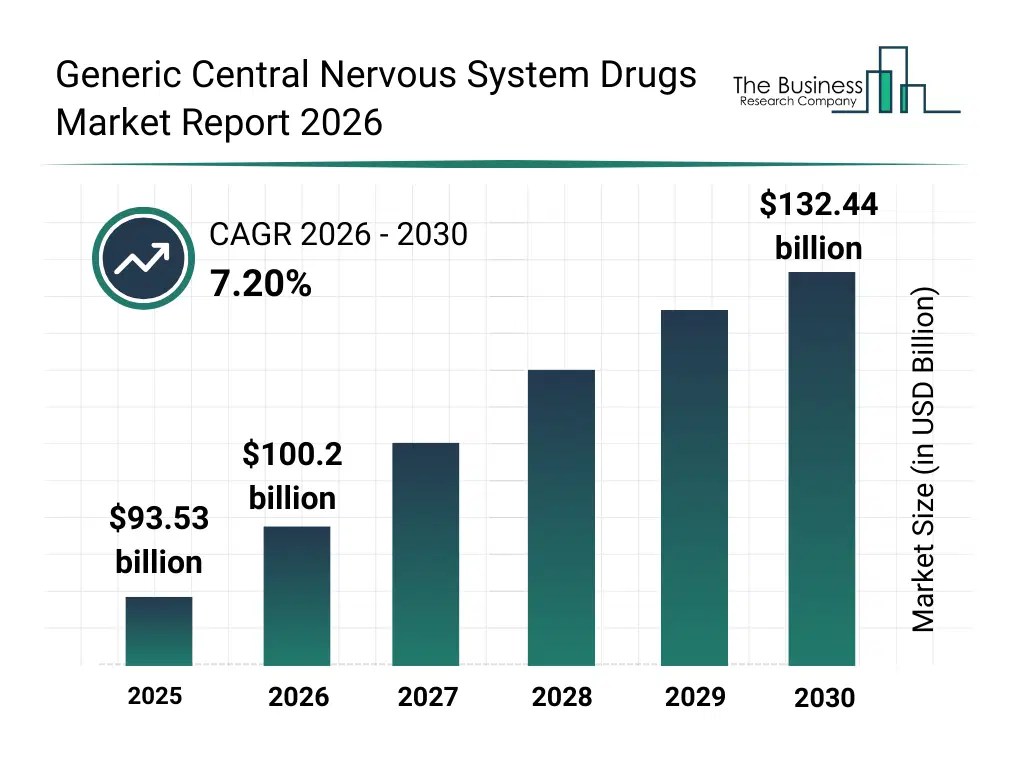
What Is The Generic Central Nervous System Drugs Market Size and Share 2026?
The generic central nervous system drugs market size has grown strongly in recent years. It will grow from $93.53 billion in 2025 to $100.2 billion in 2026 at a compound annual growth rate (CAGR) of 7.1%. The growth in the historic period can be attributed to rising incidence of anxiety and insomnia, limited availability of branded cns drugs, increasing r&d investments in generics, growing awareness of mental health, cost constraints in healthcare systems.What Is The Generic Central Nervous System Drugs Market Growth Forecast?
The generic central nervous system drugs market size is expected to see strong growth in the next few years. It will grow to $132.44 billion in 2030 at a compound annual growth rate (CAGR) of 7.2%. The growth in the forecast period can be attributed to expansion of generic drug manufacturing, adoption of digital therapeutics, integration of ai in cns drug discovery, increasing demand for outpatient and home care, growth in neurodegenerative disease population. Major trends in the forecast period include increasing prevalence of neurological disorders, rise in generic drug adoption, expansion of home-based and outpatient care, focus on mental health and stress management, development of multi-mechanism cns drugs.
Global Generic Central Nervous System Drugs Market Segmentation
1) By Type: Multiple Sclerosis (MS), Anti-Psychotic, Analgesics, Anti-Parkinson Drugs, Anesthetics, Anti-Epileptics, Anti-Depressants, Other Types 2) By Drug Classification: Branded Drugs, Generic Drugs 3) By Disease: Neurovascular Diseases, CNS Trauma, Mental Health, Neurodegenerative Diseases, Infectious Diseases, CNS Cancer 4) By Route Of Administration: Oral, Intravenous, Intranasal Or Inhalation, Other Route Of Administrations 5) By Mode Of Purchase: Over-The-counter drugs, Prescription-Based Drugs 6) By Distribution Channel: Hospital Pharmacies, Retail Pharmacies, Other Distribution Channels Subsegments: 1) By Multiple Sclerosis (MS): Interferons, Glatiramer Acetate, Sphingosine-1 Phosphate Receptor Modulators, Monoclonal Antibodies 2) By Anti-Psychotic: Atypical Antipsychotics, Typical Antipsychotics 3) By Analgesics: Non-Opioid Analgesics, Opioid Analgesics, Combination Analgesics 4) By Anti-Parkinson Drugs: Dopamine Agonists, MAO-B Inhibitors, COMT Inhibitors, Anticholinergics 5) By Anesthetics: General Anesthetics, Local Anesthetics 6) By Anti-Epileptics: Sodium Channel Blockers, GABA Enhancers, Glutamate Modulators, Other Mechanisms 7) By Anti-Depressants: Selective Serotonin Reuptake Inhibitors (SSRIs), Serotonin-Norepinephrine Reuptake Inhibitors (SNRIs), Tricyclic Antidepressants (TCAs), Monoamine Oxidase Inhibitors (MAOIs), Atypical Antidepressants 8) By Other Types: Cognitive Enhancers, Anxiolytics, Sleep AidsWhat Is The Driver Of The Generic Central Nervous System Drugs Market?
The increasing incidence of mental health disorders is expected to propel the growth of the generic central nervous system (CNS) drug market going forward. A mental health disorder is a clinically substantial impairment in a person's cognition, emotional regulation, or conduct. It is usually linked to distress or functional impairment in key areas. Generic central nervous system (CNS) drugs play a crucial role in the management of mental health disorders by providing affordable and accessible treatment options. For instance, in November 2023, according to the National Health Service, a UK-based government department, in 2023, approximately one in five individuals aged 8 to 25 years were estimated to have a probable mental disorder, affecting 20.3% of 8 to 16-year-olds, 23.3% of 17 to 19-year-olds, and 21.7% of 20 to 25-year-olds. Therefore, the increasing incidence of mental health disorders is driving the generic central nervous system (CNS) drug market.Key Players In The Global Generic Central Nervous System Drugs Market
Major companies operating in the generic central nervous system drugs market are Biogen Inc., Johnson & Johnson, Hoffmann-La Roche Ltd, Novartis AG, UCB, Sanofi, Pfizer Inc., Merck KGaA, Sumitomo Dainippon Pharma, AbbVie, Recipharm AB, Neuraxpharm, Sun Pharmaceutical Ltd, Ranbaxy Laboratories, Merz Pharma GmbH & Co. KGaA, AstraZeneca, Apotex, Bayer, GlaxoSmithKline, Amgen, Abbott Laboratories, Janssen Pharmaceutica, Teva Canada, Accord Healthcare Inc., Acerus Pharmaceuticals, EMS Pharma, Hypermarcas, Eurofarma, Teuto Brasileiro, Biolab Farmaceutica, Cristalia, União Quimica, Boehringer Ingelheim, Eli Lilly and Company, Adcock Ingram
This chart is for illustrative purposes; the full report includes a detailed competitor analysis and comprehensive overview of the top 10 companies in the market.
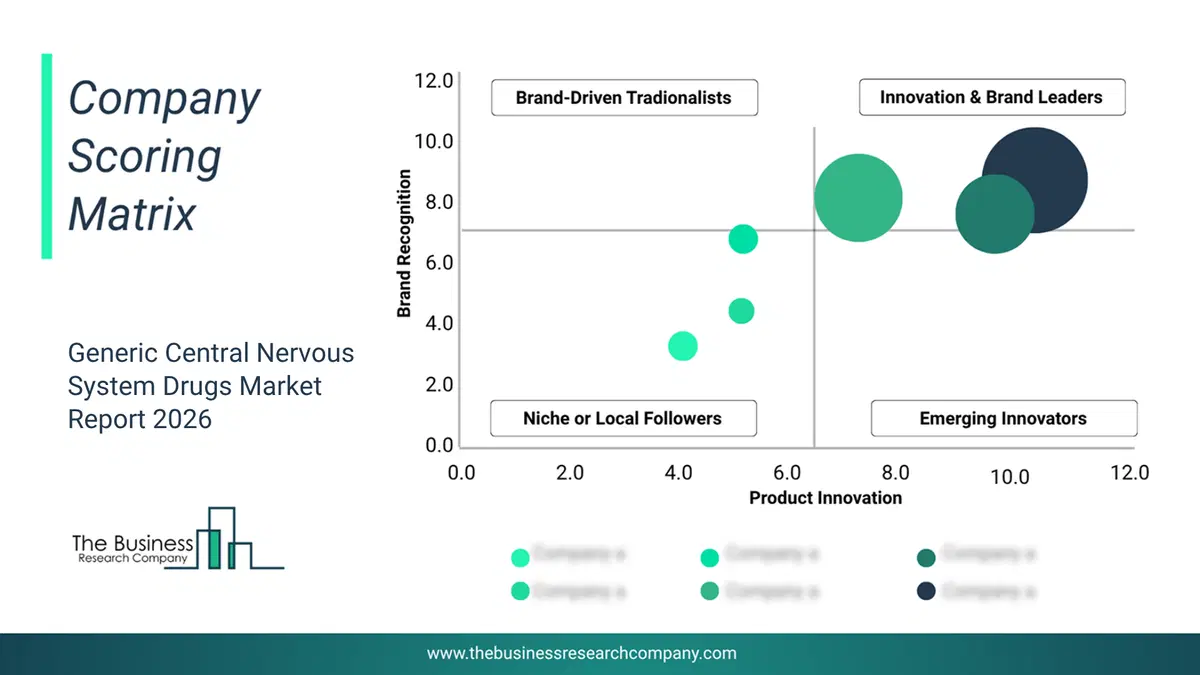
This chart maps companies by product innovation and brand strength, with bubble size indicating relative revenue, helping identify market leaders, challengers, and niche players. This is an illustrative chart; the full report provides a complete and accurate competitive analysis.
Global Generic Central Nervous System Drugs Market Trends and Insights
Major companies operating in the generic central nervous system drugs market are focused on developing biosimilars for central nervous system (CNS) conditions. The development and approval of biosimilars for certain biologic drugs used in CNS disorders are becoming a trend, offering more cost-effective alternatives to branded biologics. For instance, in October 2023, Sandoz a Switzerland-based pharmaceutical company launched natalizumab-sztn, the first biosimilar to treat relapsing forms of multiple sclerosis (MS). This includes clinically isolated syndrome, relapsing-remitting MS, and active secondary progressive MS. MS is an autoimmune disease that affects the central nervous system and is chronic and progressive. The majority of disease-affected individuals go through periods of remission and relapse, which negatively impacts their quality of life. The treatment will be contraindicated in patients with progressive multifocal leukoencephalopathy (PML) and in those who previously had PML.What Are Latest Mergers And Acquisitions In The Generic Central Nervous System Drugs Market?
In March 2024, Sanofi S.A., a France-based biopharmaceutical company, formed a partnership with Cipla Limited to promote central nervous system (CNS) products in India. The collaboration aims to expand access to and increase the adoption of innovative CNS therapies, enhancing patient outcomes in neurological and psychiatric conditions while driving growth in the CNS pharmaceutical market. Cipla Limited is an India-based pharmaceutical company that specializes in the development, manufacture, and commercialization of generic and specialty medicines for various therapeutic areas.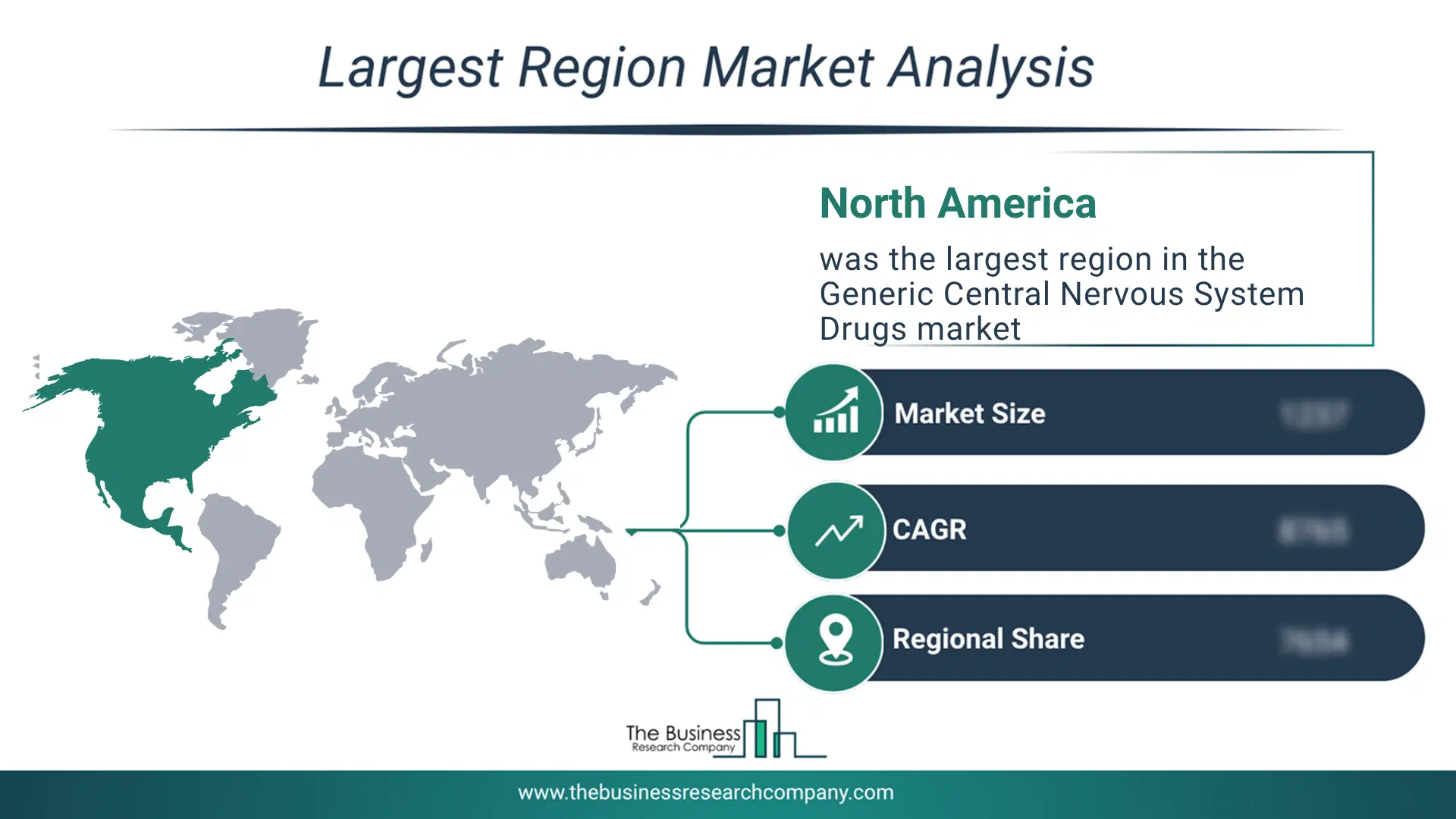
Regional Insights
North America was the largest region in the generic central nervous system drugs market in 2025. The regions covered in this market report are Asia-Pacific, South East Asia, Western Europe, Eastern Europe, North America, South America, Middle East, Africa. The countries covered in this market report are Australia, Brazil, China, France, Germany, India, Indonesia, Japan, Taiwan, Russia, South Korea, UK, USA, Canada, Italy, Spain.What Defines the Generic Central Nervous System Drugs Market?
The generic central nervous system drugs market consists of sales of sedatives, tranquilizers, and hypnotics. Values in this market are ‘factory gate’ values, that is the value of goods sold by the manufacturers or creators of the goods, whether to other entities (including downstream manufacturers, wholesalers, distributors, and retailers) or directly to end customers. The value of goods in this market includes related services sold by the creators of the goods.How is Market Value Defined and Measured?
The market value is defined as the revenues that enterprises gain from the sale of goods and/or services within the specified market and geography through sales, grants, or donations in terms of the currency (in USD unless otherwise specified). The revenues for a specified geography are consumption values that are revenues generated by organizations in the specified geography within the market, irrespective of where they are produced. It does not include revenues from resales along the supply chain, either further along the supply chain or as part of other products.
This chart presents market attractiveness based on a quantitative evaluation of growth, competition, strategic alignment, and risk, offering a clear view of opportunity areas for decision-making. This chart is for illustrative purposes; the full report contains the complete analysis.

This chart highlights the Total Addressable Market (TAM) by estimating the maximum revenue opportunity using an assumption-driven approach, supporting strategic planning and opportunity sizing across markets. The chart is illustrative; the full report provides a more comprehensive analysis.
What Key Data and Analysis Are Included in the Generic Central Nervous System Drugs Market Report 2026?
The generic central nervous system drugs market research report is one of a series of new reports from The Business Research Company that provides market statistics, including industry global market size, regional shares, competitors with the market share, detailed market segments, market trends and opportunities, and any further data you may need to thrive in the generic central nervous system drugs industry. The market research report delivers a complete perspective of everything you need, with an in-depth analysis of the current and future state of the industry.Generic Central Nervous System Drugs Market Report Forecast Analysis
| Report Attribute | Details |
|---|---|
| Market Size Value In 2026 | $100.2 billion |
| Revenue Forecast In 2030 | $132.44 billion |
| Growth Rate | CAGR of 7.1% from 2026 to 2030 |
| Base Year For Estimation | 2025 |
| Actual Estimates/Historical Data | 2020-2025 |
| Forecast Period | 2026 - 2030 |
| Market Representation | Revenue in USD Billion and CAGR from 2026 to 2030 |
| Segments Covered | Type, Drug Classification, Disease, Route Of Administration, Mode Of Purchase, Distribution Channel |
| Regional Scope | Asia-Pacific, Western Europe, Eastern Europe, North America, South America, Middle East, Africa |
| Country Scope | The countries covered in the report are Australia, Brazil, China, France, Germany, India, Indonesia, Japan, Taiwan, Russia, South Korea, UK, USA, Canada, Italy, Spain. |
| Key Companies Profiled | Biogen Inc., Johnson & Johnson, Hoffmann-La Roche Ltd, Novartis AG, UCB, Sanofi, Pfizer Inc., Merck KGaA, Sumitomo Dainippon Pharma, AbbVie, Recipharm AB, Neuraxpharm, Sun Pharmaceutical Ltd, Ranbaxy Laboratories, Merz Pharma GmbH & Co. KGaA, AstraZeneca, Apotex, Bayer, GlaxoSmithKline, Amgen, Abbott Laboratories, Janssen Pharmaceutica, Teva Canada, Accord Healthcare Inc., Acerus Pharmaceuticals, EMS Pharma, Hypermarcas, Eurofarma, Teuto Brasileiro, Biolab Farmaceutica, Cristalia, União Quimica, Boehringer Ingelheim, Eli Lilly and Company, Adcock Ingram |
| Customization Scope | Request for Customization |
| Pricing And Purchase Options | Explore Purchase Options |