

Genetic Mutation Analysis Market Report 2026
Global Outlook – By Component (Hardware, Software, Services), By Technology (Next-Generation Sequencing (NGS), Polymerase Chain Reaction (PCR), Microarray, Sanger Sequencing, Clustered Regularly Interspaced Short Palindromic Repeats (CRISPR)), By Application (Oncology, Cardiovascular Diseases, Neurological Disorders, Infectious Diseases, Genetic Disorders, Pharmacogenomics), By End User (Hospitals And Clinics, Research Institutes, Pharmaceutical And Biotechnology Companies, Diagnostic Laboratories) – Market Size, Trends, Strategies, and Forecast to 2030
Genetic Mutation Analysis Market Overview
• Genetic Mutation Analysis market size has reached to $6.65 billion in 2025 • Expected to grow to $11.47 billion in 2030 at a compound annual growth rate (CAGR) of 11.5% • Growth Driver: Rising Prevalence Of Genetic Disorders Fueling The Growth Of The Market Due To Increasing Need For Early Diagnosis And Targeted Treatment • Market Trend: Enhanced Diagnostic Accuracy With Expanded Gene Panels • North America was the largest region in 2025.What Is Covered Under Genetic Mutation Analysis Market?
Genetic mutation analysis refers to the study and examination of alterations in an organism’s DNA sequence that modify its genetic code. It focuses on detecting and describing variations such as base changes, insertions, deletions, or structural rearrangements within specific genes or regions of the genome. This process aims to determine the characteristics and potential effects of these alterations, offering insights into the patterns, diversity, and implications of genetic changes. The main components of genetic mutation analysis include hardware, software, and services. Hardware refers to physical laboratory equipment used to extract, amplify, and analyze genetic material for detecting mutations. It utilizes different technologies, including next-generation sequencing (NGS), polymerase chain reaction (PCR), microarray, Sanger sequencing, and clustered regularly interspaced short palindromic repeats (CRISPR). It is used in various applications such as oncology, cardiovascular diseases, neurological disorders, infectious diseases, genetic disorders, and pharmacogenomics by key end users including hospitals and clinics, research institutes, pharmaceutical and biotechnology companies, and diagnostic laboratories.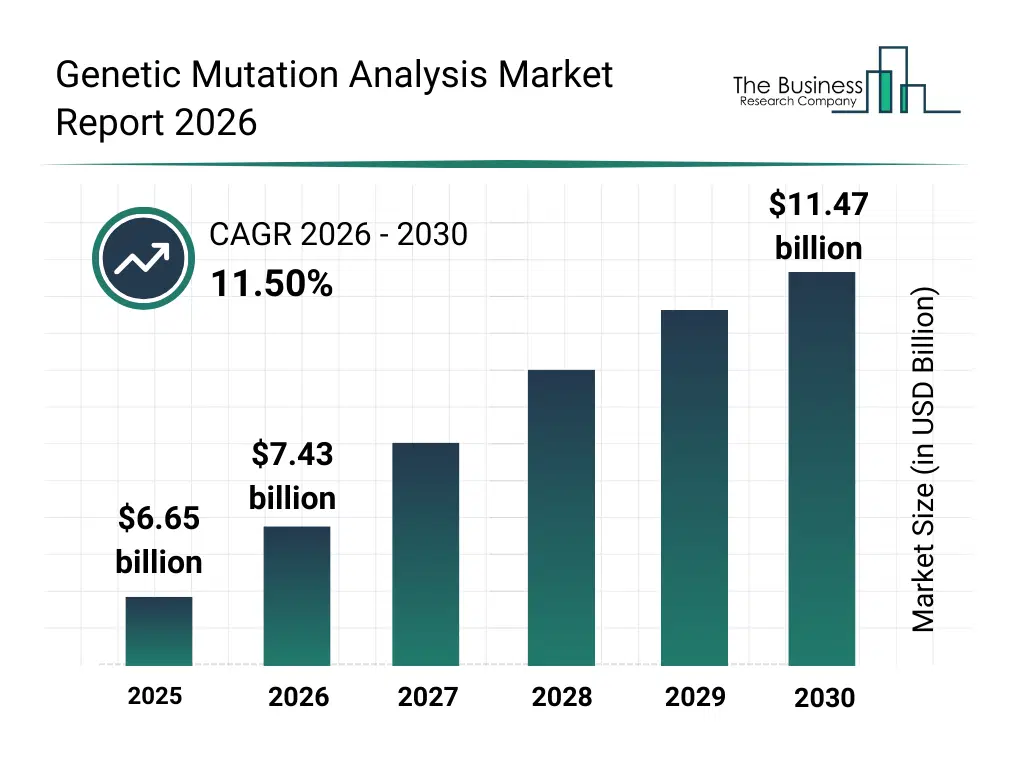
What Is The Genetic Mutation Analysis Market Size and Share 2026?
The genetic mutation analysis market size has grown rapidly in recent years. It will grow from $6.65 billion in 2025 to $7.43 billion in 2026 at a compound annual growth rate (CAGR) of 11.7%. The growth in the historic period can be attributed to limited access to advanced sequencing technologies, growing awareness of genetic disorders, increasing research in oncology and inherited diseases, adoption of pcr and microarray technologies, early development of bioinformatics tools.What Is The Genetic Mutation Analysis Market Growth Forecast?
The genetic mutation analysis market size is expected to see rapid growth in the next few years. It will grow to $11.47 billion in 2030 at a compound annual growth rate (CAGR) of 11.5%. The growth in the forecast period can be attributed to advancements in crispr and ngs platforms, expansion of pharmacogenomics research, rising investments in genetic testing infrastructure, integration of ai-driven data interpretation tools, increasing collaborations between research institutes and biotech companies. Major trends in the forecast period include increasing adoption of next-generation sequencing and crispr technologies, rising demand for personalized medicine and targeted therapies, expansion of genetic testing services in clinical diagnostics, integration of bioinformatics and data analysis platforms, growth in research on rare genetic disorders and pharmacogenomics.
Global Genetic Mutation Analysis Market Segmentation
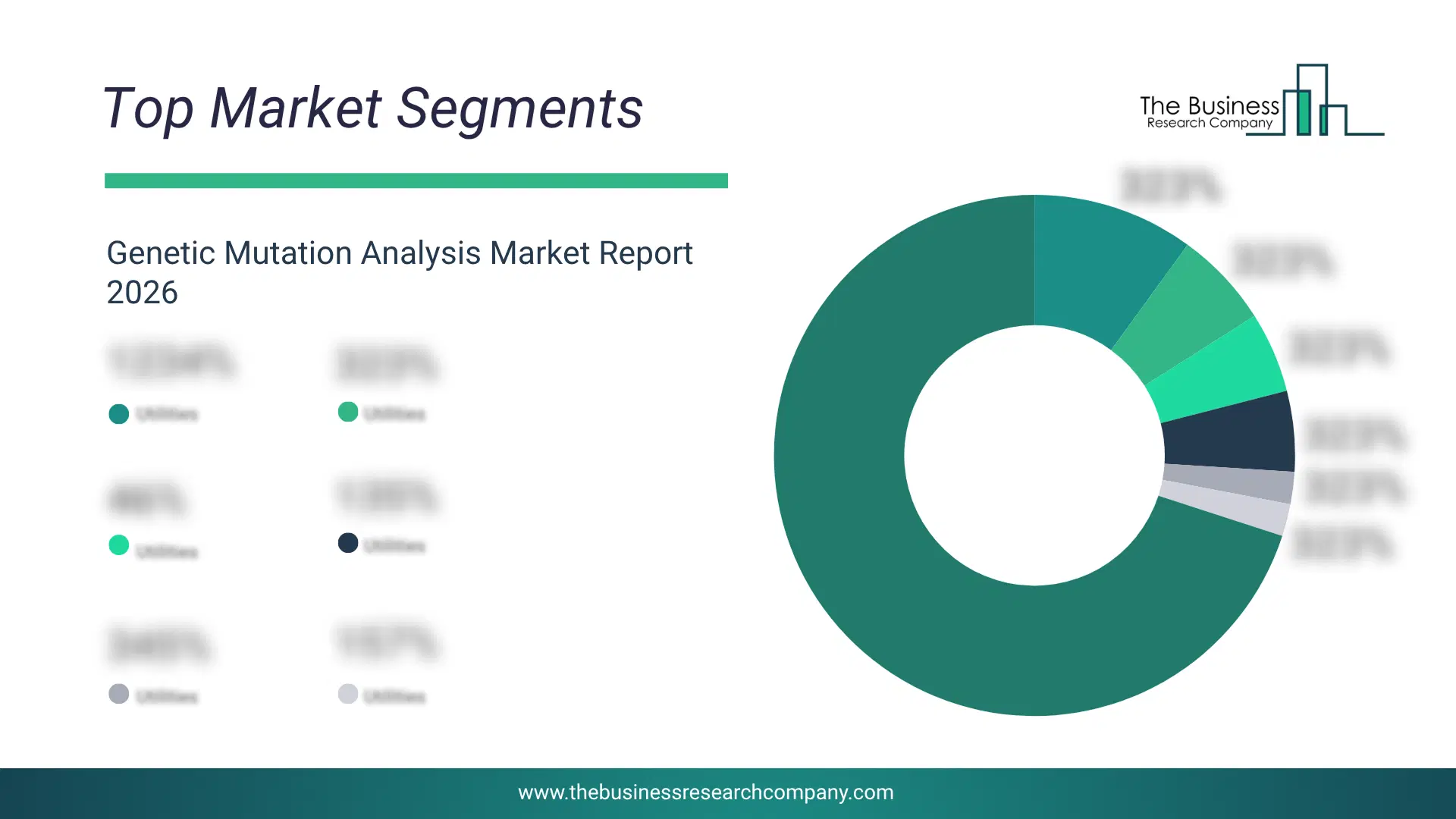
1) By Component: Hardware, Software, Services 2) By Technology: Next-Generation Sequencing (NGS), Polymerase Chain Reaction (PCR), Microarray, Sanger Sequencing, Clustered Regularly Interspaced Short Palindromic Repeats (CRISPR) 3) By Application: Oncology, Cardiovascular Diseases, Neurological Disorders, Infectious Diseases, Genetic Disorders, Pharmacogenomics 4) By End User: Hospitals And Clinics, Research Institutes, Pharmaceutical And Biotechnology Companies, Diagnostic Laboratories Subsegments: 1) By Hardware: Sequencers, Polymerase Chain Reaction (PCR) Machines, Microarray Instruments, Electrophoresis Systems, Imaging Systems 2) By Software: Data Analysis Software, Sequence Alignment Tools, Variant Calling Software, Genome Annotation Software, Visualization Tools 3) By Services: Genetic Testing Services, Data Interpretation Services, Bioinformatics Services, Sample Preparation Services, Clinical Reporting ServicesWhat Is The Driver Of The Genetic Mutation Analysis Market?
The rising prevalence of genetic disorders is expected to propel the growth of the genetic mutation analysis market going forward. Genetic disorders are diseases caused by abnormalities or mutations in an individual's DNA, which may be inherited or occur spontaneously. The increasing prevalence of genetic disorders is partly due to advanced parental age, which increases the risk of genetic mutations during reproduction, leading to a higher likelihood of these disorders in offspring. Genetic mutation analysis detects changes in genes that can lead to or signal the presence of genetic disorders, enabling early diagnosis, targeted treatment, and informed reproductive or lifestyle decisions. For instance, in October 2024, according to the Cystic Fibrosis Trust, a UK-based charity dedicated to supporting people with cystic fibrosis, 11,148 cystic fibrosis patients were registered in 2022, and this number grew to 11,318 in 2023, reflecting a 1.5% increase in patient registrations year-over-year. Therefore, the rising prevalence of genetic disorders is driving the growth of the genetic mutation analysis industry.Key Players In The Global Genetic Mutation Analysis Market
Major companies operating in the genetic mutation analysis market are F. Hoffmann-La Roche Ltd., Thermo Fisher Scientific Inc., Agilent Technologies Inc., Illumina Inc., Revvity Inc., Bio-Rad Laboratories Inc., QIAGEN N.V., Natera Inc., Myriad Genetics Inc., GenScript Biotech Corporation, Takara Bio Inc., 10x Genomics Inc., Oxford Nanopore Technologies Plc, Genomic Health Inc., Color Genomics Inc., Blueprint Medicines Corporation, GENEWIZ Inc., Pacific Biosciences of California Inc., Standard BioTools Inc., Personalis Inc., LGC Biosearch Technologies LLC, BGI Genomics Co. Ltd.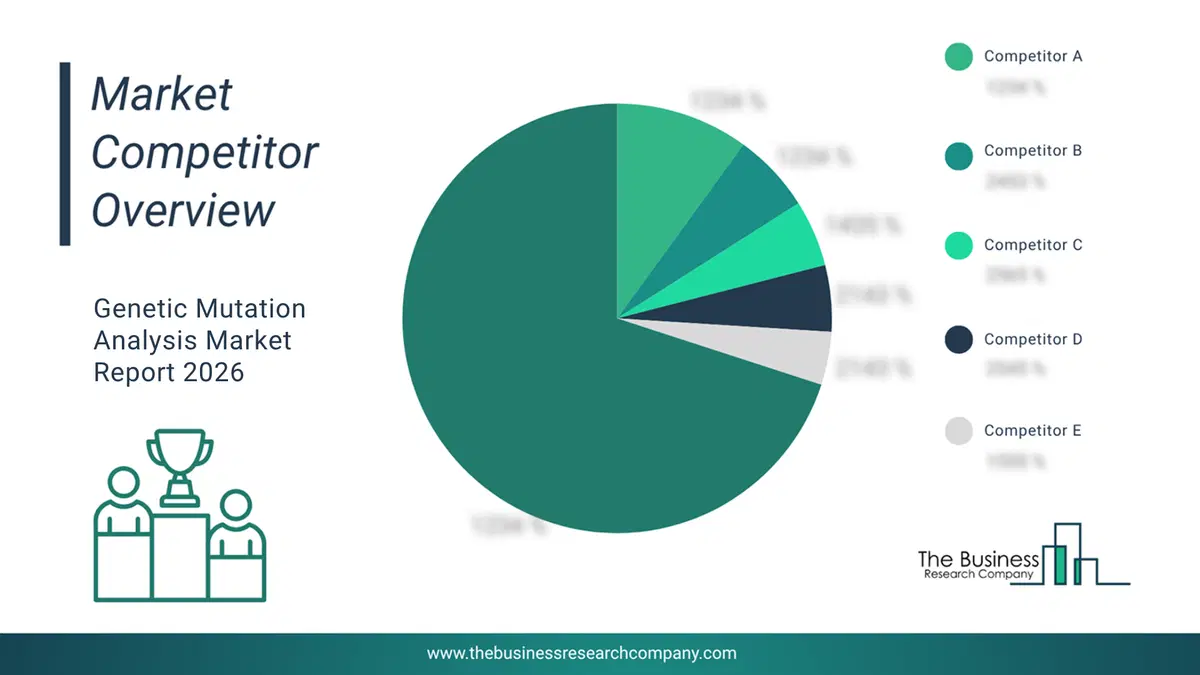
This chart is for illustrative purposes; the full report includes a detailed competitor analysis and comprehensive overview of the top 10 companies in the market.
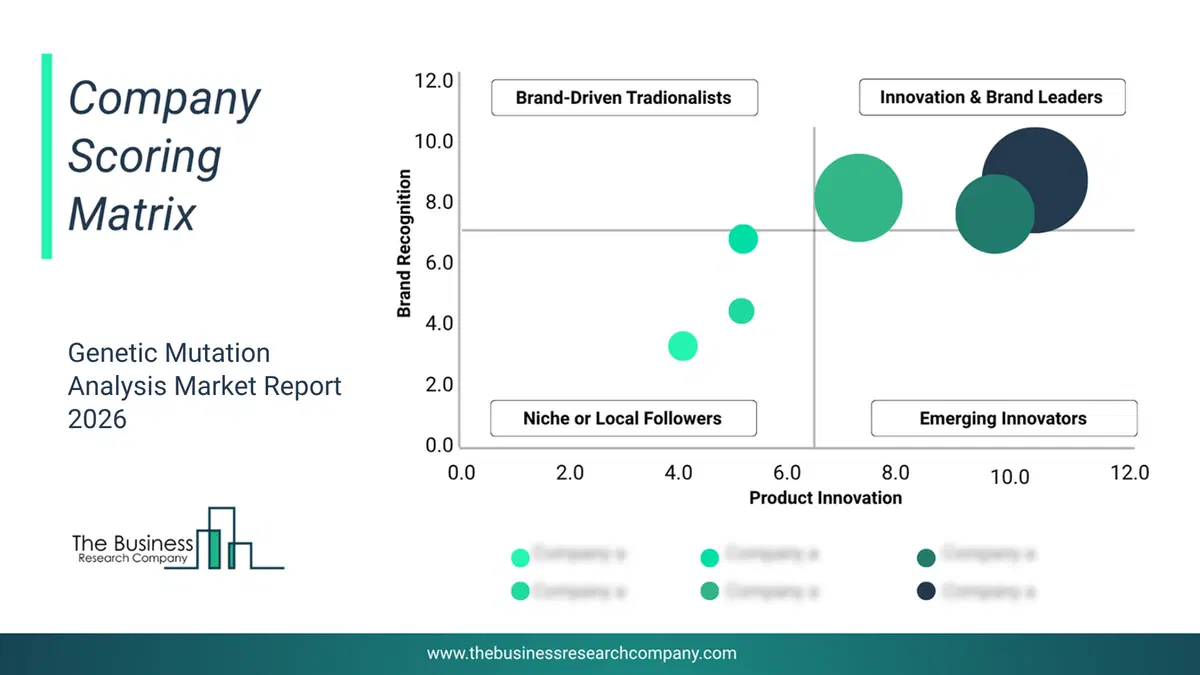
This chart maps companies by product innovation and brand strength, with bubble size indicating relative revenue, helping identify market leaders, challengers, and niche players. This is an illustrative chart; the full report provides a complete and accurate competitive analysis.
Global Genetic Mutation Analysis Market Trends and Insights
Major companies operating in the genetic mutation analysis market are focusing on developing innovative solutions, such as tissue-based next-generation sequencing (NGS) tests, to enhance precision in identifying actionable genetic alterations and guide personalized treatment strategies. Tissue-based next-generation sequencing (NGS) tests are advanced diagnostic tools that analyze DNA or RNA from a tissue sample to detect genetic mutations, alterations, or biomarkers associated with diseases such as cancer. For instance, in June 2024, Guardant Health Inc., a US-based oncology company, launched the Guardant360 TissueNext test that expands the number of genes it identifies in a tumor tissue sample to 498. These genes, or cancer biomarkers, enable oncologists to identify the targeted therapies or treatment strategies that are most effective for patients with advanced cancer. In addition to the panel expansion, Guardant has improved the test’s operational workflow for a faster turnaround time. The new Guardant360 TissueNext test will be covered for Medicare fee-for-service patients with advanced solid tumor cancers as a standalone service, based on coverage conveyed by Palmetto GBA, a Medicare administrative contractor for the Molecular Diagnostics Services program (MolDX), under the existing local coverage determination.What Are Latest Mergers And Acquisitions In The Genetic Mutation Analysis Market?
In June 2023, Dotmatics Ltd., a US-based scientific informatics software company, acquired SoftGenetics for an undisclosed amount. Through this acquisition, it aims to enhance its capabilities in genomics data analysis and bioinformatics by integrating SoftGenetics' advanced genetic analysis tools, thereby strengthening its life sciences research and development platform and expanding its reach in the precision medicine and genetic research markets. SoftGenetics LLC is a US-based bioinformatics software company that specializes in genetic analysis tools for mutation detection, sequencing, and forensic applications.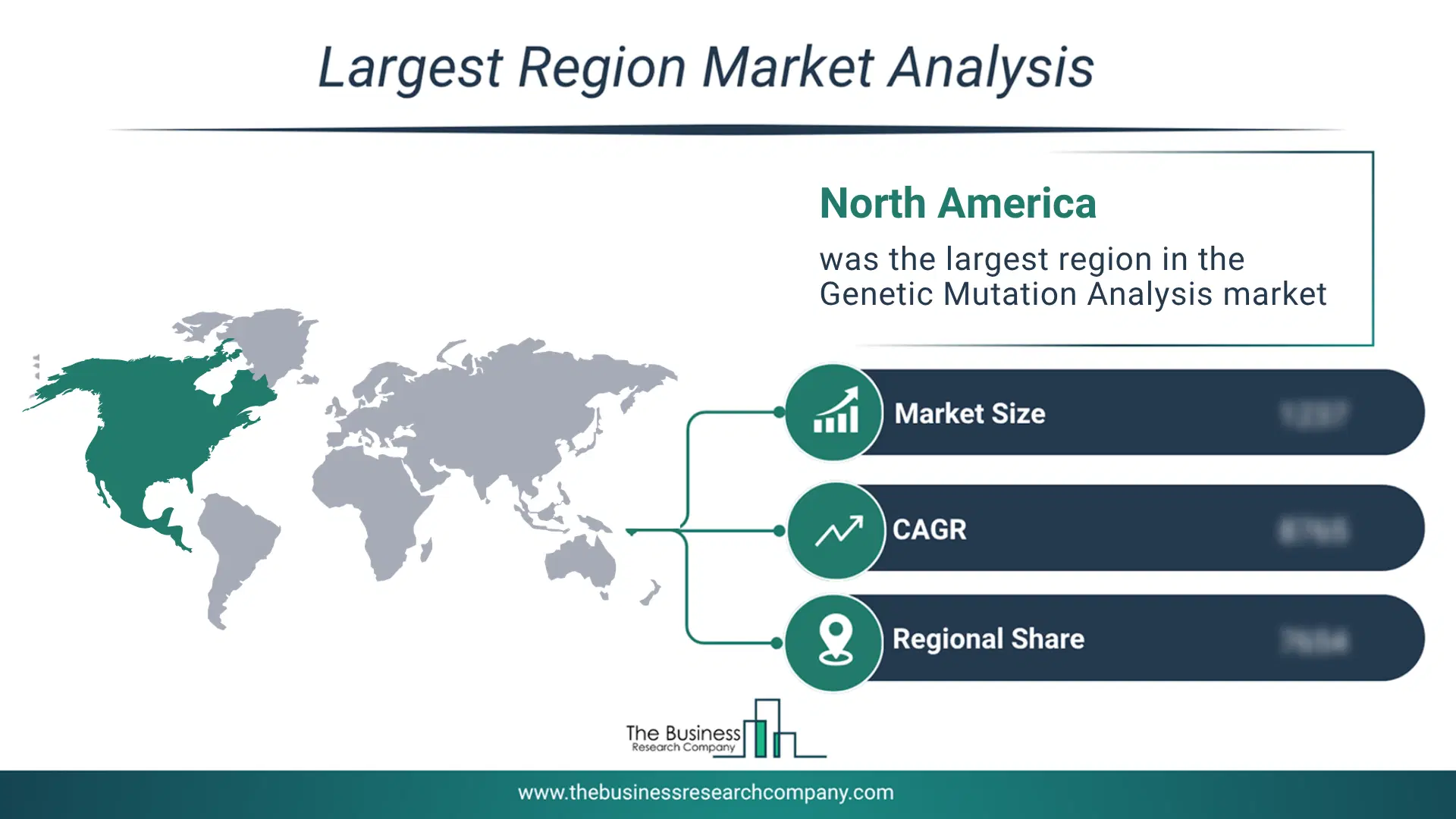
Regional Insights
North America was the largest region in the genetic mutation analysis market in 2025. The regions covered in this market report are Asia-Pacific, South East Asia, Western Europe, Eastern Europe, North America, South America, Middle East, Africa. The countries covered in this market report are Australia, Brazil, China, France, Germany, India, Indonesia, Japan, Taiwan, Russia, South Korea, UK, USA, Canada, Italy, Spain.What Defines the Genetic Mutation Analysis Market?
The genetic mutation analysis market consists of revenues earned by entities by providing services such as mutation validation, biomarker discovery, genome annotation, structural variation analysis, and epigenetic profiling. The market value includes the value of related goods sold by the service provider or included within the service offering. The genetic mutation analysis market also includes sales of DNA extraction tools, mutation detection assays, sequencing panels, and genomic reference materials. Values in this market are ‘factory gate’ values, that is the value of goods sold by the manufacturers or creators of the goods, whether to other entities (including downstream manufacturers, wholesalers, distributors and retailers) or directly to end customers. The value of goods in this market includes related services sold by the creators of the goods.How is Market Value Defined and Measured?
The market value is defined as the revenues that enterprises gain from the sale of goods and/or services within the specified market and geography through sales, grants, or donations in terms of the currency (in USD unless otherwise specified). The revenues for a specified geography are consumption values that are revenues generated by organizations in the specified geography within the market, irrespective of where they are produced. It does not include revenues from resales along the supply chain, either further along the supply chain or as part of other products.
This chart presents market attractiveness based on a quantitative evaluation of growth, competition, strategic alignment, and risk, offering a clear view of opportunity areas for decision-making. This chart is for illustrative purposes; the full report contains the complete analysis.

This chart highlights the Total Addressable Market (TAM) by estimating the maximum revenue opportunity using an assumption-driven approach, supporting strategic planning and opportunity sizing across markets. The chart is illustrative; the full report provides a more comprehensive analysis.
What Key Data and Analysis Are Included in the Genetic Mutation Analysis Market Report 2026?
The genetic mutation analysis market research report is one of a series of new reports from The Business Research Company that provides market statistics, including industry global market size, regional shares, competitors with the market share, detailed market segments, market trends and opportunities, and any further data you may need to thrive in the genetic mutation analysis industry. The market research report delivers a complete perspective of everything you need, with an in-depth analysis of the current and future state of the industry.Genetic Mutation Analysis Market Report Forecast Analysis
| Report Attribute | Details |
|---|---|
| Market Size Value In 2026 | $7.43 billion |
| Revenue Forecast In 2030 | $11.47 billion |
| Growth Rate | CAGR of 11.7% from 2026 to 2030 |
| Base Year For Estimation | 2025 |
| Actual Estimates/Historical Data | 2020-2025 |
| Forecast Period | 2026 - 2030 |
| Market Representation | Revenue in USD Billion and CAGR from 2026 to 2030 |
| Segments Covered | Component, Technology, Application, End User |
| Regional Scope | Asia-Pacific, Western Europe, Eastern Europe, North America, South America, Middle East, Africa |
| Country Scope | The countries covered in the report are Australia, Brazil, China, France, Germany, India, Indonesia, Japan, Taiwan, Russia, South Korea, UK, USA, Canada, Italy, Spain. |
| Key Companies Profiled | F. Hoffmann-La Roche Ltd., Thermo Fisher Scientific Inc., Agilent Technologies Inc., Illumina Inc., Revvity Inc., Bio-Rad Laboratories Inc., QIAGEN N.V., Natera Inc., Myriad Genetics Inc., GenScript Biotech Corporation, Takara Bio Inc., 10x Genomics Inc., Oxford Nanopore Technologies Plc, Genomic Health Inc., Color Genomics Inc., Blueprint Medicines Corporation, GENEWIZ Inc., Pacific Biosciences of California Inc., Standard BioTools Inc., Personalis Inc., LGC Biosearch Technologies LLC, BGI Genomics Co. Ltd. |
| Customization Scope | Request for Customization |
| Pricing And Purchase Options | Explore Purchase Options |