

Genetically Modified Vegetables Market Report 2026
Global Outlook – By Type Of Modification (Transgenic, Cis-Genic, Sub-Genic, Multiple Trait Integration), By Technique (Gene Guns, Electroporation, Microinjection, Agrobacterium, Other Techniques), By Trait (Herbicide Tolerance (HT), Insect Resistance (IR), Stacked Traits, Other Traits), By Application (Scientific Research, Agriculture Crops) – Market Size, Trends, Strategies, and Forecast to 2030
Genetically Modified Vegetables Market Overview
• Genetically Modified Vegetables market size has reached to $0.13 billion in 2025 • Expected to grow to $0.23 billion in 2030 at a compound annual growth rate (CAGR) of 12.3% • Growth Driver: Global Demand For Healthy And High-Yielding Crops Drives Growth In Genetically Modified Vegetable Market • Market Trend: Emergence Of Genetically Resistant Varieties Addresses Pest Challenges In Vegetable Farming • North America was the largest region in 2025.What Is Covered Under Genetically Modified Vegetables Market?
Genetically modified vegetables refer to vegetables that have their genetic material altered. The DNA of these plants is inserted with a gene from a bacteria or other organism which results in the expression of the traits that the gene represents. These vegetables are used for better resistance to certain diseases and chemicals. The main types of modification in genetically modified vegetables are transgenic, cis-genic, sub-genic and multiple trait integrations. Transgenic modification refers to the modification of plants using genes from a different organism such as a bacterium. The types of crops involved are soybean, cotton, maize, oilseed rape, canola, alfalfa and other crops that are modified by gene guns, electroporation, microinjection, agrobacterium, other techniques with herbicide tolerance (HT), insect resistance (IR), stacked traits and other traits that are used for scientific research and agriculture crops.s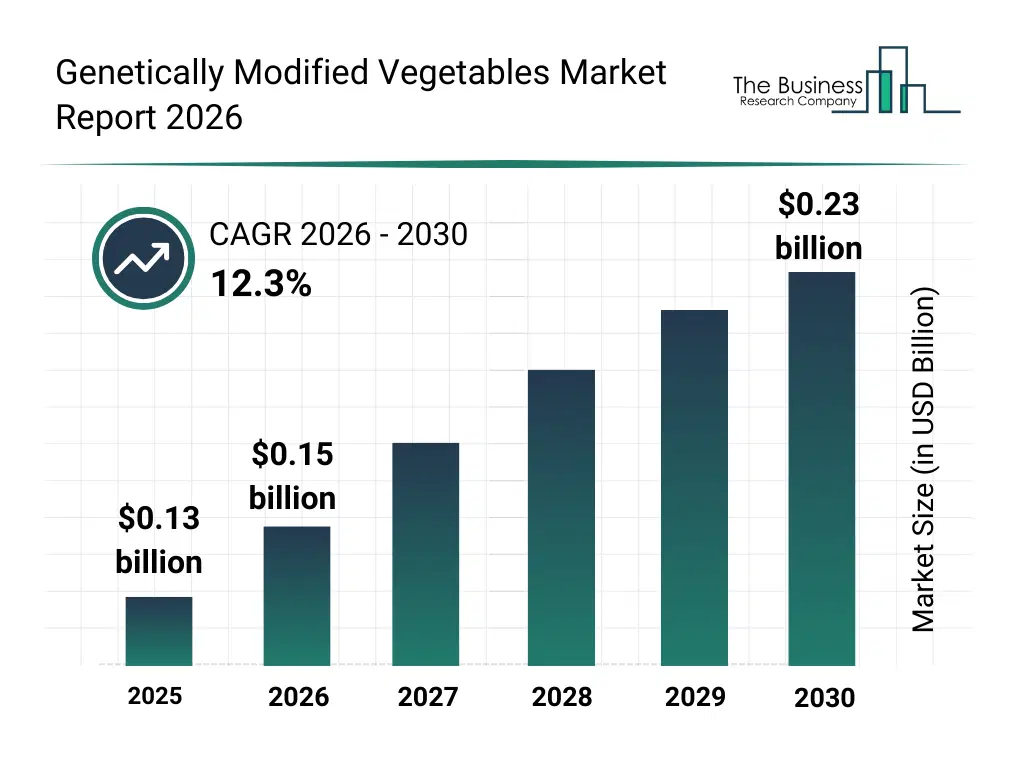
What Is The Genetically Modified Vegetables Market Size and Share 2026?
The genetically modified vegetables market size has grown rapidly in recent years. It will grow from $0.13 billion in 2025 to $0.15 billion in 2026 at a compound annual growth rate (CAGR) of 12.9%. The growth in the historic period can be attributed to increasing vegetable crop losses due to pests, early adoption of transgenic crops, expansion of commercial vegetable farming, rising investments in plant biotechnology, regulatory approvals for gm crops.What Is The Genetically Modified Vegetables Market Growth Forecast?
The genetically modified vegetables market size is expected to see rapid growth in the next few years. It will grow to $0.23 billion in 2030 at a compound annual growth rate (CAGR) of 12.3%. The growth in the forecast period can be attributed to increasing demand for resilient vegetable varieties, expansion of precision breeding techniques, growing focus on food security, rising investments in agricultural research, increasing adoption of stacked trait vegetables. Major trends in the forecast period include increasing adoption of disease-resistant gm vegetables, rising use of herbicide-tolerant vegetable varieties, expansion of gene editing techniques, growing focus on nutritional enhancement traits, enhanced integration of multi-trait vegetables.
Global Genetically Modified Vegetables Market Segmentation
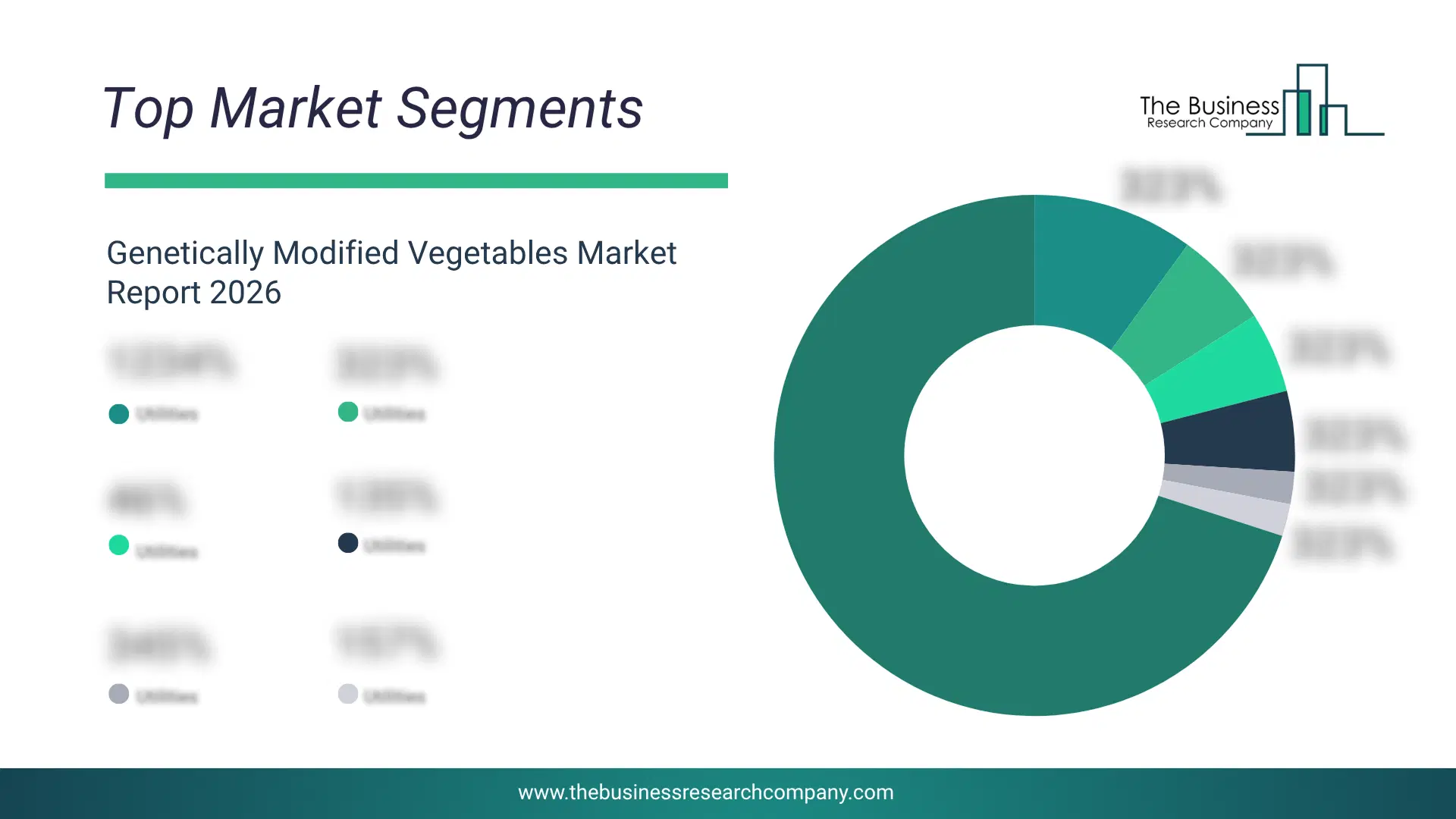
1) By Type Of Modification: Transgenic, Cis-Genic, Sub-Genic, Multiple Trait Integration 2) By Technique: Gene Guns, Electroporation, Microinjection, Agrobacterium, Other Techniques 3) By Trait: Herbicide Tolerance (HT), Insect Resistance (IR), Stacked Traits, Other Traits 4) By Application: Scientific Research, Agriculture Crops Subsegments: 1) By Transgenic: Insect-Resistant, Herbicide-Tolerant, Virus-Resistant, Nutritional Enhancement 2) By Cis-Genic: Disease Resistance, Yield Improvement, Stress Tolerance 3) By Sub-Genic: Gene Silencing, Gene Editing 4) By Multiple Trait Integration: Stacked Traits, Enhanced Nutritional ProfilesWhat Is The Driver Of The Genetically Modified Vegetables Market?
The surge in demand for healthy and more yielding crops is driving the genetically modified vegetable market forward. Healthy and more yielding crops refer to plants that grow vigorously, are resistant to diseases and pests, and produce a higher quantity and quality of harvest. The surge in demand for healthy and higher-yielding crops is primarily driven by rising health awareness, as consumers increasingly prefer nutritious and safe food options. Genetically modified vegetables help produce healthier and higher-yielding crops by enhancing nutrient content, improving resistance to pests and diseases, and optimizing growth under challenging environmental conditions. For instance, in October 2024, according to the predictions by the Food and Agriculture Organization (FAO), an Italy-based agency of the United Nations, global rice production in 2024 is projected to reach a record 539.2 million metric tons, driven by favorable conditions in India, highlighting increased demand for productive and resilient crops. Additionally, world wheat production is expected to rise to 792.9 million tons in 2024, with improved yield prospects in Australia contributing to the global focus on healthier and higher-yielding agricultural outputs. Therefore, the need for high-yielding and healthy crops is driving the genetically modified vegetable industry.Key Players In The Global Genetically Modified Vegetables Market
Major companies operating in the genetically modified vegetables market are BASF SE, Bayer AG, Syngenta AG, Dupont de Nemours Inc., Groupe Limagrain Holding SA, JR Simplot Company, JKAgri Genetics Ltd., Mahyco Private Limited, Calyxt Inc., Stine Seed Farm Inc., Nuseed Pty Ltd., KWS SAAT SE & Co. KGaA, Sakata Seed Corporation, Okanagan Specialty Fruits Inc., Pairwise Plants LLC, Corteva Inc., Sakata Seed America Inc., Limagrain Holding SA, Arcadia Biosciences Inc., Benson Hill Biosystems Inc.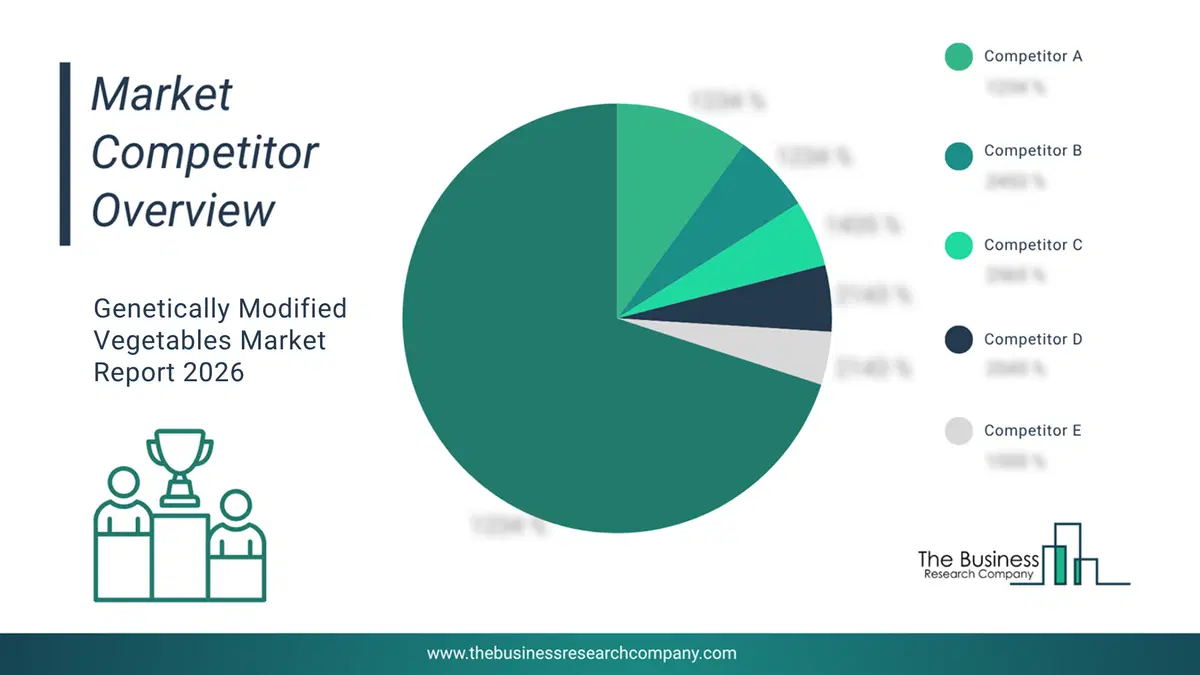
This chart is for illustrative purposes; the full report includes a detailed competitor analysis and comprehensive overview of the top 10 companies in the market.
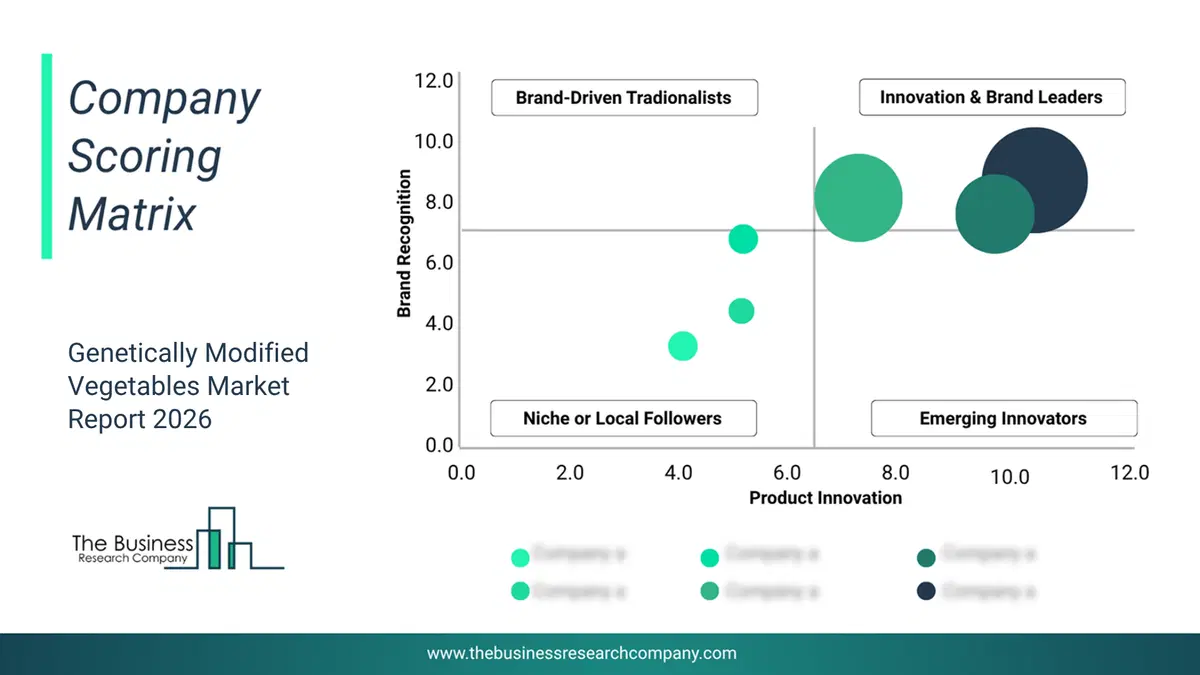
This chart maps companies by product innovation and brand strength, with bubble size indicating relative revenue, helping identify market leaders, challengers, and niche players. This is an illustrative chart; the full report provides a complete and accurate competitive analysis.
Global Genetically Modified Vegetables Market Trends and Insights
Major companies operating in the genetically modified vegetables market are developing new virus-resistant vegetables to sustain their position in the market. Virus-resistant vegetables refer to a category of genetically modified or selectively bred vegetable varieties that have been engineered or developed to possess natural resistance against specific viruses. For instance, in November 2023, Syngenta AG, a Switzerland-based agrichemical company launched four new baby plum tomato varieties with genetic resistance to Tomato Brown Rugose Fruit Virus (ToBRFV). The Crystelle, Emyelle, Sicybelle, and Adorelle varieties offer high yield potential, disease resistance to key pathogens, and maintain the quality and taste expected by growers and consumers. These genetically resistant varieties provide protection against key diseases such as tomato mosaic virus, tomato yellow leaf curl, and nematodes.What Are Latest Mergers And Acquisitions In The Genetically Modified Vegetables Market?
In May 2024, Bayer AG, a Germany-based pharmaceutical and biotechnology company, announced a partnership with G+FLAS Life Sciences Inc. This collaboration aims to leverage innovative genome editing technologies to develop nutritionally enhanced vegetables, addressing global health issues like vitamin D deficiency while improving agricultural productivity and consumer appeal. G+FLAS Life Sciences Inc. is a South Korea-based biotechnology company that develops biopharmaceuticals and transformed crops using CRISPR/Cas9-enabled products.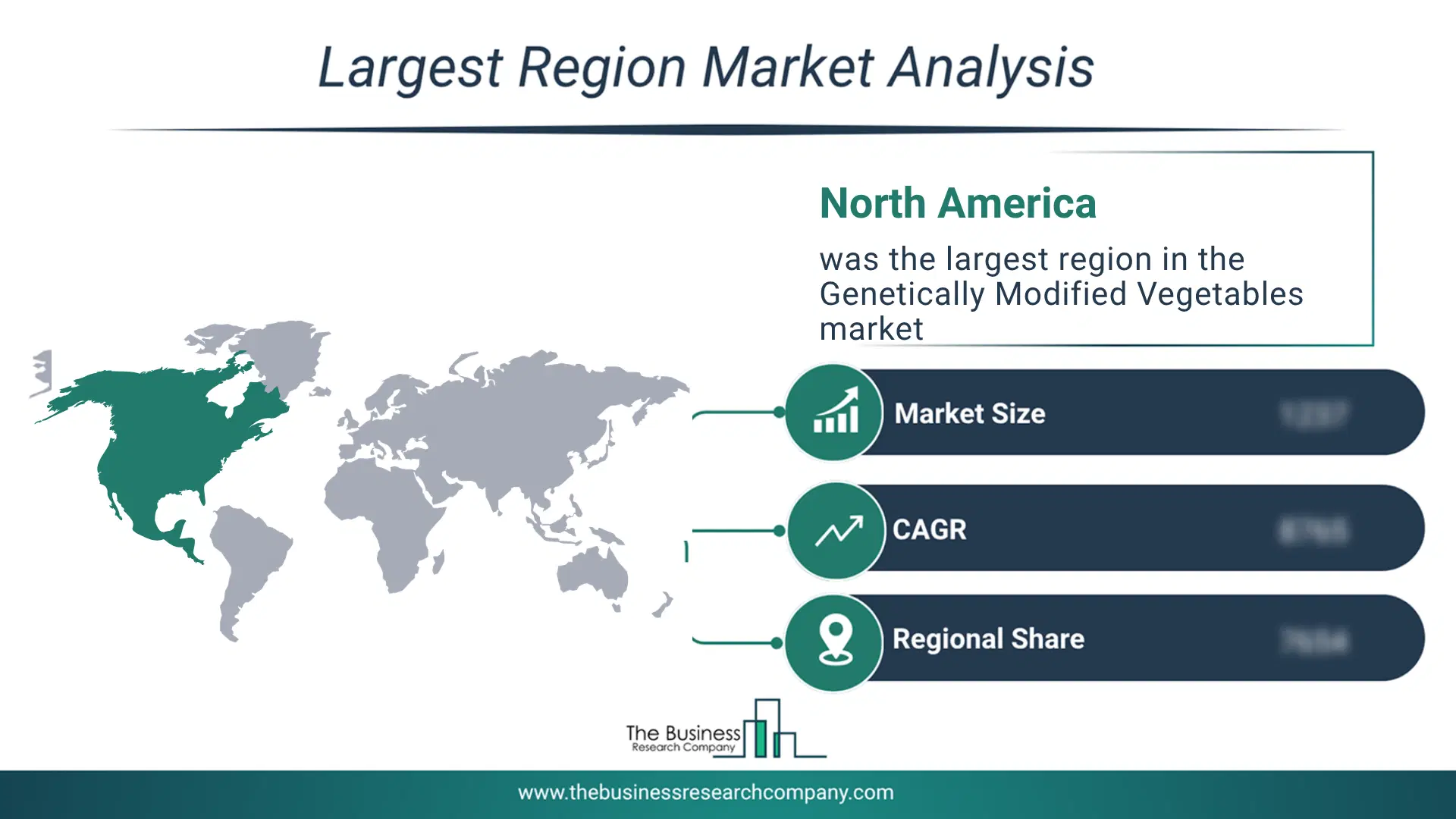
Regional Outlook
North America was the largest region in the genetically modified vegetables market in 2025. The regions covered in this market report are Asia-Pacific, South East Asia, Western Europe, Eastern Europe, North America, South America, Middle East and Africa. The countries covered in this market report are Australia, Brazil, China, France, Germany, India, Indonesia, Japan, Taiwan, Russia, South Korea, UK, USA, Italy, Spain, CanadaWhat Defines the Genetically Modified Vegetables Market?
The genetically modified vegetable market consists of sales of arctic apples, summer squash, and genetically modified Potatoes. Values in this market are ‘factory gate’ values, that is the value of goods sold by the manufacturers or creators of the goods, whether to other entities (including downstream manufacturers, wholesalers, distributors and retailers) or directly to end customers. The value of goods in this market includes related services sold by the creators of the goods.How is Market Value Defined and Measured?
The market value is defined as the revenues that enterprises gain from the sale of goods and/or services within the specified market and geography through sales, grants, or donations in terms of the currency (in USD unless otherwise specified). The revenues for a specified geography are consumption values that are revenues generated by organizations in the specified geography within the market, irrespective of where they are produced. It does not include revenues from resales along the supply chain, either further along the supply chain or as part of other products.
This chart presents market attractiveness based on a quantitative evaluation of growth, competition, strategic alignment, and risk, offering a clear view of opportunity areas for decision-making. This chart is for illustrative purposes; the full report contains the complete analysis.

This chart highlights the Total Addressable Market (TAM) by estimating the maximum revenue opportunity using an assumption-driven approach, supporting strategic planning and opportunity sizing across markets. The chart is illustrative; the full report provides a more comprehensive analysis.
What Key Data and Analysis Are Included in the Genetically Modified Vegetables Market Report 2026?
The genetically modified vegetables market research report is one of a series of new reports from The Business Research Company that provides market statistics, including industry global market size, regional shares, competitors with the market share, detailed market segments, market trends and opportunities, and any further data you may need to thrive in the genetically modified vegetables industry. The market research report delivers a complete perspective of everything you need, with an in-depth analysis of the current and future state of the industry.Genetically Modified Vegetables Market Report Forecast Analysis
| Report Attribute | Details |
|---|---|
| Market Size Value In 2026 | $0.15 billion |
| Revenue Forecast In 2030 | $0.23 billion |
| Growth Rate | CAGR of 12.9% from 2026 to 2030 |
| Base Year For Estimation | 2025 |
| Actual Estimates/Historical Data | 2020-2025 |
| Forecast Period | 2026 - 2030 |
| Market Representation | Revenue in USD Billion and CAGR from 2026 to 2030 |
| Segments Covered | Type Of Modification, Technique, Trait, Application |
| Regional Scope | Asia-Pacific, Western Europe, Eastern Europe, North America, South America, Middle East, Africa |
| Country Scope | The countries covered in the report are Australia, Brazil, China, France, Germany, India, Indonesia, Japan, Taiwan, Russia, South Korea, UK, USA, Canada, Italy, Spain. |
| Key Companies Profiled | BASF SE, Bayer AG, Syngenta AG, Dupont de Nemours Inc., Groupe Limagrain Holding SA, JR Simplot Company, JKAgri Genetics Ltd., Mahyco Private Limited, Calyxt Inc., Stine Seed Farm Inc., Nuseed Pty Ltd., KWS SAAT SE & Co. KGaA, Sakata Seed Corporation, Okanagan Specialty Fruits Inc., Pairwise Plants LLC, Corteva Inc., Sakata Seed America Inc., Limagrain Holding SA, Arcadia Biosciences Inc., Benson Hill Biosystems Inc. |
| Customization Scope | Request for Customization |
| Pricing And Purchase Options | Explore Purchase Options |