

Gestational Trophoblastic Disease Market Report 2026
Global Outlook – By Type (Hydatidiform Mole, Choriocarcinoma, Placental-Site Trophoblastic Tumor, Epithelioid Trophoblastic Tumor, Other Types), By Treatment (Surgery, Chemotherapy, Suction Dilation And Curettage (D&C), Radiation Therapy), By End User (Hospital And Clinics, Diagnostic Centers, Other End Users) - Market Size, Trends, Strategies, and Forecast to 2030
Gestational Trophoblastic Disease Market Overview
• Gestational Trophoblastic Disease market size has reached to $2.16 billion in 2025 • Expected to grow to $2.81 billion in 2030 at a compound annual growth rate (CAGR) of 5.7% • Growth Driver: The Rise In Infertility Rates Driving The Growth Of The Market Due To Advanced Parental Age And Increased Demand For Fertility Interventions • Asia-Pacific was the largest region and fastest growing region.What Is Covered Under Gestational Trophoblastic Disease Market?
Gestational trophoblastic disease (GTD) refers to a group of rare and abnormal conditions that develop from the abnormal growth of trophoblastic cells that develop a tumor inside the uterus after conception. The treatment of GTD involves uterine evacuation and monitoring human chorionic gonadotropin (hCG) levels. The main types of gestational trophoblastic disease are hydatidiform mole, choriocarcinoma, placental-site trophoblastic tumor, epithelioid trophoblastic tumor, and others. A hydatidiform mole, also known as a molar pregnancy, is a rare and abnormal pregnancy condition. This condition can be treated with surgery, chemotherapy, suction dilation and curettage (D&C), and radiation therapy by various end-users such as hospitals, clinics, diagnostic centers, and others.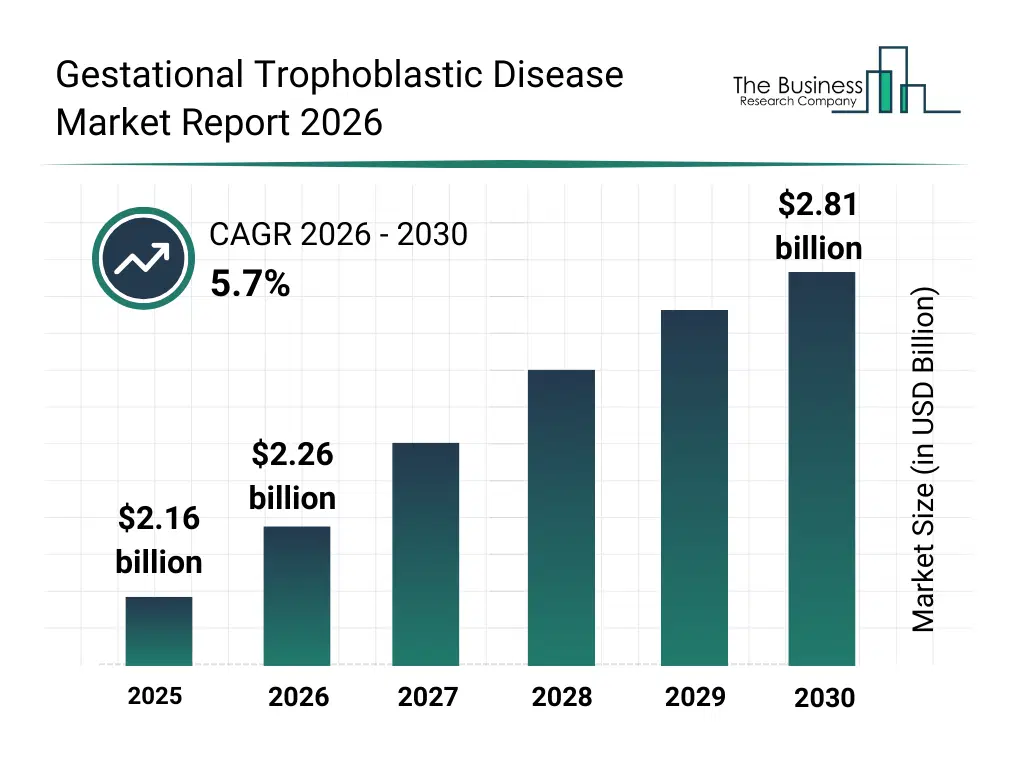
What Is The Gestational Trophoblastic Disease Market Size and Share 2026?
The gestational trophoblastic disease market size has grown steadily in recent years. It will grow from $2.16 billion in 2025 to $2.26 billion in 2026 at a compound annual growth rate (CAGR) of 4.6%. The growth in the historic period can be attributed to advances in gynecologic oncology, availability of hcg testing, surgical treatment adoption, increased awareness of rare pregnancy disorders, clinical oncology protocols.What Is The Gestational Trophoblastic Disease Market Growth Forecast?
The gestational trophoblastic disease market size is expected to see strong growth in the next few years. It will grow to $2.81 billion in 2030 at a compound annual growth rate (CAGR) of 5.7%. The growth in the forecast period can be attributed to improved diagnostic accuracy, expansion of oncology centers, standardized treatment guidelines, increased healthcare access, focus on rare disease management. Major trends in the forecast period include improved hcg-based disease monitoring, rising use of chemotherapy in gtd management, increased focus on early diagnosis, expansion of specialized women’s oncology care, improved post-treatment surveillance.
Global Gestational Trophoblastic Disease Market Segmentation
1) By Type: Hydatidiform Mole, Choriocarcinoma, Placental-Site Trophoblastic Tumor, Epithelioid Trophoblastic Tumor, Other Types 2) By Treatment: Surgery, Chemotherapy, Suction Dilation And Curettage (D&C), Radiation Therapy 3) By End User: Hospital And Clinics, Diagnostic Centers, Other End Users Subsegments: 1) By Hydatidiform Mole: Complete Hydatidiform Mole, Partial Hydatidiform Mole 2) By Choriocarcinoma: Non-Metastatic Choriocarcinoma, Metastatic Choriocarcinoma 3) By Placental-Site Trophoblastic Tumor: PSTT With Normal Placentation, PSTT With Abnormal Placentation 4) By Epithelioid Trophoblastic Tumor: Epithelioid Trophoblastic Tumor With No Evidence Of Metastasis, Epithelioid Trophoblastic Tumor With Metastasis 5) By Other Types: Trophoblastic Tumor Of Unknown Origin, Non-Gestational Trophoblastic NeoplasiaWhat Are The Drivers Of The Gestational Trophoblastic Disease Market?
The rising infertility rates are expected to propel the growth of the gestational trophoblastic disease market going forward. Infertility rates refer to the proportion of couples or individuals in a population who are unable to conceive naturally after 12 months of regular, unprotected sexual intercourse. Rising infertility rates are primarily due to advanced maternal and paternal age, as older reproductive age is associated with decreased egg and sperm quality, reduced fertility, and higher risks of complications during conception. Gestational trophoblastic disease, though typically a pathological condition, can paradoxically provide insights into infertility treatments by highlighting the roles of trophoblastic tissue in implantation and hormonal regulation, thereby guiding interventions to improve conception rates. For instance, in April 2023, according to the World Health Organization (WHO), a Switzerland-based intergovernmental organization, approximately 17.5% of the adult population, or about 1 in 6 people globally, face infertility, highlighting the pressing need to improve access to affordable, high-quality fertility care for those affected. Therefore, the rising rates of infertility is driving the gestational trophoblastic disease industry. The increasing cigarette smoking is expected to propel the growth of the gestational trophoblastic disease market going forward. Cigarette smoking refers to the practice of burning tobacco and inhaling the resulting smoke, which contains various chemicals and toxins that can cause detrimental effects on different structures of the body. Smoking may damage the DNA of trophoblastic cells, which are responsible for forming the placenta, which may lead to abnormal growth and division of these cells, resulting in gestational trophoblastic disease. For instance, in October 2024, according to the European Respiratory Society's (ERS), a Switzerland-based non-profit organization, a study covering smoking trends among young people revealed a significant rise in smoking rates, with 22.5% of respondents smoking in 2022 compared to 40.1% in 2024. Therefore, the increasing cigarette smoking is driving the gestational trophoblastic disease industry. The growing prevalence of chronic diseases in mothers is expected to propel the growth of the gestational trophoblastic disease market going forward. Chronic diseases in mothers refer to long-lasting health conditions that persist before, during, or after pregnancy, such as diabetes, hypertension, heart disease, or autoimmune disorders, which can affect both maternal and fetal health. The growing prevalence of chronic diseases in mothers is primarily driven by poor diet and nutrition, which contribute to obesity, hypertension, diabetes, and other metabolic disorders before and during pregnancy. Gestational trophoblastic disease can exacerbate chronic diseases in mothers by triggering hormonal imbalances and vascular complications that strain pre-existing conditions. For instance, in December 2024, according to the Office for Health Improvement and Disparities (OHID), a UK-based government agency, In 2024, 26.2% of women in early pregnancy were recorded as living with obesity, showing a slight increase from 25.4% in the previous year. Therefore, the growing prevalence of chronic diseases in mothers is driving the gestational trophoblastic disease industry.Key Players In The Global Gestational Trophoblastic Disease Market
Major companies operating in the gestational trophoblastic disease market are Pfizer Inc., F. Hoffmann-La Roche AG, AbbVie Inc., Bayer AG, Novartis AG, Merck And Co. Inc., Sun Pharmaceutical Industries Ltd., GSK plc, Bristol-Myers Squibb Company, Sanofi S.A., AstraZeneca plc, Eli Lilly and Company, Daiichi Sankyo Co. Ltd., Eisai Co. Ltd.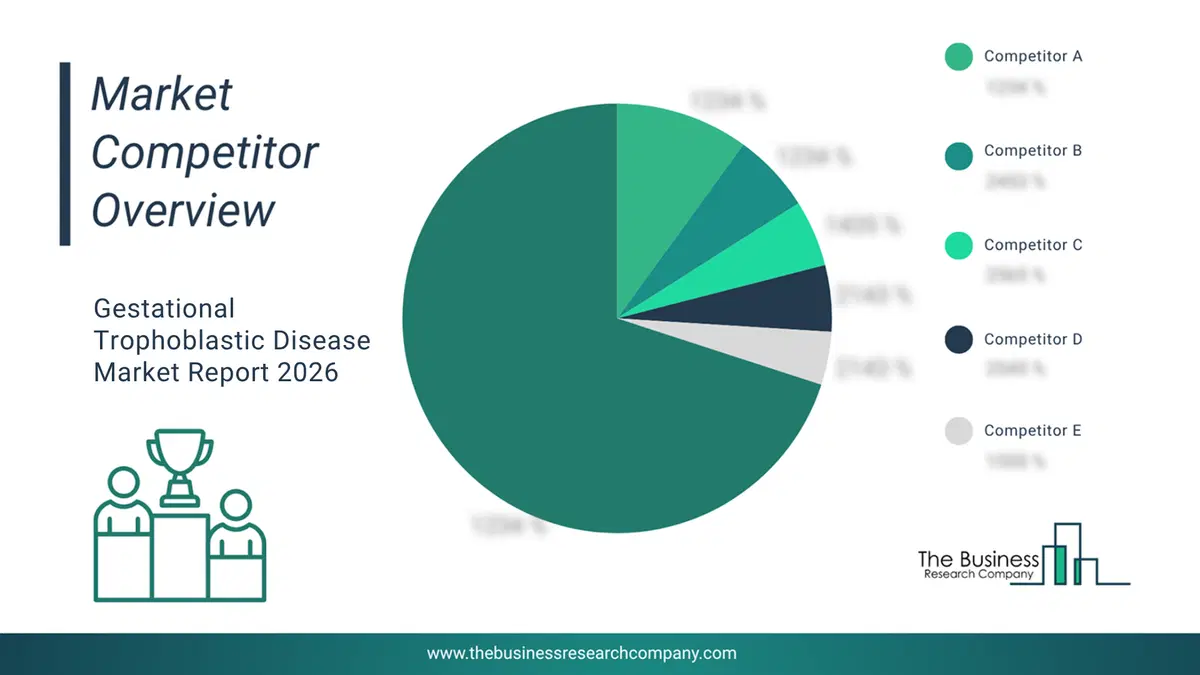
This chart is for illustrative purposes; the full report includes a detailed competitor analysis and comprehensive overview of the top 10 companies in the market.
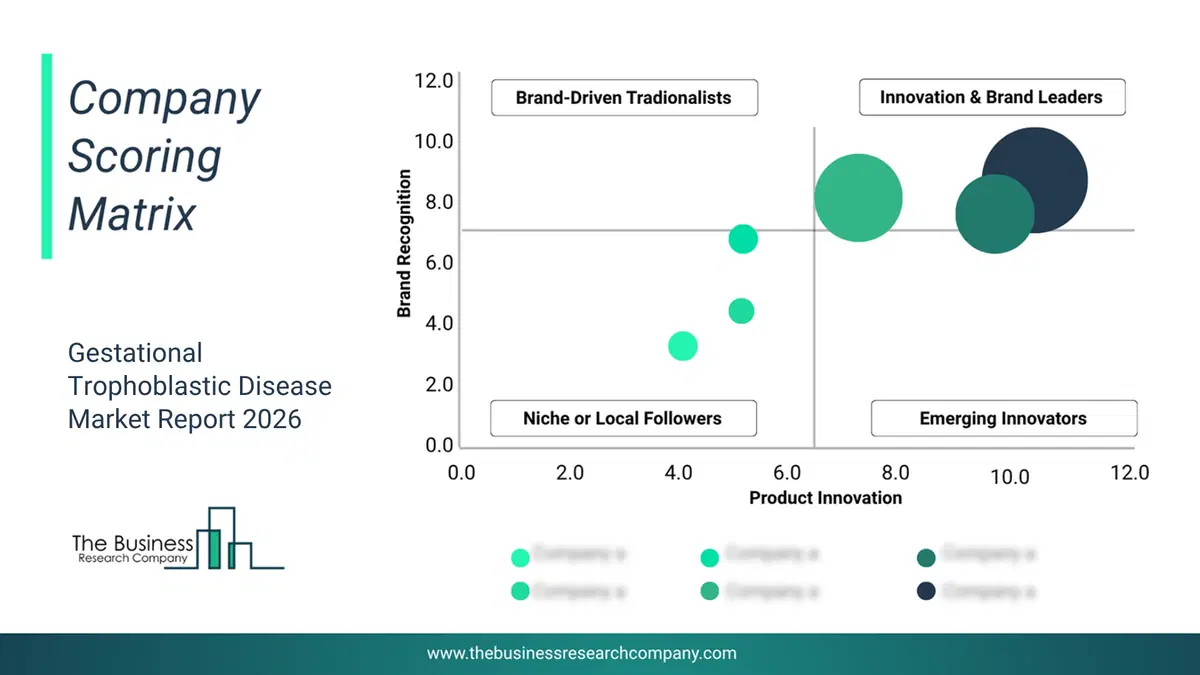
This chart maps companies by product innovation and brand strength, with bubble size indicating relative revenue, helping identify market leaders, challengers, and niche players. This is an illustrative chart; the full report provides a complete and accurate competitive analysis.
Regional Outlook
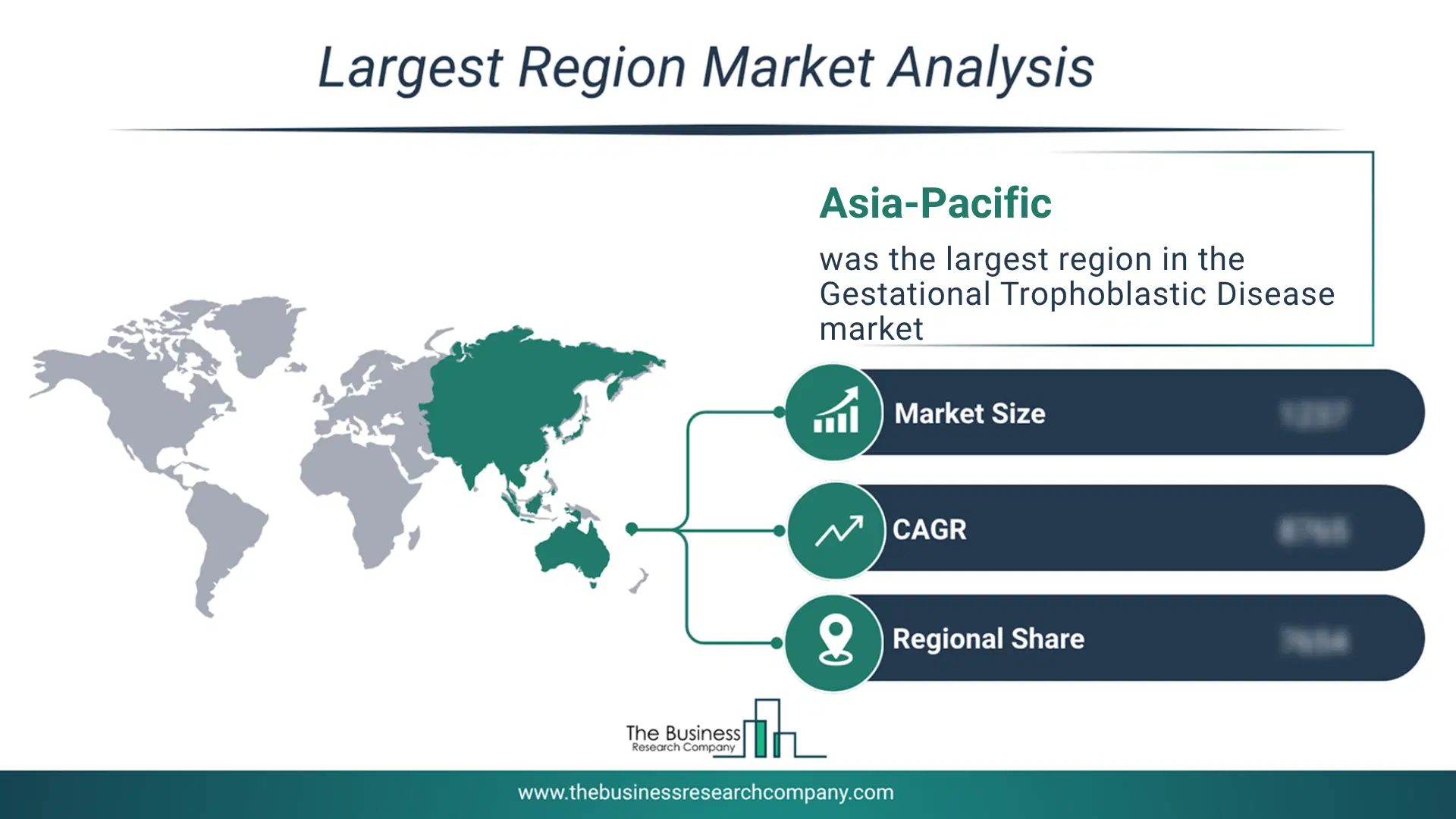
Asia-Pacific was the largest region in the gestational trophoblastic disease market in 2025, and is expected to be the fastest-growing region in the forecast period. The regions covered in this market report are Asia-Pacific, South East Asia, Western Europe, Eastern Europe, North America, South America, Middle East, Africa. The countries covered in this market report are Australia, Brazil, China, France, Germany, India, Indonesia, Japan, Taiwan, Russia, South Korea, UK, USA, Canada, Italy, Spain.What Defines the Gestational Trophoblastic Disease Market?
The gestational trophoblastic disease market consists of revenues earned by entities by providing services such as gynecology services, oncology services, and surgical services. The market value includes the value of related goods sold by the service provider or included within the service offering. The gestational trophoblastic disease market also includes sales of medications, diagnostic tools, laboratory tests, methotrexate, etoposide, cyclophosphamide, and vincristine. Values in this market are ‘factory gate’ values, that is, the value of goods sold by the manufacturers or creators of the goods, whether to other entities (including downstream manufacturers, wholesalers, distributors, and retailers) or directly to end customers. The value of goods in this market includes related services sold by the creators of the goods.How is Market Value Defined and Measured?
The market value is defined as the revenues that enterprises gain from the sale of goods and/or services within the specified market and geography through sales, grants, or donations in terms of the currency (in USD unless otherwise specified). The revenues for a specified geography are consumption values that are revenues generated by organizations in the specified geography within the market, irrespective of where they are produced. It does not include revenues from resales along the supply chain, either further along the supply chain or as part of other products.
This chart presents market attractiveness based on a quantitative evaluation of growth, competition, strategic alignment, and risk, offering a clear view of opportunity areas for decision-making. This chart is for illustrative purposes; the full report contains the complete analysis.

This chart highlights the Total Addressable Market (TAM) by estimating the maximum revenue opportunity using an assumption-driven approach, supporting strategic planning and opportunity sizing across markets. The chart is illustrative; the full report provides a more comprehensive analysis.
What Key Data and Analysis Are Included in the Gestational Trophoblastic Disease Market Report 2026?
The gestational trophoblastic disease market research report is one of a series of new reports from The Business Research Company that provides market statistics, including industry global market size, regional shares, competitors with the market share, detailed market segments, market trends and opportunities, and any further data you may need to thrive in the gestational trophoblastic disease industry. The market research report delivers a complete perspective of everything you need, with an in-depth analysis of the current and future state of the industry.Gestational Trophoblastic Disease Market Report Forecast Analysis
| Report Attribute | Details |
|---|---|
| Market Size Value In 2026 | $2.26 billion |
| Revenue Forecast In 2030 | $2.81 billion |
| Growth Rate | CAGR of 5.7% from 2026 to 2030 |
| Base Year For Estimation | 2025 |
| Actual Estimates/Historical Data | 2020-2025 |
| Forecast Period | 2026 - 2030 |
| Market Representation | Revenue in USD Billion and CAGR from 2026 to 2030 |
| Segments Covered | Type, Treatment, End User |
| Regional Scope | Asia-Pacific, Western Europe, Eastern Europe, North America, South America, Middle East, Africa |
| Country Scope | The countries covered in the report are Australia, Brazil, China, France, Germany, India, Indonesia, Japan, Taiwan, Russia, South Korea, UK, USA, Canada, Italy, Spain |
| Key Companies Profiled | Pfizer Inc., F. Hoffmann-La Roche AG, AbbVie Inc., Bayer AG, Novartis AG, Merck And Co. Inc., Sun Pharmaceutical Industries Ltd., GSK plc, Bristol-Myers Squibb Company, Sanofi S.A., AstraZeneca plc, Eli Lilly and Company, Daiichi Sankyo Co. Ltd., Eisai Co. Ltd. |
| Customization Scope | Request for Customization |
| Pricing And Purchase Options | Explore Purchase Options |