

Clinical Intelligence Market Report 2026
Global Outlook – By Component (Software, Hardware, Services), By Technology (Artificial Intelligence, Machine Learning, Natural Language Processing, Predictive Analytics, Business Intelligence, Data Mining), By Deployment Model (On-Premise, Cloud-Based), By Application (Predictive Analytics, Clinical Decision Support, Population Health Management, Performance Management, Reporting And Dashboard, Risk Management), By End User (Hospitals, Diagnostic Centers, Ambulatory Care Centers, Research Institutes, Pharmaceutical And Biotechnology Companies) - Market Size, Trends, And Global Forecast 2026-2030
Clinical Intelligence Market Overview
• Clinical Intelligence market size has reached to $10.4 billion in 2025 • Expected to grow to $20.51 billion in 2030 at a compound annual growth rate (CAGR) of 14.6% • Growth Driver: Rising Adoption Of Electronic Health Records (EHRs) Fueled The Market Growth Due To Enhanced Data Accessibility And Improved Care Coordination • Market Trend: AI-Driven Tools Transform Patient Assessment And Streamline Care Workflows • North America was the largest region in 2025 and Asia-Pacific is the fastest growing region.Market Gains By 2030 – Top Opportunities By Segment
Market Gain identifies the most promising market opportunities by highlighting the segments or products expected to generate the highest incremental revenue growth over the next five years.
What Is Covered Under Clinical Intelligence Market?
Clinical intelligence refers to the use of advanced data analytics and information systems to collect, analyze, and interpret healthcare data from multiple sources, including electronic health records (EHRs), lab results, and patient monitoring systems. Its primary purpose is to provide actionable insights that help healthcare providers improve patient outcomes, optimize clinical workflows, and support informed decision-making in medical care. The main components of clinical intelligence are software, hardware, and services. Software refers to data analytics and decision-support platforms that collect, integrate, and analyze clinical data to enhance patient outcomes, optimize workflows, and support evidence-based decision-making in healthcare settings. It leverages technologies such as artificial intelligence, machine learning, natural language processing, predictive analytics, business intelligence, and data mining and is deployed through on-premise and cloud-based models. It finds applications in predictive analytics, clinical decision support, population health management, performance management, reporting and dashboard, and risk management, serving end users such as hospitals, diagnostic centers, ambulatory care centers, research institutes, and pharmaceutical and biotechnology companies.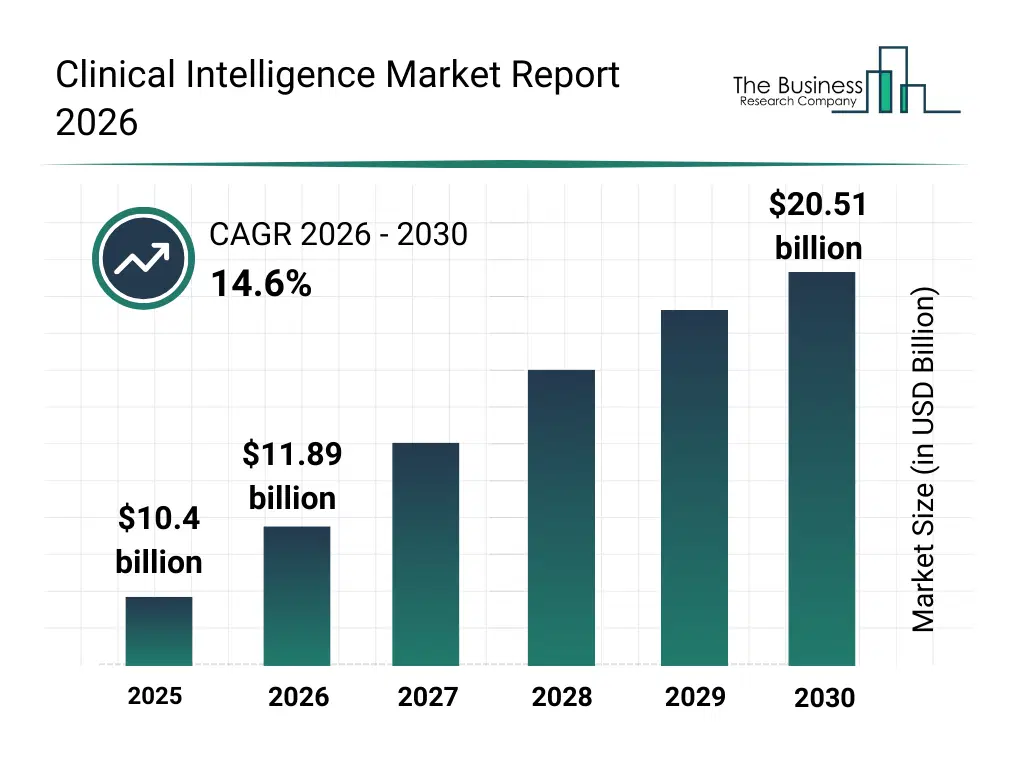
What Is The Clinical Intelligence Market Size and Share 2026?
The clinical intelligence market size has grown rapidly in recent years. It will grow from $10.4 billion in 2025 to $11.89 billion in 2026 at a compound annual growth rate (CAGR) of 14.3%. The growth in the historic period can be attributed to expansion of electronic health record adoption, growing healthcare data volumes, increased focus on clinical workflow optimization, rising demand for data-driven healthcare decisions, advancements in health analytics platforms.What Is The Clinical Intelligence Market Growth Forecast?
The clinical intelligence market size is expected to see rapid growth in the next few years. It will grow to $20.51 billion in 2030 at a compound annual growth rate (CAGR) of 14.6%. The growth in the forecast period can be attributed to increasing investments in digital health transformation, rising demand for personalized and predictive care, expansion of cloud-based clinical intelligence platforms, growing adoption of ai-enabled diagnostics, increasing regulatory focus on healthcare data utilization. Major trends in the forecast period include increasing adoption of AI-driven clinical decision support tools, rising use of predictive analytics in healthcare, growing integration of ehr and clinical data platforms, expansion of population health intelligence solutions, enhanced focus on real-time clinical insights.
Global Clinical Intelligence Market Segmentation
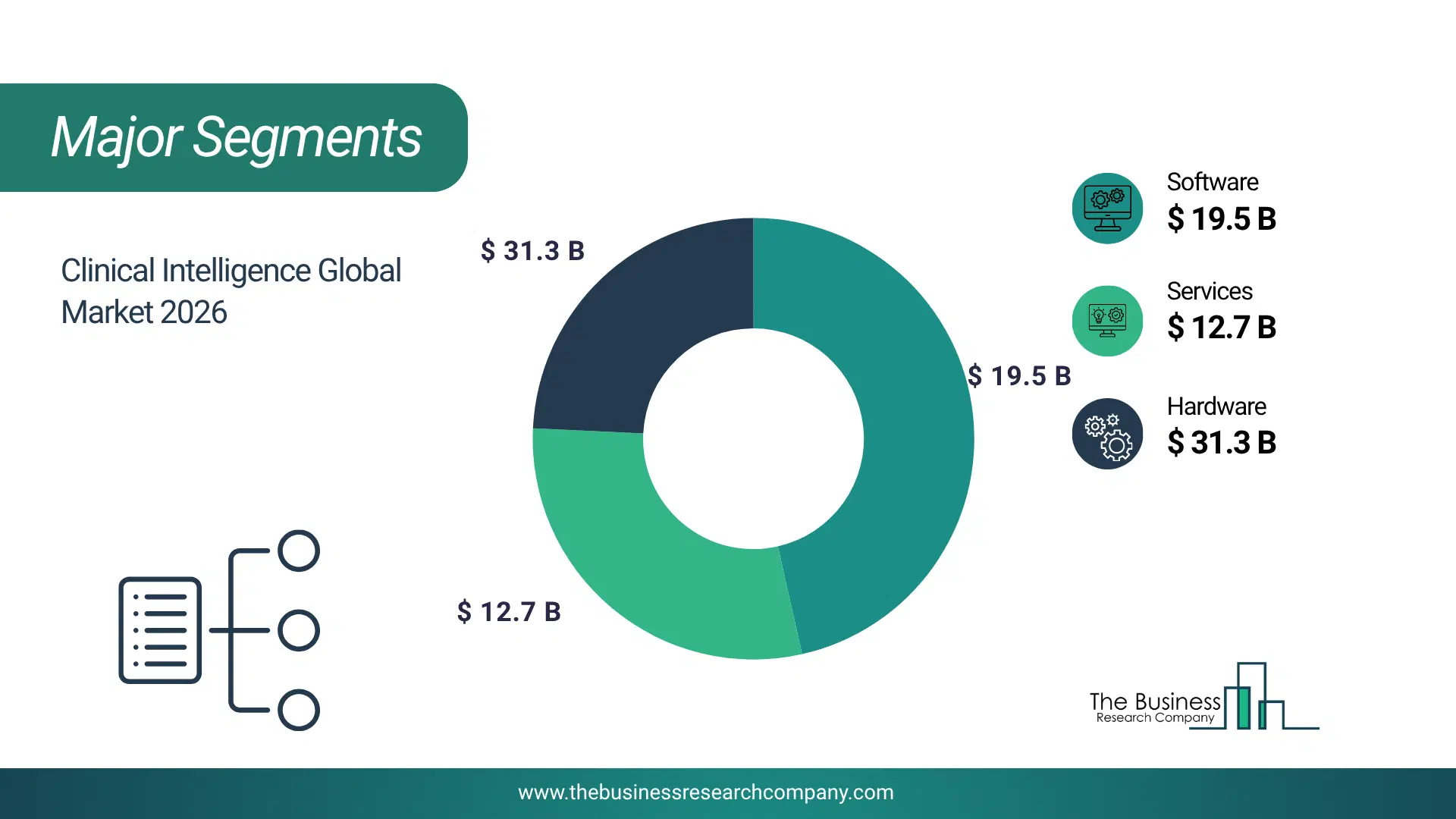
1) By Component: Software, Hardware, Services 2) By Technology: Artificial Intelligence, Machine Learning, Natural Language Processing, Predictive Analytics, Business Intelligence, Data Mining 3) By Deployment Model: On-Premise, Cloud-Based 4) By Application: Predictive Analytics, Clinical Decision Support, Population Health Management, Performance Management, Reporting And Dashboard, Risk Management 5) By End User: Hospitals, Diagnostic Centers, Ambulatory Care Centers, Research Institutes, Pharmaceutical And Biotechnology Companies Subsegments: 1) By Software: Clinical Data Analytics Software, Clinical Decision Support Software, Population Health Management Software, Data Integration And Management Software, Predictive Analytics Software, Data Visualization And Reporting Software, Electronic Health Record Analytics Software, Natural Language Processing Software 2) By Hardware: Servers, Storage Devices, Networking Equipment, Workstations, Data Centers Infrastructure, Edge Computing Devices, Processing Units 3) By Services: Consulting Services, Implementation And Integration Services, Managed Services, Support And Maintenance Services, Training And Education Services, Data Migration Services, Clinical Process Optimization Services The top segments in the clinical intelligence market will be: • Software will reach $9.54 billion by 2030. • Services will reach $5.98 billion by 2030. • Hardware will reach $4.99 billion by 2030.What Is The Driver Of The Clinical Intelligence Market?
The increasing adoption of electronic health records (EHRs) fueled the growth of the clinical intelligence market during the historic period. Electronic health records (EHRs) refer to digital versions of patients’ medical histories that are maintained over time and include comprehensive health information such as diagnoses, treatments, medications, and test results accessible to authorized healthcare providers. The rise in electronic health records (EHRs) is due to digital transformation in healthcare, as they enhance data accessibility and improve coordination among healthcare providers for better patient outcomes. Clinical intelligence helps electronic health records (EHRs) by analyzing large volumes of patient data to generate actionable insights, enabling healthcare providers to make data-driven decisions that improve care quality, efficiency, and patient outcomes. For instance, in June 2023, according to the UK Parliament, a UK-based government body, as of December 2023, 90% of NHS trusts had implemented electronic health records, with full adoption achieved by March 2025. Therefore, the increasing adoption of electronic health records (EHRs) drove the growth of the clinical intelligence industry.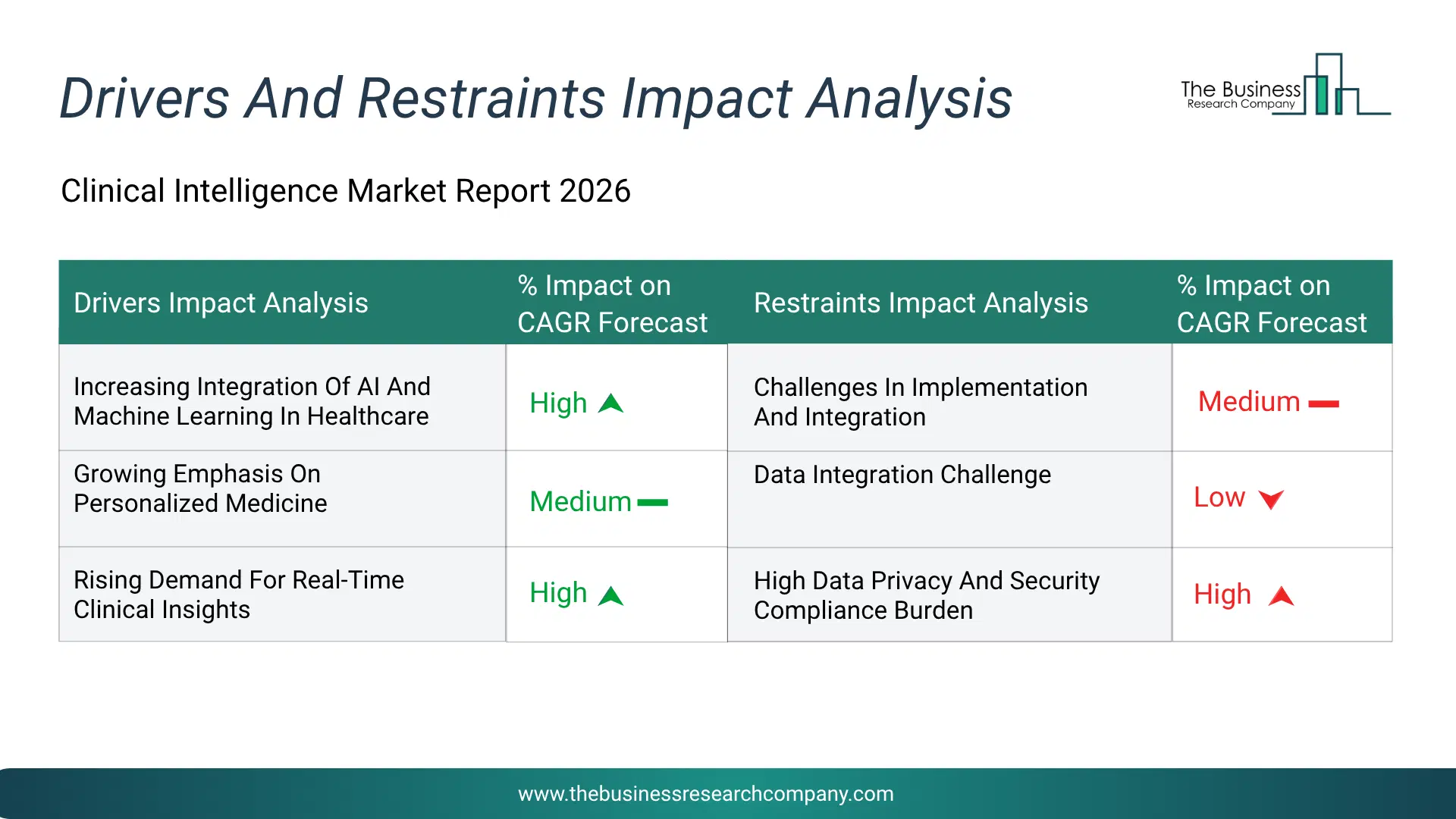
Infographic Chart Showing Key Market Drivers Analysis And Restraints For Clinical Intelligence Market
The chart presents an impact analysis of key drivers and restraints, quantifying their relative influence on the market's growth rate and helping assess the balance between growth enablers and limiting factors. This chart offers a high-level perspective; the full report contains more detailed insights.
How Will The Drivers Impact Growth In The Global Clinical Intelligence Market?
• Increasing Integration Of AI And Machine Learning In Healthcare (High) – During the forecast period, the increasing integration of ai and machine learning in healthcare is expected to become a key growth driver for the clinical intelligence market by 2030. The increasing integration of ai and machine learning in healthcare is a major driver for the clinical intelligence market, as these technologies enable faster and more accurate analysis of vast medical data. Ai-powered algorithms assist in early disease detection, predictive diagnostics, and personalized treatment plans, improving patient outcomes. Machine learning enhances clinical decision support systems by continuously learning from new data, leading to better insights. Additionally, ai automates administrative and analytical tasks, reducing workload for healthcare professionals. • Growing Emphasis On Personalized Medicine (Medium) – During the forecast period, the growing emphasis on personalized medicine is expected to emerge as a major factor driving the expansion of the clinical intelligence market by 2030. The growing emphasis on personalized medicine is driving the clinical intelligence market as healthcare providers increasingly rely on advanced data analytics to tailor treatments to individual patients. Clinical intelligence platforms analyze large volumes of patient data, including genetic, clinical, and lifestyle information, to identify precise treatment pathways. This data-driven approach enhances diagnostic accuracy, optimizes therapy selection, and improves patient outcomes. By supporting predictive modeling and real-time insights, clinical intelligence enables more effective and efficient personalized care. • Rising Demand For Real-Time Clinical Insights (High) – During the forecast period, the rising demand for real-time clinical insights is expected to act as a key growth catalyst for the clinical intelligence market by 2030. The rising demand for real-time clinical insights is driving the clinical intelligence market as healthcare providers increasingly seek immediate access to patient data for faster and more accurate decision-making. Real-time analytics enable continuous monitoring of patient conditions, early detection of complications, and timely interventions. This enhances treatment outcomes and operational efficiency while reducing hospital readmissions. Additionally, the integration of ai and advanced data analytics tools allows clinicians to process vast amounts of information instantly.How Will The Restraints Impact Growth In The Global Clinical Intelligence Market?
• Challenges In Implementation And Integration (Medium) – During the forecast period, the challenges in implementation and integration restrain the clinical intelligence market as healthcare organizations often face difficulties in merging diverse data sources such as ehrs, lab systems, and imaging platforms into a unified analytics framework. Legacy it infrastructure, lack of interoperability standards, and data silos make seamless integration complex and costly. Additionally, training staff to adopt new technologies and maintaining data accuracy across systems require significant time and investment. • Data Integration Challenge (Low) – During the forecast period, the data integration is a major challenge restraining the growth of the clinical intelligence market because healthcare data comes from multiple, heterogeneous sources such as ehrs, lab systems, imaging tools, and wearable devices. These datasets often use different formats, standards, and terminologies, making it difficult to combine and analyze them effectively. Inconsistent or incomplete data can reduce the accuracy of insights and delay clinical decisions. Moreover, ensuring data privacy and compliance while integrating information adds complexity and cost. • High Data Privacy And Security Compliance Burden (High) – During the forecast period, the high data privacy and security compliance burden acts as a significant restraint in the clinical intelligence market, as healthcare organizations must adhere to strict regulations such as hipaa, gdpr, and other regional data protection laws. Ensuring secure storage, transmission, and processing of sensitive patient data requires advanced cybersecurity infrastructure and continuous monitoring. This increases implementation costs and operational complexity for healthcare providers. Additionally, concerns over data breaches and unauthorized access often slow down data sharing across systems, limiting the effectiveness of clinical intelligence solutions. As a result, compliance requirements can hinder rapid adoption and scalability of these technologies.Key Players In The Global Clinical Intelligence Market
Major companies operating in the clinical intelligence market are Microsoft Corporation, Alphabet Inc. (Google LLC), Amazon Web Services (AWS), Optum (UnitedHealth Group), International Business Machines (IBM) Corporation, IQVIA, GE Healthcare Technologies, Inc., Koninklijke Philips N.V., Medtronic Plc, Medidata, AvoMD, Zebra Medical Vision, Teledoc Health, Health Catalyst, Tempus, PathAI, Biofourmis, Twin Health, BenevolentAI, Prometheus Biosciences, Abridge, Owkin, Insitro, Heidi Health, Pieces Technologies, Renalytix PLC, OpenEvidence, Bayesian Health, and SmarterDx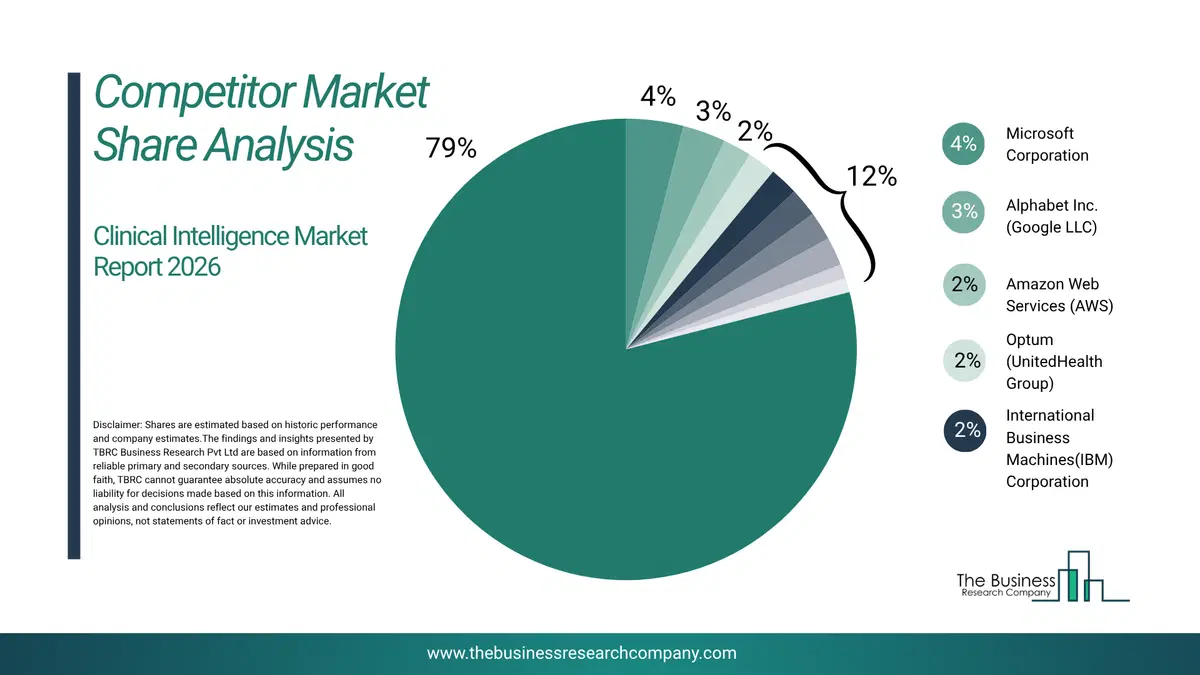
This chart is for illustrative purposes; the full report includes a detailed competitor analysis and comprehensive overview of the top 10 companies in the market.
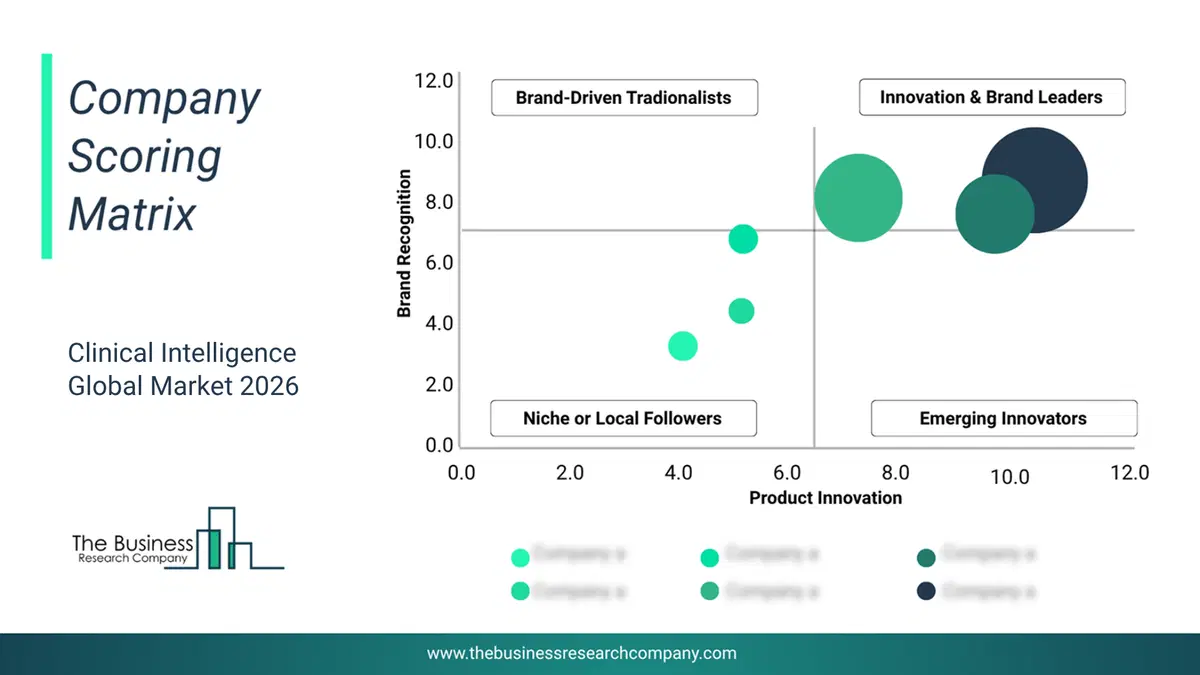
This chart maps companies by product innovation and brand strength, with bubble size indicating relative revenue, helping identify market leaders, challengers, and niche players. This is an illustrative chart; the full report provides a complete and accurate competitive analysis.
Global Clinical Intelligence Market Trends and Insights
Major companies in the clinical intelligence market are focusing on AI-driven solutions, such as digital triage, to enhance patient assessment, streamline workflows, and improve clinical decision-making. Digital triage is the use of AI-powered tools or software to assess patient symptoms, prioritize care, and guide them to the appropriate clinical pathway efficiently. For instance, in July 2025, Experity Inc., a US-based software and services company, launched Care Agent, the industry’s first clinical intelligence solution specifically designed for urgent care. The platform leverages artificial intelligence and seamless integration with electronic medical records to streamline clinic operations and enhance patient engagement. These agents enable secure communication via web chat and SMS, providing a personalized, HIPAA-compliant experience without requiring additional apps. Additionally, its modular capabilities allow clinics to select features such as digital discharge delivery, lab results communication, and upcoming enhancements such astriage assessments and appointment reminders.What Are Latest Mergers And Acquisitions In The Clinical Intelligence Market?
In January 2023, Det Norske Veritas (DNV) a Norway-based risk management and assurance company acquired Medicare Beneficiary Identifier (MBI) for undisclosed amount. Through this acquisition, DNV aims to strengthen its presence in the digital health market by leveraging MBI Healthcare Technologies’ AI-driven data assurance solutions to enhance patient safety, improve care efficiency, and address inaccuracies in electronic health records. Medicare Beneficiary Identifier (MBI) is a UK-based company that provide clinical intelligence through its AI-backed technology and data quality expertise.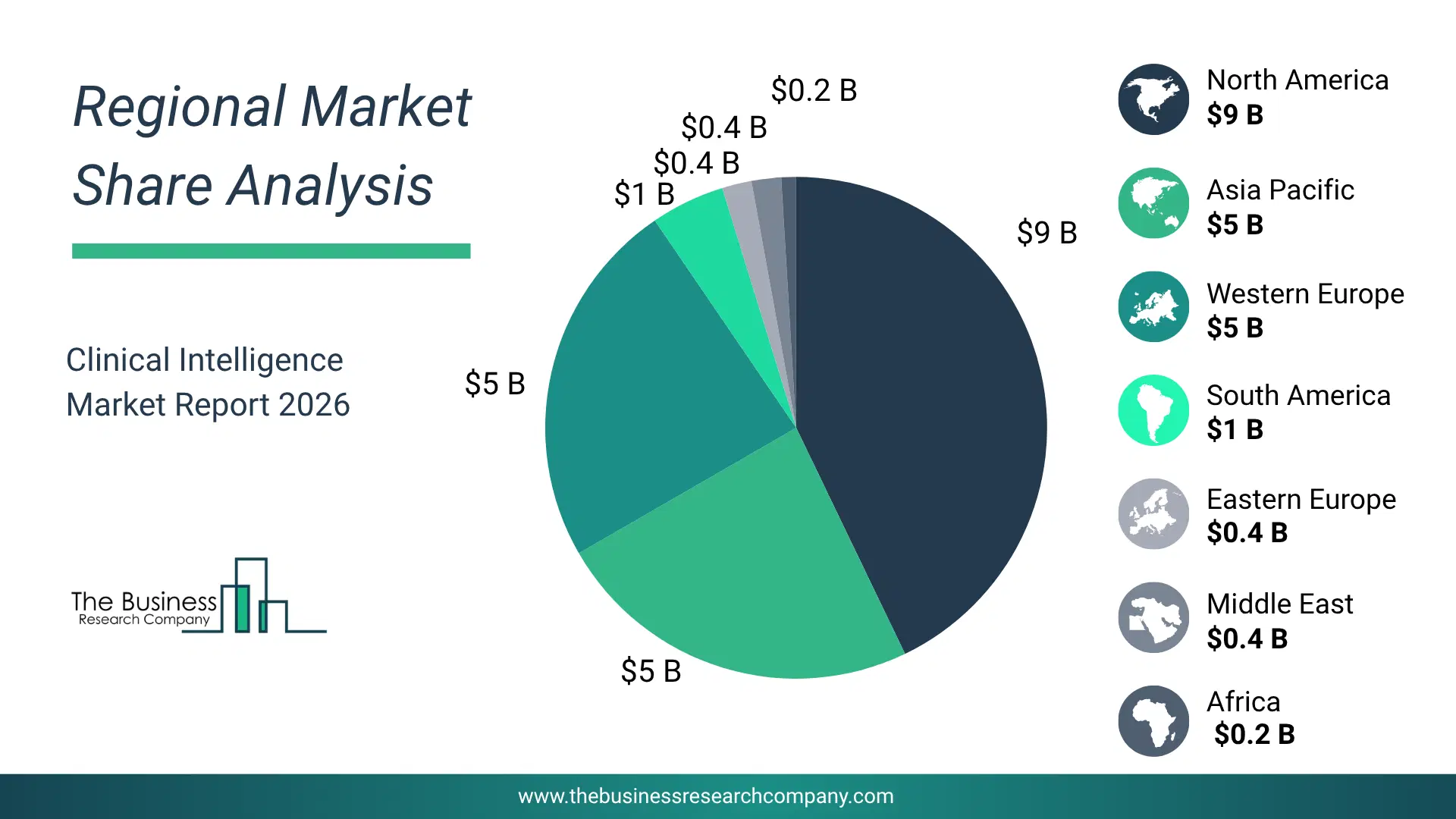
Regional Outlook
North America was the largest region in the clinical intelligence market in 2025. Asia-Pacific is expected to be the fastest-growing region in the forecast period. The regions covered in this market report are Asia-Pacific, South East Asia, Western Europe, Eastern Europe, North America, South America, Middle East, Africa. The countries covered in this market report are Australia, Brazil, China, France, Germany, India, Indonesia, Japan, Taiwan, Russia, South Korea, UK, USA, Canada, Italy, Spain.What Defines the Clinical Intelligence Market?
The clinical intelligence market consists of revenues earned by entities by providing services such as data collection and integration, healthcare analytics, patient monitoring, and reporting and visualization. The market value includes the value of related goods sold by the service provider or included within the service offering. The clinical intelligence market also includes sales of clinical data analytics software, healthcare dashboards, reporting tools, and electronic health record (EHR) integration solutions. Values in this market are ‘factory gate’ values, that is the value of goods sold by the manufacturers or creators of the goods, whether to other entities (including downstream manufacturers, wholesalers, distributors and retailers) or directly to end customers. The value of goods in this market includes related services sold by the creators of the goods.How is Market Value Defined and Measured?
The market value is defined as the revenues that enterprises gain from the sale of goods and/or services within the specified market and geography through sales, grants, or donations in terms of the currency (in USD unless otherwise specified). The revenues for a specified geography are consumption values that are revenues generated by organizations in the specified geography within the market, irrespective of where they are produced. It does not include revenues from resales along the supply chain, either further along the supply chain or as part of other products.
This chart presents market attractiveness based on a quantitative evaluation of growth, competition, strategic alignment, and risk, offering a clear view of opportunity areas for decision-making. This chart is for illustrative purposes; the full report contains the complete analysis.

This chart highlights the Total Addressable Market (TAM) by estimating the maximum revenue opportunity using an assumption-driven approach, supporting strategic planning and opportunity sizing across markets. The chart is illustrative; the full report provides a more comprehensive analysis.
What Key Data and Analysis Are Included in the Clinical Intelligence Market Report 2026?
The clinical intelligence market research report is one of a series of new reports from The Business Research Company that provides market statistics, including industry global market size, regional shares, competitors with the market share, detailed market segments, market trends and opportunities, and any further data you may need to thrive in the clinical intelligence industry. The market research report delivers a complete perspective of everything you need, with an in-depth analysis of the current and future state of the industry.Clinical Intelligence Market Report Forecast Analysis
| Report Attribute | Details |
|---|---|
| Market Size Value In 2026 | $11.89 billion |
| Revenue Forecast In 2030 | $20.51 billion |
| Growth Rate | CAGR of 14.3% from 2026 to 2030 |
| Base Year For Estimation | 2025 |
| Actual Estimates/Historical Data | 2020-2025 |
| Forecast Period | 2026 - 2030 |
| Market Representation | Revenue in USD Billion and CAGR from 2026 to 2030 |
| Segments Covered | Component, Technology, Deployment Model, Application, End User |
| Regional Scope | Asia-Pacific, Western Europe, Eastern Europe, North America, South America, Middle East, Africa |
| Country Scope | The countries covered in the report are Australia, Brazil, China, France, Germany, India, Indonesia, Japan, Taiwan, Russia, South Korea, UK, USA, Canada, Italy, Spain. |
| Key Companies Profiled | Microsoft Corporation, Alphabet Inc. (Google LLC), Amazon Web Services (AWS), Optum (UnitedHealth Group), International Business Machines (IBM) Corporation, IQVIA, GE Healthcare Technologies, Inc., Koninklijke Philips N.V., Medtronic Plc, Medidata, AvoMD, Zebra Medical Vision, Teledoc Health, Health Catalyst, Tempus, PathAI, Biofourmis, Twin Health, BenevolentAI, Prometheus Biosciences, Abridge, Owkin, Insitro, Heidi Health, Pieces Technologies, Renalytix PLC, OpenEvidence, Bayesian Health, and SmarterDx |
| Customization Scope | Request for Customization |
| Pricing And Purchase Options | Explore Purchase Options |