

Digital Human Global Market Opportunities And Strategies To 2035
By Product Type (Interactive Digital Human Avatar, Non-Interactive Digital Human Avatar), By Technology (3D Scanning, 3D Modelling, Natural Language Processing, Natural Language Generation, Artificial Intelligence (AI)), By Application (Virtual Agents, Virtual Assistants, Virtual Influencers, Virtual Companions, Virtual Characters), By Industry (Gaming, Entertainment, Banking, Financial Services And Insurance (BFSI), Information Technology (IT) And Telecommunication, Education, Automotive, Advertisement, Health And Sports, Other Industries), And By Region, Opportunities And Strategies – Global Forecast To 2035
Digital Human Market Definition
A digital human is a computer-generated virtual representation of a person that uses artificial intelligence, natural language processing and lifelike visuals to simulate human behavior, expressions and interactions. These digital entities are designed to look, sound and communicate like real humans, often in 3D or photorealistic form, enabling natural and emotionally responsive engagement. The primary purpose of a digital human is to enhance human computer interaction by offering realistic, personalized and emotionally intelligent experiences. The digital human market consists of sales by entities (organizations, sole traders and partnerships) of digital human with whom users interact virtually via devices such as smartphones, computers, virtual reality (VR)/augmented reality (AR) headsets, or kiosks, employed for customer support, content creation, interactive marketing, brand ambassadorship, training simulations, or companionship.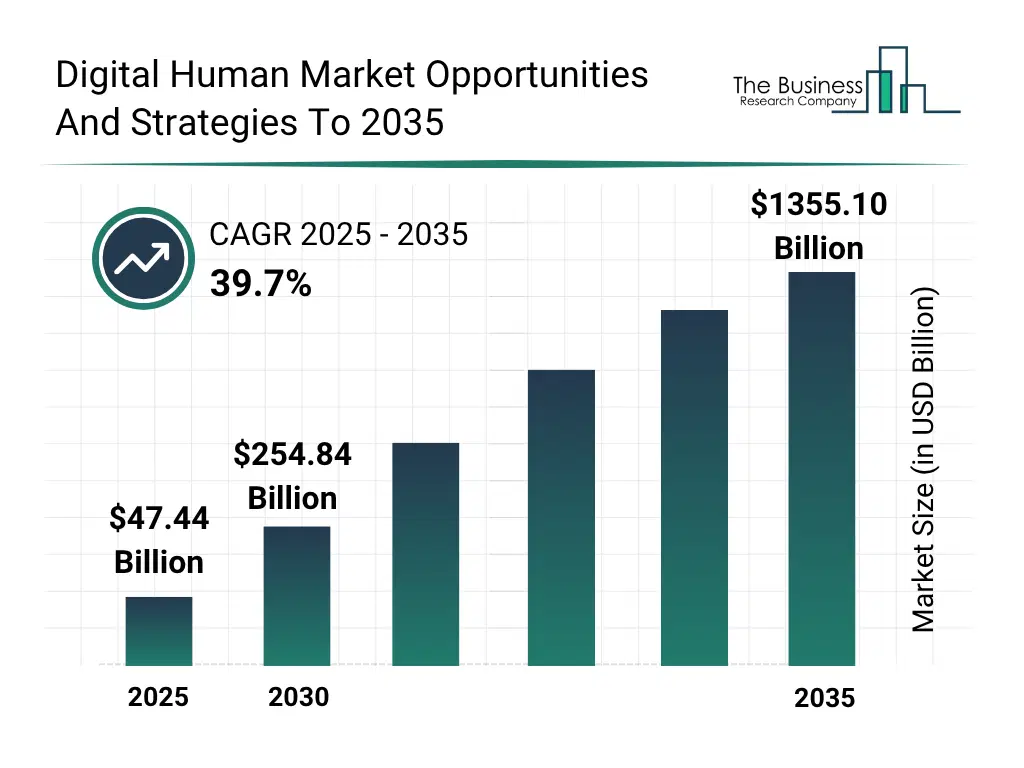
Digital Human Market Size
The global digital human market reached a value of nearly $47,441.1 million in 2025, having grown at a compound annual growth rate (CAGR) of 38.5% since 2020. The market is expected to grow from $47,441.1 million in 2025 to $254,844.0 million in 2030 at a rate of 40.0%. The market is then expected to grow at a CAGR of 39.7% from 2030 and reach $1,355,103.5 million in 2035. Growth in the historic period resulted from growing adoption of artificial intelligence (AI) and natural language processing (NLP), demand for gaming industry, increased use in entertainment and media and growth in e-learning. Factors that negatively affected growth in the historic period were high development and implementation costs and privacy and data security concerns. Going forward, the increasing retail industry, expansion of digital health and telemedicine, increasing demand for virtual assistants and increasing use in training and simulation will drive the growth. Factors that could hinder the growth of the digital human market in the future include lack of human touch and empathy, limited public awareness and acceptance and impact of trade and tariff.
Digital Human Market Segmentation
The digital human market is segmented by product type, by technology, by application and by Industry.By Product Type –
The digital human market is segmented by product type into:
- a) Interactive Digital Human Avatar
- b) Non-Interactive Digital Human Avatar
By Technology –
The digital human market is segmented by technology into:
- a) 3D Scanning
- b) 3D Modelling
- c) Natural Language Processing
- d) Natural Language Generation
- e) Artificial Intelligence (AI)
By Application –
The digital human market is segmented by application into:
- a) Virtual Agents
- b) Virtual Assistants
- c) Virtual Influencers
- c) Virtual Companions
- e) Virtual Characters
by Industry –
The digital human market is segmented by industry into:
- a) Gaming
- b) Entertainment
- c) Banking, Financial Services and Insurance (BFSI)
- d) Information Technology (IT) And Telecommunication
- e) Education
- f) Automotive
- g) Advertisement
- h) Health And Sports
- i) Other Industries
By Geography - The digital human market is segmented by geography into:
- China
- India
- Japan
- Australia
- South Korea
- Taiwan
- Indonesia o North America
- USA
- Canada
- Brazil
- France
- Germany
- UK
- Italy
- Spain
- Russia
-
o Asia Pacific
o Africa