
Factor XII Inhibitors Market Report 2026
Global Outlook – By Drug Type (Monoclonal Antibodies, Small Molecule Inhibitors, Other Drug Types), By Route Of Administration (Oral, Injectable, Other Routes Of Administration), By Application (Hereditary Angioedema, Thrombosis, Inflammatory Disorders, Other Applications), By End-User (Hospitals, Specialty Clinics, Research Institutes, Other End-Users) – Market Size, Trends, Strategies, and Forecast to 2030
Factor XII Inhibitors Market Overview
• Factor XII Inhibitors market size has reached to $1.4 billion in 2025 • Expected to grow to $2.34 billion in 2030 at a compound annual growth rate (CAGR) of 10.8% • Growth Driver: Rising Incidence Of Thrombotic Disorders Fueling The Growth Of The Market Due To Increasing Cases Of Blood Clots And Related Health Complications • Market Trend: Novel Therapy Offers Effective Prevention Of Hereditary Angioedema Attacks • North America was the largest region in 2025 and Asia-Pacific is the fastest growing region.What Is Covered Under Factor XII Inhibitors Market?
Factor XII inhibitors are therapeutic agents that block the activity of coagulation Factor XII, a protein that initiates the intrinsic pathway of blood clotting. They prevent the activation of downstream clotting processes without significantly affecting normal hemostasis. Their primary purpose is to reduce abnormal thrombosis and other clot-related disorders, offering a lower bleeding risk compared to traditional anticoagulants. The main drug types of factor XII inhibitors are monoclonal antibodies, small molecule inhibitors, and others. Monoclonal antibodies are lab-made antibodies that specifically block Factor XII to prevent abnormal blood clotting with minimal bleeding risk. These are administered through oral, injectable, and other routes. These drugs are applied for hereditary angioedema, thrombosis, inflammatory disorders, and others, serving end-users such as hospitals, specialty clinics, research institutes, and others.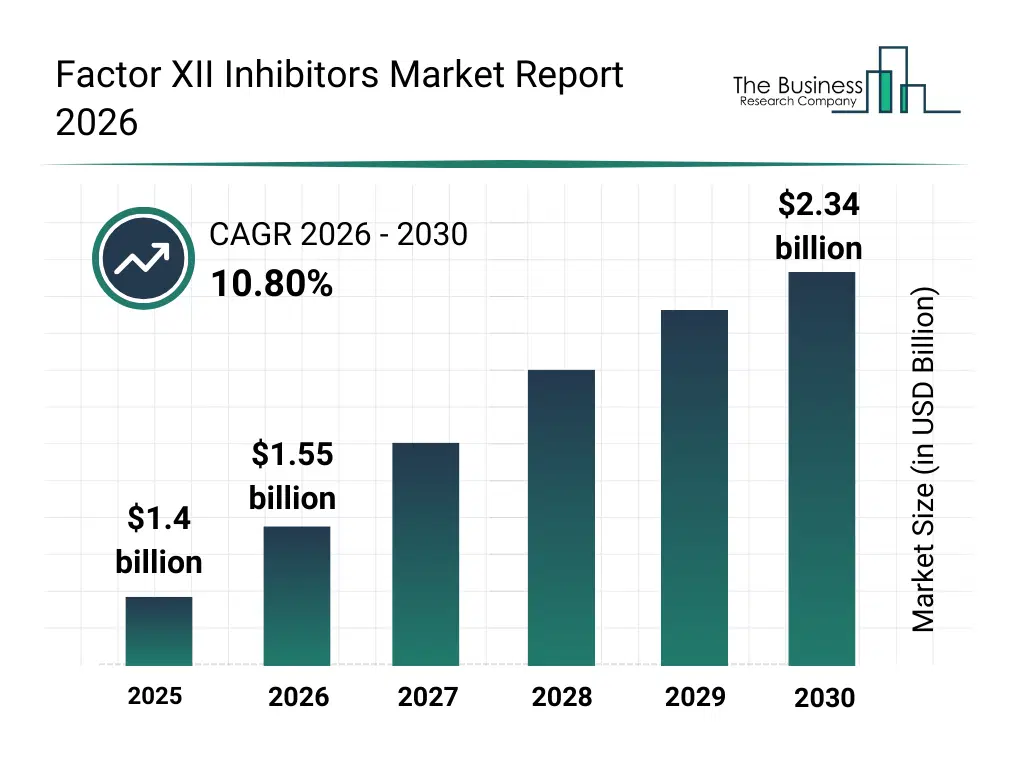
What Is The Factor XII Inhibitors Market Size and Share 2026?
The factor xii inhibitors market size has grown rapidly in recent years. It will grow from $1.4 billion in 2025 to $1.55 billion in 2026 at a compound annual growth rate (CAGR) of 11.1%. The growth in the historic period can be attributed to advancements in coagulation biology research, increasing incidence of thrombotic disorders, limitations of traditional anticoagulants, early-stage clinical success of fxii inhibition, growing investment in rare and specialty therapeutics.What Is The Factor XII Inhibitors Market Growth Forecast?
The factor xii inhibitors market size is expected to see rapid growth in the next few years. It will grow to $2.34 billion in 2030 at a compound annual growth rate (CAGR) of 10.8%. The growth in the forecast period can be attributed to expansion of late-stage clinical trials, increasing demand for safer antithrombotic therapies, rising precision medicine adoption, growing regulatory support for novel anticoagulants, expansion of fxii inhibitors into inflammatory indications. Major trends in the forecast period include increasing development of non-bleeding anticoagulant therapies, rising focus on targeted coagulation pathway modulation, growing clinical evaluation of fxii selective inhibitors, expansion of rna-based and peptide therapeutics, enhanced use of precision drug design.
Global Factor XII Inhibitors Market Segmentation
1) By Drug Type: Monoclonal Antibodies, Small Molecule Inhibitors, Other Drug Types 2) By Route Of Administration: Oral, Injectable, Other Routes Of Administration 3) By Application: Hereditary Angioedema, Thrombosis, Inflammatory Disorders, Other Applications 4) By End-User: Hospitals, Specialty Clinics, Research Institutes, Other End-Users Subsegments: 1) By Monoclonal Antibodies: Fully Human Monoclonal Antibodies, Humanized Monoclonal Antibodies, Chimeric Monoclonal Antibodies, Bispecific Monoclonal Antibodies, Single-Chain Variable Fragment (scFv) Antibodies 2) By Small Molecule Inhibitors: Direct Factor XII Inhibitors, Allosteric Factor XII Inhibitors, Reversible Inhibitors, Irreversible Inhibitors, Peptidomimetic Inhibitors 3) By Other Drug Types: Peptide-Based Inhibitors, RNA Interference (RNAi) Therapeutics, Antisense Oligonucleotides, Combination TherapiesWhat Are The Drivers Of The Factor XII Inhibitors Market?
The rising incidence of thrombotic disorders is expected to propel the growth of the factor XII inhibitors market going forward. Thromboembolic disorders are conditions in which blood clots form in veins or arteries, potentially blocking blood flow and causing serious health complications. Thromboembolic disorders are increasing due to the rising prevalence of sedentary lifestyles, which contribute to poor blood circulation and a higher risk of clot formation. Factor XII inhibitors in thrombotic disorders help prevent abnormal clot formation by blocking the contact activation pathway without affecting normal hemostasis. This allows for effective thrombosis control with a lower risk of bleeding. For instance, in January 2025, according to the Centers for Disease Control and Prevention (CDC), a US-based government agency, approximately 900,000 people in the United States are affected by venous thromboembolism, of which an estimated 60,000-100,000 Americans die annually, while many others experience long-term complications. Therefore, the rising incidence of thrombotic disorders is driving the growth of the Factor XII inhibitors industry. The increasing focus on targeted therapies is expected to propel the growth of the factor XII inhibitors market going forward. Targeted therapies are treatments that specifically target and inhibit molecular abnormalities in cancer or other diseases to improve treatment precision and minimize harm to healthy cells. The rising focus on targeted therapies is primarily driven by the advancements in precision medicine, which enables personalized, more effective treatments based on individual genetic profiles. Factor XII inhibitors enhance targeted therapies by specifically modulating the intrinsic coagulation pathway, making them ideal for patients at risk of thrombotic disorders. They reduce the risk of bleeding compared with conventional anticoagulants by providing precise inhibition of Factor XII, improving treatment safety and efficacy. For instance, in December 2024, according to the American Society of Gene & Cell Therapy (ASGCT), a US-based non-profit medical and scientific organization, the Food and Drug Administration (FDA) approved 6 gene therapy products in 2023, up from 5 approvals in 2022. Therefore, the increasing focus on targeted therapies is driving the growth of the factor XII inhibitors industry.Key Players In The Global Factor XII Inhibitors Market
Major companies operating in the factor xii inhibitors market are Taylor & Francis Group, Santa Cruz Biotechnology Inc., CSL Limited, Bridge Medicines Inc., KalVista Pharmaceuticals Inc., Ovid Technologies Inc., Affinity Biologicals Inc., Lunac Therapeutics Ltd., Grantome LLC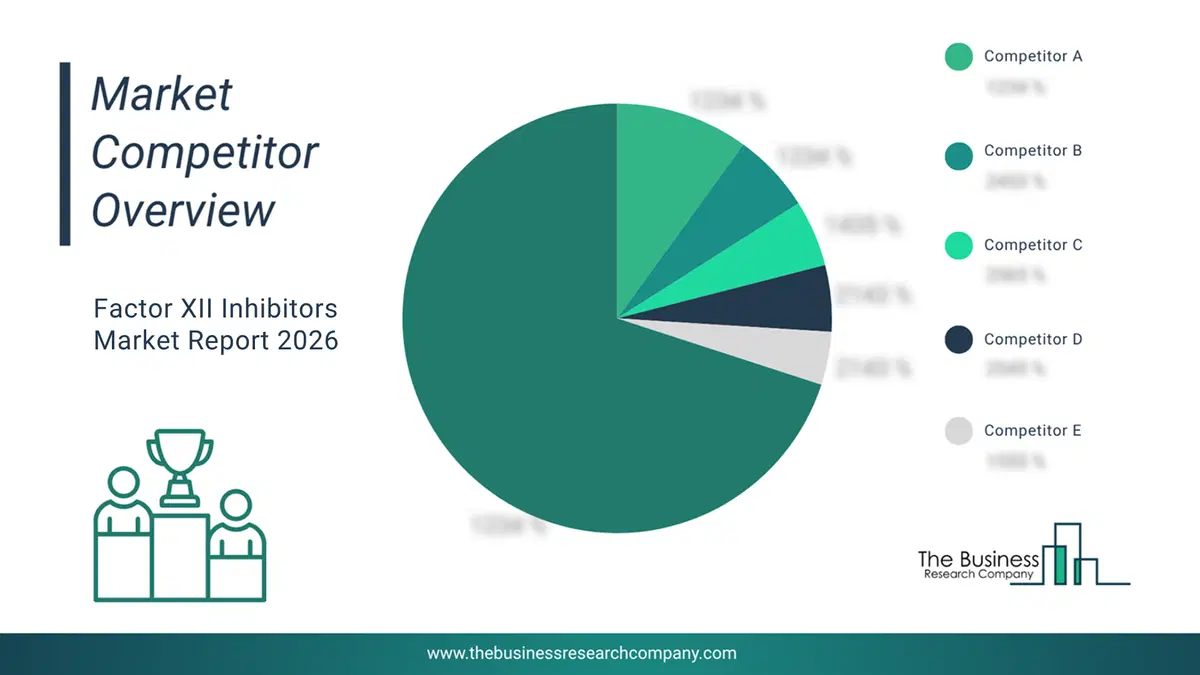
This chart is for illustrative purposes; the full report includes a detailed competitor analysis and comprehensive overview of the top 10 companies in the market.
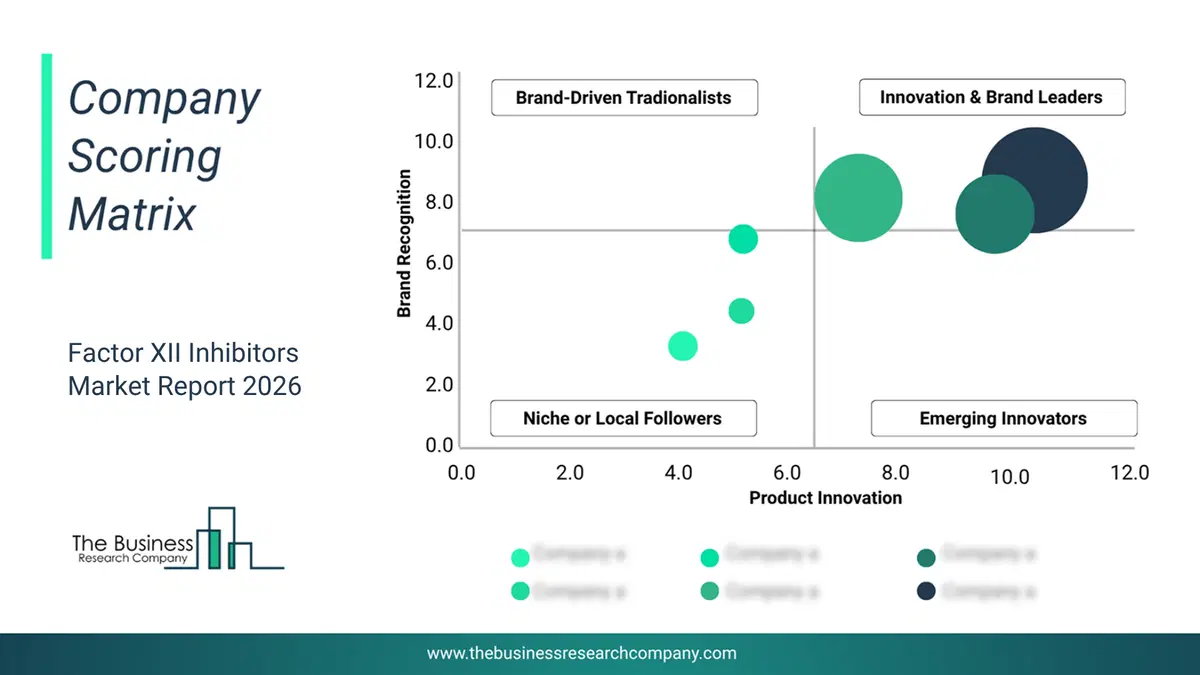
This chart maps companies by product innovation and brand strength, with bubble size indicating relative revenue, helping identify market leaders, challengers, and niche players. This is an illustrative chart; the full report provides a complete and accurate competitive analysis.
Global Factor XII Inhibitors Market Trends and Insights
Major companies operating in the Factor XII Inhibitors market are focusing on developing innovative products, such as anti-FXIIa monoclonal antibodies, to enhance therapeutic precision and treatment effectiveness. Anti-FXIIa monoclonal antibodies are targeted biologics that inhibit activated factor XII to prevent abnormal clot formation while preserving normal hemostasis. For instance, in February 2025, CSL Behring GmbH, a Germany-based biopharmaceutical company, received manufacturing and marketing approval from Japan's Ministry of Health, Labour and Welfare (MHLW) for ANDEMBRY (garadacimab) subcutaneous (S.C.) injection 200 mg pens. It is a novel, human anti-activated factor XII monoclonal antibody approved for the prevention of acute attacks of hereditary angioedema (HAE). It works by targeting activated factor XIIa, a key driver in the initiation of HAE attacks, and is administered via a convenient subcutaneous injection pen.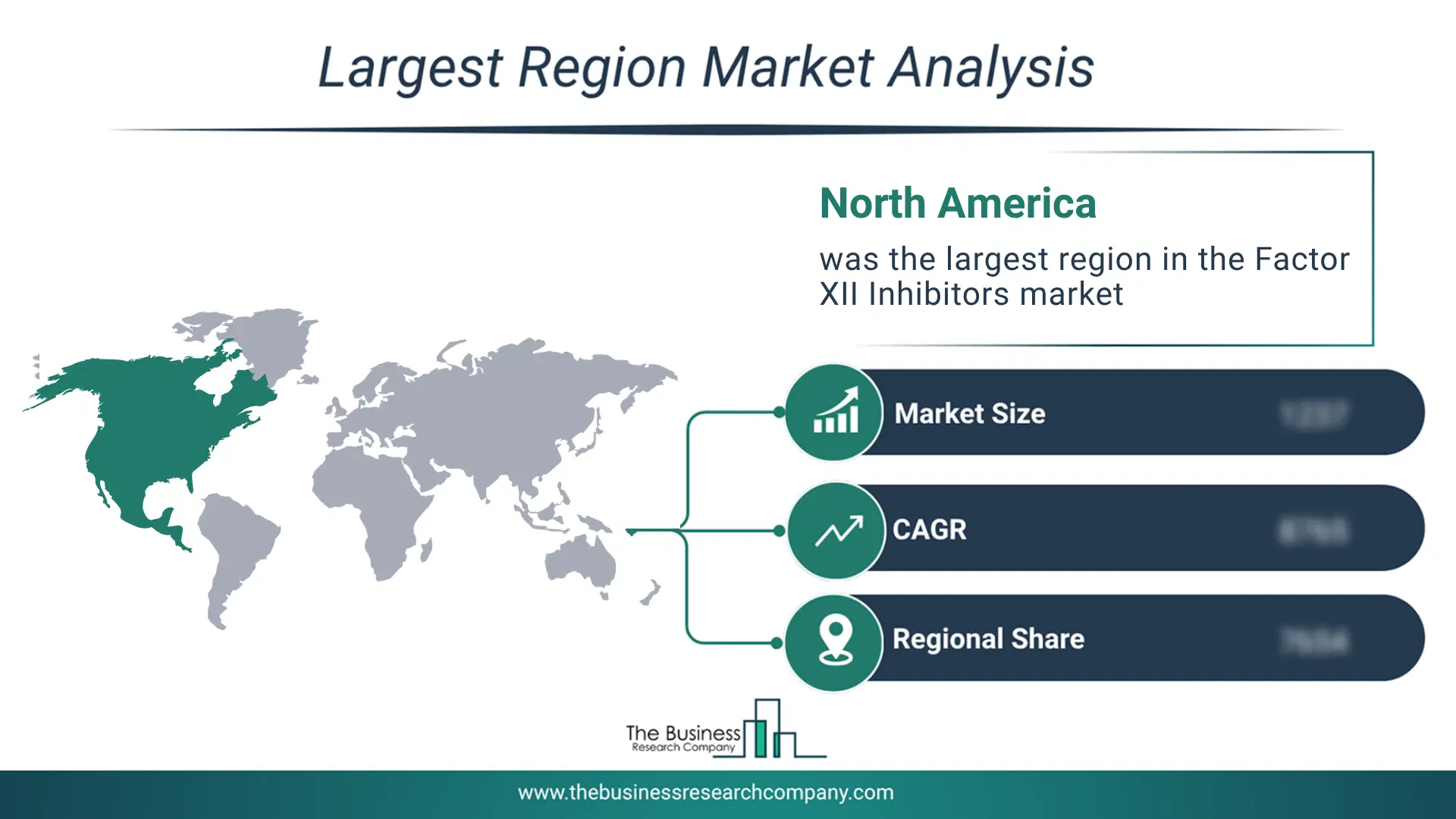
Regional Insights
North America was the largest region in the factor XII inhibitors market in 2025. Asia-Pacific is expected to be the fastest-growing region in the forecast period. The regions covered in this market report are Asia-Pacific, South East Asia, Western Europe, Eastern Europe, North America, South America, Middle East, Africa. The countries covered in this market report are Australia, Brazil, China, France, Germany, India, Indonesia, Japan, Taiwan, Russia, South Korea, UK, USA, Canada, Italy, Spain.What Defines the Factor XII Inhibitors Market?
The factor XII inhibitors market consists of revenues earned by entities by providing services such as formulation development, drug delivery optimization, laboratory testing, diagnostic support, regulatory consulting, pharmacovigilance, and contract manufacturing services. The market value includes the value of related goods sold by the service provider or included within the service offering. The factor XII inhibitors market also includes sales of anticoagulant formulations, combination therapies, diagnostic kits, research reagents, laboratory consumables, and supportive medical devices. Values in this market are ‘factory gate’ values, that is the value of goods sold by the manufacturers or creators of the goods, whether to other entities (including downstream manufacturers, wholesalers, distributors and retailers) or directly to end customers. The value of goods in this market includes related services sold by the creators of the goods.How is Market Value Defined and Measured?
The market value is defined as the revenues that enterprises gain from the sale of goods and/or services within the specified market and geography through sales, grants, or donations in terms of the currency (in USD unless otherwise specified). The revenues for a specified geography are consumption values that are revenues generated by organizations in the specified geography within the market, irrespective of where they are produced. It does not include revenues from resales along the supply chain, either further along the supply chain or as part of other products.
This chart presents market attractiveness based on a quantitative evaluation of growth, competition, strategic alignment, and risk, offering a clear view of opportunity areas for decision-making. This chart is for illustrative purposes; the full report contains the complete analysis.

This chart highlights the Total Addressable Market (TAM) by estimating the maximum revenue opportunity using an assumption-driven approach, supporting strategic planning and opportunity sizing across markets. The chart is illustrative; the full report provides a more comprehensive analysis.
What Key Data and Analysis Are Included in the Factor XII Inhibitors Market Report 2026?
The factor xii inhibitors market research report is one of a series of new reports from The Business Research Company that provides market statistics, including industry global market size, regional shares, competitors with the market share, detailed market segments, market trends and opportunities, and any further data you may need to thrive in the factor xii inhibitors industry. The market research report delivers a complete perspective of everything you need, with an in-depth analysis of the current and future state of the industry.Factor XII Inhibitors Market Report Forecast Analysis
| Report Attribute | Details |
|---|---|
| Market Size Value In 2026 | $1.55 billion |
| Revenue Forecast In 2030 | $2.34 billion |
| Growth Rate | CAGR of 11.1% from 2026 to 2030 |
| Base Year For Estimation | 2025 |
| Actual Estimates/Historical Data | 2020-2025 |
| Forecast Period | 2026 - 2030 |
| Market Representation | Revenue in USD Billion and CAGR from 2026 to 2030 |
| Segments Covered | Drug Type, Route Of Administration, Application, End-User |
| Regional Scope | Asia-Pacific, Western Europe, Eastern Europe, North America, South America, Middle East, Africa |
| Country Scope | The countries covered in the report are Australia, Brazil, China, France, Germany, India, Indonesia, Japan, Taiwan, Russia, South Korea, UK, USA, Canada, Italy, Spain. |
| Key Companies Profiled | Taylor & Francis Group, Santa Cruz Biotechnology Inc., CSL Limited, Bridge Medicines Inc., KalVista Pharmaceuticals Inc., Ovid Technologies Inc., Affinity Biologicals Inc., Lunac Therapeutics Ltd., Grantome LLC |
| Customization Scope | Request for Customization |
| Pricing And Purchase Options | Explore Purchase Options |