
Float Glass Market Report 2026
Global Outlook – By Type (Clear Float Glass, Tinted Float Glass, Textured Float Glass, Laminated Float Glass, Insulated Float Glass), By Raw Material (Sand, Soda Ash, Limestone, Dolomite, Other Materials), By Thickness (2mm-3mm, 4mm-6mm, 7mm-10mm, 11mm-12mm), By Application (Windows, Doors, Glazing), By End User (Automotive, Architectural, Electronics, Industrial) – Market Size, Trends, Strategies, and Forecast to 2030
Float Glass Market Overview
• Float Glass market size has reached to $51.11 billion in 2025 • Expected to grow to $66.35 billion in 2030 at a compound annual growth rate (CAGR) of 5.3% • Growth Driver: Growing Adoption Of Solar Energy Systems Fueling The Growth Of The Market Due To Rising Demand For Efficient Renewable-Energy Components • Market Trend: Sustainability-Driven Expansion In Float Glass Production Lines • North America was the largest region in 2025 and Asia-Pacific is the fastest growing region.Market Gains By 2030 – Top Opportunities By Segment
Market Gain identifies the most promising market opportunities by highlighting the segments or products expected to generate the highest incremental revenue growth over the next five years.
What Is Covered Under Float Glass Market?
Float glass is a type of glass made by floating molten glass on a bed of molten metal, typically tin, to produce a smooth, flat, and uniform surface. It is known for its high optical clarity, consistent thickness, and excellent surface finish. It helps to provide a high-quality, transparent, and durable base glass for construction, and interior applications. The main types of float glass are clear float glass, tinted float glass, textured float glass, laminated float glass, and insulated float glass. Clear float glass refers to a sheet of flat glass made by the float glass process, where molten glass is poured onto a bath of molten tin. It includes various raw materials such as sand, soda ash, limestone, dolomite, and other materials, and thickness grades include 2mm-3mm, 4mm-6mm, 7mm-10mm, and 11mm-12mm. These are used in applications like windows, doors, and glazing, and serve end-users including automotive, architectural, electronics, and industrial sectors.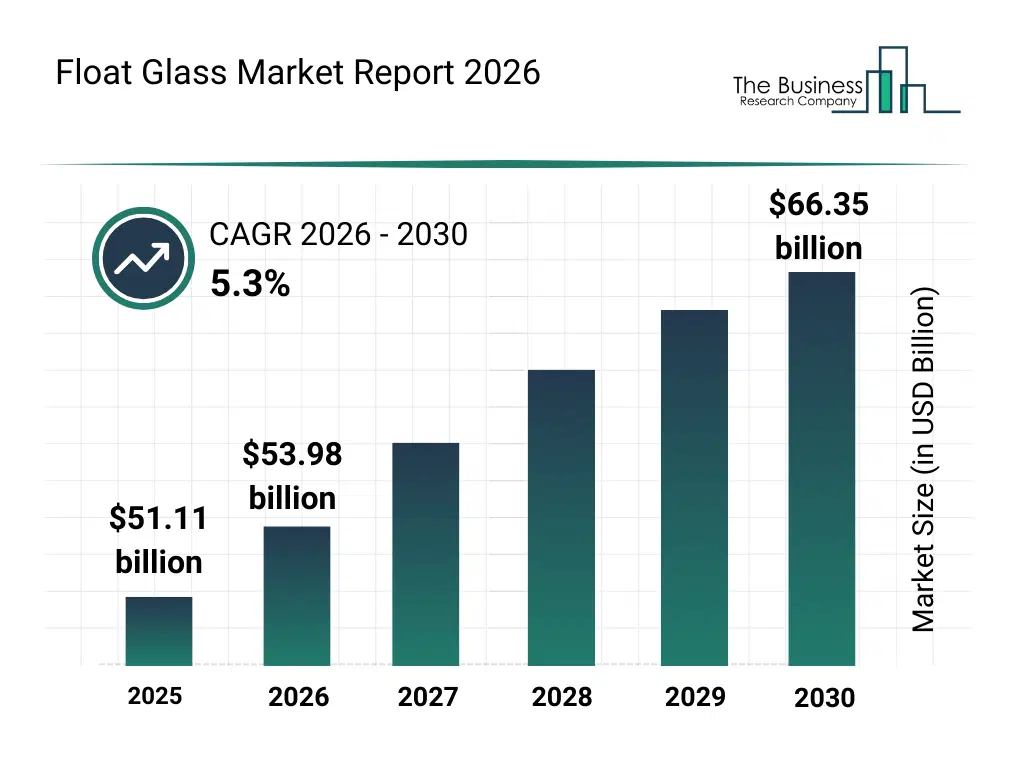
What Is The Float Glass Market Size and Share 2026?
The float glass market size has grown strongly in recent years. It will grow from $51.11 billion in 2025 to $53.98 billion in 2026 at a compound annual growth rate (CAGR) of 5.6%. The growth in the historic period can be attributed to expansion of construction and infrastructure projects, growth in automotive manufacturing, widespread use of float glass production technology, increasing demand for flat glass products, availability of large-scale glass manufacturing facilities.What Is The Float Glass Market Growth Forecast?
The float glass market size is expected to see strong growth in the next few years. It will grow to $66.35 billion in 2030 at a compound annual growth rate (CAGR) of 5.3%. The growth in the forecast period can be attributed to increasing adoption of low-emissivity glass, rising investments in green buildings, expansion of solar energy installations, growing demand for high-performance glazing, increasing focus on lightweight automotive glass. Major trends in the forecast period include increasing demand for high-quality architectural glazing, rising adoption of laminated and insulated float glass, growing use of energy-efficient glass solutions, expansion of automotive and solar applications, enhanced focus on uniform thickness and optical clarity.
Global Float Glass Market Segmentation
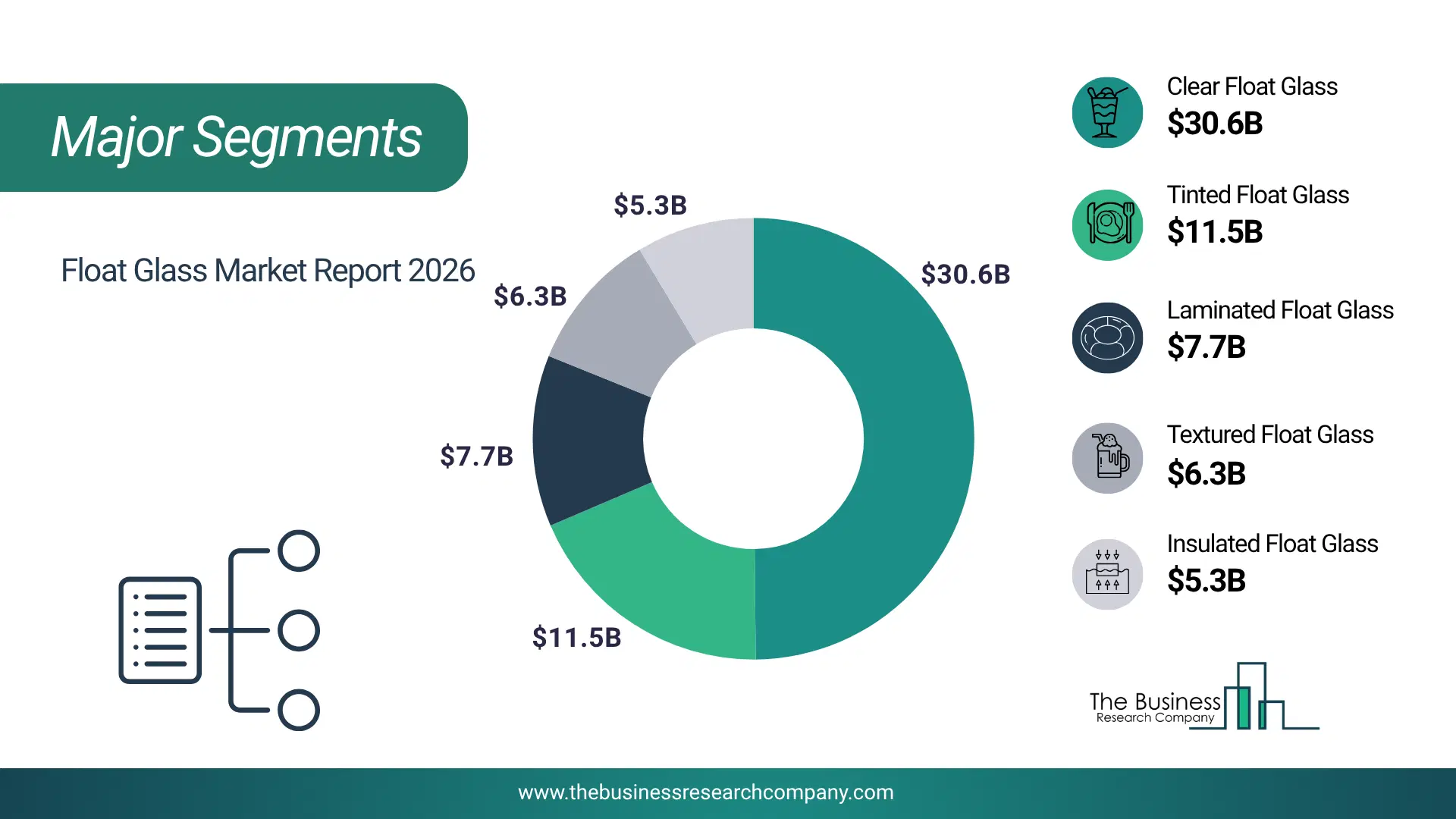
1) By Type: Clear Float Glass, Tinted Float Glass, Textured Float Glass, Laminated Float Glass, Insulated Float Glass 2) By Raw Material: Sand, Soda Ash, Limestone, Dolomite, Other Materials 3) By Thickness: 2mm-3mm, 4mm-6mm, 7mm-10mm, 11mm-12mm 4) By Application: Windows, Doors, Glazing 5) By End User: Automotive, Architectural, Electronics, Industrial Subsegments: 1) By Clear Float Glass: Standard Clear Glass, Low Iron Clear Glass, Tempered Clear Glass, Coated Clear Glass, Reflective Clear Glass 2) By Tinted Float Glass: Bronze Tinted Glass, Grey Tinted Glass, Blue Tinted Glass, Green Tinted Glass, Reflective Tinted Glass 3) By Textured Float Glass: Patterned Glass, Frosted Glass, Obscure Glass, Decorative Glass, Wired Textured Glass 4) By Laminated Float Glass: Polyvinyl Butyral Laminated Glass, Ethylene Vinyl Acetate Laminated Glass, Ionoplast Laminated Glass, Acoustic Laminated Glass, Safety Laminated Glass 5) By Insulated Float Glass: Double Glazed Units, Triple Glazed Units, Low Emissivity Glass, Argon Filled Glass, Solar Control Glass The top segments in the float glass market will be: • Clear Float Glass will reach $30.5 billion by 2030. • Tinted Float Glass will reach $11.43 billion by 2030. • Laminated Float Glass will reach $7.66 billion by 2030. • Textured Float Glass will reach $6.27 billion by 2030. • Insulated Float Glass will reach $5.23 billion by 2030.What Is The Driver Of The Float Glass Market?
The growing adoption of solar energy systems is expected to drive the expansion of the float glass market going forward. Solar energy systems refer to integrated technologies that capture sunlight and convert it into usable electricity or heat for homes, businesses, and industrial operations. The surge in solar adoption is fueled by increasing clean-energy commitments, government incentives, and the rising need for sustainable power generation. Float glass plays a critical role in enhancing panel efficiency, supporting large-scale solar installations, and meeting global renewable-energy targets. For instance, in January 2024, according to the U.S. Energy Information Administration, a US-based government agency, solar generation in the U.S. is set to climb 75%, rising from 163 billion kWh in 2023 to 286 billion kWh in 2025, while wind output edges up 11%, increasing from 430 billion kWh to 476 billion kWh over the same period. Therefore, the growing adoption of solar energy systems is driving the growth of the float glass industry.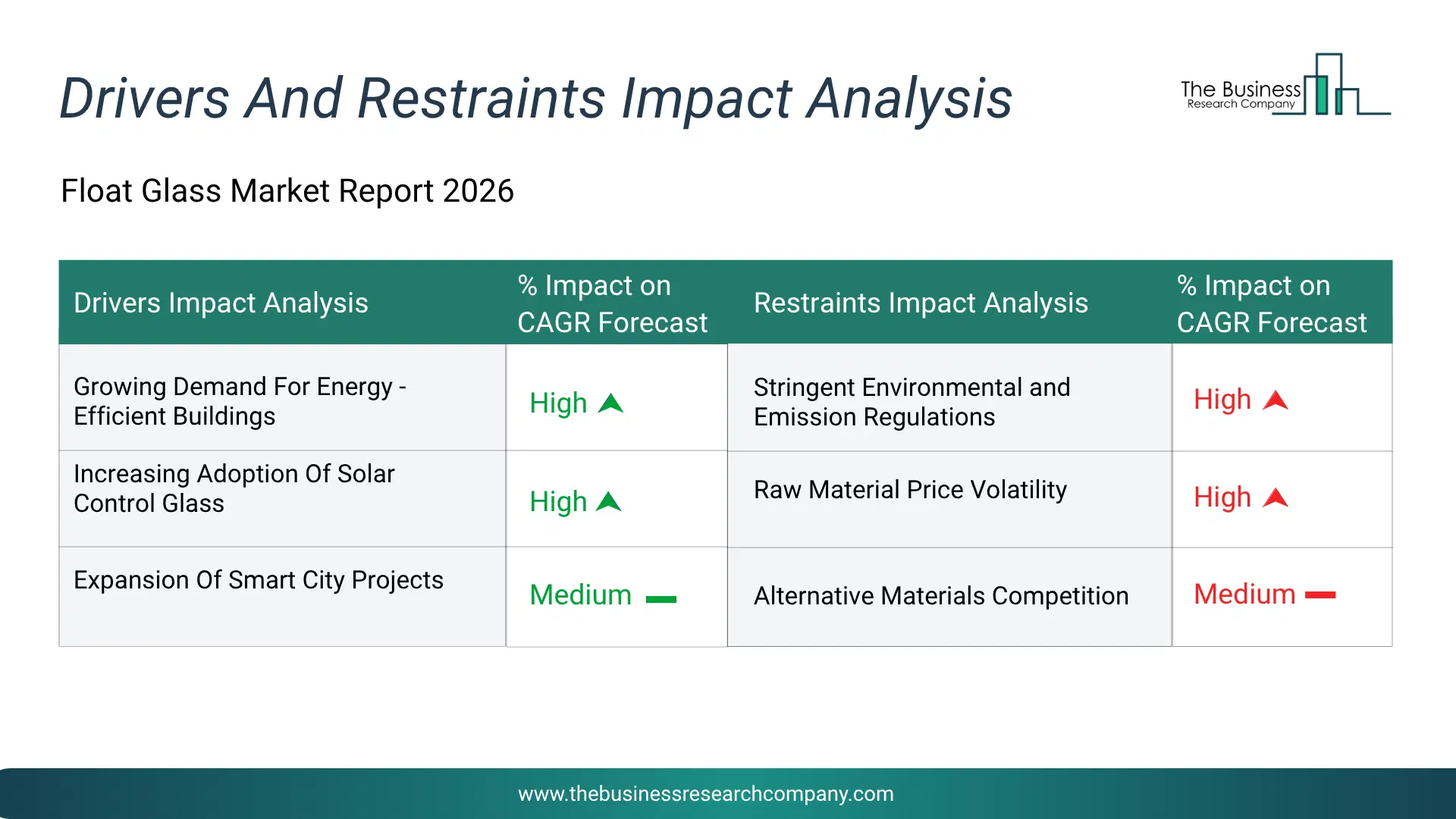
Infographic Chart Showing Key Market Drivers Analysis And Restraints For Float Glass Market
The chart presents an impact analysis of key drivers and restraints, quantifying their relative influence on the market's growth rate and helping assess the balance between growth enablers and limiting factors. This chart offers a high-level perspective; the full report contains more detailed insights.
How Will The Drivers Impact Growth In The Global Float Glass Market?
• Growing Demand For Energy -Efficient Buildings (High) – During the forecast period, the growing demand for energy -efficient buildings is expected to become a key growth driver for the float glass market by 2030. Governments and regulatory bodies across the world are increasingly enforcing stringent building energy codes and sustainability standards, encouraging the use of high -performance glazing solutions. Float glass serves as the base material for advanced products such as insulated and low -emissivity glass, which significantly reduce heat transfer and improve thermal insulation in residential and commercial structures. The rising focus on reducing carbon emissions and energy consumption in buildings is pushing developers to adopt energy -efficient glass solutions. • Increasing Adoption Of Solar Control Glass (High) – During the forecast period, the increasing adoption of solar control glass is expected to emerge as a major factor driving the expansion of the float glass market by 2030. Solar control glass, which is manufactured using float glass as a base substrate, helps regulate solar radiation by reducing heat gain while maintaining natural light transmission. This makes it highly suitable for modern architectural designs, especially in regions with high solar exposure. The growing demand for comfortable indoor environments, reduced reliance on air conditioning, and improved building aesthetics is accelerating the adoption of solar control glazing. Additionally, advancements in coating technologies are enhancing the performance and durability of such glass products. • Expansion Of Smart City Projects (Medium) – During the forecast period, the expansion of smart city projects is expected to act as a key growth catalyst for the float glass market by 2030. Governments and urban planners are investing heavily in smart infrastructure that incorporates energy-efficient buildings, intelligent transportation systems, and digitally connected urban spaces. Float glass is widely used in smart city developments for applications such as facades, windows, and integrated glazing systems that support energy management and aesthetic design. The increasing use of glass in modern urban architecture, combined with the integration of smart technologies such as electrochromic and sensor-enabled glazing, is further driving demand. As smart city initiatives continue to expand globally, the consumption of float glass is expected to rise significantly.How Will The Restraints Impact Growth In The Global Float Glass Market?
• Stringent Environmental and Emission Regulations (High) – During the forecast period, the stringent environmental and emission regulations act as a restraint for the float glass market by increasing compliance costs related to controlling carbon emissions, particulate matter, and nitrogen oxides released during high-temperature melting processes. Float glass manufacturers are required to invest heavily in pollution-control systems, energy-efficient furnaces, and continuous monitoring technologies, which raises capital and operational expenditures. Regulatory limits on fossil fuel usage further constrain production efficiency, as glass melting relies heavily on energy-intensive heating. Compliance timelines and frequent policy updates can also delay capacity expansions or modernization projects. Together, these factors reduce profit margins and slow down production growth across the float glass industry. • Raw Material Price Volatility (High) – During the forecast period, the raw material price volatility acts as a significant restraint for the float glass market by creating uncertainty in production costs, as key inputs such as silica sand, soda ash, limestone, and energy are subject to frequent price fluctuations. Sudden increases in these input costs directly squeeze manufacturer margins, especially because float glass production is highly energy-intensive and operates on thin profit spreads. Since float glass pricing is often set through long-term supply contracts, manufacturers find it difficult to immediately pass rising costs on to customers. This volatility also complicates budgeting and capacity planning, discouraging new investments or furnace expansions. As a result, sustained instability in raw material prices can slow overall market growth and reduce competitiveness. • Alternative Materials Competition (Medium) – During the forecast period, the alternative materials competition acts as a restraint for the float glass market by offering comparable or superior performance at lower cost or weight. Materials such as plastics, polycarbonate sheets, and acrylics provide high impact resistance, flexibility, and easier fabrication, making them attractive for certain construction and interior applications. In some cases, metal panels and composite materials are preferred for their strength, insulation properties, or design versatility. These substitutes also often require less energy to produce and install, aligning better with cost-efficiency and sustainability goals. As a result, end users may shift away from float glass in applications where transparency is not the primary requirement.Key Players In The Global Float Glass Market
Major companies operating in the float glass market are AGC Inc., BG Float Glass Company Limited, Cardinal Glass Industries Inc., Guardian Glass LLC, China Glass Holdings Limited, KIBING Group, Press Glass SA, Nippon Sheet Glass (NSG) Co. Ltd, PT Mulia Industrindo Tbk, Şişecam Group, Saint-Gobain, Taiwan Glass Ind. Corp., Gold Plus Glass Industry Ltd, Xinyi Glass, Gujarat Guardian Ltd, Perfect Glaze, Hindustan National Glass & Industries Ltd (HNG), Vishvesh Glass Pvt Ltd, Haldyn Glass Ltd, Qingdao AEON Glass Co. Ltd, Piramal Glass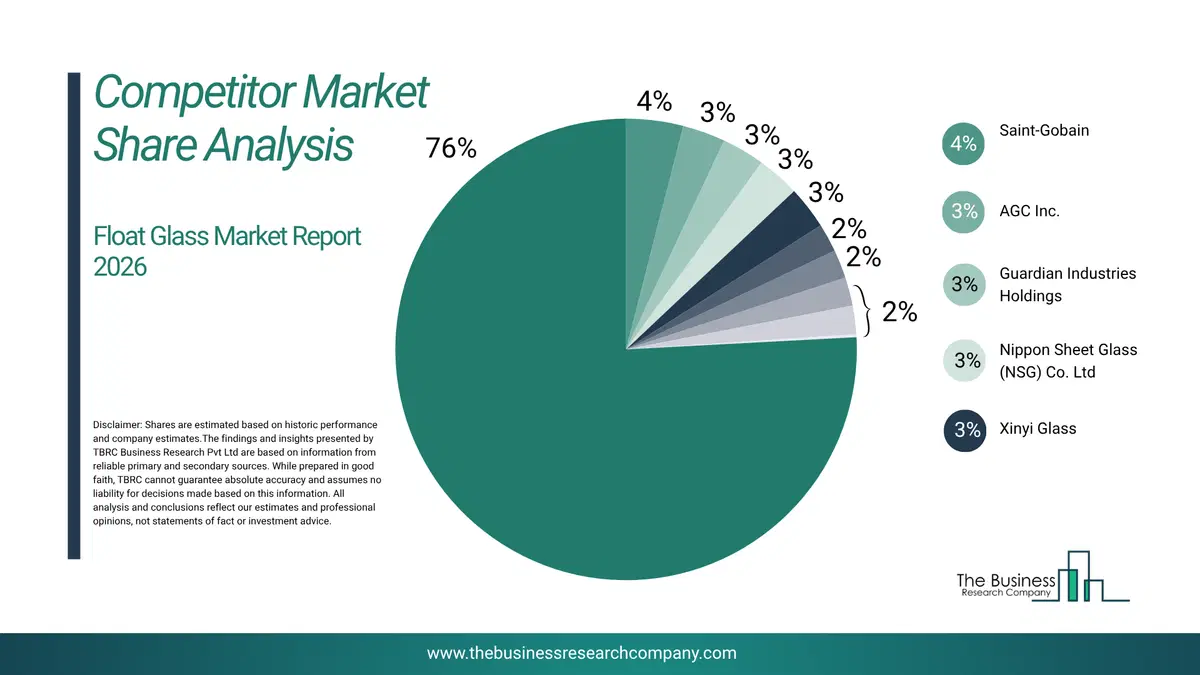
This chart is for illustrative purposes; the full report includes a detailed competitor analysis and comprehensive overview of the top 10 companies in the market.
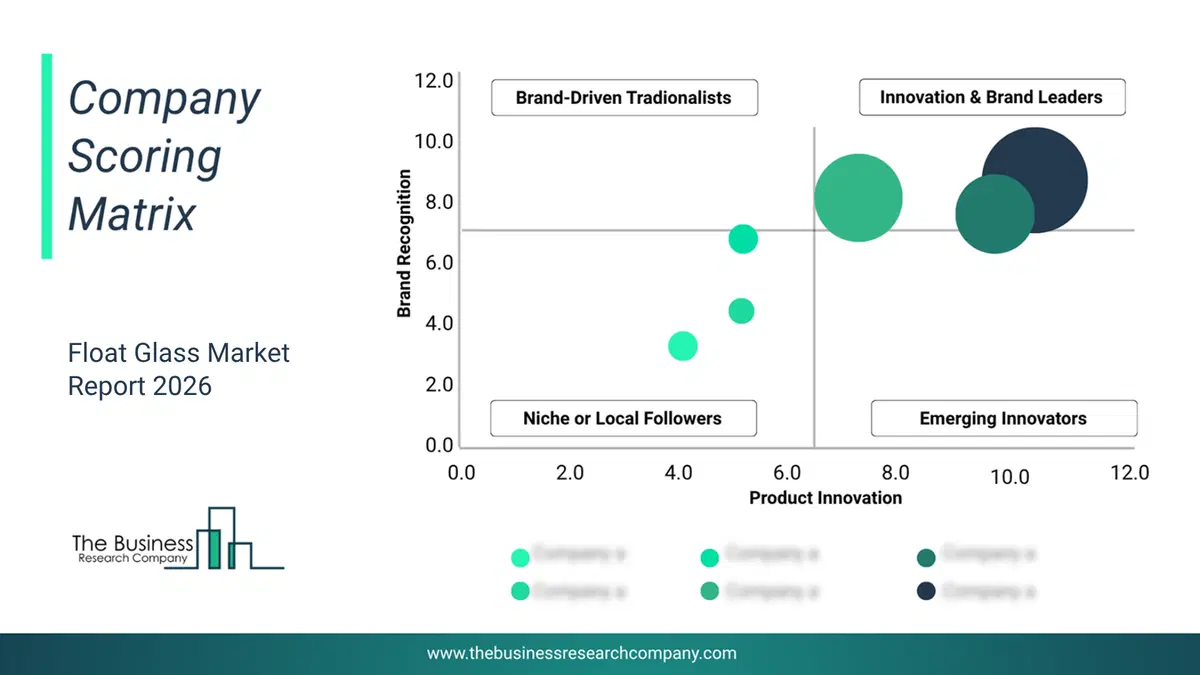
This chart maps companies by product innovation and brand strength, with bubble size indicating relative revenue, helping identify market leaders, challengers, and niche players. This is an illustrative chart; the full report provides a complete and accurate competitive analysis.
Global Float Glass Market Trends and Insights
Major companies operating in the float glass market are focusing on sustainability-driven innovation, such as, float glass production lines, to reduce energy consumption, lower carbon emissions, and enhance production efficiency while supporting the transition toward eco-friendly construction materials. Float glass production lines refer to integrated manufacturing systems that continuously produce flat glass by floating molten glass on a bed of molten tin, enabling uniform thickness, high surface quality, and large-scale, energy-efficient glass production. For instance, in September 2025, Obeikan Glass, a Saudi Arabia-based glass manufacturer, launching its second float glass production line in Yanbu, Saudi Arabia, with a production capacity of 650 tons per day. This expansion is part of an agreement with Chinese technology company Liaoning Zhongyuan for technology and equipment supply and supports Saudi Arabia’s Vision 2030. The project, costing approximately SAR 520 million (about $138.6 million), is aimed at strengthening Obeikan Glass’s industrial presence and expanding its supply to local and global markets.What Are Latest Mergers And Acquisitions In The Float Glass Market?
In May 2023, Shanghai Yaohua Pilkington Glass Group Co. Ltd., a China-based glass manufacturing company, acquired AGC Flat Glass (Dalian) Inc. for an undisclosed amount. With this acquisition, SYP aims to expand its market presence in China and strengthen its production capabilities across automotive, industrial, and architectural glass segments. AGC Flat Glass (Dalian) Inc. is a China-based float glass manufacturing company.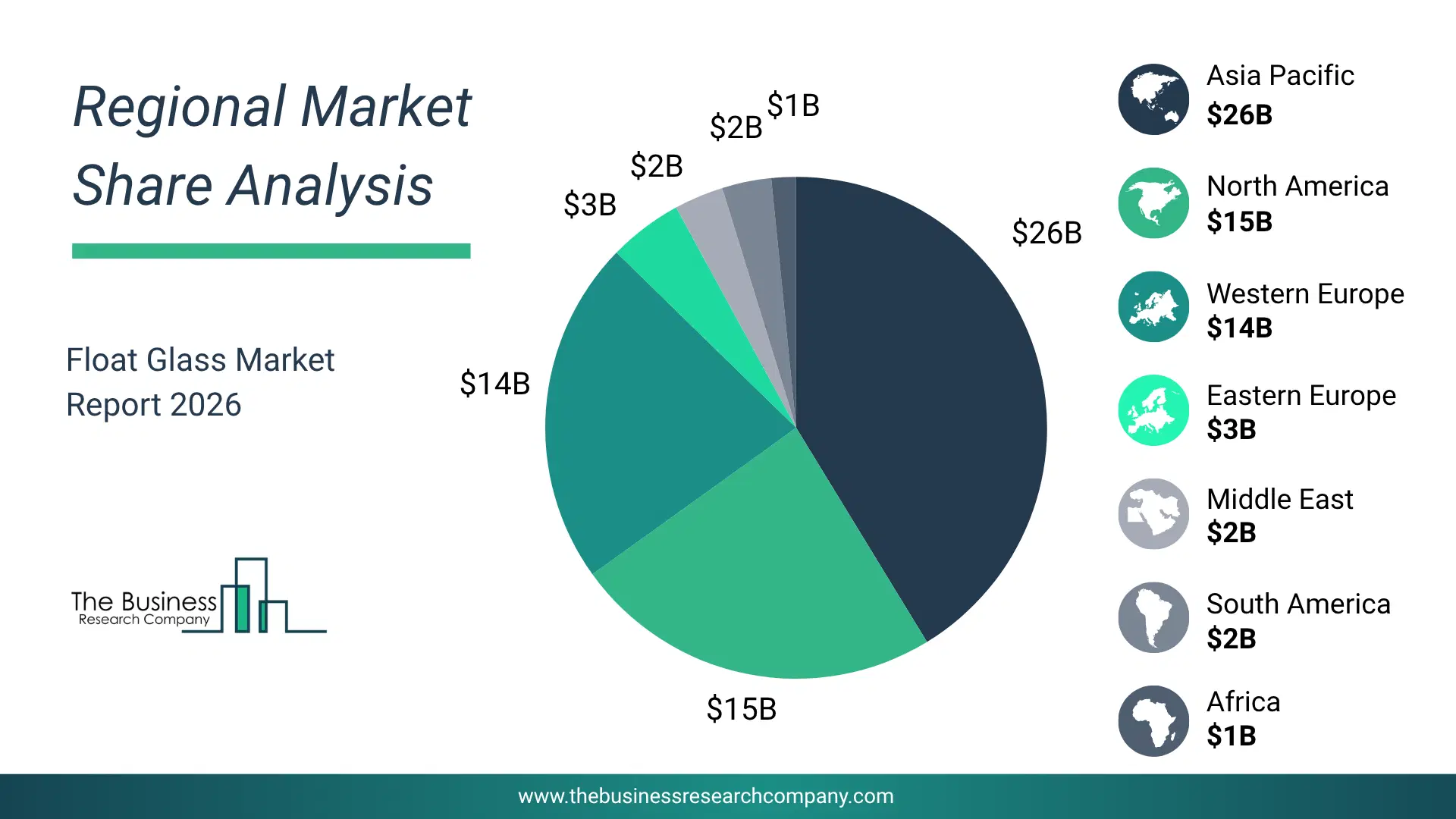
Regional Outlook
North America was the largest region in the float glass market in 2025. Asia-Pacific is expected to be the fastest-growing region in the forecast period. The regions covered in this market report are Asia-Pacific, South East Asia, Western Europe, Eastern Europe, North America, South America, Middle East, Africa. The countries covered in this market report are Australia, Brazil, China, France, Germany, India, Indonesia, Japan, Taiwan, Russia, South Korea, UK, USA, Canada, Italy, Spain.What Defines the Float Glass Market?
The float glass market consists of sales of glass facades, tabletops, skylights, display cases, and shower enclosures. Values in this market are ‘factory gate’ values, that is, the value of goods sold by the manufacturers or creators of the goods, whether to other entities (including downstream manufacturers, wholesalers, distributors, and retailers) or directly to end customers. The value of goods in this market includes related services sold by the creators of the goods.How is Market Value Defined and Measured?
The market value is defined as the revenues that enterprises gain from the sale of goods and/or services within the specified market and geography through sales, grants, or donations in terms of the currency (in USD unless otherwise specified). The revenues for a specified geography are consumption values that are revenues generated by organizations in the specified geography within the market, irrespective of where they are produced. It does not include revenues from resales along the supply chain, either further along the supply chain or as part of other products.
This chart presents market attractiveness based on a quantitative evaluation of growth, competition, strategic alignment, and risk, offering a clear view of opportunity areas for decision-making. This chart is for illustrative purposes; the full report contains the complete analysis.

This chart highlights the Total Addressable Market (TAM) by estimating the maximum revenue opportunity using an assumption-driven approach, supporting strategic planning and opportunity sizing across markets. The chart is illustrative; the full report provides a more comprehensive analysis.
What Key Data and Analysis Are Included in the Float Glass Market Report 2026?
The float glass market research report is one of a series of new reports from The Business Research Company that provides market statistics, including Market Report 2026?global market size, regional shares, competitors with the market share, detailed market segments, market trends and opportunities, and any further data you may need to thrive in the float glass Market Report 2026? The market research report delivers a complete perspective of everything you need, with an in-depth analysis of the current and future state of the Market Report 2026?Float Glass Market Report Forecast Analysis
| Report Attribute | Details |
|---|---|
| Market Size Value In 2026 | $53.98 billion |
| Revenue Forecast In 2030 | $66.35 billion |
| Growth Rate | CAGR of 5.3% from 2026 to 2030 |
| Base Year For Estimation | 2025 |
| Actual Estimates/Historical Data | 2020-2025 |
| Forecast Period | 2026 - 2030 |
| Market Representation | Revenue in USD Billion and CAGR from 2026 to 2030 |
| Segments Covered | Type, Raw Material, Thickness, Application, End User |
| Regional Scope | Asia-Pacific, Western Europe, Eastern Europe, North America, South America, Middle East, Africa |
| Country Scope | The countries covered in the report are Australia, Brazil, China, France, Germany, India, ... |
| Key Companies Profiled | AGC Inc., BG Float Glass Company Limited, Cardinal Glass Industries Inc., Guardian Glass LLC, China Glass Holdings Limited, KIBING Group, Press Glass SA, Nippon Sheet Glass (NSG) Co. Ltd, PT Mulia Industrindo Tbk, Şişecam Group, Saint-Gobain, Taiwan Glass Ind. Corp., Gold Plus Glass Industry Ltd, Xinyi Glass, Gujarat Guardian Ltd, Perfect Glaze, Hindustan National Glass & Industries Ltd (HNG), Vishvesh Glass Pvt Ltd, Haldyn Glass Ltd, Qingdao AEON Glass Co. Ltd, Piramal Glass |
| Customization Scope | Request for Customization |
| Pricing And Purchase Options | Explore Purchase Options |