

Hepatitis B Virus (HBV) Capsid Inhibitors Market Report 2026
Global Outlook – By Drug Type (Core Protein Allosteric Modulators (CpAMs), Capsid Assembly Modulators, Other Drug Types), By Application (Chronic Hepatitis B, Acute Hepatitis B, Other Applications), By Distribution Channel (Hospital Pharmacies, Retail Pharmacies, Online Pharmacies, Other Distribution Channels), By End-User (Hospitals, Clinics, Research Institutes, Other End-Users) – Market Size, Trends, Strategies, and Forecast to 2030
Hepatitis B Virus (HBV) Capsid Inhibitors Market Overview
• Hepatitis B Virus (HBV) Capsid Inhibitors market size has reached to $0.52 billion in 2025 • Expected to grow to $0.98 billion in 2030 at a compound annual growth rate (CAGR) of 13.4% • Growth Driver: Surge In Hepatitis B Virus (HBV) Infections Fueling The Growth Of The Market Due To Low Vaccination Coverage • Market Trend: Advancements In HBV Capsid Inhibitors Development • Asia-Pacific was the largest region in 2025.What Is Covered Under Hepatitis B Virus (HBV) Capsid Inhibitors Market?
Hepatitis B virus (HBV) capsid inhibitors refer to a class of antiviral agents designed to disrupt the assembly, disassembly, or stability of the viral capsid, which is essential for HBV replication. These inhibitors target the core protein responsible for forming the protective shell around the viral DNA, thereby preventing the production of new infectious particles. By interfering with the capsid formation process, they help reduce viral load and disease progression. HBV capsid inhibitors represent a promising therapeutic approach for achieving a functional cure in chronic hepatitis B infection. The main drug types of hepatitis B virus (HBV) capsid inhibitors are core protein allosteric modulators (CpAMs), capsid assembly modulators, and others. hepatitis B virus (HBV) capsid inhibitors, also known as core protein allosteric modulators (CpAMs), are antiviral agents that target and disrupt the assembly or stability of the viral capsid, thereby blocking HBV replication and reducing viral activity. The applications involved are chronic hepatitis B, acute hepatitis B, and other applications, and are distributed using hospital pharmacies, retail pharmacies, online pharmacies, and other distribution channels. The end users include hospitals, clinics, research institutes, and others.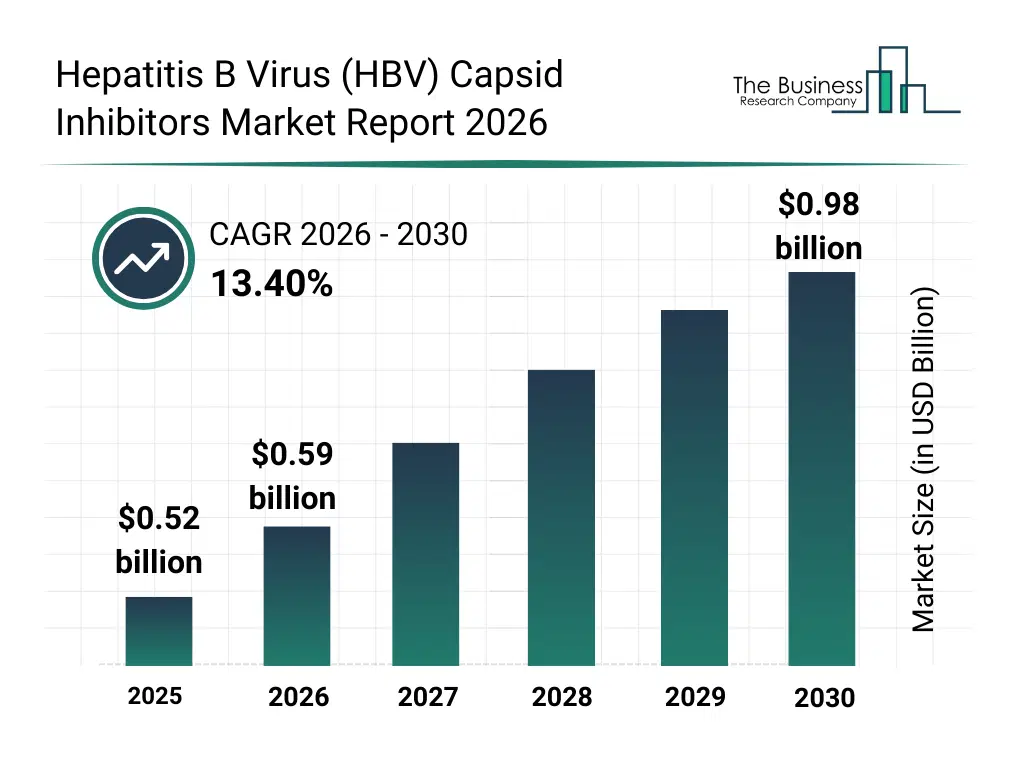
What Is The Hepatitis B Virus (HBV) Capsid Inhibitors Market Size and Share 2026?
The hepatitis b virus (hbv) capsid inhibitors market size has grown rapidly in recent years. It will grow from $0.52 billion in 2025 to $0.59 billion in 2026 at a compound annual growth rate (CAGR) of 13.7%. The growth in the historic period can be attributed to global burden of chronic hepatitis b infection, limitations of existing antiviral therapies, early clinical validation of capsid inhibitors, increased virology research funding, growing pharmaceutical pipeline activity.What Is The Hepatitis B Virus (HBV) Capsid Inhibitors Market Growth Forecast?
The hepatitis b virus (hbv) capsid inhibitors market size is expected to see rapid growth in the next few years. It will grow to $0.98 billion in 2030 at a compound annual growth rate (CAGR) of 13.4%. The growth in the forecast period can be attributed to expansion of combination regimens with immunotherapies, rising investment in curative hbv treatments, increasing regulatory approvals for novel antivirals, growing global screening programs, advancement of next-generation capsid inhibitors. Major trends in the forecast period include increasing focus on functional cure strategies for hbv, rising development of capsid assembly modulators, growing combination therapy approaches, expansion of late-stage clinical pipelines, enhanced targeting of viral replication pathways.
Global Hepatitis B Virus (HBV) Capsid Inhibitors Market Segmentation
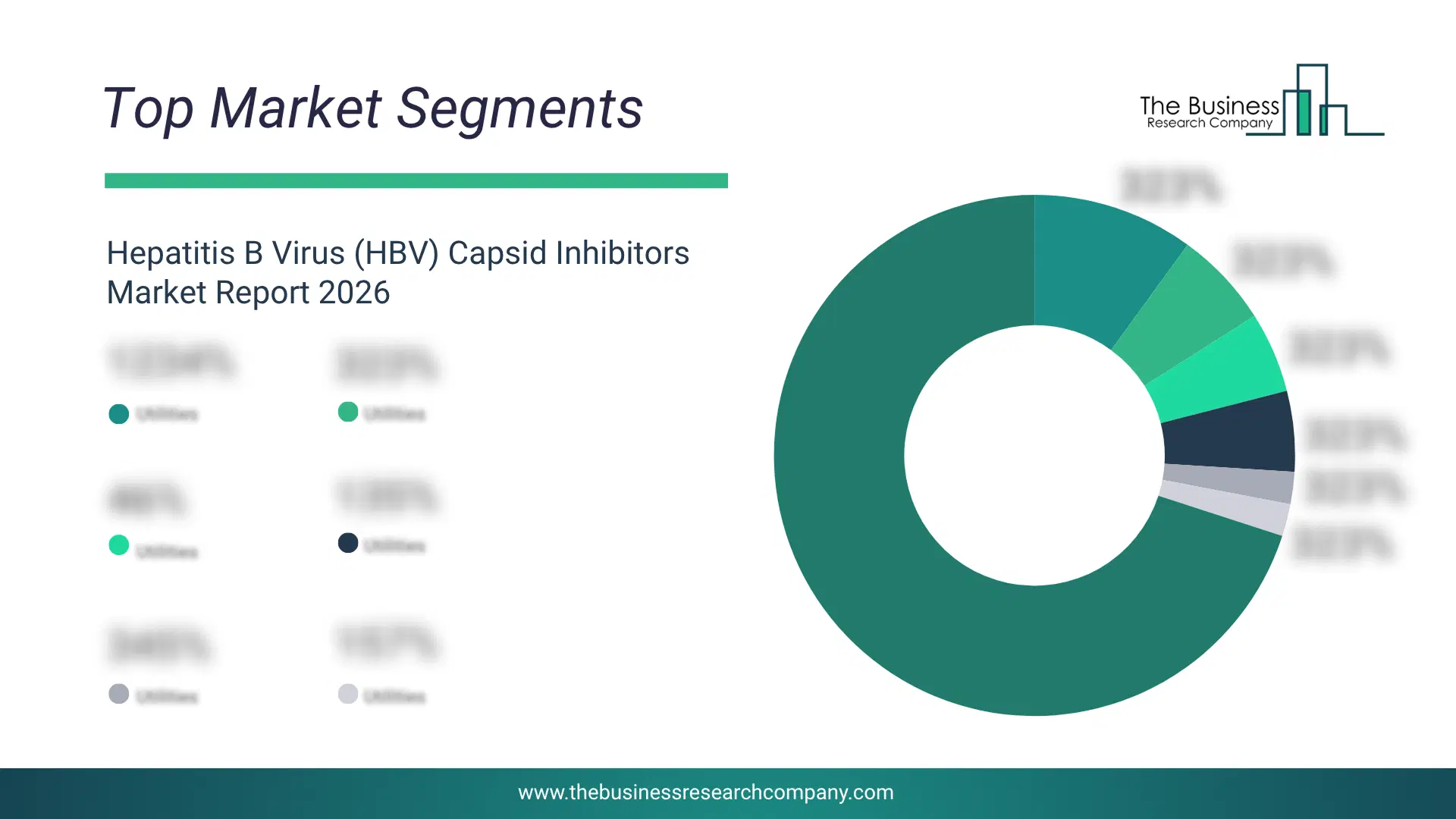
1) By Drug Type: Core Protein Allosteric Modulators (CpAMs), Capsid Assembly Modulators, Other Drug Types 2) By Application: Chronic Hepatitis B, Acute Hepatitis B, Other Applications 3) By Distribution Channel: Hospital Pharmacies, Retail Pharmacies, Online Pharmacies, Other Distribution Channels 4) By End-User: Hospitals, Clinics, Research Institutes, Other End-Users Subsegments: 1) By Core Protein Allosteric Modulators (CpAMs): Class I Core Protein Allosteric Modulators (CpAMs), Class II Core Protein Allosteric Modulators (CpAMs) 2) By Capsid Assembly Modulators: Direct Capsid Assembly Modulators, Indirect Capsid Assembly Modulators 3) By Other Drug Types: Novel Capsid Inhibitors, Combination Therapies, Experimental Mechanism-Based InhibitorsWhat Is The Driver Of The Hepatitis B Virus (HBV) Capsid Inhibitors Market?
The increasing prevalence of hepatitis B virus infections is expected to propel the growth of the hepatitis B virus (HBV) capsid inhibitors market going forward. Hepatitis B Virus (HBV) infections refer to liver infections caused by the hepatitis B virus that can lead to both acute and chronic diseases, spreading through contact with infected blood or bodily fluids and resulting in serious complications such as liver cirrhosis or liver cancer. The increasing prevalence of Hepatitis B Virus (HBV) infections is mainly due to low vaccination coverage, which leaves large portions of the population unprotected and allows the virus to spread more easily through contact with infected blood or bodily fluids. Hepatitis B virus (HBV) capsid inhibitors help hepatitis B virus (HBV) infections by disrupting the formation and assembly of the viral capsid, thereby preventing viral replication and reducing the spread of infection within the body. For instance, in April 2024, according to a report published by the World Health Organization (WHO), a Switzerland-based intergovernmental organization, as of the end of 2022, only 13% of individuals with chronic hepatitis B had been diagnosed, and approximately 3% (7 million) had received antiviral treatment. For hepatitis C, 36% of affected individuals had been diagnosed, with 20% (12.5 million) receiving curative therapy, figures that remain far below the global target of treating 80% of people living with chronic hepatitis B and C by 2030. Therefore, the increasing prevalence of hepatitis B virus infections is driving the growth of the hepatitis B virus (HBV) capsid inhibitors industry.Key Players In The Global Hepatitis B Virus (HBV) Capsid Inhibitors Market
Major companies operating in the hepatitis b virus (hbv) capsid inhibitors market are Johnson & Johnson, Roche Holding AG, GlaxoSmithKline plc, Gilead Sciences Inc., Jiangsu Hengrui Pharmaceuticals Co. Ltd., Novotech Health Holdings Pte. Ltd, Enanta Pharmaceuticals Inc., Assembly Biosciences Inc., Arbutus Biopharma Corporation, Aligos Therapeutics Inc., Qilu Pharmaceutical Co Ltd., Chia Tai Tianqing Pharmaceutical Group Co Ltd., Hepion Pharmaceuticals Inc., Shanghai Zhimeng Biopharma Inc., Antios Therapeutics, Bluejay Therapeutics Inc., Core Biopharma Inc., Door Pharmaceuticals, Shanghai Longwood Biopharmaceuticals Co. Ltd., Zhimeng Biopharma Inc.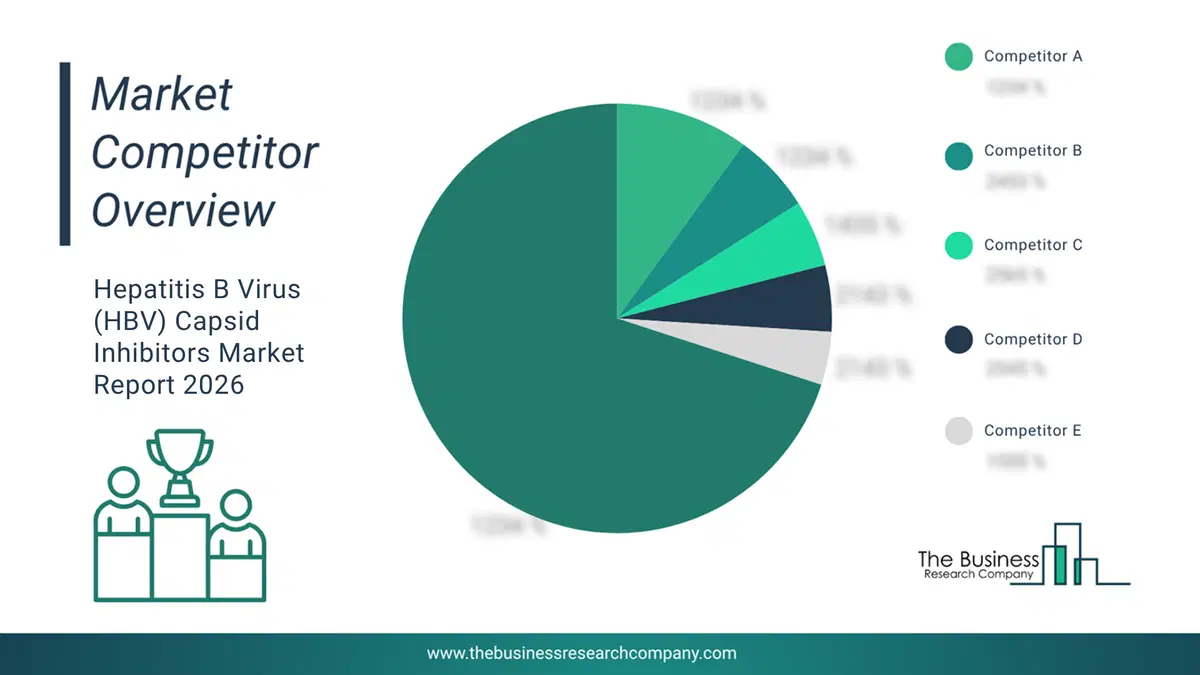
This chart is for illustrative purposes; the full report includes a detailed competitor analysis and comprehensive overview of the top 10 companies in the market.
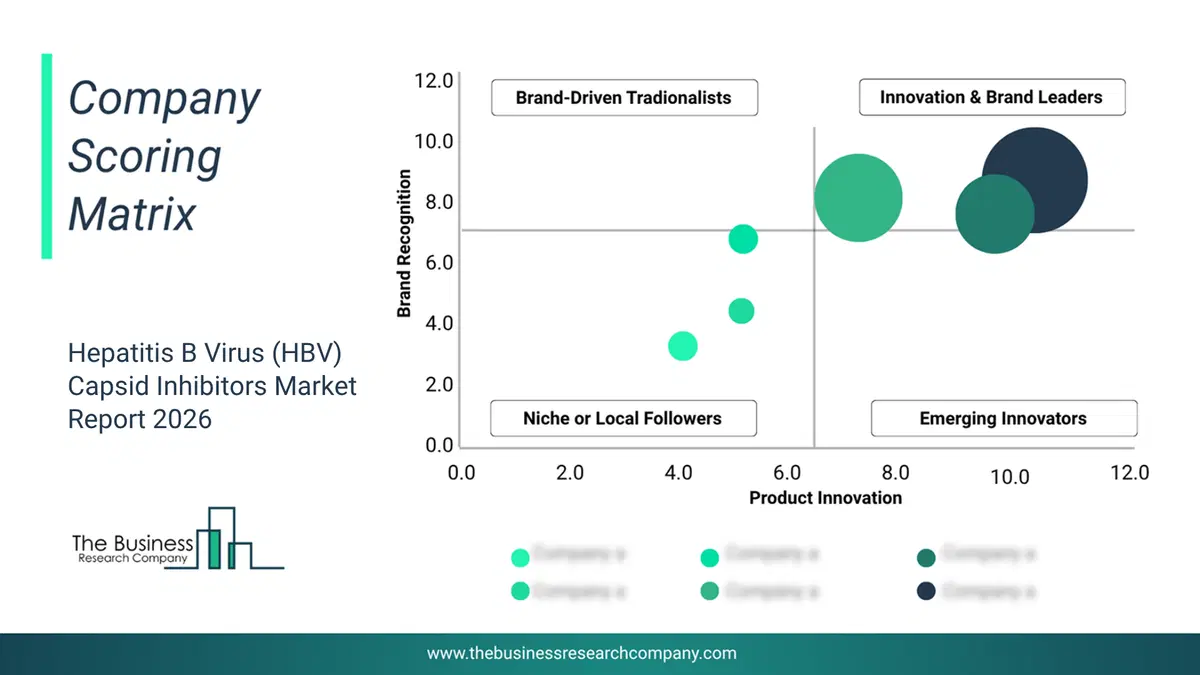
This chart maps companies by product innovation and brand strength, with bubble size indicating relative revenue, helping identify market leaders, challengers, and niche players. This is an illustrative chart; the full report provides a complete and accurate competitive analysis.
Global Hepatitis B Virus (HBV) Capsid Inhibitors Market Trends and Insights
Major companies operating in the hepatitis B virus (HBV) capsid inhibitors market are focusing on developing advancements such as oral small molecule capsid assembly modulators to enhance antiviral efficacy, improve patient compliance, and achieve sustained viral suppression. Oral small-molecule capsid assembly modulators refer to orally administered antiviral agents that interfere with the assembly of the hepatitis B virus (HBV) capsid, blocking its replication and reducing viral activity in the body. For instance, in July 2024, Aligos Therapeutics, Inc., a US-based clinical-stage biopharmaceutical company, collaborated with Xiamen Amoytop Biotech Co., Ltd., a China-based biopharmaceutical company, to launch a clinical trial to evaluate innovative treatment candidates for chronic hepatitis B (CHB), aiming to leverage its advanced capsid assembly modulator technology to enhance antiviral efficacy and accelerate the development of next-generation HBV therapies. The launch marks a significant step in advancing Aligos’s mission to develop effective and potentially curative treatments for patients suffering from chronic hepatitis B.What Are Latest Mergers And Acquisitions In The Hepatitis B Virus (HBV) Capsid Inhibitors Market?
In October 2023, Gilead Sciences Inc., a US-based biopharmaceutical company, partnered with Assembly Biosciences Inc. to leverage its antiviral expertise alongside Assembly Biosciences Inc.’s innovative capsid inhibitor technology to accelerate the development of next-generation small-molecule antivirals that enhance viral suppression, improve treatment outcomes, and potentially achieve a functional cure for patients living with chronic hepatitis B infection. Assembly Biosciences Inc. is a US-based biotechnology company specializing in the discovery and development of antiviral therapeutics, including novel agents targeting the hepatitis B virus (HBV) and other viral infections.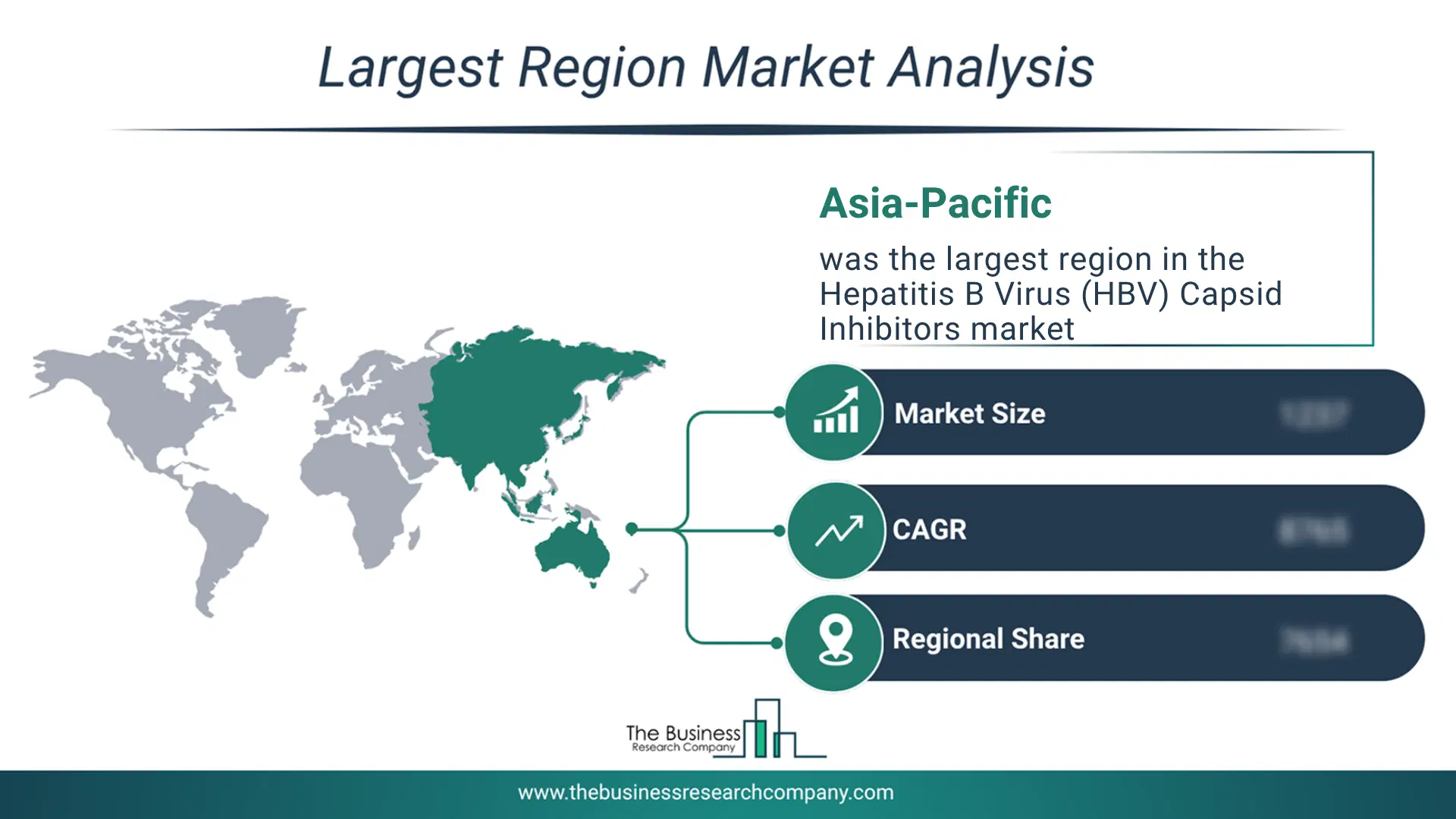
Regional Insights
Asia-Pacific was the largest region in the hepatitis B virus (HBV) capsid inhibitors market in 2025. The regions covered in this market report are Asia-Pacific, South East Asia, Western Europe, Eastern Europe, North America, South America, Middle East, Africa. The countries covered in this market report are Australia, Brazil, China, France, Germany, India, Indonesia, Japan, Taiwan, Russia, South Korea, UK, USA, Canada, Italy, Spain.What Defines the Hepatitis B Virus (HBV) Capsid Inhibitors Market?
The hepatitis B virus (HBV) capsid inhibitors market consists of sales of vebicorvir, bepirovirsen, cavrotolimod, hepcludex, and morphothiadin. Values in this market are ‘factory gate’ values; that is, the value of goods sold by the manufacturers or creators of the goods, whether to other entities (including downstream manufacturers, wholesalers, distributors, and retailers) or directly to end customers. The value of goods in this market includes related services sold by the creators of the goods.How is Market Value Defined and Measured?
The market value is defined as the revenues that enterprises gain from the sale of goods and/or services within the specified market and geography through sales, grants, or donations in terms of the currency (in USD unless otherwise specified). The revenues for a specified geography are consumption values that are revenues generated by organizations in the specified geography within the market, irrespective of where they are produced. It does not include revenues from resales along the supply chain, either further along the supply chain or as part of other products.
This chart presents market attractiveness based on a quantitative evaluation of growth, competition, strategic alignment, and risk, offering a clear view of opportunity areas for decision-making. This chart is for illustrative purposes; the full report contains the complete analysis.

This chart highlights the Total Addressable Market (TAM) by estimating the maximum revenue opportunity using an assumption-driven approach, supporting strategic planning and opportunity sizing across markets. The chart is illustrative; the full report provides a more comprehensive analysis.
What Key Data and Analysis Are Included in the Hepatitis B Virus (HBV) Capsid Inhibitors Market Report 2026?
The hepatitis b virus (hbv) capsid inhibitors market research report is one of a series of new reports from The Business Research Company that provides market statistics, including industry global market size, regional shares, competitors with the market share, detailed market segments, market trends and opportunities, and any further data you may need to thrive in the hepatitis b virus (hbv) capsid inhibitors industry. The market research report delivers a complete perspective of everything you need, with an in-depth analysis of the current and future state of the industry.Hepatitis B Virus (HBV) Capsid Inhibitors Market Report Forecast Analysis
| Report Attribute | Details |
|---|---|
| Market Size Value In 2026 | $0.59 billion |
| Revenue Forecast In 2030 | $0.98 billion |
| Growth Rate | CAGR of 13.7% from 2026 to 2030 |
| Base Year For Estimation | 2025 |
| Actual Estimates/Historical Data | 2020-2025 |
| Forecast Period | 2026 - 2030 |
| Market Representation | Revenue in USD Billion and CAGR from 2026 to 2030 |
| Segments Covered | Drug Type, Application, Distribution Channel, End-User |
| Regional Scope | Asia-Pacific, Western Europe, Eastern Europe, North America, South America, Middle East, Africa |
| Country Scope | The countries covered in the report are Australia, Brazil, China, France, Germany, India, Indonesia, Japan, Taiwan, Russia, South Korea, UK, USA, Canada, Italy, Spain. |
| Key Companies Profiled | Johnson & Johnson, Roche Holding AG, GlaxoSmithKline plc, Gilead Sciences Inc., Jiangsu Hengrui Pharmaceuticals Co. Ltd., Novotech Health Holdings Pte. Ltd, Enanta Pharmaceuticals Inc., Assembly Biosciences Inc., Arbutus Biopharma Corporation, Aligos Therapeutics Inc., Qilu Pharmaceutical Co Ltd., Chia Tai Tianqing Pharmaceutical Group Co Ltd., Hepion Pharmaceuticals Inc., Shanghai Zhimeng Biopharma Inc., Antios Therapeutics, Bluejay Therapeutics Inc., Core Biopharma Inc., Door Pharmaceuticals, Shanghai Longwood Biopharmaceuticals Co. Ltd., Zhimeng Biopharma Inc. |
| Customization Scope | Request for Customization |
| Pricing And Purchase Options | Explore Purchase Options |