

Insect Cell Culture Market Report 2026
Global Outlook – By Product Type (Media, Reagents, Sera, Equipment), By Cell Type (S19 (Spodoptera Frugiperda), High Five (Trichoplusia Ni), Sf21 (Spodoptera Frugiperda), Drosophila Schneider 2 (s2)), By Application (Biopharmaceutical Manufacturing, Gene Therapy, Tissue Culture And Engineering, Cytogenetics), By End-User (Pharmaceutical And Biotechnology Companies, Academic And Research Institutes, Contract Research Organizations) - Market Size, Trends, Strategies, and Forecast to 2030
Insect Cell Culture Market Overview
• Insect Cell Culture market size has reached to $1.97 billion in 2025 • Expected to grow to $3.24 billion in 2030 at a compound annual growth rate (CAGR) of 10.4% • Growth Driver: Rising Prevalence Of Infectious Diseases Driving The Growth Of The Market Due To Increasing Demand For Vaccine And Biologic Production Platforms • Market Trend: Advancements In Single-Cell Cloning and Traceability Enhance Biologics And Gene Therapy Efficiency • Asia-Pacific was the largest region and fastest growing region.What Is Covered Under Insect Cell Culture Market?
Insect cell culture is a laboratory technique in which cells derived from insects are grown and maintained under controlled conditions outside their natural environment. These cultures provide a versatile platform for producing recombinant proteins, vaccines, and viral vectors due to their ability to perform complex post-translational modifications. They are widely used in research and biopharmaceutical manufacturing because they can efficiently support viral replication and protein expression. The main product types of insect cell culture are media, reagents, sera, and equipment. Media refers to nutrient-rich solutions designed to support the growth, maintenance, and productivity of insect cells under laboratory and industrial conditions. The key cell types used include S19 (Spodoptera frugiperda), High Five (Trichoplusia ni), Sf21 (Spodoptera frugiperda), and Drosophila Schneider 2 (S2). Major applications include biopharmaceutical manufacturing, gene therapy, tissue culture and engineering, and cytogenetic studies, with primary end users being pharmaceutical and biotechnology companies, academic and research institutes, and contract research organizations.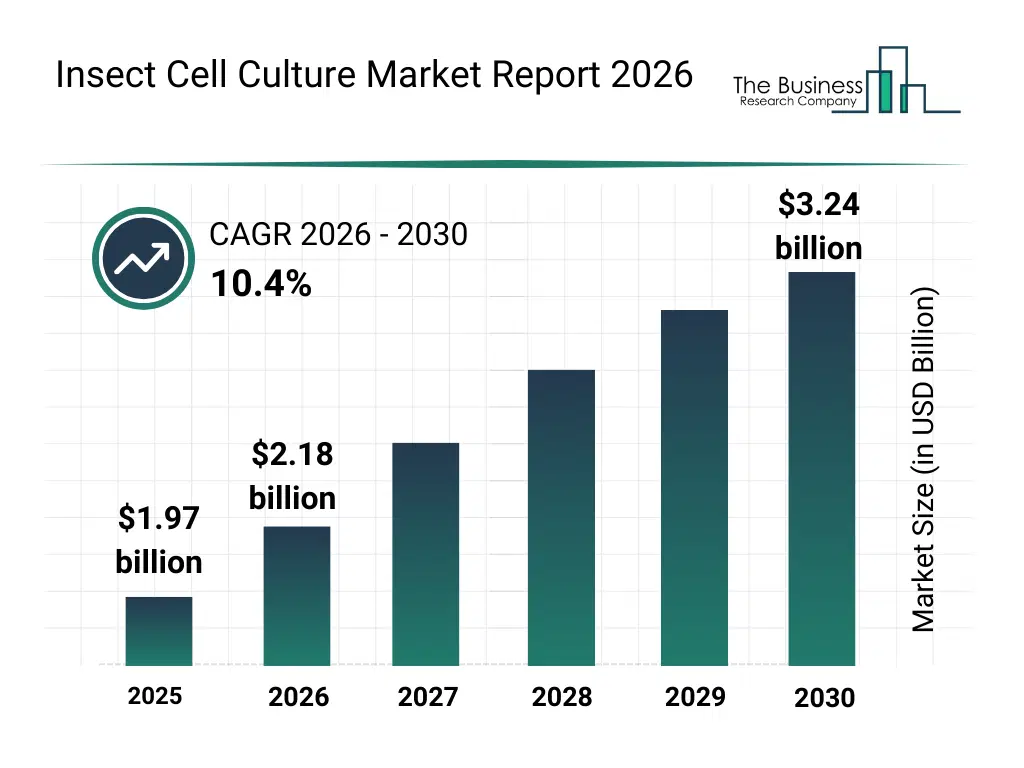
What Is The Insect Cell Culture Market Size and Share 2026?
The insect cell culture market size has grown rapidly in recent years. It will grow from $1.97 billion in 2025 to $2.18 billion in 2026 at a compound annual growth rate (CAGR) of 10.7%. The growth in the historic period can be attributed to growth in recombinant protein research, increasing use of baculovirus expression systems, expansion of academic life science research, rising adoption of insect cells in virology studies, availability of advanced culture reagents.What Is The Insect Cell Culture Market Growth Forecast?
The insect cell culture market size is expected to see rapid growth in the next few years. It will grow to $3.24 billion in 2030 at a compound annual growth rate (CAGR) of 10.4%. The growth in the forecast period can be attributed to increasing demand for viral vector production, expansion of gene therapy pipelines, rising investments in biopharmaceutical manufacturing, growing focus on scalable cell culture systems, increasing adoption of automated culture platforms. Major trends in the forecast period include increasing adoption of serum-free insect cell culture media, rising use of insect cells in vaccine production, growing demand for high-yield recombinant protein expression, expansion of scalable bioreactor-based insect cell systems, enhanced focus on process optimization and consistency.
Global Insect Cell Culture Market Segmentation
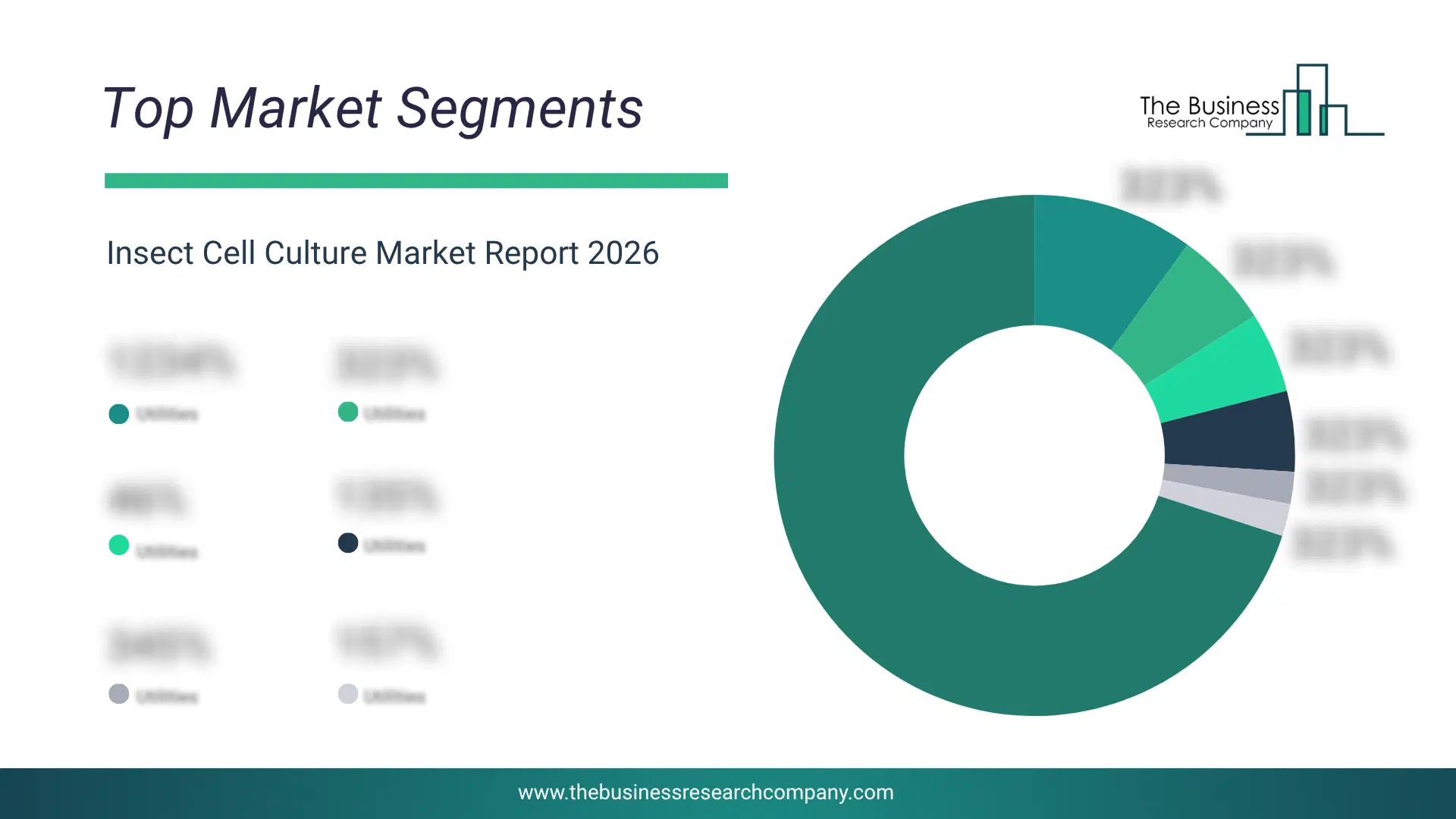
1) By Product Type: Media, Reagents, Sera, Equipment 2) By Cell Type: S19 (Spodoptera Frugiperda), High Five (Trichoplusia Ni), Sf21 (Spodoptera Frugiperda), Drosophila Schneider 2 (s2) 3) By Application: Biopharmaceutical Manufacturing, Gene Therapy, Tissue Culture And Engineering, Cytogenetics 4) By End-User: Pharmaceutical And Biotechnology Companies, Academic And Research Institutes, Contract Research Organizations Subsegments: 1) By Media: Growth Media, Serum-Free Media, Protein-Free Media, Chemically Defined Media, Specialty Media, Custom Media Formulations 2) By Reagents: Attachment Factors, Dissociation Reagents, Buffers And Salts, Cryoprotectants, Antibiotics And Antimycotics, Transfection Reagents, Supplements 3) By Sera: Fetal Bovine Serum (FBS), Insect-Derived Serum, Hybridoma Serum, Serum Substitutes, Heat-Inactivated Serum 4) By Equipment: Bioreactors, Cell Culture Flasks And Plates, Shakers And Incubators, Centrifuges, Microscopes And Imaging Systems, Filtration Systems, Automated Cell Counters, Cryogenic Storage SystemsWhat Is The Driver Of The Insect Cell Culture Market?
The rising prevalence of infectious diseases is expected to propel the growth of the insect cell culture market going forward. Infectious diseases are disorders caused by microorganisms such as bacteria, viruses, fungi, or parasites that can spread directly or indirectly from one person to another, from animals to humans, or through contaminated food, water, or environmental sources. The rise in infectious diseases is driven by increased global travel, as it facilitates faster transmission of pathogens across regions and populations. Insect cell culture helps combat infectious diseases by enabling the efficient production of vaccines, viral vectors, and recombinant proteins, providing a safe and scalable platform for developing preventive and therapeutic solutions. For instance, in March 2025, according to the UK Health Security Agency (UKHSA), a UK-based government organization responsible for protecting public health and preparing for infectious disease threats, in 2024, reported tuberculosis (TB) cases in England increased by 13% to 5,480, up from 4,850 cases in 2023, indicating a notable year-over-year rise in incidence. Therefore, the rising prevalence of infectious diseases is driving the growth of the insect cell culture industry.Key Players In The Global Insect Cell Culture Market
Major companies operating in the insect cell culture market are Thermo Fisher Scientific Inc., Danaher Corporation, Merck KGaA, GE Healthcare, Becton, Dickinson and Company, Corning Incorporated, Lonza Group Ltd., Charles River Laboratories, Sartorius AG, Wuxi Biologics, QIAGEN N.V., Eppendorf AG, Novavax Inc., Takara Bio Inc., GenScript Biotech Corporation, Promega Corporation, HiMedia Laboratories Pvt. Ltd., Cell Culture Company, Trenzyme, Proteogenix.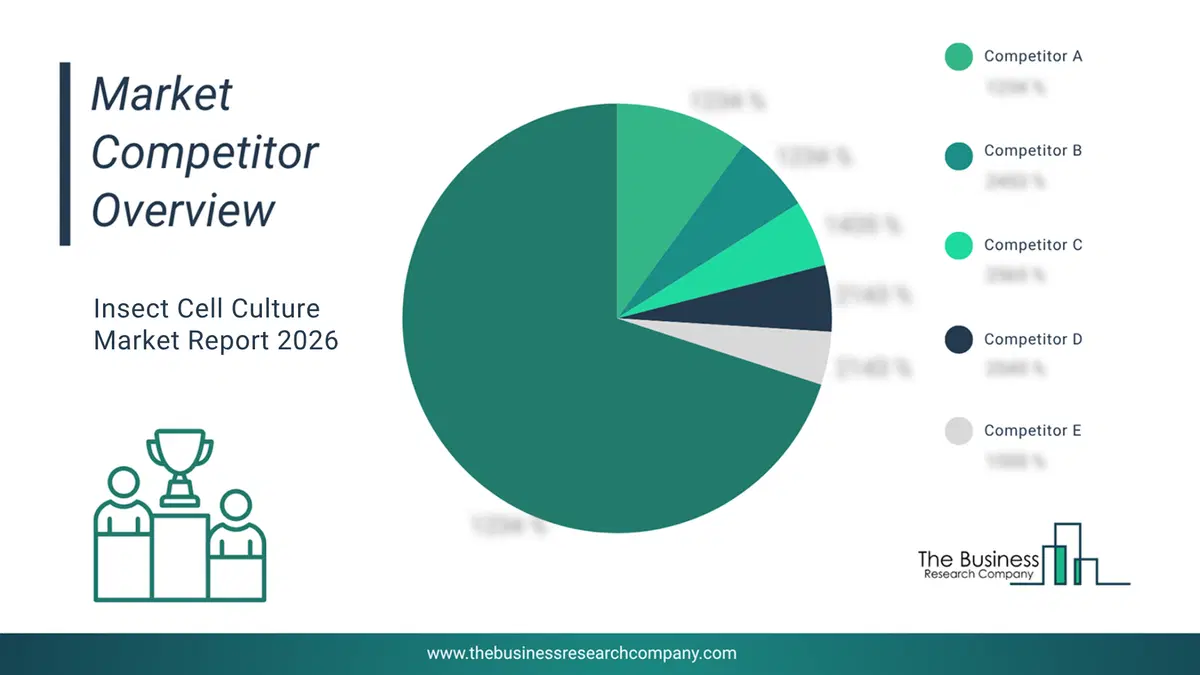
This chart is for illustrative purposes; the full report includes a detailed competitor analysis and comprehensive overview of the top 10 companies in the market.
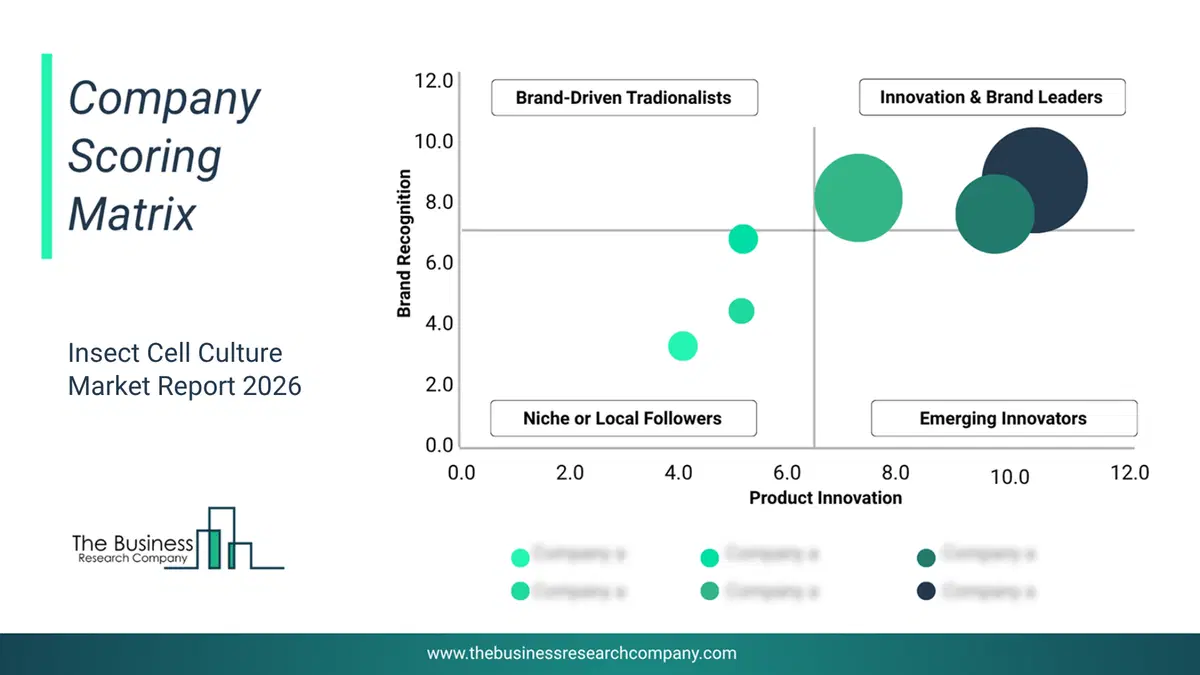
This chart maps companies by product innovation and brand strength, with bubble size indicating relative revenue, helping identify market leaders, challengers, and niche players. This is an illustrative chart; the full report provides a complete and accurate competitive analysis.
Global Insect Cell Culture Market Trends and Insights
Major companies operating in the insect cell culture market are focusing on innovation in insect cell culture technology, such as single-cell cloning and traceability, to enhance product consistency, improve bioprocessing efficiency, and ensure regulatory compliance for advanced biologics and gene therapy applications. Single-cell cloning and traceability is a cell culture process in which individual cells are isolated to create genetically uniform cell lines while maintaining complete documentation of their origin, handling, and history to ensure reproducibility, quality control, and regulatory compliance. For instance, in June 2023, Expression Systems, a US-based company specializing in cell culture media, launched the sf9 rv-free insect cell line with early-access availability for research use. This rhabdovirus-free cell line, grown in suspension, is optimized for ESF advanced chemically defined insect cell culture medium, achieving rapid growth, over 95% viability, and high cell densities within five days. It is suitable for producing recombinant proteins, adeno-associated viruses (AAV), and virus-like particles (VLPs), supporting gene therapy and viral vaccine applications. The cells are cloned via single-cell printing and come with full protocols, traceability, and regulatory documentation.What Are Latest Mergers And Acquisitions In The Insect Cell Culture Market?
In April 2024, Sino Biological Inc., a China-based biotechnology company, acquired SignalChem Biotech Inc. for $48 million. With this acquisition, Sino Biological aims to strengthen its global presence, expand its product portfolio in kinase-related research reagents, and enhance its capabilities in drug discovery and development support. SignalChem Biotech Inc. is a Canada-based biotechnology company focused on the production of bioactive enzymes, signaling proteins, and other molecular tools for cancer research, cell signaling studies, and therapeutic development.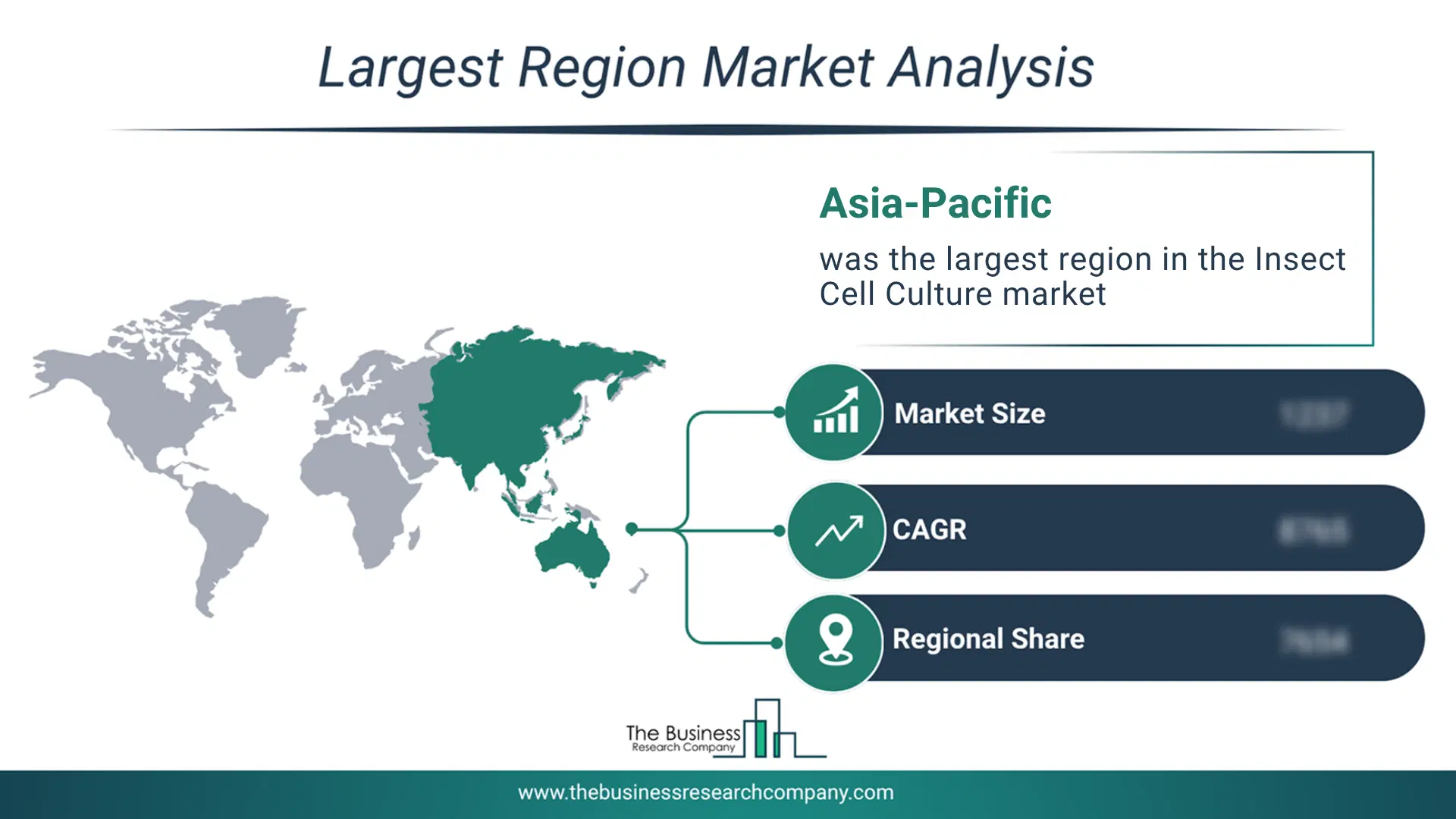
Regional Outlook
Asia-Pacific was the largest region in the insect cell culture market in 2025, and it is expected to be the fastest-growing region in the forecast period. The regions covered in this market report are Asia-Pacific, South East Asia, Western Europe, Eastern Europe, North America, South America, Middle East, Africa. The countries covered in this market report are Australia, Brazil, China, France, Germany, India, Indonesia, Japan, Taiwan, Russia, South Korea, UK, USA, Canada, Italy, Spain.What Defines the Insect Cell Culture Market?
The insect cell culture market consists of sales of media, reagents, sera, equipment, bioreactors, flasks, incubators, centrifuges, pipettes, filters, culture plates, shakers, and microscopes. Values in this market are ‘factory gate’ values, that is, the value of goods sold by the manufacturers or creators of the goods, whether to other entities (including downstream manufacturers, wholesalers, distributors, and retailers) or directly to end customers. The value of goods in this market includes related services sold by the creators of the goods.How is Market Value Defined and Measured?
The market value is defined as the revenues that enterprises gain from the sale of goods and/or services within the specified market and geography through sales, grants, or donations in terms of the currency (in USD unless otherwise specified). The revenues for a specified geography are consumption values that are revenues generated by organizations in the specified geography within the market, irrespective of where they are produced. It does not include revenues from resales along the supply chain, either further along the supply chain or as part of other products.
This chart presents market attractiveness based on a quantitative evaluation of growth, competition, strategic alignment, and risk, offering a clear view of opportunity areas for decision-making. This chart is for illustrative purposes; the full report contains the complete analysis.

This chart highlights the Total Addressable Market (TAM) by estimating the maximum revenue opportunity using an assumption-driven approach, supporting strategic planning and opportunity sizing across markets. The chart is illustrative; the full report provides a more comprehensive analysis.
What Key Data and Analysis Are Included in the Insect Cell Culture Market Report 2026?
The insect cell culture market research report is one of a series of new reports from The Business Research Company that provides market statistics, including industry global market size, regional shares, competitors with the market share, detailed market segments, market trends and opportunities, and any further data you may need to thrive in the insect cell culture industry. The market research report delivers a complete perspective of everything you need, with an in-depth analysis of the current and future state of the industry.Insect Cell Culture Market Report Forecast Analysis
| Report Attribute | Details |
|---|---|
| Market Size Value In 2026 | $2.18 billion |
| Revenue Forecast In 2030 | $3.24 billion |
| Growth Rate | CAGR of 10.4% from 2026 to 2030 |
| Base Year For Estimation | 2025 |
| Actual Estimates/Historical Data | 2020-2025 |
| Forecast Period | 2026 - 2030 |
| Market Representation | Revenue in USD Billion and CAGR from 2026 to 2030 |
| Segments Covered | Product Type, Cell Type, Application, End-User |
| Regional Scope | Asia-Pacific, Western Europe, Eastern Europe, North America, South America, Middle East, Africa |
| Country Scope | The countries covered in the report are Australia, Brazil, China, France, Germany, India, Indonesia, Japan, Taiwan, Russia, South Korea, UK, USA, Canada, Italy, Spain |
| Key Companies Profiled | Thermo Fisher Scientific Inc., Danaher Corporation, Merck KGaA, GE Healthcare, Becton, Dickinson and Company, Corning Incorporated, Lonza Group Ltd., Charles River Laboratories, Sartorius AG, Wuxi Biologics, QIAGEN N.V., Eppendorf AG, Novavax Inc., Takara Bio Inc., GenScript Biotech Corporation, Promega Corporation, HiMedia Laboratories Pvt. Ltd., Cell Culture Company, Trenzyme, Proteogenix. |
| Customization Scope | Request for Customization |
| Pricing And Purchase Options | Explore Purchase Options |