
Microbiome Skincare Product Market Report 2026
Global Outlook – By Product Type (Cleansers, Moisturizers, Serums, Masks, Other Product Types), By Skin Type (Dry Skin, Oily Skin, Combination Skin, Sensitive Skin, Normal Skin), By Formulation (Cream, Gel, Liquid, Foam), By Distribution Channel (Online Stores, Supermarkets Or Hypermarkets, Specialty Stores, Other Distribution Channels), By End User (Men, Women, Unisex, Infants And Children ) - Market Size, Trends, Strategies, and Forecast to 2030
Microbiome Skincare Product Market Overview
• Microbiome Skincare Product market size has reached to $1.35 billion in 2025 • Expected to grow to $3.15 billion in 2030 at a compound annual growth rate (CAGR) of 18.5% • Growth Driver: Surge In Skin Health Awareness Fueling The Growth Of The Market Due To Increasing Focus On Preventive And Restorative Skincare Practices • Market Trend: Personalized Microbiome Skincare Solutions To Optimize Skin Health And User Experience • North America was the largest region in 2025 and Asia-Pacific is the fastest growing region.What Is Covered Under Microbiome Skincare Product Market?
Microbiome skincare products are specially formulated to protect and balance the skin’s natural microorganisms. They use active ingredients that support healthy bacteria and strengthen the skin barrier, helping to keep the skin healthy, resilient, and well-balanced. The main types of microbiome skincare product are cleansers, moisturizers, serums, masks, and other product types. Cleansers are formulated to maintain skin microbiota while providing gentle cleansing. These are used for various skin types such as dry skin, oily skin, combination skin, sensitive skin, and normal skin with various formulation such as cream, gel, liquid, and foam forms. These are distributed through various distribution channels such as online stores, supermarkets or hypermarkets, specialty stores, and others. These are used by various end users such as men, women, unisex consumers, and infants and children.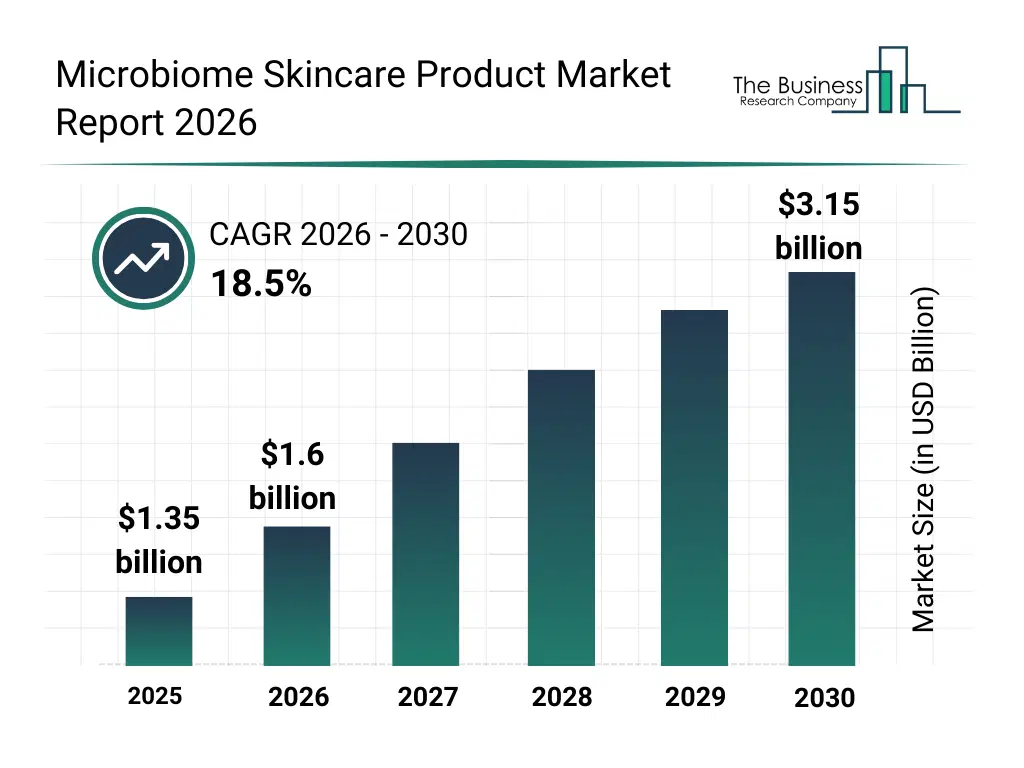
What Is The Microbiome Skincare Product Market Size and Share 2026?
The microbiome skincare product market size has grown rapidly in recent years. It will grow from $1.35 billion in 2025 to $1.6 billion in 2026 at a compound annual growth rate (CAGR) of 18.7%. The growth in the historic period can be attributed to rising consumer awareness of skin health, growing demand for sensitive skin solutions, expansion of premium skincare categories, increased availability of dermatology-backed products, wider acceptance of microbiome science in cosmetics.What Is The Microbiome Skincare Product Market Growth Forecast?
The microbiome skincare product market size is expected to see rapid growth in the next few years. It will grow to $3.15 billion in 2030 at a compound annual growth rate (CAGR) of 18.5%. The growth in the forecast period can be attributed to growing demand for personalized skincare regimens, rising investments in biotech-based cosmetics, increasing preference for clean-label formulations, expansion of online skincare distribution channels, higher focus on long-term skin health solutions. Major trends in the forecast period include increasing adoption of microbiome-friendly formulations, rising demand for barrier-repair skincare products, growing use of prebiotic and probiotic ingredients, expansion of personalized skincare solutions, enhanced focus on skin microflora balance.
Global Microbiome Skincare Product Market Segmentation
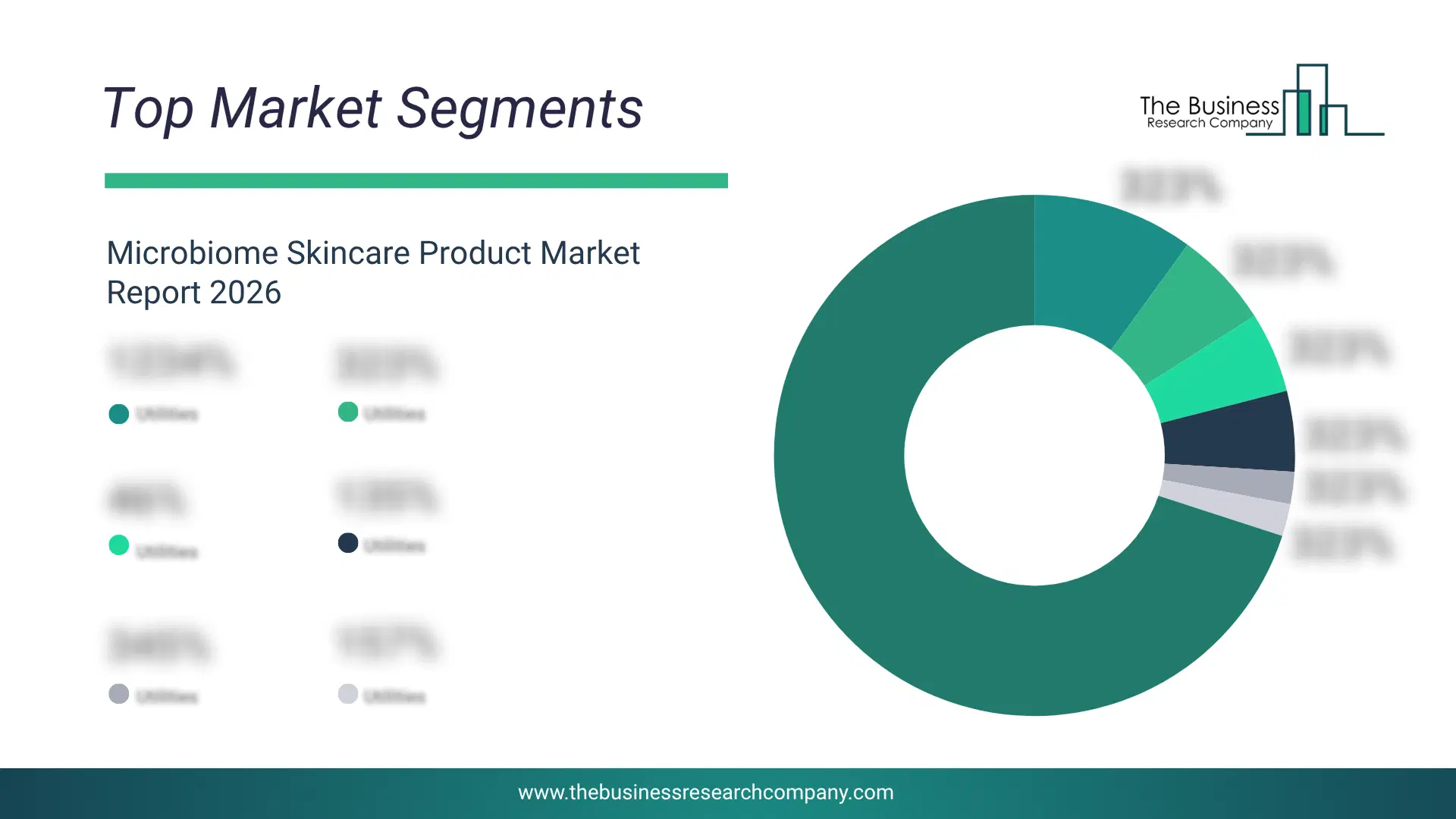
1) By Product Type: Cleansers, Moisturizers, Serums, Masks, Other Product Types 2) By Skin Type: Dry Skin, Oily Skin, Combination Skin, Sensitive Skin, Normal Skin 3) By Formulation: Cream, Gel, Liquid, Foam 4) By Distribution Channel: Online Stores, Supermarkets Or Hypermarkets, Specialty Stores, Other Distribution Channels 5) By End User: Men, Women, Unisex, Infants And Children Subsegments: 1) By Cleansers: Foam Cleanser, Gel Cleanser, Cream Cleanser, Micellar Cleanser, Oil-Based Cleanser 2) By Moisturizers: Cream Moisturizer, Gel Moisturizer, Lotion Moisturizer, Emulsion Moisturizer, Balm Moisturizer 3) By Serums: Hydrating Serum, Brightening Serum, Anti-Aging Serum, Repair Serum, Soothing Serum 4) By Masks: Sheet Mask, Clay Mask, Cream Mask, Peel-Off Mask, Overnight Mask 5) By Other Product Types: Toner, Exfoliator, Sunscreen, Facial Mist, Eye CreamWhat Is The Driver Of The Microbiome Skincare Product Market?
Increasing awareness of skin health is expected to propel the growth of the microbiome skincare market going forward. Skin health refers to the overall condition and functionality of the skin, including its barrier integrity, hydration, and microbial balance. Awareness of skin health is increasing as more consumers and healthcare professionals recognize the impact of a balanced skin microbiome on overall skin condition and prioritize preventive and restorative skincare measures. Microbiome skincare products support the balance of the skin’s natural microbiome, protecting against harmful microorganisms, and enhancing the skin’s barrier function to prevent damage and maintain overall skin condition. For instance, in February 2024, according to the International League of Dermatological Societies (ILDS), an England-based umbrella organization for national and regional dermatology societies working to improve skin health for all people globally, in 2023, the World Skin Health Day (WSHD) campaign reached 23 countries with a 21% rise in global participation, engaging over 8 million people, offering dermatological care to 40,000+ patients, and enhancing skin health knowledge among 916 healthcare professionals and advocates. Therefore, increasing awareness of skin health is driving the growth of the microbiome skincare market.Key Players In The Global Microbiome Skincare Product Market
Major companies operating in the microbiome skincare product market are BASF S.E., Unilever PLC., L’Oréal S.A., Johnson & Johnson, The Colgate-Palmolive Company, dsm-firmenich AG., Clinique Laboratories LLC., Shiseido Company Limited, Symrise AG., Amorepacific Corporation, Beiersdorf Aktiengesellschaft, Lallemand Inc., BioGaia AB., Eminence Organic Skin Care, Sabinsa Corporation, AOBiome Therapeutics Inc., Esse Skincare Pty. Ltd., LaFlore Probiotic Skincare LLC., Marie Veronique Inc., BeBe & Bella LLC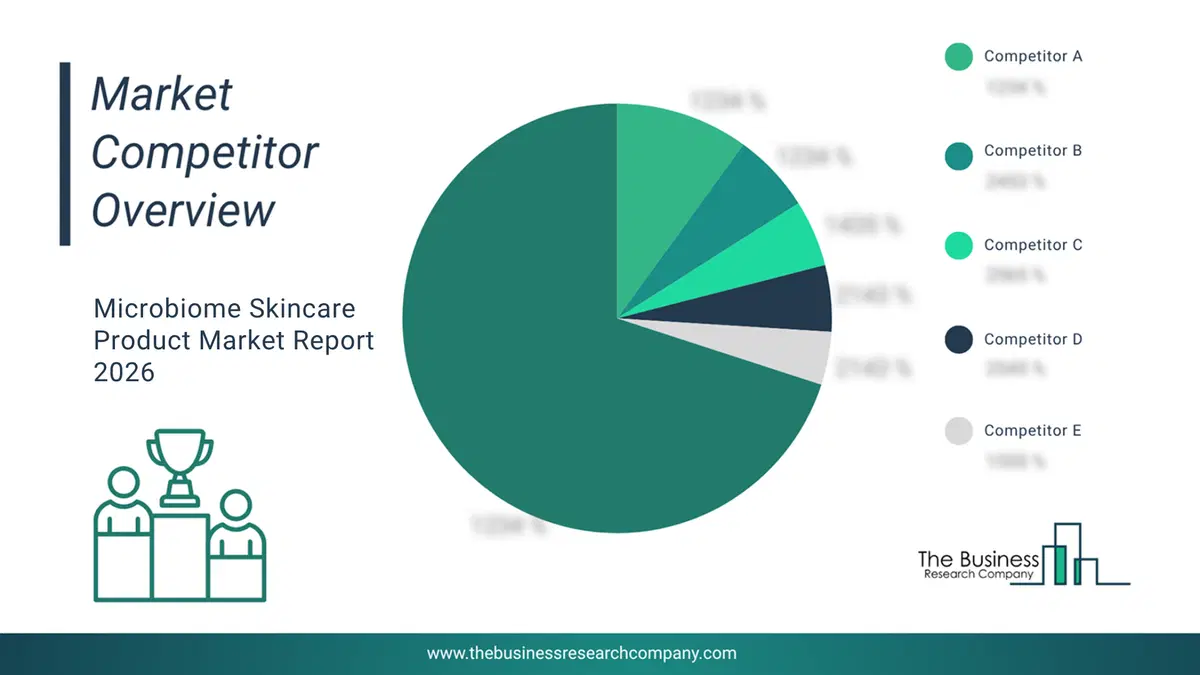
This chart is for illustrative purposes; the full report includes a detailed competitor analysis and comprehensive overview of the top 10 companies in the market.
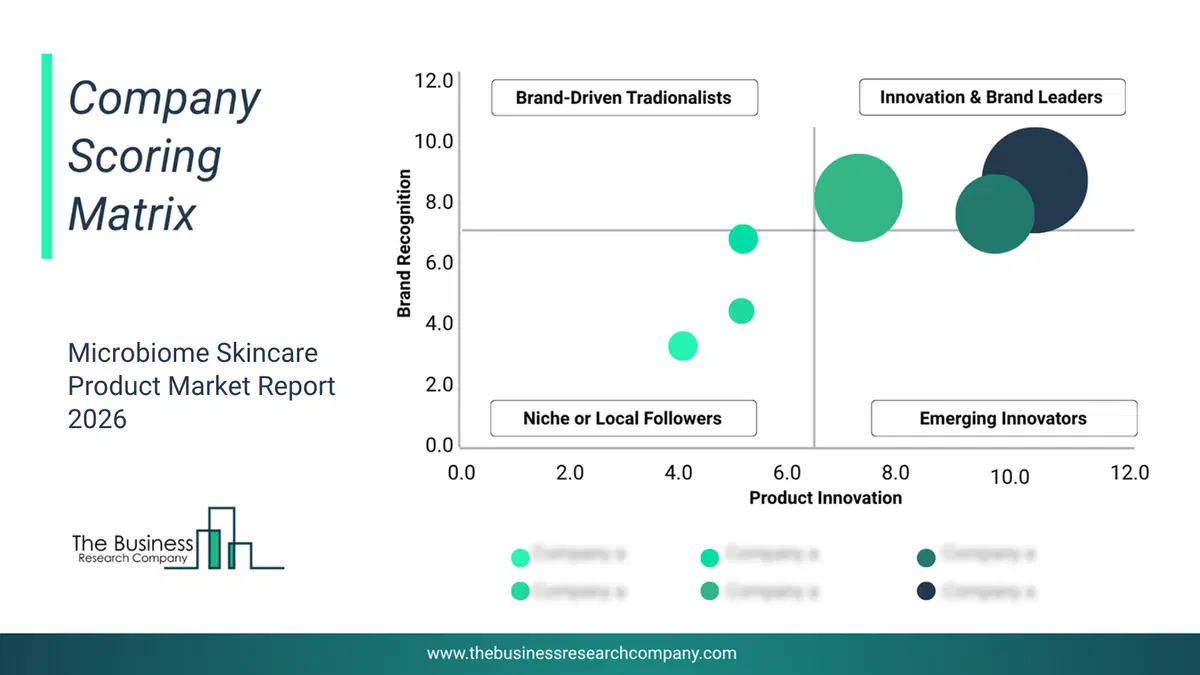
This chart maps companies by product innovation and brand strength, with bubble size indicating relative revenue, helping identify market leaders, challengers, and niche players. This is an illustrative chart; the full report provides a complete and accurate competitive analysis.
Global Microbiome Skincare Product Market Trends and Insights
Major companies operating in the microbiome skincare market are focusing on developing technological advancements such as Microbiome Analyzer to better understand individual skin microbiota, enable personalized skincare solutions, and enhance product efficacy through data-driven insights. A microbiome analyzer refers to a device that assesses an individual’s skin microbiome and provides personalized skincare recommendations based on the analysis. For instance, in July 2024, Unilever, a UK-based consumer goods company, launched the Microbiome Analyzer in partnership with Watsons, a Hong-Kong-based health and skin store in the Philippines. The device utilizes a skin swab to analyze microbiome data and recommends personalized skincare routines. The unique features of the microbiome analyzer include rapid analysis within 60 minutes, personalized product recommendations based on individual microbiome profiles. This innovation aims to empower consumers with a deeper understanding of their skin’s unique microbiome composition and how it influences overall skin health. This combines advanced skin diagnostics with tailored product suggestions.What Are Latest Mergers And Acquisitions In The Microbiome Skincare Product Market?
In December 2023, L’Oréal, a Paris-based company that offers skin care products, acquired Lactobio for an undisclosed amount. Through this acquisition, L’Oréal aims to expand its capabilities in skin microbiome research and leverage Lactobio’s expertise to strengthen its leadership in scientific-backed cosmetic innovations. Lactobio is a Denmark-based provider of proprietary microbiome discovery platforms, precision probiotics, and live-bacteria formulations for skincare and haircare.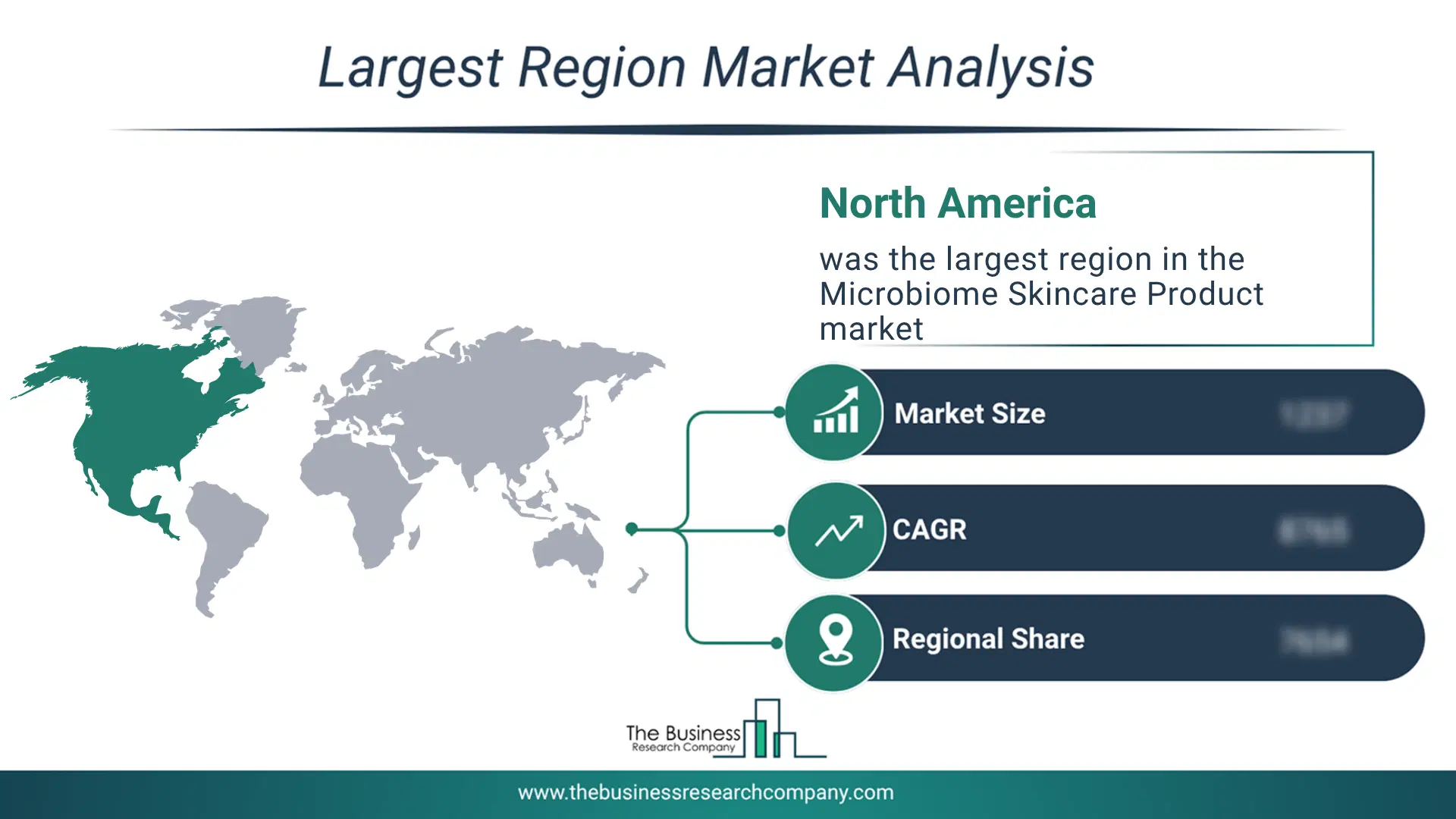
Regional Outlook
North America was the largest region in the microbiome skincare product market in 2025. Asia-Pacific is expected to be the fastest-growing region in the forecast period. The regions covered in this market report are Asia-Pacific, South East Asia, Western Europe, Eastern Europe, North America, South America, Middle East, Africa. The countries covered in this market report are Australia, Brazil, China, France, Germany, India, Indonesia, Japan, Taiwan, Russia, South Korea, UK, USA, Canada, Italy, Spain.What Defines the Microbiome Skincare Product Market?
The microbiome skincare products market consists of sales of balms, ampoules, facial mists, night creams, peeling gels. Values in this market are ‘factory gate’ values, that is the value of goods sold by the manufacturers or creators of the goods, whether to other entities (including downstream manufacturers, wholesalers, distributors and retailers) or directly to end customers. The value of goods in this market includes related services sold by the creators of the goods.How is Market Value Defined and Measured?
The market value is defined as the revenues that enterprises gain from the sale of goods and/or services within the specified market and geography through sales, grants, or donations in terms of the currency (in USD unless otherwise specified). The revenues for a specified geography are consumption values that are revenues generated by organizations in the specified geography within the market, irrespective of where they are produced. It does not include revenues from resales along the supply chain, either further along the supply chain or as part of other products.
This chart presents market attractiveness based on a quantitative evaluation of growth, competition, strategic alignment, and risk, offering a clear view of opportunity areas for decision-making. This chart is for illustrative purposes; the full report contains the complete analysis.

This chart highlights the Total Addressable Market (TAM) by estimating the maximum revenue opportunity using an assumption-driven approach, supporting strategic planning and opportunity sizing across markets. The chart is illustrative; the full report provides a more comprehensive analysis.
What Key Data and Analysis Are Included in the Microbiome Skincare Product Market Report 2026?
The microbiome skincare product market research report is one of a series of new reports from The Business Research Company that provides market statistics, including industry global market size, regional shares, competitors with the market share, detailed market segments, market trends and opportunities, and any further data you may need to thrive in the microbiome skincare product industry. The market research report delivers a complete perspective of everything you need, with an in-depth analysis of the current and future state of the industry.Microbiome Skincare Product Market Report Forecast Analysis
| Report Attribute | Details |
|---|---|
| Market Size Value In 2026 | $1.6 billion |
| Revenue Forecast In 2030 | $3.15 billion |
| Growth Rate | CAGR of 18.5% from 2026 to 2030 |
| Base Year For Estimation | 2025 |
| Actual Estimates/Historical Data | 2020-2025 |
| Forecast Period | 2026 - 2030 |
| Market Representation | Revenue in USD Billion and CAGR from 2026 to 2030 |
| Segments Covered | Product Type, Skin Type, Formulation, Distribution Channel, End User |
| Regional Scope | Asia-Pacific, Western Europe, Eastern Europe, North America, South America, Middle East, Africa |
| Country Scope | The countries covered in the report are Australia, Brazil, China, France, Germany, India, Indonesia, Japan, Taiwan, Russia, South Korea, UK, USA, Canada, Italy, Spain |
| Key Companies Profiled | BASF S.E., Unilever PLC., L’Oréal S.A., Johnson & Johnson, The Colgate-Palmolive Company, dsm-firmenich AG., Clinique Laboratories LLC., Shiseido Company Limited, Symrise AG., Amorepacific Corporation, Beiersdorf Aktiengesellschaft, Lallemand Inc., BioGaia AB., Eminence Organic Skin Care, Sabinsa Corporation, AOBiome Therapeutics Inc., Esse Skincare Pty. Ltd., LaFlore Probiotic Skincare LLC., Marie Veronique Inc., BeBe & Bella LLC |
| Customization Scope | Request for Customization |
| Pricing And Purchase Options | Explore Purchase Options |