
Microproteins Skincare Market Report 2026
Global Outlook – By Product Type (Creams, Serums, Masks, Lotions), By Distribution Channel (Online, Offline), By Application (Anti-aging, Moisturizing, Acne Treatment, Sensitive Skin) - Market Size, Trends, Strategies, and Forecast to 2030
Microproteins Skincare Market Overview
• Microproteins Skincare market size has reached to $3.3 billion in 2025 • Expected to grow to $4.87 billion in 2030 at a compound annual growth rate (CAGR) of 8% • Growth Driver: Rising Incidence Of Skin Conditions Fueling The Growth Of The Market Due To Increasing Demand For Regenerative And Restorative Skincare Solutions • Market Trend: Technological Innovations Driving Advanced Micro-Peptide Skincare Solutions • Asia-Pacific was the largest region in 2025 and North America is the fastest growing region.What Is Covered Under Microproteins Skincare Market?
Microprotein skincare refers to advanced formulations that incorporate small bioactive protein molecules capable of penetrating deeply into the skin to enhance cellular regeneration and repair processes. These microproteins help stimulate collagen and elastin synthesis, thereby improving skin firmness, elasticity, and hydration while reducing wrinkles and other visible signs of aging for a more youthful complexion. The main types of products in microprotein skincare are creams, serums, masks, and lotions. Creams are thick, semi-solid skincare formulations made from a blend of water and oil. These products are distributed online and offline and used for applications including anti-aging, moisturizing, acne treatment, and sensitive skin.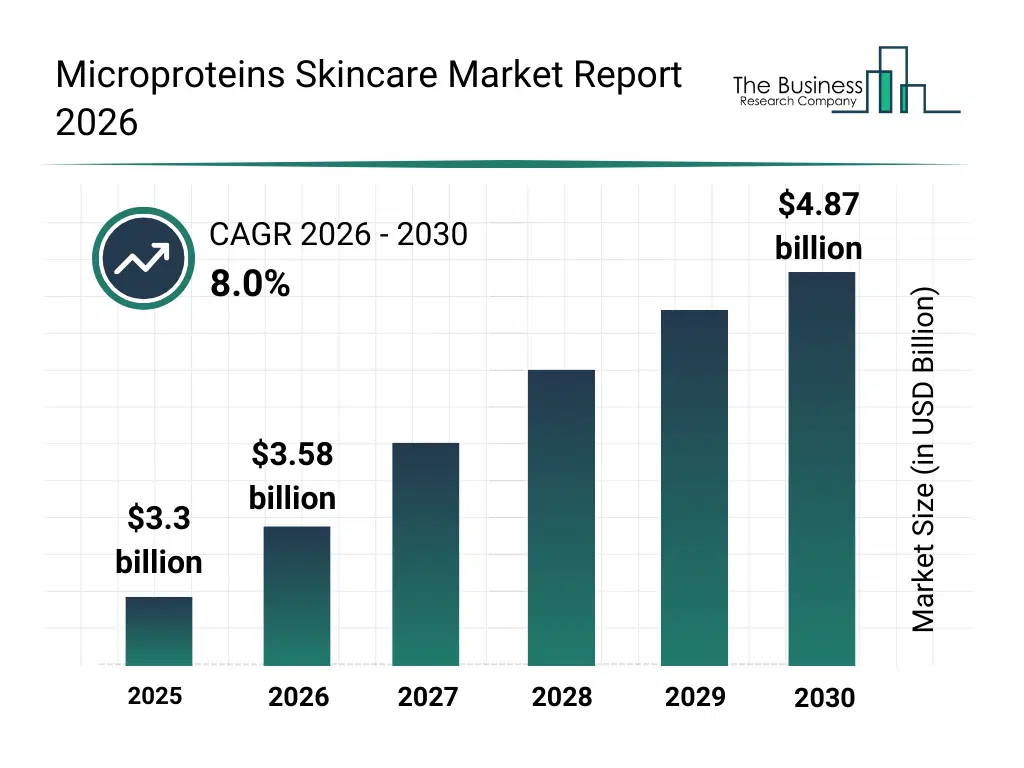
What Is The Microproteins Skincare Market Size and Share 2026?
The microproteins skincare market size has grown strongly in recent years. It will grow from $3.3 billion in 2025 to $3.58 billion in 2026 at a compound annual growth rate (CAGR) of 8.3%. The growth in the historic period can be attributed to growing consumer focus on anti-aging skincare, rising demand for premium cosmetic products, expansion of clinical-grade skincare offerings, increasing influence of dermatological research, wider availability of advanced cosmetic formulations.What Is The Microproteins Skincare Market Growth Forecast?
The microproteins skincare market size is expected to see strong growth in the next few years. It will grow to $4.87 billion in 2030 at a compound annual growth rate (CAGR) of 8.0%. The growth in the forecast period can be attributed to increasing investments in protein-based skincare R&D, rising preference for non-invasive anti-aging solutions, expansion of biotech-enabled cosmetic innovation, growing demand for multifunctional skincare products, higher adoption of personalized beauty treatments. Major trends in the forecast period include increasing adoption of microprotein-based anti-aging products, rising demand for deep-penetration skincare actives, growing focus on collagen and elastin stimulation, expansion of high-performance skincare formulations, enhanced emphasis on cellular repair solutions.
Global Microproteins Skincare Market Segmentation
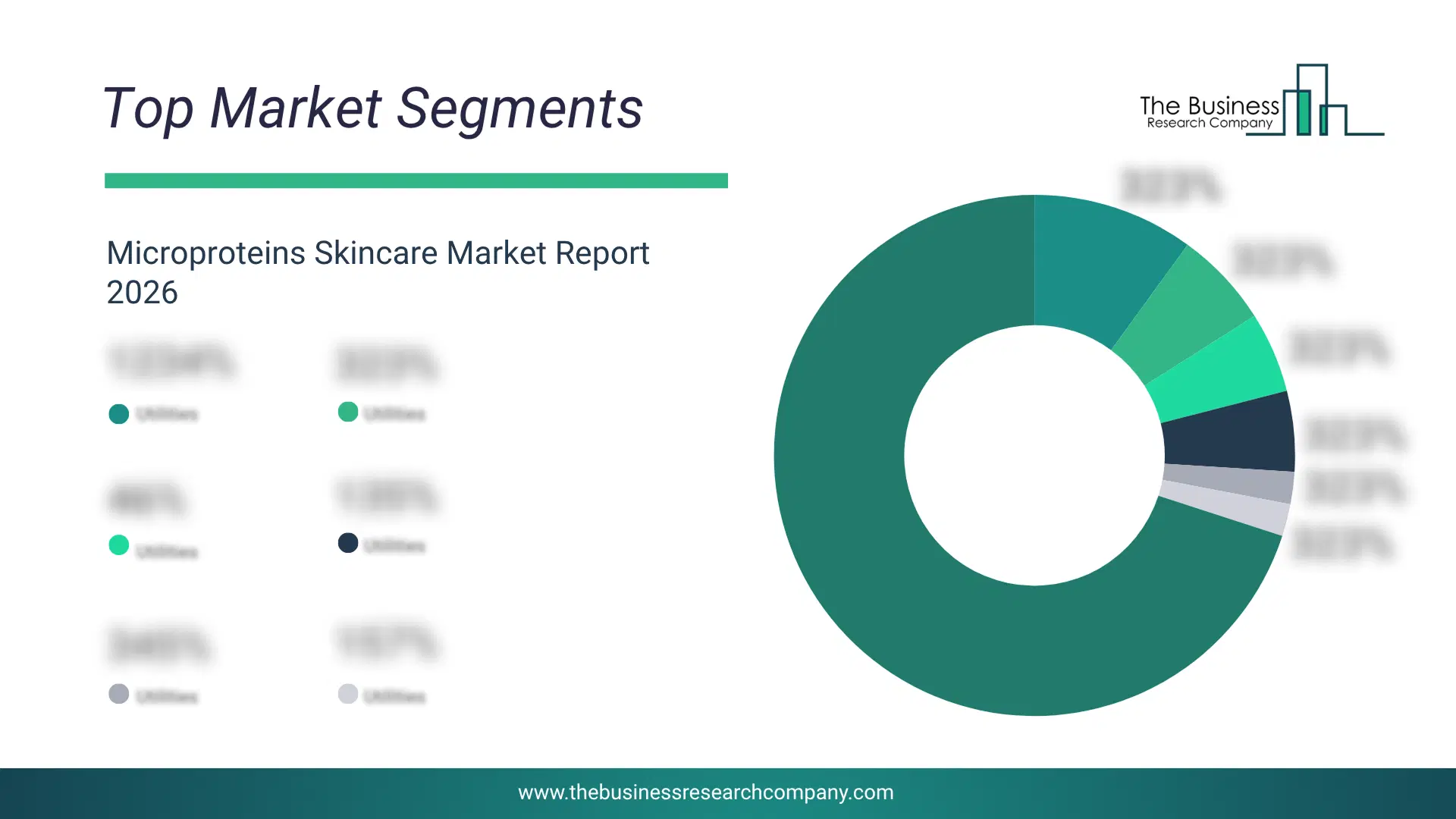
1) By Product Type: Creams, Serums, Masks, Lotions 2) By Distribution Channel: Online, Offline 3) By Application: Anti-aging, Moisturizing, Acne Treatment, Sensitive Skin Subsegments: 1) By Creams: Anti-Aging Creams, Brightening Creams, Hydrating Creams, Firming Creams 2) By Serums: Anti-Wrinkle Serums, Hydration Serums, Brightening Serums, Repair Serums 3) By Masks: Sheet Masks, Clay Masks, Gel Masks, Cream Masks 4) By Lotions: Moisturizing Lotions, Brightening Lotions, Firming Lotions, Soothing LotionsWhat Is The Driver Of The Microproteins Skincare Market?
The rising incidence of skin conditions is expected to propel the growth of the microprotein skincare market going forward. Skin conditions refer to disorders or abnormalities affecting the structure, appearance, or function of the skin, including acne, eczema, psoriasis, and infections. Incidence of skin conditions is increasing as more consumers and healthcare professionals recognize the impact of environmental, lifestyle, and genetic factors on skin health and prioritize targeted skincare solutions to manage and prevent these conditions. Microprotein skincare products play a crucial role in skin conditions by promoting skin regeneration, repairing damaged tissues, enhancing barrier function, and reducing inflammation to restore overall skin health. For instance, in March 2025, according to the Chronic Skin Conditions statistics report published by the British Dermatological Nursing Group, a UK-based independent professional organization, melanoma cases in Northern Ireland are projected to increase by 28% by 2040, potentially adding an estimated $4.8 million (£3.8 million) in annual healthcare costs. Therefore, the rising incidence of skin conditions is driving the growth of the microprotein skincare market.Key Players In The Global Microproteins Skincare Market
Major companies operating in the microproteins skincare market are BASF SE, Kenvue Inc., Natura Bissé International S.A., Croda International Plc, Indeed Laboratories Inc., Geltor Inc., HydroPeptide LLC, BeautyStat Inc., Numaferm GmbH, AnteAGE Inc., CLR Chemisches Laboratorium, Erasa Skincare LLC, Intoxicated Cosmetics LLC, Kiwla Co. Ltd., Loti Labs LLC, Merz Pharma GmbH & Co. KGaA, OneSkin Inc., Peach and Lily Inc., Skin Actives Scientific LLC, Topaz Biosciences Inc.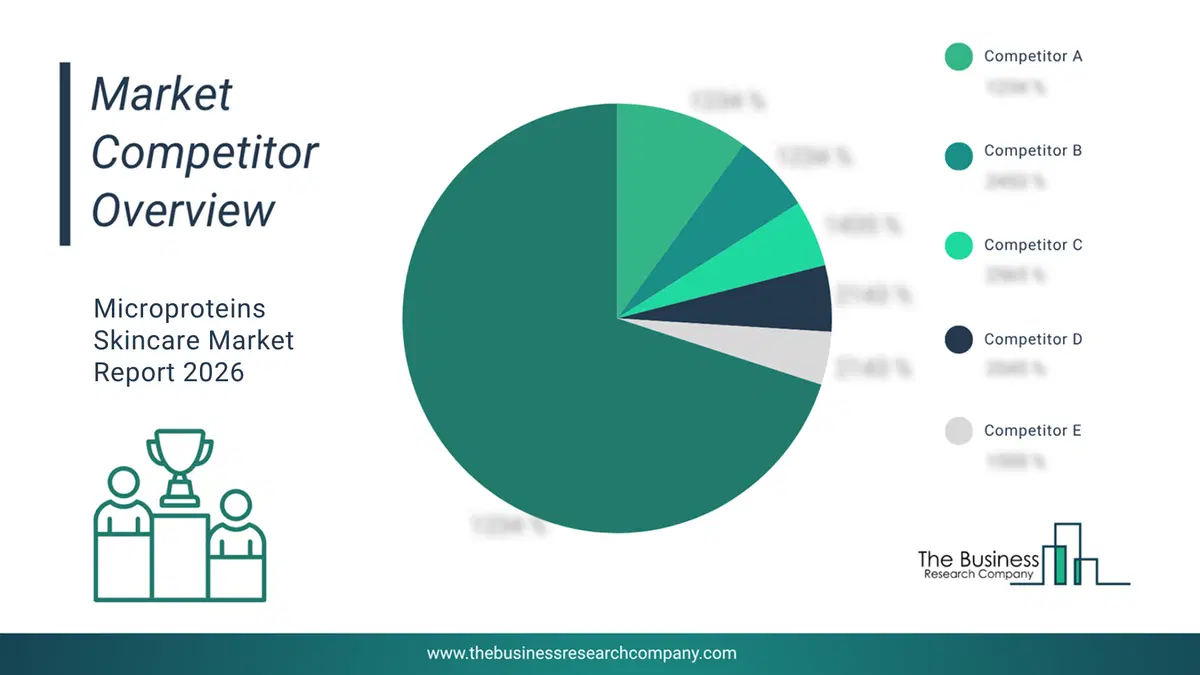
This chart is for illustrative purposes; the full report includes a detailed competitor analysis and comprehensive overview of the top 10 companies in the market.
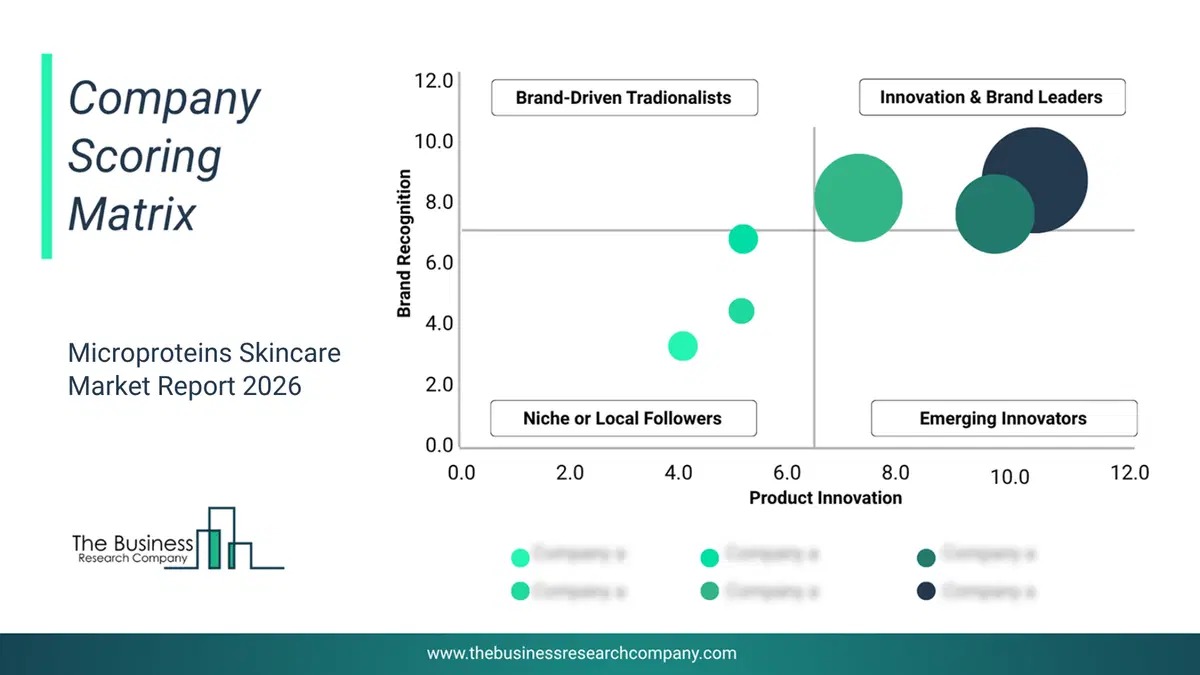
This chart maps companies by product innovation and brand strength, with bubble size indicating relative revenue, helping identify market leaders, challengers, and niche players. This is an illustrative chart; the full report provides a complete and accurate competitive analysis.
Global Microproteins Skincare Market Trends and Insights
Major companies operating in the microprotein skincare market are focusing on developing technologically innovative solutions, such as proprietary micropeptide technology, to enhance skin regeneration, improve collagen synthesis, and deliver targeted anti-aging benefits. Proprietary micro-peptide technology refers to a unique, company-developed process that creates bioactive micro-peptides designed to penetrate the skin deeply and stimulate natural regeneration, collagen synthesis, and repair mechanisms for enhanced skincare effectiveness. For instance, in August 2024, Kenvue Inc., a US-based consumer health company, launched the Neutrogena Collagen Bank skincare line featuring patented micro-peptide technology that is two times smaller than conventional peptides, enabling it to penetrate more than 10 layers beneath the skin surface to strengthen existing collagen and stimulate new collagen production, thereby targeting early signs of skin aging. The line includes moisturizers designed for daily use, such as a broad-spectrum SPF 30 moisturizer and a product infused with bakuchiol, a plant-based retinol alternative, aimed primarily at Gen Z consumers who are proactively seeking to prevent collagen loss and maintain youthful skin from their early 20s.What Are Latest Mergers And Acquisitions In The Microproteins Skincare Market?
In June 2025, L'Oréal S.A., a France-based provider of skincare brands, acquired Medik8 for $1.32 billion. Through this acquisition, L’Oréal aims to strengthen its footprint in the premium skincare segment by integrating Medik8’s deep expertise in scientifically advanced, in-house developed formulations, including high-performance serums and anti-aging creams, thereby enhancing its portfolio of dermatologically driven and results-oriented skincare solutions. Medik8 is a UK-based provider of science-backed serums and anti-aging creams and offers microprotein skincare products.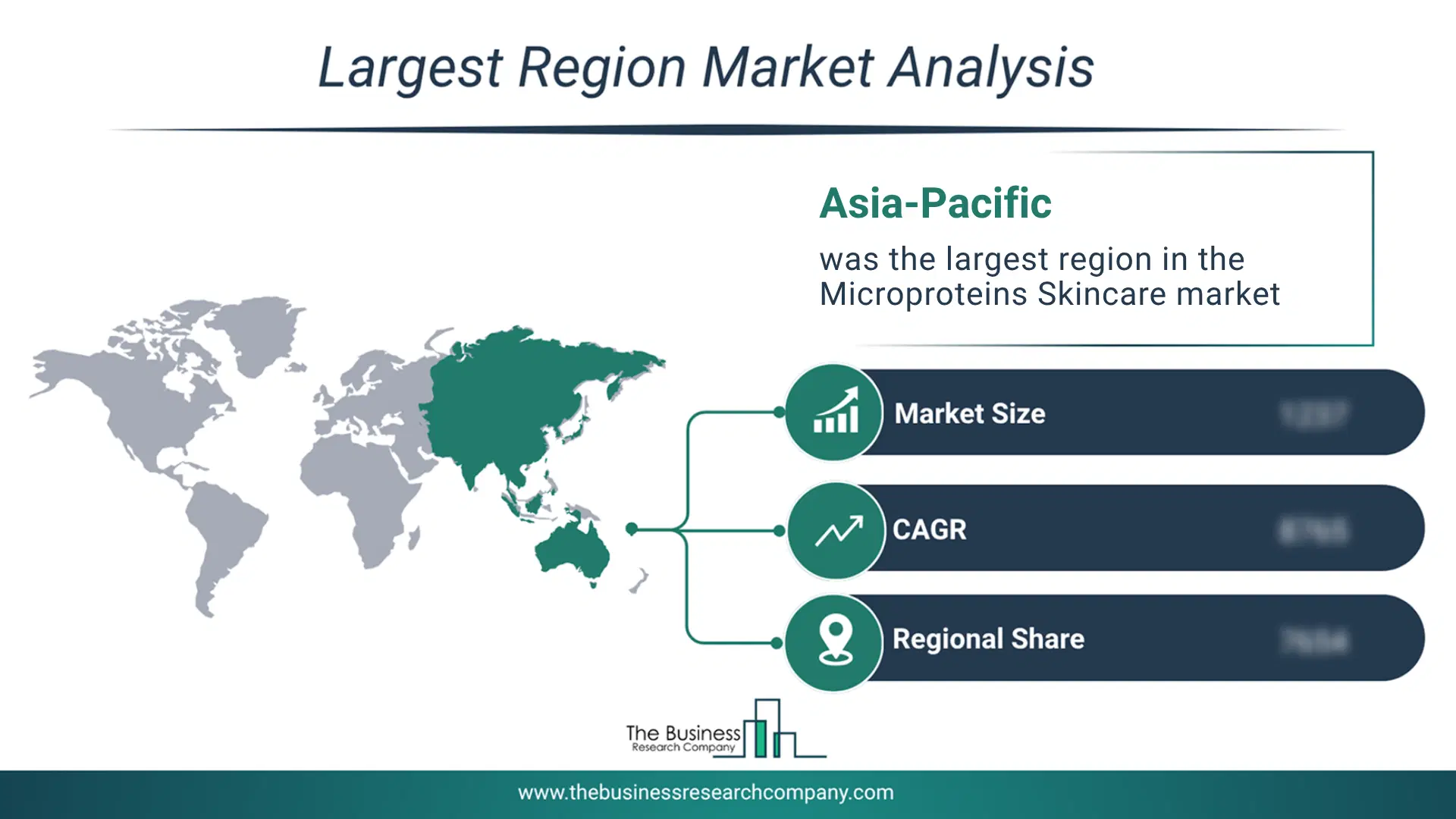
Regional Outlook
Asia-Pacific was the largest region in the microproteins skincare market in 2025. North America is expected to be the fastest-growing region in the forecast period. The regions covered in this market report are Asia-Pacific, South East Asia, Western Europe, Eastern Europe, North America, South America, Middle East, Africa. The countries covered in this market report are Australia, Brazil, China, France, Germany, India, Indonesia, Japan, Taiwan, Russia, South Korea, UK, USA, Canada, Italy, Spain.What Defines the Microproteins Skincare Market?
The microprotein skincare market consists of sales of peptide boosters, protein-enriched serums, micropeptide creams, nano-protein masks, and bioactive protein oils. Values in this market are ‘factory gate’ values, that is, the value of goods sold by the manufacturers or creators of the goods, whether to other entities (including downstream manufacturers, wholesalers, distributors, and retailers) or directly to end customers. The value of goods in this market includes related services sold by the creators of the goods.How is Market Value Defined and Measured?
The market value is defined as the revenues that enterprises gain from the sale of goods and/or services within the specified market and geography through sales, grants, or donations in terms of the currency (in USD unless otherwise specified). The revenues for a specified geography are consumption values that are revenues generated by organizations in the specified geography within the market, irrespective of where they are produced. It does not include revenues from resales along the supply chain, either further along the supply chain or as part of other products.
This chart presents market attractiveness based on a quantitative evaluation of growth, competition, strategic alignment, and risk, offering a clear view of opportunity areas for decision-making. This chart is for illustrative purposes; the full report contains the complete analysis.

This chart highlights the Total Addressable Market (TAM) by estimating the maximum revenue opportunity using an assumption-driven approach, supporting strategic planning and opportunity sizing across markets. The chart is illustrative; the full report provides a more comprehensive analysis.
What Key Data and Analysis Are Included in the Microproteins Skincare Market Report 2026?
The microproteins skincare market research report is one of a series of new reports from The Business Research Company that provides market statistics, including industry global market size, regional shares, competitors with the market share, detailed market segments, market trends and opportunities, and any further data you may need to thrive in the microproteins skincare industry. The market research report delivers a complete perspective of everything you need, with an in-depth analysis of the current and future state of the industry.Microproteins Skincare Market Report Forecast Analysis
| Report Attribute | Details |
|---|---|
| Market Size Value In 2026 | $3.58 billion |
| Revenue Forecast In 2030 | $4.87 billion |
| Growth Rate | CAGR of 8% from 2026 to 2030 |
| Base Year For Estimation | 2025 |
| Actual Estimates/Historical Data | 2020-2025 |
| Forecast Period | 2026 - 2030 |
| Market Representation | Revenue in USD Billion and CAGR from 2026 to 2030 |
| Segments Covered | Product Type, Distribution Channel, Application |
| Regional Scope | Asia-Pacific, Western Europe, Eastern Europe, North America, South America, Middle East, Africa |
| Country Scope | The countries covered in the report are Australia, Brazil, China, France, Germany, India, Indonesia, Japan, Taiwan, Russia, South Korea, UK, USA, Canada, Italy, Spain |
| Key Companies Profiled | BASF SE, Kenvue Inc., Natura Bissé International S.A., Croda International Plc, Indeed Laboratories Inc., Geltor Inc., HydroPeptide LLC, BeautyStat Inc., Numaferm GmbH, AnteAGE Inc., CLR Chemisches Laboratorium, Erasa Skincare LLC, Intoxicated Cosmetics LLC, Kiwla Co. Ltd., Loti Labs LLC, Merz Pharma GmbH & Co. KGaA, OneSkin Inc., Peach and Lily Inc., Skin Actives Scientific LLC, Topaz Biosciences Inc. |
| Customization Scope | Request for Customization |
| Pricing And Purchase Options | Explore Purchase Options |