
Rabbit Monoclonal Antibody Market Report 2026
Global Outlook – By Type (Immunoglobulin G (IgG), Immunoglobulin M (IgM), Immunoglobulin A (IgA), Immunoglobulin E (IgE), Immunoglobulin D (IgD)), By Application (Diagnostics, Therapeutics, Research, Drug Discovery, Immunohistochemistry), By End User (Pharmaceutical Companies, Academic And Research Institutions, Diagnostic Laboratories, Contract Research Organizations, Biotechnology Companies) - Market Size, Trends, Strategies, and Forecast to 2030
Rabbit Monoclonal Antibody Market Overview
• Rabbit Monoclonal Antibody market size has reached to $0.92 billion in 2025 • Expected to grow to $1.46 billion in 2030 at a compound annual growth rate (CAGR) of 9.6% • Growth Driver: Rising Prevalence Of Chronic Diseases Fueling The Growth Of The Market Due To Increasing Demand For Targeted And Effective Therapies • Market Trend: Advancing Species-Specific Antibody Platforms For Enhanced Therapeutic Efficacy • North America was the largest region in 2025 and Asia-Pacific is the fastest growing region.What Is Covered Under Rabbit Monoclonal Antibody Market?
Rabbit monoclonal antibody is a highly specific antibody derived from a single clone of rabbit B-cells. It exhibits strong affinity and can recognize small or conserved epitopes that are often challenging for mouse antibodies. It is used for precise detection, quantification, or targeting of specific proteins in research, diagnostics, and therapeutic applications. The main types of rabbit monoclonal antibody are immunoglobulin G (IgG), immunoglobulin M (IgM), immunoglobulin A (IgA), immunoglobulin E (IgE), and immunoglobulin D (IgD). Immunoglobulin G (IgG) rabbit monoclonal antibody is a high-affinity, antigen-specific antibody derived from rabbit B cells that represents the predominant immunoglobulin class used for precise detection, diagnosis, and therapeutic applications. It finds applications in diagnostics, therapeutics, research, drug discovery, and immunohistochemistry, serving end users, including pharmaceutical companies, academic and research institutions, diagnostic laboratories, contract research organizations, and biotechnology companies.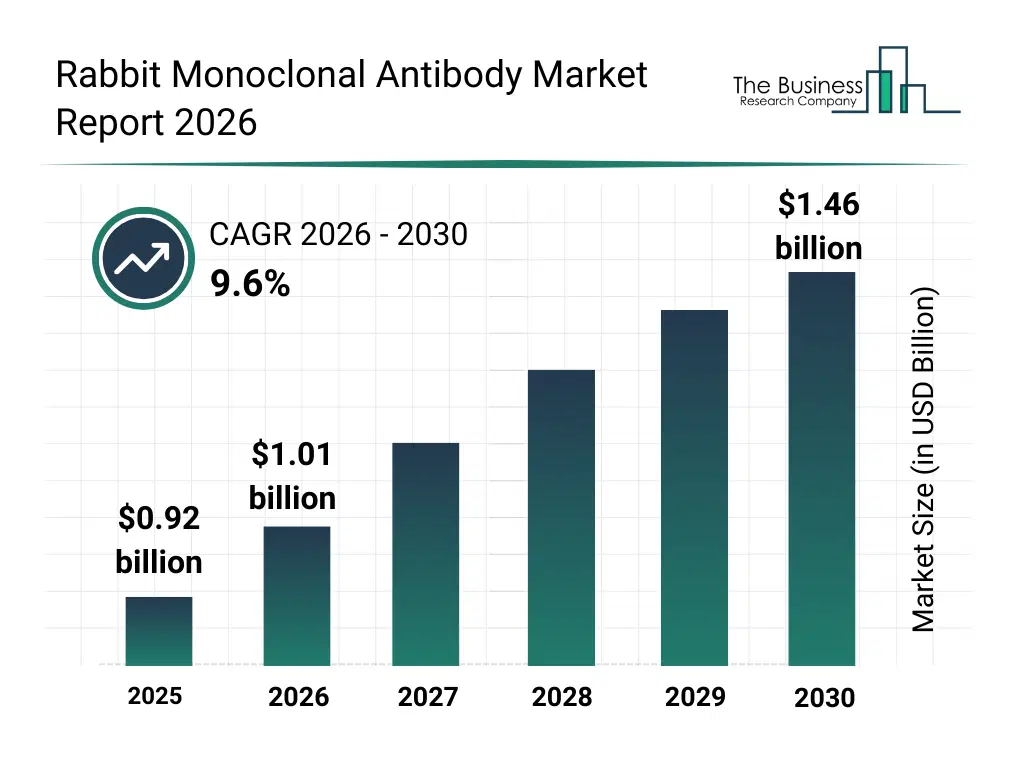
What Is The Rabbit Monoclonal Antibody Market Size and Share 2026?
The rabbit monoclonal antibody market size has grown strongly in recent years. It will grow from $0.92 billion in 2025 to $1.01 billion in 2026 at a compound annual growth rate (CAGR) of 9.9%. The growth in the historic period can be attributed to expansion of protein research applications, increasing demand for sensitive detection reagents, growth of immunohistochemistry usage, rising biomedical research funding, availability of hybridoma technologies.What Is The Rabbit Monoclonal Antibody Market Growth Forecast?
The rabbit monoclonal antibody market size is expected to see strong growth in the next few years. It will grow to $1.46 billion in 2030 at a compound annual growth rate (CAGR) of 9.6%. The growth in the forecast period can be attributed to increasing demand for precision diagnostics, rising use of antibodies in drug discovery, expansion of personalized medicine research, growing adoption of recombinant antibody platforms, increasing focus on assay sensitivity optimization. Major trends in the forecast period include increasing use of rabbit antibodies for difficult epitopes, rising adoption in advanced diagnostics, growing preference for high-affinity antibodies, expansion of recombinant rabbit antibody production, enhanced focus on analytical sensitivity.
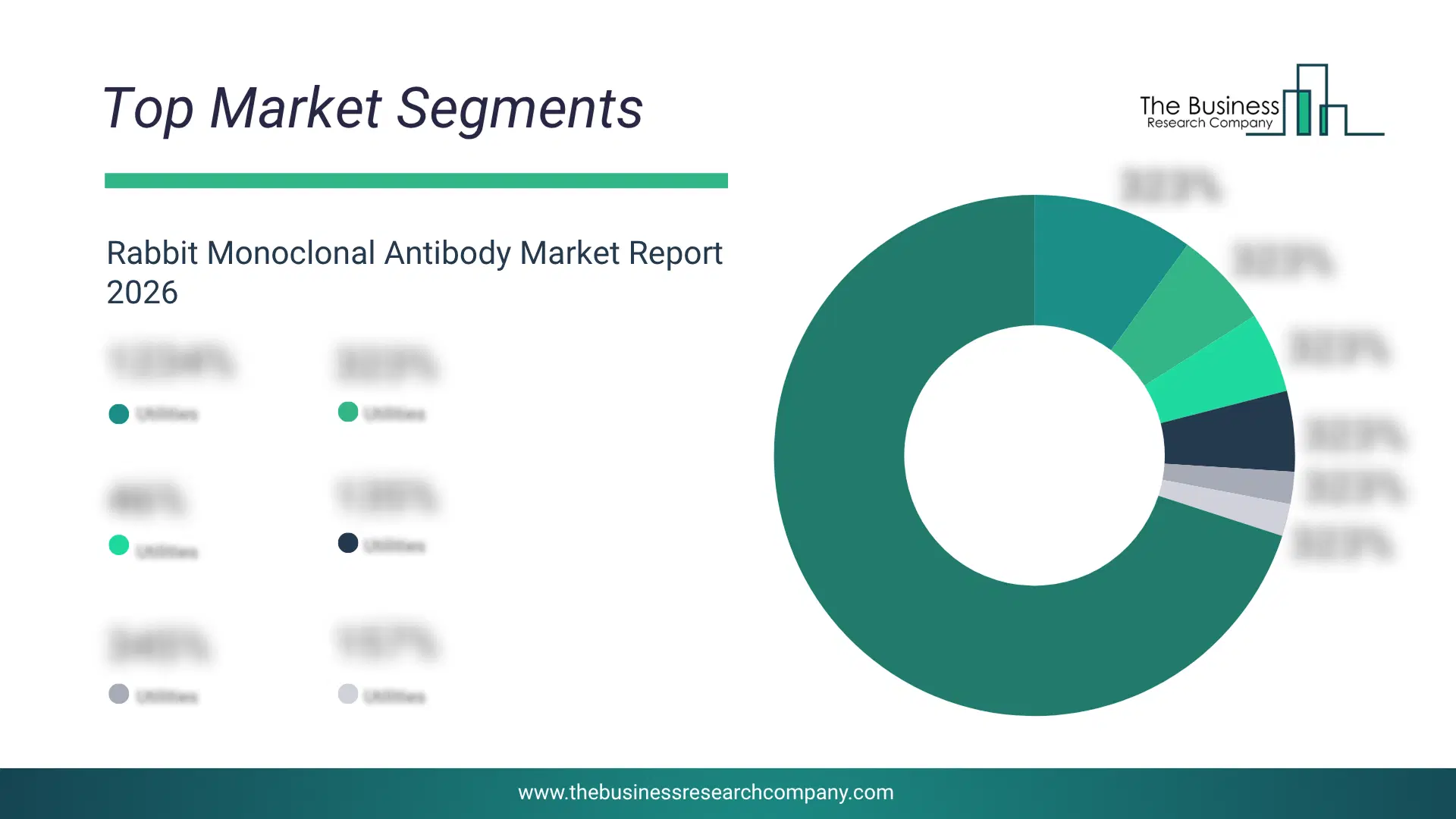
Global Rabbit Monoclonal Antibody Market Segmentation
1) By Type: Immunoglobulin G (IgG), Immunoglobulin M (IgM), Immunoglobulin A (IgA), Immunoglobulin E (IgE), Immunoglobulin D (IgD) 2) By Application: Diagnostics, Therapeutics, Research, Drug Discovery, Immunohistochemistry 3) By End User: Pharmaceutical Companies, Academic And Research Institutions, Diagnostic Laboratories, Contract Research Organizations, Biotechnology Companies Subsegments: 1) By Immunoglobulin G (IgG): Subclass 1 Immunoglobulin G, Subclass 2 Immunoglobulin G, Subclass 3 Immunoglobulin G, Subclass 4 Immunoglobulin G 2) By Immunoglobulin M (IgM): Pentameric Immunoglobulin M, Monomeric Immunoglobulin M 3) By Immunoglobulin A (IgA): Serum Immunoglobulin A, Secretory Immunoglobulin A 4) By Immunoglobulin E (IgE): Allergen Specific Immunoglobulin E, Total Immunoglobulin E 5) By Immunoglobulin D (IgD): Membrane Bound Immunoglobulin D, Secreted Immunoglobulin DWhat Is The Driver Of The Rabbit Monoclonal Antibody Market?
The rising prevalence of chronic diseases is expected to propel the growth of the rabbit monoclonal antibody market going forward. Chronic diseases are persistent health conditions that develop slowly and last for an extended period, often requiring continuous medical care. The growing prevalence of chronic diseases is partly due to inactive lifestyles, as prolonged sitting and minimal physical activity raise the risk of diseases such as heart conditions and diabetes. Rabbit monoclonal antibody aids in chronic disease treatment by providing highly specific and high-affinity targeting of disease-associated proteins. They improve therapeutic precision, reduce off-target effects, and enhance treatment efficacy, supporting better patient outcomes and streamlined drug development. For instance, in June 2024, according to the National Health Service, a UK-based government department, 3,615,330 individuals registered with a general practitioner (GP) were diagnosed with non-diabetic hyperglycemia or pre-diabetes (a condition with elevated blood sugar levels, not high enough to be classified as diabetes) in 2023, marking an 18% increase from 3,065,825 cases in 2022. Therefore, the rising prevalence of chronic diseases is driving the growth of the rabbit monoclonal antibody industry.Key Players In The Global Rabbit Monoclonal Antibody Market
Major companies operating in the rabbit monoclonal antibody market are F. Hoffmann-La Roche Ltd., Merck KGaA, Thermo Fisher Scientific Inc., Bio-Rad Laboratories Inc., Bio-Techne Corporation, Elabscience Biotechnology Inc., GenScript Biotech Corporation, Takara Bio Inc., Rockland Immunochemicals Inc., Creative Biolabs Inc., Bioss Antibodies Inc., Cell Signaling Technology Inc., MyBioSource Inc., Boster Biological Technology Co. Ltd., GeneTex Inc., Proteintech Group Inc., Santa Cruz Biotechnology Inc., AvantGen Inc., ImmunoWay Biotechnology Company, Abcam plc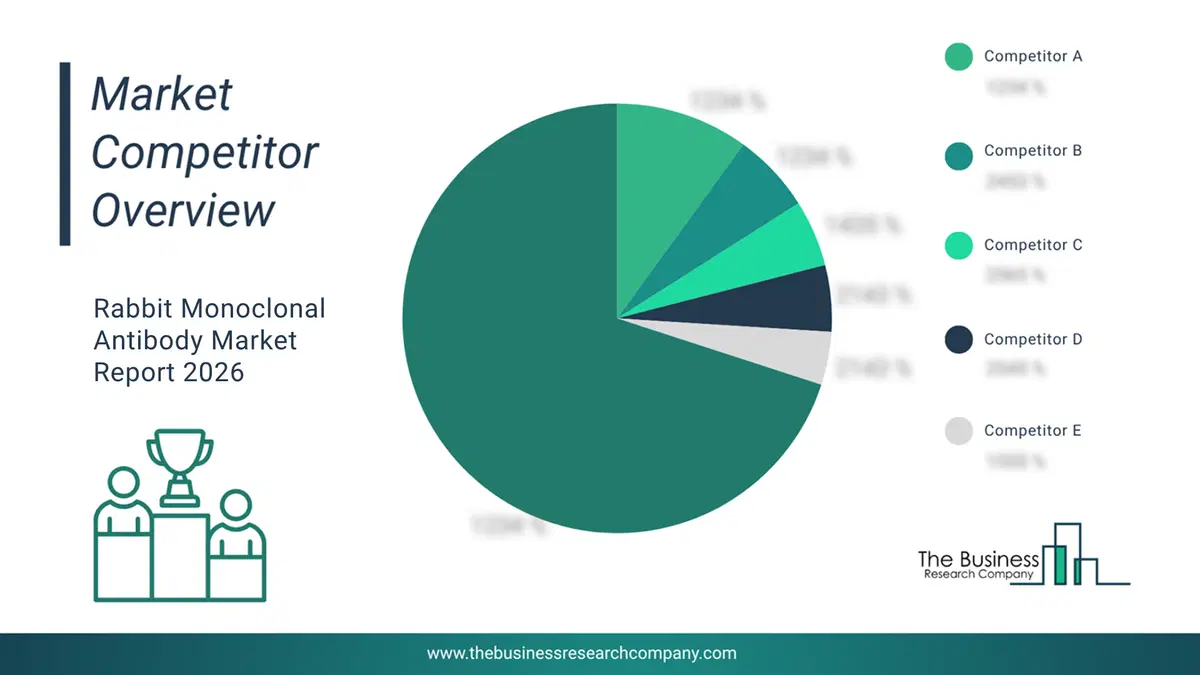
This chart is for illustrative purposes; the full report includes a detailed competitor analysis and comprehensive overview of the top 10 companies in the market.
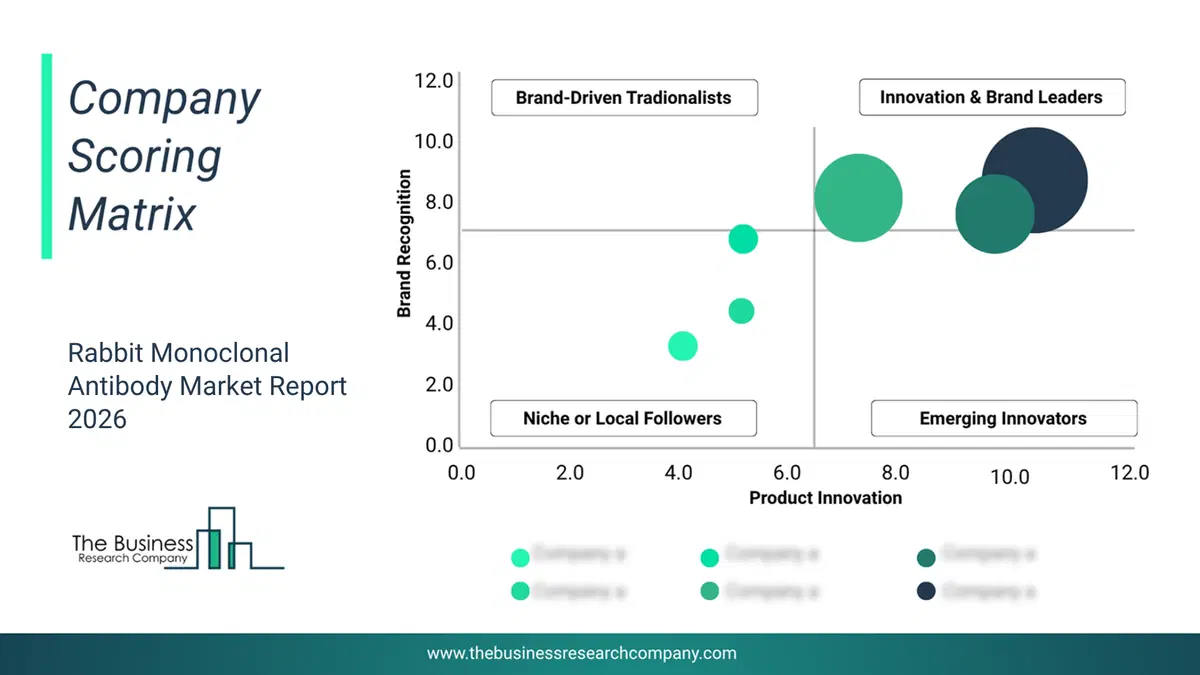
This chart maps companies by product innovation and brand strength, with bubble size indicating relative revenue, helping identify market leaders, challengers, and niche players. This is an illustrative chart; the full report provides a complete and accurate competitive analysis.
Global Rabbit Monoclonal Antibody Market Trends and Insights
Major companies operating in the rabbit monoclonal antibody market are focusing on developing advanced platforms, such as species-specific antibody development, to boost therapeutic efficacy, enhance target specificity, and reduce immunogenicity. Species-specific antibody development refers to the strategic use of distinct animal immune systems to generate antibodies with unique binding properties and high affinity for challenging drug targets. In September 2024, ImmunoPrecise Antibodies Ltd., a Canada-based AI-driven biotherapeutic research and technology company, revealed groundbreaking developments in its rabbit antibody platforms. This species-specific antibody showed significant clinical progress through its B Cell Select platform integrated with the LENSai artificial intelligence technology for automated antibody discovery and optimization, combining automation with AI-driven analytics to rapidly identify high-affinity rabbit monoclonal antibodies while preserving native structures. This approach enhances clinical translation efficiency, accelerates target validation, reduces development timelines, and improves reproducibility in therapeutic antibody programs.What Are Latest Mergers And Acquisitions In The Rabbit Monoclonal Antibody Market?
In September 2024, Leinco Technologies Inc., a US-based biotechnology company, acquired QED Biosciences Inc. for an undisclosed amount. Through this acquisition, Leinco Technologies aims to expand its antibody capabilities and strengthen its position in the research, diagnostic, and rabbit monoclonal antibody markets. QED Biosciences Inc. is a US-based biotechnology company specializing in the development and supply of high-quality rabbit monoclonal antibodies.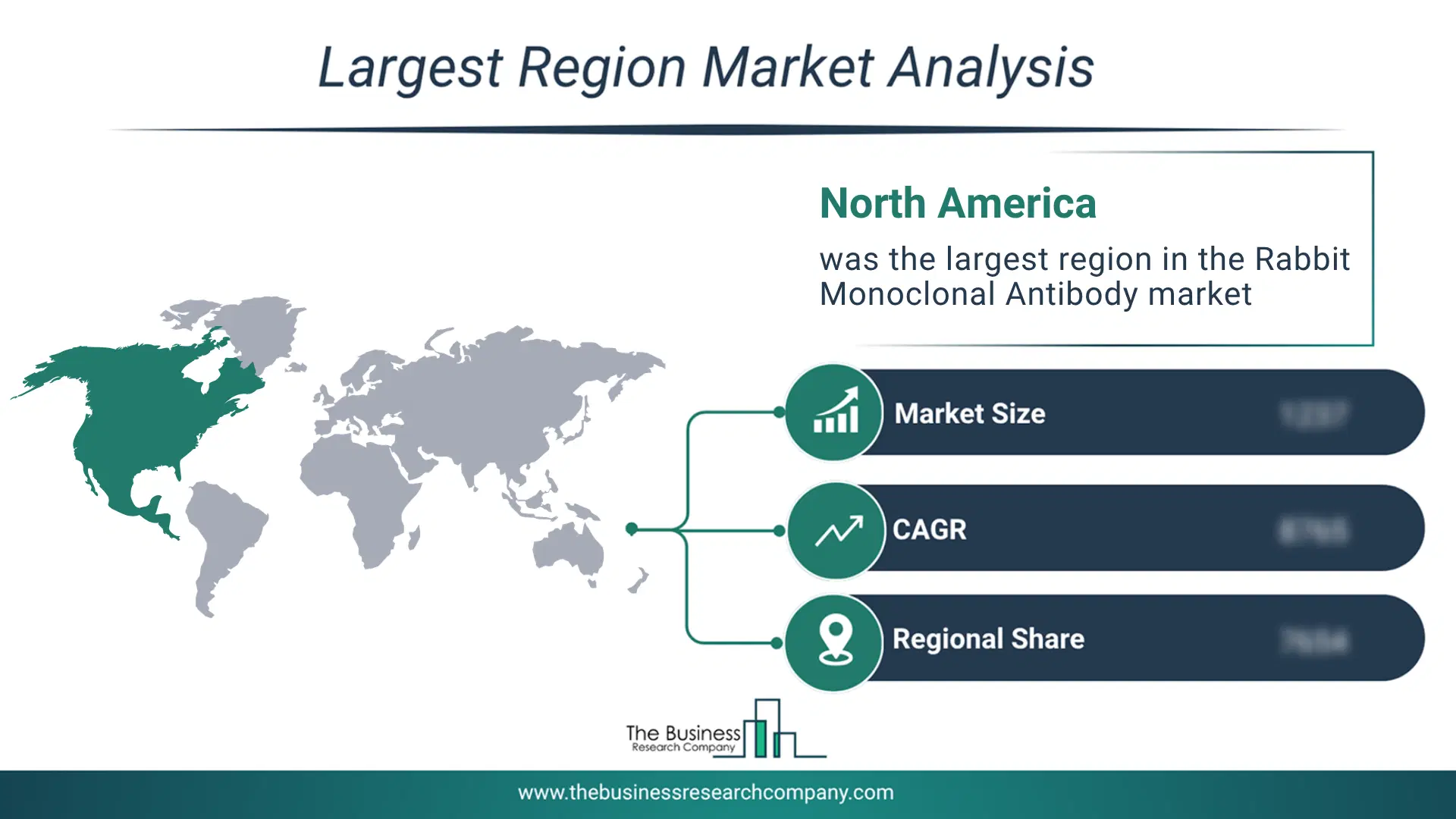
Regional Outlook
North America was the largest region in the rabbit monoclonal antibody market in 2025. Asia-Pacific is expected to be the fastest-growing region in the forecast period. The regions covered in this market report are Asia-Pacific, South East Asia, Western Europe, Eastern Europe, North America, South America, Middle East, Africa. The countries covered in this market report are Australia, Brazil, China, France, Germany, India, Indonesia, Japan, Taiwan, Russia, South Korea, UK, USA, Canada, Italy, Spain.What Defines the Rabbit Monoclonal Antibody Market?
The rabbit monoclonal antibody market consists of sales of recombinant rabbit monoclonal antibodies, polyclonal-to-monoclonal conversion antibodies, isotype control antibodies, and phospho-specific rabbit monoclonal antibodies. Values in this market are ‘factory gate’ values, that is, the value of goods sold by the manufacturers or creators of the goods, whether to other entities (including downstream manufacturers, wholesalers, distributors, and retailers) or directly to end customers. The value of goods in this market includes related services sold by the creators of the goods.How is Market Value Defined and Measured?
The market value is defined as the revenues that enterprises gain from the sale of goods and/or services within the specified market and geography through sales, grants, or donations in terms of the currency (in USD unless otherwise specified). The revenues for a specified geography are consumption values that are revenues generated by organizations in the specified geography within the market, irrespective of where they are produced. It does not include revenues from resales along the supply chain, either further along the supply chain or as part of other products.
This chart presents market attractiveness based on a quantitative evaluation of growth, competition, strategic alignment, and risk, offering a clear view of opportunity areas for decision-making. This chart is for illustrative purposes; the full report contains the complete analysis.

This chart highlights the Total Addressable Market (TAM) by estimating the maximum revenue opportunity using an assumption-driven approach, supporting strategic planning and opportunity sizing across markets. The chart is illustrative; the full report provides a more comprehensive analysis.
What Key Data and Analysis Are Included in the Rabbit Monoclonal Antibody Market Report 2026?
The rabbit monoclonal antibody market research report is one of a series of new reports from The Business Research Company that provides market statistics, including industry global market size, regional shares, competitors with the market share, detailed market segments, market trends and opportunities, and any further data you may need to thrive in the rabbit monoclonal antibody industry. The market research report delivers a complete perspective of everything you need, with an in-depth analysis of the current and future state of the industry.Rabbit Monoclonal Antibody Market Report Forecast Analysis
| Report Attribute | Details |
|---|---|
| Market Size Value In 2026 | $1.01 billion |
| Revenue Forecast In 2030 | $1.46 billion |
| Growth Rate | CAGR of 9.6% from 2026 to 2030 |
| Base Year For Estimation | 2025 |
| Actual Estimates/Historical Data | 2020-2025 |
| Forecast Period | 2026 - 2030 |
| Market Representation | Revenue in USD Billion and CAGR from 2026 to 2030 |
| Segments Covered | Type, Application, End User |
| Regional Scope | Asia-Pacific, Western Europe, Eastern Europe, North America, South America, Middle East, Africa |
| Country Scope | The countries covered in the report are Australia, Brazil, China, France, Germany, India, Indonesia, Japan, Taiwan, Russia, South Korea, UK, USA, Canada, Italy, Spain |
| Key Companies Profiled | F. Hoffmann-La Roche Ltd., Merck KGaA, Thermo Fisher Scientific Inc., Bio-Rad Laboratories Inc., Bio-Techne Corporation, Elabscience Biotechnology Inc., GenScript Biotech Corporation, Takara Bio Inc., Rockland Immunochemicals Inc., Creative Biolabs Inc., Bioss Antibodies Inc., Cell Signaling Technology Inc., MyBioSource Inc., Boster Biological Technology Co. Ltd., GeneTex Inc., Proteintech Group Inc., Santa Cruz Biotechnology Inc., AvantGen Inc., ImmunoWay Biotechnology Company, Abcam plc |
| Customization Scope | Request for Customization |
| Pricing And Purchase Options | Explore Purchase Options |