
Respiratory Syncytial Virus (RSV) Fusion Inhibitors Market Report 2026
Global Outlook – By Drug Type (Small Molecule Inhibitors, Monoclonal Antibodies, Peptide Inhibitors, Other Drugs), By Route Of Administration (Oral, Intravenous, Inhalation, Other Routes Of Administration), By Application (By Prophylaxis, Treatment), By End-User (Hospitals, Clinics, Research Institutes, Other End Users) – Market Size, Trends, Strategies, and Forecast to 2030
Respiratory Syncytial Virus (RSV) Fusion Inhibitors Market Overview
• Respiratory Syncytial Virus (RSV) Fusion Inhibitors market size has reached to $1.48 billion in 2025 • Expected to grow to $3.17 billion in 2030 at a compound annual growth rate (CAGR) of 16.5% • Growth Driver: Growing Incidence Of Respiratory Infections Fueling Market Growth Due To Rising Air Pollution And Increasing Susceptibility To Viral Illnesses • Market Trend: Single-Dose Immunization Offers Extended Protection Against RSV • North America was the largest region in 2025 and Asia-Pacific is the fastest growing region.What Is Covered Under Respiratory Syncytial Virus (RSV) Fusion Inhibitors Market?
Respiratory syncytial virus (RSV) fusion inhibitors are antiviral agents that prevent RSV from entering host cells by blocking the fusion of the viral envelope with the cell membrane. These inhibitors target the viral F-protein, helping reduce infection severity, disease progression, and hospitalization risks, especially in infants, elderly patients, and immunocompromised individuals. The main drug types of respiratory syncytial virus (RSV) fusion inhibitors are small molecule inhibitors, monoclonal antibodies, peptide inhibitors, and others. Small molecule inhibitors are low-molecular-weight drugs that block RSV infection by targeting the viral fusion protein, preventing virus entry, fusion, or replication in host cells. These are administered through various routes, including oral, intravenous, inhalation, and others and find applications in prophylaxis, and treatment, serving end-users such as hospitals, clinics, research institutes, and others.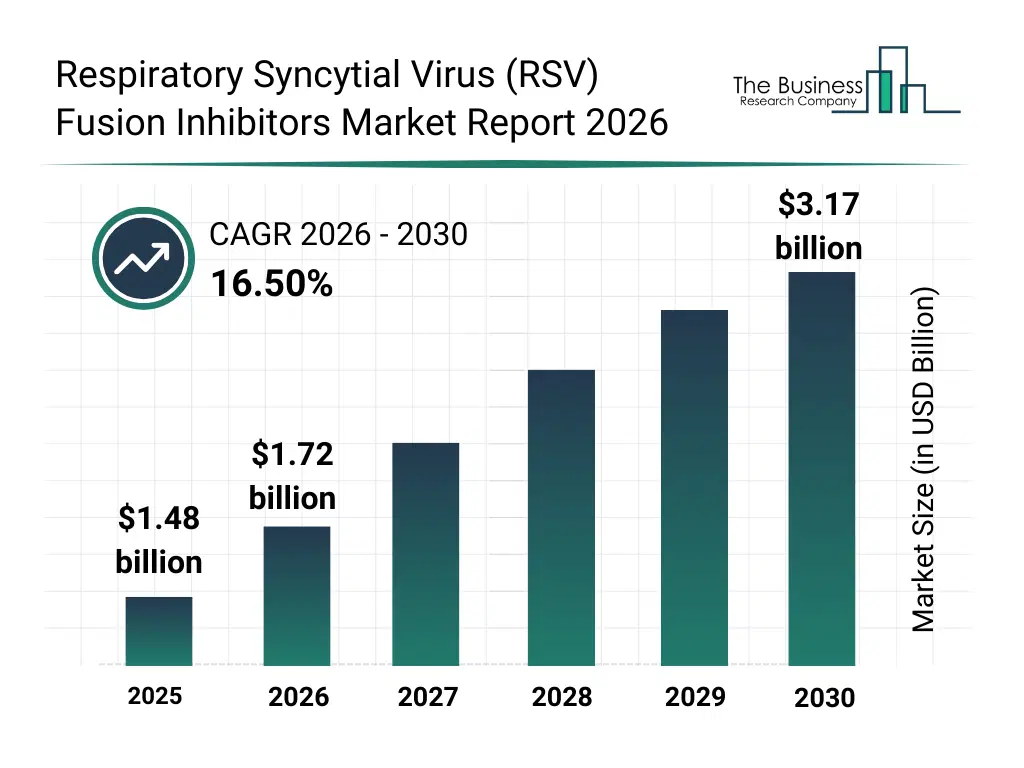
What Is The Respiratory Syncytial Virus (RSV) Fusion Inhibitors Market Size and Share 2026?
The respiratory syncytial virus (rsv) fusion inhibitors market size has grown rapidly in recent years. It will grow from $1.48 billion in 2025 to $1.72 billion in 2026 at a compound annual growth rate (CAGR) of 16.8%. The growth in the historic period can be attributed to increasing incidence of respiratory viral infections, historical lack of effective rsv-specific treatments, expansion of neonatal and pediatric care infrastructure, advancements in antiviral drug discovery, growing clinical awareness of rsv burden.What Is The Respiratory Syncytial Virus (RSV) Fusion Inhibitors Market Growth Forecast?
The respiratory syncytial virus (rsv) fusion inhibitors market size is expected to see rapid growth in the next few years. It will grow to $3.17 billion in 2030 at a compound annual growth rate (CAGR) of 16.5%. The growth in the forecast period can be attributed to increasing regulatory approvals for novel antivirals, rising investment in pediatric infectious disease research, expansion of monoclonal antibody alternatives, growing focus on outpatient rsv management, increasing global vaccination and prevention initiatives. Major trends in the forecast period include increasing development of targeted antiviral therapies, rising focus on pediatric rsv prevention, growing clinical trials for fusion inhibitors, expansion of prophylactic treatment strategies, enhanced focus on high-risk patient populations.
Global Respiratory Syncytial Virus (RSV) Fusion Inhibitors Market Segmentation
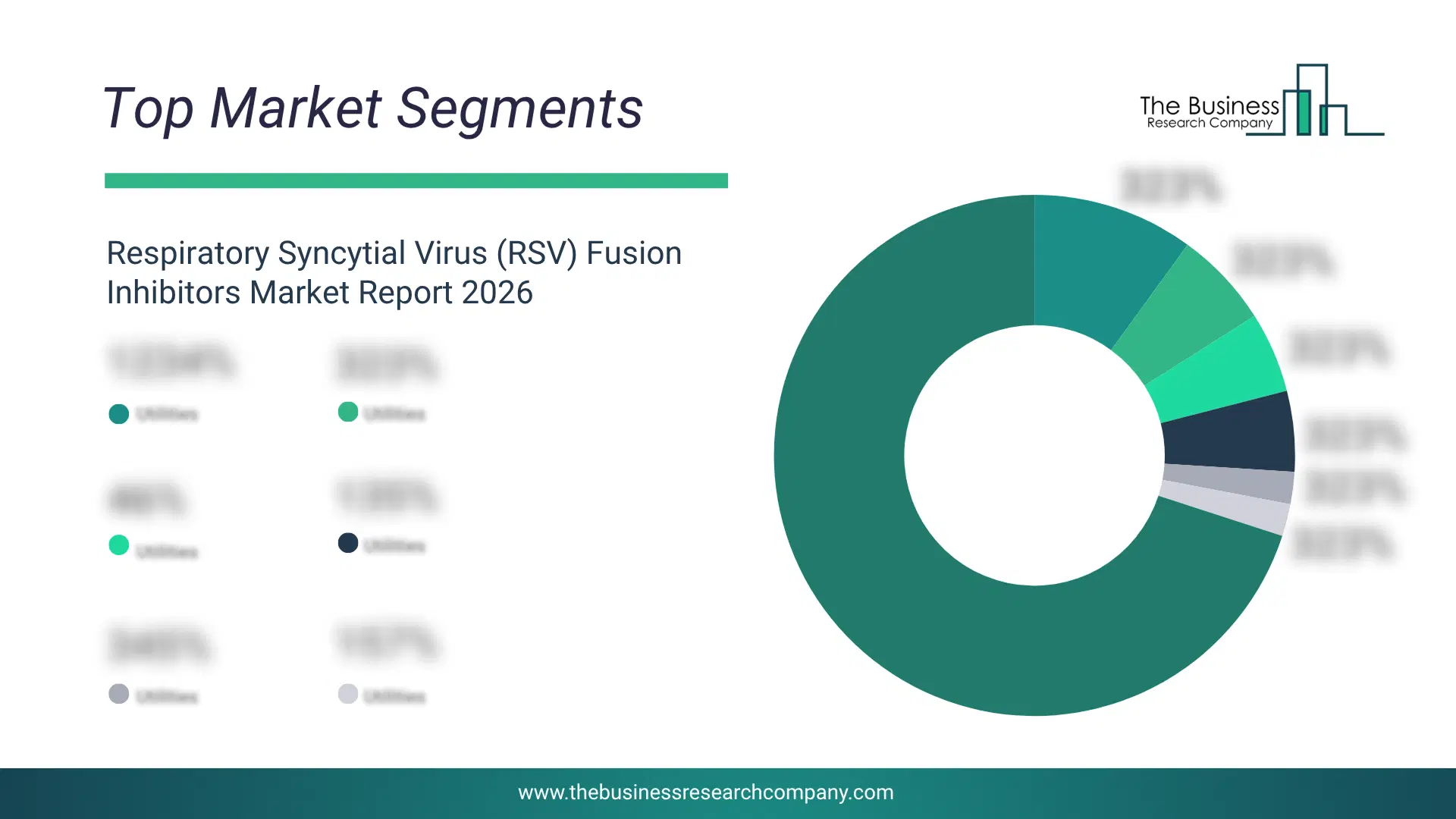
1) By Drug Type: Small Molecule Inhibitors, Monoclonal Antibodies, Peptide Inhibitors, Other Drugs 2) By Route Of Administration: Oral, Intravenous, Inhalation, Other Routes Of Administration 3) By Application: By Prophylaxis, Treatment 4) By End-User: Hospitals, Clinics, Research Institutes, Other End Users Subsegments: 1) By Small Molecule Inhibitors: Fusion Protein Inhibitors, Viral Entry Blockers, Replication Inhibitors, Nucleoside Analogues 2) By Monoclonal Antibodies: Neutralizing Antibodies, Prophylactic Antibodies, Therapeutic Antibodies, Combination Antibodies 3) By Peptide Inhibitors: Fusion Inhibitory Peptides, Receptor Binding Peptides, Entry Blocking Peptides, Synthetic Peptides 4) By Other Drugs: Ribonucleic Acid (RNA) Interference Agents, Host Targeted Inhibitors, Immunomodulators, Small Interfering AgentsWhat Are The Drivers Of The Respiratory Syncytial Virus (RSV) Fusion Inhibitors Market?
The growing incidence of respiratory infections is expected to propel the growth of the respiratory syncytial virus (RSV) fusion inhibitors market going forward. Respiratory infection refers to the invasion and multiplication of harmful microorganisms in the respiratory tract, causing illnesses such as colds, flu, or pneumonia. The incidence of respiratory infections is rising primarily due to increased air pollution, which weakens the respiratory system and makes individuals more susceptible to infections. Respiratory Syncytial Virus (RSV) fusion inhibitors enhance respiratory infection treatment by specifically blocking viral fusion, preventing the virus from entering host cells. They reduce the severity and duration of RSV infections, lower hospitalization rates, and improve patient outcomes, offering a more effective and targeted approach to managing respiratory illnesses. For instance, in May 2025, according to the New York Academy of Sciences, a US-based nonprofit organization, the number of whooping cough cases had surpassed 8,000, representing a more than twofold increase compared to the same period in 2024. Therefore, the growing incidence of respiratory infections is driving the growth of the respiratory syncytial virus (RSV) fusion inhibitors industry. The increasing healthcare expenditure is expected to propel the growth of the respiratory syncytial virus (RSV) fusion inhibitors market going forward. Healthcare expenditure refers to the total amount of money spent on medical services, treatments, facilities, research, and public health initiatives to maintain or improve health outcomes. The increasing demand for healthcare expenditure is due to the rising prevalence of chronic diseases, which require long-term and costly treatments. Rising healthcare expenditure enhances respiratory syncytial virus (RSV) fusion inhibitors by increasing funding for research, development, and accessibility of innovative therapies. It supports broader adoption of RSV fusion inhibitors by healthcare providers, enabling better prevention and treatment of respiratory infections and improving patient outcomes. For instance, in May 2024, according to the Office for National Statistics, a UK-based government department, total healthcare expenditure saw a 5.6% increase in nominal terms in 2023, an increase of 0.9% growth compared to 2022. Therefore, the increasing healthcare expenditure is driving the growth of the respiratory syncytial virus (RSV) fusion inhibitors industry.Key Players In The Global Respiratory Syncytial Virus (RSV) Fusion Inhibitors Market
Major companies operating in the respiratory syncytial virus (rsv) fusion inhibitors market are Merck & Co. Inc., Pfizer Inc., AstraZeneca plc, Bristol‑Myers Squibb Company, Sanofi S.A., Gilead Sciences Inc., Johnson & Johnson, Taisho Pharmaceutical Co. Ltd., Enanta Pharmaceuticals Inc., Shanghai Ark Biopharmaceutical Co. Ltd., Medivir AB, ARNAV Biotech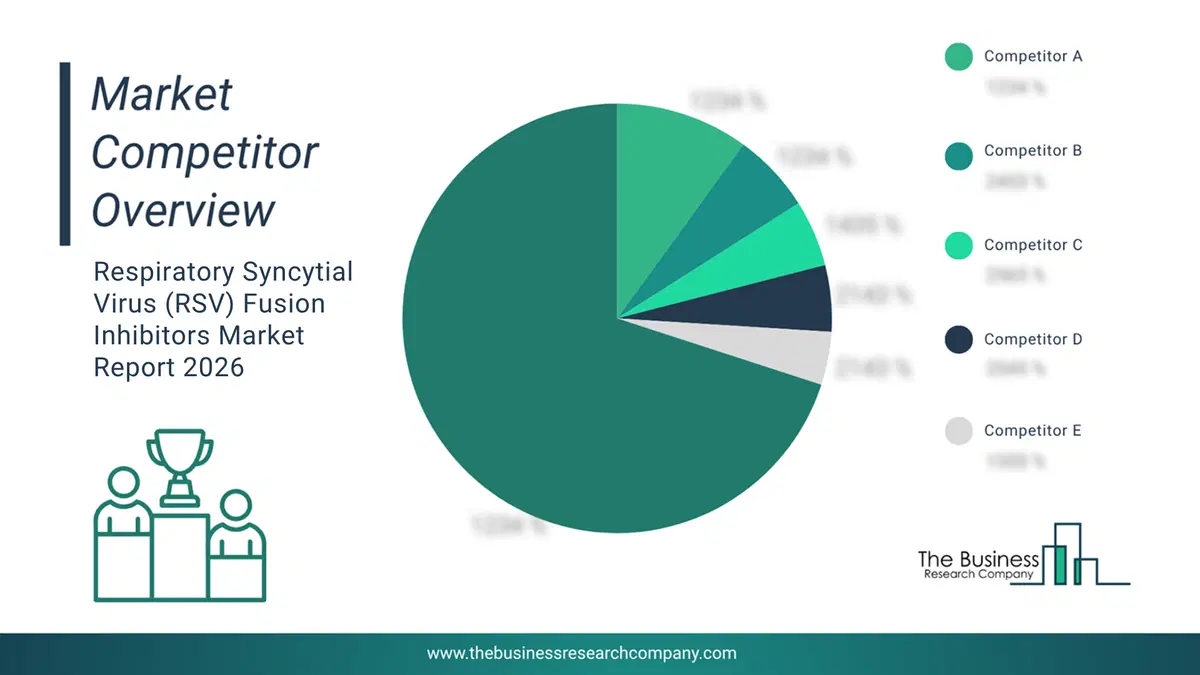
This chart is for illustrative purposes; the full report includes a detailed competitor analysis and comprehensive overview of the top 10 companies in the market.
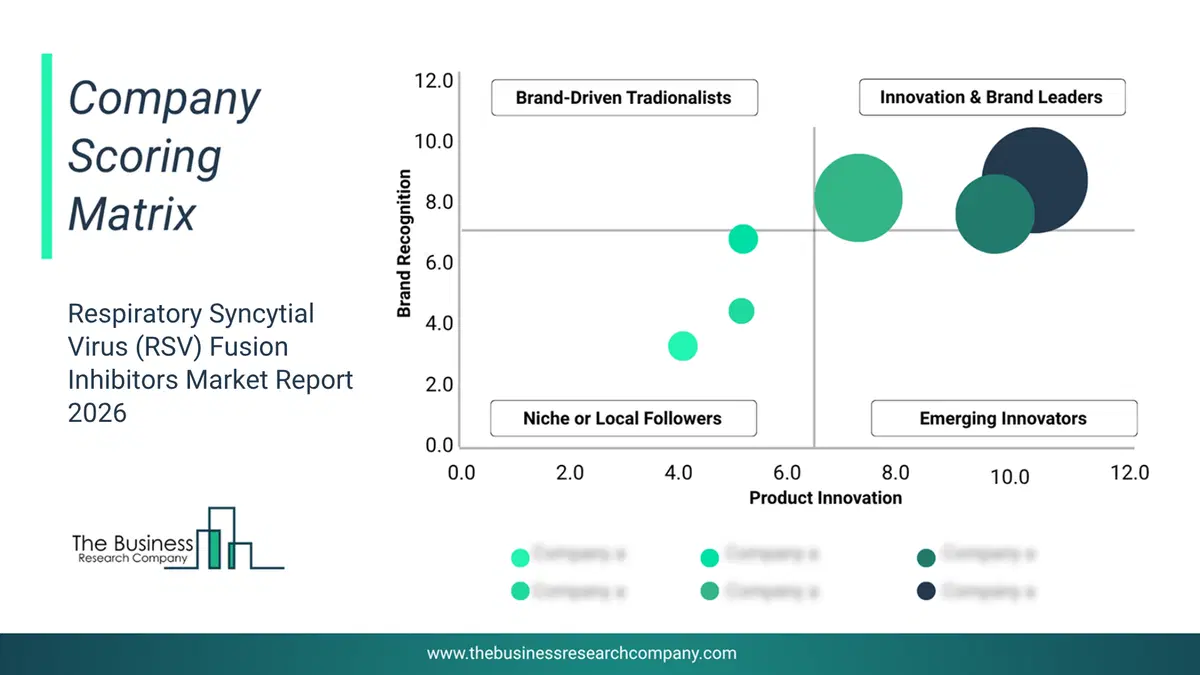
This chart maps companies by product innovation and brand strength, with bubble size indicating relative revenue, helping identify market leaders, challengers, and niche players. This is an illustrative chart; the full report provides a complete and accurate competitive analysis.
Global Respiratory Syncytial Virus (RSV) Fusion Inhibitors Market Trends and Insights
Major companies operating in the respiratory syncytial virus (RSV) fusion inhibitors market are focusing on developing advanced prophylactic solutions, such as long-acting monoclonal antibodies, to boost immunity, enhance protection, and reduce the burden of infectious diseases in vulnerable populations. Long-acting monoclonal antibodies (mAbs) refer to a class of therapeutic antibodies that have been engineered or formulated to remain active in the body for an extended period compared to standard monoclonal antibodies. For instance, in June 2025, Merck & Co. Inc., a US-based biopharmaceutical company, received approval from the U.S. Food and Drug Administration (FDA) for ENFLONSIA (clesrovimab-cfor), a long-acting monoclonal antibody for the prevention of RSV lower-respiratory-tract disease in infants born during or entering their first RSV season. It is a fully human IgG1κ monoclonal antibody with Fc-region modifications to extend its half-life and binds to the RSV fusion (F) protein, preventing viral entry and fusion with host respiratory epithelial cells. It is designed to offer long-lasting protection with a single dose, providing a new immunization option to help protect this vulnerable pediatric population.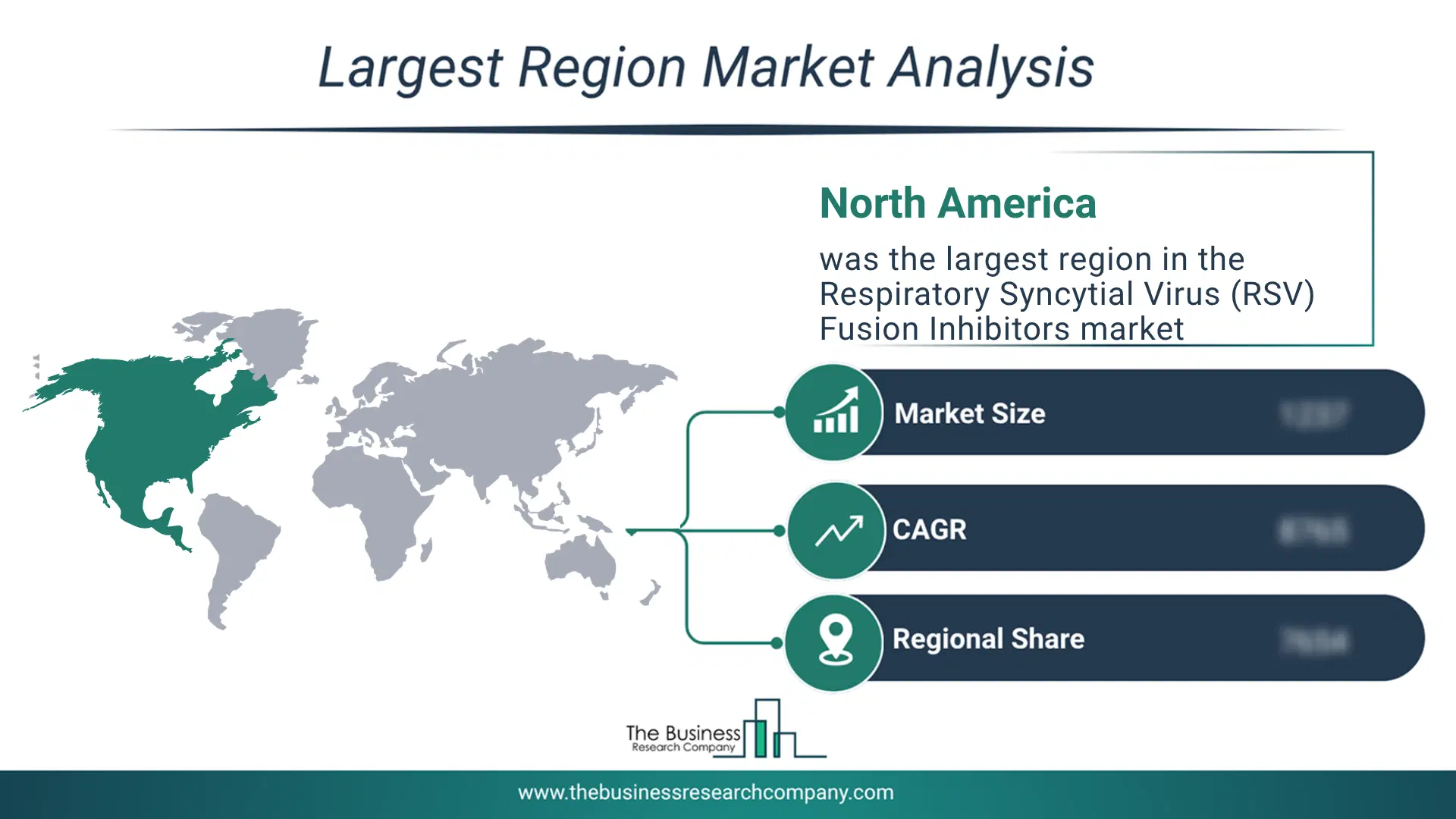
Regional Insights
North America was the largest region in the respiratory syncytial virus (RSV) fusion inhibitors market in 2025. Asia-Pacific is expected to be the fastest-growing region in the forecast period. The regions covered in this market report are Asia-Pacific, South East Asia, Western Europe, Eastern Europe, North America, South America, Middle East, Africa. The countries covered in this market report are Australia, Brazil, China, France, Germany, India, Indonesia, Japan, Taiwan, Russia, South Korea, UK, USA, Canada, Italy, Spain.What Defines the Respiratory Syncytial Virus (RSV) Fusion Inhibitors Market?
The respiratory syncytial virus (RSV) fusion inhibitors market consists of sales of inhalation or nasal spray formulations, long-acting biologics or peptides under development, and combination therapies with other antiviral or supportive agents. Values in this market are ‘factory gate’ values, that is, the value of goods sold by the manufacturers or creators of the goods, whether to other entities (including downstream manufacturers, wholesalers, distributors, and retailers) or directly to end customers. The value of goods in this market includes related services sold by the creators of the goods.How is Market Value Defined and Measured?
The market value is defined as the revenues that enterprises gain from the sale of goods and/or services within the specified market and geography through sales, grants, or donations in terms of the currency (in USD unless otherwise specified). The revenues for a specified geography are consumption values that are revenues generated by organizations in the specified geography within the market, irrespective of where they are produced. It does not include revenues from resales along the supply chain, either further along the supply chain or as part of other products.
This chart presents market attractiveness based on a quantitative evaluation of growth, competition, strategic alignment, and risk, offering a clear view of opportunity areas for decision-making. This chart is for illustrative purposes; the full report contains the complete analysis.

This chart highlights the Total Addressable Market (TAM) by estimating the maximum revenue opportunity using an assumption-driven approach, supporting strategic planning and opportunity sizing across markets. The chart is illustrative; the full report provides a more comprehensive analysis.
What Key Data and Analysis Are Included in the Respiratory Syncytial Virus (RSV) Fusion Inhibitors Market Report 2026?
The respiratory syncytial virus (rsv) fusion inhibitors market research report is one of a series of new reports from The Business Research Company that provides market statistics, including industry global market size, regional shares, competitors with the market share, detailed market segments, market trends and opportunities, and any further data you may need to thrive in the respiratory syncytial virus (rsv) fusion inhibitors industry. The market research report delivers a complete perspective of everything you need, with an in-depth analysis of the current and future state of the industry.Respiratory Syncytial Virus (RSV) Fusion Inhibitors Market Report Forecast Analysis
| Report Attribute | Details |
|---|---|
| Market Size Value In 2026 | $1.72 billion |
| Revenue Forecast In 2030 | $3.17 billion |
| Growth Rate | CAGR of 16.8% from 2026 to 2030 |
| Base Year For Estimation | 2025 |
| Actual Estimates/Historical Data | 2020-2025 |
| Forecast Period | 2026 - 2030 |
| Market Representation | Revenue in USD Billion and CAGR from 2026 to 2030 |
| Segments Covered | Drug Type, Route Of Administration, Application, End-User |
| Regional Scope | Asia-Pacific, Western Europe, Eastern Europe, North America, South America, Middle East, Africa |
| Country Scope | The countries covered in the report are Australia, Brazil, China, France, Germany, India, Indonesia, Japan, Taiwan, Russia, South Korea, UK, USA, Canada, Italy, Spain. |
| Key Companies Profiled | Merck & Co. Inc., Pfizer Inc., AstraZeneca plc, Bristol‑Myers Squibb Company, Sanofi S.A., Gilead Sciences Inc., Johnson & Johnson, Taisho Pharmaceutical Co. Ltd., Enanta Pharmaceuticals Inc., Shanghai Ark Biopharmaceutical Co. Ltd., Medivir AB, ARNAV Biotech |
| Customization Scope | Request for Customization |
| Pricing And Purchase Options | Explore Purchase Options |