
Ribonucleic Acid Interference (RNAi) Technology Market Report 2026
Global Outlook – By Product (Micro Ribonucleic Acid (miRNA), Small Interfering Ribonucleic Acid (siRNA), Other Products), By Delivery Method (Viral Vectors, Nanoparticles, Chemical Modifications, Physical Methods), By Application (Therapeutics, Drug Discovery, Agriculture, Diagnostics), By End-User (Pharmaceutical And Biotechnology Companies, Academic And Research Institutes, Contract Research Organizations (CROs) And Contract Manufacturing Organizations (CMOs)) – Market Size, Trends, Strategies, and Forecast to 2030
Ribonucleic Acid Interference (RNAi) Technology Market Overview
• Ribonucleic Acid Interference (RNAi) Technology market size has reached to $4.43 billion in 2025 • Expected to grow to $9.19 billion in 2030 at a compound annual growth rate (CAGR) of 15.6% • Growth Driver: Increasing Demand For Targeted Therapeutics Fueling The Growth Of The Market Due To Advancements In Precision Medicine • Market Trend: Strategic Funding Boosts Advancement Of RNAi Therapeutics • North America was the largest region in 2025 and Asia-Pacific is the fastest growing region.What Is Covered Under Ribonucleic Acid Interference (RNAi) Technology Market?
Ribonucleic acid interference (RNAi) technology is a biological process that regulates gene expression by using small RNA molecules to silence specific messenger RNA (mRNA) sequences. It is used to regulate gene activity, allowing scientists to silence or reduce the production of targeted proteins. it helps to inhibit the expression of disease-related genes, making it a powerful tool for genetic research, drug development, and therapeutic applications. The main products of ribonucleic acid interference (RNAi) technology are micro ribonucleic acid (miRNA), small interfering ribonucleic acid (siRNA), and others. Micro ribonucleic acid (miRNA) refers to short, non-coding ribonucleic acid molecules that bind complementary messenger ribonucleic acid sequences to repress translation or promote degradation, thereby fine-tuning gene expression. The various delivery methods include viral vectors, nanoparticles, chemical modifications and physical methods and are applied across various fields such as therapeutics, drug discovery, agriculture and diagnostics. It is widely used by pharmaceutical and biotechnology companies, academic and research institutes and contract research organizations (CROs) and contract manufacturing organizations (CMOs).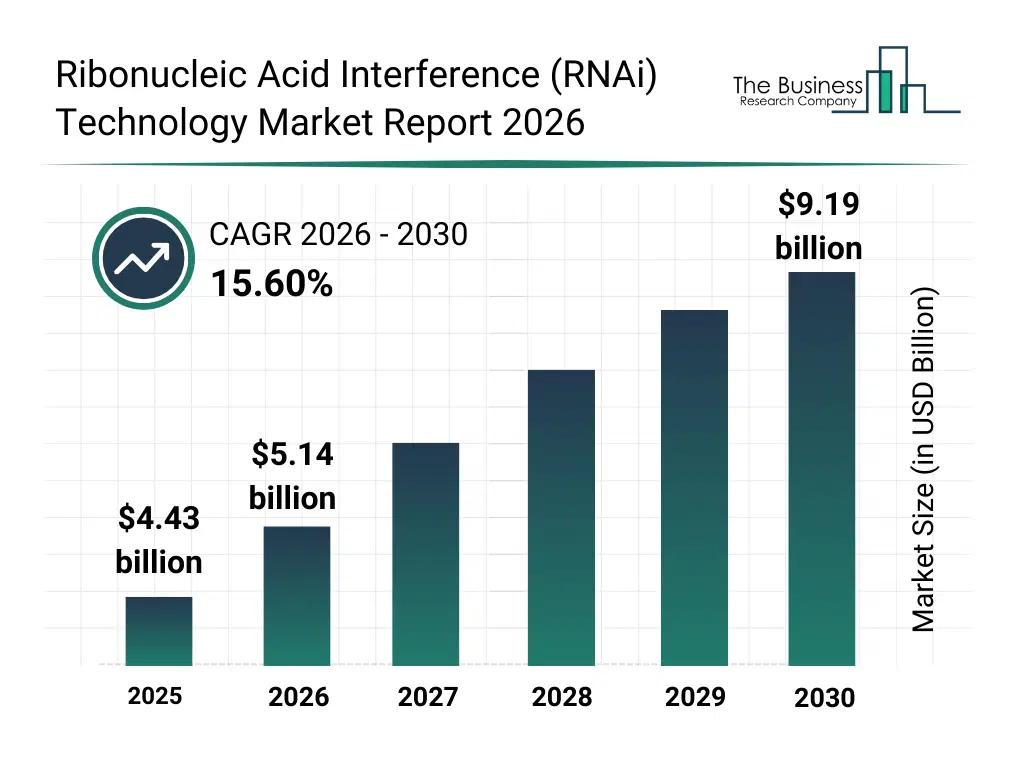
What Is The Ribonucleic Acid Interference (RNAi) Technology Market Size and Share 2026?
The ribonucleic acid interference (rnai) technology market size has grown rapidly in recent years. It will grow from $4.43 billion in 2025 to $5.14 billion in 2026 at a compound annual growth rate (CAGR) of 15.9%. The growth in the historic period can be attributed to advancements in molecular biology research, early clinical success of rnai therapeutics, expansion of academic gene research programs, availability of robust screening libraries, growth of biotech innovation ecosystems.What Is The Ribonucleic Acid Interference (RNAi) Technology Market Growth Forecast?
The ribonucleic acid interference (rnai) technology market size is expected to see rapid growth in the next few years. It will grow to $9.19 billion in 2030 at a compound annual growth rate (CAGR) of 15.6%. The growth in the forecast period can be attributed to increasing commercialization of rnai-based drugs, rising investments in rare disease therapeutics, expansion of nanoparticle delivery technologies, growing pharmaceutical partnerships, increasing regulatory acceptance of gene-silencing treatments. Major trends in the forecast period include increasing adoption of gene silencing therapies, rising use of sirna-based drug platforms, growing integration of rnai in precision medicine, expansion of targeted genetic disease treatments, enhanced delivery system optimization.
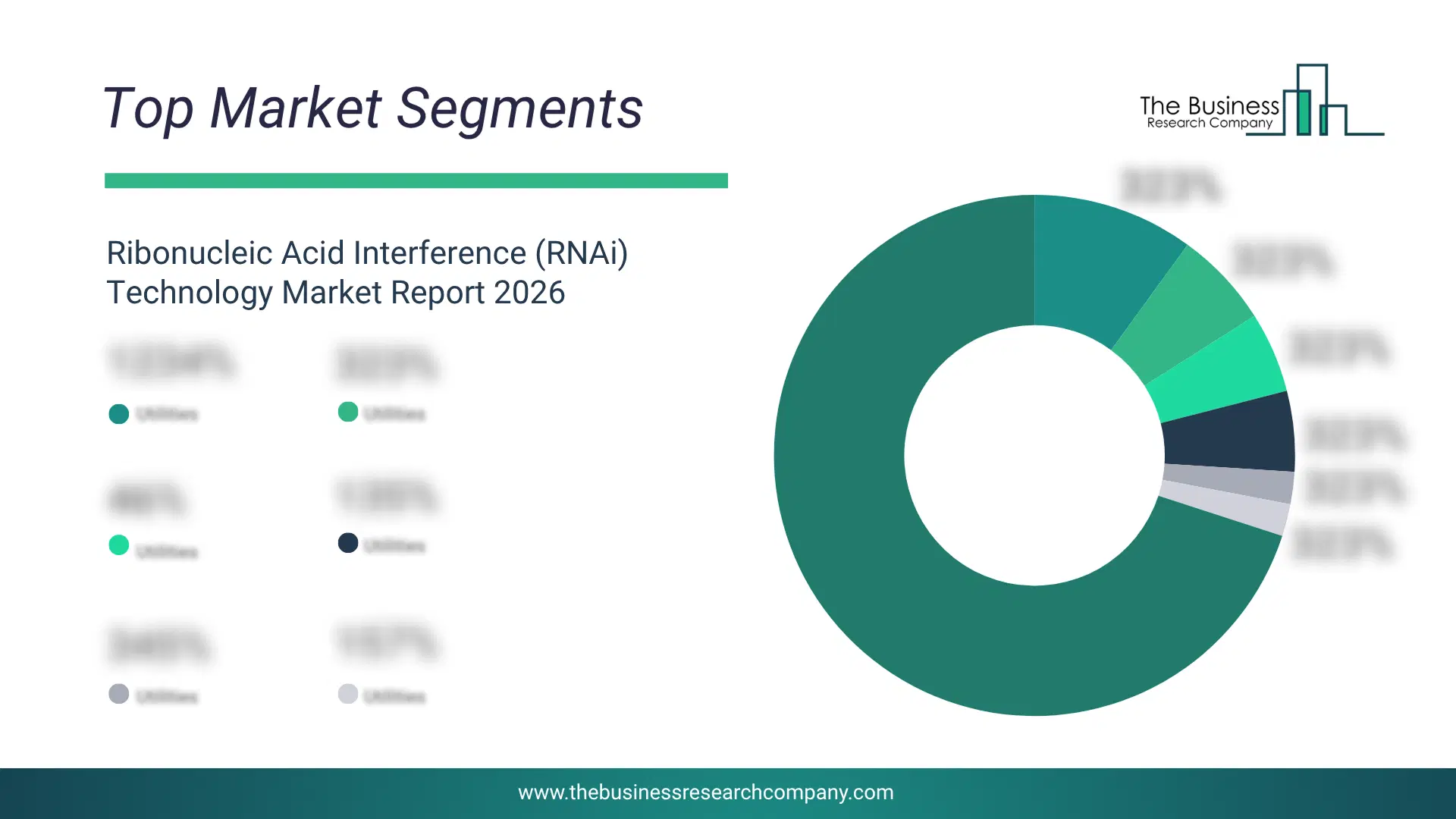
Global Ribonucleic Acid Interference (RNAi) Technology Market Segmentation
1) By Product: Micro Ribonucleic Acid (miRNA), Small Interfering Ribonucleic Acid (siRNA), Other Products 2) By Delivery Method: Viral Vectors, Nanoparticles, Chemical Modifications, Physical Methods 3) By Application: Therapeutics, Drug Discovery, Agriculture, Diagnostics 4) By End-User: Pharmaceutical And Biotechnology Companies, Academic And Research Institutes, Contract Research Organizations (CROs) And Contract Manufacturing Organizations (CMOs) Subsegments: 1) By Micro Ribonucleic Acid (miRNA): Micro Ribonucleic Acid Mimics, Micro Ribonucleic Acid Inhibitors, Micro Ribonucleic Acid Expression Vectors, Micro Ribonucleic Acid Profiling And Quantification Kits 2) By Small Interfering Ribonucleic Acid (siRNA): Small Interfering Ribonucleic Acid Synthetic Duplexes, Small Interfering Ribonucleic Acid Dicer Substrate Molecules, Small Interfering Ribonucleic Acid Self Delivering Conjugates, Small Interfering Ribonucleic Acid N Acetylgalactosamine Conjugates 3) By Other Products: Short Hairpin Ribonucleic Acid Expression Constructs, Ribonucleic Acid Interference Screening Libraries, Ribonucleic Acid Interference Transfection Reagents, Micro Ribonucleic Acid And Small Interfering Ribonucleic Acid Research KitsWhat Is The Driver Of The Ribonucleic Acid Interference (RNAi) Technology Market?
The increasing demand for targeted therapeutics is expected to propel the growth of the ribonucleic acid interference (RNAi) technology market going forward. Targeted therapies are treatments that specifically target and inhibit molecular abnormalities in cancer or other diseases to improve treatment precision and minimize harm to healthy cells. The rising focus on targeted therapies is primarily driven by the advancements in precision medicine, which enables personalized, more effective treatments based on individual genetic profiles. Ribonucleic Acid Interference (RNAi) Technology enhances demand for targeted therapeutics by enabling precise gene silencing to treat genetic and rare diseases. It supports the development of highly specific and effective treatments, driving innovation in personalized medicine. For instance, in December 2024, according to the American Society of Gene & Cell Therapy (ASGCT), a US-based non-profit medical and scientific organization, the Food and Drug Administration (FDA) approved 6 gene therapy products in 2023, up from 5 approvals in 2022. Therefore, the increasing demand for targeted therapeutics is driving the growth of the ribonucleic acid interference (RNAi) technology industry.Key Players In The Global Ribonucleic Acid Interference (RNAi) Technology Market
Major companies operating in the ribonucleic acid interference (rnai) technology market are F. Hoffmann-La Roche AG, Merck KGaA, Novartis AG, Thermo Fisher Scientific Inc., Danaher Corporation, Revvity Inc., QIAGEN N.V., Alnylam Pharmaceuticals Inc., Ionis Pharmaceuticals Inc., GenScript Biotech Corporation, Promega Corporation, Arrowhead Pharmaceuticals Inc., Silence Therapeutics plc, Creative Biolabs Inc., Bioneer Corporation, Genevant Sciences Ltd., Gradalis Inc., Altogen Labs LLC, Sirnaomics Inc., Altogen Biosystems Inc.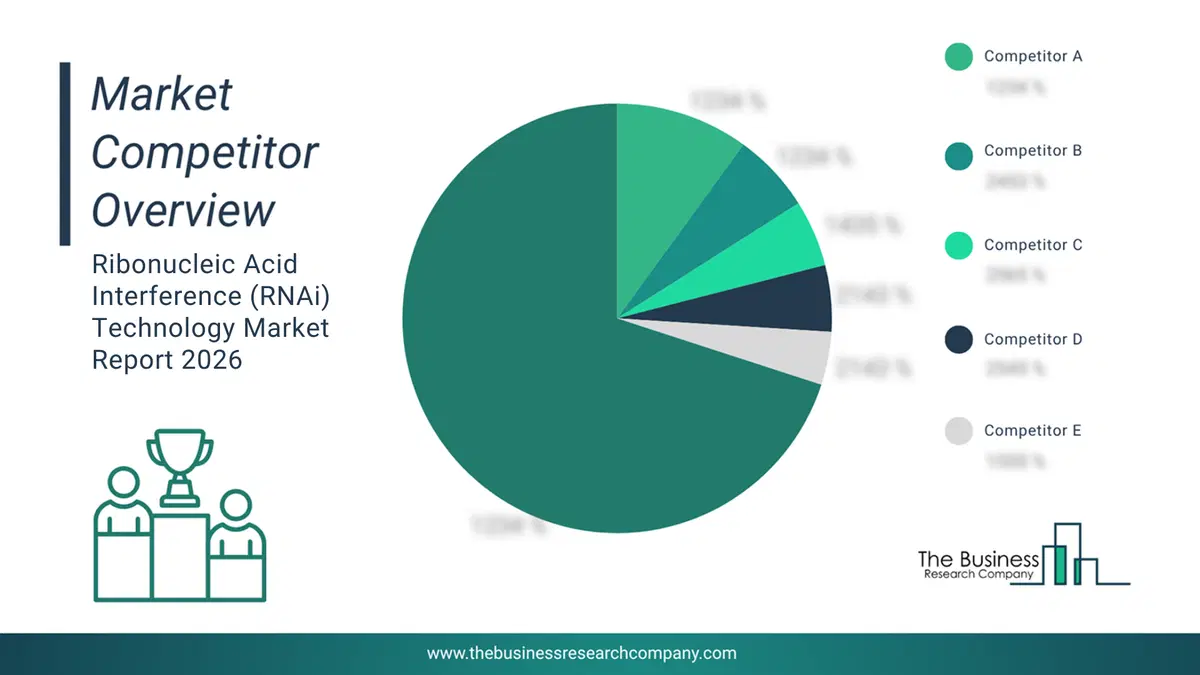
This chart is for illustrative purposes; the full report includes a detailed competitor analysis and comprehensive overview of the top 10 companies in the market.
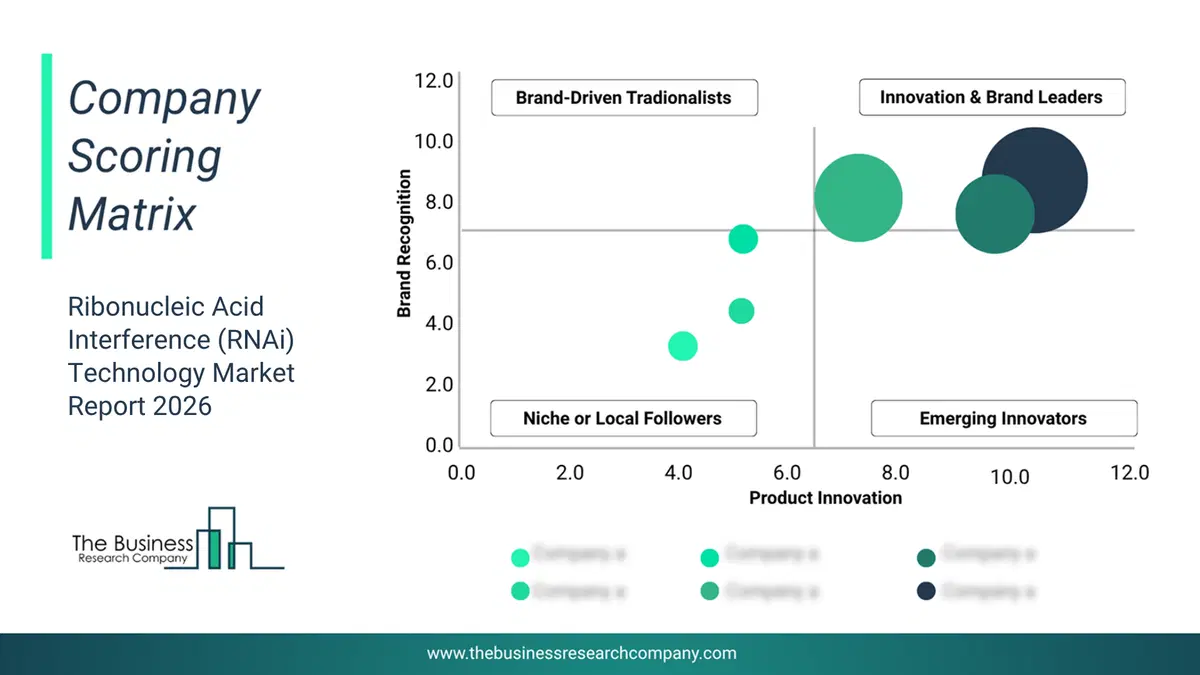
This chart maps companies by product innovation and brand strength, with bubble size indicating relative revenue, helping identify market leaders, challengers, and niche players. This is an illustrative chart; the full report provides a complete and accurate competitive analysis.
Global Ribonucleic Acid Interference (RNAi) Technology Market Trends and Insights
Major companies operating in the ribonucleic acid interference (RNAi) technology market are focusing on platform integration, such as strategic funding and support, to streamline the development, delivery, and commercialization of RNA interference (RNAi) therapeutics, enabling a sustainable pipeline of multiple programs across diverse disease areas. Strategic funding and support refer to securing investment and resources from venture capital, industry partners, and other stakeholders to accelerate research, development, and commercialization of RNA interference (RNAi) therapeutics. For instance, in October 2024, City Therapeutics Inc., a US-based biopharmaceutical company, received $135 million in Series A financing led by ARCH Venture Partners, with participation from other leading life sciences investors, to lead the future of RNA interference (RNAi)-based medicine. This funding will develop RNAi-based medicine by leveraging its proprietary lipid nanoparticle (LNP) delivery platform, designed to target tissues beyond the liver with high precision. This platform aims to overcome a key historical limitation in the field, enabling the development of therapies for a wider range of genetic disorders.What Are Latest Mergers And Acquisitions In The Ribonucleic Acid Interference (RNAi) Technology Market?
In July 2023, Novartis AG, a Switzerland-based pharmaceutical company, acquired DTx Pharma Inc. for an undisclosed amount. With this acquisition, Novartis AG aims to strengthen its RNAi therapeutic capabilities and expand its neuromuscular disease portfolio using DTx Pharma’s FALCON delivery platform. DTx Pharma Inc. is a US-based preclinical-stage biotechnology company specializing in RNA interference (RNAi) technology for developing RNAi-based therapeutics.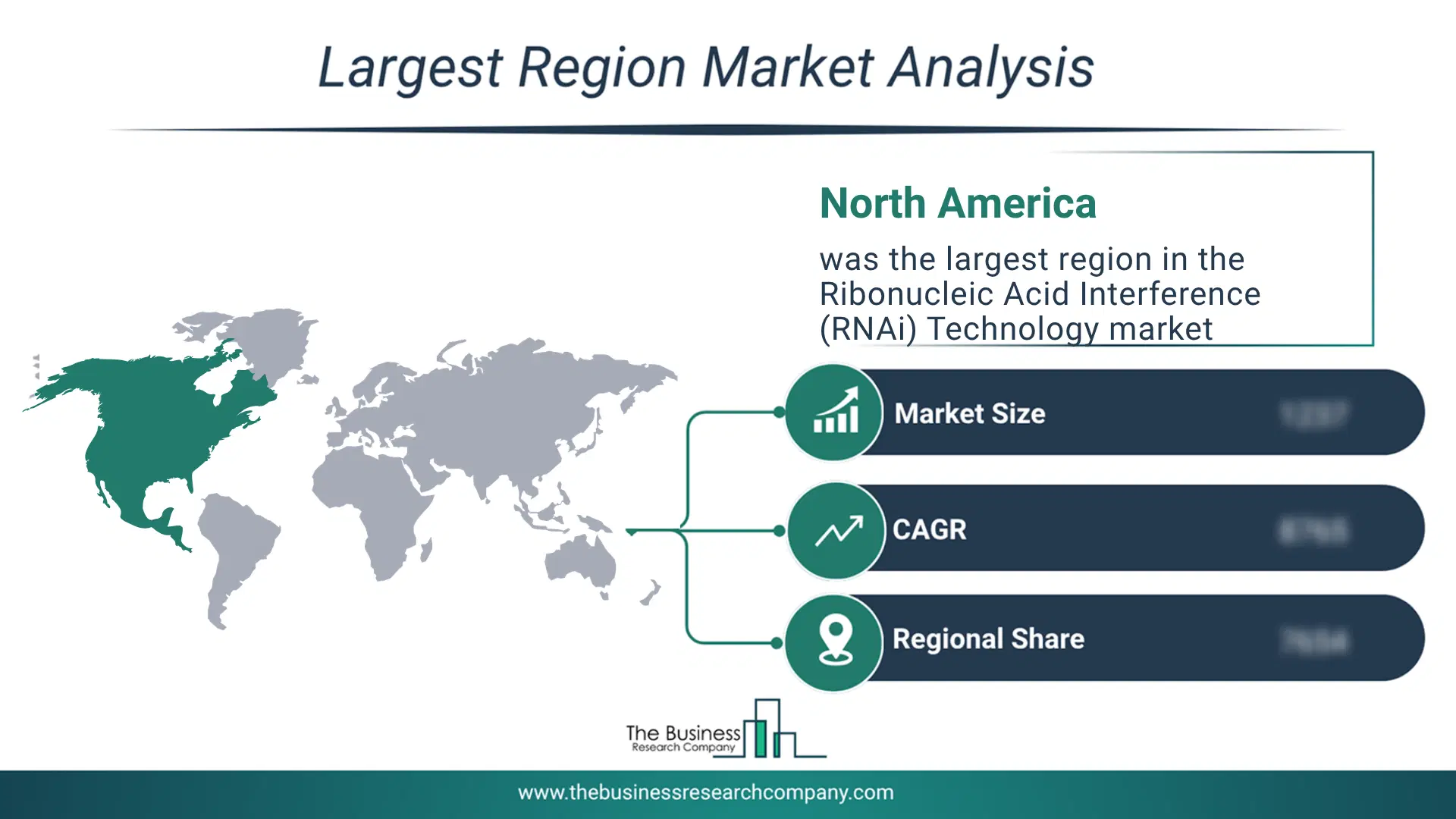
Regional Insights
North America was the largest region in the ribonucleic acid interference (RNAi) technology market in 2025. Asia-Pacific is expected to be the fastest-growing region in the forecast period. The regions covered in this market report are Asia-Pacific, South East Asia, Western Europe, Eastern Europe, North America, South America, Middle East, Africa. The countries covered in this market report are Australia, Brazil, China, France, Germany, India, Indonesia, Japan, Taiwan, Russia, South Korea, UK, USA, Canada, Italy, Spain.What Defines the Ribonucleic Acid Interference (RNAi) Technology Market?
The ribonucleic acid interference (RNAi) technology consists of revenues earned by entities by providing services such as gene silencing services, custom ribonucleic acid (RNA) synthesis, oligonucleotide design, ribonucleic acid (RNA) sequencing, target validation, functional genomics screening, data analysis, drug discovery support, delivery system optimization, and molecular assay development. The market value includes the value of related goods sold by the service provider or included within the service offering. The RNA interference (RNAi) technology market also includes sales of microRNA mimics, transfection reagents, ribonucleic acid (RNA) delivery kits, plasmid vectors, assay kits, cell lines, reagents and buffers, and laboratory consumables. Values in this market are ‘factory gate’ values; that is, the value of goods sold by the manufacturers or creators of the goods, whether to other entities (including downstream manufacturers, wholesalers, distributors, and retailers) or directly to end customers. The value of goods in this market includes related services sold by the creators of the goods.How is Market Value Defined and Measured?
The market value is defined as the revenues that enterprises gain from the sale of goods and/or services within the specified market and geography through sales, grants, or donations in terms of the currency (in USD unless otherwise specified). The revenues for a specified geography are consumption values that are revenues generated by organizations in the specified geography within the market, irrespective of where they are produced. It does not include revenues from resales along the supply chain, either further along the supply chain or as part of other products.
This chart presents market attractiveness based on a quantitative evaluation of growth, competition, strategic alignment, and risk, offering a clear view of opportunity areas for decision-making. This chart is for illustrative purposes; the full report contains the complete analysis.

This chart highlights the Total Addressable Market (TAM) by estimating the maximum revenue opportunity using an assumption-driven approach, supporting strategic planning and opportunity sizing across markets. The chart is illustrative; the full report provides a more comprehensive analysis.
What Key Data and Analysis Are Included in the Ribonucleic Acid Interference (RNAi) Technology Market Report 2026?
The ribonucleic acid interference (rnai) technology market research report is one of a series of new reports from The Business Research Company that provides market statistics, including industry global market size, regional shares, competitors with the market share, detailed market segments, market trends and opportunities, and any further data you may need to thrive in the ribonucleic acid interference (rnai) technology industry. The market research report delivers a complete perspective of everything you need, with an in-depth analysis of the current and future state of the industry.Ribonucleic Acid Interference (RNAi) Technology Market Report Forecast Analysis
| Report Attribute | Details |
|---|---|
| Market Size Value In 2026 | $5.14 billion |
| Revenue Forecast In 2030 | $9.19 billion |
| Growth Rate | CAGR of 15.9% from 2026 to 2030 |
| Base Year For Estimation | 2025 |
| Actual Estimates/Historical Data | 2020-2025 |
| Forecast Period | 2026 - 2030 |
| Market Representation | Revenue in USD Billion and CAGR from 2026 to 2030 |
| Segments Covered | Product, Delivery Method, Application, End-User |
| Regional Scope | Asia-Pacific, Western Europe, Eastern Europe, North America, South America, Middle East, Africa |
| Country Scope | The countries covered in the report are Australia, Brazil, China, France, Germany, India, Indonesia, Japan, Taiwan, Russia, South Korea, UK, USA, Canada, Italy, Spain. |
| Key Companies Profiled | F. Hoffmann-La Roche AG, Merck KGaA, Novartis AG, Thermo Fisher Scientific Inc., Danaher Corporation, Revvity Inc., QIAGEN N.V., Alnylam Pharmaceuticals Inc., Ionis Pharmaceuticals Inc., GenScript Biotech Corporation, Promega Corporation, Arrowhead Pharmaceuticals Inc., Silence Therapeutics plc, Creative Biolabs Inc., Bioneer Corporation, Genevant Sciences Ltd., Gradalis Inc., Altogen Labs LLC, Sirnaomics Inc., Altogen Biosystems Inc. |
| Customization Scope | Request for Customization |
| Pricing And Purchase Options | Explore Purchase Options |