

Scaffold Free 3D Cell Culture Market Report 2026
Global Outlook – By Product Type (3D Cell Culture Platforms, 3D Bioprinting Products, 3D Cell Culture Kits, Microfluidic Devices), By Cellular Components (Stem Cells, Adherent Cell Cultures, Suspension Cell Cultures, Immune Cells), By Technique (Hanging Drop Method, Magnetic Levitation, Microfluidics), By Application (Drug Discovery, Regenerative Medicine, Tissue Engineering, Oncology Research, Stem Cell Research), By End-User (Academic Research Institutions, Pharmaceutical And Biotechnology Companies, Contract Research Organizations (CROs), Clinics And Hospitals) - Market Size, Trends, Strategies, and Forecast to 2030
Scaffold Free 3D Cell Culture Market Overview
• Scaffold Free 3D Cell Culture market size has reached to $0.85 billion in 2025 • Expected to grow to $1.49 billion in 2030 at a compound annual growth rate (CAGR) of 11.9% • Growth Driver: Growth Of Personalized Medicine Driving The Expansion Of The Market Due To Increasing Use Of Patient-specific Tissue Models For Tailored Therapies • Market Trend: Advanced Designs Enable High-Throughput Spheroid Formation And Monitoring • North America was the largest region in 2025 and Asia-Pacific is the fastest growing region.What Is Covered Under Scaffold Free 3D Cell Culture Market?
Scaffold free 3D cell culture is a technique that allows cells to grow and self-assemble into three-dimensional structures without the use of external scaffolding materials. This approach relies on the cells’ natural ability to adhere to one another and form spheroids or organoid-like structures, better mimicking the architecture and function of native tissues. It provides a more physiologically relevant environment for studying cell behavior, tissue development, and drug responses. The main product types of scaffold free 3D cell culture are 3D cell culture platforms, 3D bioprinting products, 3D cell culture kits, and microfluidic devices. 3D cell culture platforms refer to advanced systems that allow cells to grow and interact in a three-dimensional environment without the use of scaffolding materials, closely mimicking natural tissue architecture and function. The key cellular components used include stem cells, adherent cell cultures, suspension cell cultures, and immune cells. Major techniques include the hanging drop method, magnetic levitation, and microfluidics. Key applications include drug discovery, regenerative medicine, tissue engineering, oncology research, and stem cell research, with primary end users being academic research institutions, pharmaceutical and biotechnology companies, contract research organizations (CROs), and clinics and hospitals.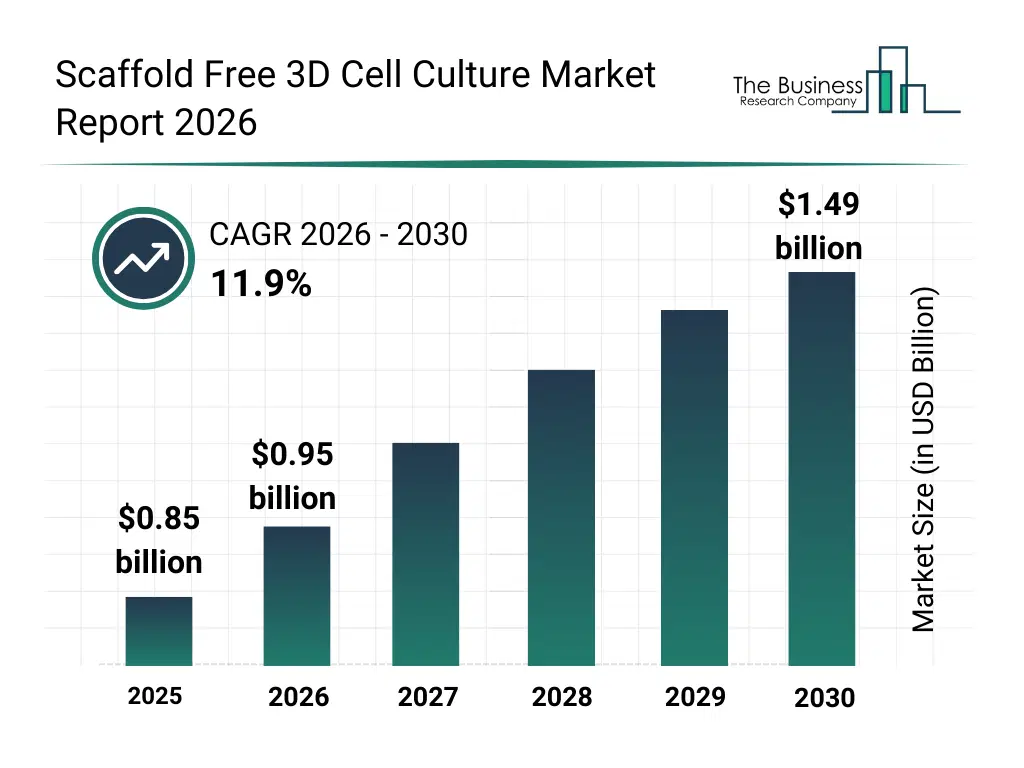
What Is The Scaffold Free 3D Cell Culture Market Size and Share 2026?
The scaffold free 3d cell culture market size has grown rapidly in recent years. It will grow from $0.85 billion in 2025 to $0.95 billion in 2026 at a compound annual growth rate (CAGR) of 12.2%. The growth in the historic period can be attributed to advancements in cell biology research, increasing limitations of 2D cell culture models, expansion of pharmaceutical R&D activities, rising adoption of 3D culture techniques, growth in stem cell research.What Is The Scaffold Free 3D Cell Culture Market Growth Forecast?
The scaffold free 3d cell culture market size is expected to see rapid growth in the next few years. It will grow to $1.49 billion in 2030 at a compound annual growth rate (CAGR) of 11.9%. The growth in the forecast period can be attributed to increasing demand for predictive drug screening models, rising investments in regenerative medicine research, expansion of organ-on-chip technologies, growing focus on reducing animal testing, integration of AI in cell analysis. Major trends in the forecast period include increasing adoption of organoid and spheroid models, rising use of scaffold-free platforms in drug discovery, growing integration of microfluidic cell culture systems, expansion of personalized medicine research applications, enhanced focus on physiologically relevant in vitro models.
Global Scaffold Free 3D Cell Culture Market Segmentation
1) By Product Type: 3D Cell Culture Platforms, 3D Bioprinting Products, 3D Cell Culture Kits, Microfluidic Devices 2) By Cellular Components: Stem Cells, Adherent Cell Cultures, Suspension Cell Cultures, Immune Cells 3) By Technique: Hanging Drop Method, Magnetic Levitation, Microfluidics 4) By Application: Drug Discovery, Regenerative Medicine, Tissue Engineering, Oncology Research, Stem Cell Research 5) By End-User: Academic Research Institutions, Pharmaceutical And Biotechnology Companies, Contract Research Organizations (CROs), Clinics And Hospitals Subsegments: 1) By 3D Cell Culture Platforms: Hanging Drop Plates, Low-Adhesion Microplates, Ultra-Low Attachment (ULA) Plates And Flasks, Spheroid Culture Dishes, Spinner Flasks And Bioreactors, Suspension Culture Systems 2) By 3D Bioprinting Products: Bioprinters, Bioinks, Printheads And Nozzles, Printing Software, Consumables And Accessories 3) By 3D Cell Culture Kits: Spheroid Formation Kits, Organoid Culture Kits, Co-Culture Kits, Tumor Model Kits, Stem Cell Differentiation Kits, Assay-Ready 3D Cell Culture Kits 4) By Microfluidic Devices: Organ-On-A-Chip Systems, Lab-On-A-Chip Platforms, Microchamber Arrays, Perfusion-Based Microfluidic Devices, Droplet-Based Microfluidic Systems, Gradient Generating Microfluidic DevicesWhat Is The Driver Of The Scaffold Free 3D Cell Culture Market?
The growth of personalized medicine is expected to propel the growth of the scaffold free 3D cell culture market going forward. Personalized medicine is a medical approach that tailors treatments and healthcare decisions based on individual genetic, environmental, and lifestyle factors. The growth of personalized medicine is driven by advancements in genomics, biotechnology, and data analytics, enabling more precise, effective, and individualized treatments. Scaffold-free 3D cell culture is used in personalized medicine to create patient-specific tissue models that enable accurate drug testing and tailored therapeutic strategies. For instance, in February 2024, the Personalized Medicine Coalition, a US-based non-profit organization, reported that in 2023, the FDA approved 16 new personalized treatments for patients with rare diseases, a significant increase from the six approved in 2022. Therefore, the growth of personalized medicine is driving the growth of the scaffold free 3D cell culture industry.Key Players In The Global Scaffold Free 3D Cell Culture Market
Major companies operating in the scaffold free 3d cell culture market are Thermo Fisher Scientific Inc., Merck KGaA, Corning Incorporated, Lonza Group AG, Sartorius AG, Hamilton Company, CELLINK AB, Creative Bioarray Inc., InSphero AG, Creative Biolabs Inc., Mimetas B.V., REPROCELL Inc., Synthecon Incorporated, Advanced Solutions Life Sciences LLC, Cherry Biotech SAS, celVivo ApS, Elveflow, Guangzhou Jet Bio-Filtration Co. Ltd., Organovo Holdings Inc., Alfa Cytology Co. Ltd.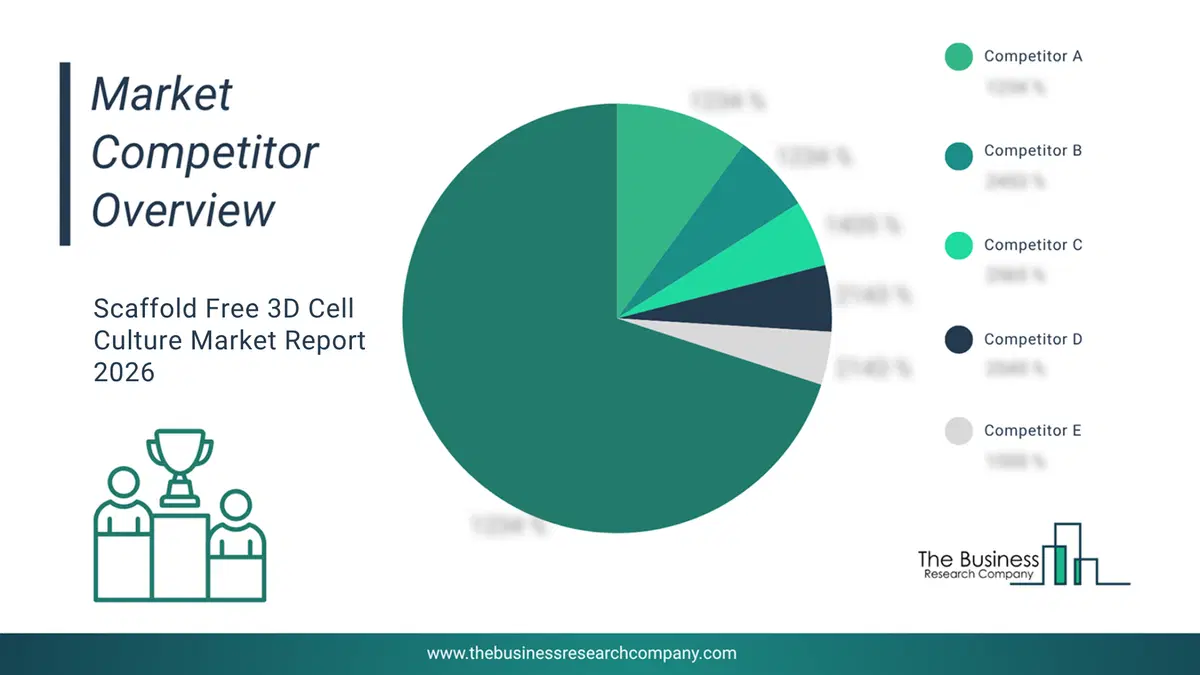
This chart is for illustrative purposes; the full report includes a detailed competitor analysis and comprehensive overview of the top 10 companies in the market.
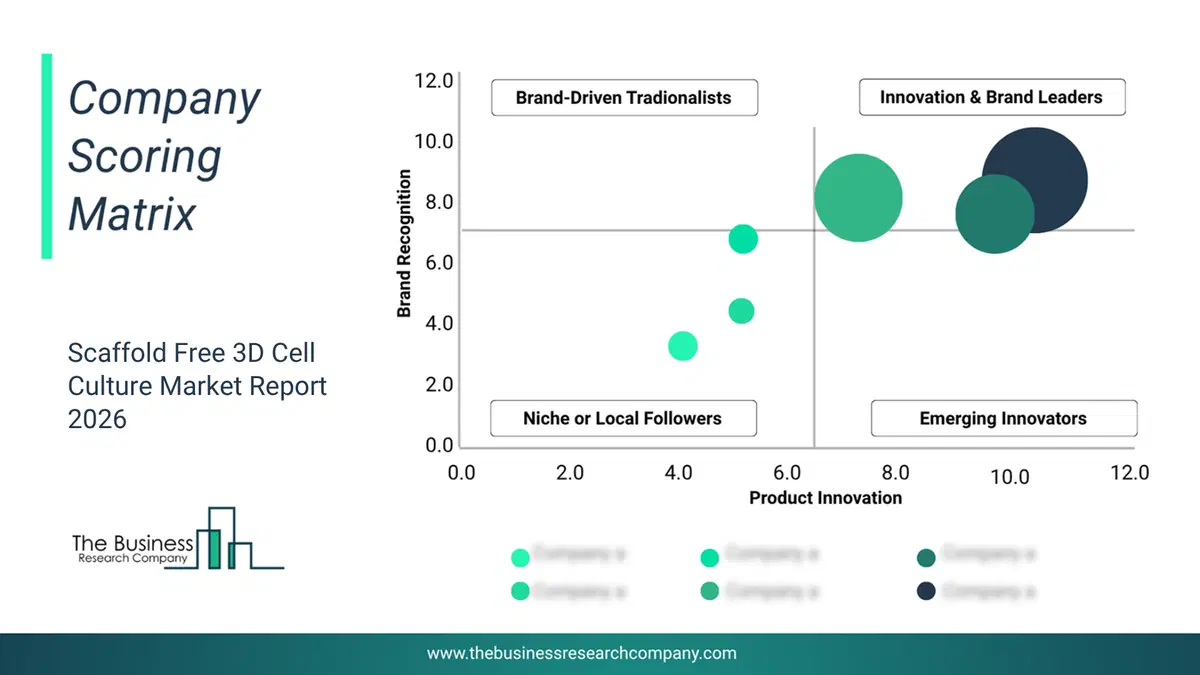
This chart maps companies by product innovation and brand strength, with bubble size indicating relative revenue, helping identify market leaders, challengers, and niche players. This is an illustrative chart; the full report provides a complete and accurate competitive analysis.
Global Scaffold Free 3D Cell Culture Market Trends and Insights
Major companies operating in the scaffold free 3D cell culture market are focusing on innovation in 3D cell culture, such as optically clear flask bottoms to enable easy spheroid visualization and monitoring, uniform microcavity designs for consistent spheroid formation, and high-throughput formats to increase efficiency in drug discovery and cancer research. An optically clear flask bottom is a transparent base that allows easy monitoring and imaging of cells or spheroids. For instance, in February 2024, Corning Incorporated, a US-based company specializing in specialty glass, ceramics, and life sciences products, introduced the Corning Elplasia 12K flask as part of its 3D cell culture portfolio. This innovative flask is specifically designed to support large-scale spheroid formation, allowing researchers to produce roughly 12,000 uniform spheroids per flask. Compared to traditional 96-well spheroid plates, it provides greater consistency in spheroid size, improved reproducibility, and significantly higher yields. The flask is compatible with a wide range of tumor, normal, and primary cell types commonly used in 3D cell culture studies. It is particularly useful for applications in drug screening, cancer research, and the development of advanced therapies, addressing the growing demand for scalable and reliable 3D cell models.What Are Latest Mergers And Acquisitions In The Scaffold Free 3D Cell Culture Market?
In January 2025, Merck KGaA, a Germany-based company that provides products and services across healthcare, life science, and electronics, acquired HUB Organoids Holding B.V. for an undisclosed amount. Through this acquisition, Merck KGaA aims to expand its next-generation, scaffold-free 3D cell-culture capabilities by integrating HUB Organoids’ patient-derived organoid technology to accelerate and enhance drug discovery and development. HUB Organoids Holding B.V. is a Netherlands-based biotechnology company specializing in patient-derived organoid technology for drug discovery and personalized medicine.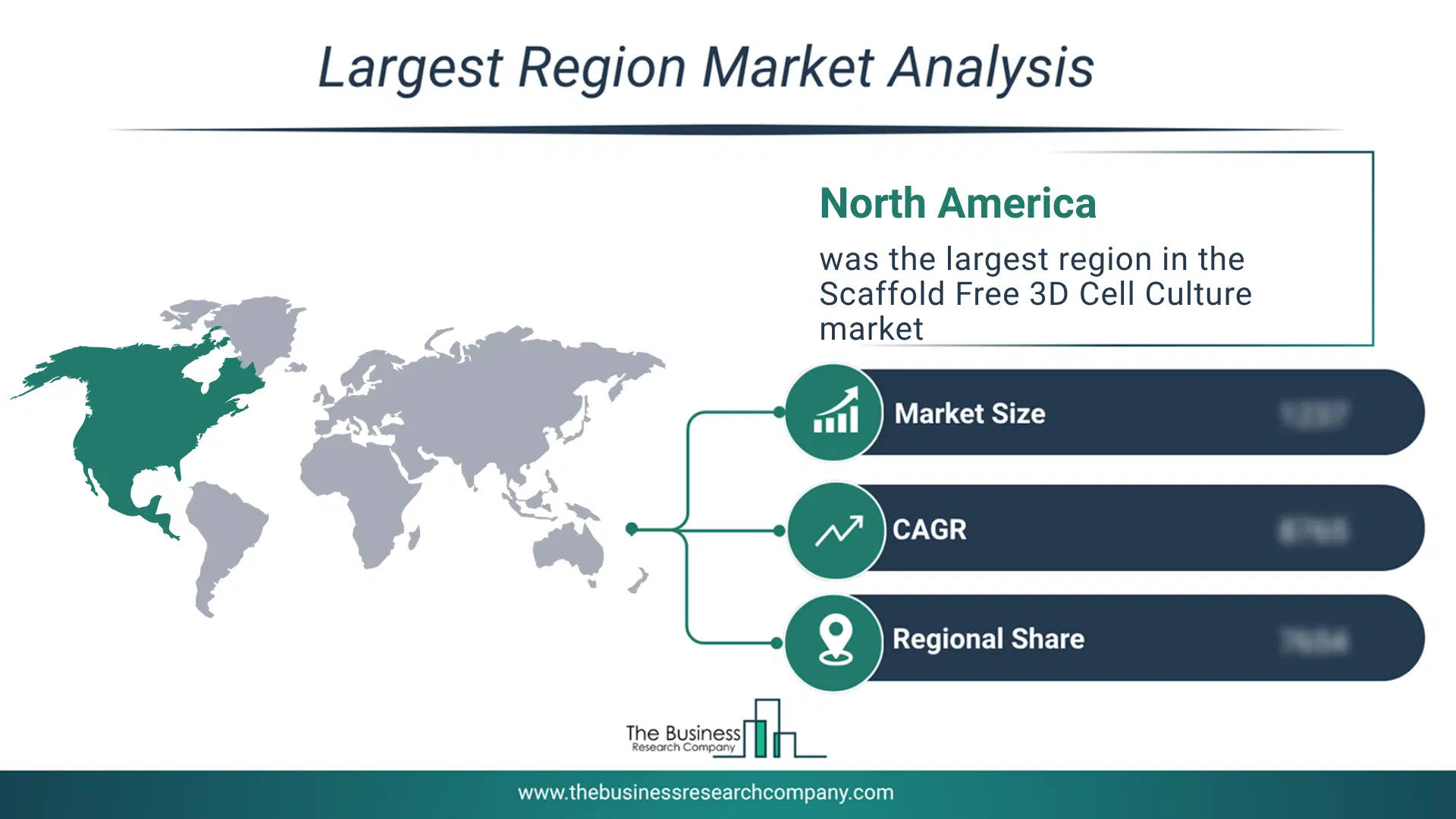
Regional Outlook
North America was the largest region in the scaffold free 3D cell culture market in 2025. Asia-Pacific is expected to be the fastest-growing region in the forecast period. The regions covered in this market report are Asia-Pacific, South East Asia, Western Europe, Eastern Europe, North America, South America, Middle East, Africa. The countries covered in this market report are Australia, Brazil, China, France, Germany, India, Indonesia, Japan, Taiwan, Russia, South Korea, UK, USA, Canada, Italy, Spain.What Defines the Scaffold Free 3D Cell Culture Market?
The scaffold free 3D cell culture market consists of sales of 3D cell culture platforms, 3D bioprinting products, 3D cell culture kits, microfluidic devices, spheroid culture plates, magnetic levitation kits, hanging drop plates, organoid culture media, cell culture consumables, and specialized culture ware. Values in this market are ‘factory gate’ values; that is, the value of goods sold by the manufacturers or creators of the goods, whether to other entities (including downstream manufacturers, wholesalers, distributors, and retailers) or directly to end customers. The value of goods in this market includes related services sold by the creators of the goods.How is Market Value Defined and Measured?
The market value is defined as the revenues that enterprises gain from the sale of goods and/or services within the specified market and geography through sales, grants, or donations in terms of the currency (in USD unless otherwise specified). The revenues for a specified geography are consumption values that are revenues generated by organizations in the specified geography within the market, irrespective of where they are produced. It does not include revenues from resales along the supply chain, either further along the supply chain or as part of other products.
This chart presents market attractiveness based on a quantitative evaluation of growth, competition, strategic alignment, and risk, offering a clear view of opportunity areas for decision-making. This chart is for illustrative purposes; the full report contains the complete analysis.

This chart highlights the Total Addressable Market (TAM) by estimating the maximum revenue opportunity using an assumption-driven approach, supporting strategic planning and opportunity sizing across markets. The chart is illustrative; the full report provides a more comprehensive analysis.
What Key Data and Analysis Are Included in the Scaffold Free 3D Cell Culture Market Report 2026?
The scaffold free 3d cell culture market research report is one of a series of new reports from The Business Research Company that provides market statistics, including industry global market size, regional shares, competitors with the market share, detailed market segments, market trends and opportunities, and any further data you may need to thrive in the scaffold free 3d cell culture industry. The market research report delivers a complete perspective of everything you need, with an in-depth analysis of the current and future state of the industry.Scaffold Free 3D Cell Culture Market Report Forecast Analysis
| Report Attribute | Details |
|---|---|
| Market Size Value In 2026 | $0.95 billion |
| Revenue Forecast In 2030 | $1.49 billion |
| Growth Rate | CAGR of 11.9% from 2026 to 2030 |
| Base Year For Estimation | 2025 |
| Actual Estimates/Historical Data | 2020-2025 |
| Forecast Period | 2026 - 2030 |
| Market Representation | Revenue in USD Billion and CAGR from 2026 to 2030 |
| Segments Covered | Product Type, Cellular Components, Technique, Application, End-User |
| Regional Scope | Asia-Pacific, Western Europe, Eastern Europe, North America, South America, Middle East, Africa |
| Country Scope | The countries covered in the report are Australia, Brazil, China, France, Germany, India, Indonesia, Japan, Taiwan, Russia, South Korea, UK, USA, Canada, Italy, Spain |
| Key Companies Profiled | Thermo Fisher Scientific Inc., Merck KGaA, Corning Incorporated, Lonza Group AG, Sartorius AG, Hamilton Company, CELLINK AB, Creative Bioarray Inc., InSphero AG, Creative Biolabs Inc., Mimetas B.V., REPROCELL Inc., Synthecon Incorporated, Advanced Solutions Life Sciences LLC, Cherry Biotech SAS, celVivo ApS, Elveflow, Guangzhou Jet Bio-Filtration Co. Ltd., Organovo Holdings Inc., Alfa Cytology Co. Ltd. |
| Customization Scope | Request for Customization |
| Pricing And Purchase Options | Explore Purchase Options |