

Sushi Restaurants Global Market Opportunities And Strategies To 2035
By Type (Single Sushi Restaurant, Conveyor Belt Sushi Restaurant), By Restaurant Size (Small And Medium Sushi Bars, Large Scale Restaurants, Boutique Sushi Cafes, Fine Dining), By Consumer Preferences (Dine-In, Takeaway, Delivery), By Application (Local Market, International Chain Market), By End User (Residential, Commercial), And By Region, Opportunities And Strategies – Global Forecast To 2035
Sushi Restaurants Market Definition
Sushi restaurants are dining establishments specializing in the preparation and serving of sushi, traditional Japanese cuisine featuring vinegared rice paired with seafood, vegetables and other ingredients. The primary purpose of sushi restaurants is to deliver fresh, high-quality sushi and Japanese-inspired meals in a setting that balances culinary artistry, food safety and cultural authenticity. The sushi restaurants market consists of sales by entities (organizations, sole traders and partnerships) of sushi restaurants services that serve a wide range of customers including everyday diners, office workers, food tourists and connoisseurs seeking a high-end culinary experience. The market also consists of take outs of sushi. They operate across various dayparts, lunchtime for quick meals, evenings for social and fine dining and weekends for leisurely gatherings or celebrations.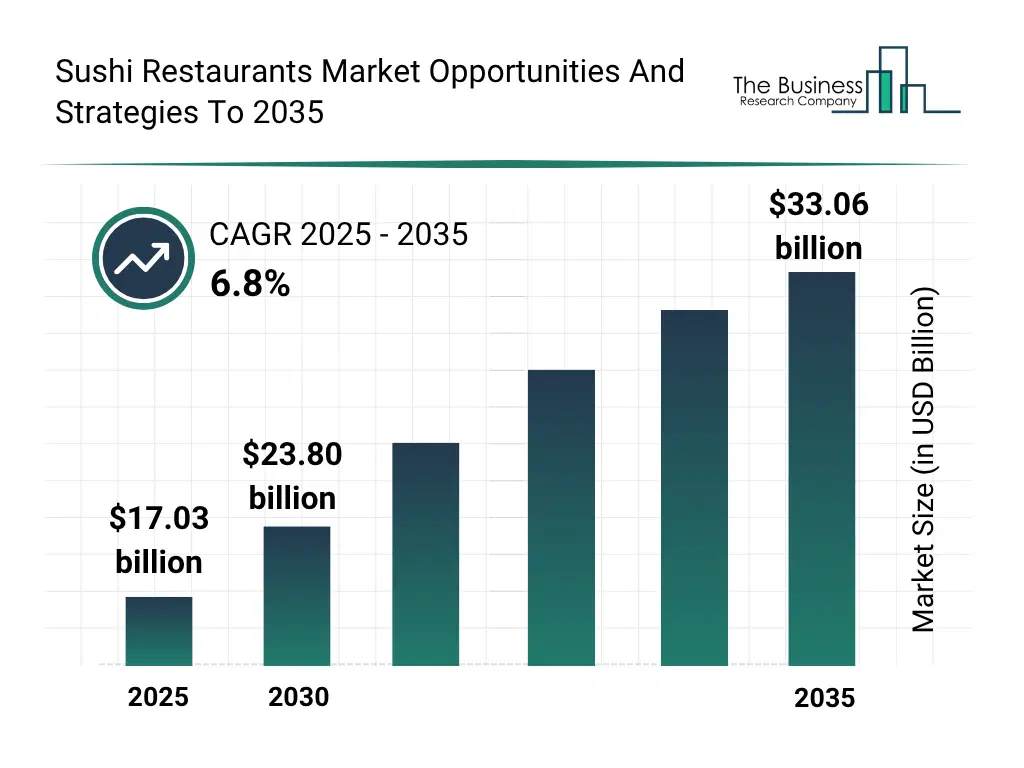
Sushi Restaurants Market Size
The global sushi restaurants market reached a value of nearly $17,033.0 million in 2025, having grown at a compound annual growth rate (CAGR) of 10.3% since 2020. The market is expected to grow from $17,033.0 million in 2025 to $23,804.2 million in 2030 at a rate of 6.9%. The market is then expected to grow at a CAGR of 6.8% from 2029 and reach $33,062.1 million in 2035. Growth in the historic period resulted from increase in consumption of seafood, increasing popularity of Japanese cuisine, rising popularity of food festivals and events and expansion and development of restaurants and food outlets. Factors that negatively affected growth in the historic period were seasonal fluctuations in fish availability and limited availability of skilled sushi chefs. Going forward, rising E-commerce and online food delivery, rising demand of the franchisee-based service model, increasing health consciousness and influence of marketing and digital presence will drive the growth. Factors that could hinder the growth of the sushi restaurants market in the future include stringent regulations, strict food safety and hygiene regulation and impact of trade war and tariffs.
Sushi Restaurants Market Segmentation
The sushi restaurants market is segmented by type, by restaurant size, by consumer preferences, by application and by end user.
By Type –
The sushi restaurants market is segmented by type into:
By Restaurant Size –
The sushi restaurants market is segmented by restaurant size into:
By Consumer Preferences –
The sushi restaurants market is segmented by consumer preferences into:
By Application –
The sushi restaurants market is segmented by application into:
By End User –
The sushi restaurants market is segmented by end user into:
By Geography - The sushi restaurants market is segmented by geography into:
By Type –
The sushi restaurants market is segmented by type into:
- a) Single Sushi Restaurant
- b) Conveyor Belt Sushi Restaurant
By Restaurant Size –
The sushi restaurants market is segmented by restaurant size into:
- a) Small And Medium Sushi Bars
- b) Large Scale Restaurants
- c) Boutique Sushi Cafes
- d) Fine Dining
By Consumer Preferences –
The sushi restaurants market is segmented by consumer preferences into:
- a) Dine-In
- b) Takeaway
- c) Delivery
By Application –
The sushi restaurants market is segmented by application into:
- a) Local Market
- b) International Chain Market
By End User –
The sushi restaurants market is segmented by end user into:
- a) Residential
- b) Commercial
By Geography - The sushi restaurants market is segmented by geography into:
- China
- India
- Japan
- Australia
- Taiwan
- South Korea
- Indonesia
- USA
- Canada
- Brazil
- France
- Germany
- UK
- Italy
- Spain
- Russia
-
o Asia Pacific
o Africa