
Glucose Biosensors Market Report 2026
Global Outlook – By Product Type (Continuous Glucose Monitoring, Self-Monitoring Blood Glucose, Non-Invasive Glucose Monitoring), By Technology (Electrochemical Biosensors, Optical Biosensors), By End Users (Hospitals, Home Care, Diagnostic Centers and Clinics) – Market Size, Trends, Strategies, and Forecast to 2030
Glucose Biosensors Market Overview
• Glucose Biosensors market size has reached to $16.72 billion in 2025 • Expected to grow to $30.88 billion in 2030 at a compound annual growth rate (CAGR) of 13.2% • Growth Driver: The Rising Prevalence of Diabetes Fueling Growth of the Glucose Biosensors Market • Market Trend: Next-Generation Continuous Monitoring Devices Offer Real-Time, Minute-By-Minute Glucose Tracking With Customizable Alerts • North America was the largest region in 2025.What Is Covered Under Glucose Biosensors Market?
A glucose biosensor is a device that is designed to measure glucose levels in various samples, typically in biological fluids such as blood or interstitial fluid. It is widely used in healthcare, particularly for diabetes management, as they enable convenient and frequent monitoring of blood glucose levels. The main product types of glucose biosensors are continuous glucose monitoring, self-monitoring blood glucose, and non-invasive glucose monitoring. Continuous glucose monitoring (CGM) is a method that uses a tiny sensor implanted under the skin to measure glucose levels in the patient’s body and it is used to provide a more comprehensive view of a patient's glucose levels than standard fingerstick glucose monitoring and offers results in real-time. Majorly used technologies are electrochemical biosensors, optical biosensors, piezoelectric biosensors, and others that are used by various end-users such as hospitals, home care, diagnostic centers and clinics, and others.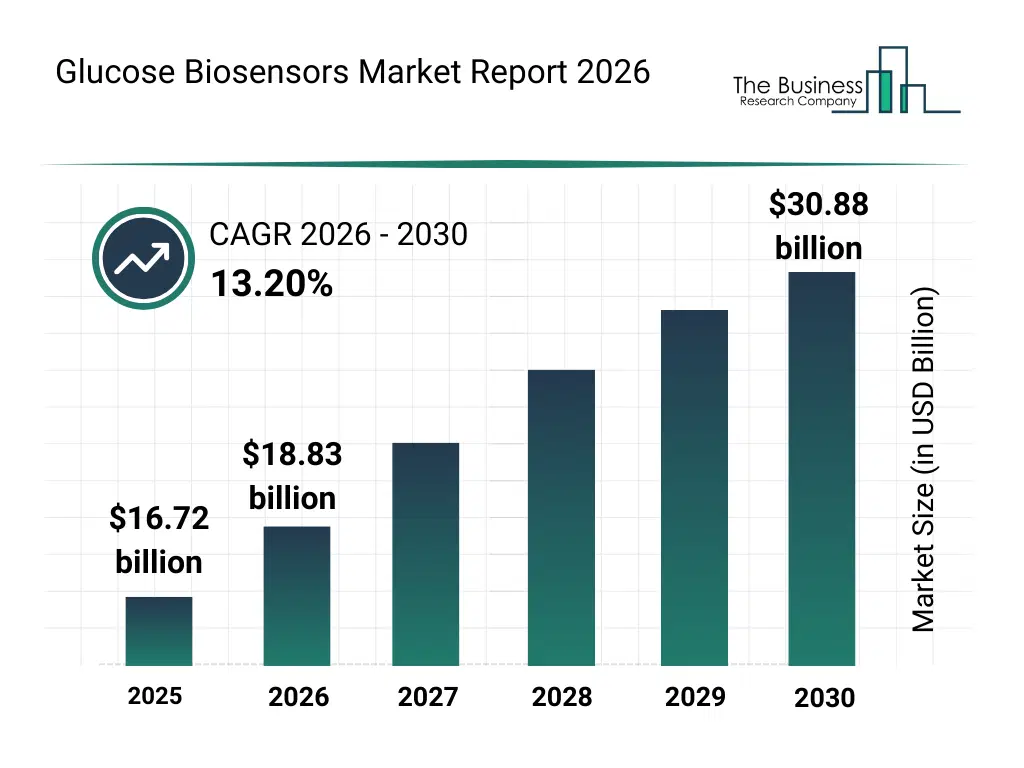
What Is The Glucose Biosensors Market Size and Share 2026?
The glucose biosensors market size has grown rapidly in recent years. It will grow from $16.72 billion in 2025 to $18.83 billion in 2026 at a compound annual growth rate (CAGR) of 12.6%. The growth in the historic period can be attributed to increasing prevalence of diabetes, rising demand for home-based monitoring solutions, improvements in biosensor sensitivity, expansion of point-of-care diagnostics, growing patient awareness of glucose management.What Is The Glucose Biosensors Market Growth Forecast?
The glucose biosensors market size is expected to see rapid growth in the next few years. It will grow to $30.88 billion in 2030 at a compound annual growth rate (CAGR) of 13.2%. The growth in the forecast period can be attributed to increasing adoption of digital diabetes management tools, rising demand for non-invasive monitoring, expansion of personalized healthcare solutions, growing investments in biosensor R&D, increasing use of AI-driven glucose analytics. Major trends in the forecast period include increasing adoption of continuous glucose monitoring systems, rising demand for wearable glucose biosensors, growing integration of mobile health platforms, expansion of non-invasive glucose monitoring technologies, enhanced focus on real-time data accuracy.
Global Glucose Biosensors Market Segmentation
1) By Product Type: Continuous Glucose Monitoring, Self-Monitoring Blood Glucose, Non-Invasive Glucose Monitoring 2) By Technology: Electrochemical Biosensors, Optical Biosensors 3) By End Users: Hospitals, Home Care, Diagnostic Centers and Clinics Subsegments: 1) By Continuous Glucose Monitoring (CGM): Real-Time CGM Systems, Professional CGM Systems 2) By Self-Monitoring Blood Glucose (SMBG): Glucometers, Test Strips 3) By Non-Invasive Glucose Monitoring: Optical Glucose Sensors, Transdermal SensorsWhat Is The Driver Of The Glucose Biosensors Market?
The rising prevalence of diabetes is expected to propel the growth of the glucose biosensors market going forward. Diabetes is an incurable disease that arises when the pancreas fails to create enough insulin or when the body fails to adequately utilize the insulin that is produced. Diabetes patients utilize glucose biosensors to monitor their blood glucose levels which enables them to monitor their blood glucose levels regularly at their convenience and helps to adjust their medication for better diabetes management. For instance, in June 2024, according to the National Health Service, a UK-based government department, in 2023, the NHS identified over half a million (549,000) additional individuals in England at risk of developing type 2 diabetes, bringing the total number of people with non-diabetic hyperglycemia, or pre-diabetes, registered with a GP to 3,615,330. This represents a significant increase compared to 3,065,825 in 2022, highlighting a rise of nearly 20%. Therefore, the increasing prevalence of diabetes is driving the growth of the glucose biosensors industry.Key Players In The Global Glucose Biosensors Market
Major companies operating in the glucose biosensors market are Abbott Laboratories, DexCom Inc., F. Hoffmann-La Roche AG, Medtronic plc, Senseonics Holdings, GlySens Incorporated, LifeScan Inc., Ascensia Diabetes Care Holdings Inc., Nova Biomedical Corporation, AgaMatrix Inc., Trividia Health, Ypsomed AG, Universal Biosensors Inc., SD Biosensor Inc., Taidoc Technology Corporation, Nipro Corporation, i-SENS Inc., ACON Laboratories Inc., ARKRAY Inc., Menarini Diagnostics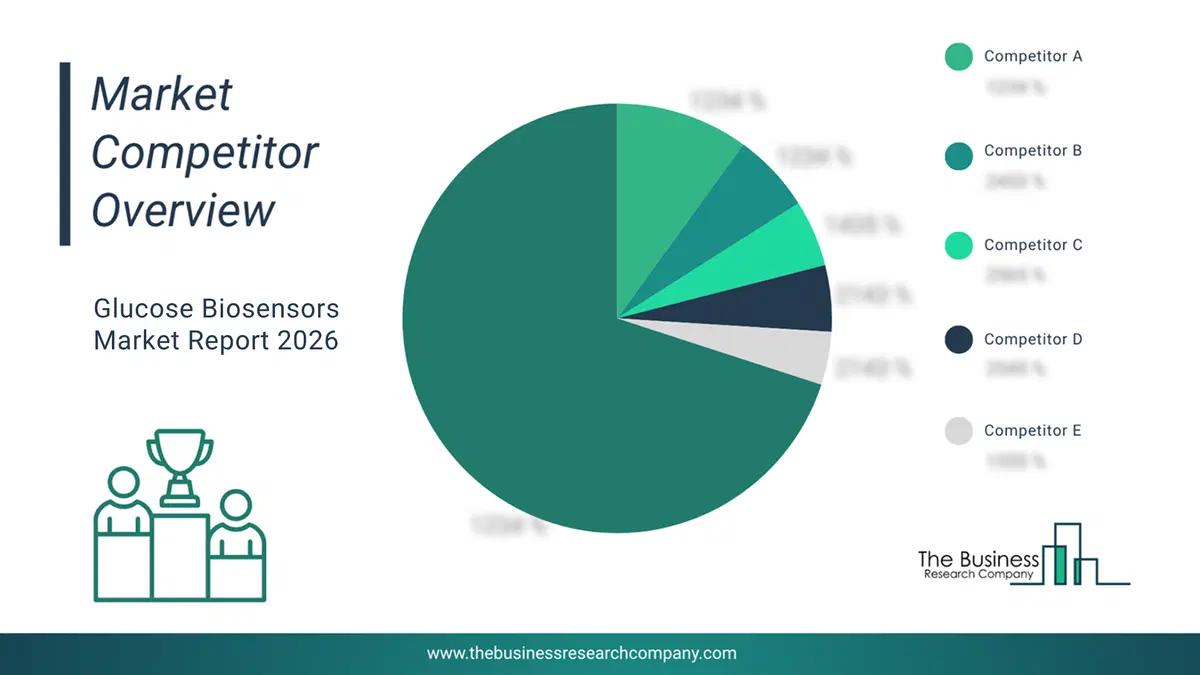
This chart is for illustrative purposes; the full report includes a detailed competitor analysis and comprehensive overview of the top 10 companies in the market.
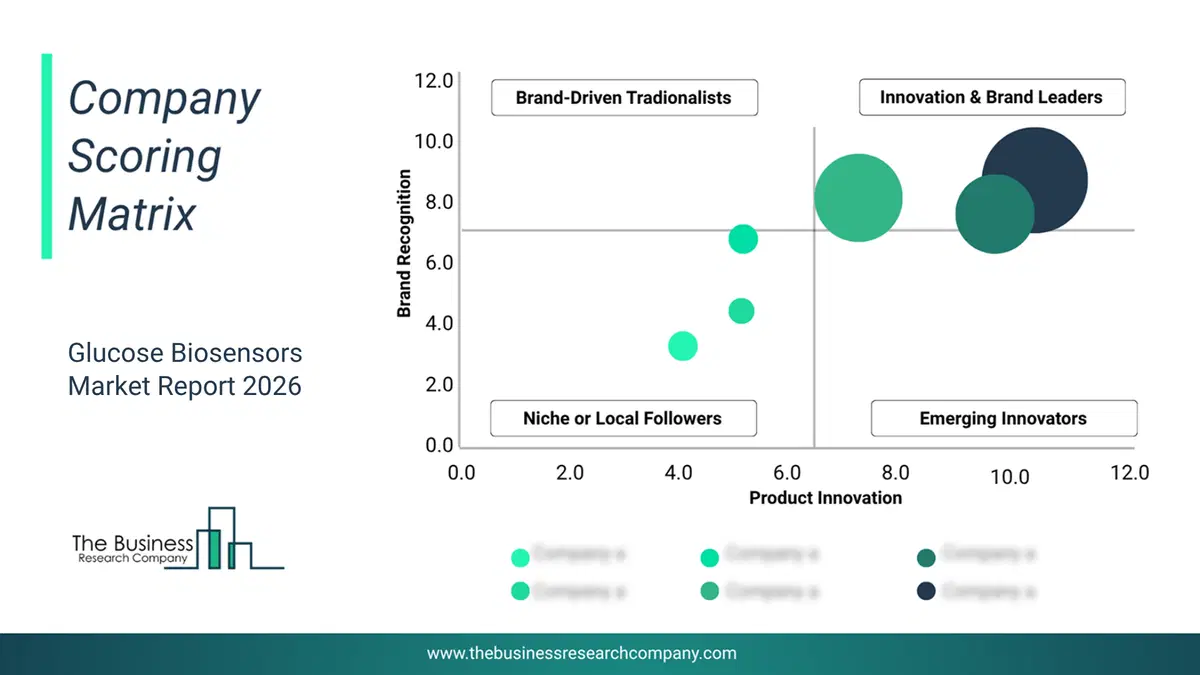
This chart maps companies by product innovation and brand strength, with bubble size indicating relative revenue, helping identify market leaders, challengers, and niche players. This is an illustrative chart; the full report provides a complete and accurate competitive analysis.
Global Glucose Biosensors Market Trends and Insights
Major companies operating in the glucose biosensor market are focusing on developing innovative solutions such as next-generation continuous glucose monitoring (CGM) sensors that provide real-time, minute-by-minute glucose readings with optional alerts to improve diabetes management and patient safety. Next-generation continuous glucose monitoring (CGM) sensors are advanced devices that continuously measure glucose levels in the interstitial fluid every few minutes, providing real-time data, trend alerts, and optional alarms to help patients and clinicians manage diabetes more effectively. For instance, in August 2025, Abbott Laboratories, a US-based healthcare company, launched the next-generation FreeStyle Libre 2 Plus sensor, which delivers continuous glucose readings every minute directly to a compatible smartphone without manual scanning. The sensor provides automatic, real-time glucose monitoring, with optional customizable alerts for high or low glucose levels. Designed for ease of use, it is comfortable to wear for up to 15 days, suitable for children aged 2 and older, and can sync with apps to share data with caregivers and healthcare professionals.What Are Latest Mergers And Acquisitions In The Glucose Biosensors Market?
In May 2023, Medtronic PLC, an India-based medical device company, acquired EOFLOW Co. Ltd. for $738 million. Through this acquisition, Medtronic plc aims to expand treatment options, address demand for discreet delivery, and strengthen its market position. EOFLOW Co. Ltd. is a South Korea-based medical device company specializing in developing and manufacturing wearable drug delivery systems.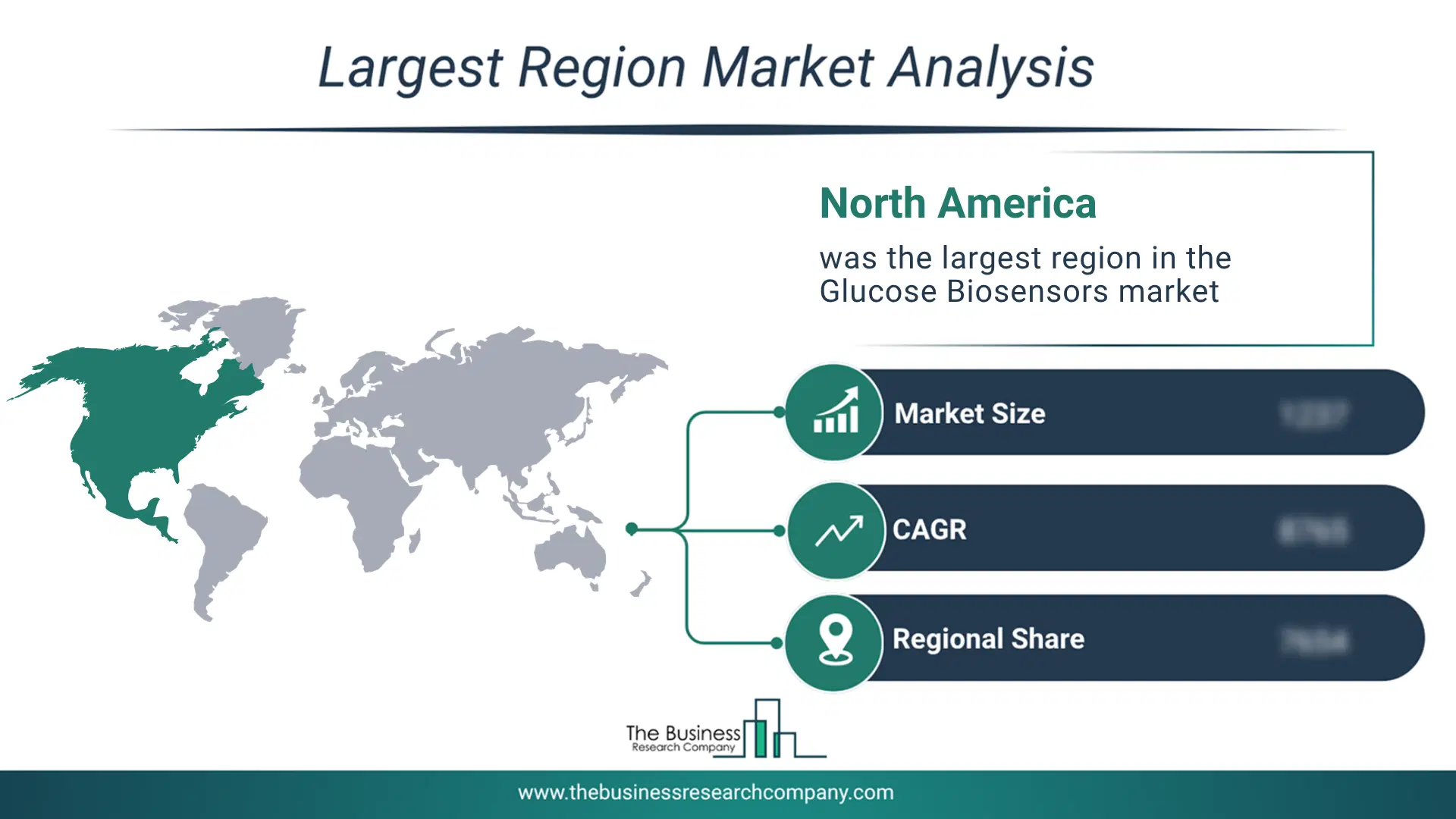
Regional Outlook
North America was the largest region in the glucose biosensors market in 2025. The regions covered in this market report are Asia-Pacific, South East Asia, Western Europe, Eastern Europe, North America, South America, Middle East, Africa. The countries covered in this market report are Australia, Brazil, China, France, Germany, India, Indonesia, Japan, Taiwan, Russia, South Korea, UK, USA, Canada, Italy, SpainWhat Defines the Glucose Biosensors Market?
The glucose biosensors market consists of sales of magnetic biosensors, thermometric biosensors, potentiometric, amperometric, and conductometric sensors. Values in this market are ‘factory gate’ values, that is the value of goods sold by the manufacturers or creators of the goods, whether to other entities (including downstream manufacturers, wholesalers, distributors, and retailers) or directly to end customers. The value of goods in this market includes related services sold by the creators of the goods.How is Market Value Defined and Measured?
The market value is defined as the revenues that enterprises gain from the sale of goods and/or services within the specified market and geography through sales, grants, or donations in terms of the currency (in USD unless otherwise specified). The revenues for a specified geography are consumption values that are revenues generated by organizations in the specified geography within the market, irrespective of where they are produced. It does not include revenues from resales along the supply chain, either further along the supply chain or as part of other products.
This chart presents market attractiveness based on a quantitative evaluation of growth, competition, strategic alignment, and risk, offering a clear view of opportunity areas for decision-making. This chart is for illustrative purposes; the full report contains the complete analysis.

This chart highlights the Total Addressable Market (TAM) by estimating the maximum revenue opportunity using an assumption-driven approach, supporting strategic planning and opportunity sizing across markets. The chart is illustrative; the full report provides a more comprehensive analysis.
What Key Data and Analysis Are Included in the Glucose Biosensors Market Report 2026?
The glucose biosensors market research report is one of a series of new reports from The Business Research Company that provides market statistics, including industry global market size, regional shares, competitors with the market share, detailed market segments, market trends and opportunities, and any further data you may need to thrive in the glucose biosensors industry. The market research report delivers a complete perspective of everything you need, with an in-depth analysis of the current and future state of the industry.Glucose Biosensors Market Report Forecast Analysis
| Report Attribute | Details |
|---|---|
| Market Size Value In 2026 | $18.83 billion |
| Revenue Forecast In 2030 | $30.88 billion |
| Growth Rate | CAGR of 13.2% from 2026 to 2030 |
| Base Year For Estimation | 2025 |
| Actual Estimates/Historical Data | 2020-2025 |
| Forecast Period | 2026 - 2030 |
| Market Representation | Revenue in USD Billion and CAGR from 2026 to 2030 |
| Segments Covered | Product Type, Technology, End Users |
| Regional Scope | Asia-Pacific, Western Europe, Eastern Europe, North America, South America, Middle East, Africa |
| Country Scope | The countries covered in the report are Australia, Brazil, China, France, Germany, India, Indonesia, Japan, Taiwan, Russia, South Korea, UK, USA, Canada, Italy, Spain. |
| Key Companies Profiled | Abbott Laboratories, DexCom Inc., F. Hoffmann-La Roche AG, Medtronic plc, Senseonics Holdings, GlySens Incorporated, LifeScan Inc., Ascensia Diabetes Care Holdings Inc., Nova Biomedical Corporation, AgaMatrix Inc., Trividia Health, Ypsomed AG, Universal Biosensors Inc., SD Biosensor Inc., Taidoc Technology Corporation, Nipro Corporation, i-SENS Inc., ACON Laboratories Inc., ARKRAY Inc., Menarini Diagnostics |
| Customization Scope | Request for Customization |
| Pricing And Purchase Options | Explore Purchase Options |